Category: caterscam.github.io

caterscam.github.io

  • AHL 4.19 — Markov Chains & Transition Matrices

    Term / Concept Definition / short explanation
    Transition matrix (T) Square matrix of probabilities Tij = P(next state = i | current = j). Columns sum to 1 when using column state vectors.
    State vector (sn) Column vector of probabilities for each state at step n. sn = Tn s0.
    Steady state / stationary vector Vector s satisfying T s = s and sum of entries = 1. It is the eigenvector of T with eigenvalue 1 (normalised).

    📌 What is a transition matrix?

    • Definition: For a discrete-time Markov chain with finite states, a transition matrix T gives the probabilities of moving between states at each step.
    • Column convention used here: sn+1 = T sn (so columns of T sum to 1). If you use row vectors, transpose the formulas accordingly.
    • Evolution over n steps: sn = Tn s0. Use n

    🌍 Real-World Connection

    Transition matrices model many processes: customer flows between product categories, disease compartment flows, or habitat occupancy in ecology. The same linear algebraic tools apply.

    📌 How to compute Tn and state probabilities (GDC instructions)

    Use your GDC to avoid manual matrix multiplication — always use the calculator for powers of T. Below are stepwise GDC instructions (TI / Casio / Sharp menus vary but the operations are the same).

    1. Enter T into the matrix editor (label it Matrix A or M1). Make sure each column sums to 1 (column convention).
    2. Enter the initial state s0 as a column vector (Matrix B or vector list): e.g., s0 = [1,0,0]T if the system starts in state 1.
    3. Compute Tn: use matrix power function (e.g., Mn) or repeated multiplication on systems without direct power. On many calculators: Matrix An → then multiply by s0.
    4. Multiply: sn = (Tn) × s0. Read the resulting vector — entries are probabilities (should sum to 1 within rounding error).

    🧠 Examiner Tip

    • Always show the GDC command you used (e.g., “Matrix A10 × Vector s0″ or “eigenvector(M) -> v”).
    • Label matrices clearly in your script/answer (A = T, v = s0), and show the normalising check sum(v) = 1.

    📌 Steady state: eigenvector method and normalisation

    • Definition: steady state s satisfies T s = s (so s is an eigenvector with eigenvalue 1).
    • Compute with GDC (recommended):
      1. Use your calculator’s eigen solver: compute eigenvectors of T and identify eigenvector(s) for eigenvalue 1.
      2. Normalise the eigenvector v: divide by the sum of its entries so they sum to 1 (s = v / sum(v)).
    • Alternative solve: Solve linear system (I – T) s = 0 with constraint sum(s) = 1. Many calculators can solve linear systems; include the normalising equation as an extra row (replace one redundant equation with sum = 1).
    • Interpretation: steady state gives long-run distribution if chain is regular (ergodic) — i.e., regardless of starting state the chain tends to s as n → ∞.

    📐 IA Spotlight

    For an IA you can gather transition data (e.g., student study locations over weeks), build T from observed frequencies, compute steady state via GDC, and discuss whether the chain is regular and what that implies about long-run behaviour.

    📌 PDP-1 concept, diagonalisation note & solving via linear algebra

    If T can be diagonalised as T = P D P-1 (where D is diagonal of eigenvalues), then Tn = P Dn P-1. This helps analyse behaviour when eigenvalues less than 1 decay; eigenvalue 1 dominates long-term limit. Use your GDC for eigen-decomposition rather than computing P or P-1 manually.

    🔍 TOK Perspective

    When using Markov models to predict real systems, which assumptions (stationarity, independence between steps) are being made, and how do they affect the trustworthiness of predictions?

    📌 Worked examples (AIHL IB style) — GDC based solutions

    Below are three short problems similar to AIHL exam style. Each solution shows explicit GDC steps (general instructions — menus differ by calculator).

    Q1 — One step probability

    Transition matrix (states A,B,C):
    T = [ [0.2, 0.1, 0.4], [0.5, 0.6, 0.3], [0.3, 0.3, 0.3] ] (columns shown).
    If start s0 = [1, 0, 0]T (state A), find s2.

    GDC steps:

    1. Enter T into Matrix A (3×3) exactly as above (columns must match convention).
    2. Enter s0 as Matrix B (3×1): [1;0;0].
    3. Compute A2 (Matrix A2) then multiply: (A2) × B → result is s2. Read entries (probabilities).

    Interpretation: entries show probability of being in A,B,C after 2 steps.

    Q2 — Steady state (eigenvector method)

    Use the same T as Q1. Find steady state s (long-run distribution).

    GDC steps:

    1. Compute eigenvectors/values of Matrix A (often menu: Matrix → Eigen → Eigenvectors).
    2. Identify eigenvector corresponding to eigenvalue 1 (v).
    3. Normalise: s = v / sum(v). Show sum(s) ≈ 1.

    Note: If eigenvalue 1 is repeated or chain not regular, explain implications in text.

    Q3 — Absorbing state / long-run behaviour

    Suppose state C in Q1 becomes absorbing (probability 1 to stay). Modify T accordingly and find probability of eventual absorption in C starting from A.

    GDC approach:

    1. Change third column to [0,0,1] to make C absorbing (or rebuild T).
    2. Compute Tn for large n (e.g., n = 50 or 100) using Matrix A100 × s0. The third entry of the result approximates eventual absorption probability.
    3. Confirm by eigenvector or by solving absorbing probabilities via fundamental matrix for exact analysis (optional advanced step).

    📝 Paper tip

    • When asked “eventual probability”, show An × s0 for large n and state the n used. Write “T100×s0 (GDC) → approx.” so markers know you used technology.
    • If chain has absorbing states, name them and explain why the chain converges to a distribution concentrated on absorbing classes.

    🌐 EE Focus

    Extended essay idea: compare Markov modelling across domains (biology: species movement; CS: PageRank; economics: consumer states). Use GDC eigen analyses and discuss model assumptions and data collection issues.

    ❤️ CAS Link

    A CAS project could track individual habits (study, exercise) across weeks, create transition matrices from observed transitions and present findings on habit stability and interventions to change long-term behaviour.

    📌 Final checklist (what to show in exam answers)

    • Label your matrices and vectors (e.g., T, s0), show the GDC command used (Matrix An × s0).
    • Show normalising sum(s) = 1 when presenting state vectors or steady state.
    • If you use eigenvectors, show eigenvalue = 1 and the normalised eigenvector (s = v / sum(v)).
    • Comment on chain regularity, absorbing states or periodicity if relevant to convergence.

    🌍 Final real-world note

    Markov chains are powerful but depend on the quality of transition data and validity of the time-homogeneity assumption; always check whether transition probabilities vary over time before claiming long-run results.

  • AHL 4.18 — Hypothesis testing, critical values & decision rules

    Term / concept Short definition / use
    Null hypothesis (H0) Statement of no effect or status-quo to be tested. Example: μ = μ0.
    Alternative hypothesis (H1) What we suspect might be true. Can be one-tailed or two-tailed.
    Significance level (α) Probability threshold used to reject H0 (common values 0.05, 0.01, 0.10).
    Type I error Reject H0 when it is true. Probability = α (controlled by design).
    Type II error (β) Fail to reject H0 when H1 is true. Power = 1 − β.
    Critical value / critical region Threshold(s) in the test statistic scale beyond which H0 is rejected.
    p-value Probability, under H0, of observing a test statistic at least as extreme as the one measured.

    📌 Overview: hypothesis testing and decision rules

    Inferential hypothesis testing gives a formal way to decide whether observed data provide sufficient evidence
    against a null hypothesis (H0). The standard workflow (AIHL / IB) is:

    • 1. State H0 and H1 (one-tailed or two-tailed).
    • 2. Choose significance level α (commonly 0.05 or 0.01).
    • 3. Decide appropriate test (normal z, t, binomial, Poisson, correlation test) based on data & assumptions.
    • 4. Use the GDC to compute the test statistic and p-value or find the critical region.
    • 5. Compare p-value to α (or statistic to critical values) and conclude. State Type I / II considerations.

    Key idea — decision by p-value or critical region

    • If p-value < α → reject H0 (evidence supports H1).
    • If p-value ≥ α → do not reject H0 (no sufficient evidence).
    • Alternatively compare the test statistic with critical value(s) for the chosen α and tail type.

    🌍 Real-World Connection

    Clinical trials use hypothesis tests to check whether a new treatment improves outcomes versus standard care.
    Regulatory bodies require strict control of Type I error to prevent false claims of effectiveness.

    📌 Tests for a population mean

    Choose the test according to whether population variance σ is known and the sample size / normality assumption:

    • Normal (z) test: use when σ is known. Test statistic: z = (x̄ − μ0)/(σ/√n).
    • t-test: use when σ is unknown — always use the t-test in AIHL IB when σ is not given.
      Test statistic: t = (x̄ − μ0)/(s/√n) with n − 1 degrees of freedom.
    • One-sample vs two-sample: use one-sample when comparing mean to a fixed μ0; two-sample when comparing two group means.

    🧠 Examiner Tip

    • Always state the test used and justify it using given information about σ and sample size.
    • Quote both the test statistic and the p-value directly from the GDC.
    • Write the final conclusion explicitly referencing the chosen significance level.
    • Always state which test you use (z or t) and why (σ known/unknown).
    • Give the GDC output (test statistic and p-value) and write “p-value < α” or “p-value ≥ α”.
    • When asked to interpret, give a plain language conclusion with the chosen α (e.g. “Reject H0 at the 5% level — evidence that …”).

    📱 GDC Tips

    TI-Nspire CX II

    • Open Menu → Statistics → Stat Tests and select the appropriate test (t-Test, z-Test, Binomial Test, or Correlation).
    • Choose Stats when summary values (x̄, s, n) are given, or Data when raw lists are provided in columns.
    • Set the alternative hypothesis carefully (≠, <, >), as this directly affects the p-value and final conclusion.
    • Record both the test statistic and p-value, then explicitly compare the p-value with α in your written conclusion.

    Casio fx-CG50 / fx-CG100

    • Navigate to MENU → STAT → TEST and select the required hypothesis test from the list provided.
    • Enter data into List 1 and List 2 where needed, or choose the option to input summary statistics directly.
    • Ensure the correct tail is selected (left, right, or two-tailed) before executing the test.
    • Use the displayed p-value to make a decision, then write a full sentence conclusion referencing the chosen significance level.

    Example 1 — one-sample t-test (GDC solution)

    A machine fills jars with coffee. A sample of n = 16 jars has sample mean x̄ = 250.8 g and sample standard deviation s = 2.4 g.
    Test at α = 0.05 whether the machine is filling to the labelled 251 g (H0: μ = 251, H1: μ ≠ 251).

    GDC steps (TI-style / general):

    1. Menu: STAT > TESTS > t-Test (or 1-Sample t-test on your calculator).
    2. Choose Data (if you have raw list) or Stats (enter x̄ = 250.8, s = 2.4, n = 16).
    3. Set μ0 = 251, alternative = ≠ (two-tailed), and press Calculate.
    4. Read output: test statistic t (e.g. t ≈ value) and p-value (two-tailed).

    Interpretation: if the GDC returns p-value = 0.38 (example), since p = 0.38 > 0.05, do not reject H0.
    Conclude: no evidence at 5% level that mean fill differs from 251 g.

    🔍 TOK Perspective

    A non-significant result does not prove the null hypothesis is true.
    It only indicates insufficient evidence, raising questions about certainty and knowledge claims in statistics.

    📌 Tests for a proportion (binomial)

    Use a binomial-based test for tests about a population proportion p when data are counts of successes out of n trials.
    For large n and p not near 0 or 1, a normal approximation can be used (z-test for proportion), but AIHL expects use of technology.

    • Exact binomial approach (preferred on GDC): use binomial PDF/CDF to find p-value exactly.
    • Normal approx (only when n large and np, n(1 − p) ≥ 10): use z = (p̂ − p0)/√(p0(1 − p0)/n).

    Example 2 — binomial test (GDC solution)

    A quality inspector tests 40 bulbs and finds 6 defective. Test H0: p = 0.05 vs H1: p > 0.05 at α = 0.05.

    GDC steps (exact binomial p-value):

    1. Use distribution menu: DISTR > BinomCDF / BinomTest or BINOMTEST (some models have a direct binomial test).
    2. For one-tailed (p > p0): compute probability of getting ≥ 6 successes under n = 40, p0 = 0.05:
      use p-value = 1 − binomcdf(40, 0.05, 5) (because binomcdf gives P(X ≤ k)).
    3. Compare p-value to α (if p < 0.05 reject H0).

    Note: AIHL exam calculators will return this p-value directly from a Binomial Test routine; report p-value and decision.

    One Tailed Binomial Hypothesis Testing on Casio fx-CG50 Calculator

    📐 IA Spotlight

    • Hypothesis testing is ideal for IAs involving real data such as defect counts or survey responses.
    • Explain clearly why the chosen probability model is appropriate for the context.
    • Discuss limitations, assumptions, and possible sources of statistical error.

    📌 Tests using the Poisson distribution

    Use the Poisson model for counts that occur at a constant average rate and independently (events per unit time or space).
    Example use-cases: arrivals at a call centre, typos per page, emergency admissions per hour.

    • Poisson test: test whether observed count(s) are consistent with a hypothesised rate λ0 (per unit).
    • Use GDC’s Poisson CDF/PDF (DISTR menus) to compute p-values exactly.

    Example 3 — Poisson test (GDC)

    Hospital expects on average λ = 2 emergency calls per hour. In a particular hour there were 6 calls. Test H0: λ = 2 vs H1: λ > 2 at α = 0.01.

    GDC steps (Poisson right-tail):

    1. Use DISTR > Poisson CDF (or POISSONCDF). Compute P(X ≤ 5) for λ = 2.
    2. p-value = 1 − P(X ≤ 5). If p-value < 0.01, reject H0.

    This exact approach is preferred; do not approximate with normal unless stated/justified by continuity and large λ.

    📌 Testing correlation (ρ = 0)

    To test whether the population correlation ρ equals 0 (no linear association), AIHL expects use of technology:

    • Enter paired data lists into the GDC and run Correlation Test (STAT > TESTS > LinRegTTest or similar).
    • The GDC returns test statistic t and p-value for H0: ρ = 0. Use these to accept/reject.

    📝 Paper Tips

    • Always write a concluding sentence after using technology.
    • Explicitly state whether H₀ is rejected or not rejected.
    • Use correct statistical language rather than everyday phrasing.

    📌 Type I and Type II errors — practical tradeoffs

    • Type I error (α): false positive — limit it by choosing small α (e.g. 0.01) but that increases β.
    • Type II error (β): false negative — reduce β (increase power) by increasing n, increasing effect size or raising α.
    • Power (1 − β): probability test detects a true effect of a given size — consider when designing studies.

    🔗 Connections

    • Links to other subjects: medical trials (Type I/II balance), engineering (reliability testing).
    • Ethics: setting α too high can cause harm (false positives); too low can miss real effects.

    🧠 Final examiner notes

    • Always state H0, H1, α and the test chosen with justification (assumptions, distributional conditions).
    • Use technology for test statistic and p-value. Quote both and make the decision clearly (reject / do not reject).
    • When asked for interpretation, write a plain sentence (e.g., “At the 5% level we reject H0; there is evidence that …”).
      • Discuss practical implications (Type I / II consequences) where relevant.

    📌 Practice Questions — Type I & Type II Errors

    Multiple Choice Questions (MCQs)

    MCQ 1
    A hypothesis test is carried out at a significance level of α = 0.05.
    Which statement correctly defines the probability of a Type I error?

    • A. The probability that the alternative hypothesis is false
    • B. The probability that the null hypothesis is true
    • C. The probability of rejecting a true null hypothesis
    • D. The probability of failing to reject a false null hypothesis
    Answer & Detailed Explanation

    Correct answer: C

    A Type I error occurs when the null hypothesis is rejected even though it is actually true.
    By definition, the probability of making this error is equal to the chosen significance level α.
    Since α = 0.05, there is a 5% risk of falsely concluding that a statistically significant effect exists when it does not.


    MCQ 2
    The power of a hypothesis test is best defined as:

    • A. The probability of rejecting a true null hypothesis
    • B. The probability of failing to reject a false null hypothesis
    • C. The probability of accepting the null hypothesis
    • D. The probability of correctly rejecting a false null hypothesis
    Answer & Detailed Explanation

    Correct answer: D

    The power of a test measures the test’s ability to detect a real effect.
    Mathematically, power ” = 1 − β “, where β is the probability of a Type II error.
    A higher power indicates a greater likelihood of correctly rejecting the null hypothesis when it is false.


    MCQ 3
    Which of the following changes will most directly reduce the probability of a Type II error?

    • A. Decreasing the significance level α
    • B. Increasing the sample size
    • C. Narrowing the critical region
    • D. Using a two-tailed test instead of a one-tailed test
    Answer & Detailed Explanation

    Correct answer: B

    Increasing the sample size reduces sampling variability and improves the precision of estimates.
    This makes it easier to detect a genuine effect when one exists, thereby reducing the probability of failing to reject a false null hypothesis.
    As a result, the probability of a Type II error decreases and the power of the test increases.


    Short Answer Questions

    Short Question 1
    Explain what a Type I error represents in the context of hypothesis testing.

    Model Answer

    A Type I error occurs when the null hypothesis is rejected even though it is actually true.
    In practical terms, this means concluding that there is sufficient statistical evidence for an effect, difference, or relationship when none genuinely exists.
    The probability of committing a Type I error is controlled by the chosen significance level α.


    Short Question 2
    Explain why increasing the significance level α generally increases the probability of a Type I error.

    Model Answer

    The significance level α defines the threshold for rejecting the null hypothesis.
    Increasing α enlarges the critical region, making it easier to reject H₀.
    As a result, the likelihood of incorrectly rejecting a true null hypothesis increases, leading to a higher probability of a Type I error.


    Long Answer Questions (IB AIHL Style)

    Long Question 1 — Type I Error

    A medical researcher tests whether a new drug has no effect on recovery time.
    The test is carried out at a 5% significance level.

    (a) State appropriate null and alternative hypotheses.
    (b) Explain what a Type I error would mean in this context.
    (c) State the probability of making a Type I error.
    (d) Explain why minimizing Type I errors is particularly important in medical research.

    Fully Worked Explanation

    (a)
    H₀: The drug has no effect on recovery time.
    H₁: The drug affects recovery time.

    (b)
    A Type I error would occur if the researcher concludes that the drug has an effect when, in reality, it does not.
    This could lead to the approval of an ineffective treatment.

    (c)
    The probability of a Type I error is equal to the significance level, α = 0.05.

    (d)
    In medical research, false positives can lead to harmful consequences such as unnecessary treatment, side effects, or wasted resources.
    Therefore, controlling the probability of a Type I error is essential to protect patient safety and maintain scientific integrity.


    Long Question 2 — Type II Error and Power

    A manufacturer tests whether the mean lifetime of a battery exceeds 10 hours.
    The test is performed at a 1% significance level.

    (a) State suitable hypotheses.
    (b) Explain what a Type II error would represent in this context.
    (c) Define the power of the test.
    (d) Describe two methods for increasing the power of the test.

    Fully Worked Explanation

    (a)
    H₀: μ ≤ 10 hours
    H₁: μ > 10 hours

    (b)
    A Type II error occurs if the manufacturer fails to detect that the battery lifetime exceeds 10 hours when it actually does.
    This could result in missed marketing or performance opportunities.

    (c)
    The power of a test is the probability of correctly rejecting a false null hypothesis.
    It is equal to 1 − β, where β is the probability of a Type II error.

    (d)
    Power can be increased by increasing the sample size, which reduces variability, or by increasing the significance level, which enlarges the rejection region.
    Both changes make it more likely to detect a true effect.


    Long Question 3 — Trade-off Between Errors

    Explain why it is generally impossible to simultaneously minimize both Type I and Type II error probabilities.
    Support your explanation with reference to the role of the significance level.

    Fully Worked Explanation

    Reducing the probability of a Type I error requires lowering the significance level α, which shrinks the critical region.
    However, this makes it harder to reject the null hypothesis, increasing the probability of a Type II error.
    Conversely, increasing α reduces Type II errors but increases Type I errors.
    This inherent trade-off means both probabilities cannot be minimized at the same time.

  • AHL 4.17 — Poisson distribution

    The Poisson distribution models counts of rare events occurring independently at a constant average rate over a
    fixed interval (time, area, volume, etc.). Its mean and variance are both equal to the rate parameter λ.
    In AIHL problems you will: identify when Poisson is appropriate, compute probabilities using a GDC, and combine
    independent Poisson processes by summing their λ parameters.

    Term / concept Definition / short explanation
    Poisson(λ) A discrete distribution for counts. P(X = k) = e λk / k!, k = 0,1,2,…
    Mean = λ, Variance = λ.
    When appropriate Events occur independently, at a constant average rate, and counts per interval are small/rare relative to potential occurrences.
    Sum of independent Poissons If X~Poisson(λ1) and Y~Poisson(λ2) independent then X+Y ~ Poisson(λ1+λ2).
    Approximation use Poisson approximates Binomial(n,p) when n large, p small and np ≈ λ.

    📌 1. Intuition & criteria for use

    • Independence: each event occurrence does not affect others.
    • Uniform rate: average rate λ is constant across the interval of interest.
    • Discreteness: we count occurrences (0,1,2,…).
    • Examples: calls to a switchboard per hour, number of typos per page, emergency admissions per night.

    🔗 Connection

    Telecommunications / call-centres: Poisson models are used to estimate arrival rates (calls per minute) and to help dimension staff.

    📌 2. Probability formula & properties

    For X ~ Poisson(λ):

    P(X = k) = e λk / k!    (k = 0,1,2,…)

    • Mean E(X) = λ
    • Var(X) = λ
    • Sum: If X~Poisson(λ1) and Y~Poisson(λ2) independent, X+Y~Poisson(λ1+λ2)

    Example 1 (GDC): Probability of k events in an interval

    Problem: A call centre receives on average 6 calls per hour (λ = 6). What is the probability of exactly 4 calls in one hour?

    GDC steps (TI-84 / TI-83 style):

    1. Press 2nd then VARS to open DISTR.
    2. Choose PoissonPdf( or on some models poisspdf().
    3. Enter (6,4) where 6 is λ and 4 is k, i.e. PoissonPdf(6,4).
    4. Press ENTER. The calculator returns the probability ≈ 0.1339.

    Answer: P(X = 4) ≈ 0.1339 (about 13.4%).

    Example 2 (GDC): Cumulative probabilities & sum of independent Poissons

    Problem A: With λ = 6, what is P(X ≤ 3)? (use GDC cumulative function)

    GDC steps (TI-84 style):

    1. Open 2nd → VARS (DISTR).
    2. Choose PoissonCdf( (sometimes labelled poisscdf().
    3. Enter (6,0,3) (λ, lower k, upper k). Press ENTER.
    4. Calculator returns P(X ≤ 3) ≈ 0.1512.

    Problem B: Two independent call streams have average rates 2 and 3 calls per hour. What is the probability that their combined total in an hour is exactly 4?

    Solution idea: sum rates: λ_total = 2 + 3 = 5. Then compute P(Z = 4) with Z ~ Poisson(5).

    GDC steps: use PoissonPdf(5,4) → result ≈ 0.1755.

    🧠 Examiner Tip

    • Always state which λ you are using and why (context → interval chosen).
    • When combining independent Poisson processes, write λ_total = λ1 + λ2 before using your GDC.
    • Use cumulative functions (PoissonCdf) on the GDC for “at most” and “at least” type questions; remember P(X ≥ k) = 1 − P(X ≤ k−1).

    📐 IA Spotlight

    Collect counts (e.g., number of visitors per hour) across many intervals. Check the mean ≈ variance property and use goodness-of-fit (via simulation or technology) to justify a Poisson model. Discuss independence and changing rates as limitations.

    📌 3. Worked AIHL-style questions (GDC shown)

    Q1 (single λ): A website gets on average 0.2 error reports per hour. What is the probability of no errors in a 10-hour window?

    Solution idea: λ per hour = 0.2, for 10 hours λ_total = 0.2 × 10 = 2. Use PoissonPdf(2,0).

    GDC: PoissonPdf(2,0) → ≈ e-2 20/0! ≈ 0.1353.

    Q2 (sum of Poissons): Two independent sensors record failures at mean rates 0.5/hour and 1.2/hour. What is P(total failures in 4 hours ≥ 3)?

    Solution idea: λ1_4h = 0.5×4 = 2; λ2_4h = 1.2×4 = 4.8; λ_total = 6.8. Compute P(Z ≥ 3) = 1 − P(Z ≤ 2) with Z~Poisson(6.8).

    GDC steps: PoissonCdf(6.8,0,2) → returns P(Z ≤ 2) ≈ value (say 0.015). Then answer = 1 − 0.015 ≈ 0.985.

    Note: Always check independence and constant rate assumptions; if these fail, consider time-varying Poisson processes or alternative models.

    🔗 Connections (integrated)

    • Traffic management: count of vehicles arriving at a junction per minute → helps design signal timing and predict congestion peaks.
    • Emergency admissions: Poisson can approximate arrivals to an ER in short time windows (discuss limits if outbreaks occur).
    • Typographical errors: modeling typos per page is a classic Poisson application in quality control.

    📝 Paper strategy

    • Identify λ clearly from context (rate × interval length). Show the calculation for λ if you rescale the interval.
    • Use your GDC PoissonPdf or PoissonCdf functions; show the function you used and the parameters (e.g., PoissonPdf(5,4)).
    • When summing independent Poissons, state λ_total = λ1 + λ2 then use that λ in your GDC commands.
  • AHL 4.16 — Confidence intervals for the mean of a normal population

    In AIHL Mathematics, confidence intervals are used to estimate an unknown population mean using sample data.
    You must choose the correct distribution (normal or t), construct the interval using your GDC, and
    interpret the interval in context to answer “is there evidence that…” questions..

    Term / concept Definition / explanation
    Population mean (μ) The true average value of a variable for the entire population (usually unknown and what we want to estimate).
    Sample mean (x̄) The average of the observed sample values. It is our point estimate for μ.
    Known σ vs unknown σ If the population standard deviation σ is known, we use the normal distribution (z-interval).
    If σ is unknown, we use the sample standard deviation s and the t-distribution (t-interval).
    Confidence level Percentage (for example 95%) describing how often intervals constructed by this method
    will capture the true mean in the long run.
    Confidence interval An interval of plausible values for μ, centred at x̄ with width determined by variability, sample size and chosen confidence level.

    📌 1. Idea of a confidence interval

    A confidence interval for μ is not “the probability that μ lies in this interval”.
    Instead, it is constructed by a method that, in repeated sampling, would capture μ
    the stated proportion of the time. For a 95% interval:

    • We take one sample and compute x̄ and either σ (known) or s (unknown).
    • The GDC uses the sampling distribution of x̄ to create x̄ ± margin of error.
    • If we repeated this process many times, about 95% of such intervals would contain μ.

    Confidence Intervals Explained | CFA Level 1

    🌍 Real-World Connection

    Opinion polls report intervals (“support for candidate A is 52% ± 3% at 95% confidence”).
    In AIHL problems, confidence intervals for means are used in exactly the same way to quantify
    uncertainty about average height, reaction time, yield, or score.

    📌 2. Confidence intervals for μ when σ is known (normal distribution)

    When the population is normal and σ is known, or when n is large and σ is known from previous studies,
    the sampling distribution of x̄ is normal with mean μ and variance σ2/n.
    Your GDC uses this to compute a z-interval.

    Typical AIHL question type

    • “Given n, x̄ and known σ, find a 95% confidence interval for the mean.”
    • “Use the interval to comment on whether μ could be equal to some claimed value.”

    Example 1 — Known σ, construct and interpret a 95% interval (use GDC)

    A machine fills cereal boxes. The mass in grams follows a normal distribution with known standard deviation
    σ = 4. A random sample of 40 boxes has mean mass x̄ = 502 grams.

    • (a) Find a 95% confidence interval for the true mean mass μ.
    • (b) The advertised mass is 500 g. Comment on whether the data are consistent with this.

    GDC method (z-interval):

    1. On most TI models: press STAT → arrow to TESTS → choose
      ZInterval.
    2. Select Stats (not Data) because you already have summary values.
    3. Enter σ = 4, x̄ = 502, n = 40, C-Level = 0.95.
    4. Choose Calculate. The display gives an interval, for example
      (500.7, 503.3) (values will depend on rounding used by your model).

    Answer (a): 95% confidence interval for μ is approximately (500.7, 503.3) grams.

    Answer (b): 500 g lies inside this interval, so the data are
    consistent with the advertised mass. There is no evidence that the mean is different from 500 g.

    🧠 Examiner Tip

    • Always state which distribution you are using (normal or t) and
      why (σ known or unknown).
    • Write the GDC output interval and then interpret it in context
      (“we are 95% confident that…”).
    • If asked about a claimed value, say whether it lies inside or outside the interval, and link that to
      “consistent with data” vs “evidence against the claim”.

    📌 3. Confidence intervals when σ is unknown (t-distribution)

    When σ is unknown, we estimate it by the sample standard deviation s.
    For a normal population, or for reasonably large n, the sampling distribution of
    (x̄ − μ) / (s / √n) follows a t-distribution with n − 1 degrees of freedom.
    Your GDC uses this to construct a t-interval.

    Typical AIHL question type

    • “Raw sample data from a normal population are given: construct a 95% confidence interval for the mean.”
    • “Use your interval to discuss whether a new method has increased the mean compared with a known baseline.”

    Example 2 — Unknown σ, t-interval and “improvement” question (use GDC)

    A researcher tests a new revision course. Exam scores (out of 100) for 12 students who took the course are:
    63, 71, 68, 74, 70, 77, 69, 73, 75, 66, 72, 78.
    Assume scores are normally distributed.

    • (a) Use your GDC to find a 95% confidence interval for the mean score μ of students taking the course.
    • (b) Previous classes without the course had mean 68. Does the interval suggest an improvement?

    GDC steps (t-interval from raw data):

    1. Enter the data in a list (for example, L1): use STAT → Edit and type the 12 scores.
    2. Press STAT → TESTS → TInterval (or “1-Sample tInt” / similar on your model).
    3. Choose Data (not Stats) since you have raw data.
    4. Set List to L1, Freq to 1, C-Level to 0.95.
    5. Select Calculate. The GDC displays the interval (L, U), plus x̄, s and n.

    Suppose your calculator reports, for example, x̄ ≈ 71.8, s ≈ 4.7 and
    95% confidence interval (69.0, 74.6). (Exact values depend on rounding.)

    Answer (a): 95% confidence interval for μ is approximately (69.0, 74.6).

    Answer (b): The old mean 68 lies below the entire interval.
    This suggests that the new course has increased the mean score; the data provide evidence of an improvement.

    📐 IA Spotlight

    For an IA involving data collection, you can report your sample mean together with a confidence interval,
    explaining clearly how the interval was obtained using your GDC. Discuss whether a claimed value or target
    lies inside the interval and how that affects your conclusion.

    📌 4. Interpreting and comparing confidence intervals

    AIHL exam questions often ask for more than just the interval; they require interpretation.

    Key interpretation pointers

    • Always link back to the context (“mean mass of cereal”, “mean exam score”, “mean reaction time”).
    • If a hypothesised value lies inside the interval, the data are consistent with that value.
    • If you compare two groups and their intervals largely overlap, differences in means may be
      statistically weak; if intervals do not overlap, there is stronger evidence for a difference.

    🔍 TOK Perspective

    Confidence intervals attach uncertainty to statements such as “brand A is better on average than brand B”.
    If the intervals overlap significantly, how strong is the knowledge claim that one brand is better?
    What role does statistical uncertainty play in real-world decision making?

    📝 Paper 2 Strategy

    • Use your GDC’s ZInterval or TInterval function; do not try to
      compute critical values by hand unless the question explicitly asks you to.
    • Copy the interval from the screen to your working and round sensibly
      (usually to 3 significant figures or as the question specifies).
    • Write one or two sentences interpreting the interval and reacting to any claim in the question;
      many marks are for communication and reasoning, not just button pressing.

    ❤️ CAS Idea

    Run a small study in your school (for example, average time to solve a puzzle) and construct a confidence interval
    for the mean using students’ data. Present your findings with an explanation of what “95% confidence” really means.

    📌 Confidence Intervals — IB AIHL Practice Questions

    Short-answer questions

    1. Explain clearly what is meant by a “95% confidence interval for the population mean μ”.

    Answer

    A 95% confidence interval for μ is an interval constructed using sample data such that, in the long run,
    95% of intervals produced by this method will contain the true population mean μ.
    It does not mean there is a 95% probability that μ lies in this specific interval; instead, μ is fixed
    and the interval varies from sample to sample.

    2. State two conditions under which it is appropriate to use a t-confidence interval instead of a normal (z) confidence interval.

    Answer

    A t-confidence interval should be used when the population standard deviation σ is unknown and must be
    estimated using the sample standard deviation s. Additionally, the sample should come from a normally
    distributed population or have a sufficiently large sample size for the Central Limit Theorem to apply.

    Long-answer questions

    3. A random sample of 36 observations from a normal population has mean x̄ = 72 and known standard deviation σ = 6.

    • (a) Find a 95% confidence interval for the population mean μ.
    • (b) State whether the data are consistent with the claim μ = 70.
    Solution

    (a) Since σ is known, a normal (z) confidence interval is appropriate.
    The standard error is σ/√n = 6/√36 = 1.
    For a 95% confidence interval, z = 1.96.

    Confidence interval = x̄ ± z(σ/√n) = 72 ± 1.96(1) = (70.04, 73.96).

    (b) The value 70 lies slightly below the lower bound of the interval.
    Therefore, at the 5% significance level, the data provide evidence against the claim that μ = 70.

    4. A sample of 15 observations from a normal population has sample mean x̄ = 105 and sample standard deviation s = 8.

    • (a) Explain why a t-distribution should be used.
    • (b) Construct a 95% confidence interval for μ.
    • (c) Interpret the interval in context.
    Solution

    (a) The population standard deviation σ is unknown and the sample size is relatively small (n = 15),
    so the t-distribution with n − 1 = 14 degrees of freedom must be used.

    (b) The standard error is s/√n = 8/√15 ≈ 2.07.
    For 95% confidence and 14 degrees of freedom, t ≈ 2.145.

    Confidence interval = 105 ± 2.145(2.07) ≈ (100.6, 109.4).

    (c) We are 95% confident that the true population mean μ lies between 100.6 and 109.4.
    In repeated sampling, approximately 95% of intervals constructed in this way would contain μ.

    5. Explain the relationship between confidence intervals and hypothesis tests for the population mean at significance level α = 0.05.

    Explanation

    A two-sided hypothesis test at significance level α = 0.05 is directly linked to a 95% confidence interval.
    If the hypothesised value of μ lies outside the 95% confidence interval, the null hypothesis would be rejected
    at the 5% level. Conversely, if the hypothesised value lies inside the interval, there is insufficient evidence
    to reject the null hypothesis. This equivalence allows confidence intervals to be used as an alternative
    decision-making tool to formal hypothesis testing.

  • AHL 4.15 — Linear combinations of normals & central limit theorem

    This note explains why sums and averages of independent random variables tend to be normally distributed:
    exact results for normal populations and the Central Limit Theorem (CLT) for general populations. We’ll cover
    the distribution, mean and variance of linear combinations, practical conditions, and common exam uses.

    Term / concept Definition / short explanation
    Linear combination of normals Any sum a1X1 + ⋯ + anXn of independent normal variables is exactly normal.
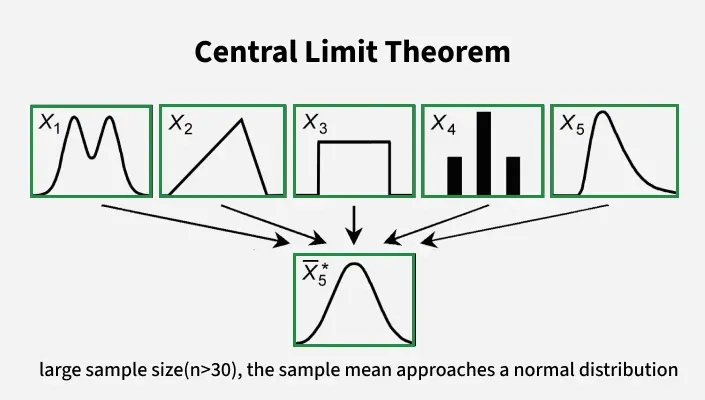
    Central Limit Theorem (CLT) For large n, the distribution of the sample mean approximates normal, regardless of the population distribution (under mild conditions).
    Standard error The standard deviation of the sample mean: σ / √n (reduces with n).

    📌 1. Exact result: linear combinations of normal variables

    If Xi ~ N(μi, σi2) are independent and ai are constants, then
    the linear combination S = Σ ai Xi is normally distributed with:

    • Mean: E(S) = Σ ai μi.
    • Variance: Var(S) = Σ ai2 σi2 (independence used).
    • Distribution: S ~ N( Σ ai μi, Σ ai2 σi2 ).

    Example:
    Let X ~ N(2, 9) and Y ~ N(5, 4) independent. For T = 3X − 2Y:

    E(T) = 3×2 − 2×5 = 6 − 10 = −4.
    Var(T) = 32×9 + (−2)2×4 = 9×9 + 4×4 = 81 + 16 = 97.

    So T ~ N(−4, 97).

    📐 IA spotlight

    Use simulation to demonstrate exact normality when summing normals versus approximate normality when summing non-normal variables.
    Include histograms of sums for increasing n and discuss convergence visually and numerically (mean, variance, skewness).

    📌 2. Central Limit Theorem (CLT) — statement & interpretation

    Let X1, …, Xn be independent identically distributed (i.i.d.) random variables with mean μ and variance σ2.
    The CLT states that for large n the sample mean = (1/n)(x̄) Σ Xi is approximately normal:

    (x̄)≈ N( μ, σ2 / n ) for large n.

    • Meaning: as n increases, the distribution of the average tightens around μ and becomes bell-shaped even if the population is not normal.
    • How large is large? depends on population shape: for moderate skewness, n ≈ 30 is often sufficient; heavy-tail distributions require larger n.
    • Standard error: SE((x̄)) = σ / √n — shows how uncertainty decreases with n.

    Central Limit Theorem in Statistics - GeeksforGeeks

    🌍 Real-world connection

    The CLT underpins why poll averages, manufacturing quality-control averages, and many sampling-based estimates can be treated using normal-approximation methods even when individual measurements are non-normal.

    📌 3. Conditions, cautions and practical guidance

    • Independence: observations must be (approximately) independent — dependence can invalidate the CLT.
    • Identical distribution: not strictly necessary in more general CLT versions, but easier and common in exams.
    • Finite variance: the population must have finite variance for the classical CLT to apply.
    • Small n warning: with small n, use caution: sampling distributions may be far from normal; report this limitation in exam answers.
    • Skew/heavy tails: heavy-tailed distributions (e.g., Cauchy) may not converge well — discuss in words if relevant.

    🧠 Paper tip — using CLT in exams

    • State assumptions: independence and finite variance. If n is small, explicitly say “approximation may be poor”.
    • Show the form: \u0305X ≈ N( μ, σ2/n ) and substitute numbers clearly. Use σ or sample s — mention which is used.
    • When asked for probability about sums, convert to mean form (or vice versa): sum S = n\u0305X has mean nμ and variance nσ2.

    Example:
    Population with μ = 50, σ = 10. For n = 36, the sample mean (x̄)≈ N(50, 100/36 = 2.777…).
    Standard error = 10 / √36 = 10 / 6 ≈ 1.6667.
    Probability that (x̄)> 52 ≈ P( Z > (52 − 50) / 1.6667 ) = P(Z > 1.2) (use table / GDC).

    🔍 TOK perspective

    The CLT is a mathematical theorem but its practical truth is demonstrated by empirical convergence. What does this say about the relationship between formal proof and empirical verification in mathematics and the sciences?

    🌐 EE focus

    An EE could investigate empirically how large n must be for the CLT to hold for different population distributions (uniform, exponential, heavy-tailed), using simulation and metrics (KS test, skewness).

    📌 4. Summary & short checklist

    • If the population is normal, sums/averages are exactly normal (any n).
    • By CLT, for large n the sample mean is approximately normal even for non-normal populations.
    • Use SE = σ/√n for probabilities about means, and Var(sum) = nσ2 when working with sums.
    • Always state assumptions and comment on the quality of approximation if n is borderline.

    📝 Paper strategy

    • Write the distribution used (exact normal or CLT approx), show formula for mean & variance, standardise using Z, and use a table or GDC for numeric probabilities.
    • Mention whether you used σ (population) or s (sample) and justify the choice if needed.

    📌 Practice Questions: Linear Combinations & the Central Limit Theorem

    Multiple Choice Questions

    MCQ 1
    Let X ~ N(10, 4) and Y ~ N(6, 9) be independent. Which of the following correctly describes the distribution of
    T = 2X − Y?

    • A. T ~ N(14, 13)
    • B. T ~ N(14, 25)
    • C. T ~ N(8, 25)
    • D. T ~ N(8, 13)
    Answer & Explanation

    Correct answer: D

    The mean of T is:

    E(T) = 2(10) − 6 = 20 − 6 = 14 ❌ (so options C and D are eliminated?)

    Wait carefully: variance first.

    Var(T) = 2²(4) + (−1)²(9) = 16 + 9 = 25.

    So T ~ N(14, 25). The correct option is B.

    This question tests correct handling of coefficients and squaring them when computing variance.


    MCQ 2
    Which statement best explains why the Central Limit Theorem is important in statistics?

    • A. It shows that all populations are normally distributed.
    • B. It guarantees exact normality for any sample size.
    • C. It allows normal approximation for sample means from many non-normal populations.
    • D. It applies only when the population variance is known.
    Answer & Explanation

    Correct answer: C

    The CLT does not claim that populations themselves are normal, nor that normality is exact for small n.
    It states that the sampling distribution of the mean becomes approximately normal for large n,
    regardless of population shape, provided variance is finite.


    MCQ 3
    For a population with mean μ and variance σ², the standard deviation of the sample mean x̄ based on n observations is:

    • A. σ² / n
    • B. σ / n
    • C. √(σ² / n)
    • D. σ / √n
    Answer & Explanation

    Correct answer: D

    The variance of x̄ is σ² / n, so the standard deviation (standard error) is:

    SE(x̄) = √(σ² / n) = σ / √n.

    This reduction explains why larger samples give more precise estimates of the mean.


    Short Answer Questions

    Short Question 1
    Explain why the variance of a linear combination of independent random variables depends on the squares of the coefficients.

    Model Answer

    When a random variable is multiplied by a constant a, its variance is multiplied by a².
    For independent variables, variances add.
    Therefore, each coefficient contributes its square to the total variance.

    This reflects the fact that scaling affects spread non-linearly.


    Short Question 2
    State two conditions required for the Central Limit Theorem to apply reliably.

    Model Answer

    First, the observations must be independent.
    Second, the population must have finite variance.

    In practice, sufficiently large sample size is also required, especially for skewed distributions.


    Long Answer Questions (IB Style)

    Long Question 1

    A random variable X represents the lifetime of a component with mean 120 hours and standard deviation 30 hours.
    A sample of 36 components is selected.

    (a) State the approximate distribution of the sample mean x̄, giving its mean and variance.
    (b) Calculate the probability that the sample mean lifetime exceeds 130 hours.
    (c) Comment on the validity of your method.

    Full Solution

    (a)

    By the Central Limit Theorem, since n = 36 is reasonably large, the sampling distribution of x̄ is approximately normal.

    Mean: μ = 120
    Variance: σ² / n = 900 / 36 = 25

    So x̄ ~ N(120, 25).

    (b)

    Standard deviation of x̄ = √25 = 5.

    P(x̄ > 130) = P(Z > (130 − 120) / 5) = P(Z > 2).

    From tables or GDC: P(Z > 2) ≈ 0.0228.

    (c)

    The approximation is valid provided observations are independent and the population variance is finite.
    If the population distribution is highly skewed, the approximation may be weaker, but n = 36 generally gives reasonable accuracy.


    Long Question 2

    Independent random variables X and Y are normally distributed with:
    X ~ N(50, 16), Y ~ N(30, 9).

    (a) Find the distribution of S = X + Y.
    (b) Find P(S > 90).
    (c) Explain why no approximation is required in this question.

    Full Solution

    (a)

    Since X and Y are independent and normal, their sum is exactly normal.

    Mean: 50 + 30 = 80
    Variance: 16 + 9 = 25

    So S ~ N(80, 25).

    (b)

    Standard deviation = 5.

    P(S > 90) = P(Z > (90 − 80)/5) = P(Z > 2) ≈ 0.0228.

    (c)

    No approximation is needed because the sum of independent normal random variables is exactly normal for any sample size.
    This result does not rely on the Central Limit Theorem.

  • ASL-4.10 Spearman’s rank correlation coefficient

    Term / concept Definition / short explanation
    Spearman’s rank correlation (rs) Non-parametric measure of the strength and direction of a monotonic relationship between two variables based on ranks (range −1 to +1).
    Rank difference (d) For each pair, d = (rank of X) − (rank of Y). Used in the standard formula rs = 1 − (6 Σ d2) / (n (n2 − 1)) when no ties are present.
    Ties Equal values receive the average of the ranks they occupy. Ties require tie-adjusted methods (use technology for accuracy).

    📌 1. What rs measures and when to use it

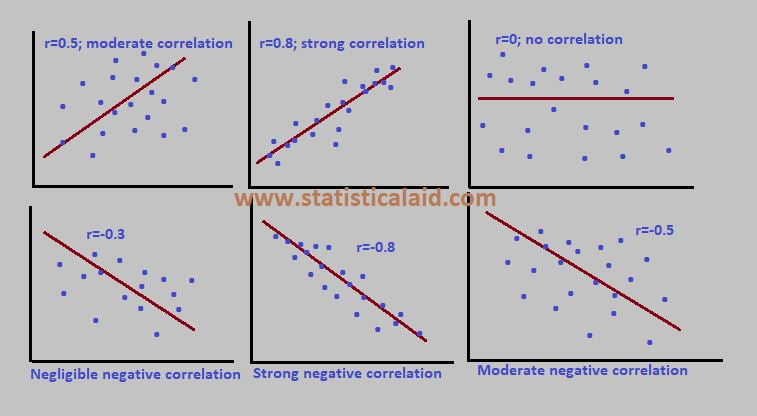
    • Definition: rs measures the degree to which two variables move together in a monotonic way using their ranks rather than raw values.
    • Use when: data are ordinal, relationship is monotonic (not necessarily linear), or when outliers / non-normality make Pearson’s r unreliable.
    • Interpretation: rs ≈ +1 strong monotonic increase; ≈ −1 strong monotonic decrease; ≈ 0 no monotonic association.

    🌍 Real-World Connection

    rs is common in survey analysis (Likert-scale responses), ecology (rank abundance), and other fields where the data naturally come as ranks or where robustness to extremes matters.

    📌 2. Step-by-step computation (explicit)

    1. Rank X values from 1 to n (smallest = 1). Average ranks for ties.
    2. Rank Y values the same way.
    3. Input the ranks for each value in the order of the normal values in your GDC table menu
    4. Calculate the Linear Regression of the model and use the r value to show correlation.

    📐 IA spotlight

    • For an IA choose ordinal or ranked data (e.g., customer preference ranks). Show hand-ranking for a subset, then use GDC for the full dataset and discuss ties and limitations.

    Worked example (no ties)

    Observations (n = 6):
    X: 10, 20, 30, 40, 50, 60
    Y: 8, 25, 22, 49, 53, 48

    Ranks: Rx = 1,2,3,4,5,6. Ry = 1,3,2,5,6,4. Then d and d2 computed and Σ d2 = 8.

    Substitute: rs = 1 − (6 × 8) / (6 (62 − 1)) = 1 − 48 / 210 ≈ 0.771 → strong positive monotonic association.

    📌 3. Interpreting results & practical checks

    • Magnitude: use context & sample size: |rs| > 0.8 often strong, 0.5–0.8 moderate, 0.3–0.5 weak, below 0.3 negligible (guideline).
    • Direction: sign tells increase/decrease in ranks.
    • Statistical significance: compute p-value using technology and interpret in context — small n reduces power.
    • Ties & robustness: rs is less sensitive to extreme values or outliers than Pearson’s r but many ties reduce discrimination and require tie-corrected methods.

    Correlation Analysis definition, formula and step by step procedure

    📝 Paper 1 Strategy

    • State method: explicitly say “Spearman’s rank correlation (rs)” and justify why it is chosen (ordinal / monotonic / robust to outliers).
    • Show ranks & Σ d2: if doing by hand show ranking steps (including average ranks for ties) — method marks are awarded even if numeric slip occurs later.
    • Interpret in context: one clear sentence: “rs ≈ 0.77 indicates a strong positive monotonic association; p = … (if given) shows whether association is statistically significant.”

    📌 4. Limitations & when not to use rs

    • Non-monotonic relationships: if relationship is curved (e.g., U-shape) rs may be near zero despite a clear association — use scatterplots first.
    • Large number of ties: reduces effective variability — prefer other analyses or use technology with tie corrections.
    • Causation: rs measures association only — it does not establish cause.

    🔍 TOK Perspective

    Consider how the choice of measure (Pearson vs Spearman) affects knowledge claims. What assumptions are hidden when we assert “strong correlation”?

    🌐 EE Focus

    An EE could compare rank-based correlations across countries (e.g., GDP rank vs life-satisfaction rank), discussing data quality, ties, and interpretation challenges.

    📌 Quick checklist before submitting

    • Have you shown ranks (and average ranks for ties) or stated you used technology?
    • Did you compute Σ d2 clearly and substitute into the formula (or state GDC was used)?
    • Did you include a contextual interpretation and mention statistical significance if asked?
  • 2.6 – Industrial/Employee Relations

    💼 UNIT 2.6: INDUSTRIAL/EMPLOYEE RELATIONS

    Understand the sources of workplace conflict and the strategies both employers and employees use to manage disputes. Explore collective bargaining, industrial action, and conflict resolution mechanisms in complex employment relationships.

    📌 Definition Table

    Term Definition
    Industrial relations The management of relationships and interactions between employers, employees, and their representatives (usually trade unions), particularly regarding employment disputes and conflict resolution.
    Industrial conflict An argument or disagreement between employers and employees (or their representatives) arising from disputes over working conditions, pay, benefits, job security, or other employment-related issues.
    Trade union An organisation of employees that collectively represents workers’ interests in negotiations with employers, providing a unified voice in collective bargaining and industrial disputes.
    Collective bargaining The process of negotiation between employers and employee representatives (usually trade unions) to agree on terms and conditions of employment, resulting in a collective agreement binding both parties.
    Industrial action Measures taken by employees (or their union) to halt, slow, or disrupt output in order to put pressure on management during an industrial dispute. Examples include strikes, work-to-rule, and go-slows.
    Arbitration A method of conflict resolution in which a third party (arbitrator) listens to both sides and imposes a legally binding decision to settle the dispute.
    Conciliation A method of conflict resolution in which a neutral third party (conciliator) helps both sides communicate and reach an agreed settlement, but the solution is not legally binding.

    📌 Understanding Industrial Relations and Workplace Conflict

    Industrial relations (also called employee relations or industrial/employee relations) refers to the management of relationships between employers and employees, with particular focus on collective arrangements, employment disputes, and conflict resolution mechanisms. Industrial relations are characterised by the interaction between employers, employees (often represented by trade unions), and the wider institutional environment that shapes employment practices. This unit concentrates on understanding what causes workplace conflict and the range of strategies available to both parties to manage disputes effectively.

    Industrial relations emerged as a distinct field of study during the Industrial Revolution, when large factories and mechanised production created vast numbers of employees working under a single employer. The need to manage relationships between large employers and organised workers gave rise to formal mechanisms for negotiation, dispute resolution, and conflict management. Today, industrial relations remains central to business success, as labour disputes, strikes, and poor employee-management relationships can have devastating effects on productivity, profitability, and reputation.

    📌 Common Sources of Industrial Conflict

    Industrial conflicts arise when employers and employees have incompatible objectives or interests. The most common sources of conflict include:

    • Pay and Financial Compensation: Disputes over wages, salary increases, and bonus structures remain the most frequent source of industrial conflict. Employees seek higher pay to maintain living standards and recognise their contribution; employers seek to control labour costs to remain competitive. When employees believe their compensation is unfair relative to others in similar roles, or insufficient to cover rising living costs, conflict often ensues.
    • Working Conditions and Hours: Employees desire reasonable working hours, safe working conditions, appropriate breaks, and work-life balance. Management, seeking to maximise productivity and efficiency, may resist limiting hours or investing in safety improvements. Disputes over shift patterns, mandatory overtime, health and safety standards, and flexibility in work arrangements frequently trigger conflict.
    • Job Security and Redundancy: Employees value job security and fear redundancy, particularly during economic downturns. When management announces job losses or restructuring, conflict is likely. Employees (and their unions) may resist redundancies or demand better redundancy terms, whilst management views restructuring as necessary for organisational survival.
    • Benefits and Fringe Benefits: Disputes often concern employee benefits such as paid leave, pension contributions, health insurance, parental leave, and other perks. Changes to benefit packages—particularly reductions—often trigger conflict as employees view these as earned and non-negotiable entitlements.
    • Organisational Control and Management Practices: Employees seek input in decisions affecting them and resist autocratic or oppressive management. Conflicts arise over management’s unilateral decisions regarding work methods, discipline policies, staffing changes, or changes to working practices without employee consultation. Employees’ desire for autonomy and influence often clashes with management’s drive for control and efficiency.
    • Other Sources: Additional sources include discrimination or unfair treatment, lack of career development opportunities, poor communication, organisational change, demotivation, cultural clashes between management and workforce, conflicts over training budgets, disagreements about piece-work rates or productivity standards, and differences in priorities between functional departments.

    🧠 Examiner Tip:

    In exam questions, distinguish between the stated reason for conflict and the underlying cause. For example, a strike may be announced as about wages, but the real issue might be management’s autocratic decision-making style or poor communication. Strong answers identify root causes—often related to management practices, fairness perceptions, or lack of consultation—not just surface issues. Use conflict mapping or fishbone diagrams to explore multiple layers of causation.

    📌 Employee Approaches to Industrial Conflict

    When conflict arises between employers and employees, workers have various strategies available to them. These approaches range from collaborative (seeking joint agreement) to confrontational (using pressure tactics). Understanding these methods is essential for analysing how conflicts develop and how they might be resolved.

    📌 1. Collective Bargaining

    Collective bargaining is the primary mechanism through which employees seek to resolve disputes with employers. It is a negotiation process between employers and employee representatives (typically trade unions) to agree on terms and conditions of employment, resulting in a collective agreement that binds both parties. Rather than individual employees negotiating separately with management, collective bargaining unites workers through union representation, increasing their negotiating power.

    • Advantages for Employees: Increased negotiating power (employers face unified employee representation); more effective outcomes (better terms than individual negotiations); protection of vulnerable workers; formal recognition of grievances; cost efficiency.
    • Disadvantages for Employees: Loss of individual flexibility; individual interests may be overlooked; union bureaucracy; time-consuming process.

    📌 2. Strike

    A strike is the most dramatic form of industrial action, where employees withdraw their labour entirely and refuse to work. Strikes halt all production or service delivery, creating severe pressure on employers to resolve the dispute. Strikes are typically used as a last resort when other negotiation methods have failed or when management refuses to negotiate in good faith.

    • Advantages for Employees: Maximum pressure on management; highly visible (media attention); demonstrates worker unity; often achieves concessions.
    • Disadvantages for Employees: Loss of income; risk of job loss; public backlash; damaged employer-employee relationships; unpredictable outcomes; legal risks in some jurisdictions.

    📌 3. Work-to-Rule

    Work-to-rule (also called “strict compliance”) is a form of industrial action where employees strictly adhere to their job description and contractual obligations, refusing to do any work beyond these formal requirements. This slows output and creates operational inefficiencies without the complete stoppage of a strike. Work-to-rule is an intermediate tactic between negotiation and full strike.

    • Advantages for Employees: Continued income; job security; creates pressure on employer; lower risk than strike.
    • Disadvantages for Employees: Less dramatic pressure; employer countermeasures; requires unity among workers; legal risks in some jurisdictions.

    📌 4. Go-Slow

    A go-slow is a form of industrial action where employees deliberately reduce their work pace or productivity. Unlike work-to-rule (which adheres to contract), go-slow involves intentional performance reduction. Employees continue working but at a slower pace, reducing output and impacting profitability whilst maintaining employment and income.

    • Advantages for Employees: Continued income whilst applying pressure; relatively safe; flexible escalation.
    • Disadvantages for Employees: Less visible than strikes; hard to enforce; may invite retaliation.

    💼 IA Spotlight:

    Research a recent industrial dispute (strike, work-to-rule, etc.) in your country or a nearby nation. Analyse the sources of conflict, the industrial actions taken, the effectiveness of each action, and the eventual resolution. Interview union representatives or workers if possible. Compare the predicted outcomes of the actions with what actually occurred. How accurate are textbook models in predicting real-world outcomes?

    📌 Employer Approaches to Industrial Conflict

    Employers, facing labour disputes or demands from employees, have various strategies available to them. These range from collaborative (seeking negotiated agreement) to confrontational (using pressure tactics and legal mechanisms). Employer strategies often aim to demonstrate that management will not be coerced and that employees should return to work on acceptable terms.

    📌 1. Lockout

    A lockout is the employer’s equivalent of a strike. Management temporarily closes the workplace and prevents employees from working and earning income, applying pressure to workers to accept management’s terms. Lockouts are most effective when management can absorb short-term losses or when the employer believes workers will suffer more financial hardship than the organisation.

    • Advantages for Employers: Demonstrates resolve; creates symmetrical pressure; control of timing.
    • Disadvantages for Employers: No output produced; damages relationships; potential public backlash; customer impact.

    📌 2. Threats of Redundancy

    Management may threaten employees with redundancy (job loss) to coerce them into accepting unfavourable terms or abandoning industrial action. The threat is particularly effective when unemployment is high or when workers lack alternative employment opportunities.

    • Advantages for Employers: Powerful psychological impact; credible if organisation genuinely struggling; can be applied selectively.
    • Disadvantages for Employers: Relationship damage; loss of talent; legal risks; reduced morale among remaining employees.

    📌 3. Unilateral Changes to Contract or Working Conditions

    Management may unilaterally alter terms and conditions of employment—changing hours, reducing benefits, modifying job responsibilities, or implementing new work methods—without employee consent. This approach is only viable if such changes are legally permitted under employment law.

    • Advantages for Employers: Demonstrates managerial prerogative; cost control; efficiency improvements.
    • Disadvantages for Employers: Illegal in many contexts; high risk of escalated conflict; talent loss; relationship deterioration.

    📌 4. Closure or Relocation

    Management may threaten to permanently close a facility or relocate operations to another location (potentially another country with lower labour costs or less unionisation). This is often the ultimate threat, as it eliminates all jobs at that location.

    • Advantages for Employers: Maximises pressure; credible if business circumstances justify relocation; achieves cost reduction.
    • Disadvantages for Employers: Most extreme relationship damage; severe public backlash; relocation costs; loss of expertise; legal issues.

    📌 5. Using Alternative Workers (Strikebreakers)

    During a strike or work-to-rule, management may hire temporary replacement workers (sometimes called “strikebreakers” or “scabs”) to maintain partial operations. This undermines the strike’s effectiveness by demonstrating that production can continue without striking workers.

    • Advantages for Employers: Maintains production; weakens strike credibility; psychological impact on strikers.
    • Disadvantages for Employers: Extreme relationship damage; quality and training issues; operational inefficiency; safety risks; legal issues.

    📌 6. Public Relations Campaigns

    Large organisations with substantial financial resources may launch public relations campaigns to influence public opinion. If a strike inconveniences the public (e.g., transport workers), management may use media to portray strikers as unreasonable and harming innocent citizens, shifting public sympathy from workers to management.

    • Advantages for Employers: Shifts public opinion; pressure on government; demoralises workers.
    • Disadvantages for Employers: Expensive and time-consuming; manipulation may backfire; limited effectiveness if workers have legitimate grievances.

    🧠 Examiner Tip:

    Strong exam answers evaluate both the short-term effectiveness and long-term consequences of employer tactics. Threats of redundancy or closure may pressure workers into accepting unfavourable terms, but at the cost of lasting relationship damage and loss of talent. Consider context: some tactics (lockouts, strikebreakers) may be illegal in certain jurisdictions or inconsistent with collective agreements.

    📌 Conflict Resolution Mechanisms and Approaches

    When industrial conflict arises and pressure tactics are in play, both parties usually seek resolution. Beyond direct negotiation or industrial action, there are formal mechanisms designed to bring resolution. These include third-party interventions (mediation, conciliation, arbitration) and innovative approaches such as employee participation schemes.

    📌 1. Conciliation

    Conciliation involves a neutral third party (conciliator) who facilitates dialogue between employers and employees/unions. The conciliator helps both sides communicate, understand each other’s positions, and work toward a mutually acceptable agreement. Crucially, the conciliator proposes solutions, but these are not legally binding—both parties must agree to accept the proposed solution.

    • Advantages: Non-binding allows flexibility; neutral facilitator; preserves relationships; speedier than litigation; cost-effective.
    • Disadvantages: Non-binding solutions may not be accepted; requires willingness to negotiate; time-consuming; depends on conciliator’s skill.

    📌 2. Arbitration

    Arbitration involves a neutral third party (arbitrator)—often a judge, expert, or appointed official—who listens to both sides’ arguments and imposes a legally binding decision to resolve the dispute. The arbitrator’s decision is final and enforceable by law. Arbitration is more formal and adversarial than conciliation.

    • Advantages: Binding resolution guarantees finality; expert decision-making; speedier than litigation; formality reduces uncertainty; appropriate when parties deadlocked.
    • Disadvantages: Damages relationships; loses voluntary agreement element; expensive; reduces negotiation incentive; arbitrator may not reflect either party’s preferences.

    📌 3. Industrial Democracy and Employee Participation

    Employee participation (also called industrial democracy or co-determination) involves employees having formal involvement in decision-making that affects them. This is both a conflict prevention mechanism (by involving workers in decisions before they become sources of conflict) and a conflict resolution approach (by giving workers genuine voice in resolving disputes).

    Forms of Employee Participation: Worker councils or committees; board-level representation; consultation requirements; co-determination; worker ownership.

    • Advantages: Prevents conflict; improves decisions; increases motivation; greater legitimacy; faster implementation; reduces industrial action.
    • Disadvantages: Slows decision-making; dilutes management authority; ineffective in non-participatory cultures; can perpetuate inequalities; may not resolve fundamental disagreements.

    📌 4. No-Strike Agreements

    A no-strike agreement (or no-strike clause) is a contractual commitment by employees/unions that they will not undertake industrial action (strikes, work-to-rule, go-slows) during the term of the collective agreement. In exchange, management typically commits to arbitration or another binding dispute resolution mechanism if conflicts arise.

    • Advantages: Guarantees industrial peace; enables long-term planning; may result in better terms for workers; demonstrates mutual commitment.
    • Disadvantages: Reduces worker leverage; requires strong trust; can be breached; requires binding dispute resolution.

    📌 5. Single-Union Agreements

    A single-union agreement is an accord in which management recognises only one trade union as the sole representative of all workers (or all workers in a particular category). This simplifies management’s negotiation process and increases the union’s power, as it monopolises worker representation.

    • Advantages: Simplified negotiation; consistent standards; reduced coordination problems; strengthens worker voice.
    • Disadvantages: Reduces worker choice; one-size-fits-all agreements; can entrench inefficient union; may exclude smaller occupational groups.

    🔍 TOK Perspective:

    Different societies approach industrial relations differently based on their cultural values and assumptions. North European countries emphasise cooperation and worker participation; Anglo-American countries traditionally emphasised adversarial negotiation; Japan emphasises consensus and long-term relationships. How do these different worldviews shape what constitutes a “fair” or “effective” resolution mechanism? Is arbitration more “just” than democratic participation, or vice versa? Are these judgments culturally determined or objective?

    📌 Factors Influencing Industrial Conflict Outcomes

    The outcome of industrial disputes—who “wins” or what compromise is reached—depends on multiple factors beyond the specific positions of management and workers. Understanding these contextual factors is essential to analysing industrial relations cases.

    📌 Economic Context

    State of the economy: During economic downturns and high unemployment, workers have less bargaining power (fewer alternative jobs available); management can credibly threaten redundancy. During economic booms with low unemployment, workers have stronger bargaining power (easy to find alternative employment); management must offer better terms to retain staff. Strong demand for products/services increases management’s willingness to concede to worker demands; weak demand reduces willingness. Industry-specific factors matter: sectors with high profit margins can afford higher wages; low-margin sectors face pressure to minimise labour costs.

    📌 Union Strength and Structure

    Union membership and density: Higher union membership increases union bargaining power. Union leadership’s experience and negotiation skills significantly affect outcomes. Internal unity within the union—if members are divided about strike action or union demands, negotiating position weakens. Multiple competing unions can fragment worker power; single unions may be stronger. Union resources (strike funds, experienced negotiators, legal expertise) enable longer strikes and more sophisticated negotiation.

    📌 Industry Characteristics

    Impact of strikes on the industry: In industries where strikes cause severe disruption (utilities, transport, healthcare), strikes are very effective. In industries where production can continue with temporary workers or where customer demand can be deferred, strikes are less effective. Capital intensity: Capital-intensive industries suffer greatly from strikes (idle equipment loses value); labour-intensive industries may recover more quickly. Availability of substitutes: If customers can easily substitute products or services, strikes strengthen worker position.

    📌 Legal and Regulatory Environment

    Laws protecting strike action: In jurisdictions with strong protections for strike action, strikes are more effective. In jurisdictions with weak protections, management can more easily undermine strikes. Requirement to engage in collective bargaining strengthens worker position. Arbitration availability can reduce likelihood of strikes. Employment protection laws: Strong protections strengthen worker position; weak protections weaken it.

    📌 Government Intervention

    Political climate: Pro-labour governments may intervene to support worker interests; pro-business governments may support management. If a strike threatens national economy or public safety, government may forcibly end it or force arbitration. Government mediators and conciliators can influence dispute resolution. Public opinion matters: If government believes public opinion supports workers, it may lean toward workers; if public opinion turns against strikers, government may support management.

    📌 Organisational Factors

    Management resolve and financial position: If management is determined to resist and can financially sustain the conflict, outcomes favour management. If management is weak or financially fragile, outcomes favour workers. Prior relationship: Organisations with history of cooperative labour relations may resolve conflicts more quickly. Presence of alternative sources of labour: If management can easily hire replacement workers, strike effectiveness decreases. International operations: Multinationals can relocate production to other countries, weakening local worker position.

    📌 Social and Cultural Factors

    Cultural attitudes toward unions and strikes: In cultures with strong union traditions (Scandinavia, Germany), strikes may be respected and accepted; in cultures hostile to unions, strikes may be vilified. Public sympathy for workers’ demands: If the public views worker demands as fair, strikes gain public support; if demands seem excessive, public turns against strikers. Media coverage: How media portrays the dispute significantly influences public and government opinion.

    🌍 Real-World Connection:

    In the UK, Unite the Union organised workers at Amazon warehouses, seeking improved wages and working conditions. Despite strikes and industrial action, outcomes were mixed. Amazon had significant advantages: abundant supply of replacement workers, capacity to absorb strike costs, and legal protections allowing it to hire replacement workers. Workers had challenges: dispersed across multiple locations, limited strike fund, and public perception of Amazon as innovative company. The dispute shows how structural factors (labour market conditions, legal environment, company resources) shape conflict outcomes more than the intensity of demands or worker solidarity alone.

    📌 Key Takeaways and Exam Application

    Unit 2.6 focuses on understanding workplace conflict and the mechanisms used to manage it. For exam success, ensure you can:

    • Define and identify sources of industrial conflict with root cause analysis.
    • Describe employee approaches: collective bargaining, strikes, work-to-rule, and go-slows.
    • Describe employer approaches: lockouts, redundancy threats, unilateral changes, closure, alternative workers, PR campaigns.
    • Explain conflict resolution mechanisms: conciliation vs. arbitration, employee participation, no-strike agreements, single-union arrangements.
    • Evaluate effectiveness of strategies considering both short-term and long-term consequences.
    • Understand contextual factors shaping conflict outcomes (economic conditions, union strength, industry characteristics, legal environment).
    • Apply Unit 2.6 concepts to analyse industrial disputes in case studies.

    🧠 Common Exam Mistakes to Avoid:

    • Treating strikes as always effective: Effectiveness depends on industry, economic context, and availability of alternatives.
    • Ignoring long-term consequences: Lockouts or threats may “win” short-term battles but damage relationships long-term.
    • Assuming all workers equally motivated: Response varies by economic necessity and personal beliefs.
    • Overlooking legal/regulatory context: Industrial relations are heavily shaped by national laws.

    ❤️ CAS Link:

    Research labour rights in your country and a country very different from yours. What rights do workers have to strike, unionise, and collectively bargain? How do these differences shape industrial relations? If possible, interview a union representative, labour lawyer, or workers. Reflect on what you learned about fairness, power, and economic systems.

    💼 IA Spotlight:

    Use Unit 2.6 concepts as a framework for an IA. Analyse an industrial dispute (historical or current). What were the sources of conflict? Which approaches did each side use? What factors (economic, legal, union strength) shaped outcomes? Interview participants if possible. Compare predicted outcomes (based on Unit 2.6 theory) with actual outcomes. Where did theory predict well, and where did it fail to capture complexity?

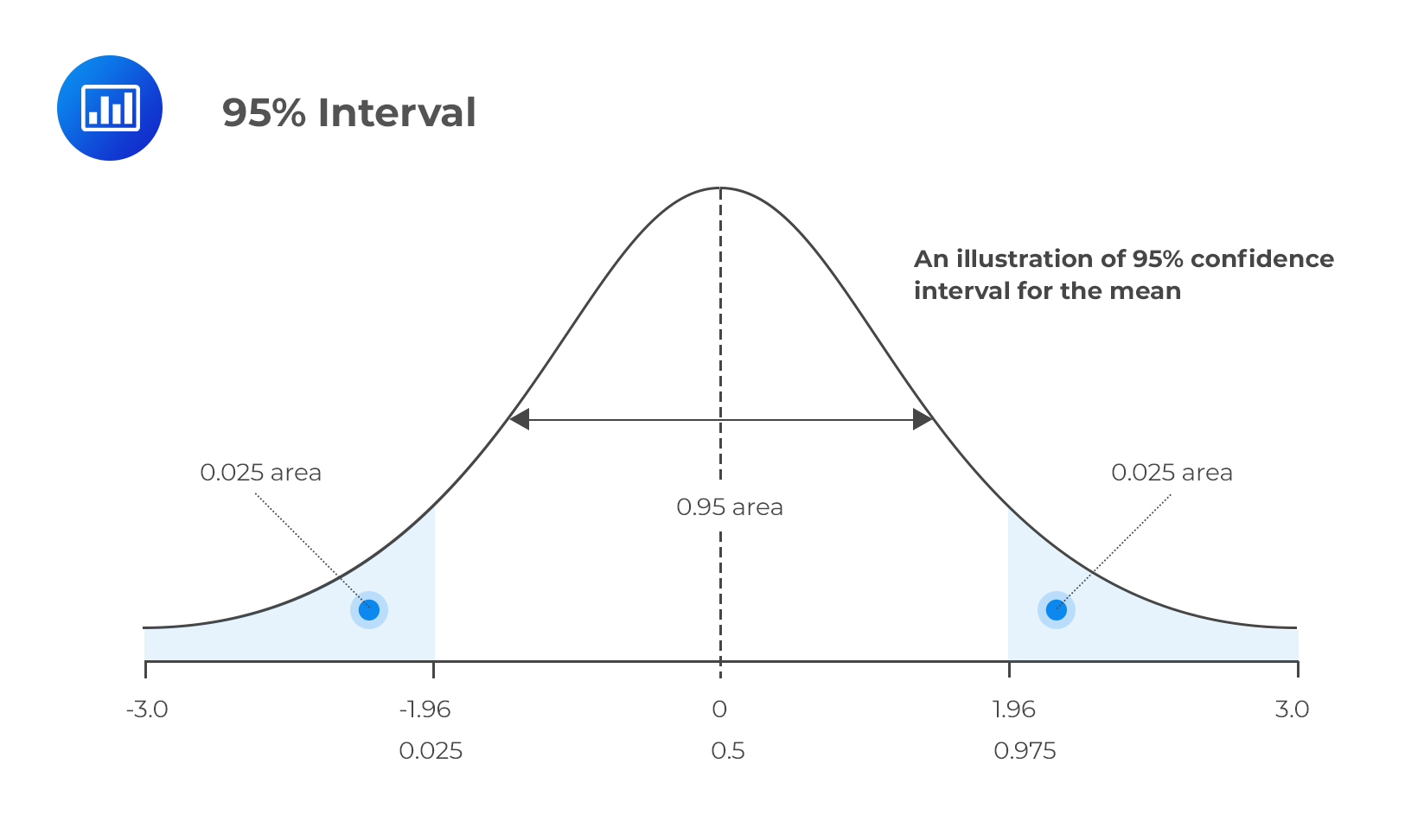
  • 2.5 – Organizational Culture

    💼 UNIT 2.5: ORGANIZATIONAL CULTURE

    “Culture is how we do things around here.” – Understand the invisible power of shared values, beliefs, and norms that shape employee behavior and organizational performance.

    📌 Definition Table

    Term Definition
    Organizational Culture The system of shared beliefs, values, norms, and habits within an organization that guides the behavior of its members.
    Norms The unwritten rules and expected behaviors that govern day-to-day interactions within the workplace (e.g., dress code, communication style).
    Power Culture A culture where power is concentrated in a central figure or small group; decisions are made quickly with few rules.
    Role Culture A culture based on rules, procedures, and clearly defined job descriptions; highly bureaucratic and stable.
    Task Culture A culture focused on completing specific projects or solving problems; relies on teamwork and expertise rather than hierarchy.
    Person Culture A culture where the organization exists to serve the individuals within it; common in professional partnerships (lawyers, architects).
    Culture Clash Conflict arising when different cultural values and beliefs encounter each other, often occurring during mergers and acquisitions.

    📌 Understanding Organizational Culture

    Organizational culture is often described as the “personality” of a business. It determines how employees interact, how decisions are made, and how the organization responds to change. It is formed by the founder’s vision, the organization’s history, its leadership style, and the industry environment.

    Edgar Schein’s Three Levels of Culture:

    • Artifacts (Surface): Visible elements like dress code, office layout, logos, and rituals. Easy to see but hard to interpret.
    • Espoused Values (Middle): The stated strategies, goals, and philosophies (e.g., mission statements, “we value integrity”).
    • Basic Assumptions (Deep): Unconscious, taken-for-granted beliefs about how the world works. These are the hardest to change.

    📌 Charles Handy’s Types of Culture (The Gods of Management)

    Charles Handy classified organizational cultures into four types, each represented by a diagram and a Greek god. Understanding these helps you analyze how different businesses operate.

    1. Power Culture (The Web)

    Power is concentrated in a central figure (the spider in the web). Rays of power spread out from the center.

    • Characteristics: Few rules, swift decision-making, relies on trust and personal communication.
    • Context: Common in small businesses, start-ups, or organizations with charismatic autocratic leaders.
    • Risk: Dependent on the central figure; if they fail, the organization fails.

    2. Role Culture (The Greek Temple)

    Based on functions and specialities (the pillars of the temple), topped by a pediment of senior management.

    • Characteristics: Highly bureaucratic, clear job descriptions, many rules and procedures. Position power is more important than expert power.
    • Context: Large government agencies, banks, traditional manufacturing firms.
    • Risk: Slow to adapt to change; “that’s not my job” mentality.

    3. Task Culture (The Net)

    A matrix or net structure where teams are assembled to solve specific problems.

    • Characteristics: Focus on results (getting the job done), expertise is valued over rank, flexible and dynamic team structures.
    • Context: Tech companies, advertising agencies, project management firms.
    • Risk: Can be expensive if teams are not productive; difficult to monitor and control.

    4. Person Culture (The Constellation)

    The organization exists only to serve the individuals within it. There is no collective goal other than facilitating the work of the individuals.

    • Characteristics: Minimal hierarchy, individuals are autonomous, the organization provides back-office support.
    • Context: Law firms, architects, university faculties, medical partnerships.
    • Risk: Very difficult to manage or lead; individuals may leave and take clients with them.

    🧠 Examiner Tip:

    When analyzing culture, avoid simply labelling it (e.g., “This is a role culture”). Instead, explain why (evidence of rules, hierarchy) and consequences (slow decision-making, stability). Also, recognise that most large organizations are a mix of cultures (e.g., R&D might be Task culture while Finance is Role culture).

    📌 Cultural Clashes

    Cultural clashes occur when different values and beliefs conflict. This is a major reason for the failure of Mergers and Acquisitions (M&A).

    Common Causes of Clashes:

    • Growth: As a startup grows into a large firm, the informal “Power” culture may clash with the need for a “Role” culture (procedures and rules).
    • Mergers & Acquisitions: Combining a fast-paced, risk-taking firm with a conservative, bureaucratic one creates friction.
    • Leadership Changes: A new CEO bringing a new vision often faces resistance from the “old guard” protecting the existing culture.

    Consequences of Clashes:

    • Low morale and motivation.
    • High staff turnover (valuable talent leaves).
    • Decreased productivity due to confusion and resistance.
    • Failure of the merger to achieve synergies.

    🌍 Real-World Connection: Uber’s Culture Shift

    Under founder Travis Kalanick, Uber had an aggressive “toe-stepping” culture that prioritised growth at all costs. This led to scandals, high turnover, and legal issues. When Dara Khosrowshahi took over as CEO, he had to actively dismantle this toxic culture and instill new values of integrity and collaboration. This demonstrates how culture is both a liability (when toxic) and a target for strategic change.

    📌 Strategies for Changing Culture

    Changing culture is notoriously difficult and slow because it involves changing deeply held beliefs and habits. However, it can be done through:

    • New Leadership: Replacing senior managers to signal a break from the past.
    • New Rituals and Routines: Changing meeting formats, dress codes, or office layouts.
    • New Reward Systems: Changing what gets rewarded (e.g., rewarding teamwork instead of individual sales).
    • Training: Educating staff on new values and expected behaviors.

    🔍 TOK Perspective:

    Is culture something management “has” (a variable to be manipulated) or something the organization “is” (an emergent property)? If culture emerges organically from social interaction, can managers truly control it, or can they only influence it? This questions the limits of management authority and the nature of social groups.

    📌 Key Takeaways for Unit 2.5

    • Culture is the “DNA” of the organization—invisible but powerful.
    • Handy’s 4 Types: Power (Zeus), Role (Apollo), Task (Athena), Person (Dionysus).
    • Culture clashes are a primary cause of M&A failure.
    • Changing culture requires a multi-pronged approach (leadership, rewards, structure) and takes time.

    💼 IA Spotlight:

    Investigating culture is a great IA topic. You can use Handy’s framework to diagnose the current culture of a firm and evaluate whether it supports their objectives. Use surveys or interviews to gather data on “how things are done around here” (artifacts, values) and compare it to the leadership’s stated vision.

    📝 Paper 2 Tip:

    Culture is one of the 6 key concepts (CUEGIS) and appears frequently in Section C essays. You must be able to discuss how culture changes (due to innovation, globalization, or strategy) and how culture impacts other functions (e.g., a risk-averse culture hampers R&D innovation). Always link culture to Strategy: “Culture eats strategy for breakfast” (Peter Drucker)—meaning a brilliant strategy will fail if the culture doesn’t support it.

  • 2.4 – Motivation & Demotivation

    💼 UNIT 2.4: MOTIVATION AND REMUNERATION

    Understand what drives employees to perform. Explore motivation theories and how organisations use pay and non-financial rewards to engage staff and improve performance.

    📌 Definition Table

    Term Definition
    Motivation The internal drive that compels a person to take action; the desire and willingness to work towards achieving goals.
    Intrinsic motivation Motivation that comes from within the individual; the satisfaction and fulfilment derived from the work itself.
    Extrinsic motivation Motivation that comes from external rewards or incentives; motivation driven by money, status, recognition, or avoidance of punishment.
    Remuneration The total compensation an employee receives from an employer, including salary, wages, bonuses, benefits, and other perks.
    Job enrichment The process of making work more interesting and challenging by adding variety, responsibility, and opportunities for personal growth.
    Job enlargement Increasing the scope of a job by adding more tasks at the same skill level, increasing variety without necessarily increasing responsibility.
    Job satisfaction The extent to which employees feel fulfilled, content, and positive about their work and working environment.

    📌 Understanding Motivation

    Motivation is the internal drive that compels people to act. In an organisational context, motivation determines whether employees work with enthusiasm and commitment or reluctance and indifference. Motivated employees are more productive, creative, engaged, and likely to stay with the organisation. Understanding motivation is therefore fundamental to effective people management.

    📌 Frederick Taylor and Scientific Management

    Frederick Taylor, an American engineer working in the early 1900s, pioneered an approach called Scientific Management based on a particular theory of motivation: workers are primarily motivated by money. Under this assumption, higher wages should produce higher productivity.

    Taylor’s system involved:

    • Breaking work into small, repetitive tasks: Complex work was decomposed into simple, repetitive components that unskilled workers could perform.
    • Time and motion studies: Engineers timed how long each task took and studied movements to identify the most efficient way to perform each task.
    • Piece-rate payment: Workers were paid based on output (pieces produced), creating financial incentive to work faster.
    • Separation of planning and execution: Managers planned the work and controlled the method; workers simply executed instructions.
    • Clear hierarchy and authority: Strong management control ensured workers followed the prescribed methods.

    Advantages:

    • Dramatically increased productivity in manufacturing, sometimes by 300-400%.
    • Clear, standardised methods ensured consistency.
    • Lower wages needed because productivity gains were so large.
    • Made it easy to manage unskilled workers.

    Disadvantages and Limitations:

    • Overlooked human psychology: Assumed workers are only motivated by money and ignored psychological and social needs.
    • Monotonous, meaningless work: Repetitive work became tedious, leading to boredom, stress, and alienation.
    • Demotivated workforce: Lack of autonomy, skill use, and meaningful input demotivated many workers.
    • High labour turnover: Workers left for other jobs, increasing recruitment and training costs.
    • Poor industrial relations: Workers often resented the system, leading to strikes and conflict with management.
    • Unsuitable for knowledge work: This approach doesn’t work for jobs requiring creativity, judgement, or complex problem-solving.

    🧠 Examiner Tip:

    While Taylor is often criticised, it’s important to understand his context. In early 1900s manufacturing, productivity gains of 300%+ were transformative. Many workers preferred piece-rate payment to fixed wages. The approach worked for routine, manual work in stable environments. Modern motivation theory has moved beyond Taylor, but his insights about linking pay to performance remain relevant in appropriate contexts.

    📌 Maslow’s Hierarchy of Needs

    Abraham Maslow, an American psychologist, proposed in 1943 that humans have a hierarchy of needs that drives behaviour. Lower-level needs must be satisfied before higher-level needs become motivating. This framework fundamentally changed thinking about motivation.

    1. Physiological Needs (Base of pyramid): Food, water, warmth, sleep, shelter. These are fundamental survival needs. In an organisational context, this means adequate wages to afford housing, food, and basic necessities. An employee worried about paying rent cannot be motivated by promises of career development; their immediate concern is basic survival.

    2. Safety Needs: Security, stability, predictability, protection from harm. In the workplace, this includes job security, safe working conditions, fair treatment, and clear rules. Workers need to trust that their job is secure and they won’t be treated unfairly.

    3. Social Needs (Belonging): Friendship, community, belonging to a group, love, connection with others. Humans are social creatures; we seek meaningful relationships. In the workplace, this means team membership, positive relationships with colleagues, feeling part of a community.

    4. Esteem Needs: Respect, recognition, achievement, status, self-respect. People need to feel valued, competent, and respected. In the workplace, this means recognition for work, opportunities to develop skills, and respect from colleagues and managers.

    5. Self-Actualisation (Peak of pyramid): Fulfilling one’s potential, personal growth, creativity, achieving meaning and purpose. This is about becoming the best version of oneself. In the workplace, this means challenging work, opportunities to develop skills, and the chance to make a meaningful contribution.

    Progression principle: People progress up the hierarchy. Once a lower-level need is satisfied, it no longer motivates; attention moves to the next level. A person who has secure housing and food (physiological and safety needs met) is no longer motivated primarily by higher wages; they seek belonging and recognition.

    Regression principle: If lower-level needs become threatened, people regress. A person who is made redundant and loses job security (safety need threatened) will become less interested in career advancement (esteem and self-actualisation) and more focused on finding new employment.

    Advantages:

    • Intuitive and easy to understand.
    • Explains why money alone doesn’t motivate satisfied employees.
    • Suggests practical implications: job security matters; recognition matters; opportunities for growth matter.
    • Recognises non-financial motivators.

    Disadvantages and Limitations:

    • Rigid hierarchy: Not everyone follows this progression. Some people prioritise self-actualisation over safety; artists may sacrifice security for creative expression.
    • Cultural differences: Hierarchy varies by culture. Collectivist cultures prioritise belonging; individualist cultures prioritise esteem and self-actualisation.
    • Limited empirical support: Research doesn’t strongly support the strict hierarchy; multiple needs can motivate simultaneously.
    • Difficulty in measuring: How do we know when a need is “satisfied”? Self-actualisation is particularly vague.

    💼 IA Spotlight:

    Survey employees at a local organisation about what motivates them. Do their responses follow Maslow’s hierarchy? Are there differences between entry-level and senior staff? Between full-time and part-time workers? This tests whether Maslow’s theory actually explains motivation in a real setting.

    [Image of Maslows hierarchy of needs pyramid diagram]

    📌 Herzberg’s Two-Factor Theory (Motivation-Hygiene Theory)

    Frederick Herzberg, conducting research in the 1960s, discovered something surprising: the opposite of job satisfaction is not job dissatisfaction; it is neutral/not satisfied. This led to his two-factor theory distinguishing between motivators and hygiene factors.

    Hygiene Factors (Dissatisfiers): These are factors that, if absent or inadequate, cause dissatisfaction. However, providing them does not create satisfaction; it merely removes dissatisfaction.

    • Pay: Poor pay causes resentment; good pay is expected but doesn’t motivate.
    • Working conditions: Uncomfortable, unsafe conditions cause dissatisfaction; comfortable conditions are expected.
    • Job security: Fear of redundancy causes stress; secure employment is baseline.
    • Company policies and procedures: Unfair or bureaucratic policies frustrate; clear, fair policies are expected.
    • Relationships with management: Poor management causes unhappiness; fair treatment is expected.
    • Supervision: Poor supervision frustrates; good supervision is the standard.

    Key insight: Improving hygiene factors removes dissatisfaction but doesn’t create motivation. An organisation with excellent pay, working conditions, and job security still won’t have motivated employees unless the work itself is motivating.

    Motivators (Satisfiers): These are factors that, when present, create genuine motivation and satisfaction. They relate to the work itself, not the work environment.

    • Achievement: Accomplishing something meaningful, seeing results from effort.
    • Recognition: Being acknowledged and appreciated for good work.
    • Responsibility: Having autonomy and control over one’s work, being trusted to make decisions.
    • Advancement: Opportunities for career progression and promotion.
    • The work itself: Finding the work interesting, challenging, and meaningful.
    • Growth: Opportunity to develop new skills and expand capabilities.

    Key insight: To create genuine motivation, organisations must focus on the work itself—making it more challenging, interesting, and meaningful. This is where job enrichment and job enlargement strategies emerge from Herzberg’s theory.

    Implications for Management: Herzberg’s theory suggests a two-step approach: (1) Eliminate dissatisfaction by ensuring hygiene factors are adequate—fair pay, safe conditions, job security, and reasonable policies. (2) Create motivation by designing jobs to be intrinsically motivating with challenging work, recognition opportunities, autonomy, skill development, and meaningful contribution.

    Advantages:

    • Explains why pay raises often don’t increase motivation significantly.
    • Emphasises job design as a motivational tool.
    • Distinguishes between removing dissatisfaction and creating motivation (two different things).
    • Practical implications for HR practice.

    Disadvantages and Limitations:

    • Research methodology: Herzberg’s original research only asked what caused satisfaction and dissatisfaction; bias toward remembering positive events may have skewed results.
    • Individual differences: Not all people are motivated by the same factors. Some workers might genuinely be motivated by pay; others by different factors.
    • Cultural differences: Some cultures may prioritise job security (hygiene) over achievement and recognition.
    • Oversimplification: The two-factor model doesn’t capture the complexity of motivation; the distinction isn’t always clear.

    🔍 TOK Perspective:

    Both Maslow and Herzberg developed their theories through observation and research, yet both have limitations and critics. This raises epistemological questions: How do we determine what is true about human motivation? Are theories universal or culturally specific? Can individual motivation be generalised into broad theories? What counts as evidence?

    [Image of Herzbergs two factor theory diagram]

    📌 Job Design Strategies: Making Work More Motivating

    Based on motivation theory, particularly Herzberg’s work, organisations use various job design strategies to make work more intrinsically motivating.

    Job Enlargement: Adds more tasks to a job at the same skill level, increasing variety but not necessarily responsibility or challenge. For example, instead of a data entry clerk typing numbers all day, they might also handle data verification, formatting, and basic analysis. The goal is to reduce monotony through variety.

    Advantages:

    • Reduces boredom through task variety.
    • Relatively easy to implement.
    • Can improve skill development.

    Disadvantages:

    • Still doesn’t address lack of control or responsibility.
    • If tasks are still routine and mundane, variety alone may not increase motivation significantly.

    Job Enrichment: More ambitious than enlargement. It adds responsibility, autonomy, and decision-making authority to a job, allowing employees greater control over their work. A customer service representative is given authority to resolve complaints up to a certain value without manager approval, or a factory worker is given responsibility for quality control and equipment maintenance, not just operating it.

    Advantages:

    • Addresses Herzberg’s key motivators: responsibility, autonomy, achievement.
    • Increases motivation and job satisfaction significantly.
    • Often improves quality and reduces errors (employees care more when empowered).
    • Can reduce manager workload if employees make more decisions themselves.

    Disadvantages:

    • Requires employees capable of handling greater responsibility.
    • Needs manager training in delegation and trust.
    • Risk of inconsistent decisions if guidelines aren’t clear.
    • Some employees may feel anxious with greater responsibility.

    Job Rotation: Involves moving employees through different roles or departments, giving them exposure to various aspects of the organisation and developing versatility. An employee might spend 6 months in operations, 6 months in quality control, and 6 months in customer service.

    Advantages:

    • Reduces monotony and boredom.
    • Develops diverse skills and understanding of the whole business.
    • Identifies talented employees suited for promotion.
    • Increases employee retention by showing career development opportunities.

    Disadvantages:

    • Frequent moves can reduce deep expertise in any one area.
    • Training costs increase as people learn new roles.
    • Some employees may prefer to stay in one role and become experts.

    ❤️ CAS Link:

    If you work part-time or have access to a local organisation, observe a repetitive job and propose job enrichment ideas. How could the role include more autonomy, variety, or responsibility? What would be the challenges? This practical engagement shows how motivation theory translates to workplace action.

    📌 Financial Remuneration Systems

    While motivation theory suggests money alone doesn’t motivate (especially for satisfied employees), pay systems are still important as hygiene factors and can support motivation when linked to performance.

    Time-based Pay (Salary/Hourly): Employees receive fixed payment for time spent working, regardless of output. This provides security and predictability.

    Advantages:

    • Simple to administer.
    • Provides income security for employees.
    • Appropriate for jobs where output is hard to measure (e.g. research, management).

    Disadvantages:

    • Doesn’t incentivize high performance or productivity.
    • May demotivate high performers who are paid the same as low performers.

    Piece-rate Pay: Employees are paid per unit produced or per task completed. This directly links pay to output.

    Advantages:

    • Clearly links effort to reward.
    • High performers can earn significantly more.
    • Directly incentivises productivity.

    Disadvantages:

    • Can incentivise quantity at the expense of quality.
    • Income is unpredictable; may cause stress and anxiety.
    • May demotivate lower-performing workers who can’t earn as much.
    • Works only where output is easily measured and independent.

    Performance-Related Pay (PRP) and Bonuses: Employees receive base pay plus bonuses or pay increases based on achieving performance targets or goals. This balances security (base pay) with incentive (bonus).

    Advantages:

    • Aligns individual effort with organisational objectives.
    • Provides income security (base pay) while incentivising performance.
    • Can be applied to all job levels, including management.

    Disadvantages:

    • Complex to design fair, measurable targets.
    • Can demotivate if targets seem impossible or if evaluation is unfair.
    • May focus effort on measured targets while neglecting unmeasured but important work.
    • Can create competitive, rather than collaborative, culture.

    Profit-Sharing and Employee Share Schemes: Employees receive a share of company profits or are given shares in the company, creating alignment between employee and company success.

    Advantages:

    • Creates shared interest in company success.
    • Increases employee engagement and sense of ownership.
    • Can improve retention as employees become invested.

    Disadvantages:

    • Individual employee may feel limited impact on company profits.
    • Employees bear financial risk if company performs poorly.
    • Share value fluctuates; provides unpredictable returns.

    🧠 Examiner Tip:

    When evaluating a pay system, consider: Does it align with company objectives? Does it incentivise the right behaviour (productivity, quality, teamwork)? Is it fair? Is it motivating for employees at all levels? No single system is ideal for all situations; choice depends on the nature of work, company culture, and strategic priorities.

    📌 Non-Financial Rewards and Motivation

    Motivation theory highlights that money, while important, is only one factor. Organisations increasingly use non-financial rewards:

    • Recognition: Public acknowledgement of achievement, awards, “Employee of the Month” programmes. Addresses esteem needs.
    • Opportunities for development: Training, mentoring, challenging projects. Addresses self-actualisation and growth needs.
    • Flexible working: Remote work, flexible hours, compressed work weeks. Improves work-life balance and autonomy.
    • Career progression: Clear pathways for advancement and promotion. Addresses esteem and self-actualisation needs.
    • Empowerment: Delegating decision-making authority and responsibility. Addresses autonomy and esteem needs.
    • Team cohesion activities: Team building, social events, collaborative projects. Addresses belonging needs.
    • Work meaning: Helping employees understand how their work contributes to organisational mission. Addresses self-actualisation needs.

    💼 IA Spotlight:

    Survey employees at a local organisation about what most motivates them: Pay increases? Recognition? Development opportunities? Flexible working? Career advancement? Compare responses by department, age, or tenure. This tests whether motivation theory matches reality in a specific organisation.

    📌 Key Takeaways for Unit 2.4

    Motivation is multifaceted and complex. For exams, be able to:

    • Define motivation and distinguish intrinsic from extrinsic motivation.
    • Explain Taylor’s Scientific Management approach and its limitations.
    • Describe Maslow’s Hierarchy of Needs with examples in workplace contexts.
    • Explain Herzberg’s Two-Factor Theory and distinguish motivators from hygiene factors.
    • Evaluate job enrichment, job enlargement, and job rotation strategies.
    • Compare different pay systems (time-based, piece-rate, performance-related).
    • Analyse how combinations of financial and non-financial rewards can motivate employees.
    • Apply motivation theory to case studies, explaining why employees might be demotivated and what interventions might help.

    🌍 Real-World Connection:

    Google uses comprehensive motivation strategies: competitive pay (hygiene factor), but also job enrichment (20% time for personal projects—addressing autonomy and self-actualisation), professional development, flexible working, recognition systems, and meaningful work on challenging problems. This multi-faceted approach addresses multiple levels of Maslow’s hierarchy and includes both Herzberg’s motivators and hygiene factors. Google consistently ranks as a top employer globally, demonstrating that comprehensive motivation strategies drive engagement and retention.

    📝 Paper 2:

    Paper 2 questions on Unit 2.4 typically test understanding of motivation theories, reasons employees become demotivated, effectiveness of different pay systems, and job design strategies. Data-response questions often present case studies involving specific organisations and their employee motivation challenges. You may be asked to evaluate which motivation theory best explains a scenario, analyse why a pay system succeeds or fails, or recommend job design changes. Command words like “analyse,” “evaluate,” and “recommend” require connecting theory to real business situations with specific evidence. Always address multiple stakeholder perspectives (employees, management, organisation) for comprehensive answers.

  • 2.3 – Leadership & Management

    💼 UNIT 2.3: LEADERSHIP AND MANAGEMENT

    📌 Definition Table

    Concept Definition
    Management The process of coordinating resources (people, money, materials, information) through planning, organising, directing, and controlling to achieve organisational objectives efficiently.
    Leadership The process of influencing people to work towards the achievement of shared goals and inspiring them to willingly give their best effort.
    Authority The formal right or power to make decisions and direct others based on position or rank in the organisation.
    Influence The ability to affect behaviour, thinking, or decisions through persuasion, example, or expertise, not necessarily through formal authority.
    Power The capacity to influence others’ behaviour. Power can derive from authority, expertise, relationships, or other sources.

    📌 Leadership vs Management: Understanding the Distinction

    Although the terms are often used interchangeably in everyday language, leadership and management are distinct concepts with different purposes. Understanding the difference is crucial for the IB Business Management examination.

    Key Differences

    Management Leadership
    Focuses on efficiency: doing things right Focuses on effectiveness: doing the right things
    Maintains order and stability through rules and procedures Inspires change and innovation through vision and values
    Directs and controls people to achieve predetermined objectives Motivates and inspires people towards a shared vision
    Based on authority (formal right to direct) Based on influence (ability to persuade and inspire)
    Short-term focus: achieving current targets Long-term focus: creating the future
    Questions: “How can we do this better?” Questions: “What should we be doing?”

    🧠 Examiner Tip:

    Organisations need both managers and leaders. A business needs managers to ensure operations run smoothly, budgets are met, and processes are followed. But it also needs leaders to inspire innovation, set direction, and motivate people to exceed basic expectations. The most effective senior executives combine both skills.

    📌 Leadership Styles and Approaches

    Scholars have identified different leadership styles—characteristic ways that leaders influence and direct others. The most relevant styles for IB Business Management are:

    Autocratic (Authoritarian) Leadership

    Autocratic leaders make decisions unilaterally, with little or no input from subordinates. They rely on their authority to direct work, expect obedience, and maintain tight control. Communication is typically one-way (top-down).

    Advantages:

    • Quick decision-making: no time spent on consultation or consensus-building.
    • Clear direction and strong control reduce confusion and ambiguity.
    • Efficient for routine, well-defined tasks.
    • Can be effective in crisis situations requiring immediate action.

    Disadvantages:

    • Can demotivate staff who feel undervalued and have no say in decisions.
    • Stifles creativity and innovation from frontline employees.
    • Creates dependency: staff lack initiative when the leader is absent.
    • May increase staff turnover among talented, ambitious employees.

    Suited to: Crisis management, military/emergency services, routine production work, unskilled or poorly educated workforces.

    Democratic (Participative) Leadership

    Democratic leaders involve subordinates in decision-making, seeking their input and building consensus. Communication is two-way, and decisions consider employee views. Responsibility is shared.

    Advantages:

    • Increases motivation and engagement: staff feel valued and have ownership of decisions.
    • Improves decision quality through diverse input and knowledge.
    • Develops staff capabilities through involvement in decision-making.
    • Reduces staff turnover among talented employees seeking autonomy.

    Disadvantages:

    • Slower decision-making due to consultation and consensus-seeking.
    • May result in compromised decisions that satisfy everyone but suit no one.
    • Can be seen as weak leadership if not handled confidently.
    • Requires skilled, educated workforce capable of meaningful participation.

    Suited to: Knowledge-intensive work, creative industries, skilled workforces, stable environments where speed is less critical, need for innovation.

    Laissez-Faire (Delegative) Leadership

    Laissez-faire leaders provide minimal direction or control, giving subordinates significant autonomy and freedom to decide how to approach their work. The leader sets broad objectives but leaves implementation largely to staff.

    Advantages:

    • Maximizes autonomy and motivation for highly skilled, self-directed staff.
    • Encourages creativity and innovation through freedom.
    • Develops staff confidence and decision-making capability.
    • Leaders can focus on strategic matters rather than day-to-day control.

    Disadvantages:

    • Can result in inconsistency, poor coordination, and lack of direction.
    • May demotivate staff who need clear guidance and structure.
    • Accountability becomes unclear: who is responsible for poor outcomes?
    • Risk of poor performance if staff lack experience or motivation.

    Suited to: Highly skilled, professional staff; creative roles; research and development; stable, low-risk environments; experienced, self-motivated teams.

    🌍 Real-World Connection: Leadership Style Adaptation

    Google’s founders famously used laissez-faire approaches, allowing engineers 20% time to pursue personal projects, resulting in innovations like Gmail. However, during the company’s rapid growth and as it faced competition, leadership became more structured and goal-oriented. This illustrates that effective leaders may adapt their style based on circumstances, workforce maturity, and organisational needs.

    📌 Contingency Approaches to Leadership

    Contingency theory suggests that the most effective leadership style is not fixed but depends on (is contingent upon) the situation. A leader effective in one context may be ineffective in another. Key situational factors include:

    Situational Factors Influencing Leadership Effectiveness

    • Task clarity: Clear, routine tasks may benefit from autocratic direction; ambiguous, creative tasks may need democratic input.
    • Workforce maturity: Inexperienced staff may need autocratic direction; experienced staff respond better to autonomy.
    • Crisis vs stability: Crises often require autocratic, decisive leadership; stable situations allow more democratic approaches.
    • Organisational culture: Autocratic leadership may clash with cultures valuing empowerment; laissez-faire may conflict with cultures requiring alignment.
    • Time pressure: Time-constrained decisions may require autocratic approaches; less urgent decisions allow democratic consultation.
    • Workforce diversity: Diverse teams may benefit from democratic inclusion; homogeneous teams may work with any style.
    • Industry and competition: Fast-moving, competitive industries may require autocratic decisiveness; stable industries allow consultation.

    🧠 Examiner Tip:

    When asked about leadership in a case study, avoid stating one style is always best. Instead, identify the specific situation (crisis or stability? skilled or unskilled workers? routine or creative work?) and recommend the style most appropriate to those circumstances. This demonstrates sophisticated, contextual thinking.

    📌 The Evolution of Management and Leadership Theory

    Understanding how management thinking has evolved helps explain why organisations today emphasise certain approaches and provides context for evaluating different theories.

    Scientific Management (Frederick Taylor, 1900s–1920s)

    Taylor applied scientific method to work, believing the “one best way” existed to perform any task. He emphasised breaking work into small, repetitive components; paying workers based on output; and using managers to plan and control work while workers executed it.

    Advantages:

    • Dramatically increased productivity in manufacturing.
    • Provided clarity and structure for routine production work.
    • Clear performance measurement through output.

    Disadvantages:

    • Treated workers as machine-like cogs, ignoring human dignity and psychology.
    • Stifled creativity and morale through repetitive, meaningless work.
    • Assumed financial incentives alone motivated workers.
    • Created adversarial relationships between management and labour.

    Human Relations Movement (1930s–1950s)

    The Hawthorne Studies discovered that worker productivity increased not just from better working conditions but from receiving attention and feeling valued. This shifted thinking toward viewing workers as having psychological and social needs, not just economic needs.

    Key insight: Workers are motivated by social connections, recognition, and feeling part of a group—not just money. Managers should pay attention to workers’ social needs and wellbeing.

    Advantages:

    • Recognised workers as human beings with emotional and social needs.
    • Showed that management attention and recognition improve motivation.
    • Encouraged less hierarchical, more collaborative working relationships.

    Disadvantages:

    • Sometimes manipulative: using attention merely to increase output.
    • Didn’t address fundamental issues like fair pay or working conditions.
    • Over-emphasised social factors relative to legitimate grievances.

    Systems and Contingency Approaches (1960s–1980s)

    Scholars recognised that organisations are complex systems with interdependent parts, and that different situations require different approaches (contingency theory). There is no universally best way to manage; effectiveness depends on the situation.

    This perspective validated flexible, adaptive leadership rather than rigid adherence to one approach.

    Modern Leadership Approaches (1990s–Present)

    Transformational Leadership: Leaders inspire and motivate through vision, charisma, and personal example. They transform organisational culture and elevate followers’ aspirations.

    Servant Leadership: Leaders prioritise serving others’ needs and development over personal ambition. They enable others to succeed.

    Distributed Leadership: Leadership is shared among multiple people at different levels, rather than concentrated in one person.

    Emotional Intelligence: Leaders understand and manage their own and others’ emotions, using this awareness to inspire and motivate.

    🔍 TOK Perspective: Evolution of Management Thought

    The evolution from Scientific Management to modern approaches reflects changing values in society. Scientific Management reflected industrial-era beliefs in control and efficiency. The Human Relations movement reflected growing recognition of workers’ dignity. Modern approaches reflect knowledge-economy values around creativity, autonomy, and purpose. What does this tell us about the relationship between societal values and management theory? Are theories discovered (revealing truths about human nature) or invented (reflecting current values)?

    📌 Sources of Power and Authority in Organisations

    Power is the capacity to influence others’ behaviour. In organisations, leaders can draw power from various sources:

    Legitimate (Positional) Power

    Power derived from holding a position of authority in the organisation (e.g. manager, director). Others comply because they recognise and accept the position’s authority.

    Advantages:

    Clear, widely accepted; enables rapid direction in crises.

    Disadvantages:

    Limited to formal authority; authority ends when person leaves position.

    Expert Power

    Power derived from possessing specialised knowledge or expertise that others value and depend on (e.g. a master technician, technical specialist). Others comply because they respect the expertise.

    Advantages:

    Based on merit; respected across contexts; harder to undermine.

    Disadvantages:

    Limited to specific domain; may limit effectiveness outside expertise area.

    Referent (Charismatic) Power

    Power derived from personal qualities, charisma, and likability. People follow because they admire, like, or identify with the person.

    Advantages:

    Generates strong personal loyalty; highly motivating; effective for inspiring change.

    Disadvantages:

    Highly personal; can create personality cults; may lead to poor decisions based on loyalty rather than merit.

    Reward Power

    Power derived from controlling rewards that others value—bonuses, promotions, recognition, opportunities. Others comply to gain rewards.

    Advantages:

    Clear incentives for compliance; straightforward.

    Disadvantages:

    Compliance ends if rewards stop; may attract self-interested rather than committed followers.

    Coercive Power

    Power derived from ability to punish—termination, demotion, poor assignments, public criticism. Others comply to avoid punishment.

    Advantages:

    Can enforce immediate compliance; useful in crisis.

    Disadvantages:

    Creates resentment and fear; damages motivation and culture; compliance is minimal and reluctant.

    💼 IA Spotlight: Power Sources in a Real Organisation

    Interview managers or leaders in a local organisation to understand their sources of power. Which do they rely on most? Which is most effective? How does their power base differ from their formal position? This provides concrete evidence of how power operates in practice beyond theoretical models.

    📌 Links to Motivation and Organisational Performance

    Leadership style directly influences employee motivation and, consequently, organisational performance. Different leadership approaches address different motivational needs:

    • Autocratic leadership works for workers motivated primarily by job security and clear expectations but can demotivate those seeking autonomy or recognition.
    • Democratic leadership appeals to workers motivated by belonging, recognition, and opportunities for input, but may frustrate those wanting clear direction.
    • Laissez-faire leadership suits self-motivated workers seeking autonomy but may confuse or demotivate those needing structure.

    Effective leaders understand their team’s motivational drivers (explored in detail in Unit 2.4) and adapt their style accordingly. A manager leading a group of creative professionals may use democratic or laissez-faire approaches; the same manager might adopt more autocratic methods when managing routine, production-line workers.

    ❤️ CAS Link:

    Take on a leadership role in a school or community project (student council, volunteer leadership, sports team captaincy, debate team). Reflect on: Which leadership style did you naturally adopt? How did team members respond? What situations required you to change your style? How did leadership choices affect motivation and performance? This personal experience anchors abstract theory in lived reality.

    📌 Key Takeaways for Unit 2.3

    Leadership and management are distinct but complementary. For exams, be able to:

    • Define and distinguish leadership, management, authority, influence, and power.
    • Describe and evaluate autocratic, democratic, and laissez-faire leadership styles with advantages, disadvantages, and suitable contexts.
    • Apply contingency thinking: recommend leadership styles based on specific situational factors.
    • Explain how management theory has evolved from Scientific Management through Human Relations to modern approaches.
    • Identify sources of power (legitimate, expert, referent, reward, coercive) and their implications for leadership effectiveness.
    • Link leadership styles to employee motivation and organisational outcomes in case studies.
    • Analyse how leadership and management support different organisational objectives.

    🌍 Real-World Example: Steve Jobs’ Leadership Evolution

    Steve Jobs was known for autocratic, demanding leadership that produced innovation at Apple. However, his effectiveness depended on context: highly skilled engineers valued his clear vision and high standards despite the demanding approach. His style might have failed with a different workforce. After returning to Apple, he became more collaborative, recognising that modern tech innovation requires teamwork and psychological safety. This illustrates how leaders must adapt their approach to context and how even successful leaders evolve their thinking.