A chemical messenger that transmits signals across the synaptic gap from one neuron to another.
Synapse
The junction between two neurons where neurotransmission occurs.
Action Potential
An electrical impulse that travels down the neuron, triggering neurotransmitter release.
Excitatory Neurotransmitter
Increases the likelihood that the receiving neuron will fire an action potential (e.g., glutamate).
Inhibitory Neurotransmitter
Decreases the likelihood that the receiving neuron will fire (e.g., GABA).
Reuptake
The reabsorption of neurotransmitters by the presynaptic neuron after signal transmission.
Agonist
A chemical or drug that enhances the effect of a neurotransmitter.
Antagonist
A chemical or drug that blocks or reduces the effect of a neurotransmitter.
Serotonin
A neurotransmitter involved in mood regulation, sleep, and arousal.
Dopamine
A neurotransmitter linked with reward, motivation, and movement.
Acetylcholine (ACh)
A neurotransmitter involved in muscle contraction, learning, and memory.
📌 Introduction
Neurotransmission is the process of communication between neurons through chemical messengers known as neurotransmitters. When an electrical impulse reaches the end of an axon (the presynaptic terminal), it triggers the release of neurotransmitters into the synaptic cleft, where they bind to receptors on the postsynaptic neuron.
This process allows for rapid, targeted communication, influencing perception, emotion, cognition, and behavior. Different neurotransmitters have distinct roles: dopamine in reward and motivation, serotonin in emotion and sleep, acetylcholine in memory, and GABA in anxiety regulation.
Understanding neurotransmission provides a biological explanation for behavior and insight into treatments for psychological disorders.
⚙️ Mechanism of Neurotransmission
Action Potential Generation:
An electrical signal travels down the axon due to depolarization.
Vesicle Release:
Neurotransmitters stored in vesicles are released into the synaptic cleft.
Receptor Binding:
Neurotransmitters bind to receptor sites on the postsynaptic membrane.
Enzymes break down neurotransmitters or they are reabsorbed for reuse (e.g., serotonin reuptake).
🧪 Key Studies
1. Rogers and Kesner (2003)
Aim: To determine the role of acetylcholine (ACh) in memory formation.
Method: Rats were trained to run a maze to find food. They were then injected with either scopolamine (ACh blocker) or saline (control).
Findings: The scopolamine group took longer and made more mistakes in maze learning.
Conclusion: ACh plays a key role in the formation of spatial memories.
2. Antonova et al. (2011)
Aim: To investigate the effect of blocking acetylcholine receptors on spatial memory in humans.
Method: Double-blind, repeated measures fMRI study with 20 healthy males. Each participant received either scopolamine (ACh antagonist) or a placebo before performing a spatial memory task in an fMRI scanner.
Findings: Participants under scopolamine showed reduced hippocampal activation.
Conclusion: Acetylcholine is essential for encoding spatial memories; fMRI provides neural evidence for this mechanism.
3. Fisher, Aron & Brown (2005)
Aim: To examine dopamine’s role in romantic love.
Method: fMRI scans of individuals “intensely in love” shown photos of their partners versus neutral acquaintances.
Findings: Activation in dopamine-rich areas (ventral tegmental area, caudate nucleus) associated with reward and motivation.
Conclusion: Romantic love involves dopamine pathways similar to addiction and reward circuits.
4. Crockett et al. (2010)
Aim: To investigate the role of serotonin in prosocial behavior.
Method: Participants were given citalopram (a selective serotonin reuptake inhibitor, SSRI) or a placebo. They completed moral dilemmas involving harm to others.
Findings: Participants on citalopram were less likely to inflict harm, showing increased prosocial responses.
Conclusion: Increased serotonin levels promote prosocial and cooperative behavior by modulating emotional processing.
5. Martinez & Kesner (1991)
Aim: To study the role of acetylcholine in memory retrieval.
Method: Rats injected with scopolamine (blocks ACh), physostigmine (enhances ACh), or saline before running a maze.
Findings: Scopolamine impaired memory; physostigmine improved it.
Conclusion: ACh directly facilitates memory encoding and retrieval—critical for learning processes.
🧩 Evaluation
Strengths
Triangulation of evidence: Both animal and human studies show consistent findings.
Use of fMRI and controlled lab conditions enhances reliability.
Demonstrates biological basis of learning, emotion, and memory.
Limitations
Reductionist: Focuses narrowly on neurotransmitters, ignoring psychological and social influences.
Ethical issues in animal research (injections, induced stress).
Drug studies may have side effects that confound results.
Ethical Considerations
Human studies (Antonova, Crockett) used double-blind designs and informed consent.
Animal studies (Rogers & Kesner) minimized suffering but must justify the use of invasive techniques.
🔍 Theory of Knowledge (TOK) Connection
Knowledge Question:How can we know that neurotransmitters cause behavior rather than merely correlate with it? This highlights the epistemological challenge of correlation vs. causation in biological psychology. TOK links include debates on determinism vs. free will, and the extent to which chemical processes define emotions like love or morality.
❤️ CAS LinkStudents could create awareness campaigns or workshops about how sleep, diet, and stress affect brain chemistry. Projects promoting mental health can emphasize serotonin balance through mindfulness, exercise, and positive lifestyle habits.
🧪 IA LinkA possible IA could investigate the effect of caffeine or music on memory recall, connecting cognitive performance to neurotransmitter activity (dopamine and norepinephrine pathways). The IA should discuss ethical considerations and avoid biological interventions.
🌍 Real-World ConnectionDepression treatment: SSRIs increase serotonin to regulate mood.
Parkinson’s disease: Linked to dopamine deficits; treated with L-DOPA.
Addiction research: Overactivation of dopamine pathways underlies dependency.
Alzheimer’s disease: Linked to loss of acetylcholine-producing neurons.
These findings underscore how understanding neurotransmitters translates into medical and psychological interventions that improve quality of life.
🧠 Examiner TipIn Paper 1 SAQs:Define neurotransmission clearly.
Explain how one neurotransmitter affects behavior (ACh or serotonin are most common).
Support with one study (Rogers & Kesner or Antonova).
Include one evaluation point or ethical issue for top marks.
Avoid describing brain structure changes — those belong under neuroplasticity.
The brain’s ability to reorganize itself by forming new neural connections throughout life.
Synaptic Plasticity
The process by which synaptic connections strengthen or weaken over time in response to increases or decreases in activity.
Cortical Remapping
When functions previously performed by a damaged area of the brain are taken over by undamaged regions.
Long-Term Potentiation (LTP)
A long-lasting increase in synaptic strength resulting from repeated stimulation.
Dendritic Branching
Growth of new dendritic spines that create additional synaptic connections.
Neurogenesis
The formation of new neurons, especially in the hippocampus and olfactory bulb.
Experience-Dependent Plasticity
Brain structural and functional changes in response to environmental demands and learning.
📌 Introduction
Neuroplasticity describes the dynamic nature of the brain—its capacity to adapt structurally and functionally in response to learning, environmental changes, and injury. Once thought to be fixed after childhood, modern neuroscience has shown that plasticity persists throughout life, enabling recovery from trauma and supporting lifelong learning.
It involves both functional plasticity (the brain’s ability to move functions from damaged to undamaged areas) and structural plasticity (the brain’s ability to change its physical structure through new connections and dendritic growth).
Plasticity is influenced by environmental enrichment, learning, stress, and trauma, and is mediated by neurochemical and molecular changes like LTP and neurotrophin release (e.g., BDNF).
🧩 Mechanisms of Neuroplasticity
Mechanism
Description
Biological Process
LTP (Long-Term Potentiation)
Repeated activation of synapses strengthens synaptic transmission.
Increased neurotransmitter release and receptor sensitivity.
Dendritic Branching
Formation of new dendritic spines, increasing synaptic networks.
Promotes information storage and learning.
Cortical Remapping
Brain reallocates functional areas after injury or experience.
Neighboring regions take over lost functions.
Environmental Enrichment
Stimulating surroundings promote neuron growth.
Increased neurogenesis and synaptic density.
Neurogenesis
Growth of new neurons, primarily in hippocampus.
Linked to memory, learning, and mood regulation.
🧠 Key Studies
1. Maguire et al. (2000)
Aim: To investigate whether structural changes occur in the hippocampus of London taxi drivers in response to spatial navigation experience.
Method: MRI scans of 16 male London taxi drivers compared with 50 matched controls.
Findings: Increased grey matter volume in the posterior hippocampus of taxi drivers, positively correlated with years of experience.
Conclusion: Experience (navigation) causes structural plasticity; the hippocampus adapts to spatial demands.
2. Draganski et al. (2004)
Aim: To investigate whether learning a new skill (juggling) induces structural changes in the brain.
Method: MRI scans before, during, and after participants learned to juggle over three months.
Findings: Increased grey matter in mid-temporal areas involved in visual motion; decreases after training stopped.
Conclusion: Learning new skills leads to temporary structural brain changes—evidence of experience-dependent plasticity.
3. Rosenzweig, Bennett & Diamond (1972)
Aim: To study the effects of environmental enrichment and deprivation on neuroplasticity in rats.
Method: Rats placed in either enriched (toys, social interaction) or deprived environments.
Findings: Enriched rats developed thicker cerebral cortices and higher acetylcholine activity.
Applications to rehabilitation and education are significant.
Limitations
Causation cannot always be inferred (e.g., taxi drivers may have had larger hippocampi to begin with).
MRI studies show correlation, not process.
Animal research raises ethical concerns regarding deprivation and harm.
Ethical Considerations
Use of animals (Rosenzweig, Merzenich) must adhere to minimization of harm and proper housing.
Human studies like Maguire are non-invasive and low-risk, aligning with IB ethical guidelines.
💬 Theory of Knowledge (TOK) ConnectionNeuroplasticity challenges the deterministic view of the brain.Knowledge Question:To what extent can scientific evidence of brain plasticity support the idea of free will? If the brain changes with experience, are behavior and personality truly fixed? This raises TOK debates between biological determinism and personal agency—bridging neuroscience with philosophy.
❤️ CAS LinkStudents can engage in service projects promoting neurorehabilitation or mental agility in aging populations — such as organizing “Brain Fitness” workshops that involve memory games, puzzles, or mindfulness sessions to demonstrate neuroplastic change through experience.
🧪 IA LinkAn IA could explore memory recall improvement through practice, linking behavioral changes to potential neural adaptation. For example, replicating aspects of Maguire or Draganski by testing participants on spatial or skill-based tasks over time.
🌍 Real-World ConnectionStroke Recovery: Therapies like constraint-induced movement therapy rely on cortical remapping to restore motor control.
Education: Learning techniques that encourage repeated practice and spaced recall stimulate long-term potentiation.
The theory that specific brain areas are responsible for specific psychological functions or behaviors.
Cortical Specialization
The distribution of different functions across distinct areas of the cerebral cortex.
Broca’s Area
Brain region in the left frontal lobe responsible for speech production.
Wernicke’s Area
Region in the left temporal lobe essential for speech comprehension.
Hippocampus
A structure in the limbic system associated with memory consolidation and spatial navigation.
Amygdala
Part of the limbic system involved in processing emotions, particularly fear and aggression.
Corpus Callosum
Bundle of neural fibers connecting the left and right hemispheres, enabling interhemispheric communication.
📌 Introduction
Localization of function refers to the concept that different parts of the brain perform distinct roles in behavior and cognition. This principle emerged from 19th-century neurology, evolving through studies of brain injury, neuroimaging, and animal research. While early theorists like Gall (phrenology) oversimplified this idea, modern neuroscience shows that although specific brain regions are specialized, most behaviors arise from the interaction between localized areas.
Localization forms the foundation of biological psychology, connecting mental processes like memory, language, and emotion to observable neural structures. Modern neuroimaging techniques (fMRI, PET) have refined our understanding, showing that while certain functions are concentrated, they remain integrated within brain networks.
🧩 Mechanisms and Functional Areas
Brain Region
Function
Associated Behavior / Process
Frontal Lobe
Decision-making, impulse control, planning
Executive function, moral reasoning
Parietal Lobe
Sensory integration, spatial processing
Touch, spatial orientation
Temporal Lobe
Auditory processing, memory
Speech comprehension, facial recognition
Occipital Lobe
Visual processing
Visual recognition and perception
Hippocampus
Memory formation
Long-term memory, spatial navigation
Amygdala
Emotional processing
Fear, aggression
Broca’s Area
Speech production
Language expression
Wernicke’s Area
Speech comprehension
Language understanding
Corpus Callosum
Inter-hemispheric communication
Coordination between hemispheres
🧠 Key Studies
1. Broca (1861) – “Tan” Study
Aim: Investigate speech loss in patient “Tan” who could only utter one syllable.
Findings: Postmortem examination revealed a lesion in the left frontal lobe (now called Broca’s area).
Conclusion: Speech production localized in the left frontal region.
2. Wernicke (1874)
Aim: Examine patients with speech comprehension deficits but intact speech production.
Findings: Lesions in the left posterior temporal lobe caused impaired understanding.
Conclusion: Language comprehension localized in Wernicke’s area.
3. Maguire et al. (2000)
Aim: Investigate whether London taxi drivers show structural brain differences related to spatial memory.
Method: MRI scans compared taxi drivers to control participants.
Findings: Taxi drivers had increased grey matter in the posterior hippocampus, correlated with years of navigation experience.
Conclusion: The hippocampus is involved in spatial memory and demonstrates experience-dependent plasticity.
4. HM Case Study (Scoville & Milner, 1957)
Aim: Explore the effects of hippocampal removal on memory.
Findings: HM developed anterograde amnesia — inability to form new long-term memories.
Conclusion: The hippocampus is essential for memory consolidation.
🔍 Evaluation
Strengths:
Neuroimaging (MRI/fMRI) provides empirical support through correlational evidence.
Case studies offer detailed insights into specific brain-behavior relationships.
Consistent replication across studies (Broca, Wernicke, Maguire) supports general reliability.
Limitations:
Reductionist – oversimplifies behavior as arising from one area, ignoring network interaction.
Individual variation – not all functions are identically localized across individuals.
Case studies lack generalizability and sometimes rely on postmortem analysis.
Ethical Considerations:
Brain-injury studies often use patients with limited consent capacity.
Modern neuroimaging resolves many ethical issues through non-invasive techniques.
💬 Theory of Knowledge (TOK) ConnectionLocalization relies on inference, not direct observation — we cannot see “memory” or “language,” only brain activation patterns.Knowledge Question:To what extent can we rely on indirect evidence (neuroimaging) to claim causation in psychology?
This challenges how scientific knowledge is built: Does brain activation cause a behavior or merely correlate with it?
❤️ CAS LinkStudents could design a neuroscience outreach project—for example, creating informational posters or workshops explaining brain regions to younger students or communities. This encourages awareness of brain health, stroke, or trauma recovery, linking CAS service and creativity.
🧪 IA LinkIB Psychology Internal Assessments can replicate localization studies using memory recall or language tasks (e.g., Stroop test) to explore cognitive performance related to hemispheric processing. Students can relate cognitive outcomes to underlying brain functions.
🌍 Real-World ConnectionUnderstanding localization aids neurorehabilitation, education, and mental health treatment.In stroke therapy, knowing which hemisphere controls speech or motor movement helps target recovery strategies.
Neurosurgery planning uses localization to avoid damaging critical regions.
📝 Examiner TipIn Paper 1 SAQs, structure your response using:Define localization.
Describe the brain region and function.
Support with one study (e.g., Maguire or HM).
Briefly discuss strengths/limitations.
Avoid mixing localization with neuroplasticity—focus on specific area-function relationships.
5.2 AGRICULTURE AND FOOD
📌 Definitions Table
Term
Definition (Exam-Ready, 2 Marks)
Finite Resource
A natural resource that exists in limited quantity and cannot be replenished within a human timescale (e.g., fossil fuels).
Caste
A rigid social stratification system that can affect access to land, resources, and food security in some societies.
Vertical Farms
Multi-layered indoor farming systems using controlled environments to grow crops, often in urban settings.
Pastures
Grazing lands covered with grass or similar vegetation, used primarily for feeding livestock.
Soil Erosion
The removal of topsoil by wind, water, or human activity, reducing soil fertility and structure.
Toxification
The accumulation of harmful substances, such as pesticides or heavy metals, in soil or ecosystems.
Salinisation
The build-up of salts in soil, often due to irrigation, which can reduce soil fertility and crop yield.
Desertification
The degradation of land in arid areas, turning productive land into desert due to climatic or human factors.
Infiltration
The process by which water enters the soil surface and moves downward into the ground.
Surpluses
Quantities of agricultural or resource outputs that exceed the immediate demand or consumption.
Ruminants
Herbivorous mammals (e.g., cows, sheep) that digest plant matter in a specialized stomach via fermentation.
Social Safety Nets
Public or community-based programs that provide support (e.g., food, income) during times of economic or environmental stress.
Resource Depletion
The exhaustion of natural resources due to overuse, exceeding their natural regeneration rate.
🧠 Exam Tips:
For degradation terms (e.g., salinisation, toxification), mention impact on soil health or productivity.
Link finite resource and resource depletion to sustainability for stronger evaluation.
📌 Land Use and Agricultural Systems
Land as a finite resource
Land is limited and cannot be expanded (i.e. it is a finite resource)
Efficient land use is crucial to meeting growing food requirements
About 70% of ice-free land is used for agriculture and forestry
Agricultural land is used to grow crops (arable) and raise livestock
As the human population grows, the demand for food increases
This puts pressure on available land for food production
Urbanisation leads to the conversion of agricultural land into urban areas
This further reduces the availability of land for food production per capita
Agricultural land use
Not all land is suitable for crop production
land must be fertile, flat, and have adequate water supply
Unsuitable land for crops:
Steep slopes:
Risk of erosion
It is difficult to use machinery
Nutrient-poor soils:
Cannot support crop growth without significant fertilisation
These lands are often used for livestock production instead
For example, in the UK, hilly areas like Eryri (Snowdonia, Wales) and the Scottish Highlands are used for sheep grazing due to unsuitable conditions for arable farming
Vulnerability of marginalised groups
Marginalised groups:
These include:
Indigenous peoples
Low socio-economic status groups
Women farmers
People in low-income countries
Often have limited access to land and resources
Impact of land-use decisions:
Land-use policies can increase inequalities
Marginalised groups are more vulnerable to changes and restrictions
For example, in India, many Dalits (members of a lower caste) face significant barriers to land ownership and agricultural resources
This is limiting their ability to improve their economic status and sustain their livelihoods
Indigenous peoples:
Indigenous groups often depend on land for their livelihoods
Indigenous land rights are often ignored in favour of large-scale agricultural projects
For example, the Maasai in Kenya and Tanzania have faced land encroachment
This is due to expanding agriculture and tourism projects
This is threatening their traditional way of life
Other examples of land-use impacts on marginalised groups
Deforestation in the Amazon:
Driven by agricultural expansion
It affects Indigenous tribes like the Yanomami
Leads to loss of biodiversity and traditional lands
Land grabs in Africa:
Foreign investors acquire large areas of land for industrial-scale agriculture
Displaces local farmers and communities
Impacts their food security
Urban sprawl in China:
Rapid urbanisation consumes agricultural land
Affects rural communities’ access to arable land
Variability in agricultural systems
Global variation:
Agriculture systems vary globally due to differences in soil and climate
Soils in different biomes support different crop types and productivity levels
Soil and climate influence:
Tropical soils may be nutrient-poor, affecting crop choices
This limits the types of crops that can be grown successfully without heavy fertilisation
For example, in Brazil, nutrient-poor tropical soils require heavy fertilisation for crops like soybeans
Temperate climates with fertile soils can support diverse crops
For example, in the UK, temperate climates support a variety of crops like wheat and barley
Classification of agricultural systems
Agricultural systems can be classified in a number of ways, including:
Subsistence farming: producing food for the farmer’s own use
Sedentary farming: farmers stay in one place
Nomadic farming: farmers move with their livestock
Types of inputs required:
Intensive farming:
High inputs of labour, capital and technology
E.g. dairy farming in the Netherlands
Extensive farming:
Low input per unit area
E.g. sheep farming in Australia
Irrigated farming:
Requires artificial water supply
E.g. Central Valley, California: large-scale irrigation systems support the cultivation of crops such as almonds, grapes and tomatoes in this semi-arid region
Rain-fed farming:
Relies on natural rainfall
E.g. wheat farming in Canada
Soil-based farming:
Traditional farming in soil
E.g. vegetable farms in the UK
Hydroponic farming:
Growing plants without soil, using nutrient solutions
E.g. hydroponic lettuce farms or vertical farms in urban areas
Organic farming:
Avoids synthetic chemicals
E.g. organic tea plantations in India: many use natural fertilisers, compost and biological pest control methods to maintain soil fertility and produce high-quality tea without synthetic pesticides or herbicides
Inorganic farming:
Uses synthetic chemicals and fertilisers
E.g. large-scale corn farms in the US
Implications of agricultural systems
Economic sustainability:
Varies with farming type and market access
Monoculture can be profitable but risky due to crop failure, e.g. due to disease
Diversified farming reduces risk and can be more economically sustainable
Social sustainability:
Agricultural systems affect community stability and employment in different ways
Subsistence farming supports local communities but can limit economic growth
Commercial farming can create jobs but may displace small farmers
Environmental sustainability:
Intensive farming can lead to soil degradation and pollution
Organic farming promotes biodiversity and soil health
Extensive farming generally has a lower environmental impact
📌 Traditional and Modern Agricultural Practices
Nomadic pastoralism
Nomadic pastoralism is a form of agriculture where livestock is herded to different pastures in a seasonal cycle
For example, Bedouin tribes in the Middle East traditionally move their camels, goats and sheep across desert regions to find grazing land
Characteristics:
Relies on natural pasture and water sources
Adapted to arid or semi-arid environments
Minimal permanent settlements
Seasonal changes control movement
Slash-and-burn agriculture (shifting cultivation)
Slash-and-burn agriculture is a method of agriculture where forests are cut down and burned
Crops are grown on the cleared land for a few years until the soil is depleted of nutrients
For example, some Indigenous peoples in the Amazon rainforest traditionally practice slash-and-burn to grow crops like cassava and maize
Characteristics:
Sustainable in low-density populations
Allows regeneration of forest over time
Relies on a rotating cycle of land use
Challenges with traditional practices
Environmental impacts:
Deforestation and loss of biodiversity from slash-and-burn
Overgrazing and soil erosion can occasionally result from nomadic pastoralism
Modernisation and population growth:
Traditional agricultural methods become unsustainable as populations grow and land becomes scarce
Some Indigenous peoples have been observed transitioning to more sedentary lifestyles
This leads to overuse of land and resources
The green revolution
What was the green revolution?
The green revolution refers to a series of research, development and technologyinitiatives that took place between the 1950s and 1960s
These initiatives aimed to increase agricultural production and food security globally
It is also known as the third agricultural revolution
Key initiatives of the green revolution
High-yielding varieties (HYVs):
Breeding of crops like wheat, rice and maize to produce higher yields
E.g. IR8 rice, known as ‘Miracle Rice’, developed in the Philippines
Improved irrigation systems:
Development and expansion of irrigation infrastructure
Helped transform arid and semi-arid lands into highly productive agricultural areas
E.g. the Indus Basin Irrigation System in Pakistan
Synthetic fertilisers:
Use of chemical fertilisers to provide essential nutrients to crops
The production of synthetic fertilisers is dependent on nitrogen fixation
This means their production relies on fossil fuels
Pesticides:
Application of chemical pesticides to protect crops from pests and diseases
Positive consequences of the green revolution
Increased food production:
Significant increase in crop yields and food availability
Helped alleviate hunger and food shortages in many regions
Economic growth:
Boosted agricultural economies and increased farmer incomes
For example, Mexico became a major wheat exporter due to green revolution practices
Technological advancements:
Led to further agricultural research and innovation
Negative consequences of the green revolution
Environmental impacts:
The overuse of chemical fertilisers and pesticides led to soil degradation and water pollution
Loss of biodiversity due to intense monoculture practices
Economic inequality:
Resulted in greater economic benefits for larger, wealthier farmers compared to small-scale farmers
Increased debt for farmers who could not afford new technologies
Sociocultural effects:
Displacement and loss of traditional farming practices
Increase in rural to urban migration due to changes in agricultural labour demands
Selective implementation:
The green revolution was not universal
It did not reach all developing nations
Regions without access to necessary resources and infrastructure saw limited benefits
Synthetic fertilisers & sustainable methods
Synthetic fertilisers are chemical compounds applied to soil to supply essential nutrients for plant growth
Their purpose is to maintain high commercial productivity in intensive farming systems
Advantages:
Immediate nutrient supply to crops
Increased crop yields and faster growth
Disadvantages:
Soil degradation over time
Water pollution from runoff
Dependency on fossil fuels for production
Sustainable methods for improving soil fertility
In sustainable agriculture, there are many alternative methods for improving soil fertility
Sustainable Methods for Improving Soil Fertility
Method
Definition
Benefits
Fallowing
Leaving land uncultivated for a period
Allows soil to recover and regain nutrientsReduces need for synthetic fertilisers
Organic Fertiliser
Using manure from farm animals or human waste (humanure)
Improves soil structure and fertilityReduces need for synthetic fertilisers
Herbal Mixed Leys
Planting a mixture of herbs and grasses
Provides diverse nutrients to the soilImproves soil health and biodiversity
Mycorrhizae
Symbiotic fungi that enhance plant nutrient uptake
Increases plant access to nutrientsReduces need for synthetic fertilisers
Continuous Cover Forestry
Maintaining a continuous canopy of trees
Prevents soil erosion due to root systems binding soil and interception of rain by forest canopyIncreases soil organic matter and fertility
Agroforestry
Integrating trees and shrubs into agricultural landscapes
Improves soil healthReduces soil erosionProvides additional sources of income (e.g. fruit, timber)
🔍 TOK Tip: How do different knowledge systems define “sustainable agriculture”?
📌 Soil Conservation
Soil conservation techniques
Soil conservation techniques are used to maintain the health and productivity of our soils
As soil fertility declines, various detrimental processes can occur, such as:
Soil erosion
Toxification
Salinisation
Desertification
These processes lead to significant environmental and agriculturalchallenges
Soil conservation techniques can be used to:
Mitigate soil degradation
Preserve the important characteristics of fertile soils
Soil conservation techniques can be classified in several ways, including:
Techniques that reduce soil erosion
Techniques that increase soil fertility (using soil conditioners)
Cultivation techniques
❤️ CAS Tip: Set up a school composting system or a permaculture garden.
Protecting Soils from Erosion
Soil conservation technique
Type of erosion reduced
Description
Effect
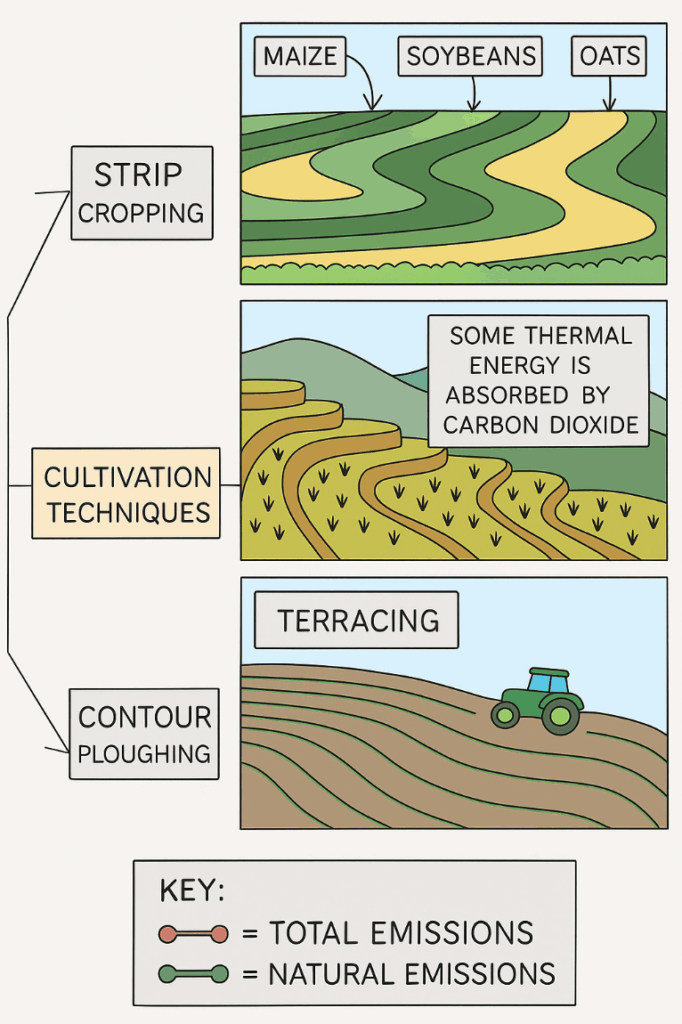
Strip cultivation
Water
Planting crops in alternating strips or bands, leaving natural vegetation between the strips
Reduces soil erosion by trapping water, slowing down runoff and increasing infiltrationwhile still allowing for crop production in the cultivated stripsIncreases biodiversity
Terracing
Water
Creating levelled steps on sloped lands
Reduces soil erosion by slowing down water movement and increasing infiltrationMinimises soil loss on steep slopes
Contour ploughing
Water
Ploughing parallel to the contour lines of the land instead of up and down slopes
Minimises soil erosion by reducing length and speed of water flow downhillPrevents gully formation and increases infiltration
Bunding
Water
Building embankments or barriers along fields
Controls water flowPrevents soil erosion and waterlogging
Drainage systems
Water
Installing systems to manage excess water
Prevents waterloggingReduces erosion and nutrient loss
Cover crops
Water
Planting crops that cover the soil
Reduces water erosionImproves soil structure
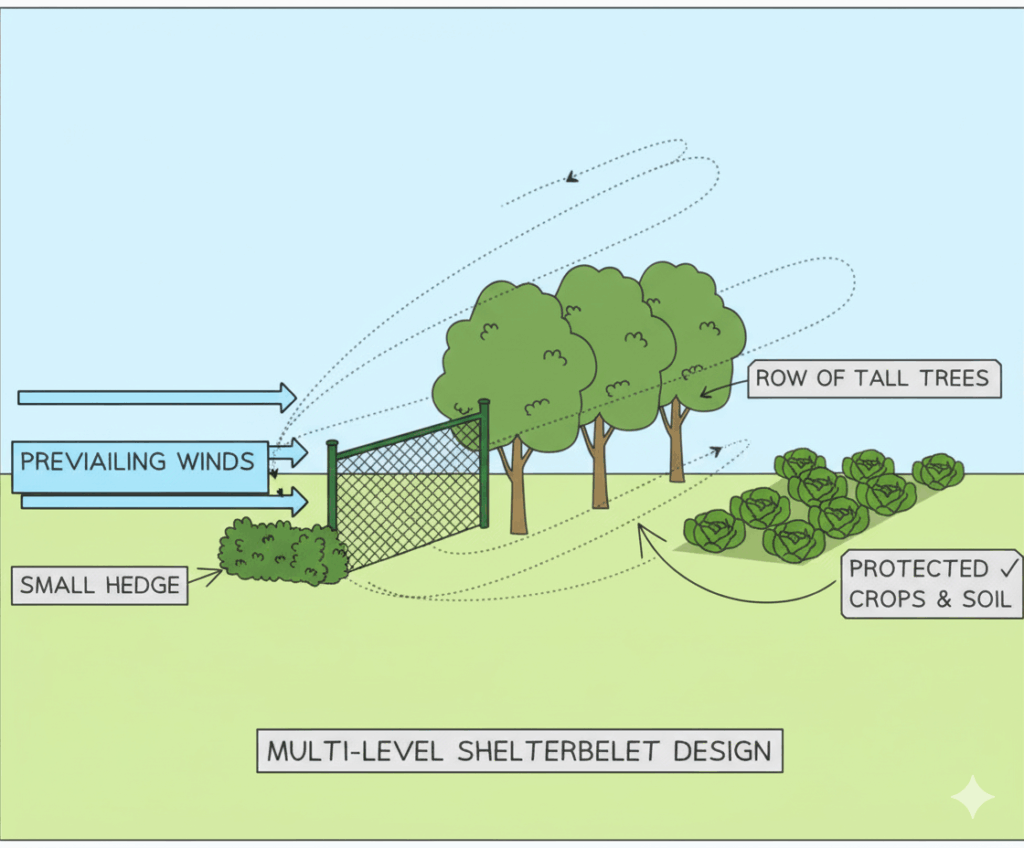
Windbreaks
Wind
Planting trees or hedges to block and reduce wind speed
Provides physical barrier to windReduces wind erosionProtects topsoilProtects crops from wind damage
Growing plants (e.g. cover crops) specifically to be ploughed into the soil
Increases organic matterEnhances soil fertility
Cultivation Techniques
Soil conservation technique
Description
Effect
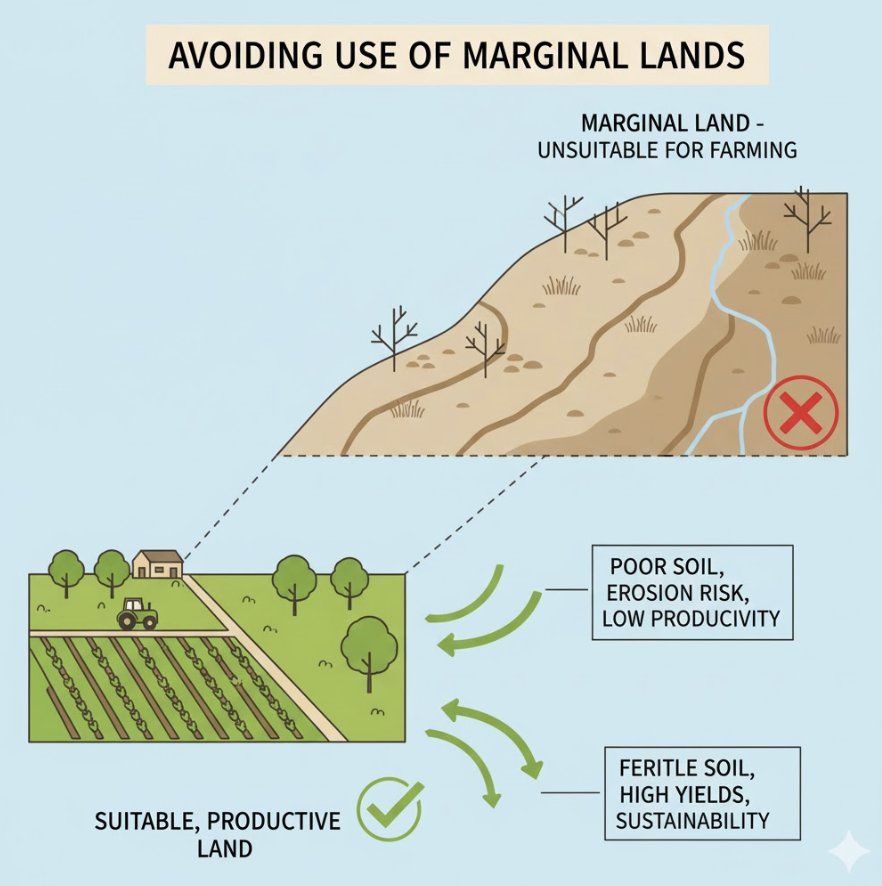
Avoid marginal land
Not farming on land that is vulnerable to erosion or poor in nutrients
Protects fragile ecosystemsPrevents soil degradationMaintains soil health
Avoid overgrazing / overcropping
Managing livestock and crop levels to prevent depletion
Maintains soil coverPrevents soil erosion and compaction
Mixed cropping
Growing different types of crops together
Improves soil healthReduces pest and disease issues
Crop rotation
Rotating different crops on the same land
Maintains soil nutrientsReduces disease and pest buildup
Reduced tillage
Minimising ploughing and soil disturbance
Preserves soil structureMaintains moisture levels
Agroforestry
Integrating trees and shrubs into farming systems
Enhances soil structureProvides shade and wind protection
Reduced use of heavy machinery
Minimising the use of heavy equipment on fields
Prevents soil compactionMaintains soil structure
🌐 EE Tip: Compare soil health under different farming systems (organic vs conventional) using physical and chemical indicators.
📌 Sustainability of Food Production Systems
Increasing sustainability of terrestrial food production
Humans are omnivores, consuming a variety of foods, including:
Fungi
Plants
Meat
Fish
Diets that include more food from lower trophic levels, such as plant-based diets, are generally more sustainable
This is due to their reduced environmental impact
Crop vs. livestock production
Yield and cost:
Crops:
The yield of food per unit of land area is significantly higher with crops than with livestock
Crop production also has lower financial costs associated with it
Livestock:
Producing food through livestock requires more land and resources
It is usually more expensive
Plant-based diets
Increasing the proportion of plant-based foods in diets can make agriculture more sustainable
This is because plant-based diets decrease the demand for resource-intensive livestock farming
Energy efficiency is greater in a plant-based diet compared to a meat-eating diet due to several factors:
Trophic levels:
Energy is lost at each trophic level as it moves up the food chain
When we consume plant-based foods directly, we bypass the energy loss associated with raising animals for meat
By consuming plants (the primary producers) directly, we utilise energy more efficiently
Feed conversion efficiency:
Animals raised for meat require significant amounts of feed to grow and develop
However, a large portion of the energy from the feed is used for the animals’ own bodily functions and metabolic processes, rather than being converted into edible biomass
This inefficiency in feed conversion results in higher energy losses when obtaining nutrition from meat
Land use efficiency:
Producing meat requires vast amounts of land for grazing or growing animal feed crops
This land could otherwise be used more efficiently to cultivate plant-based foods directly for human consumption
By consuming plant-based foods, we optimise land use and reduce the energy required for livestock farming
By focusing on lower-trophic-level food production, such as promoting plant-based diets, it is possible to:
Maximise food production per unit area
At the same time, mitigating the pressure on land resources
Global food production and distribution
Current production:
Global agriculture currently produces enough food to feed approximately eight billion people (the global population currently stands at 8.1 billion in 2024)
Despite this, food is not distributed equitably around the world
Some regions experience surpluses, while others face severe shortages
Food waste:
It is estimated that at least one-third of all food produced is wasted
This can be during:
Post-harvest
Storage
Transport and distribution
SDG goal:
The United Nations’ Sustainable Development Goal 12 aims to:
“…ensure sustainable consumption and production patterns.”
Target 12.3 within this goal focuses on:
Reducing global food waste by 50% per capita at the retail and consumer levels (i.e. halving global food waste) by 2030
By minimising food losses throughout production and supply chains (including post-harvest losses)
Strategies for sustainable food supply
Reducing demand and food waste:
Encouraging plant-based diets: shifting towards plant-based diets can reduce the demand for resource-intensive animal products
Improving food distribution systems: increasing the efficiency of food distribution can help ensure that food reaches those in need and reduce waste. For example:
Using refrigerated transport to keep food fresh longer
Optimising delivery routes to reduce transport time
Collecting and redistributing surplus food to those in need
Educating consumers: raising awareness about the importance of reducing food waste at the consumer level can have a significant impact
Reducing greenhouse gas emissions:
Plant-based meat substitutes: developing and promoting plant-based alternatives to meat can reduce greenhouse gas emissions associated with livestock
These products mimic the taste and texture of meat but are made from plants
Low methane rice cultivation: using rice cultivation practices that produce less methane can help reduce agricultural emissions. For example:
Periodically draining and re-flooding rice fields
Applying additives that reduce methane emissions
Reducing methane release by ruminants: adjusting livestock diets and using dietary additives like seaweed can lower methane emissions from ruminants
Increasing productivity without expanding agricultural land use:
Extending shelf life: improving preservation methods to extend the shelf life of food can help reduce waste. For example:
Improved packaging
Improved refrigeration
Genetic modification: using genetic modification to create crops with increased productivity. For example:
Crops that produce higher yields with the same inputs
Crops that are more resistant to pests and diseases
In-field solar-powered fertiliser production: using solar energy to produce fertilisers on-site
Reduces the need for synthetic fertilisers
Reduces reliance on fossil fuels (required for production of synthetic fertilisers)
Reduces production and transport costs
📌 Food Security
Food security can be defined as:
Key components of food security
Availability: ensuring that enough food is produced and supplied to meet the population’s needs
Access: ensuring that individuals have the resources (economic means) to obtain the food they need (i.e. food is affordable)
Use: ensuring food is used properly alongside a healthy diet, clean water, sanitation and healthcare to achieve good nutritional health
Stability: ensuring consistent and reliable access to food at all times, without disruptions from economic or climate-related issues
🔍 TOK Tip: Is food security a scientific or ethical problem?
Regional food security
Developed regions:
Generally highlevels of food security
Good infrastructure, economic stability and social safety nets ensure food availability and access
Examples: North America, Western Europe
Developing regions:
Varying levels of food security, often lower than in developed regions
Issues include poverty, poor infrastructure and political instability
Examples: Sub-Saharan Africa, parts of South Asia, Latin America
Factors affecting food security
Economic factors:
Income levels, food prices and employment opportunities impact individuals’ ability to purchase food
Environmental factors:
Climate change, natural disasters and resource depletion impact food production and availability
Social and political factors:
Government policies, conflict and social inequality impact food distribution and access
The original rock material that breaks down through weathering to form soil.
Natural Soil Mineralisation
The process by which organic matter decomposes, releasing nutrients into the soil in mineral form.
Parent Material
The base geological material from which soil develops, including rock or transported sediments.
Natural Seed Bank
A reserve of viable seeds present in the soil that can germinate under suitable conditions.
Sink
A part of the system where matter or energy is absorbed and stored for a significant period.
Stores
Components of a system that hold energy or matter temporarily, such as soil, biomass, or atmosphere.
Sources
Components of a system that release matter or energy into other parts of the system.
Primary Productivity
The rate at which producers convert solar energy into biomass through photosynthesis.
🧠 Exam Tips:
When discussing sources and sinks, link them to nutrient cycles (e.g., carbon or nitrogen).
For productivity terms, distinguish between GPP and NPP if specified.
📌 Components and Structure of Soil
Soil components
Soil is made up of a complex mixture of interacting components, including inorganic and organic components, water and air
Inorganic components
Mineral matter:
Rock fragments
Sand
Silt
Clay
These components come from the weathering of parental rock
Organic components
Living organisms:
Bacteria
Fungi
Earthworms
Dead organic matter:
Decaying plants
Animal remains
Animal waste (faeces)
Other components
Water:
Essential for chemical reactions and life
Air:
Oxygen and other gases necessary for organism survival
Soils as systems
Soils are dynamic systems within larger ecosystems
As with any system, soil systems can be simplified by breaking them down into the following components:
Storages
Flows (inputs and outputs)
Transfers (change in location) and transformations (change in chemical nature, state or energy)
Image source: savemyexams.com
Soil System Storages
Storage
Description
Organic matter
Accumulation of plant and animal matter in various stages of decompositionProvides nutrients, improves soil structure and enhances water-holding capacity
Organisms
Includes microorganisms, fungi, bacteria, insects and other living organisms present in the soilThey play essential roles in nutrient cycling, organic matter decomposition and soil structure formation
Nutrients
Elements necessary for plant growth, such as nitrogen, phosphorus and potassiumNutrients are stored in the soil and are made available to plants through various biological and chemical processes
Minerals
Inorganic components of the soil derived from weathering of rocks and mineralsContribute to the physical properties and fertility of the soil
Air
Pore spaces within the soil are filled with air, allowing oxygen to be available for root respiration and microbial activities
Water
Soil acts as a reservoir for water, holding it for plant uptake and providing a suitably moist habitat for soil organisms
Soil System Inputs
Input
Description
Dead organic matter
Inputs of plant material (e.g. leaf litter) and other organic materials (e.g. dead animal biomass or animal faeces) that contribute to the organic matter content in the soil
Inorganic matter from rock material
Contributes to the mineral composition of soil, derived from parent materials (e.g. bedrock) and the weathering of exposed rock at the soil surface
Precipitation
Rainfall or snowfall that provides water (containing dissolved minerals) to the soil system
Energy
Solar radiation and heat influence soil temperature and biological activities
Anthropogenic inputs
E.g. compost, fertilisers, agrochemicals, water from irrigation
Soil System Outputs
Output
Description
Leaching
Loss of dissolved minerals and nutrients from the soil into streams, rivers, lakes and oceans through water movement
Uptake by plants
Absorption of minerals and water by plant roots for growth and development
Soil erosion
Removal of soil particles by water or wind, leading to the loss of topsoil and degradation of soil quality
Diffusion and evaporation
Diffusion of gases and evaporation of water from soil
Soil System Transfers
Transfer
Description
Infiltration
Process by which water enters the soil from the surface
Percolation
Movement of water through the soil and its layers, typically downward through the soil profile
Groundwater flow
Movement of water through the subsurface soil layers, often feeding into aquifers and other groundwater reserves
Biological mixing
Movement of soil particles and materials by soil organisms, including burrowing animals, earthworms and root growthContributes to the mixing of organic matter and minerals, enhancing soil structure and nutrient distribution
Aeration
Process by which air is circulated through and mixed with soil
Erosion
Process by which soil particles are detached and transported by wind or water
Leaching
Process in which minerals dissolved in water are moved downwards or horizontallythrough the soil profileResults in the loss of nutrients from the root zone, particularly in areas with high rainfall or excessive irrigation
Soil System Transformations
Transformation
Description
Decomposition
The process of organic matter breakdown by microorganisms, results in the release of carbon dioxide, water and nutrientsInvolves the conversion of complex organic compounds into simpler forms
Weathering
Physical and chemical processes that break down rocks and minerals into smaller particles, contribute to soil formationIncludes physical weathering (mechanical breakdown) and chemical weathering (alteration of minerals through chemical reactions)
Nutrient cycling
The cycling of nutrients within the soil-plant system involves uptake, assimilation, release and recycling of elements like nitrogen, phosphorus and potassiumEnsures the availability and redistribution of essential nutrients for plant growth
Salinisation
Accumulation of soluble salts in the soil, which can be detrimental to plant growth and soil structureIt often results from improper irrigation practices, high evaporation rates, or natural soil mineralisation
Humification
Process of organic matter transformation into stable humusIt involves the accumulation of complex organic compounds, leading to the dark colouration and improved water-holding capacity of soilContributes to soil fertility and structure
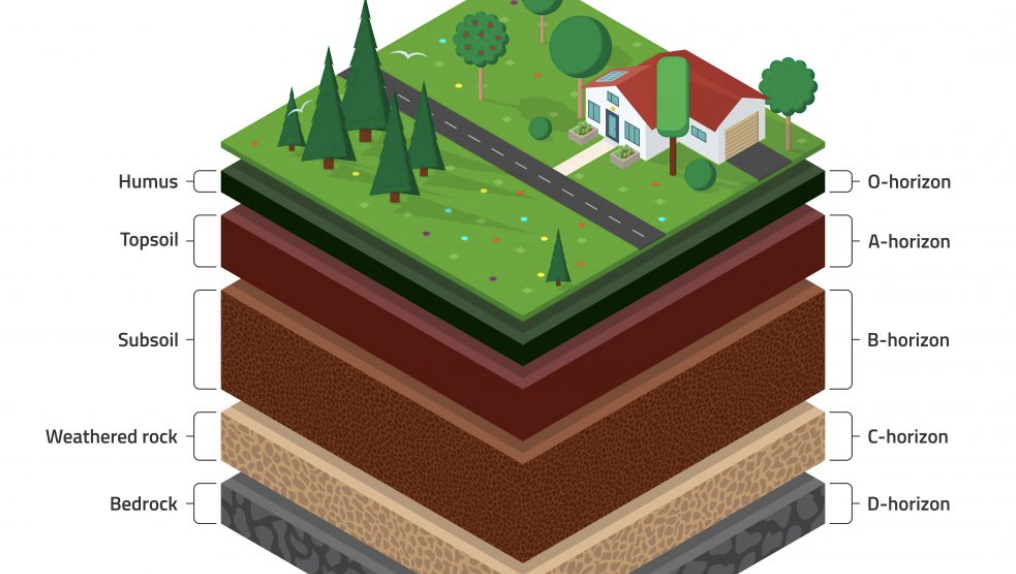
Soil profiles
Soil profiles develop as a result of long-term interactions within the soil system
These interactions and processes form distinct layers known as horizons
These layers vary in composition and characteristics from the surface downward
This reflects the processes of soil formation over time
Profiles usually transition from organic-rich layers near the surface to more mineral-rich layers deeper down
These lower layers generally contain more inorganic material
Image source: savemyexams.com
The development of soil profiles is influenced by factors such as:
Climate
Vegetation
Parent material
Time
Real-world examples
Tropical rainforests:
Often have thick, organic-rich top soils due to rapid decomposition and high biological activity
Desert regions:
Characterised by shallow, mineral-dominated soils with distinct horizons due to low organic matter input and minimal leaching
Peat soils in boreal forests (e.g. Scandinavia):
Soils characterised by thick layers of partially decomposed organic matter (peat)
This is due to the cold, wet conditions that slow down decomposition rates, resulting in highly acidic and nutrient-poor soils
Prairie soils in the Great Plains, USA:
Soils known for their deep, dark topsoil have developed over millennia
This is due to the accumulation of organic matter from grassland vegetation and the semi-arid climate
📌 Functions and Properties of Soil
Soil functions
Soils carry out important functions in terrestrial ecosystems
Soils support plant growth, biodiversity and biogeochemical cycles
Medium for plant growth
Soils act as a natural seed bank, providing a substrate for germination and root development
They store water crucial for plant hydration, nutrient uptake and photosynthesis
They store essential nutrients for plants such as nitrogen, phosphorus and potassium
These essential nutrients support healthy plant growth
For example, in the Amazon rainforest, the fertile soils contain high levels of nutrients
This allows these soils to support diverse plant life
This has led to the Amazon’s status as the world’s largest tropical rainforest
Contribution to biodiversity
Soils provide habitats and niches for a wide range of species
Soil communities support high biodiversity, including microorganisms, animals and fungi
For example, in the UK, ancient woodlands are rich in soil biodiversity
Their soils support rare fungal species that play important roles in nutrient cycling
Role in biogeochemical cycles
Soils allow the recycling of elements essential for life, such as carbon, nitrogen and phosphorus
Dead organic matter from plants is a major input into soils, where it decomposes and releases nutrients
Carbon storage dynamics
Soils can function as carbon sinks, stores, or sources, depending on environmental conditions
For example, tropical forest soils generally have low carbon storage due to rapid decomposition rates
This is because the warm and moist conditions accelerate the decomposition of organic matter by microorganisms
This causes carbon to be released back into the atmosphere quickly
Tundra, wetlands and temperate grasslands can accumulate large amounts of carbon in their soils
This is because colder temperatures and waterlogged conditions slow down the decomposition process
This allows organic matter to build up in the soil over time without being fully decomposed and released as CO2
Soil texture
Soil texture describes the physical make-up of soils
It depends on the proportions of sand, silt, clay and humus within the soil
Soil texture influences various soil properties and plant growth
Components of soil texture
Sand: larger particles that feel gritty
Silt: medium-sized particles that feel smooth
Clay: very fine particles that feel sticky when wet
Humus: organic matter, dark brown or black, crumbly texture from partially decayed plant material
Determining soil texture
Soil texture can be determined using several methods
Each method provides insight into:
The soil’s properties
How suitable the soil is for different plants and crops
Using a soil key:
A soil key is a more systematic and detailed method
It uses a step-by-step guide to classify soil texture based on specific criteria
The key helps identify the proportions of sand, silt, and clay by guiding the soil tester (the user) through a series of questions or observations
It often includes descriptions of soil behaviour when moistened and manipulated
Soil keys are often used in more formal or scientific settings where precise classification is needed
Feel test:
The feel test is a simpler method
It involves rubbing moistened soil between the fingers to assess its texture
Sand feels gritty, silt feels smooth and clay feels sticky
It is a quick, informal assessment that can be done in the field without additional tools
The feel test is commonly used by farmers, gardeners, and others needing a quick assessment
Laboratory test:
The laboratory test involves mixing soil with water and allowing it to settle into distinct layers
This method provides a clear visual representation of the proportions of sand, silt and clay
Any large debris like rocks, roots, or organic matter, are first removed from the sample
The sample is added to a transparent container
Water is added and the container is shaken vigorously
The container is left on a flat surface and left undisturbed (e.g. for 24 hours)
Silt settles first, then clay, and finally sand
The thickness of these layers can be measured to determine their proportions
Image source: savemyexams.com
In the example above:
The sand layer is 2.5 cm
The silt layer is 2 cm
The clay layer is 2.5 cm
The total thickness is 7 cm
These measurements can be used to calculate the percentage of each soil component:
The percentage of sand is (2.5 ÷ 7) × 100 = 35.7%
The percentage of silt is (2 ÷ 7) × 100 = 28.6%
The percentage of clay is (2.5 ÷ 7) × 100 = 35.7%
Influence of soil texture on primary productivity
Soil texture affects primary productivity by influencing:
Nutrient availability
Water retention
Soil aeration
Nutrient retention vs. leaching:
Humus contributes significantly to the nutrient content of soils
It lies beneath leaf litter and has a loose, crumbly texture
It is formed by the partial decay of dead plant material
Soils with more humus retain nutrients better
Less humus means nutrients are more likely to be washed away
For example, forest floors, like those in the New Forest in Hampshire, UK, have rich humus layers that support diverse plant life
Water retention vs. drainage:
Clay and humus-rich soils retain water well
Sandy soils drain quickly but may not retain enough moisture for some plants
For example, sandy soils in East Anglia, UK, require more frequent irrigation for crops
Aeration vs. compaction or waterlogging:
Well-aerated soils support root growth and beneficial microbial activity
Clay soils can become compacted, limiting aeration
Humus helps improve aeration in clay soils
For example, compacted clay soils in urban areas often need organic matter added to improve their structure and aeration
3.3 CONSERVATION AND REGENERATION
📌 Definitions Table
Term
Definition
Flagship Species
Charismatic species used to raise public awareness and support for biodiversity conservation.
Keystone Species
A species with a disproportionately large effect on ecosystem structure and function relative to its abundance.
Sluices
Water-control structures that regulate flow, often used in wetland or floodplain management.
Target Species
Species specifically monitored or managed in conservation programs or ecological studies.
Viable Populations
Populations that are sufficiently large and genetically diverse to survive and reproduce in the long term.
Microclimates
Localized climate conditions that differ from the surrounding area, often influenced by vegetation, topography, or structures.
Gene Flow
The transfer of genetic material between populations, promoting genetic diversity and adaptability.
Apex Predators
Top-level predators with no natural enemies, regulating populations of other species and maintaining ecosystem balance.
Communities
All interacting populations of different species living in the same habitat at the same time.
Succession
The gradual process of change in species composition and ecosystem structure over time.
Earth System
The interacting physical, chemical, and biological components of Earth, including the atmosphere, hydrosphere, lithosphere, and biosphere.
Holocene Epoch
The current geological epoch, beginning around 11,700 years ago, characterized by relative climatic stability.
Biosphere Integrity
The maintenance of biodiversity and ecosystem functions critical to Earth system stability.
Environmental Justice
The fair treatment and meaningful involvement of all people in environmental decision-making, regardless of race, income, or nationality.
🧠 Exam Tips:
Use examples (e.g., wolves as keystone species, tigers as flagship species) when asked to justify or evaluate.
For biosphere integrity and environmental justice, link to sustainability and systems interconnections.
📌 Preserving Biodiversity
There are many reasons for maintaining and preserving biodiversity, including:
Aesthetic reasons
Ecological reasons
Economic reasons
Ethical reasons
Social reasons
Aesthetic reasons
Humans find great joy and pleasure in the beauty of nature
It provides inspiration for human creativity, including photography, poetry, music and art
There is a strong argument for preserving biodiversity because of its aesthetic benefits
Ecological reasons
Species and habitats contribute to vital ecological processes and services
E.g. pollination, water purification, climate regulation and maintaining soil fertility
Biodiversity has a major effect on the stability and resilience of an ecosystem
A more diverse ecosystem is better able to recover from disturbances and adapt to environmental changes or threats
For example, if the temperature of a species-rich lake rises due to global warming:
Some species of fish in the ecosystem are unable to cope with the change while others can or may be able to adapt
The fish that are able to cope or adapt will survive, reproduce and keep contributing to the ecosystem, allowing the ecosystem to continue to function
Within communities, there are keystone species that have a larger impact on the ecosystem than others
When these species are lost there are knock-on effects
Bush elephants in the African savannah are a keystone species
They graze in a very extreme way, knocking over and eating several species of tree
This destruction of vegetation actually helps to maintain the ecosystem by preventing any one plant species from dominating, creating habitats for other species and increasing biodiversity
Elephant dung also provides a habitat for many important fungi and insect species
In cases where elephants have been illegally poached for their ivory and their numbers greatly reduced, ecologist have observed major negative impacts on the savannah ecosystem
Economic reasons
Ecotourism is a major source of income for many countries
Natural areas attract tourists, generating revenue for local economies and providing jobs
E.g. many tourists travel to and spend money in National parks so they can see wildlife
Natural capital:
Natural ecosystems provide resources like timber, fish and clean water
Maintaining these resources supports long-term economic prosperity
Genetic resources:
Wild species are sources of genes for crop improvement, medicine, and biotechnology
Preserving this genetic diversity could be essential for future innovations and food security
Many of the medicines used today have originated from plants, fungi and bacteria
For example, the cancer-fighting drug paclitaxel is sourced from Pacific and Himalayan Yew Trees
The Himalayan Yew has declined in numbers due to over-harvesting for fuel and medicine
Due to the large number of drugs that have already been sourced from nature it is reasonable to assume that there are many other drug still to be found in nature that could be used in the future
Ethical reasons
Many people believe that species and habitats have intrinsic value (i.e. they have inherent worth, independent of their usefulness to humans)
Many believe that humans have a moral obligation to prevent the loss of biodiversity that results from human activities
Humans share the planet with millions of other species and many people hold the view that they have no right to cause the extinction of other species
As humans are the most intelligent, dominant and powerful species on the planet, many believe that it is our responsibility to protect and value all organisms on Earth
Many believe that is also our ethical obligation to preserve nature for future generations
Social reasons
Many people enjoy spending time in the natural environment
There are many activities that people can do together in nature, e.g. birdwatching, walking, climbing
Access to natural spaces improves mental and physical health
Such environments may be lost if their biodiversity is not conserved, resulting in the loss of the social benefits that they can bring
🔍 TOK Tip: Should species be conserved based on ecological value or emotional appeal (e.g. flagship species)?
📌 Conservation Strategies
Conservation strategies are methods used to protect and preserve biodiversity
These strategies can be divided into:
Species-based conservation
Habitat-based conservation
Mixed approaches
Species-based conservation
Species-based conservation focuses on protecting individual species, especially those that are endangered
This often involves ex situ strategies
This means conservation actions are taken outside the natural habitat of the species
Ex situ strategies
Botanic gardens:
Botanic gardens are specially designed areas where a wide variety of plants are grown for scientific, educational and ornamental purposes
Botanic gardens cultivate and maintain plant species outside their natural habitats
They provide a safe environment for endangered plants and facilitate research and education.
For example, Kew Gardens in London holds over 30 000 different plant species.
Zoos:
Zoos keep and breed animals in captivity, often focusing on endangered species
They play a role in education, research and breeding programmes to reintroduce species into the wild
Captive breeding is the process of breeding animals in controlled environments, such as zoos, aquariums, or wildlife sanctuaries
These programmes are often used to help restorepopulations of endangered species that have declined in the wild
For example, the San Diego Zoo in the United States runs breeding programmes for species like the California Condor
Zoos also play a role in conservation by raising public awareness and funding other conservation efforts
Convention on International Trade in Endangered Species of Wild Fauna and Flora (CITES):
CITES is an international agreement that aims to ensure that international trade in wild animals and plants does not threaten their survival
It regulates and monitors the trade of endangered species through a licensing system
For example, CITES has helped to protect many species, including elephants, rhinos and tigers
Seed banks:
Seed banks are places where seeds of different plant species are stored to preserve genetic diversity
They act as a backup against the loss of plants in their natural habitats
For example, the Svalbard Global Seed Vault in Norway holds seeds from all around the world
Habitat-based conservation
Habitat-based conservation focuses on protecting and restoring habitats to support the species that live there
This often involves in situ strategies
This means conservation actions are taken within the natural habitat of the species
In situ measures
National parks:
National parks protect large areas of natural habitat, preserving the ecosystems and species within them
They also provide opportunities for research, tourism and education
For example, Yellowstone National Park in the USA protects a variety of ecosystems and species, including grizzly bears and wolves
Reserves and sanctuaries:
Wildlife reserves and sanctuaries are areas set aside for the protection of particular species and their habitats
They often involve community participation and sustainable use of resources
For example, the Maasai Mara National Reserve in Kenya protects a range of species including lions, elephants and wildebeest
Mixed conservation approach
A mixed conservation approach combines species-based and habitat-based strategies
This approach often focuses on flagship or keystonespecies to justify the conservation of entire ecosystems
Flagship species
Flagship species are charismatic species that are well-known and popular with the public, such as elephants, pandas or tigers
They can be used as symbols for conservation efforts and can help to raise awareness and supportfor conservation efforts
By protecting charismatic species, their habitats and other species in the same ecosystem may also be protected
An example of a flagship species is the mountain gorilla (Gorilla beringei beringei)
These primates are found in the Virunga Mountains, which span Rwanda, Uganda, and the Democratic Republic of Congo
The mountain gorilla population has faced threats from habitat destruction, poaching, and human conflict
By focusing on the conservation of mountain gorillas and their habitat, conservation organisations have been able to protect not only this species but also the many other plants and animals that share their ecosystem
Keystone species
Keystone species are species that have a disproportionateeffect on the structure and function of their ecosystem.
Their removal can cause significant changes in the ecosystem, including the loss of other species
By protecting keystone species, the integrity of the ecosystem can be maintained, which can in turn benefit other species in the ecosystem
For example, the sea otter is a keystone species in the kelp forest ecosystem in the Pacific Northwest of the United States
It feeds on sea urchins
This helps to control the population of sea urchins, which are herbivores that can significantly damage the kelp forests
Case Study
Chengdu Research Base of Giant Panda Breeding
The Chengdu Research Base of Giant Panda Breeding in China is a good example of a mixed conservation approach, combining species-based and habitat-based strategies to protect the giant panda
Objectives and strategies:
Captive breeding: running a breeding program to increase the giant panda population.
Habitat restoration: restoring and expanding bamboo forests, the natural habitat of giant pandas
Public education and awareness: educating the public through tours, programs and exhibits to generate support for conservation
Research and collaboration: conducting research on panda biology and collaborating with international organisations
Facilities:
Breeding centres: areas for breeding and raising panda cubs
Veterinary hospital: provides medical care for pandas
Enclosures and habitats: naturalistic spaces for pandas to live and play
Research laboratories: equipped for scientific research on panda conservation
Achievements:
Increased panda population: successful breeding programs have raised the number of giant pandas
Genetic diversity: genetic diversity have been maintained through careful breeding
Habitat protection: has played a key role in restoring and protecting panda habitats
Wider ecosystem and species conservation: by focusing on this flagship species, the base has also helped to protect the broader ecosystem and other species within it
🧠 Examiner Tips:
Make sure you know the definitions of the terms ex situ and in situ in the context of conservation strategies.
Be prepared to give examples of both the types of strategies.
Convention on Biological Diversity
The Convention on Biological Diversity (CBD) is a United Nations treaty aimed at promoting sustainable development and conserving biodiversity
It was signed at the Earth Summit in Rio de Janeiro in Brazil in 1992
Objectives:
The conservation of biodiversity by use of a variety of different conservation methods
The sustainable use of biological resources
Identify and protect marine areas beyond national jurisdictions
Nagoya Protocol:
The CBD also includes the Nagoya Protocol, which is the part that ensures fair sharing of benefits arising from the use of genetic resources
The countries that signed the convention agreed to:
Design and implement national strategies for the conservation and sustainable use of biodiversity
Organise international cooperation and further international meetings
📌 Habitat Management and Designing Protected Areas
Habitat management
Habitat conservation strategies aim to protect species by preserving and managing their natural environments
This may involve the protection of wild areas or active management
These strategies are crucial for maintaining biodiversity and ensuring the survival of various species
Protection of wild areas
Protecting wild areas involves:
Setting aside land that is left in its natural state
Ensuring this land remains free from significant human interference
This helps to maintain the habitat necessary for the survival of many species, allowing ecosystems to function naturally
For example, large areas of the Amazon Rainforest are protected to preserve the rich biodiversity found there
Active management
Active management refers to human intervention to maintain or restorehabitats to a desired condition
Methods include:
Controlled burning: this can be used to manage grasslands and forests, promoting the growth of desired plant species
Reforestation: planting trees to restore deforested areas
Invasive species control: removing non-native species that threaten local biodiversity
Case Study
Ecosanctuary with pest-exclusion fencing: Zealandia, New Zealand
Location: Wellington, New Zealand
Habitat type: forest and scrubland
Conservation strategies:
Pest-exclusion fencing: a predator-proof fence encircles the sanctuary to keep out invasive species like rats, stoats and possums
These are major threats to New Zealand’s native species
Reintroduction of native species: species such as the little spotted kiwi and tuatara have been reintroduced to the area
These reintroduction efforts have helped boost populations of species that had declined drastically due to predation by invasive species
Surrounding land use: the sanctuary is located near urban areas but is isolated by the fence, creating a safe habitat for native wildlife
Factors in conservation area design
Effective conservation of biodiversity in conservation areas depends on:
A detailed understanding of the biology of the target species
The size and shape of the conservation area
These factors help ensure that the ecosystem or habitat:
Meets the needs of the species
Maintains ecological processes
Biology of target species
Habitat requirements: understanding what specific conditions the species needs to thrive, such as food, water, shelter and breeding sites
Home range: knowing the area size that individual animals or groups need to roam and find resources
Life cycle: understanding the different life stages of the species and their varying habitat requirements
Threats: identifying natural and human threats to the species, such as predation, disease, habitat destruction and climate change
Size and shape of conservation areas
Factors that need to be considered when designing protected areas include:
Size
Shape
Edge effects
Corridors
Proximity to potential human influence
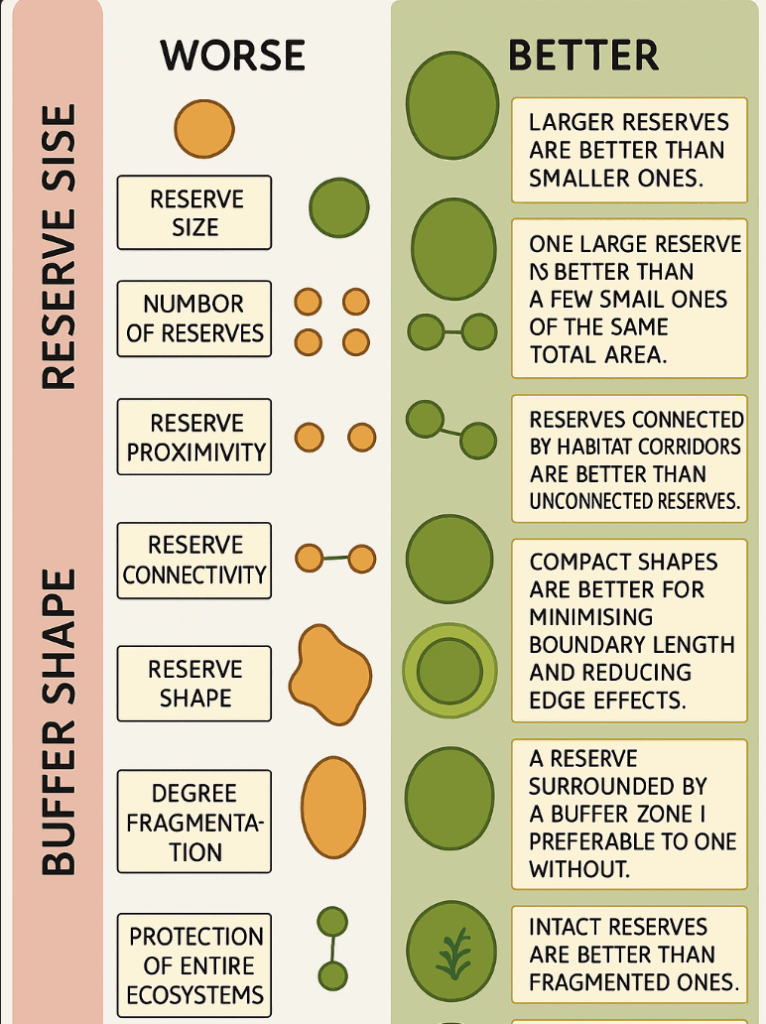
Protected Area Design Factors
Criteria for designing protected area
Explanation
Size
Larger areas can support more species, have larger populations and provide a greater range of habitatsThe size should be large enough to maintain viable populations of target species
Shape
The shape of a protected area can affect its biodiversity by influencing the distribution of habitats and the movement of organismsA complex shape can increase edge effects, while a simple shape may not provide enough habitat varietyIrregular shapes that follow natural features like rivers and ridges can provide better connectivity and help ecological processes
Edge effects
Edge effects refer to the changes that occur at the boundary between two different habitats or land-use types, e.g. at the boundary of a protected areaProtected areas with high edge-to-area ratios can have negative effects on biodiversity due to increased exposure to human disturbances, invasive species and variable microclimatesMinimising edge effects can be achieved by creating protected areas with simple shapes or using buffer zones around the edges
Corridors
Corridors are narrow strips of land that connect otherwise isolatedareas of habitatThey can facilitate the movement of organisms and allow for gene flow between populationsCorridors can also provide additional habitat and increase the effective size of a protected areaThe effectiveness of corridors depends on their width, length and the surrounding land use
Proximity to potential human influence
Human activities can have negative impacts on biodiversityProtected areas that are close to human settlements or infrastructure may be subject to habitat destruction, pollution and huntingIt is important to balance the need for accessibility and the potential for human impact when designing protected areas
Surrounding land use
Agricultural land: risk of pollution (e.g. via nutrient runoff), habitat fragmentation and human-wildlife conflicts
Urban areas: higher risk of human disturbance and spread of invasive species, but can provide education and recreational opportunities
Industrial areas: potential pollution and habitat destruction
Distance from urban centres
Close proximity: easier access for management and public education, but higher human pressure and disturbance
Remote locations: less human disturbance, better preservation of natural states, but harder for conservation workers to access and manage
📌 Rewilding
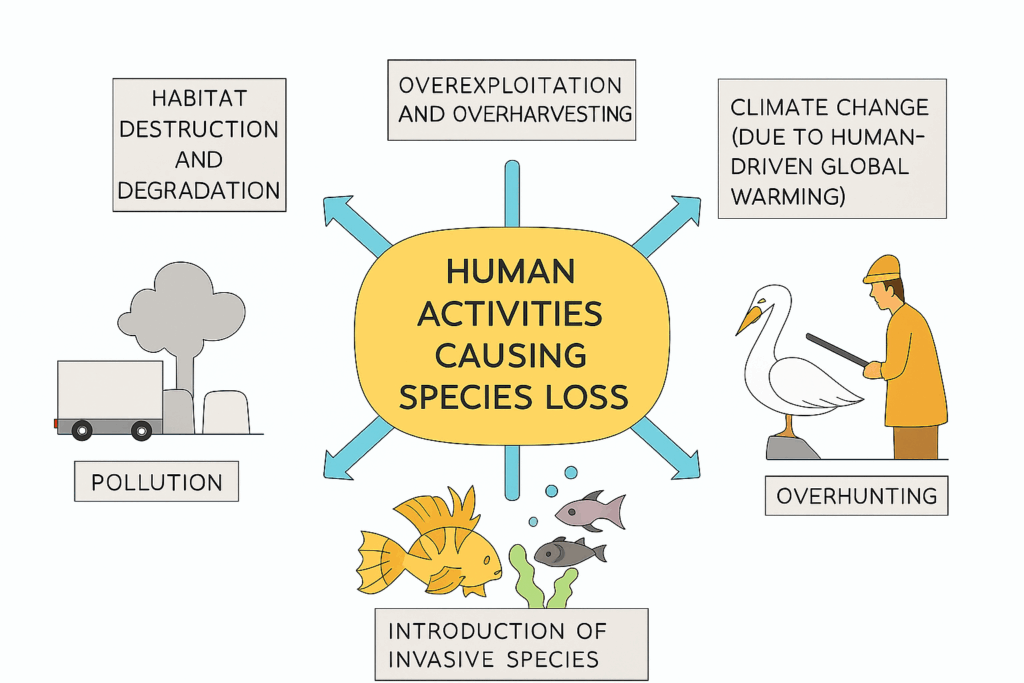
Human activities such as deforestation and overharvesting of resources can disrupt, damage and destabilise ecosystems
Conservation efforts at the ecosystem level aim to restore ecosystem stability by restoring natural ecosystem processes
These processes may include:
Predator-prey relationships
Seed dispersal
Nutrient cycling
This type of ecosystem restoration project is also known as rewilding
Restoration strategies may involve:
Species reintroduction
Reintroduction of apex predatorswill reduce herbivore populations and allow the restoration of habitat vegetation
This may boost the diversity of plant species
This, in turn, enhances total biodiversity
For example, wolves were reintroduced to Yellowstone National Park, USA
The wolves help to control deer populations
This has allowed certain types of vegetation to recover
Reintroducing keystone species can improve the structure of an ecosystem
For example, beavers have been reintroduced to parts of the UK
Beavers build dams
These dams create large wetland areas that support diverse wildlife
Improving habitat connectivity
This involves connecting fragmented habitats to allow free movement of species
Creating wildlife corridors, such as hedgerows on farmland, connects small pockets of habitat
This allows wildlife to roam over larger areas, increasing the resources available
This allows larger population sizes to establish
Stopping agriculture
Allowing land previously used for farming to return to its natural state
For example, the Knepp Estate in England has been rewilded
This former farmland now supports wild ponies, pigs and longhorn cattle
These species promote biodiversity by disturbing soils, dispersing seeds and grazing on vegetation, so no single plant species dominates
Limiting human influence
This may involve preventing the harvesting of resources, e.g. by logging or fishing
Ecological management techniques, e.g. controlled grazing or burning, may be used to restore a habitat
The aim is to minimise direct human management and let ecosystems self-regulate as much as possible
📌 Biodiversity Planetary Boundary
The planetary boundaries model outlines nine critical processes and systems that have regulated the stability and resilience of the Earth system during the Holocene epoch
The model identifies the level of human disturbance on certain fundamental ecological processes and systems
It aims to highlight where action is needed in order to avoid abrupt and irreversible changes
The biodiversity planetary boundary refers to the limits within which humanity can safely operate to maintain the Earth’s biodiversity
The boundary is often referred to as biosphere integrity
Protecting biosphere integrity means preventing the loss of species (and therefore genetic diversity) and the loss of ecosystem functioning
This is important as biodiversity loss can have significant negative impacts on human life and the planet’s health
Current state of the biodiversity planetary boundary
Biodiversity loss is occurring at an alarming rate due to human activities such as deforestation, pollution and overfishing, as well as human-induced climate change
Scientists estimate that we have already crossed the biodiversity planetary boundary
This means the current rate of species extinction is higher than the safe limit
Conservation and ecosystemregeneration measures can be used to reverse this decline in biodiversity
The aim is to move back towards a safe operating space for humanity within the biodiversity planetary boundary
In order for this to be achieved, these measures will need to be implemented at all levels, including:
Individual behaviours, e.g.
Reduce, reuse, recycle
Sustainable consumption
Collective actions, e.g.
Local conservation projects, such as tree planting or habitat restoration,
Increase understanding of biodiversity issues within communities through workshops and educational programmes
National measures, e.g.
Establish national parks and wildlife reserves
Enforce laws that prevent illegal logging, poaching and trade in endangered species
Providing financial incentives for businesses and farmers to adopt environmentally friendly practices
International efforts, e.g.
Participate in international treaties and agreements, such as the Convention on Biological Diversity (CBD)
Contribute to international funds that support biodiversity projects in developing countries
Sharing scientific knowledge and technologies across borders to enhance conservation efforts
📌 Conservation Perspectives
Impact of environmental perspectives and value systems
Environmental perspectives and value systemsinfluence the choice of conservation strategies
Ecocentric perspectives:
Focus on the intrinsic value of biodiversity
Prioritise low-intervention in situ strategies
This refers to conservation strategies that involve minimal human interference and are implemented within the natural habitats or ecosystems where species live
Example: setting aside large areas of land as wilderness reserves or national parks, such as the Cairngorms National Park in Scotland (UK)
Anthropocentric/technocentric perspectives:
Focus on the economic and societalvalue of biodiversity
Encouragescientific interventions, zoos, gene banks and ecotourism
Example: conservation breeding programme for European bison at the Highland Wildlife Park in Scotland (UK)
Factors influencing conservation success
The success of conservation and regeneration measuresdepends on:
Community support:
Engaging local communities in conservation efforts
Getting volunteers to help complete projects
Example: Snowdonia National Park Authority has a successful partnership with local farmers in Wales (UK) to manage and conserve the upland landscapes of Snowdonia National Park (known as Eryri)
Adequate funding:
Securing financial resources for conservation projects
Example: the National Lottery Heritage Fund supports biodiversity conservation projects across the UK
Education and awareness:
Raising public awareness about conservation issues
Example: millions of people watched the BBC’s Blue Planet II documentary series, which highlighted the effects of plastic pollution on marine ecosystems
Appropriate legislation:
Implementing laws and regulations to protect biodiversity
Example: the Wildlife and Countryside Act 1981 in the UK provides legal protection to endangered species and habitats
Scientific research:
Informing conservation decisions through scientific knowledge.
Example: the British Trust for Ornithology (BTO) conducts extensive research on bird populations to guide conservation efforts
Environmental justice considerations
It is also important to consider issues of environmental justice in conservation efforts
Conservation efforts should try to ensure that different social groups receive a fair share of conservation benefits and burdens
For example, the Marine Conservation Zones (MCZs) in the UK are established to protect marine habitats and species while also considering the livelihoods of local communities
Stakeholders, including fishermen, conservationists and local residents, are involved in the decision-making process to balance ecological protection with economic and social needs
This collaborative approach helps ensure that the benefits of conservation, such as improved fish stocks and healthier ecosystems, are shared among different social groups
At the same time, the potential burdens to certain groups, like restrictions on fishing, are fairly managed
🔍 TOK Tip: How does language shape how we value nature?
3.2 HUMAN IMPACT ON BIODIVERSITY
📌 Definitions Table
Term
Definition
Invasive Species
Non-native species that spread rapidly in a new environment, outcompeting native species and disrupting ecosystem balance.
Arboreal
Organisms that live in or primarily use trees as their habitat.
IUCN (International Union for Conservation of Nature)
A global organization that assesses the conservation status of species and publishes the Red List of Threatened Species.
Tragedy of the Commons
The overexploitation of shared, open-access resources due to individual self-interest, leading to resource depletion.
🧠 Exam Tips:
For invasive species, always mention their impact on native biodiversity.
For tragedy of the commons, include key terms like “shared resource” and “depletion” for full marks.
📌 Threats to Biodiversity
Biodiversity is crucial for ecosystem stability, resilience and functioning
However, biodiversity is being negatively affected by both direct and indirect human influences
Direct threats
Overharvesting:
Harvesting of species at a rate faster than their natural reproduction, leading to population decline
For example, overfishing of Atlantic cod in the North Sea, leading to population collapse
Many tropical rainforests are also under threat from overexploitation
They have major ecological and economic value
The trees are being cut down and harvested at a rate much faster than reforestation takes place
Continued overexploitation of a species can drive it to become extinct
Poaching:
Illegal hunting or capturing of wildlife, often for trade or consumption
For example, poaching of African elephants for their tusks, leading to a decline in elephant populations
If too many individuals within a species are killed then the population will become so small that it is no longer able to survive and the species may go extinct
Illegal pet trade:
Trafficking of live animals for the exotic pet market
🌐 EE Tip: Investigate human impact on a local endangered species or protected area, comparing primary and secondary data sources.
Indirect threats
Habitat loss:
Destruction or fragmentation of natural habitats due to human activities such as deforestation, urbanisation, or agriculturalexpansion
For example, clearing of rainforests in the Amazon for cattle ranching
Causes of aquatic habitat loss include: destructive fishing techniques, dredging of wetlands, damage from ships, tourism and pollution
Causes of terrestrial habitat loss include: inland dams, deforestation, desertification, agriculture and pollution
When a species’ habitat is destroyed or degraded, they no longer have the support systems and resources they need to survive
Climate change:
The change in global climate patterns due to greenhouse gas emissions, leading to habitat disruption, shifts in species distributions and increased frequency of extreme weather events
For example, melting of polar ice caps, threatening species like polar bears
Pollution:
Introduction of harmful substances or contaminants into the environment, including air, water and soil pollution
For example, plastic pollution in oceans, endangering marine species
Invasivealien species:
Non-native species introduced into an ecosystem that disrupt native species and ecosystems
For example, Japanese knotweed in the UK, which outcompetes native plants and causes damage to buildings
When humans travel between countries and continents, they often exchange (either intentionally or unintentionally) animal and plant species between their home country and the foreign country
These non-native species can be highly problematic as they often have no natural competitors, predators or pathogens that help limit population growth
Without these natural population checks, non-native species can massively increase in number
The large numbers of non-native species can negatively affect the native species through factors such as competition and disease
Grey Squirrel Invasion in the UK
Alien species:
Grey squirrels (Sciurus carolinensis) were introduced to the UK from North America in the 19th century
Originally brought over as ornamental additions to estates, they have since become a major invasive species
Impact:
Grey squirrels outcompete native red squirrels (Sciurus vulgaris) for resources such as food and habitat
They also carry the squirrelpox virus, which is fatal to red squirrels but does not affect grey squirrels
Management strategies:
Culling programs: some areas have introduced culling programs to reduce grey squirrel populations, aiming to protect red squirrels and restore native biodiversity
Forest management: habitat management practices such as selective tree planting and creating corridors for red squirrels help to create more favourable conditions for the native species, as they are more arboreal than grey squirrels
Research and monitoring: continual research and monitoring of squirrel populations and their impacts can help to develop effective management strategies over time
Combined impacts
Most ecosystems face multiple human impacts simultaneously
This leads to cumulative effects
This is when negative effects are amplified when different threats act together, reducing ecosystem resilience
For example, in a coral reef ecosystem, overfishing by human populations weakens the resilience of the coral reef to coral bleaching caused by climate change, making ecosystem collapse more likely
📌 Assessing Conservation Status
International cooperation is essential if conservation is to be successful
There are several agreements and authorities that exist within and between countries with the aim of protecting and conserving species worldwide
IUCN
The International Union for the Conservation of Nature (IUCN) is the global authority on the status of the natural world and the measures needed to safeguard it
One of the duties that the IUCN carries out is assessing the conservation status of animal and plant species around the world:
Scientists use data and modelling to estimate the category each species should be in
Factors used to determine the conservation status of a population include:
Population size (smaller populations are usually at a greater risk of extinction)
Rate of increase or decrease of the population
Degree of specialisation
Distribution (geographic range)
Reproductive potential and behaviour (breeding potential)
Geographic range
Degree of endemicity (i.e. if the species is only found in a single specific area)
Degree of habitat fragmentation
Quality of habitat
Trophic level (animals in higher trophic levels are usually at a greater risk of extinction)
Known threats
The IUCN has their own classification system:
There are several different categories and levels that a species can fall into depending on its population numbers and the threats and risks to those populations
Species that have been assessed are categorised by the IUCN as:
LC = least concern
NT = near threatened
VU = vulnerable
EN = endangered
CR = critically endangered
EW = extinct in the wild
EX = extinct
Species can also be classed as DD (data deficient) when there is not enough data on which to base a category choice, or as NE (not evaluated)
Animals that are on the IUCN Red List of Threatened Species™ can be seen online as this list is made public
Giving a global conservation status highlights how vulnerable certain species are
This helps governments, NGOs and individuals to select appropriate conservation priorities and management strategies
🔍 TOK Tip: Should species be conserved based on ecological value or emotional appeal (e.g. flagship species)?
📌 Conservation Case Studies
Extinct species
Passenger Pigeon (Ectopistes migratorius):
The Passenger pigeon was once one of the most abundant bird species in North America, numbering in the billions of individuals
However, due to overhunting and habitat destruction, the passenger pigeon went extinct in the early 20th century
The hunting of these birds for meat, as well as the destruction of their forest habitats, led to a sharp decline in their numbers
By the late 1800s, the species was in serious decline, and despite some attempts at conservation, it went extinct in 1914
Tasmanian Tiger (Thylacinus cynocephalus):
The Thylacine, also known as the Tasmanian Tiger or Tasmanian Wolf, was a carnivorous marsupial that once inhabited the Australian island of Tasmania
Human activity such as hunting, habitat loss and disease transmission by introduced species caused their population to decline
The last known Tasmanian tiger died in captivity in 1936, marking the extinction of the species
Critically endangered species
Sumatran Orangutan (Pongo abelii):
The Sumatran orangutan is one of three species of orangutan and is found only on the Indonesian island of Sumatra
Habitat destruction and fragmentation due to logging, conversion of forests to agriculture, and infrastructure development have been the primary causes of its decline
In addition, illegal hunting and capture of orangutans for the pet trade have also contributed to their decline
The Sumatran orangutan is now critically endangered, with only around 14 000 individuals remaining in the wild
Black rhinoceros (Diceros bicornis):
The black rhinoceros is a large mammal native to Africa and is critically endangered due to poaching for their horns, habitat loss, and civil unrest in the countries of their range
Their population has declined by over 90% since the 1960s, and there are currently only around 3 000 mature individuals remaining in the wild
Conservation efforts such as anti-poaching patrols, habitat restoration and captive breeding programs are underway to try to save this species from extinction
Improving species
Southern white rhinoceros (Ceratotherium simum):
The Southern white rhinoceros was once on the brink of extinction due to poaching for their horns, with only a handful of individuals surviving in the wild in South Africa in the early 20th century
However, conservation efforts including increased law enforcement, habitat protection, and captive breeding programs have helped their population recover to over 18 000 individuals today
While they are still threatened by poaching and habitat loss, the Southern white rhinoceros’ conservation status has greatly improved thanks to human intervention
Bald eagle (Haliaeetus leucocephalus):
The bald eagle is a bird of prey native to North America and was once on the brink of extinction due to habitat destruction, hunting, and pesticide use, which caused eggshell thinning and reproductive failure
Conservation efforts such as habitat protection, captive breeding programs, and the banning of harmful pesticides like DDT have helped their population recover from less than 500 pairs in the 1960s to over 10 000 pairs today
The bald eagle’s conservation status has greatly improved thanks to human intervention
📌 Tragedy of the Commons
Tragedy of the commons
The tragedy of the commons describes the overuse and depletion of a shared resource
It occurs when individuals act in their own self-interest rather than considering the common good
It leads to the degradation of the resource, making it unavailable for future use
Implications for sustainability
Overexploitation:
Many natural resources are used faster than they can be replenished
This is resulting in resource depletion and could eventually lead to the collapse of certain ecosystems
Impact on biodiversity:
Result in the loss of habitats and species
It can also lead to reduced genetic diversity
These factors can weaken ecosystem resilience, threatening biodiversity
The ability of an ecosystem to recover from disturbance and return to its original state while maintaining function and structure.
Heritable Characteristics
Traits encoded in DNA that can be passed from parents to offspring, influencing evolution through natural selection.
Adaptive Features
Traits that enhance an organism’s survival or reproduction in a specific environment.
Natural Selection
The process where organisms with favorable heritable traits survive and reproduce more successfully, leading to evolution.
Selection Pressure
Environmental factors that affect survival and reproduction, driving natural selection and adaptation.
Species Diversity
A measure of biodiversity that includes both the number of species (richness) and their relative abundance (evenness) in an area.
Species Richness
The number of different species present in a given area, regardless of their population sizes.
Biodiversity
The variety of life in all its forms, including genetic, species, and ecosystem diversity, within a given area.
Habitat Diversity
The range of different habitats or ecosystems in a given area, contributing to overall biodiversity.
Genetic Diversity
The variation of genes within a species population, contributing to adaptability and resilience.
🧠 Exam Tips:
For diversity terms, use “variety” and specify what is being measured (genes, species, habitats).
Always distinguish between species richness vs. species diversity — a common exam point.
📌 Biodiversity and Resilience
Why is biodiversity important?
Biodiversity can be thought of as a study of all the variation that exists within and between all forms of life
Biodiversity looks at the range and variety of habitats, species and genes within a particular region
It can be assessed at three different levels:
The number and range of different ecosystems and habitats
The number of species and their relative abundance
The genetic variation within each species
Biodiversity is very important for the resilience of ecosystems
This is because biodiversity allows them to resist changes in the environment and avoid ecological tipping points
Habitat diversity
This is the range of different habitats within a particular ecosystem or biome
If there is a large number of different habitats within an area, then that area has high biodiversity
A good example of this is a coral reef
They are very complex with lots of microhabitats and niches to be exploited
If there is only one or two different habitats then an area has low biodiversity
Large sandy deserts typically have very low biodiversity
The conditions are basically the same throughout the whole area
Species diversity
An ecosystem such as a tropical rainforest that has a very high number of different species would be described as species-rich
Species richness is the number of species within an ecosystem
Species diversity looks at the number of different species in an ecosystem, and also the evenness of abundance across the different species present
The greater the number of species in an ecosystem and the more evenly distributed the number of organisms are among each species, then the greater the species diversity
Ecosystems with high species diversity are usually more stable than those with lower species diversity as they are more resilient to environmental changes
For example in the pine forests of Florida, the ecosystem is dominated by one or two tree species
If a pathogen comes along that targets one of the two dominant species of trees, then the whole population could be wiped out and the ecosystem it is a part of could collapse
Genetic diversity
Genetic diversity is the diversity of genes found within different individuals of a species
Although individuals of the same species will have the same set of genes, these genes can take a variety of different forms
This makes it possible for genetic diversity to occur between populations of the same species
Genetic diversity within a single population also occurs
This diversity is important as it can help the population adaptto, and survive, changes in the environment
This could include changes in biotic factors such as new predators, pathogens and competition with other species
Or the changes could be abiotic factors like temperature, humidity and rainfall
📌 Evolutionary Processes
Biodiversity arises from evolutionary processes
Evolution is the cumulative change (i.e. the overall change over time) in the heritable characteristics of a population or species
Natural selection is the name of the mechanism that drives this evolutionary change
Natural selection occurs continuously and can take place over billions of years
The result of this process of natural selection is the biodiversity of life on Earth we see today
Natural selection
In any environment, the individuals that have the best adaptive features are the ones most likely to survive and reproduce
This results in natural selection:
Individuals in a species show a range of variation caused by differences in genes (genetic diversity)
When organisms reproduce, they produce more offspring than the environment is able to support
This leads to competition for food and other resources, which results in a “struggle for survival“
Individuals with characteristics most suited to the environment have a higher chance of survival and more chances to reproduce
Therefore, the genes resulting in these characteristics are passed on to offspring at a higher rate than those with characteristics less suited to survival
This means that in the next generation, there will be a greater number of individuals with the better adapted variations in characteristics
This theory of natural selection was put forward by Charles Darwin and became known as “survival of the fittest”
Example of natural selection
Imagine a population of rabbits shows variation in fur colour
The rabbits have natural predators like foxes
This acts as a selection pressure
Rabbits with a white coat do not camouflage as well as rabbits with brown fur
This means predators are more likely to see white rabbits when hunting
As a result, rabbits with white fur are less likely to survive than rabbits with brown fur
The rabbits with brown fur therefore have a selection advantage
This means they are more likely to survive to reproductive age and be able to pass on their genes to their offspring
Over many generations, the frequency of the gene for brown fur will increase and the frequency of the gene for white fur will decrease
Remember that organisms better suited to their environments are more likely to survive
However, this does not mean their survival is guaranteed
Organisms that are less suited to an environment are still able to survive and potentially reproduce within it
However, their chance of survival and reproduction is lower than the individuals that are better-adapted
Also, it is important to be aware that an environment, and the selection pressures it exerts on an organism, can change over time
When a change occurs then a different characteristic may become more advantageous
Finally, remember that all organisms (not just animals) experience selection pressures as a result of the environment they are in
Speciation
Speciation is the generation of new species through evolution
It occurs when populations of a species become isolated and adapt to their environments in different ways
Over time, these populations become so different that they can no longer interbreed with each other to produce fertile offspring
When they cannot interbreed in this way, they are considered separatespecies
📌 Assessing Biodiversity
Species diversity
Species richness is the number of species in a community or defined area
In some cases, it can be a useful measure to compare the biodiversity of different areas
However, in other cases, species richness can be a misleadingindicator of diversity
This is because it does not take into account the number of individuals of each species
Once the abundance of each species in an area has been recorded, the results can be used to calculate the species diversity for that area
Species diversity looks at the number of different species in an area but also the species evenness
Species evenness is the evenness of abundance across the different species (i.e. their relative abundances)
Species richness vs species diversity
Species diversity is a muchmore informative measurement than species richness and conservationists often favour the use of species diversity as it takes into account both species richness and evenness
For example:
Area 1 and Area 2 both contain four tree species
However, Area 2 is actually dominated by one species and in fact, one of the species is very rare (only one individual)
Although the two areas have exactly the same species richness, Area 1 has a higher species evenness (and therefore a higher overall species diversity) than Area 2
This example illustrates the limitations of using just species richness on its own
Simpson’s diversity index
Biological communities can be described and compared through the use of diversity indices
These are mathematical tools used to quantify the diversity of species within a community
These indices provide a measure of the variety of species present, as well as their relative abundances
They can be used to compare different communities or to track changes indiversity over time
A commonly used diversity index is Simpson’s index
📌 Biodiversity Management
Importance of biodiversity management
Biodiversity refers to the variety of life on Earth, including ecosystems, habitats, species and genetic diversity
Managing biodiversity is crucial for many reasons, including:
Ecosystem stability—biodiversity maintains ecosystem resilience to environmental changes
Medicine and pharmaceuticals—many medicines are derived from biodiversity, offering potential treatments for various diseases
Cultural and spiritual significance—biodiversity holds cultural and spiritual importance, preserving traditional knowledge
Economic benefits—biodiversity contributes to tourism and livelihoods, supporting local economies
Climate regulation—ecosystems help mitigate climate change by sequestering carbon dioxide
Pollination and food security—biodiversity, especially pollinators, is essential for crop pollination and food production.
Gathering knowledge of biodiversity
Effective biodiversity management requires comprehensive knowledge at both global and regional levels
❤️ CAS Tip: Design a biodiversity awareness campaign or species ID workshop in your community.
Global biodiversity data collection
International organisations:
Organisations like the IUCN (International Union for Conservation of Nature) and WWF (World Wildlife Fund) gather data globally
For example, the IUCN Red List categorises species based on their extinction risk
Regional biodiversity data collection
National and local agencies:
Government-funded agencies, such as Natural England in the UK, collect data on local species and habitats
For example, Natural England conducts surveys on bird populations to monitor their status
Citizen science:
Involves public participation in scientific research
Volunteers collect data on local wildlife, which is then used by scientists
For example, the Big Butterfly Count in the UK engages the public in counting butterfly species
Voluntary organisations:
NGOs like The Wildlife Trusts (UK) work on local biodiversity projects
For example, the Wildlife Trusts have a long-term hedgehog monitoring programme
Training for data collection
Indigenous people:
Indigenous communities often possess detailed traditional knowledge of local ecosystems
Training helps integrate their knowledge with scientific methods
For example, indigenous rangers in Australia are trained to monitor and protect native species
Parabiologists:
These are local people trained to assist in biological research
They bridge the gap between local communities and scientific researchers
They may be used to gather information for use in conservation management
Biodiversity management strategies
There are many different biodiversity management strategies but the main categories are:
The creation of protected areas
The restoration of existing but damaged habitat
The implementation of sustainable management strategies
Protected areas:
Creating parks, reserves and conservation areas
For example, the establishment of marine protected areas to safeguard coral reefs
Habitat restoration:
Restoring degraded ecosystems to their natural state
For example, rewilding projects involve the restoration of ecosystems by reintroducing native species to their original habitats
Sustainable practices:
Encouraging sustainable agriculture, forestry and fishing
For example, certification schemes like Fair Trade promote sustainable farming practices