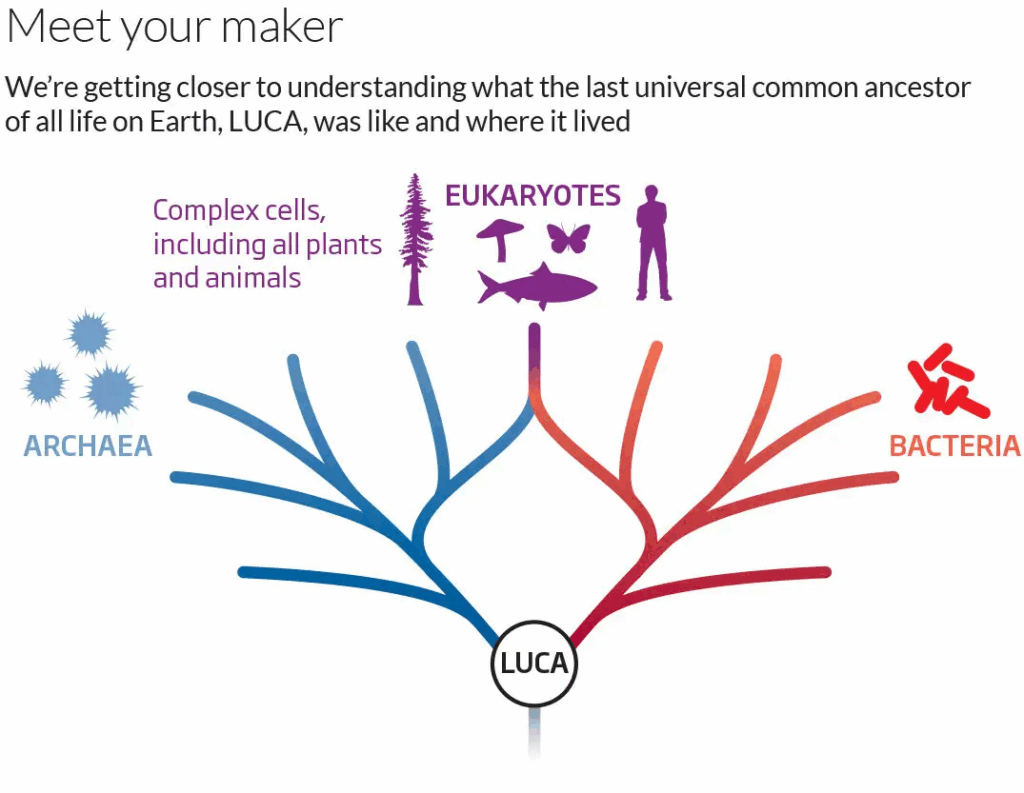
Last Universal Common Ancestor — the most recent organism from which all life descends.
Hydrothermal Vent Hypothesis
Theory that life evolved around deep-sea vents with rich chemical environments.
Molecular Clock
Technique using mutation rates to estimate divergence times between species.
Autotroph
An organism that produces its own food from inorganic sources.
Fossil Record
Preserved remains or traces of ancient life used to study evolutionary history.
Radiometric Dating
Method for determining the age of rocks/fossils using decay of radioactive isotopes.
📌Introduction
Evidence for the evolution of life combines molecular biology, geology, and paleontology. DNA and protein comparisons reveal shared ancestry, while fossils and dating techniques establish timelines for life’s emergence. Geological evidence suggests life may have originated in extreme environments, such as hydrothermal vents, where chemical energy supported early organisms.
❤️ CAS Link: Create an interactive school exhibit showing models of hydrothermal vents and extremophile habitats.
📌 Molecular Evidence for Common Ancestry
All living organisms share the same genetic code, supporting a common origin.
DNA sequences and protein structures show strong similarities across species.
Universality of basic biochemical pathways (glycolysis, ATP synthesis) points to a shared ancestor.
Molecular clock analysis uses mutation rates to estimate divergence times.
Similarity in ribosomal RNA sequences is a strong evolutionary marker.
LUCA likely had a simple but fully functioning genetic and metabolic system.
🧠 Examiner Tip: In “evidence” questions, include molecular, structural, and biochemical similarities — not just DNA sequences.
📌 Geological and Fossil Evidence
The oldest known microfossils date to around 3.5 billion years ago.
Stromatolites, layered structures from microbial mats, provide early evidence of life.
Fossils are dated using radiometric methods such as uranium–lead or potassium–argon dating.
Sedimentary rock layers help reconstruct the sequence of evolutionary events.
Fossil evidence is limited due to the rarity of preservation and erosion over time.
Isotopic signatures in ancient rocks suggest biological carbon fixation occurred early in Earth’s history.
🌍 Real-World Connection: Fossil dating techniques are also applied in archaeology to date ancient human remains and artefacts.
📌 Hydrothermal Vent Hypothesis
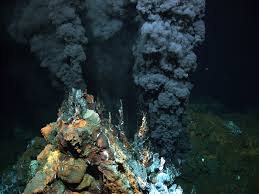
Proposes that LUCA evolved in deep-sea hydrothermal vents.
Vents provide heat, minerals, and chemical gradients — all potential energy sources.
Extremophile microbes found in vents today may resemble early life forms.
Vents’ stable conditions could protect early life from surface hazards like UV radiation.
Chemosynthetic bacteria use vent chemicals to produce food without sunlight.
Fossil and chemical evidence suggests vent ecosystems existed over 3 billion years ago.
🔍 TOK Perspective: How do scientists decide between competing origin hypotheses when direct observation is impossible?
🌐 EE Focus: An EE could analyse genomic evidence of extremophile adaptations to assess whether vent environments are plausible origins of life
📝 Paper 2: Data Response Tip: When explaining the hydrothermal vent hypothesis, always include energy source, protection from UV, and chemical gradients for full marks
A2.1.2 – EVOLUTION OF CELLS
📌Definition Table
Term
Definition
Protocell
A membrane-bound structure thought to be a precursor to modern cells.
RNA World Hypothesis
Theory that self-replicating RNA was the first genetic material.
Compartmentalisation
Separation of internal chemistry from the environment via membranes.
Metabolism-First Model
Hypothesis that life began with metabolic networks before genetic material.
Gene-First Model
Hypothesis that self-replicating genetic molecules appeared before metabolism.
Abiogenesis
The origin of living organisms from non-living matter.
📌Introduction
The evolution of cells marks the transition from non-living chemistry to living systems capable of growth, reproduction, and metabolism. This process involved the development of self-replicating molecules, the formation of protective membranes, and the emergence of the first prokaryotic cells. While several hypotheses exist, evidence points to RNA as playing a key early role in life’s origin.
📌 Stages in the Origin of Cells
Abiotic synthesis of organic molecules (amino acids, nucleotides) in early Earth conditions.
Polymerisation into macromolecules such as proteins and nucleic acids.
Self-replication: first genetic material likely RNA due to its dual role as information carrier and catalyst.
Compartmentalisation: formation of membranes/vesicles to protect and concentrate reactions.
Development of metabolic pathways to harness energy and resources.
Transition from protocells to the Last Universal Common Ancestor (LUCA).
🧠 Examiner Tip: Always mention compartmentalisation as a key step — many students forget it and lose marks in origin-of-life questions.
📌 RNA World Hypothesis
RNA can store genetic information and act as an enzyme (ribozyme).
This dual role supports the idea that RNA preceded DNA and proteins.
RNA ribozymes could catalyse their own replication in early life.
DNA likely evolved later for greater stability in information storage.
Proteins took over most catalytic functions due to greater versatility.
Lab experiments have shown that short RNA sequences can self-replicate under certain conditions.
📌 Compartmentalisation and Protocells
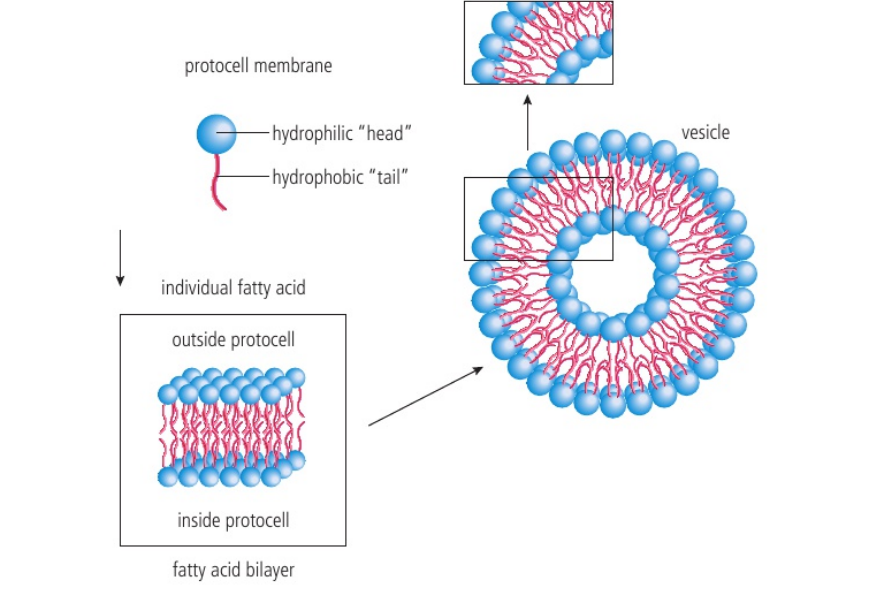
Fatty acids can spontaneously form vesicles in water.
Vesicles can encapsulate RNA, proteins, and other molecules.
This separation from the environment allows controlled internal chemistry.
Vesicles can grow and divide without complex machinery.
Early membranes were likely more permeable than modern phospholipid bilayers.
Protocells could have formed naturally in volcanic pools or oceanic hydrothermal vents.
⚗️ IA Tips & Guidance: Simple lipid vesicle experiments can be modelled in the lab using micelle and emulsion formation — ideal for chemistry–biology crossover IAs.
📌 Competing Hypotheses: Gene-First vs Metabolism-First
Gene-First Model: Self-replicating molecules (RNA/DNA) appeared first, later supported by metabolism.
Metabolism-First Model: Self-sustaining chemical cycles evolved first, creating a framework for genetic material to develop.
Hydrothermal vents could have supported metabolism-first life by providing continuous chemical gradients.
Both models may have operated together — early metabolic cycles could stabilise and support genetic molecules.
Debate continues due to limited fossil and experimental evidence.
🌐 EE Focus: An EE could explore metabolism-first vs gene-first origins using modern synthetic biology studies as evidence.
📝 Paper 2: Data Response Tip: In origin-of-life questions, clearly link abiotic synthesis → polymerisation → replication → membranes in the correct sequence.
A2.1.1 – FORMATION OF CARBON COMPOUNDS & EARLY ORGANIC MOLECULES
📌Definition Table
Term
Definition
Abiogenesis
The origin of living organisms from non-living matter.
Primordial Soup Hypothesis
Theory that life began in a warm, shallow ocean rich in organic compounds.
Miller–Urey Experiment
1953 experiment simulating early Earth conditions to test the primordial soup hypothesis.
Polymerization
The chemical process of linking monomers to form polymers.
Fatty Acid
A building block of lipids, important in membrane formation.
Vesicle
A small, membrane-bound compartment that can form spontaneously from lipids.
📌Introduction
The formation of carbon compounds was a key step in the origin of life. Before cells existed, simple molecules like water, methane, ammonia, and hydrogen reacted to produce the organic building blocks of life — amino acids, sugars, lipids, and nucleotides. These compounds then assembled into polymers and eventually into membrane-bound structures, paving the way for the first living cells.
❤️ CAS Link: Organize a science outreach activity where students build models of early Earth and simulate vesicle formation using soap bubbles or oil-in-water emulsions.
📌 Conditions on Early Earth
Early Earth’s atmosphere likely contained methane, ammonia, hydrogen, and water vapour, but little to no oxygen.
High energy sources — UV radiation, lightning, volcanic heat — drove chemical reactions.
Oceans acted as a solvent where compounds could accumulate.
No ozone layer meant high UV penetration, which could both drive synthesis and degrade molecules.
These conditions favoured the formation of organic molecules from inorganic gases.
🧠 Examiner Tip: In essays, link atmospheric composition and energy sources to the formation of organic molecules — omitting one loses marks.
📌 Primordial Soup Hypothesis
Proposed independently by Oparin and Haldane in the 1920s.
Suggests early oceans formed a “soup” of organic molecules from atmospheric gases.
Energy from lightning and UV drove the formation of simple organic compounds.
Molecules accumulated in oceans, providing building blocks for life.
This set the stage for polymerisation and protocell formation.
Hypothesis has been tested experimentally with partial success.
🌍 Real-World Connection: Understanding abiogenesis informs astrobiology, guiding the search for life on planets like Mars and moons like Europa.
📌 Miller–Urey Experiment
Conducted in 1953 to test the primordial soup hypothesis.
Simulated early Earth atmosphere with methane, ammonia, hydrogen, and water vapour.
Passed electric sparks to mimic lightning.
After a week, found amino acids and other simple organic molecules in the apparatus.
Proved organic compounds can form under abiotic conditions.
Later research showed early Earth atmosphere may have been less reducing, raising questions about the experiment’s exact relevance.
📌 Assembly into Polymers
Organic monomers can link to form polymers (proteins, nucleic acids, polysaccharides).
Polymerisation can occur on mineral surfaces like clay, which act as catalysts.
Lipids can spontaneously form micelles and vesicles in water.
Vesicles provide compartmentalisation, protecting reactions from the external environment.
These membrane-bound structures are possible precursors to the first protocells.
Fatty acids, more permeable than modern phospholipids, may have formed primitive membranes.
⚗️ IA Tips & Guidance: For a practical link, consider IAs on self-assembly of lipids into micelles/vesicles or polymerization under simulated conditions — easy to model with safe lab analogues.
🌐 EE Focus: A possible EE topic could be comparing pathways for abiotic synthesis of amino acids in different atmospheric models, linking to planetary habitability.
📝 Paper 2: Data Response Tip: If shown the Miller–Urey setup, label the gas mixture, condenser, spark chamber, and collection trap. Always mention the type of molecules produced.
A1.2.3 – HISTORICAL EXPERIMENTS AND SCIENTIFIC ADVANCES
📌 Definition Table
Term
Definition
Hershey–Chase Experiment
An experiment using bacteriophages to confirm DNA is the genetic material.
Radioisotope Labeling
Using radioactive elements to trace molecules in biological systems.
Chargaff’s Rules
Observations that in DNA, %A ≈ %T and %G ≈ %C.
Tetranucleotide Hypothesis
An early, incorrect theory that DNA consisted of repeating units of four bases.
Molecular Visualization
Software or techniques used to model and study DNA/protein structures.
Falsification
The process of disproving a hypothesis through evidence.
📌 Introduction
The history of nucleic acids is shaped by key experiments and technological advances that proved DNA, not protein, is the genetic material, and revealed its structure and function. These discoveries illustrate how scientific knowledge evolves through falsification, technological innovation, and collaboration.
📌 Hershey – Chase Experiment
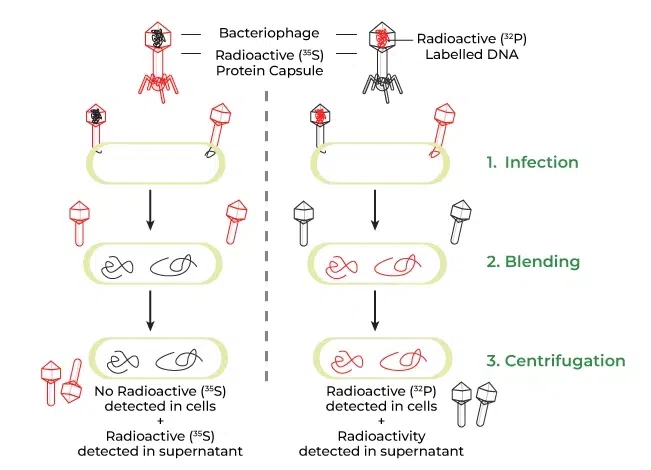
Used bacteriophages (viruses that infect bacteria) to test whether protein or DNA carried genetic information.
DNA was labeled with radioactive phosphorus (³²P), protein coat with radioactive sulfur (³⁵S).
After infection, ³²P was found inside bacteria, ³⁵S remained outside.
Conclusion: DNA is the genetic material passed to offspring, not protein.
Provided final confirmation after earlier evidence from other studies.
🧠 Examiner Tip: State both radioisotopes and which macromolecule each labels — examiners award marks for detail.
🌍 Real-World Connection: Radioisotope tracing is now used in medicine (PET scans) and forensic science.
📌 Chargaff’s Rules
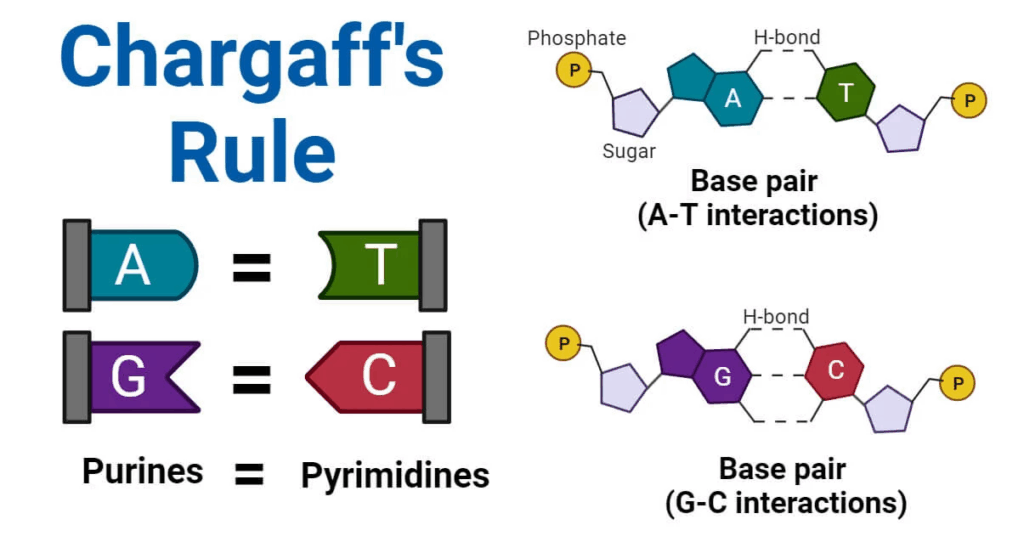
Erwin Chargaff discovered that in any DNA sample: %A ≈ %T and %G ≈ %C.
Ratios vary between species, but A always pairs with T and G with C.
This disproved the tetranucleotide hypothesis (equal quantities of all bases).
Provided key evidence for complementary base pairing in the double helix.
Also explained why purines pair with pyrimidines for uniform helix width.
🔍 TOK Perspective: Chargaff’s work shows how unexpected data can challenge accepted theories, raising the question — how open should science be to overturning long-held beliefs?
📌 Falsification of the Tetranucleotide Hypothesis
Early scientists believed DNA was too simple to carry genetic information.
Proposed repeating units of four bases in equal amounts.
Chargaff’s data disproved this — base composition is species-specific.
This paved the way for the Watson–Crick model of DNA.
Shows how scientific theories are discarded when evidence contradicts them.
🌐 EE Focus: Explore the process of falsification in biology by comparing historical theories about DNA with modern understanding.
Molecular visualization software now models DNA and proteins in 3D.
Computer modelling helps predict protein folding and genetic interactions.
Databases store genome sequences for research and biotechnology.
These tools improve our understanding of structure–function relationships in biology.
⚗️ IA Tips & Guidance: Consider using online DNA modeling tools or protein databases in IAs to investigate structural properties.
📝 Paper 2: Data Response Tip: When asked about experiments like Hershey–Chase, always include the method, results, and conclusion. Missing any one of these will lose marks.
A1.2.2 – FUNCTION AND ROLE OF THE GENETIC CODE
📌Definition Table
Term
Definition
Genetic Code
The set of rules by which information in DNA or RNA is translated into proteins.
Codon
A sequence of three nucleotides that codes for a specific amino acid or stop signal.
Anticodon
A complementary three-nucleotide sequence on tRNA that pairs with a codon on mRNA.
Universal Code
The genetic code is the same in almost all organisms.
Redundant Code
Multiple codons can code for the same amino acid.
Genome
The complete set of DNA, including all genes, of an organism.
📌Introduction
The genetic code is the link between the information stored in nucleic acids and the proteins that carry out cellular functions. Its structure, universality, and redundancy allow life to exist and evolve while maintaining accuracy in protein synthesis. The way DNA is transcribed and translated is fundamental to understanding heredity, gene expression, and biotechnology.
📌 Nature of the Genetic Code
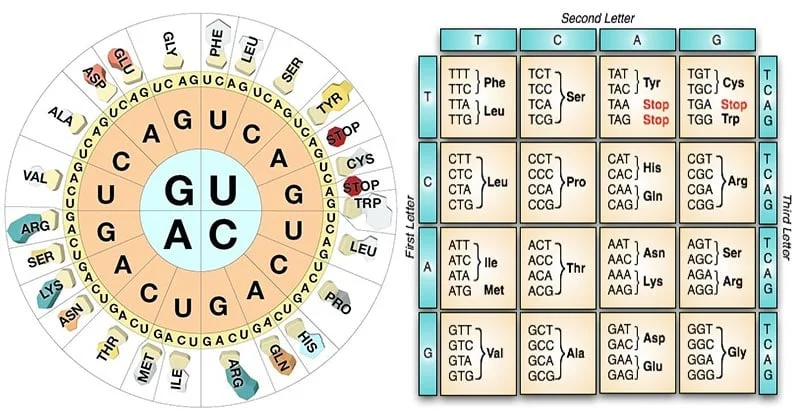
Made of triplet codons — each codon specifies one amino acid or a stop signal.
Code is universal — the same in nearly all organisms, evidence for common ancestry.
Code is redundant — multiple codons can code for the same amino acid.
Code is non-overlapping — codons are read sequentially in sets of three.
Start codon AUG codes for methionine and begins translation.
Stop codons UAA, UAG, UGA terminate protein synthesis.
🧠 Examiner Tip: Always include “triplet, non-overlapping, universal, redundant” when defining the genetic code in exams.
📌 Storage and Transmission of Information
DNA stores instructions for building proteins in the sequence of its bases.
Complementary base pairing ensures faithful replication during cell division.
mRNA carries a temporary copy of a gene from DNA to ribosomes.
The sequence of bases in DNA directly determines protein structure.
Changes in base sequence can alter amino acid sequence, potentially affecting function.
Genome size and gene number vary widely across organisms.
🌍 Real-World Connection: Genome sequencing projects help identify genes linked to diseases, enabling targeted therapies and personalized medicine.
📌 Protein Synthesis Overview
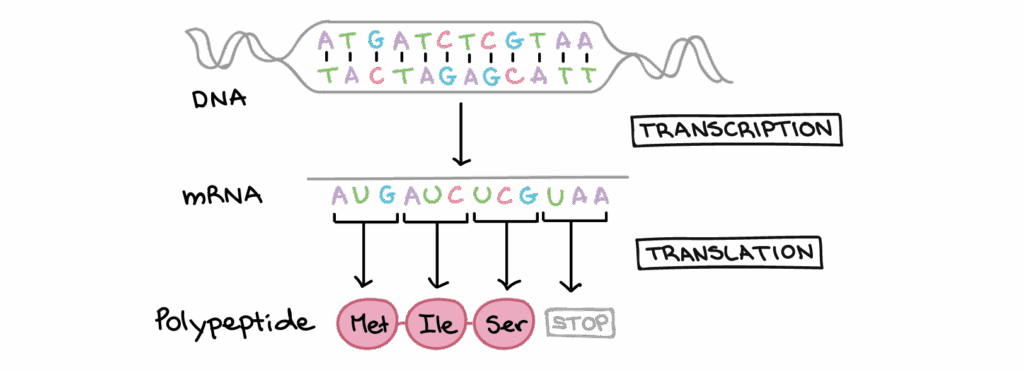
Transcription: DNA sequence is copied into mRNA by RNA polymerase.
mRNA processing in eukaryotes includes splicing, capping, and poly-A tail addition.
Translation: Ribosomes read codons on mRNA to assemble amino acids in sequence.
tRNA molecules match their anticodons to mRNA codons, delivering amino acids.
Ribosomes catalyse peptide bond formation to create a polypeptide chain.
Folding and modifications create a functional protein.
⚗️ IA Tips & Guidance: In protein synthesis modelling or bioinformatics IAs, link codon sequences to protein structure and function.
📌 Universality and Biotechnology
The universality of the genetic code allows gene transfer between species.
Bacteria can produce human proteins like insulin when given the human gene.
Genetically modified crops use foreign genes to gain desired traits.
The redundancy of the code reduces harmful effects of some mutations.
Ethical debates arise over the use of genetic engineering in food and medicine.
The universality also supports the theory of evolution.
🌐 EE Focus: An EE could investigate mutation effects on protein function using in-silico translation tools.
📌 Errors and Mutations in the Code
Mutations are changes in DNA base sequence — may be silent, missense, or nonsense.
Silent mutations do not change the amino acid sequence due to redundancy.
Missense mutations replace one amino acid with another, possibly altering function.
Frameshift mutations (insertion/deletion) alter the reading frame, often severely damaging function.
Mutation effects depend on location, type, and protein function.
🔍 TOK Perspective: Are “errors” in the genetic code always harmful, or can they be a source of creativity in evolution?
📝 Paper 2: Data Response Tip: If given a DNA or mRNA sequence, be ready to transcribe and translate it, then determine amino acids. Show all working to get method marks.
A1.2.1 – STRUCTURE OF NUCLEIC ACIDS
📌Definition Table
Term
Definition
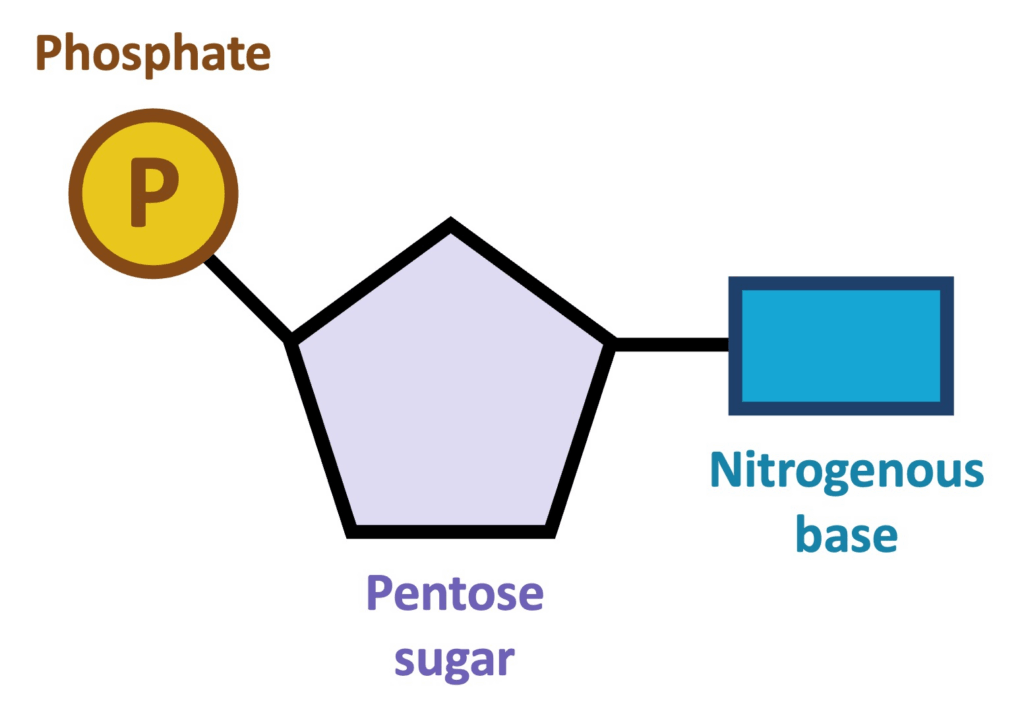
Nucleotide
The basic unit of nucleic acids, consisting of a phosphate group, a pentose sugar, and a nitrogenous base.
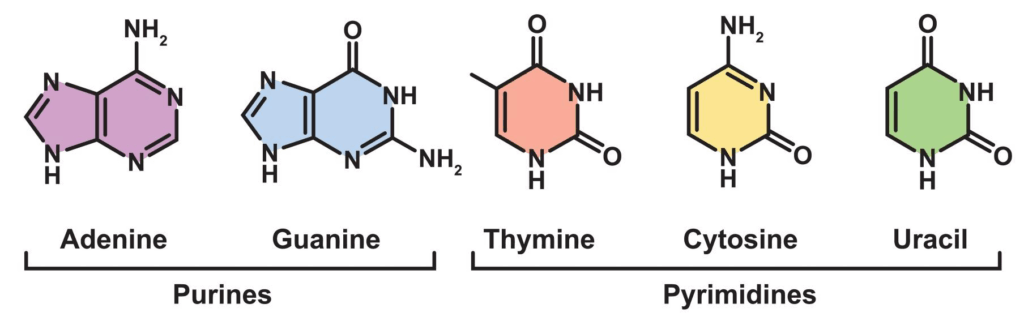
Purine
A nitrogenous base with a double-ring structure (adenine, guanine).
Pyrimidine
A nitrogenous base with a single-ring structure (cytosine, thymine, uracil).
Antiparallel
Arrangement where the two strands of DNA run in opposite directions (5’→3’ and 3’→5’).
Complementary Base Pairing
Hydrogen bonding between specific bases (A–T or A–U, and G–C).
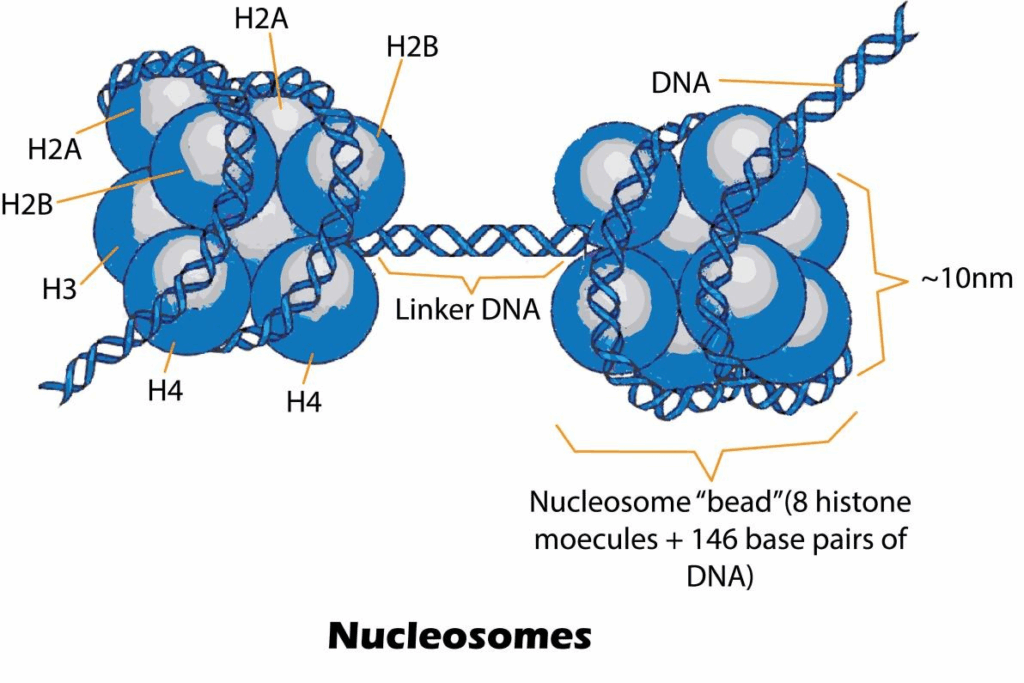
Nucleosome
A structural unit of DNA wrapped around histone proteins, aiding packaging in eukaryotes.
📌Introduction
Nucleic acids are the molecules of heredity — storing, transmitting, and expressing genetic information in all living organisms. Their structure, composed of nucleotides arranged in specific sequences, determines how genetic instructions are preserved and used. The structure of DNA and RNA underpins every process in molecular biology, from replication to protein synthesis.
📌 DNA as Genetic Material
DNA is found in the nucleus of eukaryotes and the cytoplasm of prokaryotes.
It stores hereditary information in the form of base sequences.
Viruses may have DNA or RNA as their genetic material.
The double helix structure allows stability and long-term information storage.
DNA’s complementary base pairing supports accurate replication.
Its stability allows it to persist for generations without rapid degradation.
🧠 Examiner Tip: In “structure–function” questions, link double helix stability to information storage and complementary base pairing to accurate replication.
📌 Components of Nucleotides
Each nucleotide contains a pentose sugar (deoxyribose in DNA, ribose in RNA).
A phosphate group forms the sugar–phosphate backbone.
Nitrogenous bases are either purines (A, G) or pyrimidines (C, T, U).
Bases attach to the 1′ carbon of the sugar; phosphate attaches to the 5′ carbon.
The sugar–phosphate backbone is connected by phosphodiester bonds.
Nitrogenous bases form the genetic code through specific sequences.
⚗️ IA Tips & Guidance: In gel electrophoresis or molecular modeling IAs, discuss how nucleotide structure (size, charge) influences DNA movement or stability.
📌 Structure of DNA
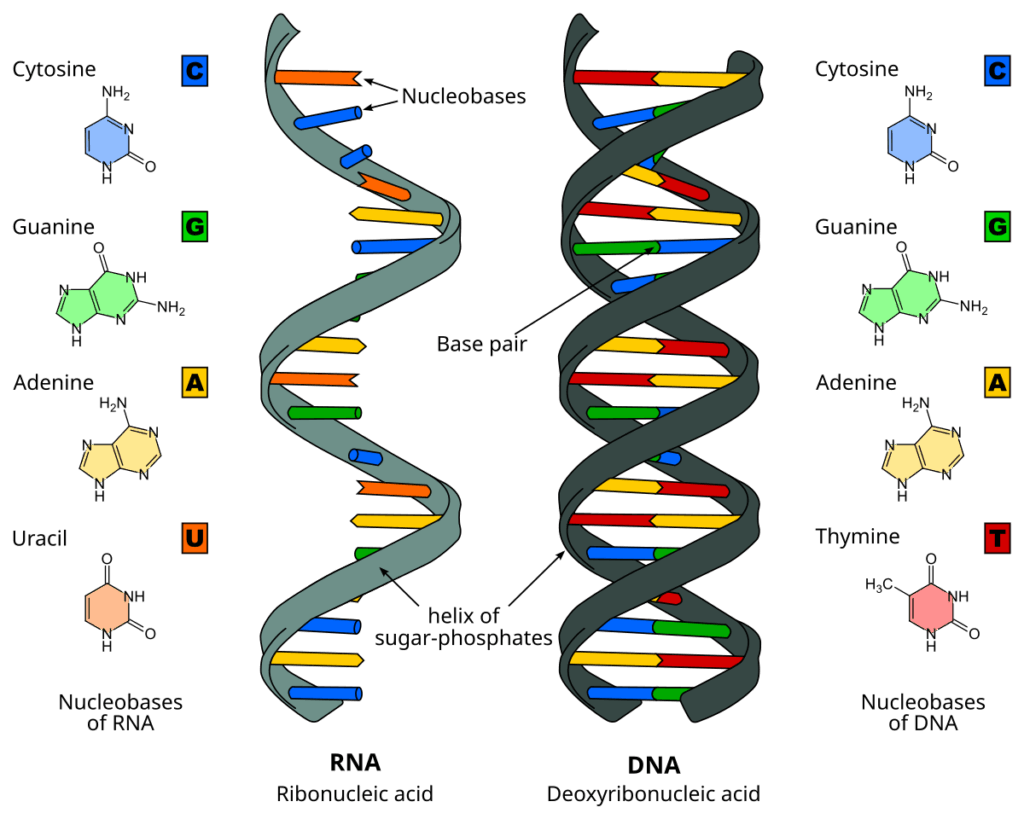
DNA consists of two antiparallel strands forming a double helix.
Strands are held together by hydrogen bonds between complementary bases.
Adenine pairs with thymine (A–T) via two hydrogen bonds.
Guanine pairs with cytosine (G–C) via three hydrogen bonds.
The helical twist creates major and minor grooves where proteins can bind.
DNA is always read and replicated in the 5′→3′ direction.
🌐 EE Focus: Explore how GC content affects DNA melting temperature in organisms adapted to extreme environments.
📝 Paper 2: Data Response Tip: If a diagram shows DNA, label the 5′ and 3′ ends, indicate hydrogen bonds, and state the number of bonds in each base pair for full marks.
📌 Structure of RNA
RNA is usually single-stranded and shorter than DNA.
Contains ribose sugar and uracil instead of thymine.
Three main types: mRNA (codes for proteins), tRNA (transfers amino acids), and rRNA (structural component of ribosomes).
Can fold into secondary structures due to internal base pairing.
Less stable than DNA — suited for short-term genetic instructions.
RNA can act as an enzyme (ribozymes) as well as an information carrier.
❤️ CAS Link: Create a school science workshop using models to show differences between DNA and RNA, highlighting their roles in cells.
📌 Nucleosomes and DNA Packaging
In eukaryotes, DNA wraps around histone proteins to form nucleosomes.
Each nucleosome contains eight histone subunits.
Nucleosomes compact DNA so it fits inside the nucleus.
They help regulate gene expression by controlling accessibility to DNA.
DNA between nucleosomes is called linker DNA.
Histone modifications can activate or silence genes.
🌍 Real-World Connection: Epigenetic research studies how histone modifications change gene expression, which is important in cancer and aging.
🔍 TOK Perspective: Models of DNA simplify its structure for understanding. To what extent does this simplification distort the reality of how DNA functions in the cell?
A1.1.3 – ORIGIN OF WATER ON EARTH
📌 Definition Table
Term
Definition
Asteroid Hypothesis
A theory suggesting Earth’s water came from asteroid or meteorite impacts.
Carbonaceous Chondrites
A type of meteorite believed to contain ice and organic compounds.
Goldilocks Zone
The region around a star where temperatures are just right for liquid water.
Exoplanet
A planet that exists outside our solar system.
Water Signature
Evidence of water vapor or liquid in a planet’s atmosphere.
Transit Spectroscopy
A method for detecting atmospheric composition of exoplanets using light.
📌 Introduction
Understanding the origin of water on Earth is vital to understanding how life began. This topic explores how water may have arrived from extraterrestrial sources, why water is central to the emergence of life, and how we use this knowledge in the search for life beyond Earth. It also explains key scientific methods used in modern astrobiology.
📌 Origin of Water on Earth
Earth was initially too hot to retain water, so early oceans could not form directly.
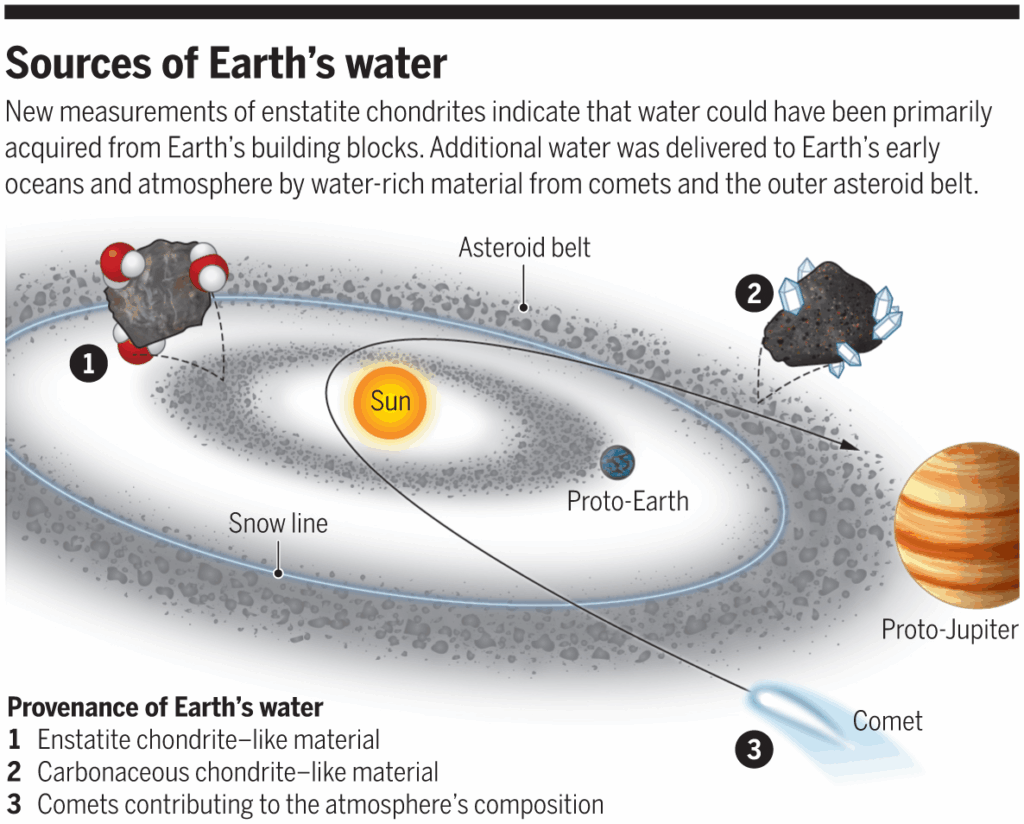
The asteroid hypothesis suggests water came from space, via icy meteorites colliding with Earth.
Carbonaceous chondrites are ancient meteorites that contain water and organic molecules.
These meteorites have hydrogen isotopes similar to those found in Earth’s oceans.
Another group, eucrite achondrites, also matches Earth’s hydrogen isotope ratio.
Water released by these impacts could condense into liquid once Earth cooled, forming oceans.
🧠 Examiner Tip: Focus on carbonaceous chondrites, hydrogen isotopes, and the link to early oceans. You only need to study the asteroid hypothesis for IB exams.
📌 Conditions for Liquid Water and Life
Liquid water can only exist if a planet is not too hot or too cold.
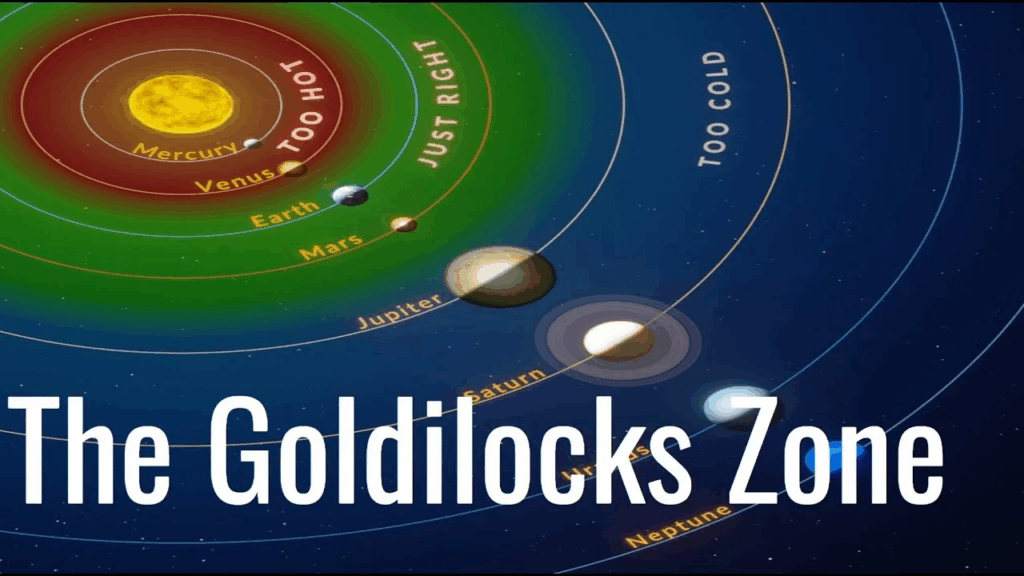
The Goldilocks zone is the habitable region around a star where water stays liquid.
Earth is in the Sun’s Goldilocks zone, enabling stable bodies of water to form.
Water’s unique properties (solvent ability, heat stability) support complex life.
All known life forms require water for metabolism, structure, and reproduction.
The search for extraterrestrial life focuses heavily on planets that may contain water.
⚗️ IA Tips & Guidance: While you can’t test exoplanets in a lab, you can design IAs modeling planetary habitability, water properties, or temperature effects on phase change — always link back to life-supporting conditions.
📌 Search for Life: Water as an Indicator
Scientists look for exoplanets located in the Goldilocks zone of their solar systems.
To assess habitability, they use transit spectroscopy — studying how light filters through a planet’s atmosphere.
If water vapor is detected, the planet is said to have a water signature.
Planets also need to be massive enough to retain an atmosphere that can support liquid water.
A water signature does not confirm life but suggests favorable conditions.
Combined with other markers (e.g., oxygen, methane), it increases the chance of life being possible.
🔍 TOK Perspective: How reliable is water as an indicator of life? Are we limited by anthropocentric bias in assuming that all life must be water-based?
📌 Role of Water in Life’s Emergence
Life is believed to have originated in aqueous environments like hydrothermal vents.
Water allowed solutes to dissolve, react, and be contained within membrane-bound structures.
These early protocells could carry out basic metabolic reactions inside water.
Water’s thermal stability allowed life to evolve in stable, buffered environments.
Many theories suggest water was essential in protein folding and replication mechanisms.
Life’s dependency on water is still seen today — all cells require water to function.
❤️ CAS Link: Create a campaign or workshop educating others on why Earth’s water is rare and valuable, linking space science with sustainability.
🌍 Real-World Connection: Missions like NASA’s Kepler and James Webb telescopes aim to detect water on exoplanets, informing both space exploration and environmental ethics here on Earth.
A1.1.2 – PHYSICAL AND CHEMICAL PROPERTIES OF WATER
📌 Definition Table
Term
Definition
Cohesion
The attraction between water molecules due to hydrogen bonding.
Adhesion
The attraction between water molecules and other polar or charged surfaces.
Specific Heat Capacity
The amount of energy required to raise the temperature of 1 kg of a substance by 1°C.
Latent Heat of Vaporization
The amount of energy required for a substance to change from liquid to gas.
Viscosity
The resistance of a fluid to flow.
Thermal Conductivity
The ability of a substance to conduct heat.
📌 Introduction
Water has a set of unique physical and chemical properties that make it ideal for supporting life. These include its cohesive and adhesive behavior, thermal stability, solvent capabilities, and low density of ice. Most of these properties stem from water’s polarity and hydrogen bonding, making it a critical component in temperature regulation, transport, metabolism, and survival of organisms in various habitats.
📌 Cohesion and Adhesion
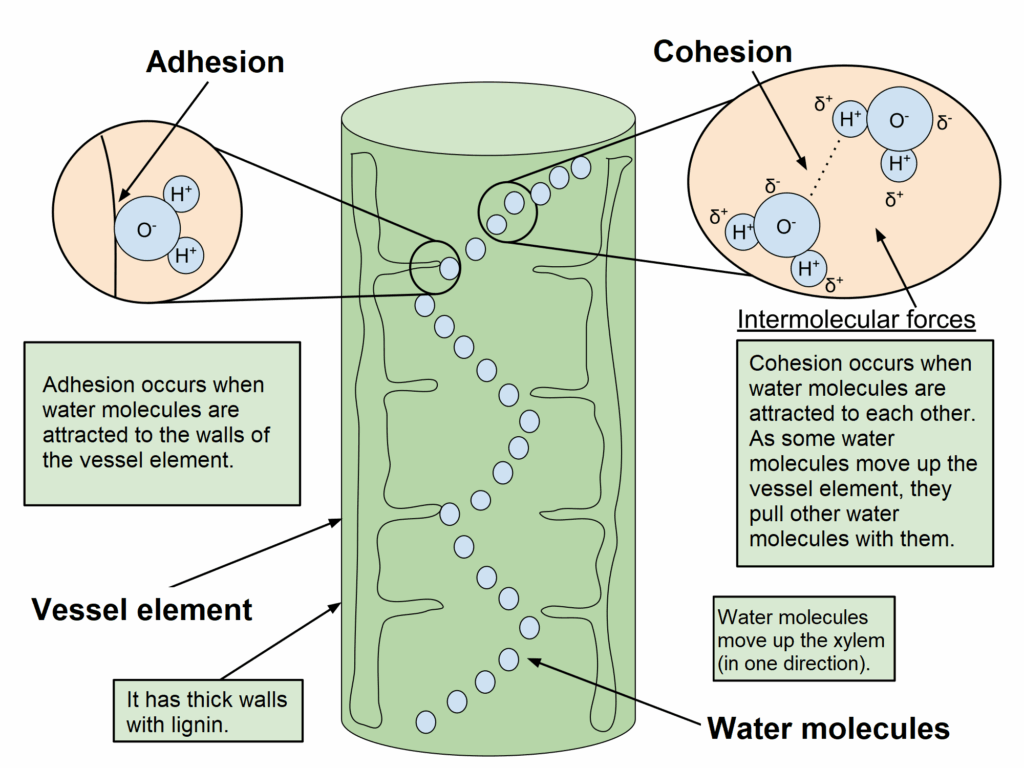
Cohesion results from hydrogen bonds between water molecules, allowing them to stick together.
This creates surface tension, allowing some organisms (like pond skaters) to walk on water.
Cohesion enables the formation of continuous water columns in plant xylem.
Adhesion allows water to bind to polar surfaces like cellulose in plant cell walls.
The combination of cohesion and adhesion drives capillary action, helping water move through narrow tubes.
These forces are vital for water transport in plants during transpiration.
🧠 Examiner Tip: Use “hydrogen bonding” to explain both cohesion and adhesion, and relate them to plant transport or surface tension in short-answer questions.
📌 Water as a Solvent
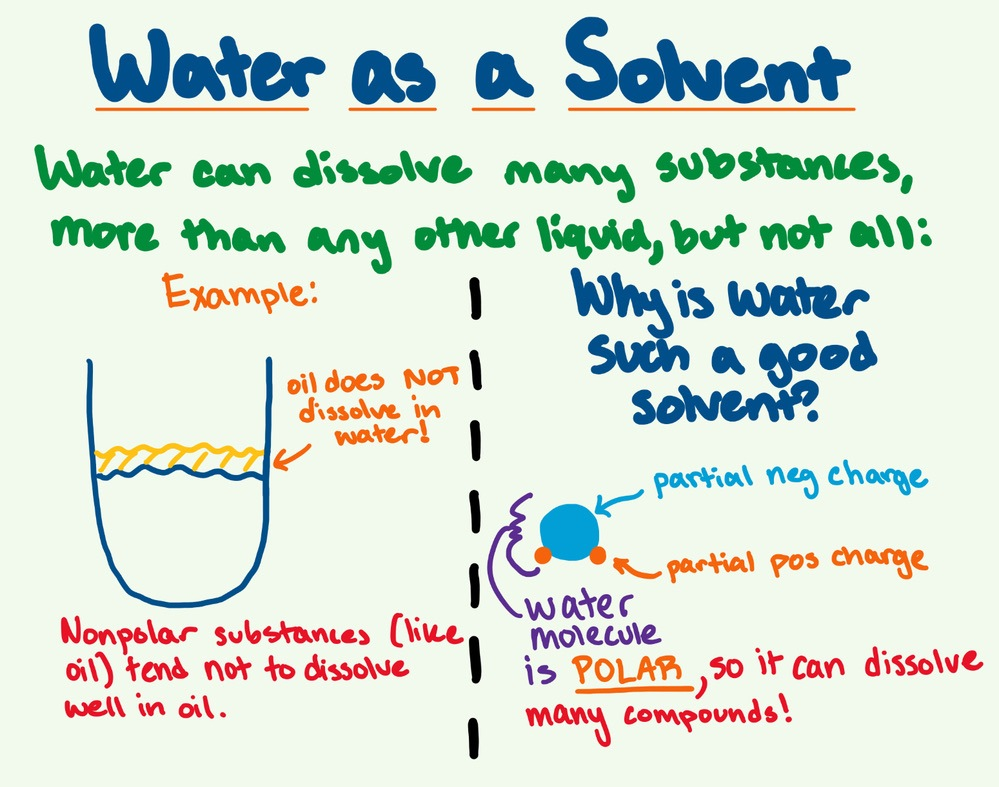
Water’s polarity allows it to dissolve ionic and polar compounds such as salts, sugars, and amino acids.
Substances that dissolve in water are called hydrophilic, while non-polar substances are hydrophobic.
Water forms hydration shells around ions, separating and stabilizing them in solution.
It enables transport of dissolved substances in blood, lymph, and plant sap.
Most biochemical reactions occur in aqueous solutions due to water’s solvent nature.
Water facilitates interactions between molecules, making it a medium for metabolism.
⚗️ IA Tips & Guidance: When investigating solubility or reaction rates, discuss how water’s polarity and hydrogen bonding influence molecular interactions and transport mechanisms.
📌 Specific Heat Capacity
Water has a high specific heat capacity of 4200 J/kg/°C, which means it resists rapid temperature changes.
This stability is due to hydrogen bonds absorbing heat before increasing molecular motion.
It helps maintain stable aquatic environments despite fluctuating air temperatures.
Organisms can maintain homeostasis as water buffers against heat gain/loss.
Aquatic animals benefit from minimized temperature extremes in water bodies.
This is especially important for enzyme function, which depends on optimal temperatures.
🌐 EE Focus: An EE could investigate how water’s thermal properties influence organism survival or biochemical reaction rates in different temperature conditions.
📌 Thermal Conductivity and Latent Heat
Water has relatively high thermal conductivity, helping distribute heat efficiently in organisms and environments.
This property supports internal temperature regulation and even heat distribution in multicellular organisms.
Water has a high latent heat of vaporization, requiring significant energy to evaporate.
This allows for effective cooling mechanisms such as sweating or transpiration.
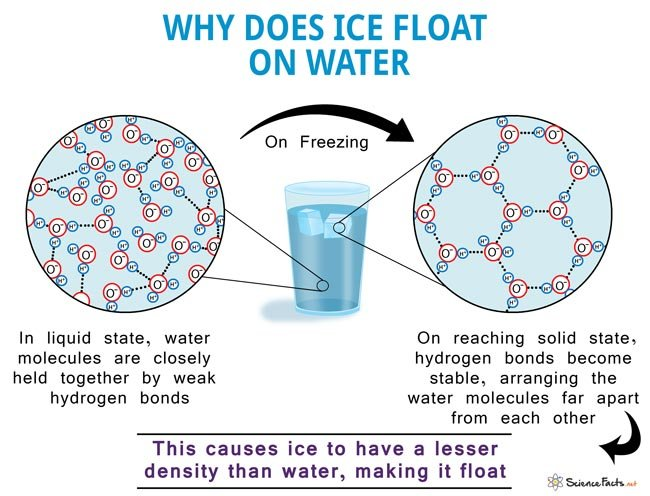
Ice, due to stable hydrogen bonds, forms a lattice structure that insulates water beneath.
These features make water excellent for thermoregulation and habitat stability.
🔍 TOK Perspective: How do we “know” water is essential for life? Are our definitions of life biased by Earth-based systems and water-dependent models?
📌 Density of Ice and Buoyancy
Ice is less dense than liquid water due to hydrogen bonding creating a structured crystal lattice.
This makes ice float, insulating the water below and protecting aquatic life in winter.
Floating ice forms stable platforms for animals like seals and polar bears.
This property contributes to the thermal stability of oceans and lakes.
Aquatic organisms survive harsh winters because water beneath the ice remains liquid.
Buoyancy is also affected by body composition; animals like seals use blubber for buoyancy and insulation.
❤️ CAS Link: Develop a CAS project involving ecosystem protection of aquatic life or education about climate change’s impact on ice habitats.
📌 Viscosity and Movement
Water has a low viscosity compared to other fluids, enabling efficient flow through vessels.
This allows blood, lymph, and xylem sap to move with minimal resistance.
Organisms like fish and aquatic birds are adapted to water’s viscosity for smooth movement.
Water’s viscosity supports buoyant force, helping organisms float or swim.
Streamlined body shapes evolve to reduce drag and move efficiently through water.
Lower viscosity compared to oil or honey makes water ideal for internal circulation systems.
🌍 Real-World Connection: Water’s physical properties are crucial in engineering, medical fields (IV fluids), and climate science. Its viscosity and heat properties are considered in designing life support and artificial habitats.
📝 Paper 2: Data Response Tips: Use terms like “high specific heat capacity” or “high latent heat of vaporization” to explain temperature or evaporation trends. Always connect the data back to hydrogen bonding for full marks.
A1.1.1 – HYDROGEN BONDING AND THE BIOLOGICAL IMPORTANCE OF WATER
📌Definition Table
Term
Definition
Hydrogen Bond
A weak electrostatic attraction between a δ⁺ hydrogen atom and a δ⁻ atom (like oxygen or nitrogen) in another molecule.
Polarity
A condition where electrons are unevenly shared in a bond, resulting in partial charges.
Dipole
A molecule that has regions of positive and negative charge.
Cohesion
The attraction between molecules of the same substance (e.g., water to water).
Adhesion
The attraction between water molecules and other polar/charged surfaces.
Solvent
A liquid that dissolves solutes to form a solution; water is the universal solvent.
📌Introduction
Water is the most essential molecule for life. It comprises 70–95% of cellular mass and acts as the medium for biochemical reactions, a solvent, a thermal regulator, and a structural support for living organisms. These biological roles are due to water’s polarity and ability to form hydrogen bonds.
📌 Structure and Polarity of Water
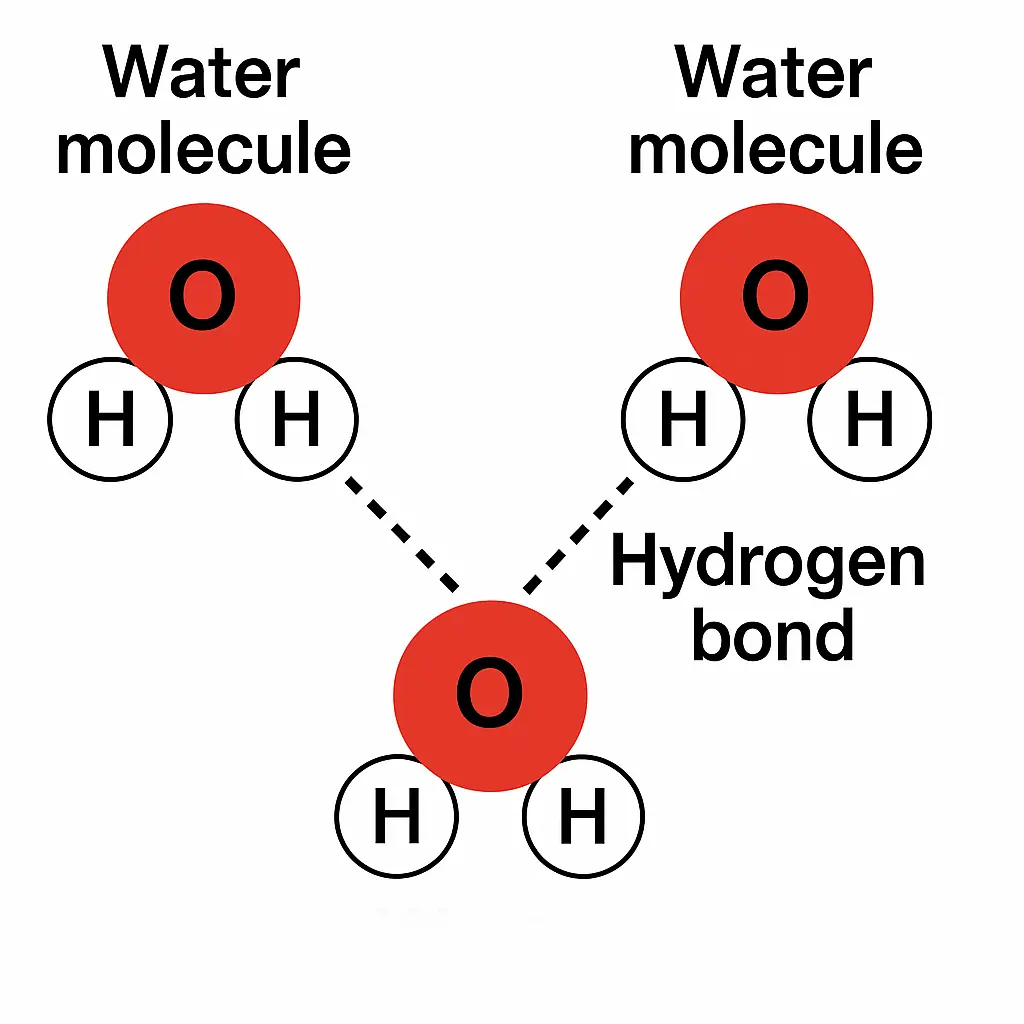
A water molecule consists of two hydrogen atoms and one oxygen atom, forming a bent shape.
The oxygen atom attracts electrons more strongly than hydrogen, causing uneven electron sharing.
This creates a partial negative charge (δ⁻) on oxygen and a partial positive charge (δ⁺) on hydrogen.
Because of this, water is a polar molecule and behaves as a dipole.
Water molecules are attracted to each other via hydrogen bonds between opposite charges.
These bonds are responsible for many unique properties of water like surface tension and high boiling point.
🧠 Examiner Tip: Use terms like “dipole”, “partial charges (δ⁻ / δ⁺)”, and “hydrogen bonding” when describing water’s structure or behavior. Diagrams must clearly show the orientation and labeling of water molecules and hydrogen bonds.
📌 Hydrogen Bonds in Biological Molecules
Hydrogen bonds in DNA base pairs (A-T and G-C) stabilize the double helix structure.
Proteins rely on hydrogen bonds to maintain secondary structures like α-helices and β-pleated sheets.
Tertiary protein structure is also supported by hydrogen bonding between R-groups.
In cellulose and collagen, hydrogen bonds provide structural strength and rigidity.
Enzyme-substrate interactions are stabilized by hydrogen bonds, aiding in catalytic activity.
Hydrogen bonding is essential in forming and maintaining biologically active molecular structures.
🧬 IA Tips & Guidance: Explore experiments involving protein denaturation, enzyme kinetics, or DNA interactions. Discuss how temperature or pH disrupts hydrogen bonding, and use molecular diagrams in your analysis to show how structure affects function.
📌 Water as a Solvent and Medium for Life
Water’s polarity allows it to dissolve a wide variety of solutes, making it a universal solvent.
It supports transport of nutrients and waste in the bloodstream and plant xylem/phloem.
Water enables biochemical reactions to occur in aqueous environments inside cells.
Polar molecules like glucose and ions dissolve easily, aiding metabolic function.
Non-polar molecules like fats are excluded, which helps organize biological structures like membranes.
Solubility differences affect how substances are transported or stored in organisms.
🌐 EE Focus: A strong EE topic could explore solubility of biological molecules in water, the role of polarity in reaction rates, or hydrogen bonding in protein folding. Focus your research on how molecular structure affects function in biological system
📌 Cohesion and Adhesion in Transport
Cohesion results from hydrogen bonds between water molecules, allowing them to stick together.
This creates continuous water columns in plant xylem, aiding upward movement against gravity.
Adhesion allows water to cling to xylem walls (cellulose), supporting capillary action.
Together, cohesion and adhesion support transpiration pull and efficient water transport.
Surface tension from cohesion enables certain insects to move across water surfaces.
These properties are crucial for plant survival and maintaining water cycles in ecosystems.
❤️ CAS Link: Design a service project where students build simple capillary tube demonstrations or a hydroponic system. Use it to explain cohesion and adhesion while promoting sustainable agriculture and plant care awareness.
📌 Hydrogen Bonding and Thermal Stability
Water has a high specific heat capacity due to the energy needed to break hydrogen bonds.
It can absorb large amounts of heat with minimal temperature change.
This property buffers temperature changes in organisms and environments.
It maintains stable aquatic ecosystems, which support biodiversity.
Helps organisms regulate internal temperatures and sustain enzyme activity.
Water’s high latent heat of vaporization makes sweating an effective cooling mechanism.
🌍 Real-World Connection: Water’s heat buffering capacity is crucial in climate regulation. Global warming reduces this balance, impacting marine life, ice caps, and weather systems. Understanding hydrogen bonding helps explain these environmental shifts
📌 Water’s Role in the Origin and Continuation of Life
Life is believed to have originated in aqueous environments, such as near hydrothermal vents.
Water dissolved molecules and allowed chemical reactions inside primitive membranes.
It continues to support life as the solvent of metabolism and transport medium.
Water is required for photosynthesis, respiration, and digestion.
It is actively involved in hydrolysis and condensation reactions.
Scientists search for water on other planets as a key indicator of life’s potential.
🔍 TOK Perspective:Can the presence of water alone be considered sufficient evidence of life? Reflect on how evidence, assumptions, and methodology influence scientific conclusions when interpreting data from exoplanets.
📝 Paper 2: Data Response Tips: Be prepared to interpret graphs showing solubility, enzyme activity, or temperature regulation. Always link back to hydrogen bonding in your explanations and highlight how structure relates to function for full marks.
THE CIRCULAR FLOW OF INCOME
A model that illustrates how income and output circulate between different sectors of the economy, showing the continuous movement of money, resources, and goods/services.
📌How the circular flow of income works:
Households provide factors of production (land, labor, capital, entrepreneurship)
Firms pay households income (wages, rent, interest, profit)
Households use this income to purchase goods and services from firms
This creates a cycle of economic activity
📌Additional flows:
Leakages
Leakages are withdrawals of money from the circular flow of income, reducing the total amount of spending in the economy.
Savings: Money that households or businesses choose not to spend on goods and services, instead putting it into banks or other financial institutions.
🌍Real world example: In Q1 2025, Americans saved 3.97% of their disposable income.
Taxes: Money collected by the government from individuals and businesses in the form of income tax, corporate tax, VAT, etc.
🌍Real world example: In India, in FY 2023–24, income tax (personal + corporate) rose 17.7%, reaching approximately ₹19.58 trillion.
Imports: Spending on foreign-produced goods and services. Money leaves the domestic economy to pay for these goods.
🌍Real world example: In 2024, U.S. imports totaled $4.110 trillion, including $606 billion from the EU.
Injections
Injections are additions of money into the circular flow, increasing the total level of spending in the economy.
Investment: Spending by businesses on capital goods like machinery, buildings, and technology.
🌍Real world example: In 2023, Tesla invested billions of dollars in building a new Gigafactory in Mexico. This factory includes advanced robotics, machinery, and green energy systems to produce electric vehicles and batteries. This kind of spending on capital goods is a classic example of business investment, aimed at increasing production capacity and future profits.
Government spending: Expenditures by the government on goods and services such as infrastructure, healthcare, and education.
🌍Real world example: The federal government allocated over $1 trillion through the Infrastructure Investment and Jobs Act (2021) to improve roads, bridges, public transit, and broadband internet.
Exports: Goods and services produced domestically and sold to foreign consumers. This brings money into the domestic economy.
🌍Real world example: The U.S. exported $370 billion in goods and $277 billion in services to the EU in 2024.
📌Assumptions of the circular flow of income:
Only Two Sectors: households and firms (no government or foreign trade). Households provide factors of production (land, labour, capital, enterprise), and firms produce goods and services and pay households factor incomes (wages, rent, interest, profit)
No Government Intervention: no taxes or government spending and no public sector influence on the economy.
No Foreign Sector: no imports or exports, and all goods and services are produced and consumed domestically.
All Incomes Are Spent (No Savings): households spend all their income on consumption.
❤️CAS idea
Run a School Simulation or Game
CAS Strand: Creativity + Activity
Idea: Design a classroom or school-wide roleplay where your peers or younger school children act as households, firms, banks, and the government.
Impact: Helps understand income flow, injections, and leakages in a fun, practical way.
Learning Outcomes:
Develop new skills
Work collaboratively
📌Can you guess the equilibrium condition?
It is when total leakages = total injections
📌The ideal scenario
In a perfectly balanced or ideal economic scenario, leakages and injections would be equal, leading to a state of equilibrium in the circular flow of income. However, in the real world this perfect balance is rarely maintained due to a variety of constantly changing economic conditions because:
Households may save more than businesses invest,
When savings > investment, this creates a leakage larger than the injection → leading to a fall in national income.
Governments often spend more than they collect in taxes (budget deficits), or sometimes less (surpluses).
Many economies consistently run trade deficits
📌Advantages of Equilibrium in the Circular Flow of Income
When leakages = injections, national income remains stable.
Avoids unwanted inflation or deflation.
Stable income levels encourage predictable spending and investment.
Stable output and income mean steady tax revenue.
Helps governments manage budgets and plan spending.
📌Disadvantages or Limitations (especially of Disequilibrium)
If leakages (like high savings or taxes) exceed injections, demand falls → businesses cut output → job losses.
If injections (like heavy government spending or booming exports) exceed leakages, demand can outstrip supply → prices rise.
A surplus of imports over exports drains money from the domestic economy (net leakage), leading to long-term current account deficits.
📌Video to better understand the circular flow of income
🔁EE Link
Research question ideas:
To what extent has government fiscal policy (taxation and spending) influenced the circular flow of income in [your country/city] during the COVID-19 pandemic?
To what extent has a persistent trade deficit affected the circular flow of income in [country]?
How has the change in household savings rates affected investment and income growth in [country] between 2020 and 2025?
📌Stakeholder analysis
Households
Supply factors of production: labor, land, capital, enterprise
Receive income through wages, rent, interest, profit
Use this income to buy goods and services
Income gives them purchasing power and access to goods/services.
Leakages like taxes and savings reduce disposable income.
Firms
Hire factors of production from households
Sell goods and services to households and other sectors
Invest in capital (injections) and generate profits
Consumer spending provides revenue and profit.
Government spending and exports also support business growth.
Government
Collects taxes from households and firms (leakages)
Spends on public goods, services, and welfare (injections)
Must manage the balance between taxation (leakages) and spending (injections).
Helps stabilize the economy during booms and recessions.
🔍TOK Link
To what extent can economic models like the circular flow accurately reflect real-world complexity?
This model is a simplification – helps understand the economy, but:
Assumes constant flows (no delays, uncertainty)
Doesn’t show inequality or informal sectors
Human behavior is not always rational or predictable