Author: Admin

  • TermDefinition
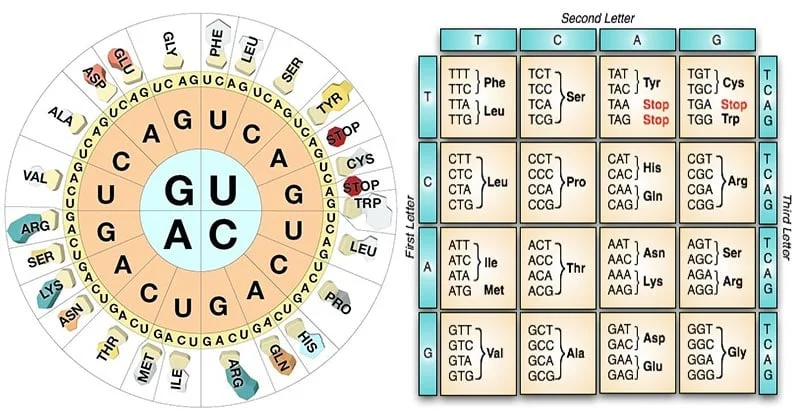
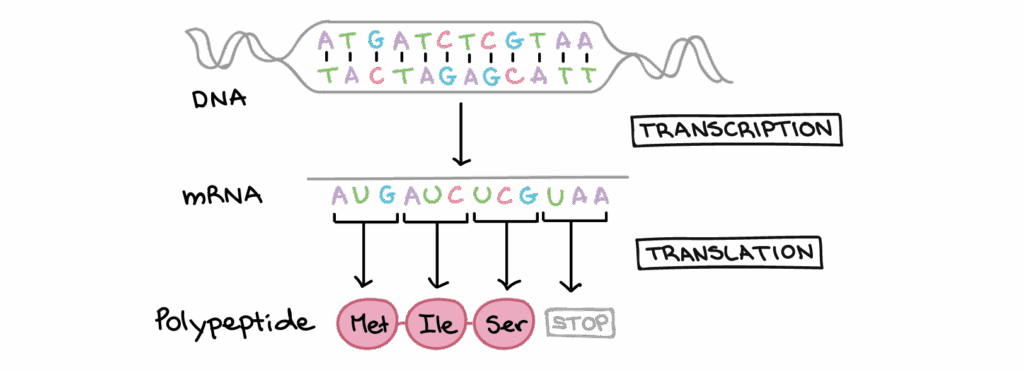
    Genetic CodeThe set of rules by which nucleotide sequences are translated into amino acid sequences in proteins.
    CodonA triplet of nucleotides in mRNA that codes for a specific amino acid or a stop signal.
    Start CodonAUG; signals the start of translation and codes for methionine.
    Stop CodonUAA, UAG, UGA; signals the end of translation.
    DegeneracyMultiple codons can code for the same amino acid.
    Reading FrameThe way nucleotides are grouped into codons during translation.

    The genetic code is a universal molecular language linking DNA sequences to protein structures. It ensures accurate transfer of genetic instructions from DNA to functional proteins through transcription and translation.

    • Triplet Nature: Each amino acid is specified by a three-nucleotide codon.
    • Degenerate: Most amino acids have more than one codon, reducing mutation effects.
    • Unambiguous: Each codon codes for only one amino acid.
    • Non-Overlapping: Codons are read sequentially without sharing bases.
    • Universal: Shared by almost all organisms (with minor exceptions in mitochondria).
    • Start/Stop Signals: AUG starts translation; UAA, UAG, UGA stop it.
    🧠 Examiner Tip: Always specify the start codon (AUG) and stop codons in answers about translation.

    • DNA sequence is copied into mRNA by RNA polymerase.
    • Uses complementary base pairing (A–U, G–C).
    • Only one strand (template strand) is transcribed.
    • Promoter regions control where transcription begins.
    • mRNA produced is complementary to the DNA template strand.
    • Errors in transcription can lead to incorrect proteins.

    🧬 IA Tips & Guidance: Measure transcription rates under different temperature or pH conditions using in vitro transcription systems.

    • Ribosomes read mRNA codons in the 5β€² β†’ 3β€² direction.
    • tRNA molecules carry specific amino acids to the ribosome.
    • Anticodon in tRNA pairs with codon in mRNA.
    • Peptide bonds form between amino acids.
    • Process continues until a stop codon is reached.
    • Produces a specific polypeptide chain.
    🌐 EE Focus: Investigate how codon bias affects translation efficiency in different organisms.

    • Start: AUG β€” codes for methionine; establishes reading frame.
    • Stops: UAA, UAG, UGA β€” do not code for amino acids.
    • Misreading start/stop sites can produce non-functional proteins.
    • Mutations in these sites can disrupt protein synthesis.
    • Alternative start codons exist in rare cases.

    ❀️ CAS Link: Create a classroom activity where students decode amino acid sequences from mRNA codons.

    • Reduces harmful effects of point mutations.
    • Silent mutations often occur at the third codon position.
    • Codon families group codons with the same amino acid outcome.
    • Evolutionary adaptation to minimize protein errors.
    • Some codons are more common (codon bias).

    🌍 Real-World Connection: Codon optimization is used in biotechnology to improve protein expression in recombinant DNA systems.

    • Shared by most life forms β€” evidence for common ancestry.
    • Minor variations exist in mitochondrial and some microbial codes.
    • Supports evolutionary conservation of molecular machinery.
    • Changes in code are rare due to complexity of translation system.

    πŸ” TOK Perspective: Universality of the genetic code raises questions about whether life shares a single origin or if convergent evolution could produce the same code.
    πŸ“ Paper 2: Data Response Tips: Expect codon tables, mRNA sequences to translate, or mutation impact questions.

  • TermDefinition
    Nucleic AcidA polymer of nucleotides that stores and transmits genetic information.
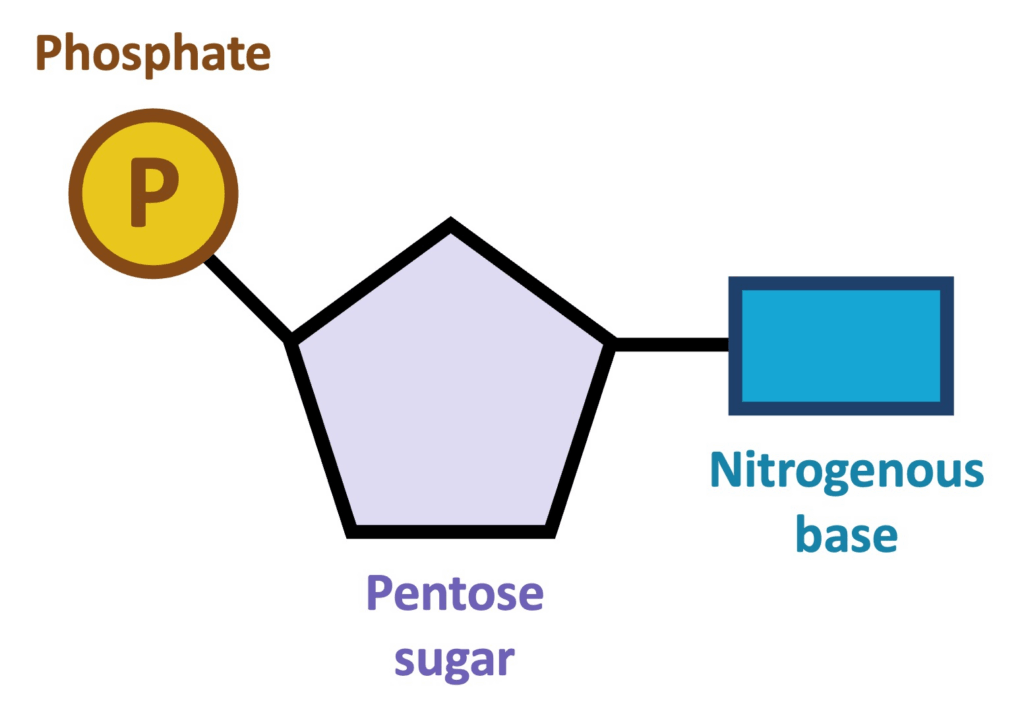
    NucleotideMonomer unit of nucleic acids composed of a phosphate group, pentose sugar, and nitrogenous base.
    NucleosideA nitrogenous base covalently bonded to a sugar, without a phosphate group.
    Phosphodiester BondCovalent linkage between the 3β€² hydroxyl group of one sugar and the 5β€² phosphate group of another nucleotide.
    AntiparallelOrientation of the two DNA strands in opposite 5β€² β†’ 3β€² directions.
    Base PairingSpecific hydrogen bonding between complementary nitrogenous bases (A–T or A–U, G–C).

    Nucleic acids are the essential molecules that store, transmit, and express genetic information in all living organisms. DNA serves as the long-term storage molecule, while RNA plays diverse roles in decoding, regulation, and catalysis, with their structures directly determining their biological functions.

    • Phosphate Group:
      • Negatively charged at physiological pH.
      • Imparts acidic nature to nucleic acids.
      • Links sugars via phosphodiester bonds.
      • Part of the sugar–phosphate backbone.
      • Can be mono-, di-, or triphosphate in energy molecules like ATP.
    • Pentose Sugar:
      • Ribose in RNA (–OH at 2β€² and 3β€² carbons β†’ more reactive).
      • Deoxyribose in DNA (–H at 2β€² carbon β†’ more stable).
      • Numbered carbons guide bond locations.
      • Influences chemical stability and function.
      • Determines type of nucleic acid.
    • Nitrogenous Bases:
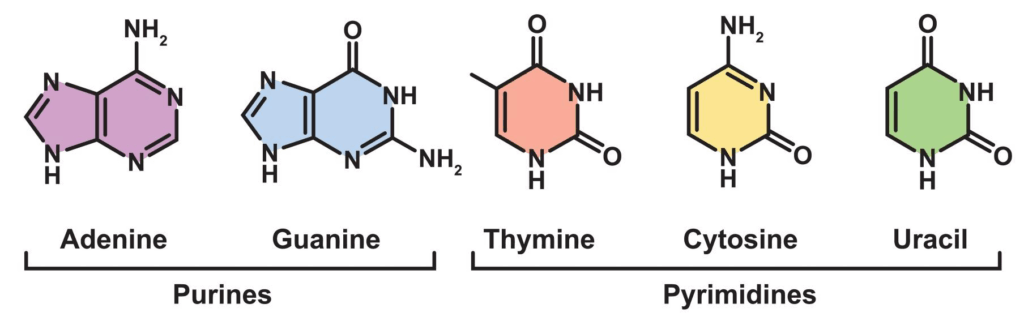
      • Purines (A, G) – double ring.
      • Pyrimidines (C, T, U) – single ring.
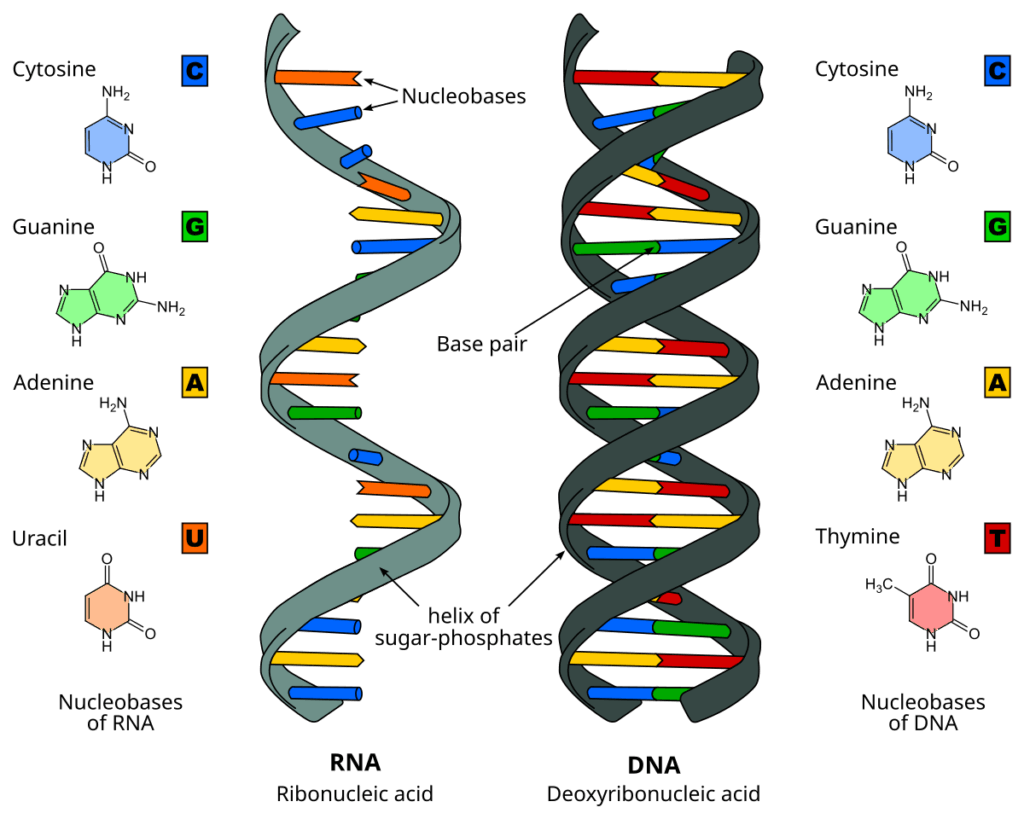
      • Uracil replaces thymine in RNA.
      • Sequence encodes genetic information.
      • Hydrogen bonding specificity ensures replication accuracy.

    🧠 Examiner Tip: Always label the sugar type and number carbons correctly when drawing nucleotides.

    • Two polynucleotide strands form a right-handed double helix.
    • Strands are antiparallel (5β€² β†’ 3β€² and 3β€² β†’ 5β€²).
    • Complementary base pairing: A–T (2 H bonds), G–C (3 H bonds).
    • GC-rich DNA is more thermally stable.
    • Sugar–phosphate backbone is hydrophilic and faces outward.
    • Bases are hydrophobic and stacked inward for stability.
    • Major and minor grooves allow protein binding.

    🧬 IA Tips & Guidance: Investigate DNA melting temperature with different GC contents using spectrophotometry at 260 nm.

    • Usually single-stranded but folds into hairpins and loops.
    • Contains ribose sugar (more reactive than deoxyribose).
    • Bases: A, G, C, U (uracil instead of thymine).
    • Types: mRNA, tRNA, rRNA, miRNA, siRNA.
    • mRNA carries genetic code to ribosomes.
    • tRNA links codons to amino acids.
    • rRNA forms ribosomal structure and catalyzes peptide bonds.

    🌐 EE Focus: Study RNA degradation under different pH or temperatures to link structure to stability.

    • Covalent bonds between 3β€² OH of one sugar and 5β€² phosphate of the next.
    • Backbone is highly stable in DNA.
    • RNA is more prone to hydrolysis due to 2β€²-OH group.
    • Requires polymerase enzymes for synthesis.
    • Directionality dictates replication and transcription.
    • Protects genetic information from random cleavage.

    ❀️ CAS Link: Organize a DNA/RNA model-building activity to teach base pairing and backbone structure.

    • Prokaryotes: Circular DNA, supercoiled in nucleoid region.
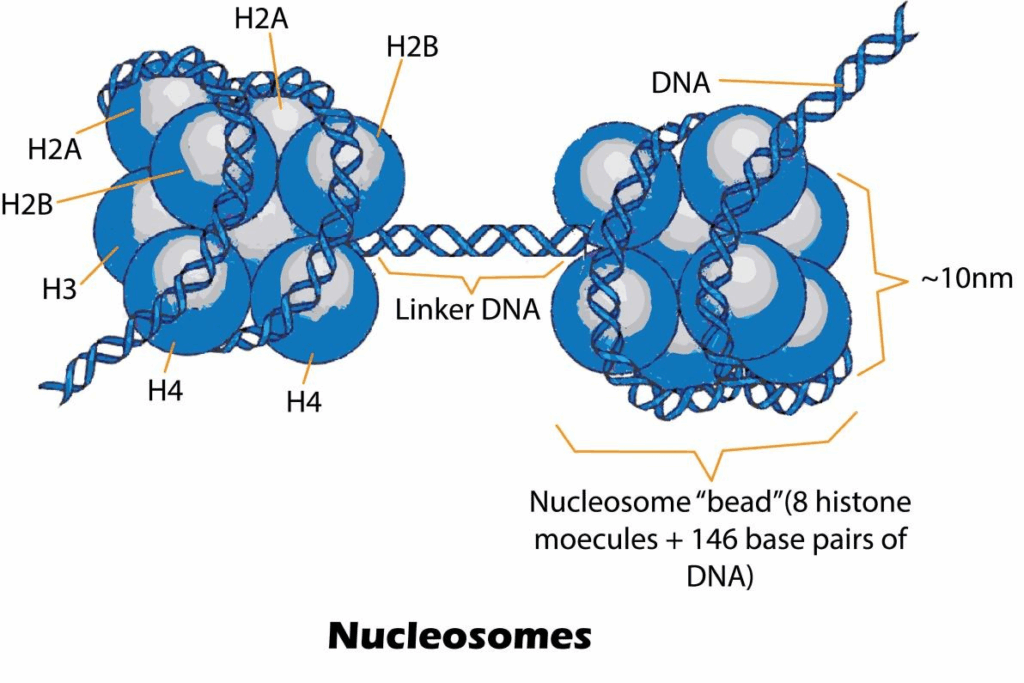
    • Eukaryotes: Linear DNA wrapped around histones β†’ nucleosomes β†’ chromatin β†’ chromosomes.
    • Euchromatin is loosely packed and transcriptionally active.
    • Heterochromatin is tightly packed and inactive.
    • Packaging controls accessibility for gene expression.
    • Protects DNA from damage.

    🌍 Real-World Connection: Epigenetic changes to DNA or histones can alter gene expression without changing sequence.

    • Information flows: DNA β†’ RNA β†’ Protein.
    • Transcription uses RNA polymerase to make RNA from DNA.
    • Translation uses ribosomes to build proteins from mRNA.
    • Reverse transcription (RNA β†’ DNA) occurs in retroviruses.
    • RNA editing and alternative splicing modify genetic output.

    πŸ” TOK Perspective: The Central Dogma is a guiding principle, but exceptions remind us that scientific knowledge evolves.

    πŸ“ Paper 2: Data Response Tips: Be ready for questions on DNA melting curves, GC content, and RNA vs. DNA stability.

  • TermDefinition
    CohesionThe attraction between water molecules due to hydrogen bonding.
    AdhesionThe attraction between water molecules and other polar or charged surfaces.
    Specific Heat CapacityThe amount of energy required to raise the temperature of 1 kg of a substance by 1Β°C.
    Latent Heat of VaporizationThe amount of energy required for a substance to change from liquid to gas.
    ViscosityThe resistance of a fluid to flow.
    Thermal ConductivityThe ability of a substance to conduct heat.

    Water has a set of unique physical and chemical properties that make it ideal for supporting life. These include its cohesive and adhesive behaviour, thermal stability, solvent capabilities, and low density of ice. Most of these properties stem from water’s polarity and hydrogen bonding, making it a critical component in temperature regulation, transport, metabolism, and survival of organisms in various habitats.

    ❀️ CAS Link: Design a service project where students build simple capillary tube demonstrations or a hydroponic system. Use it to explain cohesion and adhesion while promoting sustainable agriculture and plant care awareness.

    • Cohesion results from hydrogen bonds between water molecules, allowing them to stick together.
    • This creates surface tension, allowing some organisms (like pond skaters) to walk on water.
    • Cohesion enables the formation of continuous water columns in plant xylem.
    • Adhesion allows water to bind to polar surfaces like cellulose in plant cell walls.
    • The combination of cohesion and adhesion drives capillary action, helping water move through narrow tubes.
    • These forces are vital for water transport in plants during transpiration.

    🧠 Examiner Tip: Use β€œhydrogen bonding” to explain both cohesion and adhesion, and relate them to plant transport or surface tension in short-answer questions.

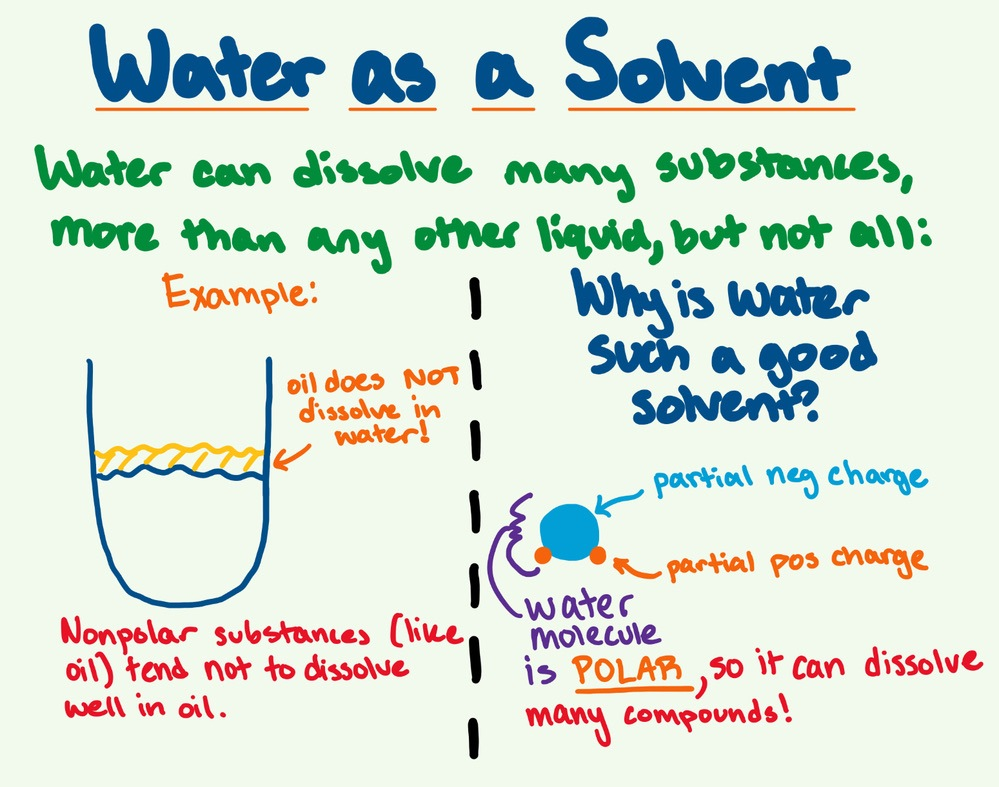
    • Water’s polarity allows it to dissolve ionic and polar compounds such as salts, sugars, and amino acids.
    • Substances that dissolve in water are called hydrophilic, while non-polar substances are hydrophobic.
    • Water forms hydration shells around ions, separating and stabilizing them in solution.
    • It enables transport of dissolved substances in blood, lymph, and plant sap.
    • Most biochemical reactions occur in aqueous solutions due to water’s solvent nature.
    • Water facilitates interactions between molecules, making it a medium for metabolism.

    🧬 IA Tips & Guidance: When investigating solubility or reaction rates, discuss how water’s polarity and hydrogen bonding influence molecular interactions and transport mechanisms.

    • Water has a high specific heat capacity of 4200 J/kg/Β°C, which means it resists rapid temperature changes.
    • This stability is due to hydrogen bonds absorbing heat before increasing molecular motion.
    • It helps maintain stable aquatic environments despite fluctuating air temperatures.
    • Organisms can maintain homeostasis as water buffers against heat gain/loss.
    • Aquatic animals benefit from minimized temperature extremes in water bodies.
    • This is especially important for enzyme function, which depends on optimal temperatures.

    🌐 EE Focus: An EE could investigate how water’s thermal properties influence organism survival or biochemical reaction rates in different temperature conditions.

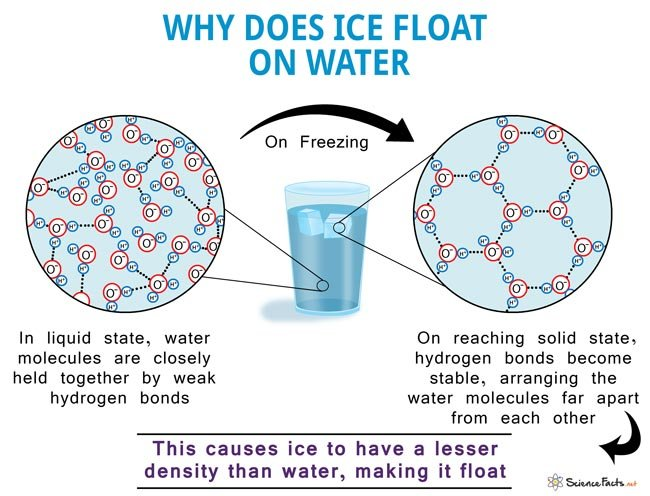
    • Ice is less dense than liquid water due to hydrogen bonding creating a structured crystal lattice.
    • This makes ice float, insulating the water below and protecting aquatic life in winter.
    • Floating ice forms stable platforms for animals like seals and polar bears.
    • This property contributes to the thermal stability of oceans and lakes.
    • Aquatic organisms survive harsh winters because water beneath the ice remains liquid.
    • Buoyancy is also affected by body composition; animals like seals use blubber for buoyancy and insulation.

    ❀️ CAS Link: Develop a CAS project involving ecosystem protection of aquatic life or education about climate change’s impact on ice habitats.

    • Water has a low viscosity compared to other fluids, enabling efficient flow through vessels.
    • This allows blood, lymph, and xylem sap to move with minimal resistance.
    • Organisms like fish and aquatic birds are adapted to water’s viscosity for smooth movement.
    • Water’s viscosity supports buoyant force, helping organisms float or swim.
    • Streamlined body shapes evolve to reduce drag and move efficiently through water.
    • Lower viscosity compared to oil or honey makes water ideal for internal circulation systems.

    🌍 Real-World Connection: Water’s physical properties are crucial in engineering, medical fields (IV fluids), and climate science. Its viscosity and heat properties are considered in designing life support and artificial habitats.

    • Water has relatively high thermal conductivity, helping distribute heat efficiently in organisms and environments.
    • This property supports internal temperature regulation and even heat distribution in multicellular organisms.
    • Water has a high latent heat of vaporization, requiring significant energy to evaporate.
    • This allows for effective cooling mechanisms such as sweating or transpiration.
    • Ice, due to stable hydrogen bonds, forms a lattice structure that insulates water beneath.
    • These features make water excellent for thermoregulation and habitat stability.

    πŸ” TOK Perspective: How do we β€œknow” water is essential for life? Are our definitions of life biased by Earth-based systems and water-dependent models?

    πŸ“ Paper 2: Data Response Tips: Use terms like β€œhigh specific heat capacity” or β€œhigh latent heat of vaporization” to explain temperature or evaporation trends. Always connect the data back to hydrogen bonding for full marks.

  • TermDefinition
    Niche ShiftChange in the range of conditions and resources used by a species due to environmental change or species interactions.
    Niche ExpansionBroadening of a species’ realised niche, often due to reduced competition or new resource availability.
    Niche ContractionReduction of a species’ realised niche due to increased competition, predation, or habitat loss.
    Climate EnvelopeThe set of climatic conditions within which a species can survive and reproduce.
    Phenotypic PlasticityThe ability of an organism to change its physiology or behaviour in response to environmental conditions.

    Environmental change β€” whether natural or human-induced β€” can alter species niches by shifting the conditions and resources available. Organisms may respond by moving, adapting, or facing extinction. Some species expand their range, while others become more restricted. These dynamics have profound implications for biodiversity conservation, ecosystem services, and predicting species’ future distributions.

    ❀️ CAS Link: Coordinate a climate-awareness campaign that highlights local species vulnerable to niche contraction due to habitat loss or climate change.

    • Rising temperatures and altered precipitation patterns change the location of suitable habitats.
    • Species may shift polewards or to higher altitudes to track their climatic niche.
    • Example: Alpine plants move upslope as lower elevations become too warm.
    • Marine species shift towards cooler waters, disrupting fisheries and predator-prey relationships.
    • Climate change also alters phenology, causing mismatches between species (e.g., pollinators and flowering times).

    🧠 Examiner Tip: Always link climate change impacts to both abiotic (temperature, rainfall) and biotic (competition, predation) niche constraints.

    • Habitat destruction from agriculture, logging, and urbanisation reduces available niche space.
    • Pollution can eliminate sensitive species from parts of their range.
    • Overexploitation (hunting, overfishing) can shrink populations below viable levels.
    • Invasive species outcompete or prey on native species, reducing their realised niche.
    • Example: Native mussels in North America displaced by invasive zebra mussels.

    🌍 Real-World Connection: Orangutan niches have contracted severely due to palm oil plantation expansion, forcing conservation action in remaining forests.

    • Disturbances such as forest fires can create new habitat for pioneer species, expanding niches temporarily.
    • Reduced competition (e.g., after predator removal) allows some species to exploit new resources.
    • Phenotypic plasticity enables species to survive in broader conditions without genetic change.
    • Example: Coyotes expanded their niche in North America after wolf populations declined.
    • Evolutionary adaptation can permanently broaden a niche, given sufficient time and selective pressure.

    πŸ” TOK Perspective: Predicting species’ future ranges involves uncertainty β€” models are simplifications that depend on assumptions about ecological and evolutionary processes.

    • Species Distribution Models (SDMs) forecast future niche locations under climate scenarios.
    • Used to identify climate refugia β€” areas that will remain suitable as conditions change.
    • Assists in designing protected area networks and wildlife corridors.
    • Can prioritise conservation for species with narrow climate envelopes and low dispersal ability.
    • Example: Modelling polar bear niches predicts rapid habitat loss due to sea ice decline.

    βš—οΈ IA Tips & Guidance: An IA could investigate how altering salinity or temperature in controlled aquaria changes the feeding rate or activity pattern of a marine invertebrate, linking results to niche adaptability.

    πŸ“ Paper 2: Data Response Tip: When interpreting niche adaptation graphs, discuss both the direction (expansion or contraction) and the ecological drivers behind the change.

  • TermDefinition
    Interspecific CompetitionInteraction where individuals of different species compete for the same limited resource, negatively affecting both.
    PredationBiological interaction where one organism (predator) kills and consumes another (prey).
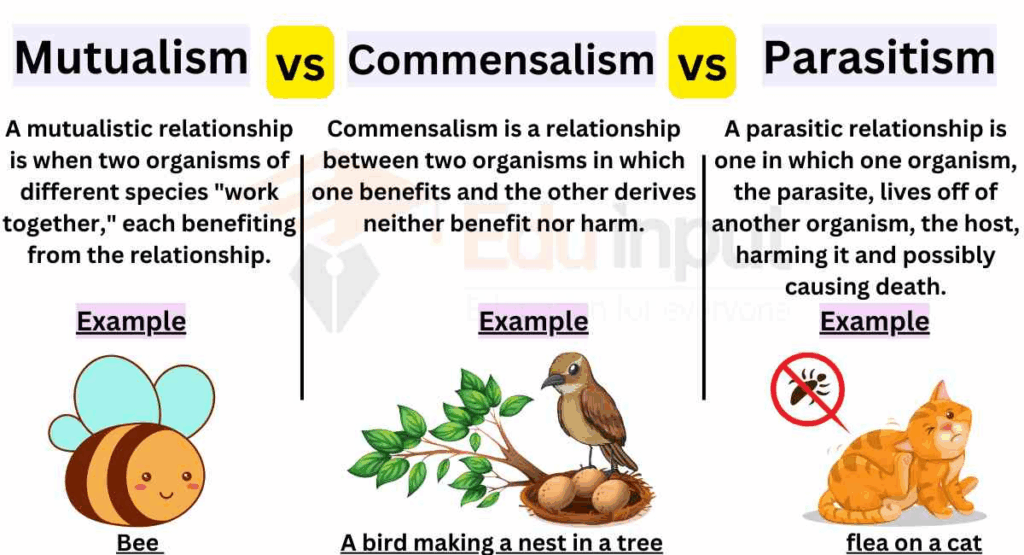
    MutualismSymbiotic relationship where both species benefit.
    CommensalismSymbiotic relationship where one species benefits and the other is neither helped nor harmed.
    AmensalismRelationship where one species is harmed and the other is unaffected.

    Species do not live in isolation β€” they interact constantly with others in their ecosystem. These interactions shape ecological niches, influencing where species live, what they eat, and how they reproduce. Competition tends to narrow realised niches, while facilitative interactions like mutualism can expand them. Understanding these dynamics is essential for conservation biology and for predicting how ecosystems respond to environmental change.

    ❀️ CAS Link: Lead a school garden project where native plants are selected to promote beneficial interactions with pollinators and other species.

    • Occurs when two or more species require the same limited resource (e.g., food, nesting sites, light).
    • Reduces population growth rates for all competitors involved.
    • May result in competitive exclusion (one species outcompetes the other) or resource partitioning (niche differentiation).
    • Example: Different grass species competing for light and nutrients in a meadow.
    • Can drive evolutionary change, selecting traits that reduce overlap in resource use.

    🧠 Examiner Tip: When describing competition, always specify the resource in question and whether the competition is exploitative (indirect) or interference (direct).

    • Predation controls prey populations, preventing overpopulation and resource depletion.
    • Can drive prey adaptations such as camouflage, mimicry, and defensive behaviours.
    • Herbivory is a specialised form where herbivores feed on plants; plants may evolve spines, toxins, or rapid regrowth as defences.
    • Predation pressure can create β€œlandscape of fear” effects, altering prey behaviour and habitat use.
    • Example: Sea otters preying on sea urchins regulates kelp forest health.

    🌍 Real-World Connection: Reintroduction of wolves to Yellowstone restored balance by reducing elk overgrazing, allowing vegetation recovery.

    • Mutualism benefits both partners β€” e.g., bees and flowering plants; coral and zooxanthellae.
    • Can be obligate (partners cannot survive without each other) or facultative (beneficial but not essential).
    • Commensalism benefits one partner without affecting the other β€” e.g., barnacles on whales gain transport to nutrient-rich waters.
    • Such relationships can increase survival, reproduction, and niche breadth for one or both species.
    • May shift along a spectrum over time, becoming parasitic or competitive depending on conditions.

    πŸ” TOK Perspective: Labelling interactions as β€œbeneficial” or β€œharmful” is human interpretation β€” in nature, these roles can change depending on environmental context.

    • Over evolutionary time, species under strong competition adapt to minimise niche overlap.
    • Morphological differentiation β€” e.g., variation in beak shape among finches reduces competition for seed types.
    • Temporal separation β€” nocturnal vs. diurnal foragers avoid direct competition.
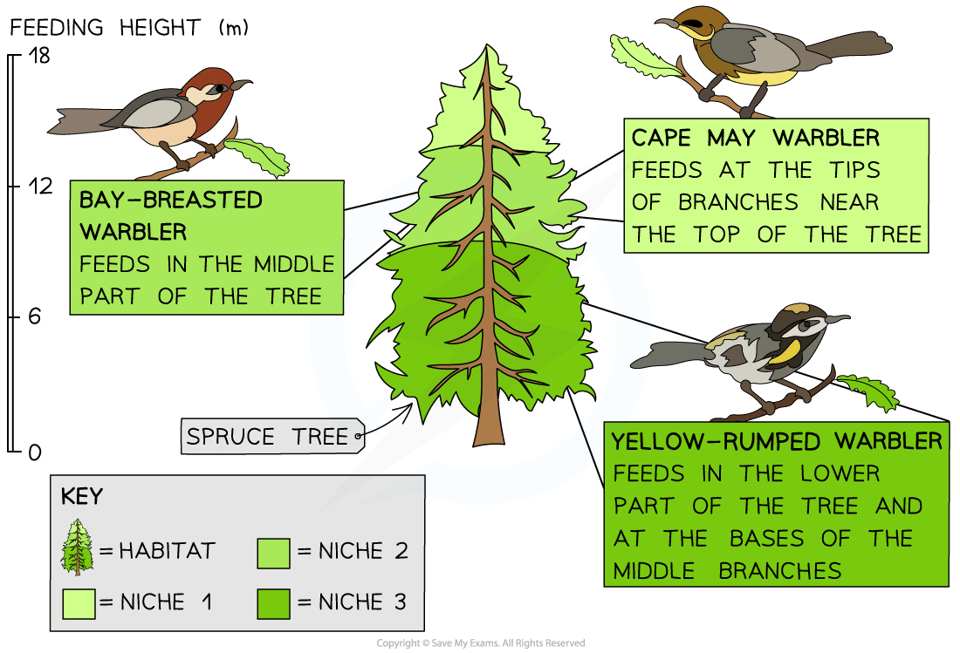
    • Habitat segregation β€” warbler species feeding in different parts of the same tree canopy.
    • Can lead to adaptive radiation when species diversify into many specialised niches.

    🌐 EE Focus: An EE could investigate how pollinator diversity affects floral morphology and resource partitioning in wild plant communities.

  • TermDefinition
    Ecological NicheThe role and position of a species within its environment, including interactions with biotic and abiotic factors.
    Fundamental NicheThe full range of environmental conditions and resources a species could theoretically use without competition or predation.
    Realised NicheThe actual conditions and resources a species occupies due to competition, predation, and other limiting factors.
    Competitive ExclusionPrinciple stating that two species competing for the same resource cannot coexist indefinitely under constant environmental conditions.
    Resource PartitioningDifferentiation of ecological niches to reduce competition and allow coexistence of similar species.

    An ecological niche defines how a species interacts with its environment and other organisms, encompassing its habitat, resource use, and role in energy and nutrient cycles. The distinction between a fundamental niche and a realised niche highlights the gap between theoretical potential and ecological reality. Studying niches is crucial for understanding biodiversity patterns, predicting species distributions, and managing ecosystems under environmental change.

    ❀️ CAS Link: Organise a local biodiversity survey and map the niches of key species in a nearby park, linking species presence to specific habitat features and resources.

    • Fundamental Niche represents the total possible conditions a species can tolerate, determined by its physiological limits and resource needs.
    • Realised Niche is narrower due to interspecific competition, predation, parasitism, and human disturbance.
    • Example: Barnacle species β€” Chthamalus occupies higher shore (fundamental niche broader but restricted by competition), while Balanus dominates lower shore.
    • Abiotic factors (temperature, salinity, pH) primarily shape the fundamental niche, while biotic factors constrain the realised niche.
    • Niche modelling uses environmental data to predict potential distributions, crucial for conservation planning.

    🧠 Examiner Tip: In application questions, always mention both abiotic and biotic influences when explaining why a realised niche is smaller than a fundamental niche.

    • States that two species with identical niches cannot coexist in the same habitat long-term.
    • Leads to local extinction of one species or evolutionary divergence into different niches.
    • Example: Paramecium aurelia outcompetes Paramecium caudatum in lab experiments when grown together.
    • Encourages natural selection for traits that minimise direct competition.
    • Forms the basis for predicting invasive species impacts on native communities.

    🌍 Real-World Connection: The decline of native red squirrels in the UK is partly due to competitive exclusion by the invasive grey squirrel, which is more efficient at exploiting certain food resources.

    • Occurs when species divide resources by specialising in different aspects of the niche.
    • Can be spatial (different habitats), temporal (different activity times), or dietary (different prey or plant species).
    • Example: Anole lizards in the Caribbean occupy distinct vertical zones of forest to avoid competition.
    • Reduces direct competition, allowing coexistence of ecologically similar species.
    • Often associated with morphological adaptations, such as beak size in Darwin’s finches.

    πŸ” TOK Perspective: The concept of a β€œniche” is a human framework β€” how might different cultures or indigenous knowledge systems describe species’ ecological roles differently?

    • Niche Breadth β€” range of resources used; broad niches indicate generalists, narrow niches indicate specialists.
    • Niche Overlap β€” degree to which species share resources; higher overlap increases competition.
    • Ecological Modelling Tools β€” e.g., MaxEnt software uses occurrence records to predict distributions based on environmental parameters.
    • Field Experiments β€” manipulation of resource availability or competitor presence tests niche limits.
    • Applications in Conservation β€” niche models guide reintroduction programs and habitat restoration efforts.

    βš—οΈ IA Tips & Guidance: An IA could test the effect of resource availability (e.g., seed size) on foraging preference in birds, linking observed behaviour to niche specialisation and partitioning.

    πŸ“ Paper 2: Data Response Tip: When interpreting niche diagrams, clearly label the fundamental and realised niches, and explain limiting factors in context of the given data.

  • TermDefinition
    HypoxiaCondition where oxygen availability is insufficient to meet metabolic needs.
    MyoglobinOxygen-binding protein in muscle tissue with high affinity for oxygen, facilitating storage.
    Hemoglobin Affinity ShiftChange in hemoglobin’s oxygen-binding properties to optimise oxygen uptake or release under specific conditions.
    Anaerobic RespirationEnergy production without oxygen, producing ATP less efficiently but allowing survival during oxygen deprivation.
    Barophilic OrganismOrganism adapted to survive in high-pressure environments, such as the deep ocean.

    Life in extreme environments requires unique physiological, structural, and behavioural adaptations. In habitats with low oxygen β€” such as high altitudes, deep seas, or burrows β€” organisms must maximise oxygen uptake, transport, and storage. Similarly, specialised environments such as deserts, polar regions, and hydrothermal vents impose multiple stresses including temperature extremes, pressure, and nutrient limitations. Adaptations often involve convergent evolution where unrelated species evolve similar solutions to environmental challenges.

    ❀️ CAS Link: Partner with a mountaineering club to create a training workshop on physiological preparation for high-altitude treks, including oxygen acclimatisation strategies.

    • Increased Hemoglobin Affinity β€” Ensures oxygen loading in thin air (e.g., llamas, yaks).
    • Higher Red Blood Cell Count β€” Increases oxygen-carrying capacity of blood.
    • Expanded Lung Volume β€” Improves oxygen uptake per breath.
    • Increased Capillary Density β€” Enhances oxygen delivery to tissues.
    • Behavioural Acclimatisation β€” Gradual ascent reduces risk of altitude sickness in humans.

    🧠 Examiner Tip: In application questions, always distinguish between short-term acclimatisation and long-term genetic adaptations.

    • Large Gills or Respiratory Surfaces β€” Maximise oxygen extraction from water.
    • Cutaneous Respiration β€” Amphibians and some fish absorb oxygen directly through skin.
    • Air Breathing in Fish β€” Lungfish use lungs in stagnant, oxygen-poor waters.
    • High Myoglobin Concentration β€” In diving mammals, stores oxygen in muscles for extended dives.
    • Bradycardia β€” Slowed heart rate during dives conserves oxygen.

    🌍 Real-World Connection: Free-divers study marine mammal adaptations to extend breath-holding limits safely.

    • Pressure-Resistant Enzymes β€” Function normally under high hydrostatic pressure.
    • Slow Metabolism β€” Reduces oxygen demand.
    • Bioluminescence β€” Used for prey attraction, camouflage, and communication in dark waters.
    • Large Eyes β€” Optimised for detecting minimal light.
    • Flexible Skeletons β€” Prevent structural damage under pressure.

    πŸ” TOK Perspective: Studying deep-sea species challenges our assumptions about the limits of life and β€œhabitability” of environments.

    • Low Metabolic Rates β€” Reduce oxygen needs in poorly ventilated burrows.
    • Tolerance to High COβ‚‚ Levels β€” Special hemoglobin variants prevent acid–base imbalance.
    • Efficient Ventilation Movements β€” Rapid breathing when emerging above ground to replenish oxygen stores.
    • Use of Anaerobic Pathways β€” Temporarily sustain energy production without oxygen.
    • Water Conservation β€” Linked to burrow life in arid climates.

    βš—οΈ IA Tips & Guidance: An IA could investigate oxygen diffusion rates through different thicknesses of agar gel to model oxygen limitation in various environments.

    • Chemosynthesis β€” Bacteria use hydrogen sulfide instead of sunlight for energy production.
    • Symbiotic Relationships β€” Tube worms rely on internal bacteria for nutrients.
    • Heat-Stable Enzymes β€” Allow survival at temperatures near boiling.
    • Pressure-Resistant Membranes β€” Maintain fluidity and function under extreme pressure.
    • Toxin Resistance β€” Proteins resistant to heavy metals and toxins in vent water.

    πŸ“ Paper 2: Data Response Tip: For environmental adaptation questions, always link the adaptation to both the specific environmental stress and the physiological outcome.

  • TermDefinition
    OsmoregulationControl of water and solute concentrations in the body to maintain homeostasis.
    OsmoconformerOrganism whose internal osmotic conditions match the surrounding environment.
    OsmoregulatorOrganism that actively regulates internal osmotic conditions regardless of environment.
    Hypoosmotic RegulationMaintenance of internal solute concentration lower than the surrounding medium (marine animals).
    Hyperosmotic RegulationMaintenance of internal solute concentration higher than the surrounding medium (freshwater animals).
    Excretory OrganOrgan responsible for removing metabolic wastes and regulating water and ion balance (e.g., kidney, Malpighian tubules).

    Water and salt balance is crucial for maintaining osmotic pressure, enzyme function, and metabolic processes. Different environments β€” freshwater, marine, and terrestrial β€” present unique challenges to organisms. Adaptations can be structural, physiological, or behavioural, enabling organisms to survive and reproduce while conserving or excreting water appropriately.

    ❀️CAS Link: Design an awareness campaign on sustainable freshwater use, linking it to how animals adapt to water scarcity and salinity challenges.

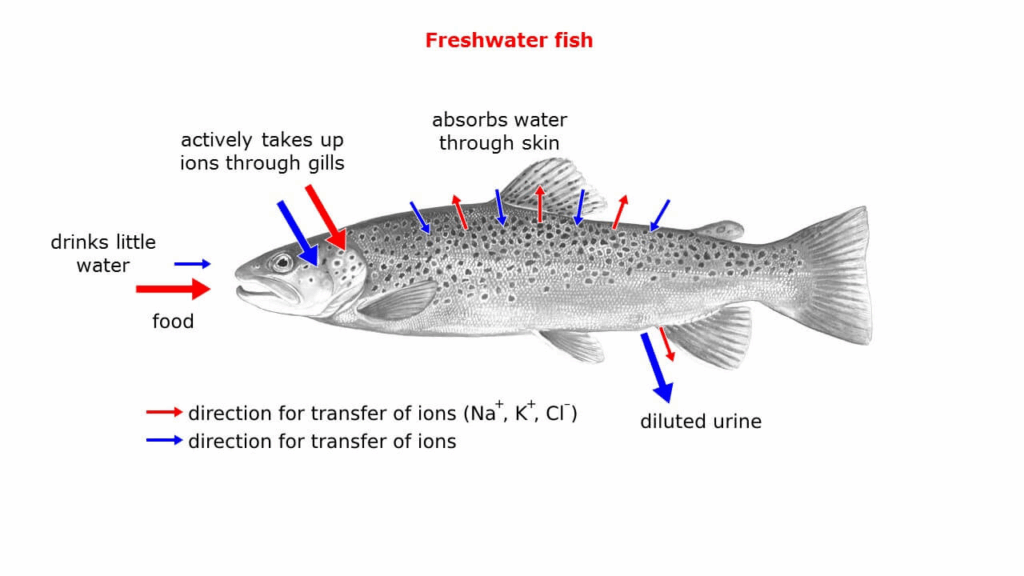
    • Hyperosmotic to Environment β€” Body fluids contain more salts than surrounding water, causing water influx and ion loss.
    • Active Ion Uptake β€” Gills absorb salts through specialised chloride cells.
    • Large Volume Dilute Urine β€” Kidneys excrete excess water while retaining salts.
    • Low Permeability to Water β€” Mucus-covered skin reduces water influx.
    • Behavioural Strategies β€” Freshwater fish avoid areas with strong currents that increase water influx.

    🧠 Examiner Tip: When comparing osmotic strategies, always specify the direction of water and ion movement for full marks.

    • Hypoosmotic to Environment β€” Body fluids contain less salt than seawater, causing water loss and ion gain.
    • Drinking Seawater β€” Compensates for water loss; excess salts actively excreted.
    • Salt Glands β€” Found in seabirds and reptiles for excreting concentrated salt solutions.
    • Small Volume Concentrated Urine β€” Conserves water while removing salts.
    • Countercurrent Exchange in Gills β€” In fish, aids in salt excretion and oxygen uptake simultaneously.

    🌍 Real-World Connection: Desalination technology mimics ion transport mechanisms found in marine animals to remove salt from seawater.

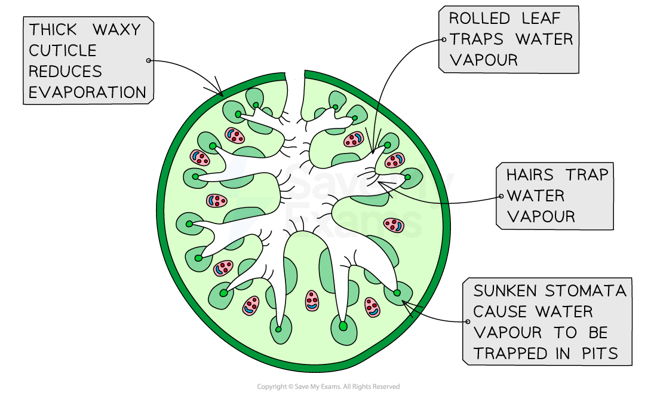
    • Water Conservation β€” Thick cuticles in insects, keratinised skin in reptiles and mammals.
    • Efficient Kidneys β€” Long loops of Henle in desert mammals maximise water reabsorption.
    • Nocturnal Behaviour β€” Reduces water loss through evaporation during cooler nights.
    • Metabolic Water β€” Produced during oxidation of food molecules, important for desert animals like kangaroo rats.
    • Excretion of Concentrated Waste β€” Uric acid in birds and reptiles minimises water loss compared to urea excretion.

    πŸ” TOK Perspective: The idea of β€œwaste” in biology is relative β€” uric acid in reptiles is not just excretory but also aids in water conservation.

    • Euryhaline Species β€” Tolerate a wide range of salinities (e.g., salmon migrating between rivers and oceans).
    • Anhydrobiosis β€” Ability to survive extreme dehydration (e.g., tardigrades, brine shrimp).
    • Salt-Excreting Crustaceans β€” Use antennal glands to remove excess ions.
    • Halophyte Plants β€” Store salt in vacuoles and secrete excess through salt glands.
    • Amphibians β€” Rely on moist skin for water absorption but limit exposure during dry conditions.

    βš—οΈ IA Tips & Guidance: An IA could test model kidneys (dialysis tubing setups) with different solute gradients to simulate water and salt movement in osmoregulation.

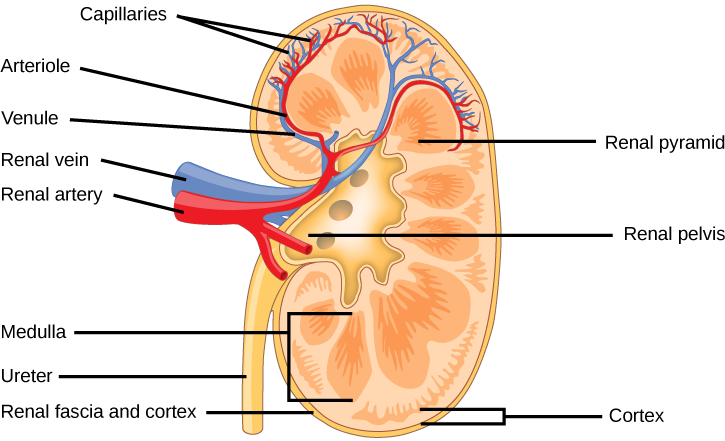
    • Filtration β€” Glomerulus filters blood under high pressure.
    • Selective Reabsorption β€” Proximal tubule reabsorbs glucose, amino acids, and most water.
    • Loop of Henle β€” Generates concentration gradient in medulla; longer in desert species for maximal water reabsorption.
    • Distal Tubule and Collecting Duct β€” Adjust salt and water balance under hormonal control (ADH, aldosterone).
    • Urine Concentration β€” Final osmolarity reflects both water needs and environmental demands.

    πŸ“ Paper 2: Data Response Tip: For questions with urine concentration graphs, explain patterns using both kidney structure and environmental water availability.

  • TermDefinition
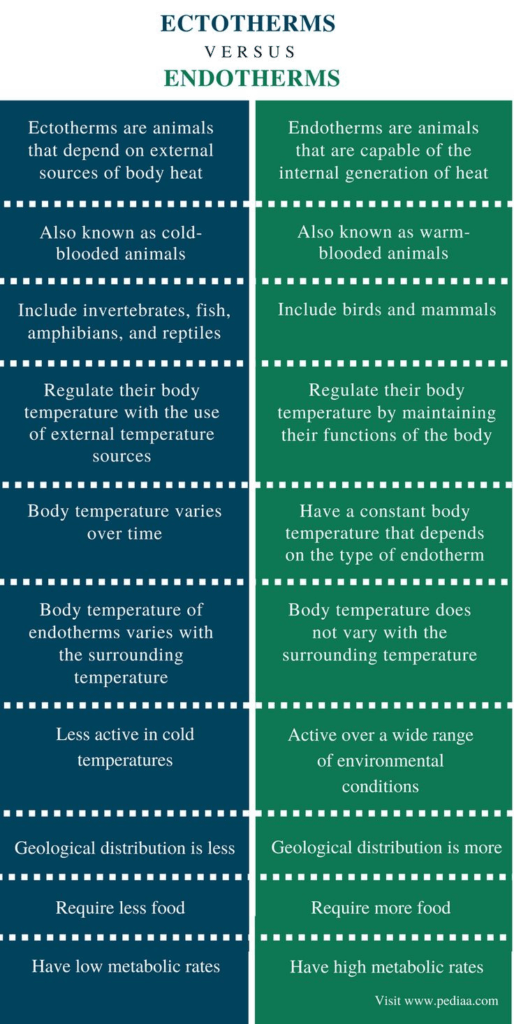
    EndothermOrganism that maintains a constant internal body temperature through metabolic heat production.
    EctothermOrganism whose body temperature varies with environmental temperature, relying primarily on external heat sources.
    ThermoregulationThe process by which organisms maintain their core internal temperature within a tolerable range.
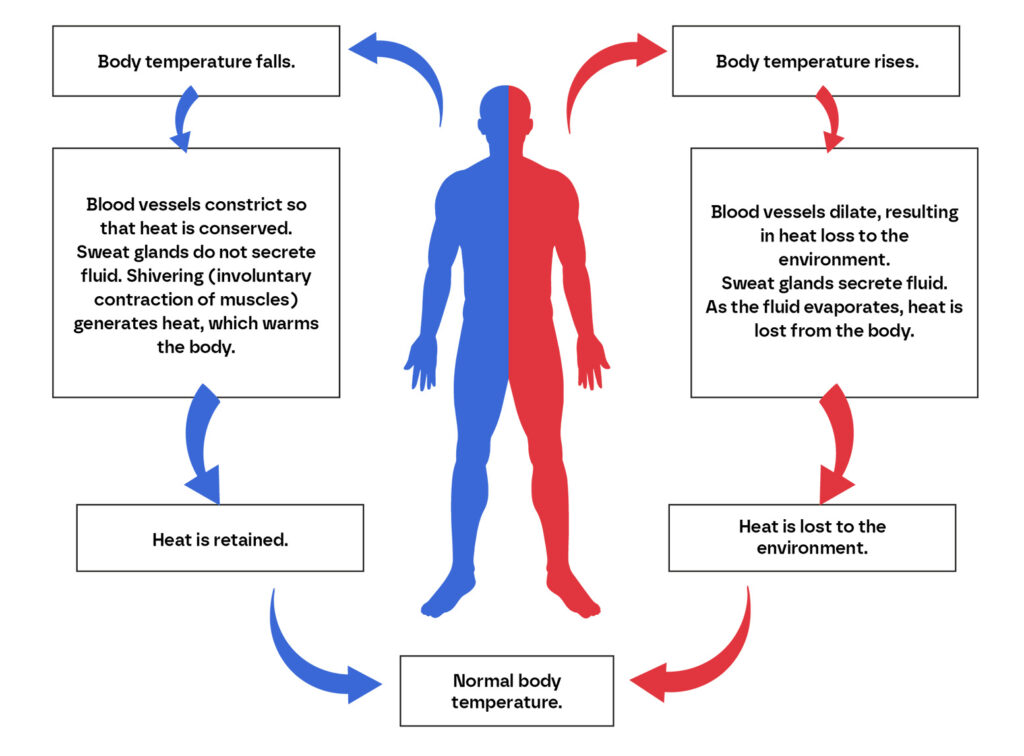
    VasodilationWidening of blood vessels to increase blood flow to the skin and promote heat loss.
    VasoconstrictionNarrowing of blood vessels to reduce blood flow to the skin and minimise heat loss.
    Countercurrent Heat ExchangeMechanism where warm blood flowing from the body core transfers heat to colder returning blood, conserving body heat.

    Temperature regulation is essential for maintaining optimal enzyme activity, metabolic rate, and cellular processes. Endotherms use metabolic heat production combined with behavioural and physiological adaptations to stabilise body temperature, while ectotherms rely largely on environmental heat sources. Survival in extreme hot or cold environments requires a range of structural, behavioural, and physiological traits that reduce thermal stress and energy expenditure.

    ❀️ CAS Link: Create an educational campaign showing how different animals adapt to extreme temperatures, including interactive models and infographics for local schools.

    • Insulation β€” Thick fur or feather layers trap air for insulation; blubber in marine mammals reduces heat loss.
    • Small Surface Area-to-Volume Ratio β€” Compact body shapes (Allen’s Rule) minimise heat loss.
    • Behavioural Strategies β€” Huddling, burrowing, or seasonal migration to warmer regions.
    • Countercurrent Heat Exchange β€” Found in penguins and Arctic foxes to retain core heat in cold limbs.
    • Increased Metabolic Heat Production β€” Shivering thermogenesis and brown adipose tissue metabolism in mammals.

    🧠 Examiner Tip: In application questions, link each structural feature (e.g., fur length) directly to the thermoregulatory advantage it provides.

    • Large Surface Area-to-Volume Ratio β€” Long limbs and ears (e.g., fennec fox) facilitate heat dissipation.
    • Reduced Insulation β€” Short fur or seasonal shedding to prevent overheating.
    • Behavioural Cooling β€” Seeking shade, burrowing during the day, being nocturnal to avoid peak heat.
    • Evaporative Cooling β€” Sweating in humans; panting in dogs; gular flutter in birds.
    • Tolerance of Higher Body Temperatures β€” Camels can allow their body temperature to rise to reduce water loss from sweating.

    🌍 Real-World Connection: Desert survival training often applies knowledge of evaporative cooling and hydration strategies based on animal adaptations.

    • Endotherms β€” Stable internal temperatures allow activity in varied conditions but require high energy intake.
    • Ectotherms β€” Lower metabolic demands but activity restricted to suitable environmental temperatures.
    • Behavioural Regulation β€” Ectotherms bask to warm up and retreat to shade to cool down; endotherms may migrate seasonally.
    • Ecological Niches β€” Endothermy allows colonisation of colder regions; ectothermy often limits species to warmer climates.
    • Thermal Acclimatisation β€” Both groups can adjust tolerance ranges seasonally to match environmental conditions.

    πŸ” TOK Perspective: The classification of animals into endotherms and ectotherms is a simplification β€” many species exhibit traits of both under certain conditions.

    • Hypothalamic Control β€” Detects changes in blood temperature and initiates corrective responses.
    • Vasodilation and Vasoconstriction β€” Control blood flow to skin to regulate heat exchange.
    • Sweating and Shivering β€” Increase or decrease heat production and loss.
    • Metabolic Adjustments β€” Thyroid hormone levels influence long-term metabolic heat production.
    • Acclimatisation β€” Gradual physiological adjustments to temperature extremes improve survival and performance.

    🌐 EE Focus: An EE could compare the efficiency of evaporative cooling between desert-adapted and temperate mammals, measuring body temperature changes under controlled heat exposure.

    • Thermophilic Bacteria β€” Enzymes adapted to function at high temperatures; heat-stable membranes.
    • Polar Fish β€” Antifreeze proteins prevent ice crystal formation in body fluids.
    • Alpine Plants β€” Grow in rosettes to trap heat and reduce wind exposure.
    • Insects in Deserts β€” Use stilting behaviour to keep their bodies above hot sand.
    • Reptiles in Cold Climates β€” Hibernate to survive long periods of low temperatures.

    πŸ“ Paper 2: Data Response Tip: In data interpretation questions on temperature regulation, link observed patterns to both structural and physiological adaptations β€” not just one type.

  • TermDefinition
    LocomotionActive movement of an organism from one place to another using its own energy.
    GoniometerDevice used to measure the range of motion at a joint in degrees.
    Range of Motion (ROM)The extent of movement a joint is capable of, measured in terms of flexion, extension, rotation, and other specific motions.
    MigrationSeasonal movement of animals from one region to another, often for breeding or resource availability.
    Adaptation for LocomotionStructural or physiological traits enhancing efficiency and survival during movement.

    Locomotion is essential for many animals to survive, reproduce, and interact with their environment. It involves a combination of skeletal, muscular, and nervous systems working together to generate coordinated movement. The efficiency of locomotion depends on joint flexibility, muscle strength, lever mechanics, and adaptations suited to an organism’s ecological niche. Range of motion and locomotor patterns are determined by both anatomy and lifestyle.

    ❀️ CAS Link: Collaborate with the sports department to conduct a school-wide flexibility and movement workshop using goniometers, teaching participants how joint mobility impacts performance.

    • Foraging β€” Movement to obtain food resources, such as predators hunting prey or herbivores searching for plants.
    • Escape from Predators β€” Rapid movement, camouflage relocation, or shelter seeking to avoid predation.
    • Mating and Reproduction β€” Travel to breeding grounds or displaying courtship movements to attract mates.
    • Migration β€” Seasonal long-distance movements to exploit changing environmental resources.
    • Territorial Defence β€” Patrolling and marking territory boundaries to deter competitors.

    🧠 Examiner Tip: When asked about migration, always mention triggering cues such as temperature, photoperiod, and food availability.

    • Joint movement depends on joint type, ligament elasticity, muscle length, and tendon flexibility.
    • Synovial joints allow various motions: hinge (flexion/extension), ball-and-socket (rotation, abduction/adduction), pivot (rotation), saddle, and gliding movements.
    • ROM can be measured with a goniometer for clinical or sports performance purposes.
    • Flexibility training can increase ROM, while injury or arthritis can reduce it.
    • Different sports place varying demands on ROM (e.g., gymnasts require extreme flexibility, sprinters prioritise explosive force).

    🌍 Real-World Connection: Physiotherapists use ROM measurements to track recovery after injuries such as ACL tears or shoulder dislocations.

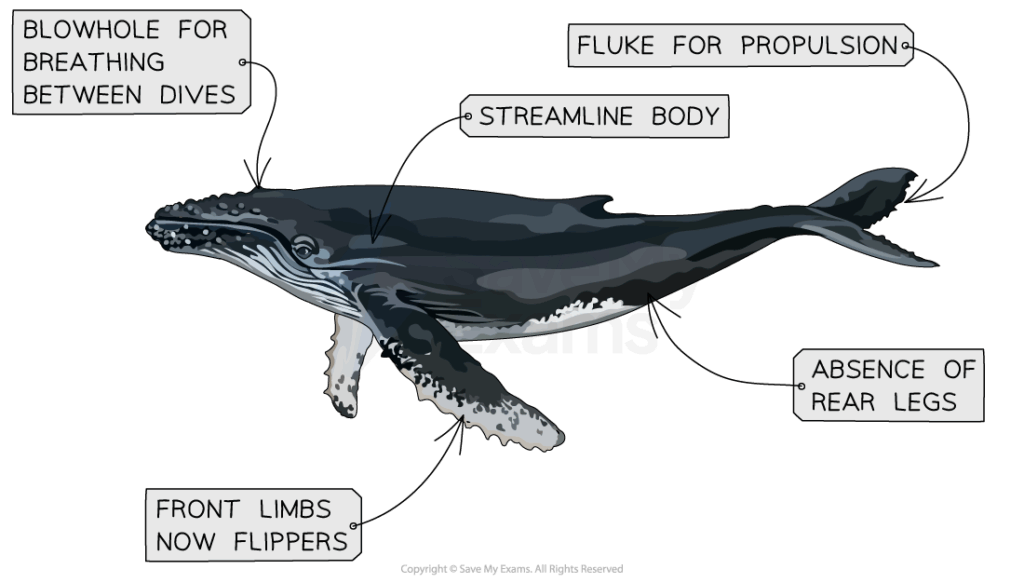
    • Aquatic Animals β€” Streamlined bodies reduce drag; fins/flippers act as paddles or hydrofoils (e.g., dolphins, seals).
    • Flying Animals β€” Lightweight skeletons, wing adaptations, and strong flight muscles (e.g., birds, bats, insects).
    • Terrestrial Runners β€” Long limbs for stride efficiency; springy tendons store and release energy (e.g., cheetahs, horses).
    • Burrowers β€” Strong forelimbs with claws for digging (e.g., moles, armadillos).
    • Climbers β€” Prehensile tails, opposable digits, and flexible joints for grip (e.g., monkeys, geckos).

    πŸ” TOK Perspective: Classifying locomotion into distinct categories is a human-made system; in nature, many species blur the boundaries (e.g., penguins swim and walk).

    • Goniometers measure angles at joints during movement.
    • Motion capture systems track detailed body movement for biomechanical studies.
    • Force plates measure the power and direction of forces exerted during locomotion.
    • High-speed cameras reveal muscle and joint function in fast movements.
    • Data informs medical rehabilitation, sports training, and robotic design.

    βš—οΈ IA Tips & Guidance: An IA could measure how footwear type (barefoot, cushioned, cleated) affects ankle ROM during running to investigate biomechanical efficiency.

    • Joint structure is optimised for specific movement types (e.g., shoulder joint sacrifices stability for flexibility; hip joint prioritises stability).
    • Ligament and tendon arrangement influences both mobility and injury risk.
    • Muscle fibre type distribution (fast-twitch vs. slow-twitch) affects endurance vs. speed performance.
    • Lever mechanics determine whether movement prioritises force or speed.
    • Evolution shapes locomotor features based on environmental pressures and lifestyle needs.

    πŸ“ Paper 2: Data Response Tip: When interpreting movement data, always link observed ROM or locomotor ability to both anatomical structure and ecological function for maximum marks.