Author: Admin

  • TermDefinition
    Adaptive RadiationThe rapid diversification of a single ancestral species into multiple new species, each adapted to a specific ecological niche.
    PolyploidyThe condition in which an organism has more than two complete sets of chromosomes, common in plant speciation.
    AutopolyploidyPolyploidy arising from chromosome duplication within a single species.
    AllopolyploidyPolyploidy resulting from hybridisation between different species followed by chromosome doubling.
    Niche DifferentiationThe process by which competing species use the environment differently to coexist.

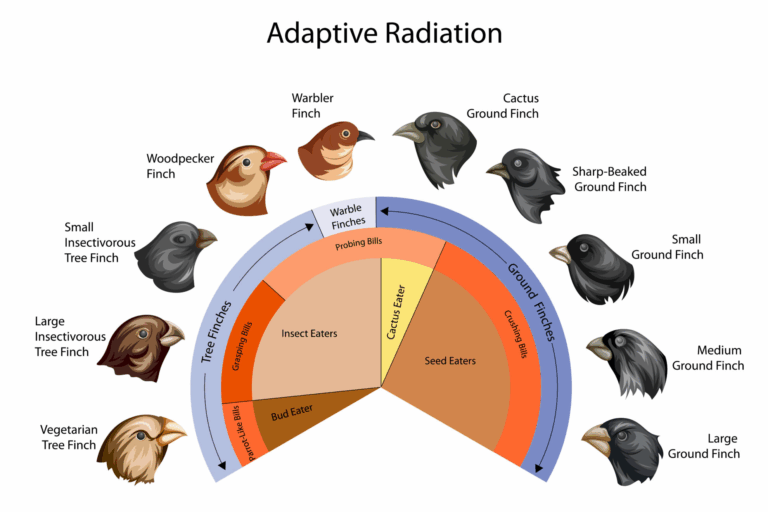
    Adaptive radiation is a process where an ancestral species rapidly diversifies into multiple species adapted to different ecological niches. In plants, speciation is often influenced by polyploidy, hybridisation, and environmental variation. Plant adaptive radiation is especially common on islands, in isolated habitats, or following environmental change. The flexibility of plant reproductive systems and their ability to undergo genome duplication allow for rapid formation of reproductively isolated lineages.

    • Begins with a single ancestral species colonising new or underused environments.
    • Rapid speciation driven by ecological opportunities.
    • Morphological and physiological adaptations evolve for specific niches.
    • Reduced competition in newly colonised areas accelerates diversification.
    • Can occur after mass extinctions or environmental shifts.
    • Results in high biodiversity in a relatively short evolutionary period.
    🧠 Examiner Tip: When giving examples of adaptive radiation, always link species’ adaptations to the ecological niches they occupy.

    • Common in plants but rare in animals.
    • Autopolyploidy results from nondisjunction during meiosis, producing unreduced gametes.
    • Allopolyploidy combines chromosome sets from different species.
    • Polyploid plants are often reproductively isolated from diploid relatives.
    • Can lead to immediate speciation in a single generation.
    • Examples: bread wheat (Triticum aestivum), cotton, tobacco.
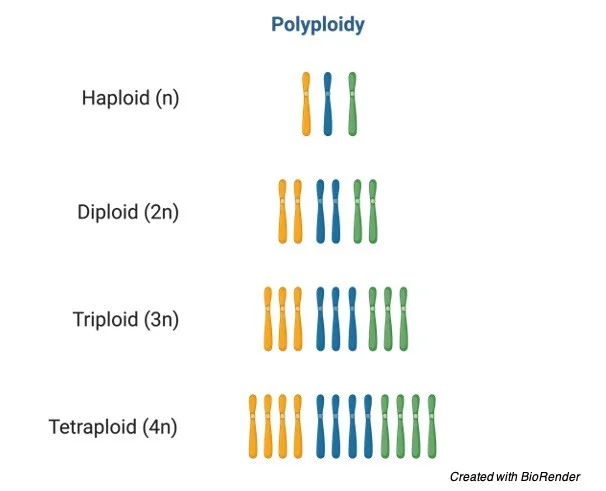
    🧬 IA Tips & Guidance: An IA could compare chromosome numbers in related plant species to investigate possible polyploid origins.

    • Island ecosystems promote rapid radiation due to isolation and diverse habitats.
    • Mountain ranges create microhabitats and climatic gradients.
    • Human-altered landscapes can generate novel niches.
    • Pollinator specialisation drives floral diversification.
    • Seasonal and climatic variation influences reproductive timing.
    • Soil type and nutrient availability affect plant morphology and physiology.

    🌐 EE Focus: An EE could explore the role of pollinator diversity in driving adaptive radiation in flowering plants.

    • Hawaiian silverswords: radiated from a single ancestor into diverse forms adapted to different altitudes and habitats.
    • GalΓ‘pagos Scalesia: tree-like daisies adapting to varied island conditions.
    • African violets: diversified in mountain forests with distinct niches.
    • Wild sunflowers: adapted to different soil types and moisture levels.
    • Brassica crops: artificial selection mimicking natural adaptive diversification.
    • Orchid family: extreme floral diversity linked to specialised pollinators.

    ❀️ CAS Link: A CAS activity could involve planting and observing species adapted to different microhabitats in a school garden to illustrate adaptive variation.

    🌍 Real-World Connection:
    Understanding adaptive radiation and plant speciation helps in agriculture (developing new crop varieties), conservation (protecting rare endemic plants), and habitat restoration.

    • Hybridisation without chromosome doubling can still produce new species.
    • Ecological isolation via adaptation to distinct microhabitats.
    • Temporal isolation due to differences in flowering periods.
    • Gametic incompatibility between pollen and stigma.
    • Chromosomal rearrangements reducing fertility with parent species.
    • Reinforcement of barriers through selection against hybrids.

    πŸ” TOK Perspective: Plant speciation challenges the idea that species boundaries are fixed β€” polyploidy can create new species almost instantly, showing how rapid evolutionary change is possible.
    πŸ“ Paper 2:
    Expect questions asking you to explain polyploidy, give plant examples of adaptive radiation, and relate environmental factors to speciation rates.

  • TermDefinition
    SpeciationThe process by which new species arise from existing ones.
    Allopatric SpeciationSpeciation due to geographical isolation between populations.
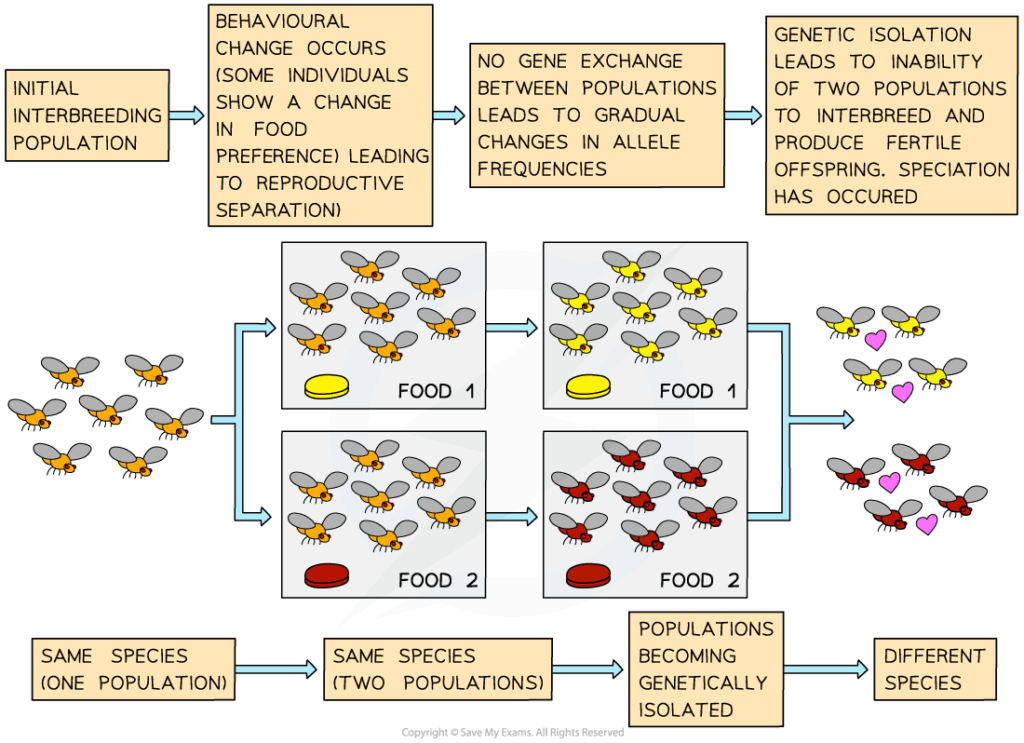
    Sympatric SpeciationSpeciation occurring within the same geographical area, often due to ecological or behavioural isolation.
    Reproductive IsolationBarriers preventing gene flow between populations, leading to speciation.
    Hybrid ZoneRegion where two species meet and interbreed, producing hybrids.

    Speciation is the formation of new species through the gradual accumulation of genetic differences that prevent interbreeding. This process is driven by reproductive isolation, which can be caused by geographic separation, ecological divergence, behavioural differences, or genetic incompatibility. Understanding isolation mechanisms is crucial for explaining biodiversity patterns and evolutionary processes.

    • Allopatric: Geographic barriers prevent gene flow, leading to divergence.
    • Peripatric: Small populations become isolated at the edge of a larger population’s range, allowing rapid divergence.
    • Parapatric: Adjacent populations diverge while maintaining some gene flow.
    • Sympatric: Occurs without physical barriers, often via polyploidy in plants or niche specialisation.
    • Speciation speed varies β€” can be gradual or rapid.
    • Molecular evidence helps confirm speciation events.

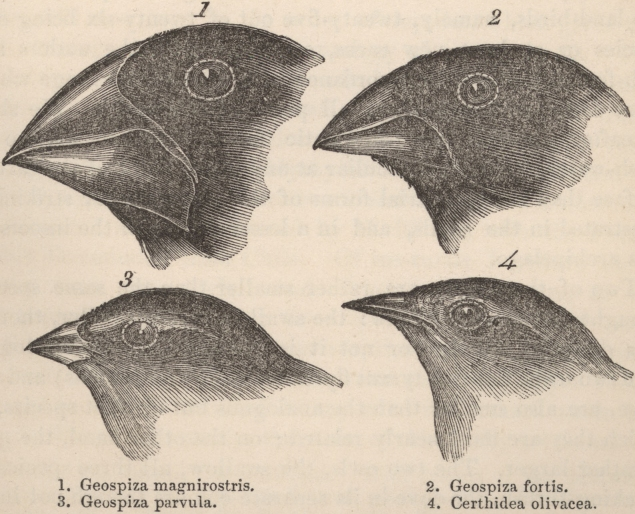
    🧠 Examiner Tip: Always link examples of speciation to the type β€” e.g., Darwin’s finches (allopatric), cichlid fish in the same lake (sympatric).

    • Temporal isolation: species breed at different times/seasons.
    • Behavioural isolation: unique courtship behaviours prevent interbreeding.
    • Mechanical isolation: incompatible reproductive structures.
    • Ecological isolation: different habitats reduce encounters.
    • Gametic isolation: gametes cannot fuse due to chemical incompatibility.
    • Prezygotic barriers prevent fertilisation entirely.

    🧬 IA Tips & Guidance: A possible IA could investigate mating behaviours in a model organism to study behavioural isolation patterns.

    • Hybrid inviability: hybrids fail to develop or survive.
    • Hybrid sterility: hybrids survive but cannot reproduce (e.g., mule).
    • Hybrid breakdown: hybrid offspring viable but less fit or fertile in subsequent generations.
    • Postzygotic barriers reinforce species boundaries.
    • Often result from genetic incompatibilities.
    • Maintain separation even when hybridisation occurs.

    🌐 EE Focus: An EE could analyse genetic incompatibilities causing hybrid sterility in closely related species.

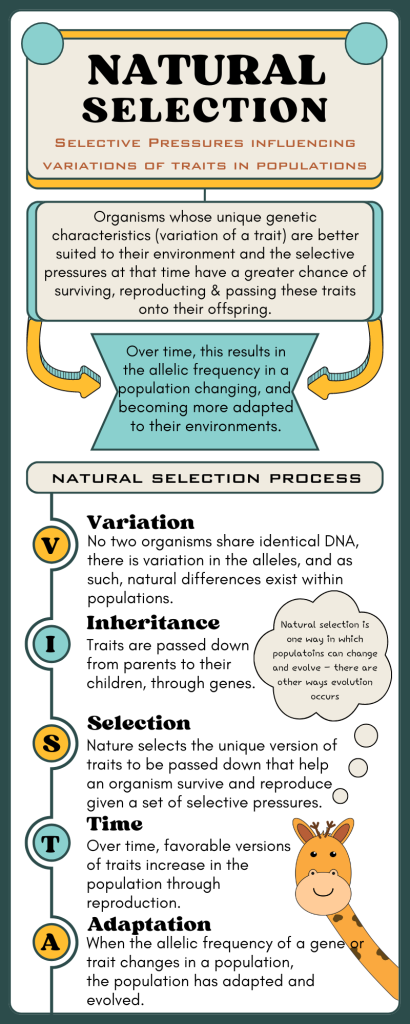
    • Natural selection drives adaptation to different environments, reinforcing isolation.
    • Genetic drift can fix differences in small populations.
    • Founder effects accelerate divergence in isolated groups.
    • Sexual selection may lead to reproductive isolation through mate preferences.
    • Isolation allows accumulation of unique alleles.
    • Gene flow reduction is key to speciation.

    ❀️ CAS Link: A CAS project could involve presenting case studies of local species undergoing isolation to a school science club.

    🌍 Real-World Connection:
    Understanding speciation helps in conservation by identifying evolutionarily significant units and preventing genetic homogenisation of populations

    • Darwin’s finches (allopatric, adaptive radiation).
    • Apple maggot flies shifting from hawthorn to apple trees (sympatric).
    • Cichlid fishes in African lakes (sympatric).
    • Polar and grizzly bears producing hybrids yet remaining distinct species.
    • Plant polyploidy in wheat and other crops.
    • Squirrels separated by the Grand Canyon (allopatric).

    πŸ” TOK Perspective: Speciation illustrates how defining species is not always straightforward β€” the concept is shaped by the criteria scientists choose to emphasise (morphological, genetic, ecological).

    πŸ“ Paper 2: Expect to explain types of speciation, give examples, and distinguish between prezygotic and postzygotic isolation mechanisms.

  • TermDefinition
    EvolutionThe change in heritable characteristics of populations over successive generations.
    MicroevolutionSmall-scale evolutionary changes within a population over short timescales.
    MacroevolutionLarge-scale evolutionary changes that result in the formation of new species or higher taxa.
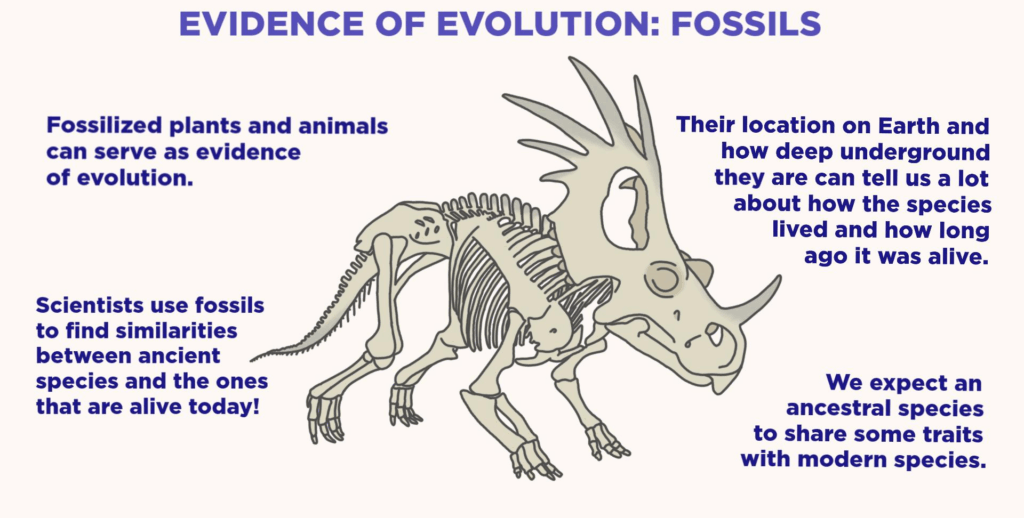
    Fossil RecordPreserved remains or traces of past organisms, providing evidence of evolutionary change.
    Homologous StructuresStructures with similar anatomy due to shared ancestry, even if function differs.

    Evolution explains the diversity of life by showing how species change over time through natural selection and other mechanisms. Evidence for evolution comes from multiple disciplines, including palaeontology, comparative anatomy, embryology, molecular biology, and biogeography. The integration of fossil evidence with genetic data has created a robust framework that connects extinct and extant species in a continuous evolutionary lineage.

    • Shows chronological changes in organisms through the geological record.
    • Transitional fossils bridge gaps between major groups (e.g., Archaeopteryx between reptiles and birds).
    • Radiometric dating provides accurate age estimates for fossils.
    • Fossil distribution aligns with evolutionary theory and plate tectonics.
    • Reveals extinct species and their relationship to modern organisms.
    • Helps calibrate molecular clocks for evolutionary timelines.

    🧠 Examiner Tip: When giving fossil examples, always link them to the evolutionary transition they represent.

    • Homologous structures indicate shared ancestry (e.g., vertebrate forelimbs).
    • Analogous structures arise from convergent evolution, not shared ancestry.
    • Vestigial structures are remnants of features from ancestors (e.g., human appendix).
    • Comparative embryology shows similar developmental stages among different species.
    • Morphological patterns can be mapped onto phylogenetic trees.
    • Anatomy supports hypotheses generated from molecular data.

    🧬 IA Tips & Guidance: An IA could compare morphological data from related species to test phylogenetic predictions.

    • DNA and protein sequence comparisons show degrees of relatedness.
    • Highly conserved genes (e.g., cytochrome c) provide deep evolutionary links.
    • Molecular clocks estimate divergence times.
    • Supports and refines phylogenetic trees built from morphology.
    • Can reveal cryptic species undetectable by anatomy alone.
    • Mitochondrial DNA useful for tracing maternal lineages.

    🌐 EE Focus: An EE could investigate the correlation between genetic similarity and geographical distribution of related species.

    • Species distribution patterns support continental drift and plate tectonics.
    • Endemic species on islands often resemble mainland relatives but are distinct.
    • Adaptive radiation seen in isolated habitats (e.g., Darwin’s finches).
    • Continental separation explains unique fauna in Australia.
    • Dispersal and vicariance shape species ranges.
    • Fossil distribution matches predicted historical land connections.

    ❀️ CAS Link: A CAS project could involve mapping local biodiversity and explaining its evolutionary significance to a community audien

    🌍 Real-World Connection:
    Evolutionary evidence guides conservation strategies, helps predict disease emergence, and informs sustainable agriculture through understanding pest resistance.

    • Antibiotic resistance in bacteria evolves rapidly under selection pressure.
    • Insecticide resistance in agricultural pests.
    • Industrial melanism in peppered moths as an example of natural selection.
    • Climate change affecting migration and breeding times in birds.
    • Laboratory experiments demonstrating artificial selection in plants/animals.
    • Rapid evolution in invasive species adapting to new environments.

    πŸ” TOK Perspective: The variety of evidence for evolution highlights the role of converging lines of inquiry in building strong scientific theories.

    πŸ“ Paper 2: Be prepared to describe multiple lines of evidence for evolution, give examples, and explain how different data sources complement each other.

  • TermDefinition
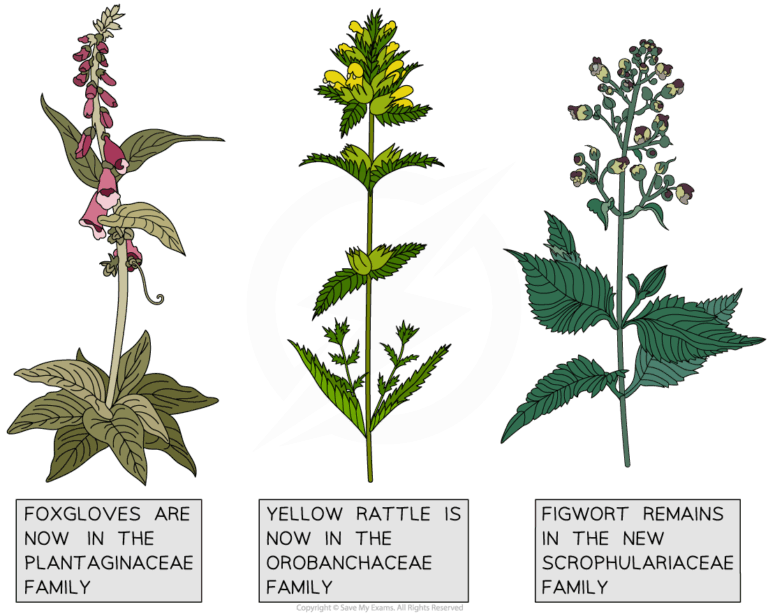
    ReclassificationThe reassignment of organisms to different taxonomic groups based on new evidence.
    SystematicsThe scientific study of the diversity of organisms and their evolutionary relationships.
    Monophyletic GroupA group containing an ancestor and all its descendants.
    Polyphyletic GroupA group containing organisms from different ancestors, not including their most recent common ancestor.
    Paraphyletic GroupA group containing an ancestor and some, but not all, of its descendants.

    Reclassification is an essential part of taxonomy as scientific understanding evolves. As new evidence emerges β€” particularly from molecular genetics β€” organisms may be reassigned to more accurate groups. This process reflects the dynamic nature of systematics, which aims to represent evolutionary history as precisely as possible. Reclassification ensures that taxonomic systems remain consistent with current scientific knowledge, even if it means overturning long-held classifications.

    • Discovery of new fossil or living species.
    • Molecular evidence (DNA, RNA, protein sequences) revealing unexpected relationships.
    • Correction of historical misclassifications based on superficial similarities.
    • Evidence of convergent evolution misleading earlier classification.
    • Advances in bioinformatics allowing more robust phylogenetic analysis.
    • Refinement of evolutionary models to reflect new data.

    🧠 Examiner Tip: When discussing reclassification in IB answers, always give a concrete example, such as the reclassification of prokaryotes into separate domains: Bacteria and Archaea.

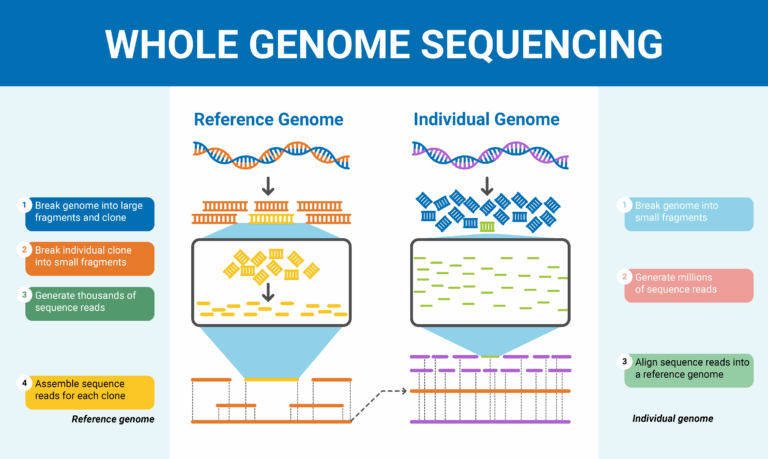
    • DNA sequencing can reveal genetic similarities and differences invisible to morphology.
    • Ribosomal RNA gene sequences are often used to determine deep evolutionary splits.
    • Mitochondrial DNA is used for recent divergence studies.
    • Molecular data can confirm or contradict morphology-based classifications.
    • Has led to major taxonomic revisions, such as splitting Protista into multiple lineages.
    • Supports the three-domain system over the traditional five-kingdom model.

    🧬 IA Tips & Guidance: A possible IA could analyse genetic sequence data from online databases to propose a reclassification of a selected group.

    • Prokaryotes: Once grouped as Monera, now divided into Bacteria and Archaea.
    • Fungi: Previously classified with plants, now recognised as a separate kingdom.
    • Whales: Once grouped separately, now classified with even-toed ungulates (Artiodactyla) based on molecular data.
    • Protists: Split into multiple eukaryotic supergroups based on genetic evidence.
    • Pandas: Giant pandas and red pandas once thought closely related, now placed in different families.
    • Birds: Reclassified as a subgroup of reptiles based on cladistic analysis.

    🌐 EE Focus: An EE could examine the role of molecular evidence in the reclassification of a specific taxonomic group, integrating both historical and modern perspectives.

    • Requires consensus among the scientific community.
    • Can cause confusion in literature and field guides.
    • Changes in names may affect conservation legislation and legal documents.
    • Requires updates to educational materials and databases.
    • Some classifications remain debated despite molecular evidence.
    • Historical inertia can slow adoption of new classifications.

    ❀️ CAS Link: A CAS project could involve updating a local biodiversity database to reflect recent taxonomic changes.

    🌍 Real-World Connection:
    Reclassification affects agriculture, conservation, and medicine β€” for example, correctly identifying pathogen species is crucial for disease control.

    • Integrates taxonomy, evolutionary biology, and molecular genetics.
    • Informs conservation priorities by identifying evolutionarily distinct species.
    • Supports ecological studies by clarifying species identities.
    • Assists in tracking the spread of invasive species.
    • Helps in drug discovery by identifying related species with known properties.
    • Contributes to understanding the tree of life.

    πŸ” TOK Perspective: Reclassification illustrates how scientific knowledge is provisional and subject to revision β€” even well-established systems can change when new evidence arises.

    πŸ“ Paper 2: Expect questions asking you to explain why reclassification occurs, give examples, and discuss how molecular evidence has reshaped taxonomy.

  • TermDefinition
    CladisticsA method of classification that groups organisms based on common ancestry and shared derived characteristics (synapomorphies).
    CladeA group of organisms consisting of a common ancestor and all its descendants.
    SynapomorphyA shared derived trait unique to a clade, indicating common ancestry.
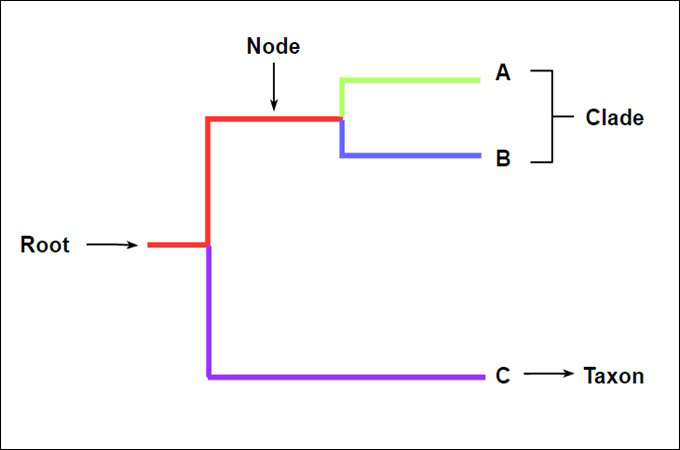
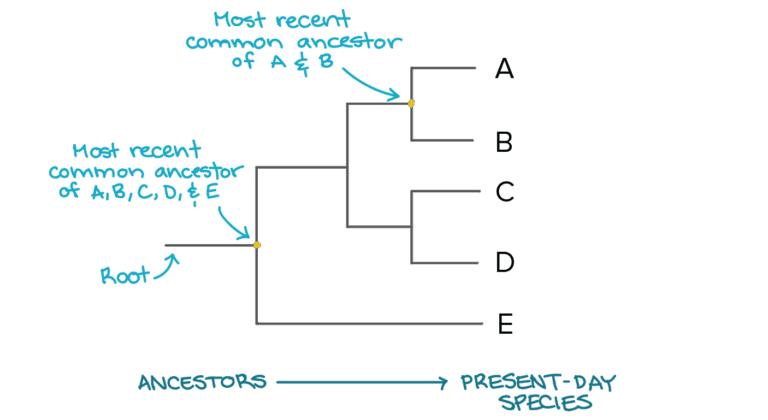
    NodeA branching point on a cladogram representing the most recent common ancestor of the descendant lineages.
    OutgroupA species or group outside the clade being studied, used to infer ancestral traits.

    Cladistics is a classification approach that focuses on evolutionary relationships rather than overall similarity. It groups organisms into clades, each representing a single branch of the tree of life, defined by shared derived characteristics. Cladograms, the diagrams produced through cladistic analysis, visually represent hypotheses about evolutionary relationships. This method has transformed taxonomy, particularly with the integration of molecular data, making it possible to resolve relationships that morphology alone could not.

    • Groups are based solely on shared derived traits, not ancestral traits.
    • All members of a clade share a common ancestor.
    • Cladograms are constructed using both morphological and molecular data.
    • Branching order represents hypothesised evolutionary pathways.
    • Outgroups help determine which traits are ancestral vs derived.
    • Cladistics aims for monophyletic groups β€” including all descendants of a common ancestor.

    🧠 Examiner Tip: When drawing cladograms, label each branch with a shared derived characteristic; avoid mixing ancestral traits with synapomorphies.

    • Identify traits and determine which are ancestral vs derived.
    • Use an outgroup for reference.
    • Assign traits to different branches based on appearance in evolutionary history.
    • Arrange branches so that each node represents the emergence of a new trait.
    • Molecular data (DNA, RNA, protein sequences) can refine branch placement.
    • Branch length may or may not represent evolutionary time β€” check diagram details.

    🧬 IA Tips & Guidance: A possible IA could construct cladograms from genetic sequence data of related plant or animal species and compare them to morphology-based diagrams.

    • Reflects actual evolutionary history more accurately than traditional systems.
    • Allows integration of molecular evidence.
    • Avoids polyphyletic and paraphyletic groupings.
    • Highlights the evolutionary significance of traits.
    • Can be updated easily with new data.
    • Provides testable hypotheses about relationships.

    🌐 EE Focus: An EE could investigate whether morphological or molecular data produce more accurate cladograms for a specific taxonomic group.

    • Requires accurate identification of derived vs ancestral traits.
    • Convergent evolution can mislead trait-based analysis.
    • Incomplete fossil records may limit available data.
    • Different data sets (morphological vs molecular) can produce conflicting trees.
    • Rapid evolutionary change can obscure relationships.
    • Assumes traits evolve in a linear, non-reversible fashion (which may not be true).

    ❀️ CAS Link: A CAS project could involve teaching younger students how to read and construct cladograms through an interactive workshop.

    🌍 Real-World Connection:
    Cladistics is used in epidemiology to track virus evolution, in conservation biology to prioritise unique evolutionary lineages, and in agriculture to breed resistant crops.

    • Uses DNA, RNA, or protein sequence comparisons to identify similarities and differences.
    • Molecular clocks estimate divergence times between clades.
    • Ribosomal RNA sequences are often used due to their slow rate of change.
    • Mitochondrial DNA is useful for tracing maternal lineages.
    • Data analysis requires bioinformatics tools.
    • Can reveal cryptic evolutionary relationships invisible to morphological study.

    πŸ” TOK Perspective: Cladistics shows how scientific knowledge is shaped by the choice of evidence β€” morphological and molecular data may lead to different interpretations of evolutionary history.

    πŸ“ Paper 2: Be ready to draw and interpret cladograms, define key terms (clade, synapomorphy), and compare molecular vs morphological evidence in cladistics.

  • TermDefinition
    Biological ClassificationThe systematic arrangement of living organisms into groups based on similarities and evolutionary relationships.
    TaxonomyThe science of naming, describing, and classifying organisms.
    SystematicsThe study of biological diversity and the evolutionary relationships among organisms.
    Binomial NomenclatureA universal naming system assigning each species a two-part name: genus and species.
    Taxonomic HierarchyThe ordered ranking of taxa from broad to specific: domain, kingdom, phylum, class, order, family, genus, species.

    Biological classification provides a framework for organising the immense diversity of life on Earth. By grouping organisms based on shared features and genetic relationships, scientists can communicate effectively, make predictions about unknown species, and understand evolutionary history. The system originated with Carl Linnaeus’s morphological approach and has since evolved to incorporate molecular data, making classification more accurate and reflective of true phylogenetic relationships.

    • Organises biodiversity into manageable and meaningful groups.
    • Enables clear communication among scientists worldwide through standardised naming.
    • Provides insights into evolutionary relationships between organisms.
    • Helps predict characteristics of newly discovered organisms.
    • Supports conservation efforts by identifying species and their roles in ecosystems.
    • Facilitates research by grouping organisms with similar traits.

    🧠 Examiner Tip: Always italicise genus and species names and capitalise only the genus when writing binomial nomenclature (e.g., Homo sapiens).

    • Based on observable characteristics and genetic similarities.
    • Uses a hierarchical system of ranks from broad to specific.
    • Includes both morphological and molecular evidence.
    • Reflects evolutionary history wherever possible.
    • Employs binomial nomenclature for universal identification.
    • Allows for flexibility and revision as new data emerge.

    🧬 IA Tips & Guidance: A possible IA could compare species identification using morphological keys versus DNA barcoding techniques.

    • Artificial systems: Based on one or few characteristics, often for convenience (e.g., habitat or size).
    • Natural systems: Based on multiple characteristics reflecting evolutionary relationships.
    • Phylogenetic systems: Focused on common ancestry using morphological and molecular data.
    • Systems can shift as new technologies and evidence become available.
    • Phylogenetic classification is currently the most accepted method.
    • Fossil evidence can be integrated into classification.

    🌐 EE Focus: An EE could analyse how molecular evidence has reshaped classification within a specific group of organisms.

    • Dichotomous keys for identification.
    • Field guides for local species.
    • Microscopy for cellular characteristics.
    • DNA sequencing for molecular comparisons.
    • Bioinformatics for analysing large datasets.
    • Phylogenetic software for tree construction.

    ❀️ CAS Link: A CAS project could involve creating a field guide for local biodiversity, integrating both scientific names and common names.

    🌍 Real-World Connection:
    Accurate classification underpins agriculture, medicine, conservation, and environmental policy by ensuring correct species identification.

    • Morphological similarities may be due to convergent evolution, not shared ancestry.
    • Genetic data may conflict with traditional classification.
    • Hybridisation can blur species boundaries.
    • Cryptic species may remain undetected without molecular analysis.
    • Classification is dynamic β€” constant updates are required.
    • Human bias can influence early classification decisions.

    πŸ” TOK Perspective: Classification systems reflect human attempts to impose order on nature; changes in technology and perspective can reshape these systems over time.

    πŸ“ Paper 2: Be ready to define taxonomy and systematics, outline the hierarchy of classification, and compare artificial, natural, and phylogenetic systems.

  • TermDefinition
    BiodiversityThe variety of life at all levels, from genes to ecosystems.
    PhylogeneticsThe study of evolutionary relationships among organisms.
    CladogramDiagram showing evolutionary relationships based on shared derived traits.
    Molecular ClockA method estimating evolutionary time based on mutation rates in DNA or protein sequences.
    Convergent EvolutionThe independent evolution of similar features in unrelated lineages due to similar environmental pressures.

    Evolutionary relationships underpin modern biology, explaining how species are connected through common ancestry. Biodiversity is shaped by evolutionary processes, environmental changes, and ecological interactions. Studying phylogenetics allows scientists to reconstruct the tree of life, identifying shared ancestry and divergence events. Advances in DNA sequencing and bioinformatics have transformed our understanding of biodiversity, revealing cryptic species and clarifying relationships that morphological studies alone could not resolve. Conservation biology increasingly depends on evolutionary data to prioritise species and habitats for protection.

    • Morphological analysis: comparing structures to infer relationships.
    • Molecular phylogenetics: uses DNA, RNA, or protein sequences to build evolutionary trees.
    • Molecular clocks: estimate divergence times based on mutation rates.
    • Cladistics: groups organisms by shared derived traits (synapomorphies).
    • Fossil calibration: uses fossil ages to anchor phylogenetic timelines.
    • Bioinformatics: computational tools for large-scale sequence analysis.

    🧠 Examiner Tip: When interpreting cladograms, remember that branch length may or may not indicate evolutionary time β€” check the diagram’s scale.

    • Divergent evolution: species from a common ancestor become more different over time.
    • Convergent evolution: unrelated species evolve similar traits due to similar selection pressures.
    • Parallel evolution: related species evolve similar traits independently.
    • Adaptive radiation: rapid diversification from a common ancestor into multiple ecological niches.
    • Coevolution: two or more species reciprocally influence each other’s evolution.
    • Extinction events: can reset evolutionary trajectories and open niches.

    🧬 IA Tips & Guidance: A bioinformatics-based IA could compare mitochondrial DNA sequences to infer evolutionary relationships between local species.

    • Genetic diversity: variation in genes within a population.
    • Species diversity: number and relative abundance of species in an area.
    • Ecosystem diversity: variety of habitats and ecological processes.
    • Biodiversity supports ecosystem stability and resilience.
    • High biodiversity often correlates with ecosystem productivity.
    • Conservation strategies target all three diversity levels.

    🌐 EE Focus: An EE could investigate how genetic diversity influences species survival in changing environments, using molecular data for analysis.

    • Habitat loss from agriculture, urbanisation, and deforestation.
    • Overexploitation of species for food, medicine, or trade.
    • Pollution affecting ecosystems and species health.
    • Climate change altering habitats and migration patterns.
    • Invasive species outcompeting native organisms.
    • Conservation biology aims to mitigate these impacts using evolutionary insights.

    ❀️ CAS Link: A CAS project could involve participating in biodiversity surveys and using phylogenetic tools to classify observed species.

    🌍 Real-World Connection:
    Understanding evolutionary relationships is vital for predicting disease spread, managing endangered species, and sustaining ecosystems under climate change.

    • Phylogenetic diversity can be used to prioritise species conservation.
    • Protecting evolutionarily distinct species preserves unique traits.
    • Genetic data reveal population structure for targeted management.
    • Evolutionary history informs restoration ecology projects.
    • Endangered species lists increasingly consider evolutionary uniqueness.
    • Conservation decisions may integrate both ecological and evolutionary data.

    πŸ” TOK Perspective: The use of molecular data in biodiversity studies highlights how changing tools and technologies shape our understanding of the natural world and influence policy.

    πŸ“ Paper 2: Be ready to construct or interpret phylogenetic trees, compare patterns of evolution, and explain how evolutionary knowledge supports biodiversity conservation.

  • TermDefinition
    DomainThe highest taxonomic rank, grouping all life into broad categories based on fundamental genetic and cellular differences.
    ArchaeaDomain of prokaryotic organisms distinct from bacteria, often living in extreme environments.
    BacteriaDomain of prokaryotic organisms with diverse metabolisms, including many important in ecology and medicine.
    EukaryaDomain containing all organisms with eukaryotic cells (nucleus and membrane-bound organelles).
    KingdomTaxonomic level below domain, grouping organisms with shared fundamental characteristics.

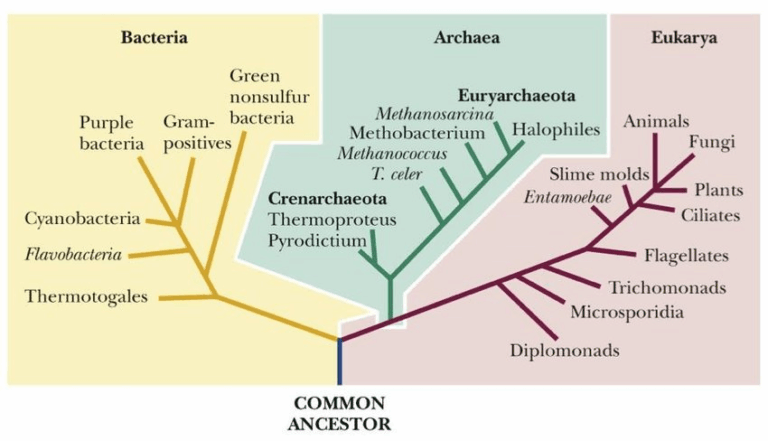
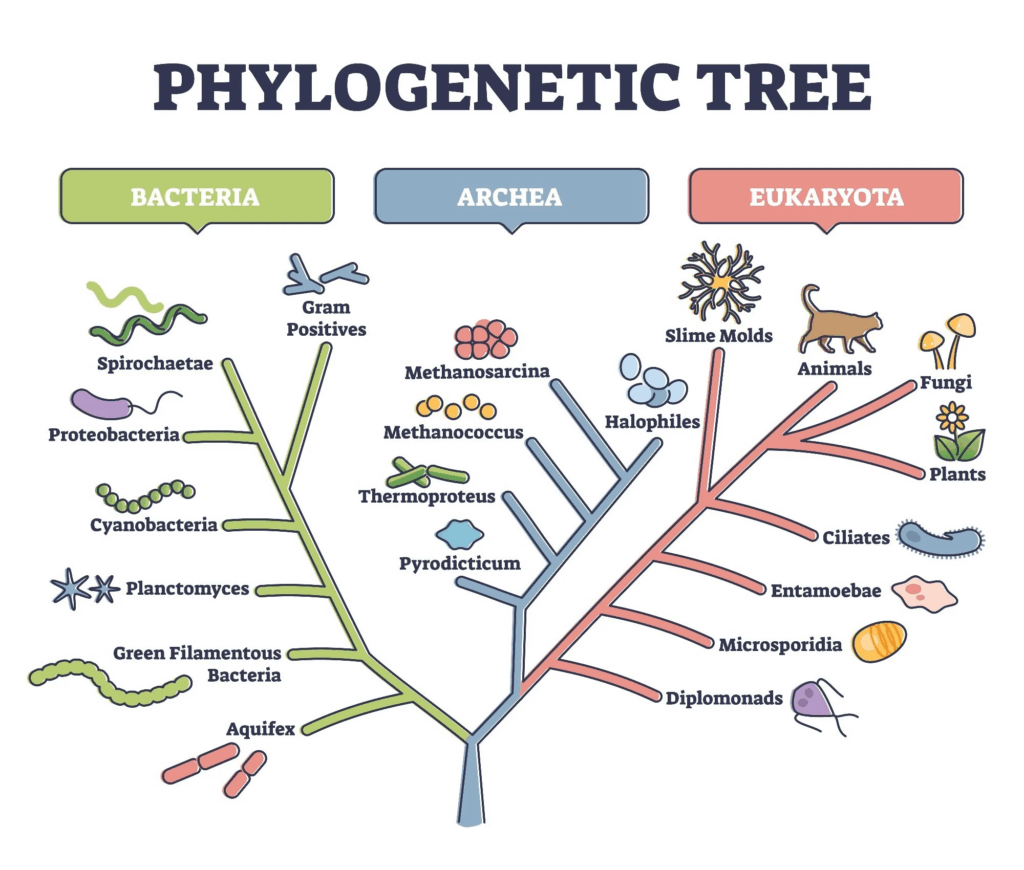
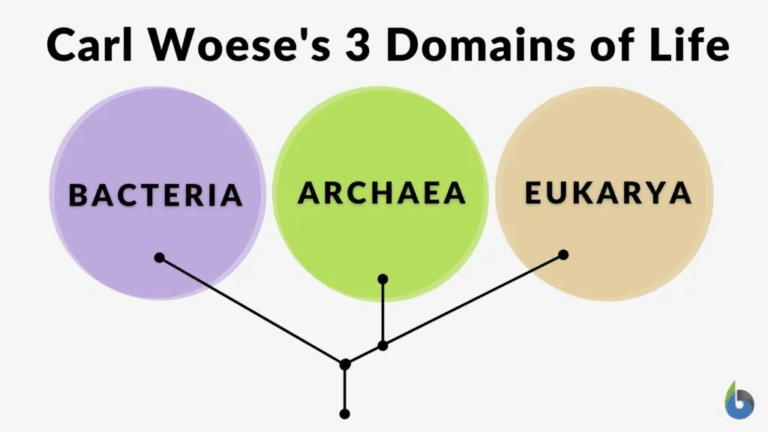
    The classification of life into domains and kingdoms reflects the deepest evolutionary divisions among organisms. The three-domain system β€” Bacteria, Archaea, and Eukarya β€” is based on molecular and genetic evidence, particularly ribosomal RNA sequences. Within each domain, organisms are further divided into kingdoms, reflecting key structural, metabolic, and evolutionary traits. This system captures both ancient divergences in life’s history and the diversity of forms and functions that have evolved since.

    • Bacteria: Prokaryotes with peptidoglycan cell walls, circular DNA, and diverse metabolisms. Examples: Escherichia coli, Streptococcus.
    • Archaea: Prokaryotes lacking peptidoglycan, often extremophiles (thermophiles, halophiles, methanogens). Unique membrane lipids and gene expression mechanisms.
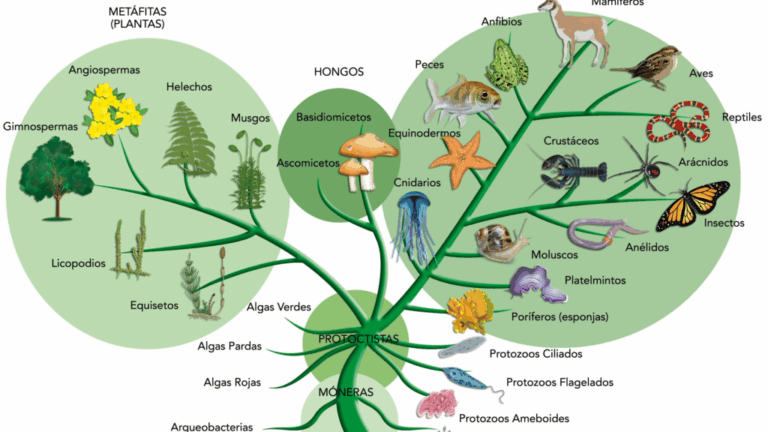
    • Eukarya: All organisms with eukaryotic cells, including protists, fungi, plants, and animals.
    • Domain differences are supported by rRNA sequence comparisons and molecular biology evidence.
    • Domains represent the most ancient evolutionary splits, over 3 billion years ago.
    • Archaea and Eukarya share more recent common ancestry than either does with Bacteria.

    🧠 Examiner Tip: In domain comparisons, always mention cell wall composition, ribosome type, and rRNA sequence differences.

    • Domain Bacteria: Often grouped into one kingdom (Eubacteria).
    • Domain Archaea: Often grouped into one kingdom (Archaebacteria).
    • Domain Eukarya: Contains multiple kingdoms:
      • Protista: Mostly unicellular eukaryotes, diverse in form and nutrition.
      • Fungi: Multicellular or unicellular heterotrophs with chitin cell walls.
      • Plantae: Multicellular autotrophs with cellulose cell walls, photosynthetic.
      • Animalia: Multicellular heterotrophs without cell walls, complex body plans.
    • Modern research suggests Protista is paraphyletic, with groups reclassified based on molecular data.
    • Kingdom classification can vary depending on system used (e.g., 5-, 6-, or more kingdoms).

    🧬 IA Tips & Guidance: A possible IA could investigate environmental conditions affecting growth rates of representative organisms from different domains.

    • Bacteria: Binary fission reproduction, 70S ribosomes, sensitive to traditional antibiotics.
    • Archaea: Resistant to most antibiotics, unique lipid monolayers in membranes, ability to survive extreme conditions.
    • Eukarya: Mitotic and meiotic cell division, 80S ribosomes in cytoplasm, membrane-bound organelles.
    • Fungi: Absorptive nutrition, decomposers, important in symbiosis (mycorrhizae).
    • Plantae: Photosynthetic autotrophs, alternation of generations life cycle.
    • Animalia: Nervous and muscular systems for rapid response and movement.

    🌐 EE Focus: An EE could compare molecular phylogenies of organisms from different domains to test evolutionary relationships suggested by rRNA evidence.

    • Carl Woese introduced the three-domain system in the late 20th century.
    • Based on sequencing of the 16S and 18S rRNA genes.
    • Revealed Archaea are genetically closer to Eukarya than to Bacteria.
    • Supports the idea of a universal common ancestor.
    • Highlights the importance of molecular data in reshaping classification.
    • Suggests early life experienced horizontal gene transfer, complicating lineage tracing.

    ❀️ CAS Link: A CAS activity could involve creating an illustrated timeline of the evolutionary emergence of

    🌍 Real-World Connection:
    Domain and kingdom classification helps scientists track emerging diseases, identify extremophiles for biotechnology, and guide conservation of biodiversity.

    • Medical: distinguishing between bacterial and archaeal pathogens for correct treatment.
    • Environmental: identifying microbial communities in extreme environments.
    • Evolutionary research: tracing the origin of complex cellular features.
    • Conservation: cataloguing biodiversity for protection.
    • Biotechnology: selecting species with useful enzymes (e.g., thermostable DNA polymerase from Thermus aquaticus in Archaea).
    • Education: simplifying biological diversity into a teachable structure.

    πŸ” TOK Perspective: The division of life into domains shows how advances in technology (DNA sequencing) can reshape scientific classification systems and challenge traditional frameworks.

    πŸ“ Paper 2: Be ready to compare domains in a table, give examples from each kingdom, and explain molecular evidence supporting the three-domain system.

  • TermDefinition
    TaxonomyThe science of classifying organisms into groups based on shared characteristics.
    Binomial NomenclatureThe two-part scientific naming system for species, consisting of genus and species names.
    Taxon (plural: taxa)A group of organisms classified together at any level in the taxonomic hierarchy.
    PhylogenyThe evolutionary history and relationships among species.
    CladisticsA classification method that groups organisms by common ancestry using shared derived characteristics.

    Classification and taxonomy organise biological diversity into a structured system, enabling scientists to identify, name, and study organisms systematically. This framework allows communication across languages and disciplines and reflects evolutionary relationships. The modern system of taxonomy, developed from the work of Carl Linnaeus, uses hierarchical levels β€” from domain to species β€” and binomial nomenclature for species naming. Advances in molecular biology have refined classification, allowing genetic data to guide taxonomy and resolve ambiguities in evolutionary relationships.

    • Levels from broadest to most specific: Domain β†’ Kingdom β†’ Phylum β†’ Class β†’ Order β†’ Family β†’ Genus β†’ Species.
    • Each level groups organisms with increasingly specific similarities.
    • Binomial nomenclature: genus name capitalised, species name lowercase (e.g., Homo sapiens).
    • Classification reflects morphological, physiological, and molecular traits.
    • Fossil records and molecular clocks can support taxonomic placement.
    • Revisions occur as new data become available, especially from DNA sequencing.

    🧠 Examiner Tip: Always italicize scientific names in written answers and ensure the genus is capitalised but the species name is not.

    • Morphological classification: based on structural similarities and differences.
    • Physiological classification: based on metabolic processes or biochemical traits.
    • Molecular classification: uses DNA, RNA, or protein sequence comparisons.
    • Ecological classification: based on habitat or ecological niche.
    • Cladistic analysis: groups organisms by evolutionary descent rather than overall similarity.
    • Classification systems are dynamic, changing with new discoveries.

    🧬 IA Tips & Guidance: A possible IA could compare classification outcomes when using morphological vs molecular data for the same set of species.

    • Cladograms depict evolutionary relationships based on shared derived characteristics (synapomorphies).
    • Branch points (nodes) represent common ancestors.
    • Outgroups help establish the direction of evolutionary change.
    • Molecular phylogenetics uses DNA/RNA/protein data to build trees.
    • Trees are hypotheses, subject to change with new evidence.
    • Cladistics emphasises monophyletic groups (common ancestor and all its descendants).

    🌐 EE Focus: An EE could analyse how molecular phylogenetics has changed the classification of a specific group (e.g., fungi or protists).

    • Provides a universal language for scientists worldwide.
    • Organises vast biodiversity into manageable categories.
    • Reflects evolutionary relationships between organisms.
    • Facilitates identification of species and study of their biology.
    • Aids in predicting characteristics of newly discovered organisms.
    • Helps track and manage biodiversity conservation efforts.

    ❀️ CAS Link: A CAS project could involve creating an interactive exhibit on classification for a local science fair.

    🌍 Real-World Connection:
    Taxonomy underpins conservation biology, agriculture, and medicine β€” correct species identification is essential for managing invasive species, breeding crops, and diagnosing pathogens.

    • Dichotomous keys for species identification.
    • Field guides for local flora and fauna.
    • Genetic barcoding using standard DNA sequences.
    • Microscopy to examine structural features.
    • Biochemical assays for unique metabolic products.
    • Databases like GenBank for genetic information.

    πŸ” TOK Perspective: Taxonomy illustrates how scientific classification systems are human-made frameworks that reflect both nature and our interpretation of it β€” they can change as new knowledge emerges.

    πŸ“ Paper 2: Be prepared to construct or interpret a cladogram, explain binomial nomenclature, and compare morphological vs molecular classification methods.

  • TermDefinition
    Virus Origin HypothesesTheories explaining how viruses first appeared, including progressive, regressive, and coevolution hypotheses.
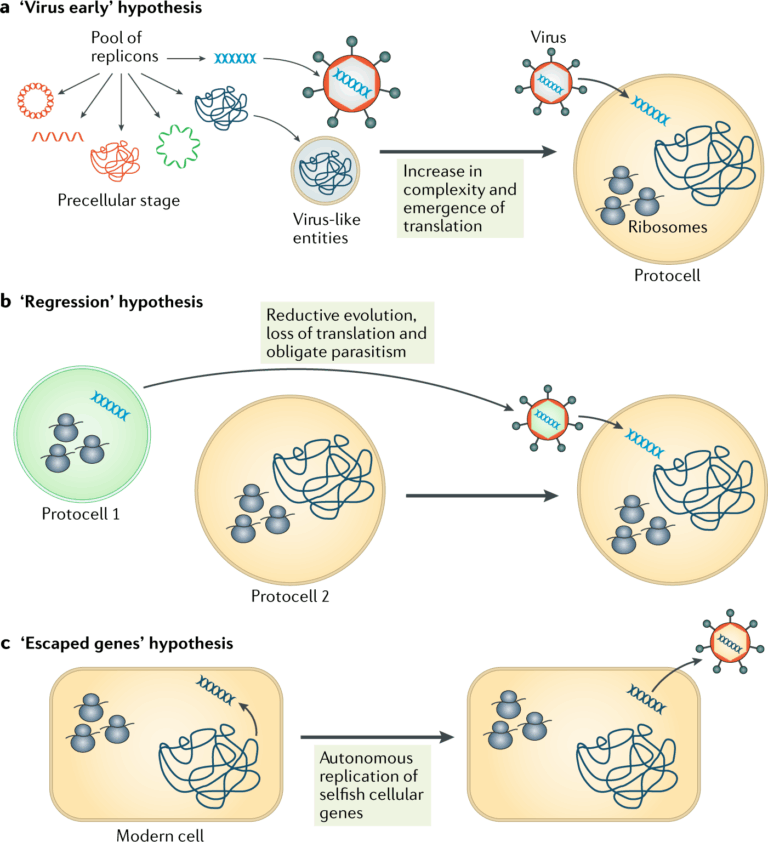
    Progressive HypothesisSuggests viruses evolved from mobile genetic elements (e.g., plasmids, transposons) that gained the ability to move between cells.
    Regressive HypothesisProposes viruses evolved from more complex parasitic cells that lost genes over time, becoming dependent on hosts.
    Coevolution HypothesisSuggests viruses evolved alongside the first cellular life forms from self-replicating molecules.
    Viral QuasispeciesA group of viruses with related but genetically varied genomes, arising from high mutation rates, especially in RNA viruses.

    The origin of viruses remains a subject of debate, as they leave no fossil record and their nature blurs the boundary between living and non-living entities. Several hypotheses attempt to explain their emergence, including evolution from mobile genetic elements (progressive), degeneration from more complex ancestors (regressive), or coevolution with the earliest life forms. Viruses have been present for billions of years, evolving alongside their hosts, influencing genetic diversity, and playing significant roles in ecosystems. Their rapid mutation rates and capacity for horizontal gene transfer make them key drivers of evolution.

    • Viruses originated from fragments of cellular genetic material, such as plasmids or transposons.
    • These mobile genetic elements gained the ability to exit one cell and enter another, possibly via protein coats.
    • Explains similarities between some viral genes and host cell genes.
    • Supported by the existence of retrotransposons, which share mechanisms with retroviruses.
    • Suggests viruses are derived from their hosts, not ancient life forms.
    • Fits well with RNA viruses, which may have arisen from RNA-based replicators in early cells.

    🧠 Examiner Tip: If asked to compare hypotheses, always mention supporting evidence and key limitations β€” IB rewards balanced evaluation.

    • Proposes that viruses were once free-living, parasitic cells that lost genes over time.
    • As dependence on hosts increased, unnecessary genes for metabolism and independent survival were discarded.
    • Explains large DNA viruses like mimiviruses, which have genes similar to cellular organisms.
    • Suggests a continuum between viruses and intracellular parasites.
    • Limited by lack of direct fossil or molecular evidence.
    • Implies multiple independent origins for different virus groups.

    🧬 IA Tips & Guidance: A literature-based IA could compare genomic features of giant viruses and parasitic bacteria to investigate gene loss patterns.

    • Suggests viruses arose from self-replicating molecules in the pre-cellular “RNA world.”
    • Viruses and cells may have evolved together, influencing each other’s development.
    • Implies viruses are as ancient as life itself.
    • Supported by similarities between some viral enzymes and those in ancient cellular lineages.
    • Could explain unique viral proteins with no known cellular counterpart.
    • Suggests an ancient role for viruses in shaping genetic systems.

    🌐 EE Focus: An EE could explore whether coevolutionary evidence supports a universal viral ancestor or multiple independent origins.

    • RNA viruses evolve rapidly due to high mutation rates.
    • Genetic recombination between viruses and hosts occurs frequently.
    • Viruses can acquire host genes, influencing host evolution.
    • Viral quasispecies ensure adaptability to changing environments.
    • Coevolutionary “arms races” occur between viruses and host immune systems.
    • Some viral sequences have been incorporated into host genomes (endogenous retroviruses).

    ❀️ CAS Link: A CAS project could involve creating an educational documentary explaining how viruses shape biodiversity and evolution.

    🌍 Real-World Connection:
    Understanding viral origins informs pandemic preparedness by helping predict potential emergence of new viral diseases from animal reservoirs.

    • No direct fossil record, but viral structures can be inferred from molecular data.
    • Ancient viral DNA found integrated into host genomes offers evolutionary clues.
    • Comparative genomics reveals relationships between viral and cellular genes.
    • Lack of universal viral genes makes determining a single origin difficult.
    • Likely that different virus families have different evolutionary pathways.
    • Studying viruses from extreme environments may reveal ancient features.

    πŸ” TOK Perspective: The debate over viral origins highlights how different interpretations of the same evidence can lead to competing theories in science.

    πŸ“ Paper 2: Expect questions asking you to compare origin hypotheses, link evidence to specific examples, and explain how viral evolution affects disease emergence.