Author: Admin

  • TermDefinition
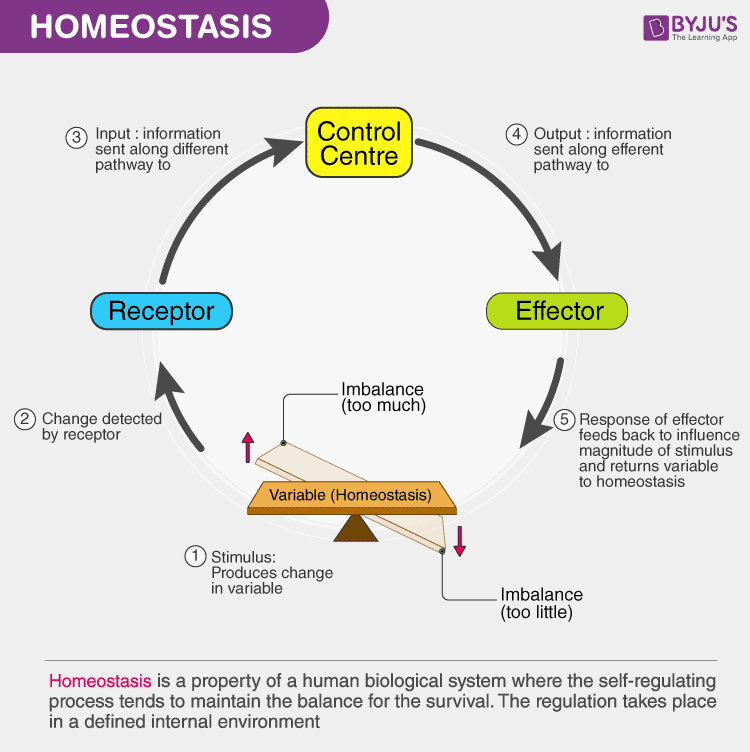
    HomeostasisThe maintenance of a stable internal environment despite external fluctuations.
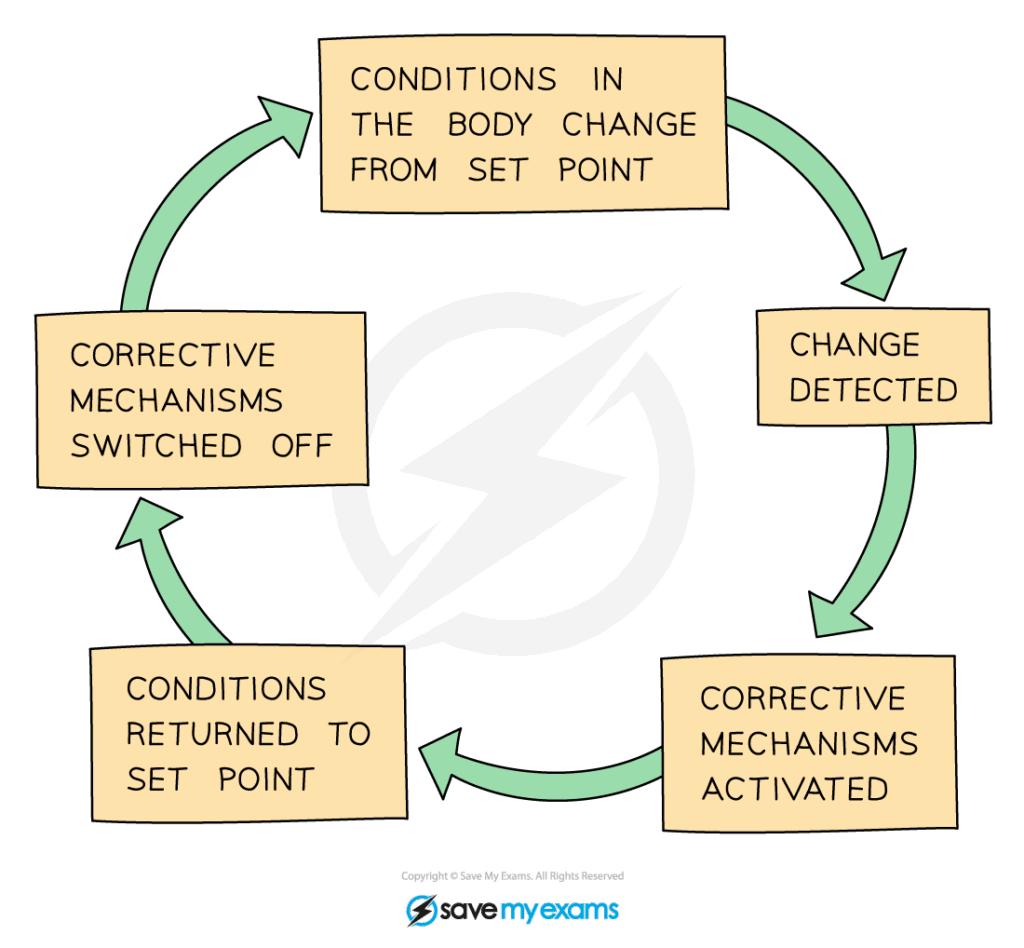
    Negative feedbackA control mechanism that counteracts changes, restoring conditions to a set point.
    Positive feedbackA mechanism that amplifies changes, moving conditions away from a set point.
    EffectorAn organ, tissue, or cell that brings about a response to restore balance.
    ReceptorA sensor that detects internal or external changes (stimuli).
    Set pointThe optimal level at which a physiological condition is maintained (e.g., 37 °C for human body temperature).

    Homeostasis is the foundation of physiological stability in living organisms. It ensures that key conditions such as temperature, pH, blood glucose, and water balance remain within narrow limits to allow enzymes and cellular processes to function optimally. Homeostasis is achieved through feedback mechanisms that involve continuous monitoring, comparison to a set point, and responses from effectors. While negative feedback stabilises systems, positive feedback temporarily amplifies responses, often in special processes like childbirth. Disruptions in homeostasis can lead to disease and reduced survival, highlighting its essential role in biology.

    • Receptors detect changes in internal or external environments (e.g., thermoreceptors in skin, chemoreceptors for blood pH).
    • Control centres (often in the brain or endocrine glands) process sensory input and compare it to set points.
    • Effectors carry out corrective responses (e.g., muscles shivering, glands secreting insulin).
    • Constant monitoring and adjustment create dynamic equilibrium, not fixed constancy.
    • Examples: thermoregulation, osmoregulation, glucose regulation all follow this pattern.

    🧠 Examiner Tip: Always describe receptor → control centre → effector when explaining homeostasis. Missing one step often loses marks.

    • Most homeostatic processes use negative feedback to restore equilibrium.
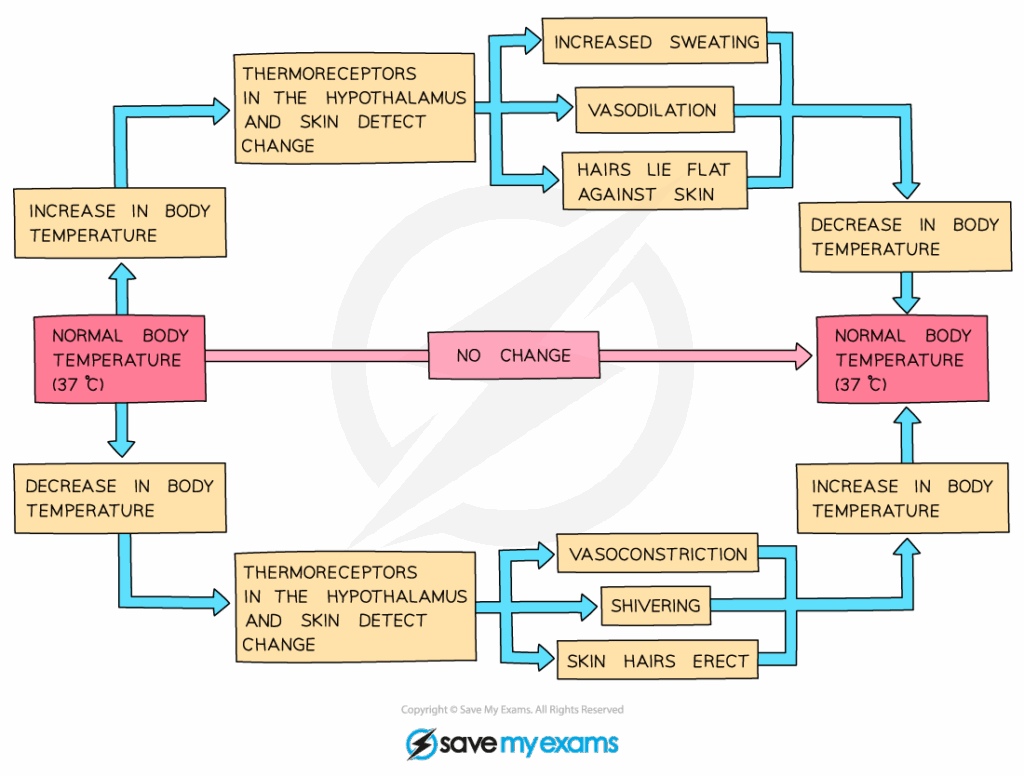
    • Example: Body temperature regulation
      • Too hot → vasodilation, sweating → cooling.
      • Too cold → vasoconstriction, shivering → warming.
    • Example: Blood glucose regulation
      • High glucose → insulin secretion → uptake by cells, storage as glycogen.
      • Low glucose → glucagon secretion → glycogen breakdown to glucose.
    • Negative feedback prevents extreme fluctuations and maintains stability.
    • Malfunctions in negative feedback cause disorders like diabetes or thyroid imbalances.

    🧬 IA Tips & Guidance: Students can design experiments monitoring body temperature or glucose before and after exercise/food intake, modelling feedback in action (ethical considerations applied).

    • Less common but important in certain biological processes.
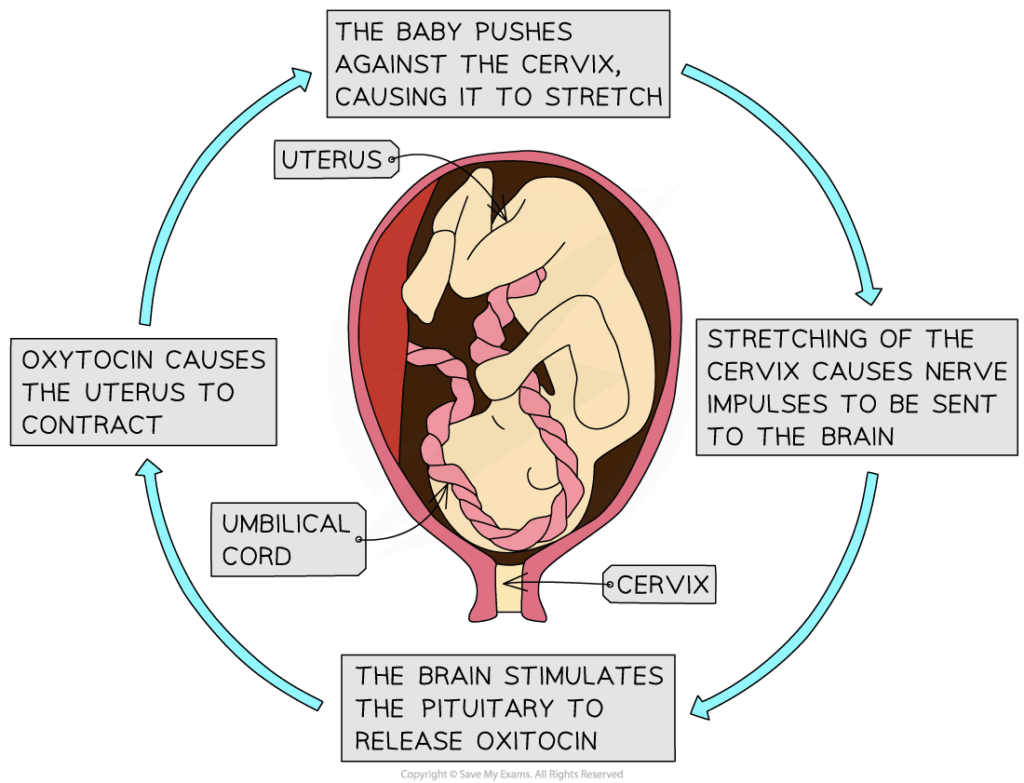
    • Childbirth: oxytocin stimulates contractions → more oxytocin released → stronger contractions until birth.
    • Lactation: suckling triggers prolactin and oxytocin → more milk produced and released.
    • Blood clotting: platelets release factors that attract more platelets, forming a clot.
    • Unlike negative feedback, positive feedback drives systems away from balance but ensures rapid completion of vital processes.
    • Must be tightly regulated, as unchecked positive feedback is harmful.
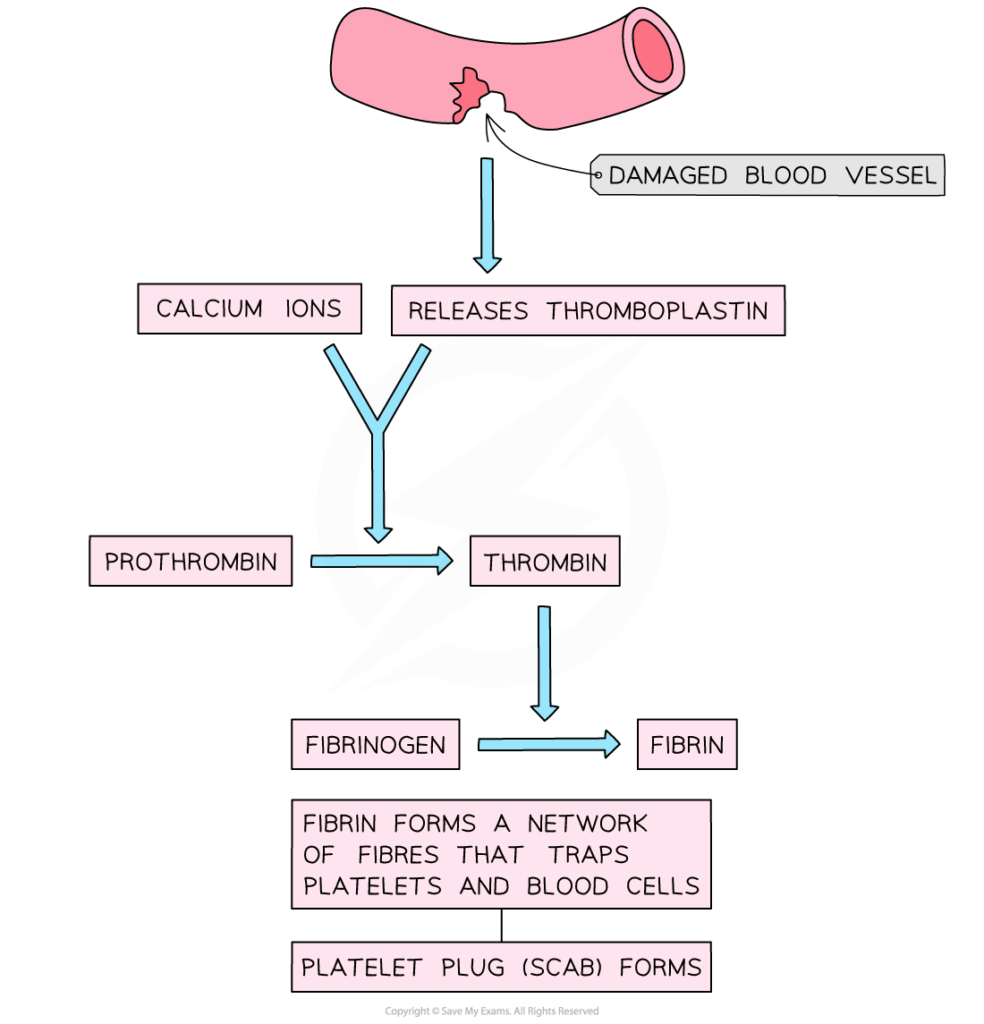
    🌐 EE Focus: An EE could explore whether positive feedback loops represent exceptions or integral parts of homeostasis, using examples like parturition or ecological systems.

    • Thermoregulation: balancing heat production and loss.
    • Osmoregulation: kidneys regulate water and ion balance using ADH.
    • pH regulation: buffers in blood maintain pH ~7.4; lungs and kidneys remove CO₂ and H⁺.
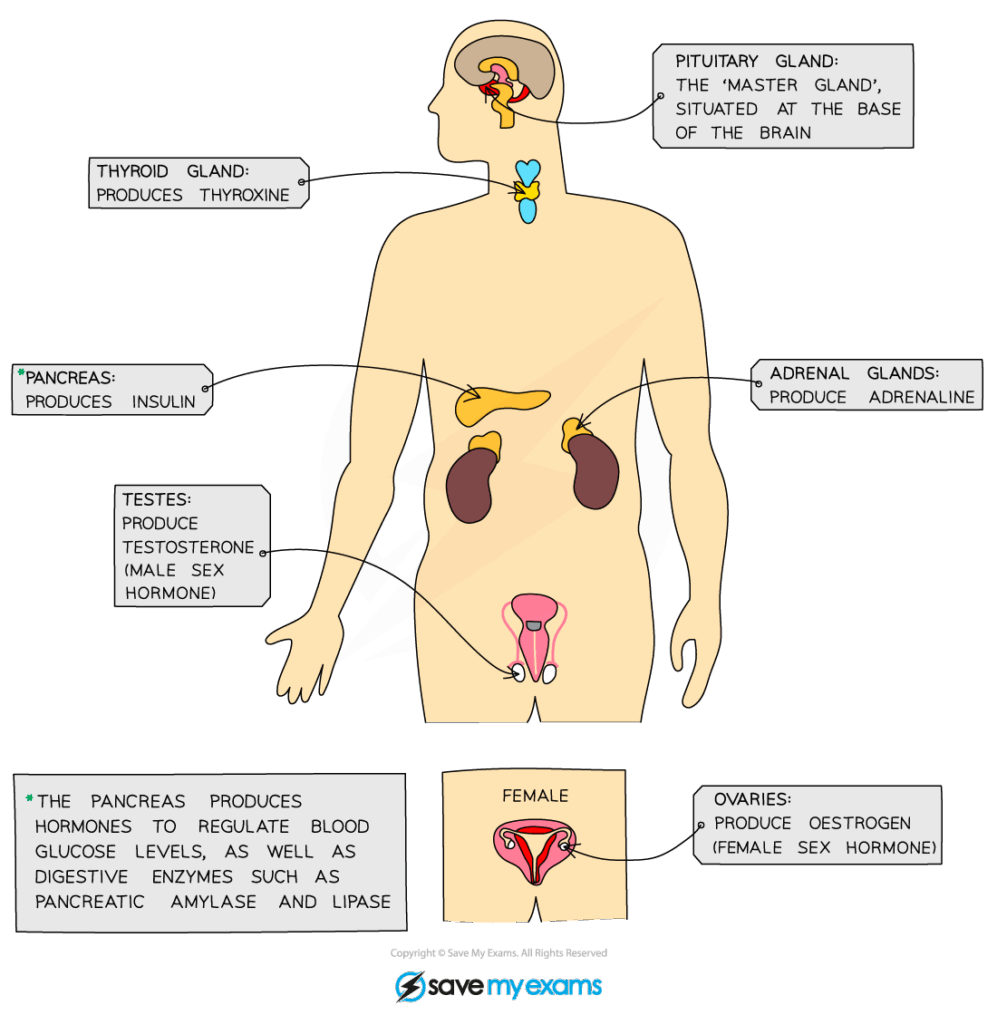
    • Glucose regulation: pancreas hormones balance blood sugar for cellular respiration.
    • Gas regulation: respiratory control centres adjust breathing rate to CO₂ and O₂ levels.

    ❤️ CAS Link: Students could run workshops on healthy lifestyles, showing how hydration, diet, and exercise help maintain homeostasis in the human body.

    🌍 Real-World Connection: Failures of homeostasis cause common health problems — diabetes (glucose imbalance), dehydration (osmoregulation failure), hyperthermia and hypothermia (thermoregulation failure). Medical interventions often mimic or restore these mechanisms.

    • Homeostasis requires coordination across multiple organ systems.
    • Example: Exercise → increased CO₂ → respiratory system increases ventilation; cardiovascular system raises heart rate; nervous and endocrine systems coordinate.
    • The hypothalamus is a central hub, integrating neural signals with hormonal control.
    • Disruptions in one system can cascade across others (e.g., kidney failure affecting blood pressure and pH).
    • Homeostasis is not a single system’s job but the combined effort of nervous, endocrine, respiratory, circulatory, and excretory systems.

    🔍 TOK Perspective: Homeostasis is often described as balance around a set point. TOK question: Is this an oversimplified metaphor? In reality, homeostasis is dynamic and constantly fluctuating — so are our scientific models too static to capture this complexity?
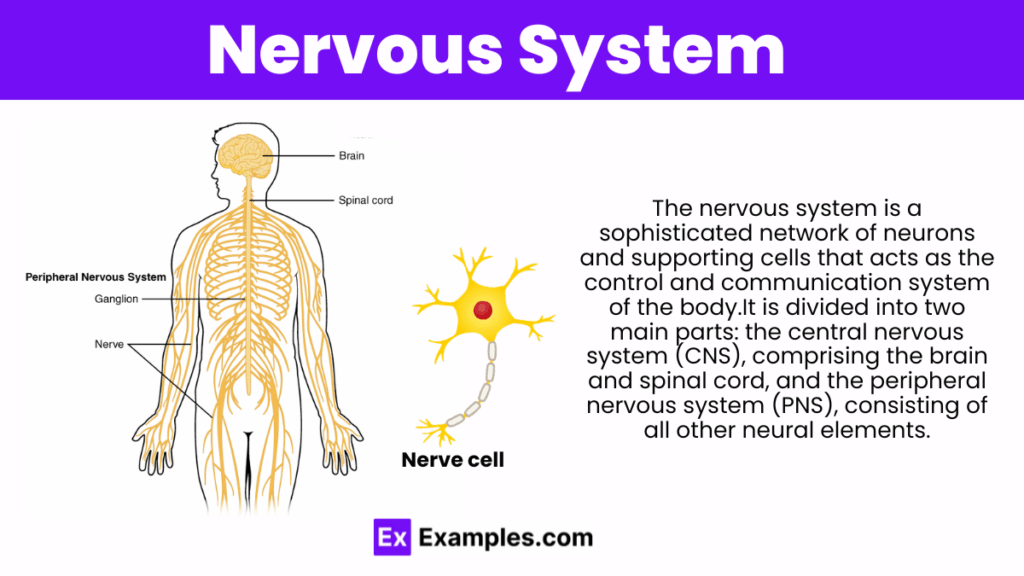
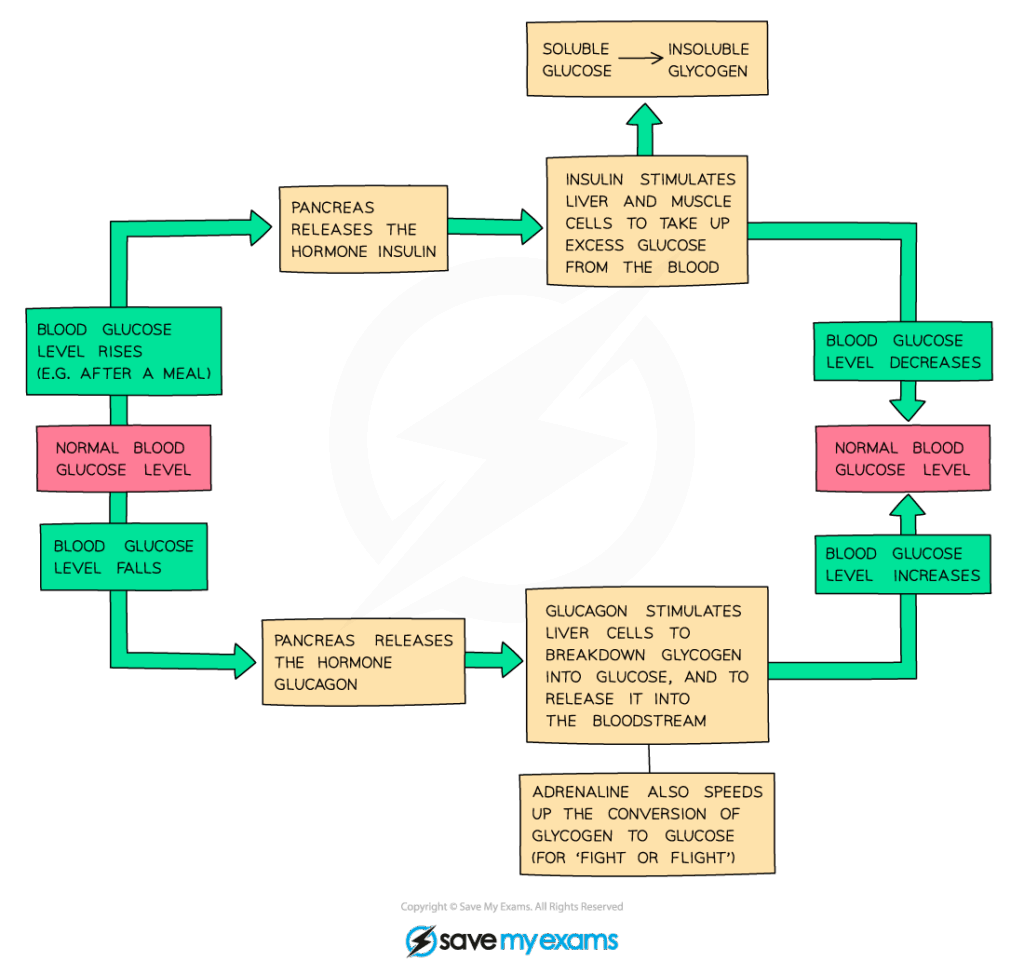
    📝 Paper 2: Questions may require explanation of negative vs positive feedback, examples of homeostasis, or analysis of experimental data (e.g., blood glucose before/after meals). Graph-based data are common. For full marks, answers must identify stimulus, receptor, control centre, effector, and response.

  • TermDefinition
    CoordinationThe process by which the body integrates functions of different organs and systems to respond effectively to internal and external stimuli.
    Nervous systemA communication system that uses electrical impulses along neurons for rapid, short-term responses.
    Endocrine systemA communication system where glands release hormones into the bloodstream for slower, longer-lasting regulation.
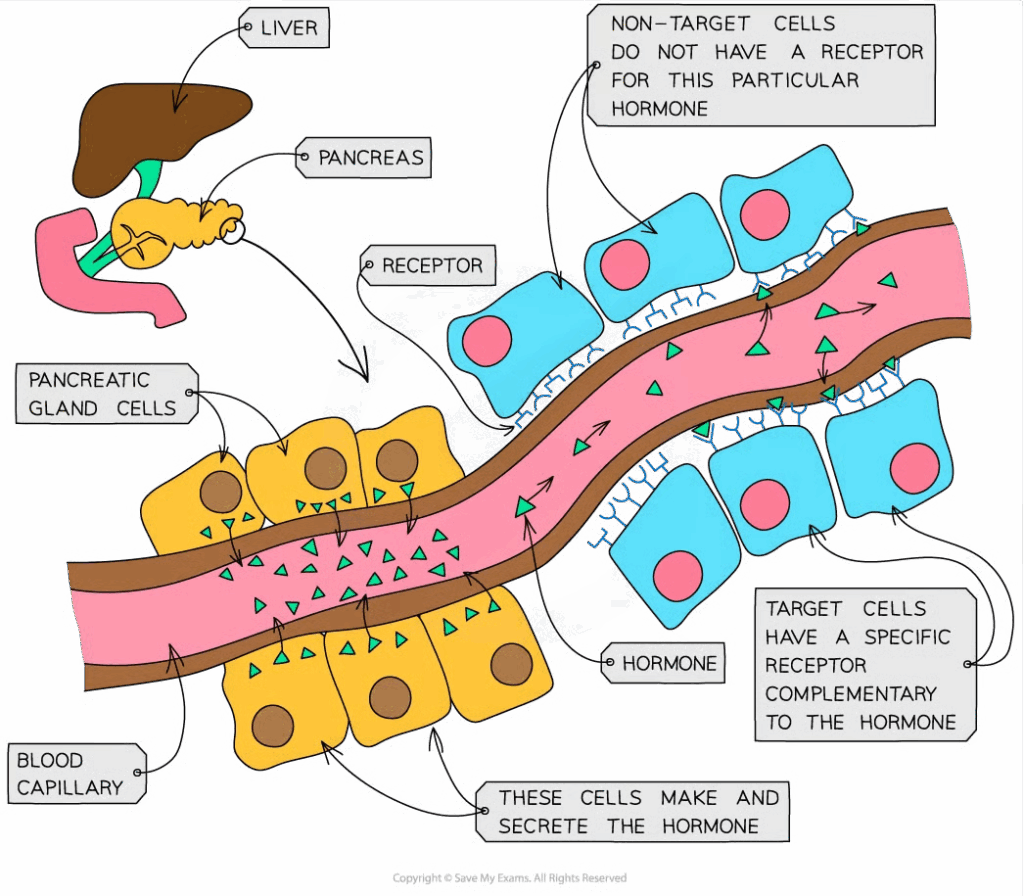
    HormoneA chemical messenger secreted by endocrine glands that travels in the blood and acts on target cells with specific receptors.
    Reflex arcA neural pathway that mediates rapid, involuntary responses to stimuli, bypassing conscious brain involvement.
    HypothalamusA brain region that links nervous and endocrine systems, regulating pituitary hormone release.

    The coordination of the nervous and endocrine systems ensures that organisms can respond appropriately to both rapid changes and long-term demands. The nervous system provides fast, targeted communication using electrical impulses and neurotransmitters, allowing immediate responses such as reflexes and muscle contractions. In contrast, the endocrine system works through hormones transported in the bloodstream, producing slower but more sustained effects such as regulating growth, reproduction, and metabolism. Together, these systems maintain homeostasis and allow organisms to adapt to changing environments. Their interaction is most evident in the hypothalamus–pituitary axis, which integrates neural signals with hormonal regulation.

    • Nerve impulses travel along neurons at very high speeds, enabling immediate responses to stimuli.
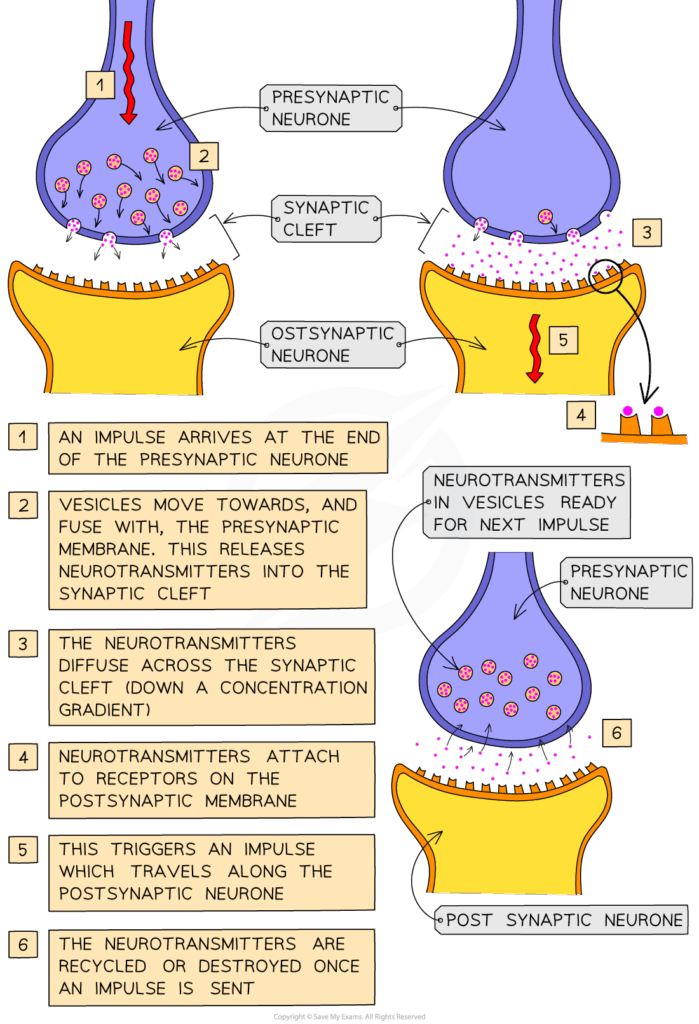
    • Coordination is achieved through synaptic transmission, where neurotransmitters bridge communication between neurons.
    • Reflex arcs illustrate automatic control mechanisms, e.g., hand withdrawal from a hot object.
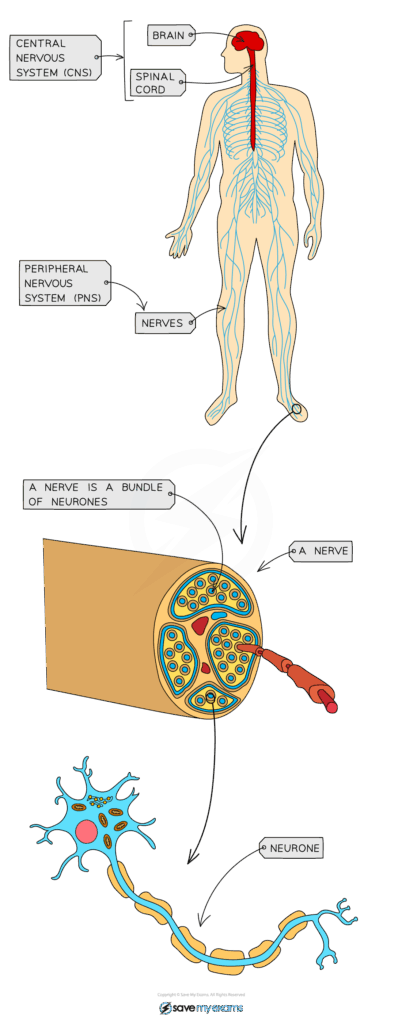
    • Central nervous system (CNS) integrates sensory information and produces responses via motor neurons.
    • Enables precise, localised actions (e.g., contracting a muscle fibre or dilating a pupil).

    🧠 Examiner Tip: Don’t just state “nervous system = fast.” Always link speed to survival advantage (e.g., reflexes prevent injury).

    • Glands release hormones into blood → circulate throughout the body.
    • Effects are slower to start but last longer compared to nervous responses.
    • Hormones act only on target organs with receptors (specificity).
    • Example:
      • Adrenaline prepares body for fight-or-flight (increased heart rate, glucose release).
      • Insulin lowers blood glucose; glucagon raises it.
    • Provides global regulation (growth, metabolism, reproduction).

    🧬 IA Tips & Guidance: Investigations could model hormone action using simulations of insulin–glucose regulation or examine how adrenaline affects heart rate in organisms such as Daphnia.

    • The hypothalamus is the control centre linking nerves and hormones.
    • Hypothalamic neurons secrete hormones that act on the pituitary gland.
    • Example: Stress response — hypothalamus triggers pituitary → ACTH release → adrenal glands produce cortisol/adrenaline.
    • Feedback loops (negative feedback) prevent overproduction of hormones.
    • Integration allows short-term nervous input to result in long-term endocrine effects.

    🌐 EE Focus: An EE could compare the efficiency of neural vs hormonal signalling in maintaining homeostasis, or investigate evolutionary adaptations of coordination in different taxa (invertebrates vs vertebrates).

    • Fight-or-flight response: Nervous system detects threat → adrenal glands release adrenaline → systemic effects.
    • Reproduction: Hormones (FSH, LH, estrogen, testosterone) regulated by hypothalamus and pituitary.
    • Thermoregulation: Hypothalamus receives temperature signals and triggers shivering (nervous) or sweating (endocrine influence).
    • Blood glucose regulation: Nervous signals after eating + insulin/glucagon secretion coordinate glucose homeostasis.

    ❤️ CAS Link: Students could create community workshops explaining stress management, linking how nervous (immediate stress) and endocrine (chronic stress) systems interact.

    🌍 Real-World Connection: Many disorders involve miscommunication between nervous and endocrine systems — e.g., diabetes (hormonal imbalance), chronic stress (overactive HPA axis), thyroid disorders.

    • Negative feedback ensures stability: e.g., high blood glucose triggers insulin → lowers glucose → insulin decreases.
    • Positive feedback occurs rarely (e.g., oxytocin in childbirth, lactation).
    • Both nervous and endocrine systems rely on these loops for effective control.
    • Disruptions in feedback (tumours, genetic mutations, autoimmune conditions) cause diseases.
    • Interdependence of systems ensures precise adjustments rather than uncontrolled responses.

    🔍 TOK Perspective: Nervous vs endocrine coordination raises a TOK issue: do we oversimplify complex interactions by dividing them into “fast vs slow”? In reality, the systems overlap, challenging reductionist models.

    📝 Paper 2: Questions may ask students to compare nervous vs endocrine systems, describe hypothalamus–pituitary integration, or analyse feedback mechanisms. Data-based questions might include interpreting hormone concentration graphs after stimuli. For full marks, answers must use examples (fight-or-flight, blood glucose, thermoregulation) and explain integration, not just list differences.

  • TermDefinition
    Neural pathwayNetwork of interconnected neurons transmitting signals from receptors to effectors.
    Reflex arcSimplest neural pathway producing an involuntary, rapid response to a stimulus.
    ConvergenceMultiple presynaptic neurons synapsing onto a single postsynaptic neuron, integrating signals.
    DivergenceOne presynaptic neuron communicating with multiple postsynaptic neurons, spreading signals.
    SummationProcess where multiple EPSPs/IPSPs combine to influence action potential firing.
    Temporal summationMultiple signals from the same synapse close together in time add up to threshold.
    Spatial summationSignals from multiple synapses at different locations combine to reach threshold.

    Neural pathways integrate signals from sensory inputs, process them in the central nervous system, and coordinate appropriate responses. Integration allows the nervous system to balance excitatory and inhibitory inputs, prioritize essential stimuli, and coordinate complex behaviors. Reflexes represent the simplest form of integration, enabling organisms to react quickly to danger without conscious control.

    • Involuntary, rapid, protective responses to stimuli.
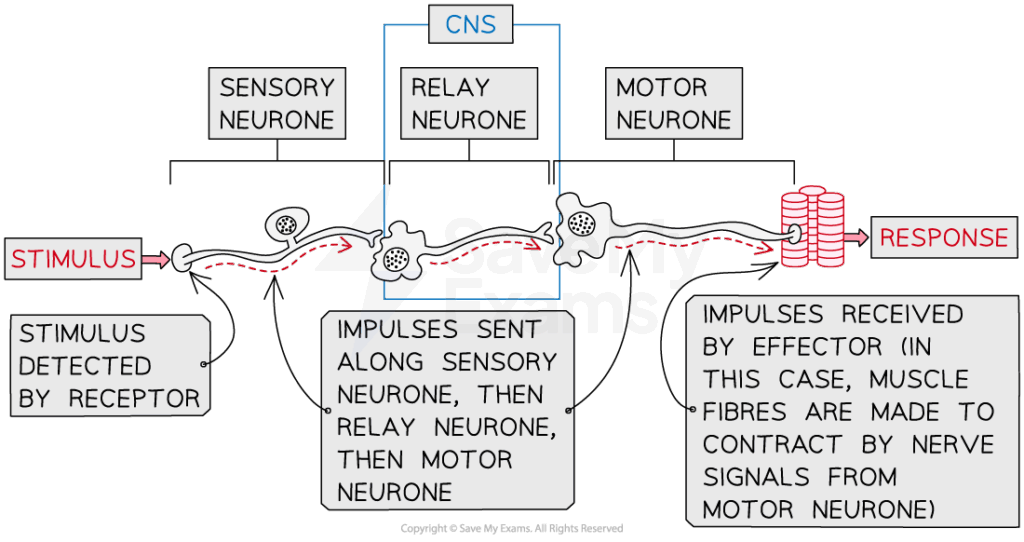
    • Components: receptor → sensory neuron → relay neuron (in spinal cord) → motor neuron → effector.
    • Example: knee-jerk reflex, withdrawal reflex from pain.
    • Reflexes bypass the brain initially, but the brain may later process the signal for awareness.

    🧠 Examiner Tip: Always include all 5 components (receptor, sensory, relay, motor, effector) when drawing/labeling a reflex arc diagram.

    • Convergence: allows multiple signals to combine, e.g., rod cells converging onto bipolar cells in retina.
    • Divergence: spreads signals to multiple pathways, e.g., spinal cord signals activating both posture and withdrawal reflex.
    • Summation: balances EPSPs and IPSPs to determine if threshold is reached.
    • Ensures flexibility, sensitivity, and coordination of responses.

    🧬 IA Tips & Guidance: An IA could test reflex reaction times under different conditions (e.g., fatigue, caffeine, distraction) to explore neural integration and processing speed.

    • Reflexes provide basic survival, but higher centers integrate voluntary control.
    • Neural circuits underpin memory, learning, and decision-making.
    • Inhibitory interneurons prevent excessive or conflicting responses.

    🌐 EE Focus: An EE could investigate how neural summation contributes to sensory perception, or compare simple reflexes in invertebrates vs vertebrates as models for nervous system evolution.

    • Reflexes may be overridden by conscious control in some cases.
    • Brain integrates reflex signals with voluntary movements for coordinated responses.

    ❤️ CAS Link: Students could create reflex-testing stations (e.g., ruler drop tests) in community health fairs, connecting neuroscience to public awareness of nervous system function.

    🌍 Real-World Connection: Reflex testing is widely used in medical exams to assess nervous system integrity. Absent or exaggerated reflexes can indicate spinal cord injury, peripheral nerve damage, or neurological disease.

    • Repeated use strengthens neural pathways (basis of motor learning).
    • Reflexes can be conditioned (e.g., Pavlovian learning).

    🔍 TOK Perspective: Reflexes are often considered “automatic,” yet experiments show they can be modified by experience. TOK reflection: To what extent can something labeled as “innate” be influenced by learning, and how does this affect our understanding of human behavior?

    📝 Paper 2: Expect to outline reflex arc pathways, describe convergence/divergence, and explain summation. Data questions may involve reflex times, neurotransmitter levels, or inhibition experiments.

  • TermDefinition
    SynapseJunction between two neurons or a neuron and effector where impulses are transmitted.
    NeurotransmitterChemical messenger released into synaptic cleft to transmit signal across synapse.
    Synaptic vesicleMembrane-bound sac containing neurotransmitter molecules in the presynaptic terminal.
    ExocytosisProcess by which vesicles fuse with presynaptic membrane to release neurotransmitters.
    Postsynaptic receptorProtein on postsynaptic membrane that binds neurotransmitter, triggering a response.
    Excitatory neurotransmitterIncreases likelihood of action potential in postsynaptic cell (e.g., acetylcholine, glutamate).
    Inhibitory neurotransmitterDecreases likelihood of action potential (e.g., GABA, glycine).
    Synaptic cleftGap (~20–40 nm) between presynaptic and postsynaptic cells.

    Synaptic transmission enables communication between neurons and between neurons and effectors. Unlike electrical conduction along axons, synapses rely on chemical messengers (neurotransmitters) to carry signals across the synaptic cleft. This process ensures unidirectional transmission and provides multiple points for regulation, integration, and drug action.

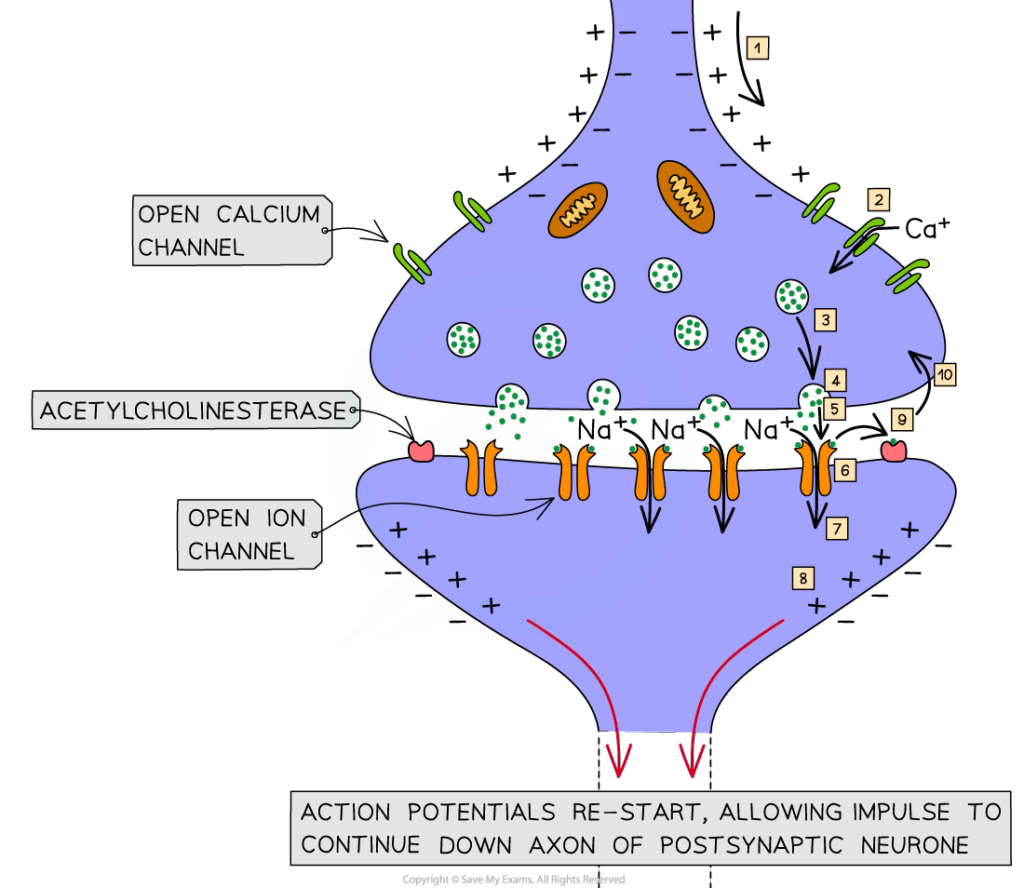
    • Arrival of action potential at presynaptic terminal depolarizes membrane.
    • Voltage-gated Ca²⁺ channels open; Ca²⁺ influx triggers vesicle movement.
    • Synaptic vesicles fuse with presynaptic membrane, releasing neurotransmitter by exocytosis.
    • Neurotransmitters diffuse across cleft and bind to postsynaptic receptors.
    • Ion channels open, producing excitatory (EPSP) or inhibitory (IPSP) postsynaptic potentials.
    • Neurotransmitter is removed via enzymatic breakdown, reuptake, or diffusion, ensuring signals are brief.

    🧠 Examiner Tip: Always mention Ca²⁺ influx and exocytosis when describing synaptic transmission—these are frequent marking points.

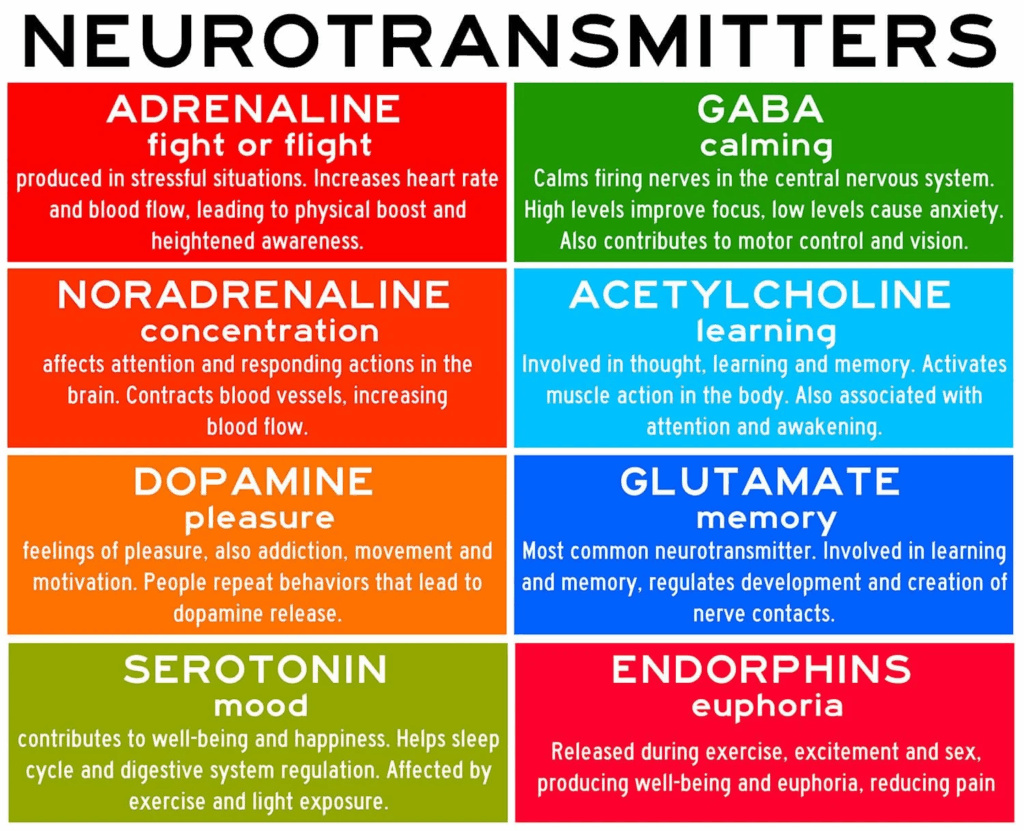
    • Acetylcholine (ACh): at neuromuscular junctions; excitatory, triggers muscle contraction.
    • Glutamate: main excitatory neurotransmitter in CNS.
    • GABA: main inhibitory neurotransmitter in CNS.
    • Dopamine, serotonin, norepinephrine: regulate mood, reward, and alertness.
    • Neuropeptides (endorphins): modulate pain and stress responses.

    🧬 IA Tips & Guidance: An IA could explore reaction times under stimulant vs relaxant conditions (e.g., caffeine vs relaxation exercises) as a proxy for neurotransmitter effects on synaptic activity.

    • Excitatory synapses depolarize postsynaptic membranes, bringing potential closer to threshold.
    • Inhibitory synapses hyperpolarize postsynaptic membranes, reducing likelihood of action potential.
    • Balance between EPSPs and IPSPs determines neuron firing.

    🌐 EE Focus: An EE could investigate the role of excitatory vs inhibitory neurotransmission in disorders like epilepsy, Parkinson’s, or depression, linking neurobiology to medical treatments.

    • Stimulants (cocaine, amphetamines) increase neurotransmitter levels or block reuptake.
    • Depressants (alcohol, benzodiazepines) enhance inhibitory transmission.
    • Neurotoxins (botulinum toxin, curare) block neurotransmitter release or receptor binding.
    • Therapeutics (SSRIs, antipsychotics) modulate synaptic activity to treat disorders.

    ❤️ CAS Link: Students could design awareness projects on the neurological effects of recreational drug abuse or create educational models of neurotransmission for peers.

    🌍 Real-World Connection: Neurotransmission is central to understanding diseases like Alzheimer’s (loss of acetylcholine neurons), Parkinson’s (dopamine deficiency), and depression (serotonin imbalance). Many treatments work by modulating synapses.

    • Repeated activity strengthens synapses (long-term potentiation), forming basis of learning and memory.
    • Synaptic pruning removes weaker connections, refining neural circuits.

    🔍 TOK Perspective: Much of what we know about synapses comes from animal models and indirect measurements. TOK reflection: Can knowledge about human cognition be fully trusted when it relies on models from simpler organisms?

    📝 Paper 2: Be ready to describe synaptic transmission steps, distinguish excitatory vs inhibitory neurotransmitters, and give examples. Data questions may show neurotransmitter levels or effects of inhibitors/drugs.

  • TermDefinition
    NeuronSpecialized cell that transmits electrical impulses in the nervous system.
    AxonLong fibre conducting impulses away from the cell body.
    DendriteBranching extension that receives impulses from other neurons.
    Myelin sheathInsulating layer formed by Schwann cells around the axon, speeding impulse transmission.
    Node of RanvierGaps in myelin sheath where ion exchange occurs, enabling saltatory conduction.
    Sensory neuronCarries impulses from receptors to the CNS.
    Motor neuronCarries impulses from the CNS to effectors (muscles/glands).
    Relay neuronConnects sensory and motor neurons within the CNS.

    The nervous system coordinates responses by transmitting electrical impulses along neurons. Neurons are highly specialized for rapid communication, forming complex networks in the central and peripheral nervous systems. Their structural features—long axons, branched dendrites, and insulating myelin—allow rapid and precise transmission of information.

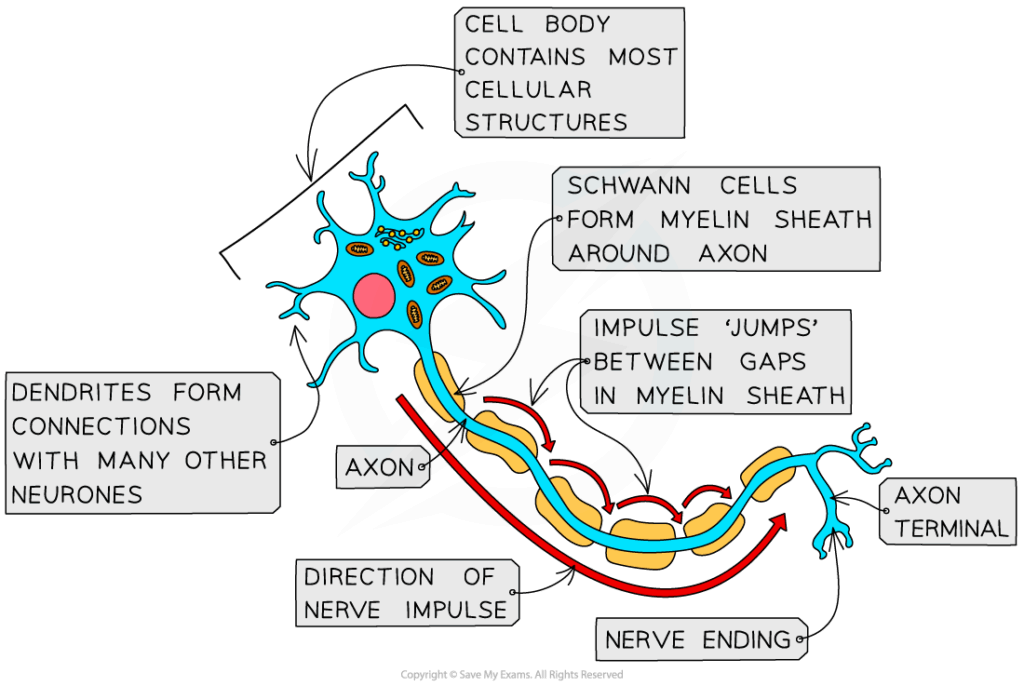
    • Cell body (soma): contains nucleus and organelles, supporting metabolic activities.
    • Dendrites: provide large surface area for synaptic input, enabling integration of multiple signals.
    • Axon: long fibre transmitting impulses away from the soma toward other neurons or effectors.
    • Myelin sheath: multilayered lipid covering that insulates axons, preventing current leakage.
    • Nodes of Ranvier: unmyelinated gaps where depolarization occurs, allowing saltatory conduction.
    • Axon terminals: release neurotransmitters into synaptic clefts for communication.

    🧠 Examiner Tip: Always label neuron diagrams with axon, dendrites, cell body, myelin, and nodes. IB markschemes often allocate separate points for each structure.

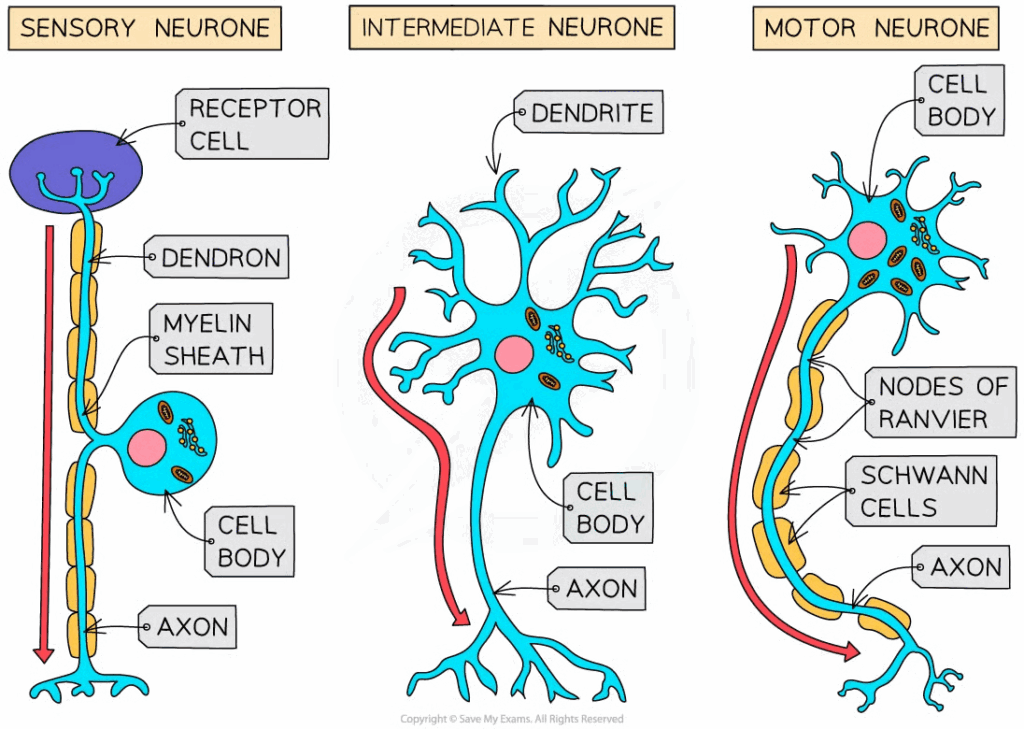
    • Sensory neurons: transmit impulses from receptors (e.g., skin, eyes) to CNS.
    • Relay neurons: entirely within CNS, connecting sensory and motor neurons.
    • Motor neurons: carry impulses from CNS to muscles or glands, triggering responses.

    🧬 IA Tips & Guidance: An IA could measure reaction times under different conditions (light vs sound stimuli, dominant vs non-dominant hand), linking to neuron transmission speed and synaptic delay.

    • Myelination: allows impulses to jump between nodes (saltatory conduction), increasing speed ~50x.
    • Large axon diameter: reduces resistance, speeding conduction (e.g., squid giant axon).
    • Synaptic connections: dendritic branching allows complex integration of inputs.

    🌐 EE Focus: An EE might investigate correlations between axon diameter and conduction velocity, or compare myelinated vs unmyelinated pathways in different organisms.

    • Rapid transmission of sensory input to CNS.
    • Relay of integrated information within CNS.
    • Initiation of motor responses at effectors.
    • Support of higher functions like memory, learning, reflexes.

    ❤️ CAS Link: Students could design interactive models of neuron transmission for school science fairs, helping communities understand nervous system function and health.

    🌍 Real-World Connection: Myelin degeneration in multiple sclerosis disrupts impulse conduction, leading to muscle weakness and vision problems. Research on stem cells and remyelination therapies directly applies neuron structure knowledge.

    • Neurons work in circuits, converting stimuli into responses.
    • CNS neurons act as central processors, PNS neurons as input/output channels.

    🔍 TOK Perspective: Neuron structure is inferred from microscopy and electrophysiology. TOK reflection: To what extent can technological limitations shape our knowledge of biological structures, and how might future tools expand it?

    📝 Paper 2: Be ready to draw and label a neuron, compare sensory/motor/relay neurons, and explain adaptations like myelination and saltatory conduction. Data questions may involve axon diameter vs conduction velocity.

  • TermDefinition
    HomeostasisMaintenance of stable internal conditions in response to external changes.
    Negative feedbackRegulatory mechanism where a change triggers responses that counteract the initial stimulus, restoring balance.
    Positive feedbackMechanism where a change is reinforced or amplified, driving processes to completion.
    Endocrine axisA hierarchical signalling pathway where one gland controls another via tropic hormones (e.g., hypothalamus–pituitary–thyroid).
    Receptor down-regulationDecrease in receptor number in response to high hormone levels, reducing sensitivity.
    Circadian rhythmBiological cycle regulated by feedback loops of signalling molecules and clock genes.

    Chemical signalling systems must be tightly regulated to prevent under- or over-activation of pathways. Feedback mechanisms, both negative and positive, ensure appropriate hormone levels and cellular responses. These mechanisms underpin homeostasis, growth, reproduction, and stress responses, and their disruption can lead to disease.

    • Most common form of regulation in endocrine systems.
    • Example: Blood glucose control
      • High glucose → insulin secretion → glucose uptake/storage → lowers glucose → reduces insulin secretion.
      • Low glucose → glucagon secretion → glycogen breakdown → raises glucose → reduces glucagon secretion.
    • Example: Thyroid axis
      • Hypothalamus (TRH) → pituitary (TSH) → thyroid (thyroxine).
      • High thyroxine inhibits TRH and TSH release.

    🧠 Examiner Tip: Always specify which hormone or gland is inhibited in negative feedback diagrams — vague answers often lose marks.

    • Less common but important for processes requiring completion.
    • Example: Childbirth
      • Oxytocin release stimulates uterine contractions.
      • Contractions trigger more oxytocin release until delivery.
    • Example: Lactation
      • Suckling stimulates prolactin and oxytocin release, sustaining milk production and ejection.

    🧬 IA Tips & Guidance: Students could simulate feedback with data-logging software, e.g., glucose regulation models or heart rate feedback after exercise, linking physiology to regulation concepts.

    • Multi-gland pathways provide fine control and amplification.
    • Hypothalamus integrates nervous and endocrine signals.
    • Pituitary releases tropic hormones that regulate other glands (thyroid, adrenal, gonads).
    • Axes allow integration of multiple feedback loops.

    🌐 EE Focus: An EE could examine disruptions in endocrine feedback, e.g., Cushing’s syndrome (excess cortisol), or model circadian rhythm regulation by melatonin feedback.

    • Chronic high hormone levels cause receptor down-regulation (e.g., insulin resistance in type 2 diabetes).
    • Chronic low levels cause up-regulation, increasing sensitivity.
    • Desensitization protects against overstimulation but contributes to disease when feedback fails.

    ❤️ CAS Link: Students could run health-awareness programs on diabetes or thyroid disorders, highlighting the role of feedback regulation in maintaining balance.

    🌍 Real-World Connection: Disrupted feedback loops underlie many conditions: diabetes (glucose regulation failure), hyperthyroidism (thyroid overactivity), infertility (gonadal axis disruption). Hormone replacement therapies and drugs often restore balance by targeting feedback pathways.

    • Circadian rhythms controlled by feedback loops of clock genes and melatonin secretion.
    • Menstrual cycle regulated by interplay of positive and negative feedback among FSH, LH, estrogen, and progesterone.

    🔍 TOK Perspective: Feedback systems are often represented in simplified diagrams. TOK reflection: To what extent do simplified models capture the complexity of living systems, and when does simplification risk misrepresenting reality?

    📝 Paper 2: Be ready to explain negative vs positive feedback with examples, outline endocrine axes, and analyze data on hormone levels over time. Graph-based questions often require identifying feedback patterns.

  • TermDefinition
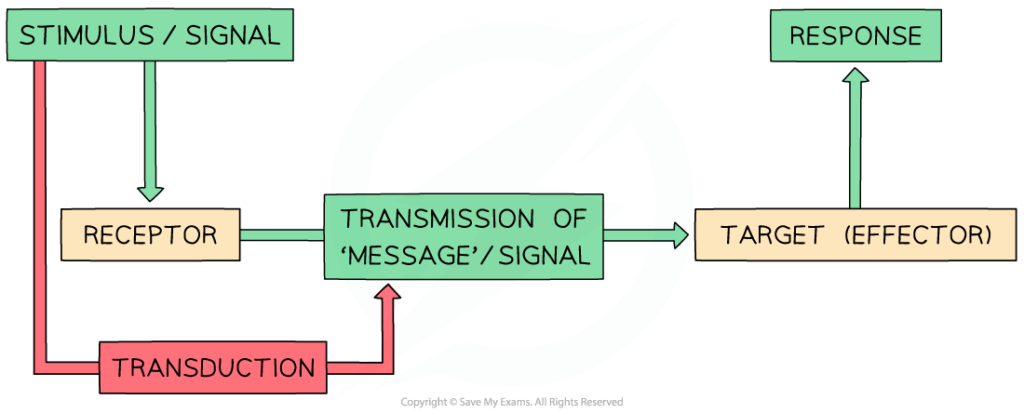
    Signal transductionThe process by which a cell converts an extracellular signal into a specific cellular response.
    ReceptorProtein (membrane-bound or intracellular) that binds to a signaling molecule and initiates a response.
    Second messengerSmall intracellular molecules (e.g., cAMP, IP₃, Ca²⁺) that relay signals from receptors to target proteins.
    G-proteinA membrane-associated protein that transduces signals from GPCRs to intracellular effectors.
    Kinase cascadeSequential activation of protein kinases that amplify signals inside the cell.
    AmplificationProcess where one ligand triggers multiple downstream responses, greatly increasing signal strength.

    Signal transduction pathways allow cells to sense and respond to external and internal cues. These pathways translate a hormone or signal binding event into biochemical changes that regulate metabolism, gene expression, or cell behavior. By using second messengers and amplification systems, cells ensure that even small signals can produce strong and coordinated responses.

    • Reception
      • Signaling molecule (ligand) binds to its receptor.
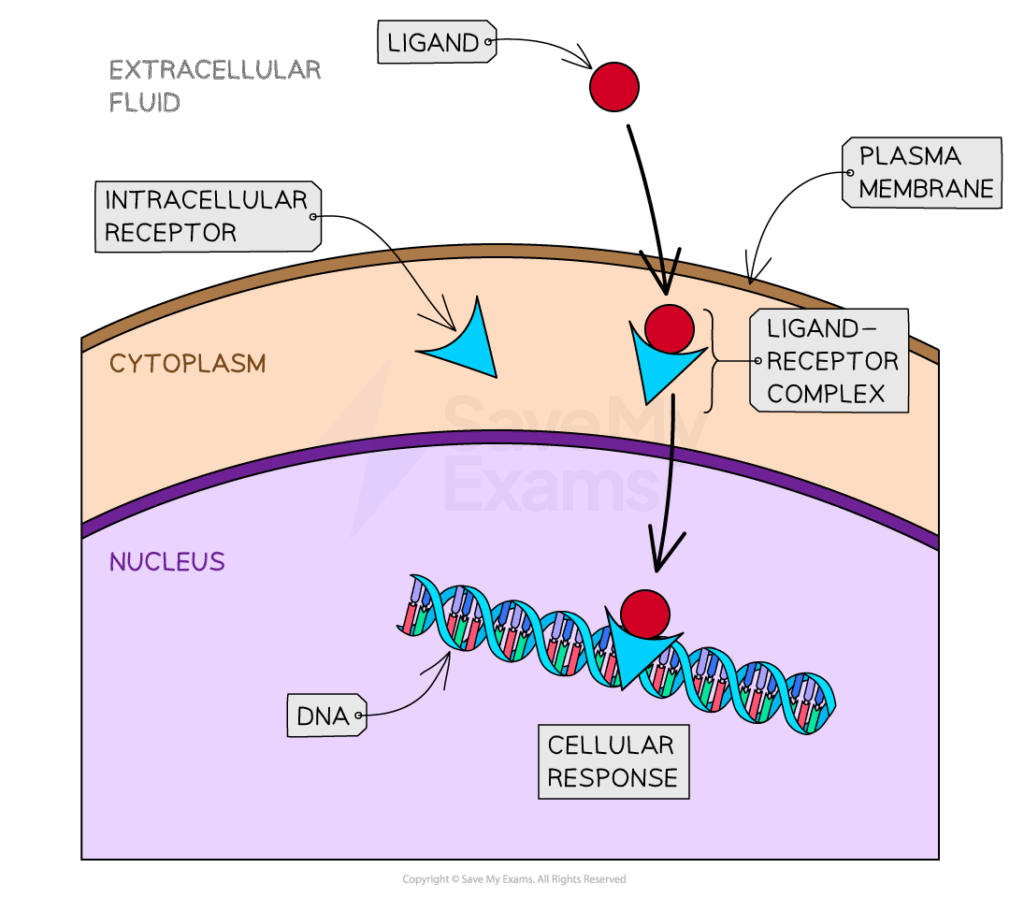
      • Receptors can be membrane-bound (peptide hormones) or intracellular (steroid hormones).
    • Transduction
      • Binding triggers conformational changes.
      • Activates G-proteins, kinase cascades, or second messengers.
      • Multiple intermediate steps allow amplification.
    • Response
      • Changes in enzyme activity, ion channel opening, cytoskeleton, or transcription factor activation.

    🧠 Examiner Tip: Always mention the three stages of cell signalling — reception, transduction, and response — as IB mark schemes often award points for this framework.

    • cAMP pathway (e.g., adrenaline):
      • Hormone binds GPCR → activates G-protein → activates adenylate cyclase → produces cAMP.
      • cAMP activates protein kinase A → phosphorylates enzymes (e.g., glycogen breakdown in liver).
    • IP₃/DAG pathway (e.g., ADH, histamine):
      • GPCR activates phospholipase C → splits PIP₂ into IP₃ and DAG.
      • IP₃ releases Ca²⁺ from ER; DAG activates protein kinase C.
      • Leads to smooth muscle contraction or secretion.
    • MAP kinase cascade (growth factors):
      • Tyrosine kinase receptor activation → phosphorylation cascade.
      • Regulates transcription and cell proliferation.

    🧬 IA Tips & Guidance: Students could measure enzyme activity (e.g., phosphorylase) under simulated “hormone” conditions, showing how second messengers regulate metabolism. Alternatively, yeast models can demonstrate GPCR responses.

    • One ligand–receptor binding can activate hundreds of second messengers.
    • Amplification ensures strong response even at low hormone concentration.
    • Specificity achieved through receptor type, downstream effectors, and tissue-specific expression.

    🌐 EE Focus: An EE could investigate how mutations in signal transduction pathways (e.g., faulty GPCRs or kinases) contribute to diseases such as cancer or diabetes.

    • Termination ensures signals don’t persist:
      • GTP hydrolysis in G-proteins.
      • Breakdown of cAMP by phosphodiesterase.
      • Receptor internalization and degradation.
    • Crosstalk between pathways allows integration of multiple signals.

    ❤️ CAS Link: Students could develop workshops on how drugs (like asthma inhalers or beta-blockers) work by modifying cell signalling, linking molecular biology to public health.

    🌍 Real-World Connection: Pharmaceuticals often target receptors or second messengers in signal transduction. Examples: insulin analogues in diabetes, GPCR-targeting drugs for allergies, kinase inhibitors in cancer therapy.

    • Signal pathways connect environmental cues to physiological responses.
    • Allow rapid adaptation at cellular and organism level.

    🔍 TOK Perspective: Signal transduction pathways are understood largely through models, diagrams, and indirect assays. TOK reflection: How much of our biological knowledge relies on models of invisible processes, and how do we decide whether a model is accurate enough to count as knowledge?

    📝 Paper 2: Be ready to outline steps of reception–transduction–response, compare second messenger systems (cAMP vs IP₃), and explain amplification. Data questions may involve hormone concentration graphs or inhibitor effects on pathways.

  • TermDefinition
    HormoneA chemical messenger secreted by endocrine glands, transported in blood to target organs, where it alters physiology.
    Steroid hormoneLipid-soluble hormone derived from cholesterol, able to diffuse through membranes and bind intracellular receptors.
    Peptide hormoneHormone made of amino acids; water-soluble and binds membrane receptors, activating signal cascades.
    Amino acid derivativeSmall hormones derived from tyrosine or tryptophan (e.g., epinephrine, melatonin).
    Endocrine signallingLong-distance communication where hormones are secreted into the bloodstream.
    Target cellCell possessing specific receptors for a hormone, enabling response.

    Hormones are essential regulators of growth, metabolism, reproduction, and homeostasis. Unlike nervous signalling, which is rapid and localized, hormonal communication is slower but longer-lasting and systemic. Hormones differ in chemical structure, solubility, and mechanisms of action, which determine how they interact with receptors and affect gene expression or enzyme activity.

    • Steroid hormones (e.g., cortisol, estrogen, testosterone):
      • Lipid-soluble, pass through membranes.
      • Bind intracellular receptors in cytoplasm or nucleus.
      • Hormone–receptor complex acts as transcription factor, altering gene expression.
    • Peptide hormones (e.g., insulin, glucagon, ADH):
      • Water-soluble, cannot cross membrane.
      • Bind receptors on cell surface.
      • Trigger signal transduction cascades (second messengers like cAMP).
    • Amino acid derivatives (e.g., adrenaline, thyroxine):
      • Adrenaline behaves like a peptide hormone.
      • Thyroxine behaves like a steroid (lipid-soluble).

    🧠 Examiner Tip: Always specify whether a hormone acts via intracellular receptors (steroid/thyroxine) or membrane receptors (peptide/adrenaline). This distinction is commonly tested.

    • Steroid pathway
      • Hormone diffuses into cell → binds receptor → moves into nucleus.
      • Directly regulates transcription and protein synthesis.
      • Longer onset, longer duration.
    • Peptide pathway
      • Hormone binds to receptor → activates G-protein/kinase cascade.
      • Generates second messengers (cAMP, IP₃, Ca²⁺).
      • Leads to enzyme activation or channel regulation.
      • Rapid, short-lived effects.

    🧬 IA Tips & Guidance: A practical extension could be measuring glucose levels in blood samples before and after food intake to illustrate insulin/glucagon action. Graphing hormone effects strengthens data analysis skills.

    • Hormones often act in antagonistic pairs (insulin vs glucagon).
    • Pituitary gland releases “tropic” hormones controlling other glands.
    • Hormone action is highly specific due to receptor–ligand binding.

    🌐 EE Focus: An EE could explore molecular differences in hormone signalling, such as comparing steroid hormone receptor binding vs peptide hormone cascades, linking biochemistry to physiology.

    • Steroid hormones reprogram transcription, producing long-term structural/functional changes.
    • Peptide hormones regulate immediate metabolic activity.
    • Cells adapt by altering receptor number (up- or down-regulation).

    ❤️ CAS Link: Students could develop awareness campaigns on lifestyle diseases (e.g., diabetes), showing how hormones regulate blood sugar and why balance is crucial for health.

    🌍 Real-World Connection: Hormonal therapies treat many conditions: insulin for diabetes, thyroxine for hypothyroidism, corticosteroids for inflammation, contraceptive pills for reproduction control. Understanding hormone action underpins medical treatments.

    • Nervous and endocrine systems interact (hypothalamus controls pituitary).
    • Hormonal cascades allow small signals to have amplified systemic effects.

    🔍 TOK Perspective: Hormone action involves invisible molecules inferred by effects on physiology. TOK reflection: How do scientists gain knowledge about unobservable processes, and to what extent can indirect measurements be trusted as evidence?

    📝 Paper 2: Expect questions contrasting peptide vs steroid mechanisms, examples of each hormone type, and diagrams showing pathways. Data questions may involve blood hormone concentrations in feedback systems.

  • TermDefinition
    Limiting factorThe single environmental condition closest to its minimum that directly restricts the rate of photosynthesis.
    Light compensation pointLight intensity at which photosynthetic CO₂ uptake equals CO₂ release from respiration.
    Saturation pointLight or CO₂ level beyond which further increases do not raise photosynthetic rate.
    PhotorespirationProcess where Rubisco fixes O₂ instead of CO₂, reducing efficiency of photosynthesis.
    C₃ plantsPlants that fix CO₂ directly into 3C compound (GP) via Calvin cycle (most plants).
    C₄ plantsPlants that fix CO₂ into a 4C compound (oxaloacetate), reducing photorespiration and improving efficiency under high light and temperature.
    CAM plantsPlants adapted to arid environments, fixing CO₂ at night and photosynthesizing during the day to reduce water loss.

    Photosynthesis is influenced by multiple environmental factors, and its efficiency is often limited by the factor in shortest supply. Understanding these factors is critical in agriculture, ecology, and climate science. Plants have evolved structural and biochemical adaptations (C₃, C₄, CAM pathways) that optimize photosynthesis under different conditions, ensuring survival in diverse environments.

    • Light intensity
      • Increases the rate up to a point; beyond saturation, no further rise occurs.
      • Low light limits ATP and NADPH production.
    • Carbon dioxide concentration
      • CO₂ is a raw material for Calvin cycle.
      • Higher CO₂ increases rate until Rubisco and enzymes become saturated.
    • Temperature
      • Affects enzyme activity (Rubisco, ATP synthase).
      • Low temperature slows reactions; high temperature causes enzyme denaturation and increases photorespiration.
    • Water availability
      • Indirect factor: water stress causes stomata to close, limiting CO₂ uptake.

    🧠 Examiner Tip: In graphs, always identify the limiting factor at different ranges. State clearly when a plateau indicates another factor has become limiting.

    • C₃ plants:
      • Most common; efficient under moderate light, CO₂, and temperature.
      • Disadvantage: prone to photorespiration at high O₂/low CO₂.
    • C₄ plants (maize, sugarcane):
      • Fix CO₂ into oxaloacetate (4C) in mesophyll cells, then shuttle to bundle-sheath cells for Calvin cycle.
      • Adapted to high light, high temperature, low CO₂.
      • Reduce photorespiration, enhancing yield.
    • CAM plants (cacti, succulents):
      • Open stomata at night, store CO₂ as malate, and photosynthesize in the day.
      • Adaptation to arid climates, conserving water.

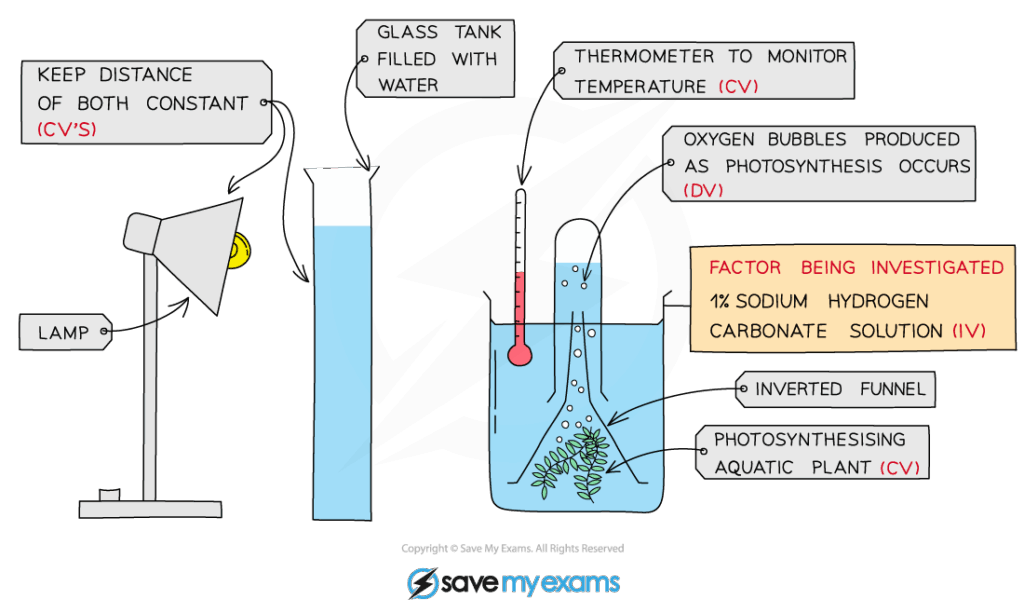
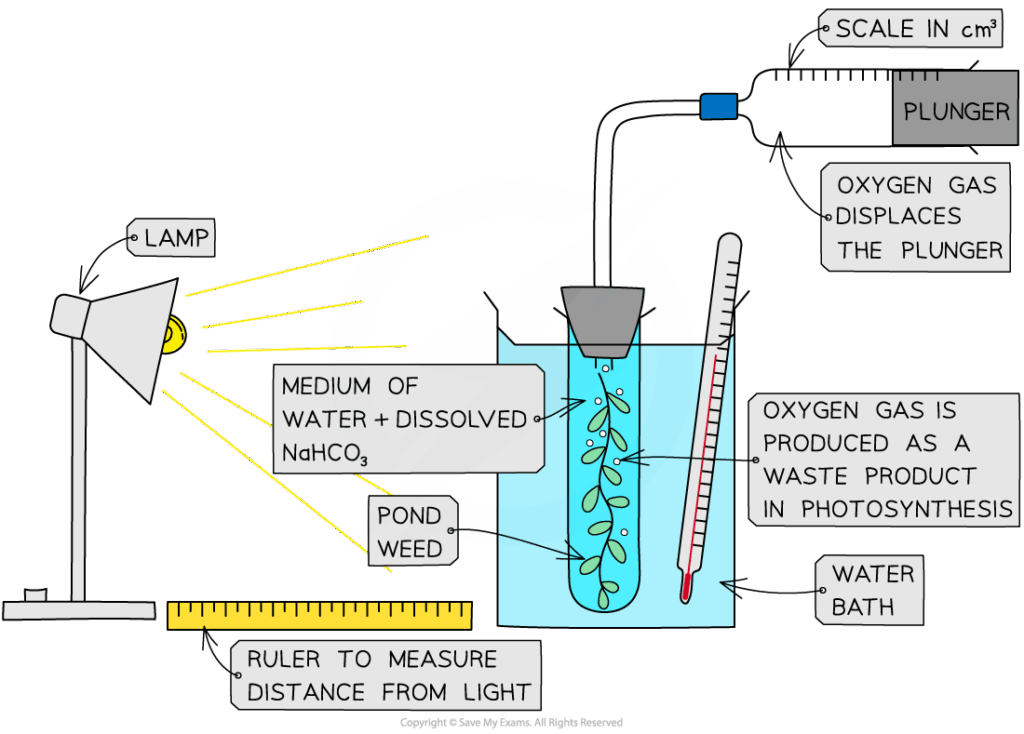
    🧬 IA Tips & Guidance: Students can test how light intensity or CO₂ availability affects photosynthetic rate using aquatic plants (e.g., counting oxygen bubbles in Elodea). This provides clear links to limiting factors.

    • Oxygen release (aquatic plants, respirometers).
    • CO₂ uptake (pH changes in water, gas probes).
    • Biomass increase over time.
    • Chlorophyll fluorescence to monitor light-use efficiency.

    🌐 EE Focus: An EE could investigate the effect of elevated CO₂ on photosynthesis in C₃ vs C₄ plants, or adaptations of CAM plants to drought stress.

    • Photosynthesis underpins primary productivity in ecosystems.
    • Limiting factors directly influence agriculture and food security.
    • Climate change alters photosynthetic efficiency (e.g., drought stress, temperature extremes).

    ❤️ CAS Link: Students could run a school gardening project or hydroponics experiment, testing how light, water, or nutrients affect plant growth, linking classroom biology to sustainability.

    🌍 Real-World Connection: Greenhouse crop yields are maximized by controlling limiting factors (artificial lighting, CO₂ enrichment, temperature regulation). Global climate models also rely on photosynthesis rates to predict carbon cycling. Biotechnology seeks to engineer crops with C₄ or CAM pathways for higher efficiency.

    • C₃, C₄, and CAM plants illustrate biochemical diversity in solving environmental challenges.
    • Adaptations show the balance between maximizing CO₂ fixation and minimizing water loss or photorespiration.

    🔍 TOK Perspective: Graphs of photosynthetic rate simplify complex interactions between multiple variables. TOK reflection: How do scientists use simplifications to make complex processes understandable, and what knowledge might be lost in oversimplification?

    📝 Paper 2: Be ready to interpret graphs of limiting factors, compare C₃, C₄, and CAM pathways, and explain environmental adaptations. Data-based questions often ask you to identify the limiting factor under different conditions.

  • TermDefinition
    Calvin cycleLight-independent pathway in the chloroplast stroma that fixes CO₂ into carbohydrates using ATP and NADPH.
    Carbon fixationIncorporation of atmospheric CO₂ into organic molecules.
    RubiscoEnzyme that catalyzes the first step of carbon fixation by attaching CO₂ to RuBP.
    RuBP (ribulose-1,5-bisphosphate)Five-carbon compound that reacts with CO₂ in the Calvin cycle.
    GP (3-phosphoglycerate)First stable product of CO₂ fixation.
    TP (triose phosphate)Three-carbon sugar produced in the Calvin cycle, used for carbohydrate synthesis.
    RegenerationProcess of reforming RuBP from TP so the cycle can continue.

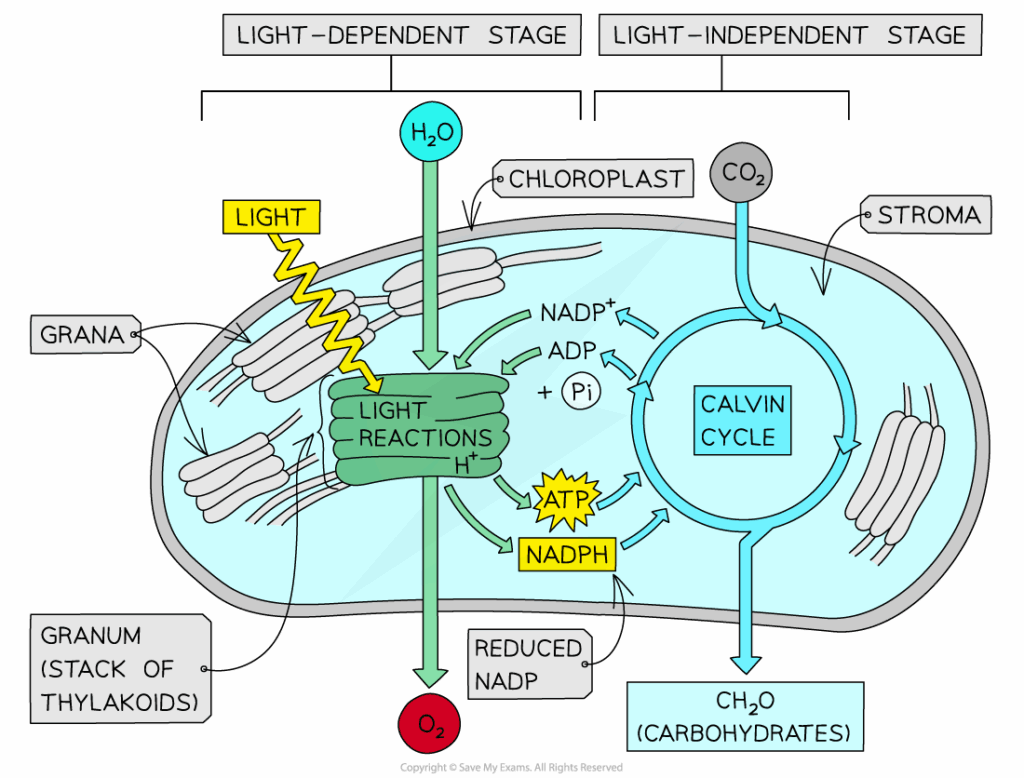
    The Calvin cycle, also called the light-independent reactions, occurs in the stroma of chloroplasts. It uses the ATP and NADPH generated in the light-dependent stage to fix CO₂ and synthesize carbohydrate precursors. This cycle does not directly require light but is indirectly dependent on it, since its energy and reducing power come from the light reactions.

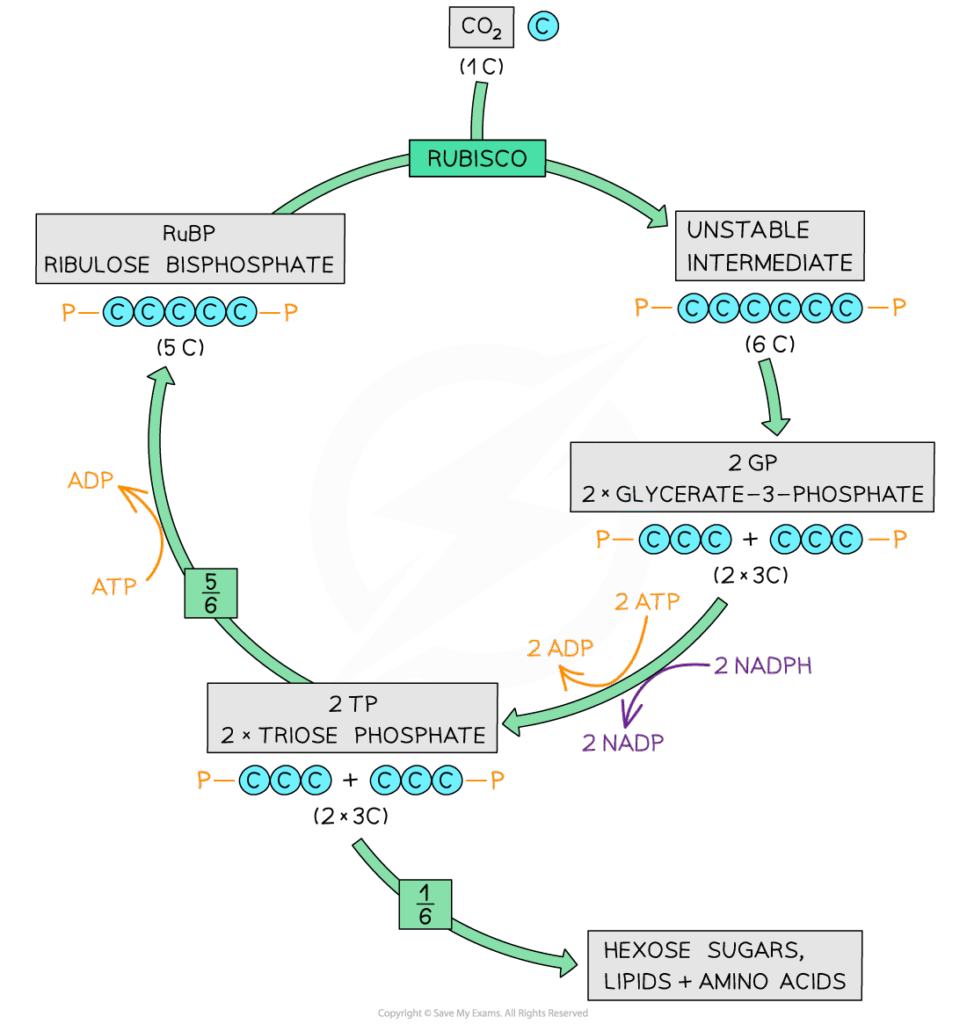
    1. Carbon Fixation
      • CO₂ combines with RuBP (5C) to form an unstable 6C compound.
      • Reaction catalyzed by Rubisco, the most abundant enzyme on Earth.
      • The 6C intermediate immediately breaks down into two molecules of GP (3C).
    2. Reduction
      • GP is reduced to TP (triose phosphate) using:
        • ATP (energy source).
        • NADPH (reducing agent).
      • TP is the key output: it can form glucose, amino acids, fatty acids.
    3. Regeneration of RuBP
      • Most TP molecules are recycled to regenerate RuBP using ATP.
      • Ensures the cycle continues.
    • Products per 3 turns (fixing 3 CO₂):
      • 6 TP formed, but only 1 TP exits to contribute to glucose synthesis.
      • 5 TP recycled to regenerate 3 RuBP.
    • Net result per glucose (6 CO₂ fixed):
      • 2 TP used → 1 glucose.
      • Requires 18 ATP and 12 NADPH.

    🧠 Examiner Tip: Many students wrongly state that Calvin cycle produces glucose directly. Always emphasize that TP is the actual product; glucose forms after multiple turns.

    • Calvin cycle depends on ATP and NADPH from light-dependent reactions.
    • If light is absent, ATP and NADPH are unavailable → cycle halts.
    • Rubisco is sensitive to CO₂ and O₂ levels; high O₂ can trigger photorespiration, reducing efficiency.

    🧬 IA Tips & Guidance: Students can measure the effect of light intensity or CO₂ concentration on photosynthetic rate using leaf disk assays, directly linking data to Calvin cycle activity.

    • TP → forms glucose, sucrose, starch, cellulose (carbohydrates).
    • TP also provides precursors for lipids and amino acids.
    • ATP and NADPH are converted back into ADP, Pi, and NADP⁺, which return to the light reactions.

    🌐 EE Focus: An EE could analyze Rubisco activity under varying environmental conditions, or model Calvin cycle efficiency under elevated CO₂ (climate change relevance).

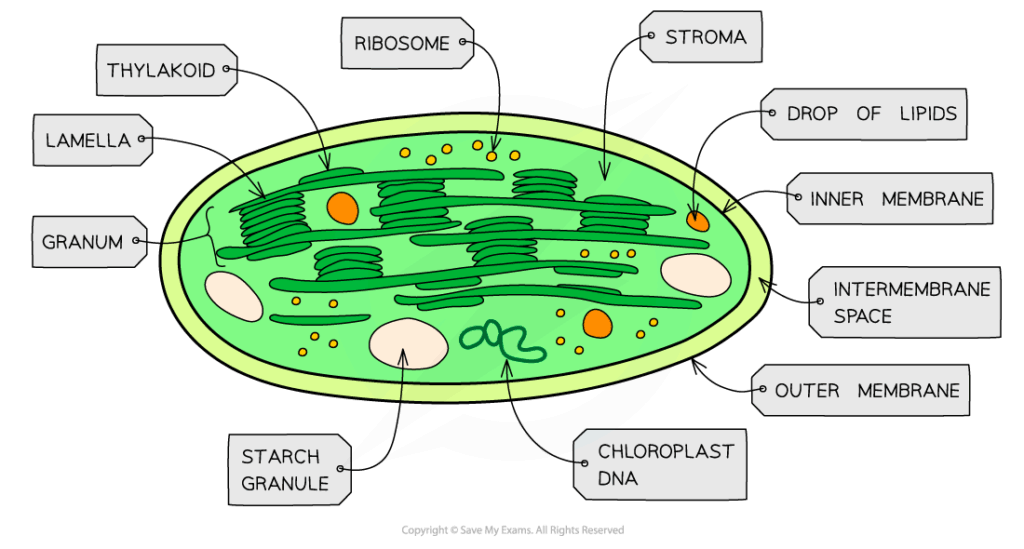
    • Stroma contains enzymes of Calvin cycle.
    • Close proximity to thylakoids ensures rapid supply of ATP/NADPH.
    • Double membrane maintains suitable internal environment.

    ❤️ CAS Link: Students could design community projects on sustainable farming, showing how plant photosynthesis underpins global food security.

    🌍 Real-World Connection: Calvin cycle efficiency determines global food production and carbon cycling. Rising atmospheric CO₂ and climate change directly impact Rubisco activity and crop yields. Biotechnology efforts aim to engineer more efficient Rubisco to boost photosynthesis.

    • Links with light-dependent stage via ATP and NADPH supply.
    • Provides organic molecules feeding into cellular respiration, biosynthesis, and growth.

    🔍 TOK Perspective: Rubisco’s inefficiency raises a TOK question: How do scientific explanations account for imperfections in natural systems, and does “efficiency” reflect human bias in evaluating biology?

    📝 Paper 2: Be prepared to outline the stages of Calvin cycle, identify key molecules (RuBP, GP, TP), explain ATP/NADPH use, and state the net requirements for glucose synthesis. Data questions may test effects of light, CO₂, or enzyme activity.