D3.1.2 HUMAN REPRODUCTIVE SYSTEMS
📌Definition Table
| Term | Definition |
|---|---|
| Testes | Male gonads producing sperm and testosterone. |
| Ovaries | Female gonads producing eggs, estrogen, and progesterone. |
| Uterus | Muscular organ where embryo implants and develops. |
| Menstrual cycle | Regular hormonal cycle preparing the uterus for pregnancy. |
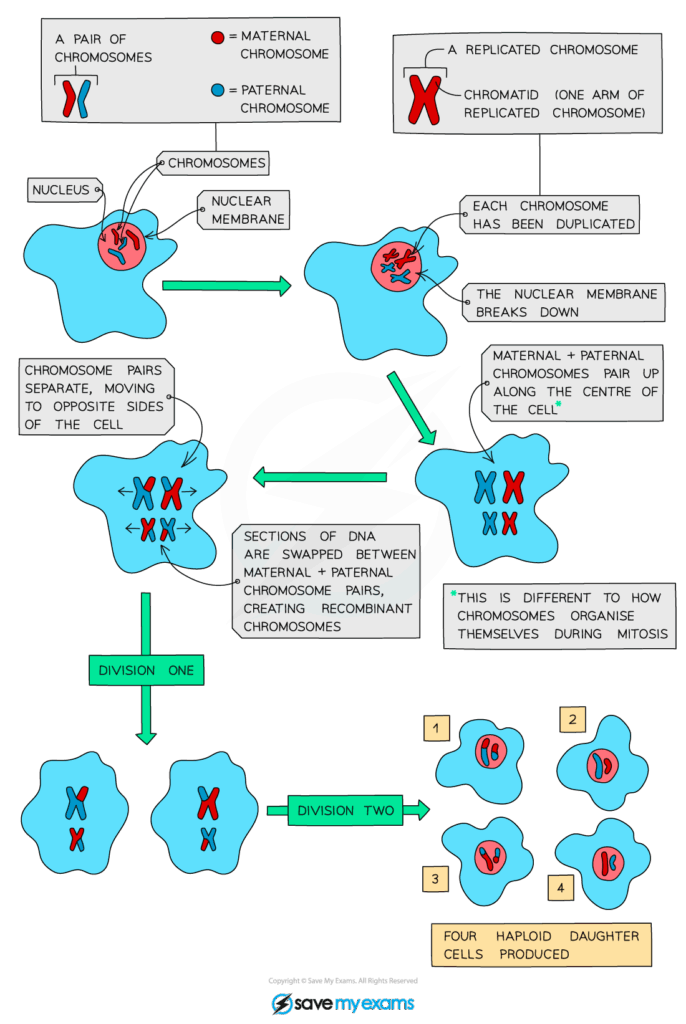
| Gametogenesis | Formation of gametes (spermatogenesis in males, oogenesis in females). |
📌Introduction
The human reproductive system enables gamete production, fertilisation, and development of offspring. It consists of specialised structures in males and females, regulated by hormones to ensure timing and coordination. Understanding these systems is vital for medicine, fertility management, and reproductive health
📌 Male Reproductive System
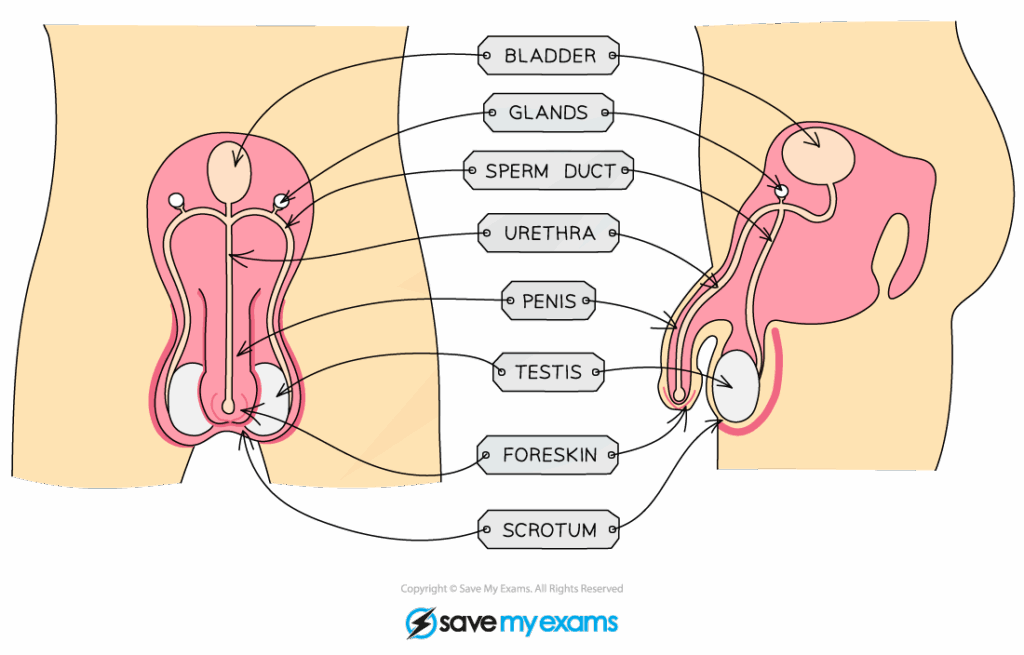
- Testes produce sperm in seminiferous tubules and hormones in interstitial cells.
- Epididymis stores and matures sperm.
- Vas deferens transports sperm during ejaculation.
- Prostate gland and seminal vesicles produce fluids for semen, nourishing sperm.
- Penis delivers sperm into the female reproductive tract.
🧠 Examiner Tip: Always specify the role of accessory glands (prostate, seminal vesicles) when describing semen composition.
📌 Female Reproductive System
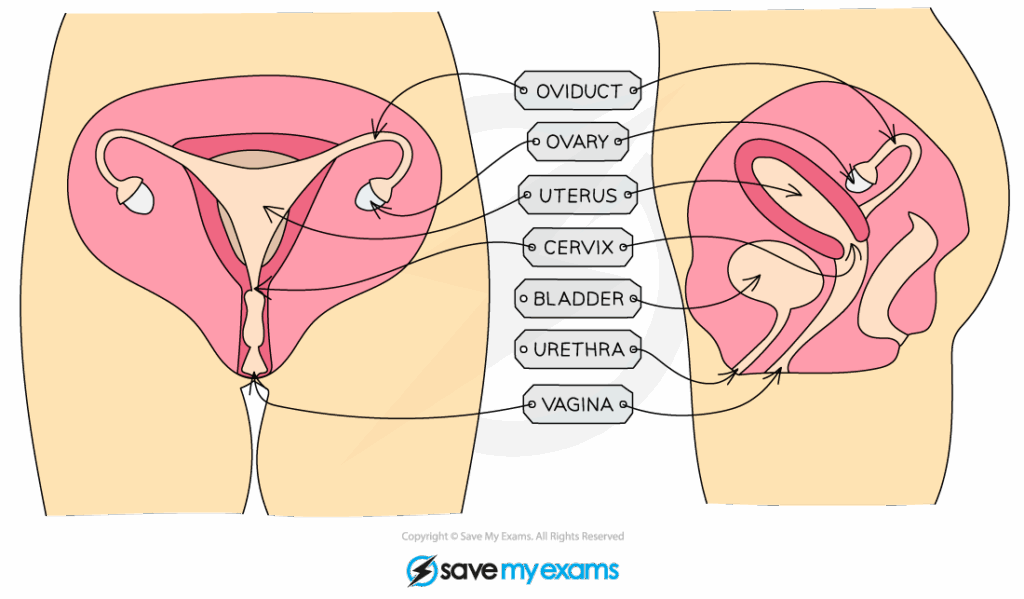
- Ovaries produce eggs and hormones (estrogen, progesterone).
- Fallopian tubes transport eggs and are the site of fertilisation.
- Uterus supports embryo implantation and development.
- Endometrium thickens in preparation for implantation, sheds during menstruation.
- Vagina receives sperm and serves as the birth canal.
🧬 IA Tips & Guidance: Possible IA – effect of hormones or contraceptives on menstrual cycle modeling, linking human physiology with statistical data.
📌 Hormonal Regulation of Reproduction
- In males: FSH stimulates sperm production; LH stimulates testosterone release.
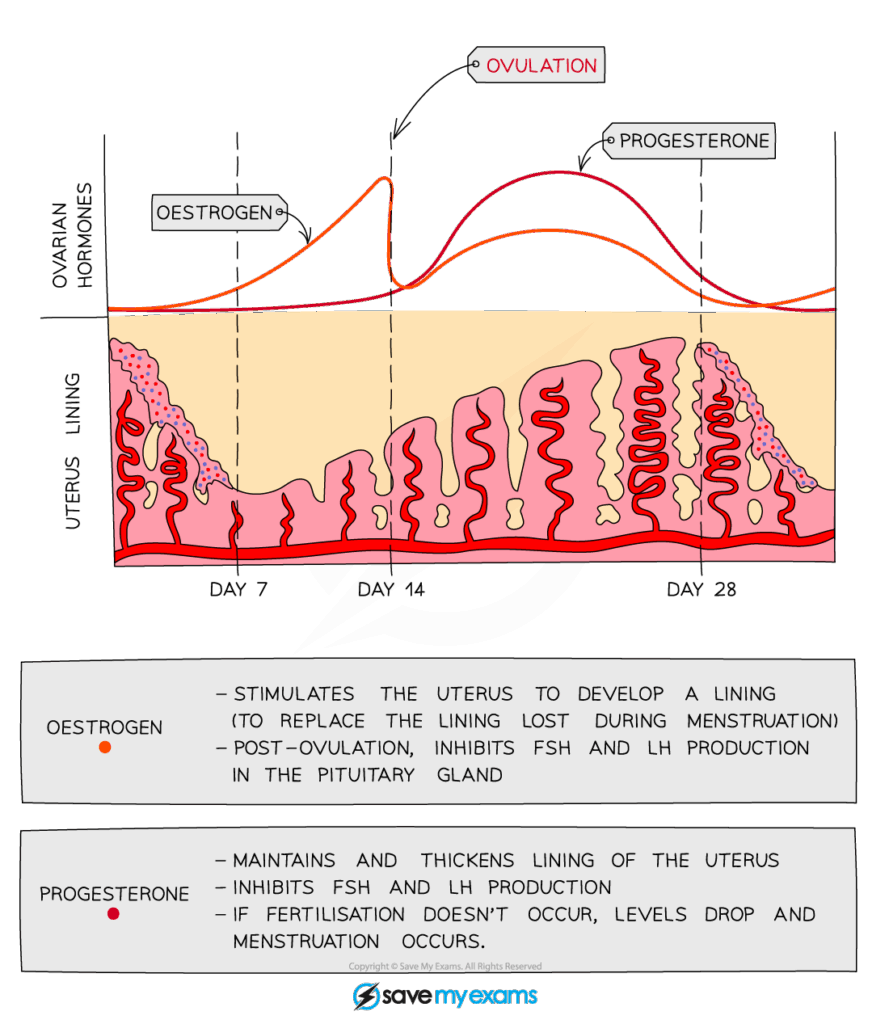
- In females: FSH and LH regulate follicle growth and ovulation.
- Estrogen builds the endometrium; progesterone maintains it.
- Hormone feedback loops regulate menstrual cycles.
- Contraceptives exploit hormone manipulation to prevent ovulation.
🌐 EE Focus: An EE could investigate the effect of endocrine disruptors on reproductive health or compare gametogenesis processes across species.
📌 Reproductive Health and Technology
- Infertility treatments: IVF, artificial insemination, hormonal therapies.
- Contraceptives: hormonal pills, barriers, IUDs, surgical sterilisation.
- Diseases: STIs (HIV, syphilis, chlamydia) affect reproductive systems.
- Hormone imbalances cause infertility or menstrual irregularities.
- Modern technology advances reproductive choice and health.
❤️ CAS Link: Students could design awareness workshops on reproductive health, contraception, or STI prevention, linking science with public health.
🌍 Real-World Connection: Knowledge of reproductive systems underpins medicine, public health, and biotechnology. Treatments for infertility, contraception methods, and education programs rely on physiology. Reproductive technology also raises ethical debates about accessibility, choice, and societal impacts.
📌 Integration with Development and Health
- Reproductive health links to population growth and demographics.
- Technology provides solutions for infertility but raises ethical challenges.
- Comparative anatomy reveals evolutionary adaptations in reproduction.
- Hormonal cycles illustrate system-wide physiological regulation.
- Understanding reproduction informs medicine and society.
🔍 TOK Perspective: Discussions of reproduction involve both scientific facts and cultural values. TOK reflection: To what extent does culture shape how scientific knowledge about reproduction is taught, accepted, or applied?