Author: Admin

  • TermDefinition
    Fossil recordPreserved remains or traces of organisms showing evolutionary change over time.
    Homologous structuresSimilar structures in different species due to shared ancestry.
    Analogous structuresSimilar functions but different evolutionary origins (convergent evolution).
    Artificial selectionHuman-directed breeding of organisms to emphasise traits.
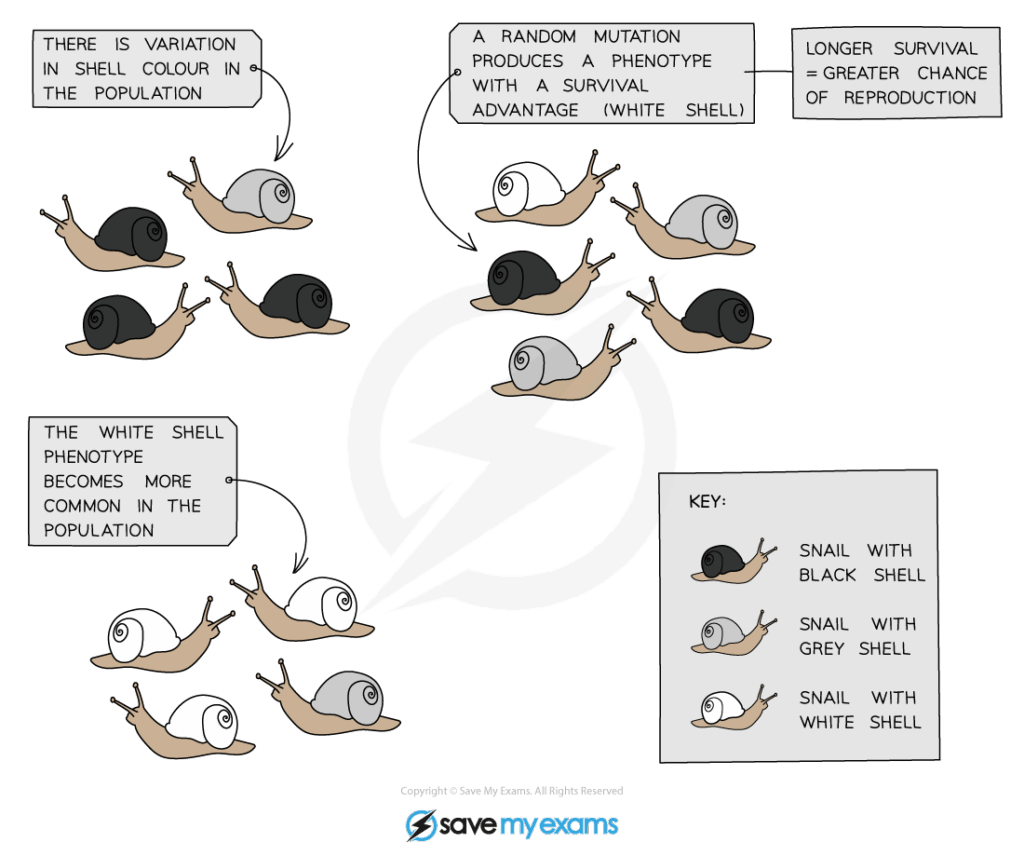
    Industrial melanismExample of natural selection seen in changing frequencies of dark/light moths.
    Antibiotic resistanceEvolution of bacteria to survive drug treatment, a modern example of selection.

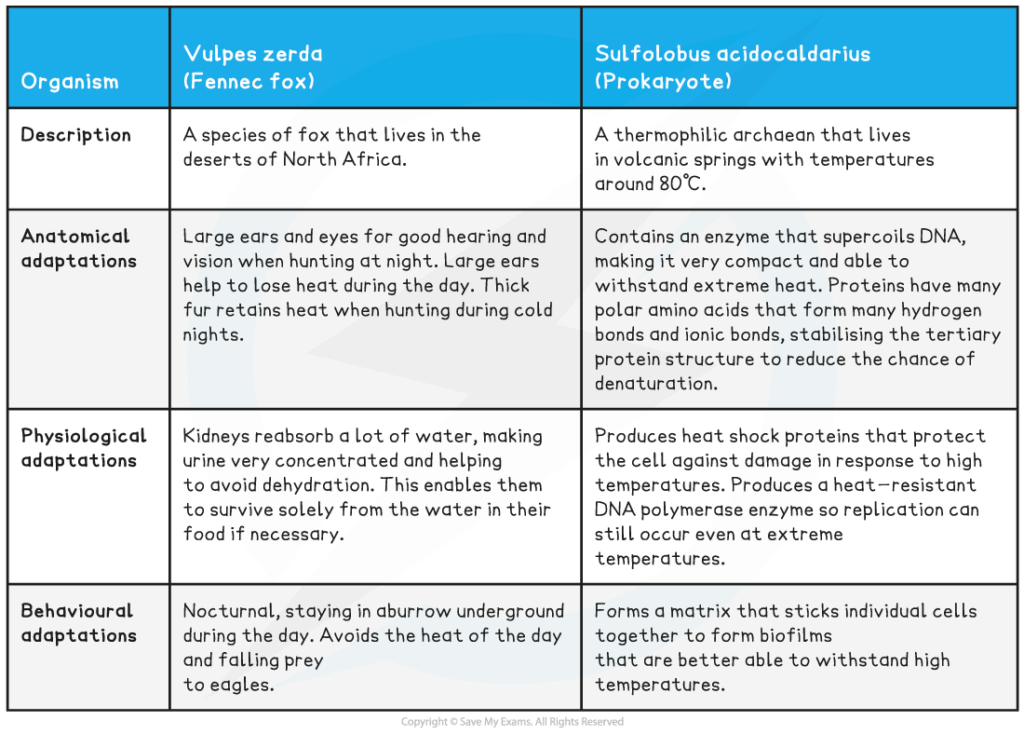
    Evidence for natural selection comes from multiple disciplines, including paleontology, comparative anatomy, molecular biology, and modern-day observations. Fossils reveal gradual changes, homologous structures show common ancestry, and DNA studies confirm genetic links. Contemporary examples, such as antibiotic resistance in bacteria and pesticide resistance in insects, provide direct evidence of selection in action. Together, these lines of evidence make natural selection one of the most well-supported theories in biology.

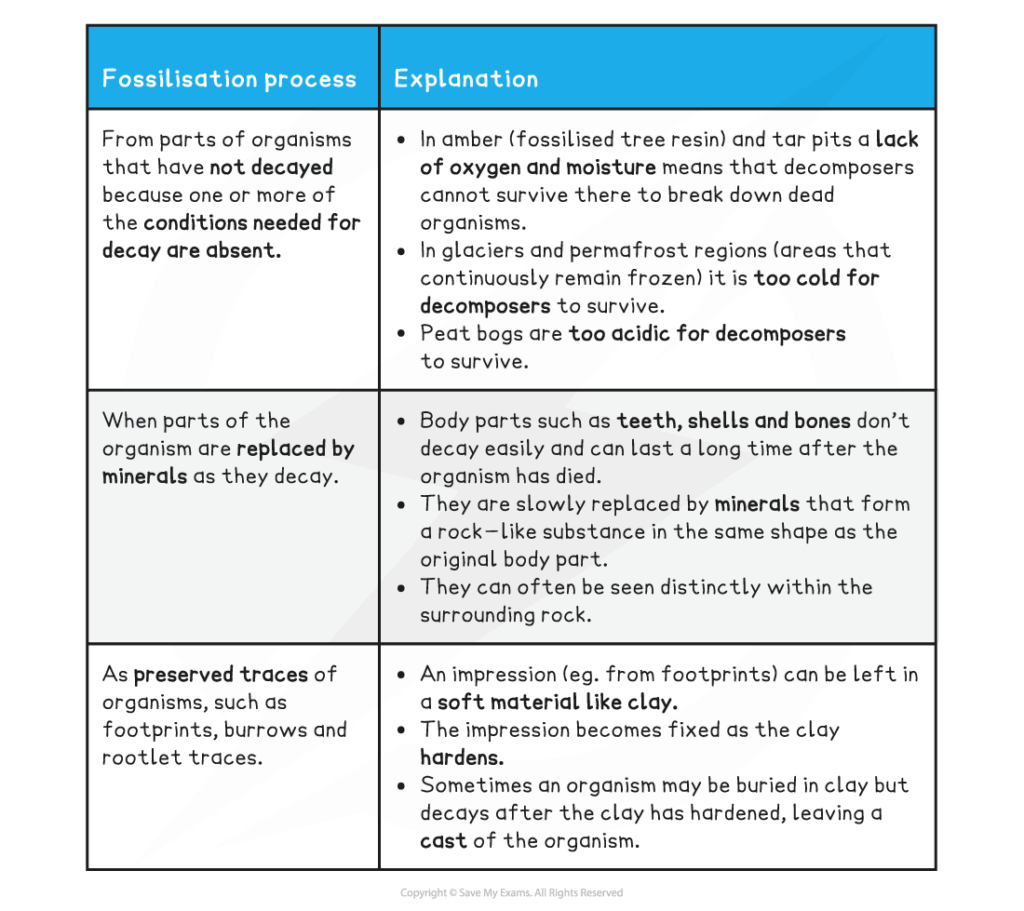
    • Fossil record shows transitional forms linking ancestors to modern species.
    • Homologous structures (e.g., pentadactyl limb) show divergent evolution.
    • Vestigial structures (e.g., whale pelvis) indicate evolutionary remnants.
    • Analogous structures (e.g., wings in insects vs birds) show convergent evolution.
    • Comparative embryology reveals conserved developmental pathways.
    ๐Ÿง  Examiner Tip: Be ready to distinguish homologous vs analogous structures with clear examples โ€” examiners look for precise terminology.

    • DNA sequencing reveals shared genes among distant species.
    • Universal genetic code supports a common ancestor.
    • Similar proteins (e.g., cytochrome c) indicate evolutionary relationships.
    • Mutation rates in DNA provide molecular clocks for divergence timing.
    • Genome analysis reveals horizontal gene transfer in some lineages.

    ๐Ÿงฌ IA Tips & Guidance: Bioinformatics investigations (BLAST searches, DNA sequence alignments) can be designed to compare homologous genes between species.

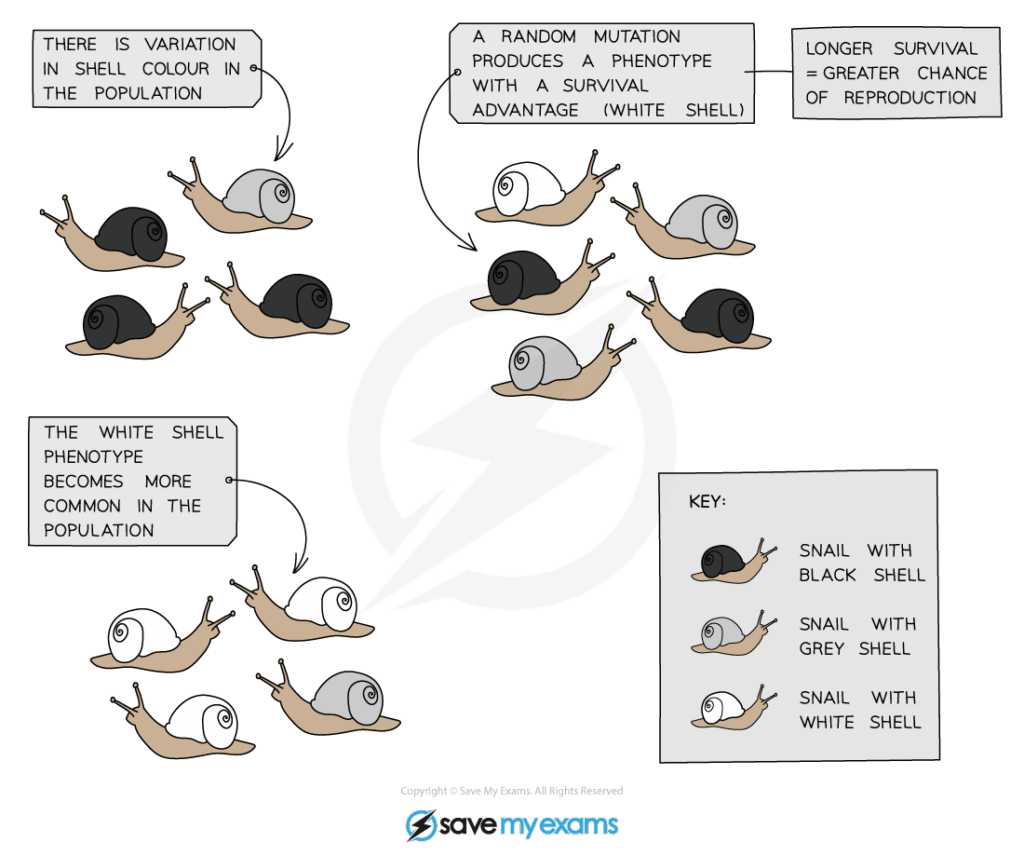
    • Peppered moths: shift from light to dark morphs during industrialisation.
    • Antibiotic resistance: bacteria evolve mechanisms like enzyme production.
    • Insecticide resistance: agricultural pests develop resistance, requiring new controls.
    • Climate change: altering selection pressures on migratory and flowering times.
    • Experimental evolution: laboratory studies on bacteria show rapid selection.

    ๐ŸŒ EE Focus: An EE could focus on antibiotic resistance as a case study of natural selection under human influence, linking evolution to global health issues.

    • Artificial selection: deliberate breeding for traits (e.g., dogs, crops).
    • Mimics natural selection but with humans as selective agent.
    • Provides strong evidence for potential of selection to shape traits.
    • Risks: reduced genetic diversity, increased vulnerability to disease.
    • Natural selection works slower but maintains adaptation to environment.

    โค๏ธ CAS Link: Students could create awareness campaigns about antibiotic resistance as a natural selection process accelerated by misuse of drugs.

    ๐ŸŒ Real-World Connection: Understanding natural selection informs conservation, agriculture, and medicine. From breeding resistant crops to designing new antibiotics, it underpins applied biology.

    • Multiple lines of evidence converge on natural selection as key mechanism.
    • Fossils show patterns; molecular biology provides mechanisms.
    • Modern examples demonstrate real-time evolution.
    • Theory unifies disparate biological observations.
    • Makes evolution one of the most robust scientific theories.

    ๐Ÿ” TOK Perspective: Natural selection cannot be observed directly in deep time; it is inferred from multiple indirect evidences. TOK issue: How do scientists establish certainty in theories built on inference rather than direct observation?
    ๐Ÿ“ Paper 2: Expect questions comparing evidence types, analysing examples of contemporary selection, or distinguishing between artificial and natural selection with examples.

  • TermDefinition
    AdaptationInherited trait that increases an organismโ€™s chance of survival and reproduction.
    FitnessAbility of an organism to survive, reproduce, and pass on genes to the next generation.
    Structural adaptationPhysical feature of an organism (e.g., thick fur, beak shape).
    Physiological adaptationInternal function enhancing survival (e.g., enzymes working at extreme temperatures).
    Behavioural adaptationActions or behaviours that aid survival (e.g., migration, mating calls).
    Evolutionary fitnessMeasured by reproductive success relative to others in the population.

    Adaptation is the process by which traits that improve survival or reproduction become more common in a population. Fitness, in evolutionary terms, is not about strength or speed, but the relative success in leaving viable offspring. Organisms display structural, physiological, and behavioural adaptations that allow them to thrive in their niches. Over time, natural selection ensures that beneficial adaptations accumulate, while less useful traits decline

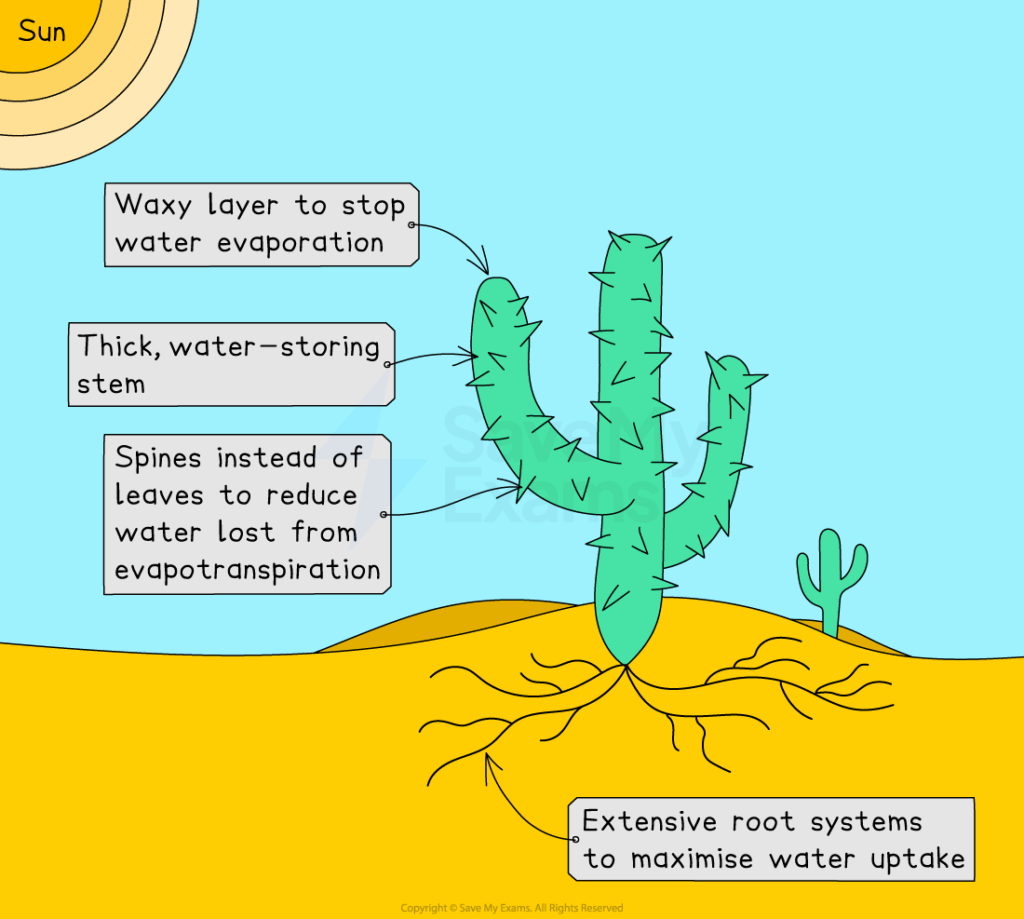
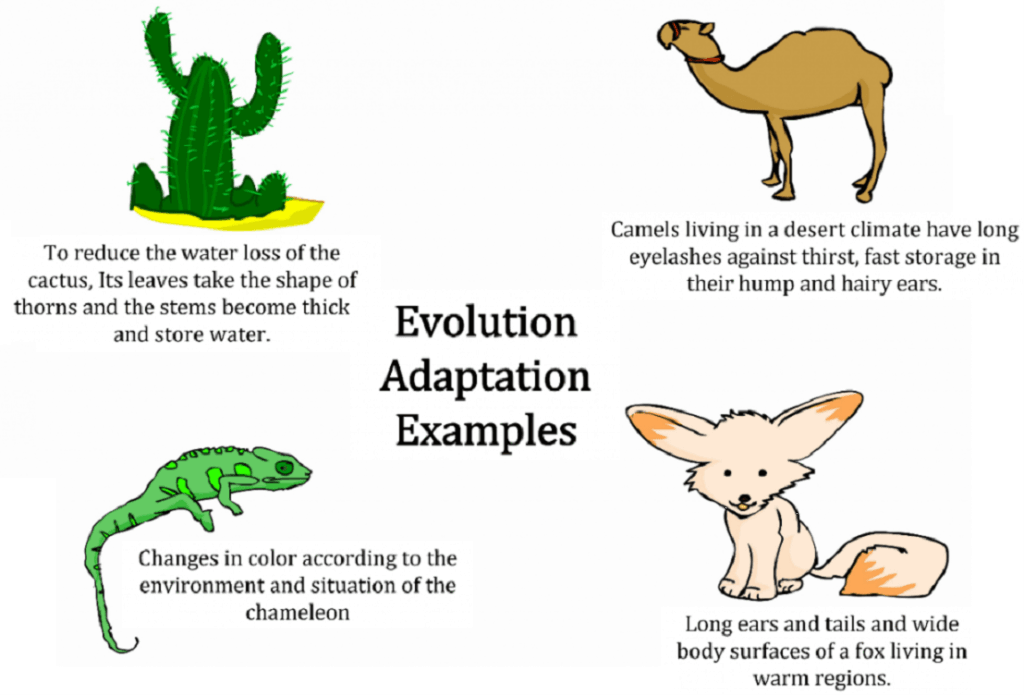
    • Structural adaptations: physical modifications like spines in cacti or camouflaged fur.
    • Physiological adaptations: biochemical adjustments like antifreeze proteins in polar fish.
    • Behavioural adaptations: cooperative hunting in wolves, migration in birds.
    • Reproductive adaptations: strategies like producing many seeds or parental care.
    • Molecular adaptations: changes in enzymes for efficiency under specific conditions.

    ๐Ÿง  Examiner Tip: Donโ€™t define fitness as strength or health. In biology, fitness is measured by reproductive success and contribution to the gene pool.

    • Individuals with higher fitness produce more viable offspring.
    • Fitness depends on match between traits and environment.
    • Different environments favour different traits (context-specific).
    • Fitness may involve trade-offs (e.g., bright colours attract mates but predators too).
    • Fitness varies with time as environments change.

    ๐Ÿงฌ IA Tips & Guidance: Experiments on adaptation can model selection โ€” e.g., simulating predation on coloured beads against different backgrounds to show camouflage fitness.

    • Desert plants: water storage, CAM photosynthesis.
    • Polar animals: blubber, fur insulation, seasonal hibernation.
    • Predator-prey systems: speed, camouflage, mimicry.
    • High altitude species: haemoglobin with higher oxygen affinity.
    • Parasites: specialised mouthparts, complex life cycles.

    ๐ŸŒ EE Focus: An EE could investigate trade-offs in adaptations, e.g., why some plants invest in chemical defence over growth. This explores cost-benefit balances in evolutionary fitness.

    • Accumulated adaptations may isolate populations reproductively.
    • Leads to divergence and eventually speciation.
    • Adaptive radiation: multiple adaptations from one ancestor (e.g., Darwinโ€™s finches).
    • Coevolution: adaptations shaped by interactions (e.g., flowers and pollinators).
    • Shows adaptation as both a driver of diversity and survival.

    โค๏ธ CAS Link: Students could present projects comparing local speciesโ€™ adaptations (e.g., plants in dry vs wet areas), linking them to environmental fitness.

    ๐ŸŒ Real-World Connection: Understanding adaptations informs conservation (protecting species in changing climates) and biotechnology (engineering enzymes with industrial adaptations).

    • Adaptations accumulate gradually, refining survival.
    • They are context-dependent, advantageous only in certain environments.
    • Maladaptations occur when environments change rapidly.
    • Fitness landscapes illustrate peaks (high fitness) and valleys (low fitness).
    • This concept underpins predictions about evolutionary trajectories.

    ๐Ÿ” TOK Perspective: Fitness is a relative, not absolute, concept. TOK issue: To what extent is scientific knowledge shaped by how we define and measure abstract concepts like โ€œfitnessโ€?

    ๐Ÿ“ Paper 2: Questions may involve explaining examples of adaptations, distinguishing between types of adaptations, or applying the concept of fitness to new scenarios.

  • TermDefinition
    VariationDifferences in traits among individuals of a species caused by genetic and environmental factors.
    Genetic variationHeritable differences due to mutations, sexual reproduction, and recombination.
    Struggle for survivalCompetition among organisms for limited resources necessary to survive and reproduce.
    Intraspecific competitionCompetition between members of the same species for resources like mates, food, or territory.
    Interspecific competitionCompetition between different species occupying similar ecological niches.
    Selective pressureEnvironmental factors that influence survival and reproductive success of individuals.

    Variation is the foundation of evolution, as it provides the raw material on which natural selection acts. Within any population, individuals differ in physical, physiological, and behavioural traits. These differences arise from genetic mutations, recombination during meiosis, and environmental influences. Since resources are limited, individuals must compete in the struggle for survival, where only some succeed in obtaining food, mates, and shelter. Those with advantageous traits survive and reproduce, passing their characteristics to the next generation, shaping evolutionary change.

    • Mutation introduces new alleles and traits, sometimes beneficial, neutral, or harmful.
    • Meiosis generates variation through independent assortment and crossing over.
    • Sexual reproduction combines alleles from two parents, producing unique offspring.
    • Environmental influences (nutrition, temperature, disease) modify phenotype without altering genotype.
    • Epigenetic modifications regulate gene expression, influencing variation across generations.

    ๐Ÿง  Examiner Tip: Avoid confusing adaptation with variation. Variation is the raw diversity of traits, while adaptations are traits that prove advantageous under selective pressures.

    • Populations produce more offspring than the environment can support.
    • Resources such as food, water, and mates become limiting.
    • Competition arises both within species and between species.
    • Predation, disease, and climate stress increase mortality.
    • Individuals with advantageous traits gain better access to resources, enhancing reproductive success.

    ๐Ÿงฌ IA Tips & Guidance: Investigations could examine variation in a measurable trait (e.g., height in plants grown under different light conditions) and link it to environmental pressures.

    • Predators preferentially consume weaker or poorly adapted individuals.
    • Climate extremes (heat, drought, cold) test physiological limits.
    • Parasites and pathogens reduce survival of less resistant hosts.
    • Human activities (hunting, antibiotics, habitat alteration) impose new pressures.
    • Selection favours traits that improve survival under these conditions.

    ๐ŸŒ EE Focus: An EE could analyse the role of genetic variation in conservation biology, asking how maintaining diversity ensures species survival under changing environments.

    • Survival of the fittest: only those with favourable traits survive.
    • Differential reproductive success leads to gradual changes in population genetics.
    • Traits conferring disadvantage become rare or lost.
    • Over generations, advantageous traits accumulate, driving evolution.
    • In extreme cases, variation plus selection may lead to speciation.

    โค๏ธ CAS Link: Students could conduct biodiversity surveys of local species, documenting variation and relating it to survival challenges in the environment.

    ๐ŸŒ Real-World Connection: Variation underlies agriculture (e.g., breeding drought-resistant crops) and medicine (e.g., variation in pathogens leads to antibiotic resistance).

    • Darwin and Wallace observed variation and competition in nature.
    • Their work on finches demonstrated adaptation through selective survival.
    • The principle of overproduction combined with variation explains natural selection.
    • Population genetics later quantified variation with allele frequencies.
    • This integration remains the foundation of modern evolutionary biology.

    ๐Ÿ” TOK Perspective: Variation is observable, but linking it to survival often involves inference. TOK issue: To what extent do scientists rely on indirect evidence and models when explaining natural processes?

    ๐Ÿ“ Paper 2: Expect questions comparing sources of variation, describing examples of struggle for survival, or analysing graphs showing survival rates under different pressures.

  • TermDefinition
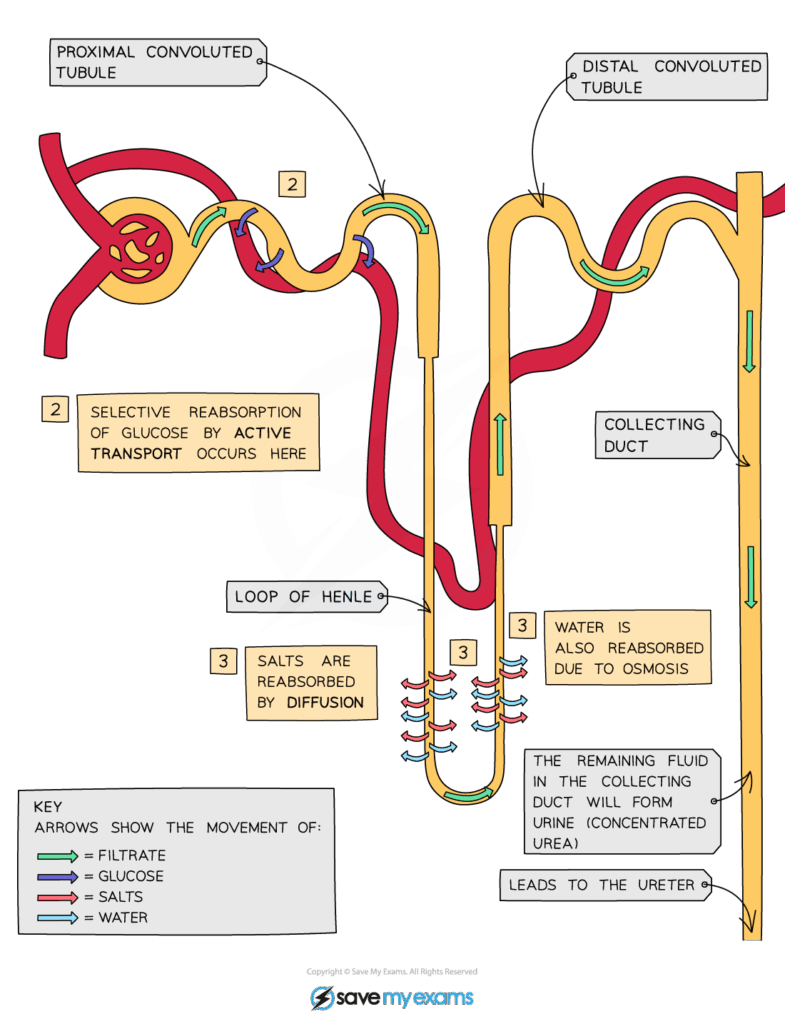
    OsmoregulationControl of water and solute balance in body fluids.
    ExcretionRemoval of toxic metabolic wastes from the body.
    NephronFunctional unit of the kidney, producing urine.
    UltrafiltrationHigh-pressure filtration of blood in the glomerulus.
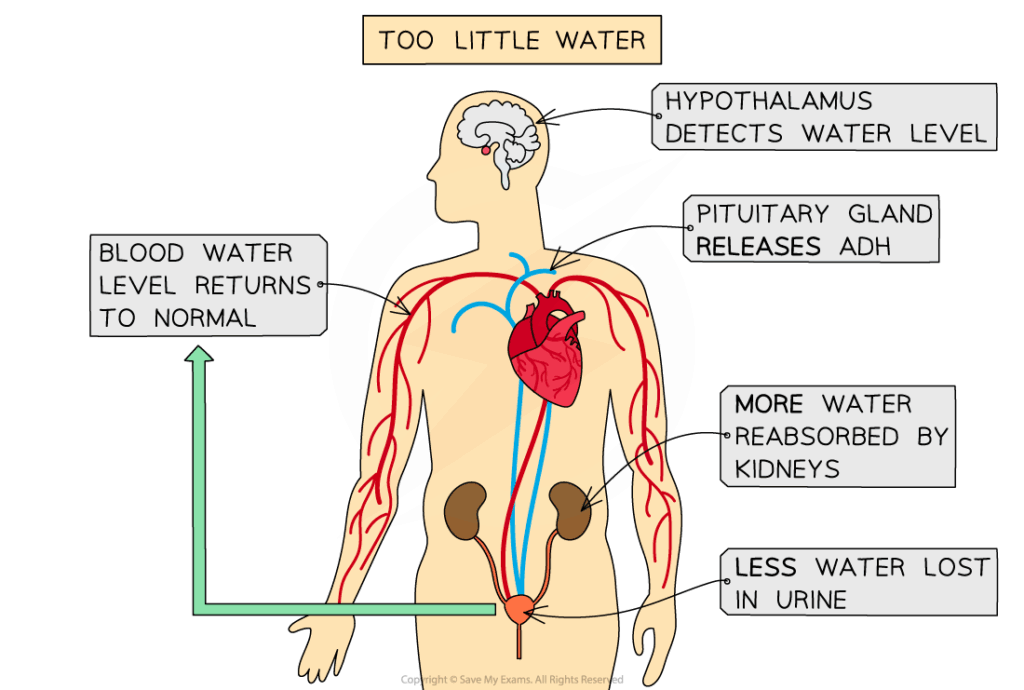
    ADH (antidiuretic hormone)Hormone regulating water reabsorption in kidneys.

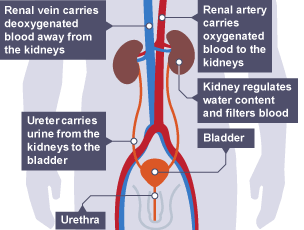
    Osmoregulation and excretion maintain stable fluid composition by balancing water, salts, and nitrogenous waste. The kidneys are central, producing urine through ultrafiltration, selective reabsorption, and controlled water reabsorption. Failure of these processes can be fatal, making them critical to life

    • Nitrogenous waste (from amino acids) excreted mainly as urea in humans.
    • Nephrons span cortex and medulla, filtering and modifying blood plasma.
    • Ultrafiltration at Bowmanโ€™s capsule forces small molecules into filtrate.
    • Selective reabsorption in proximal tubule reclaims glucose, amino acids, salts.
    • Loop of Henle establishes osmotic gradients for water conservation.

    ๐Ÿง  Examiner Tip: Students often confuse glucagon (hormone) with glycogen (storage molecule). Keep spelling distinctions clear.

    • Hypothalamus osmoreceptors detect blood water concentration.
    • Low water โ†’ ADH release โ†’ aquaporins inserted in collecting duct โ†’ more water reabsorbed โ†’ concentrated urine.
    • High water โ†’ ADH falls โ†’ fewer aquaporins โ†’ dilute urine.
    • Loop of Henle gradient ensures reabsorption efficiency.
    • Balances hydration under varying intake and loss conditions.

    ๐Ÿงฌ IA Tips & Guidance: Students could test urine solute concentration under different hydration conditions (safe classroom simulations using salt solutions).

    • Desert animals have longer loops of Henle โ†’ produce concentrated urine.
    • Aquatic animals may excrete ammonia directly.
    • Uric acid excretion in birds conserves water.
    • Kidney structure links tightly to ecological niche.
    • Human kidney failure managed with dialysis or transplant.

    ๐ŸŒ EE Focus: An EE could investigate comparative osmoregulation in desert vs aquatic animals, or the efficiency of dialysis vs natural kidney function.

    • Dialysis mimics nephron functions in renal failure patients.
    • ADH malfunction causes diabetes insipidus (excess dilute urine).
    • Hydration monitoring crucial in athletics and medicine.
    • Waste excretion central to maintaining pH and ionic balance.
    • Pollution affects excretion in aquatic organisms.

    โค๏ธ CAS Link: Students could create awareness posters on hydration and kidney health, linking classroom learning to community well-being.

    ๐ŸŒ Real-World Connection: Osmoregulation is critical in medicine (kidney disease, dialysis), ecology (animal adaptations), and health (hydration). Technologies like dialysis machines and water balance therapies directly apply this biology.

    • Kidneys integrate with circulatory and endocrine systems.
    • ADH and aldosterone show hormonal control.
    • Links metabolism (protein breakdown) to excretion.
    • Adaptations illustrate natural selection in action.
    • Highlights role of water balance in all life forms.

    ๐Ÿ” TOK Perspective: We cannot observe osmoregulation directly but infer it from urine composition and blood solutes. TOK reflection: How do indirect measurements shape our confidence in unseen physiological processes?

    ๐Ÿ“ Paper 2: Expect nephron diagrams (ultrafiltration, reabsorption), roles of ADH, and adaptations for osmoregulation. Data questions may involve interpreting urine solute graphs or effects of hydration.


  • REGULATION OF TEMPERATURE AND BLOOD GLUCOSE

    TermDefinition
    ThermoregulationControl of internal body temperature within limits.
    VasodilationWidening of arterioles to increase blood flow to the skin for heat loss.
    VasoconstrictionNarrowing of arterioles to conserve heat.
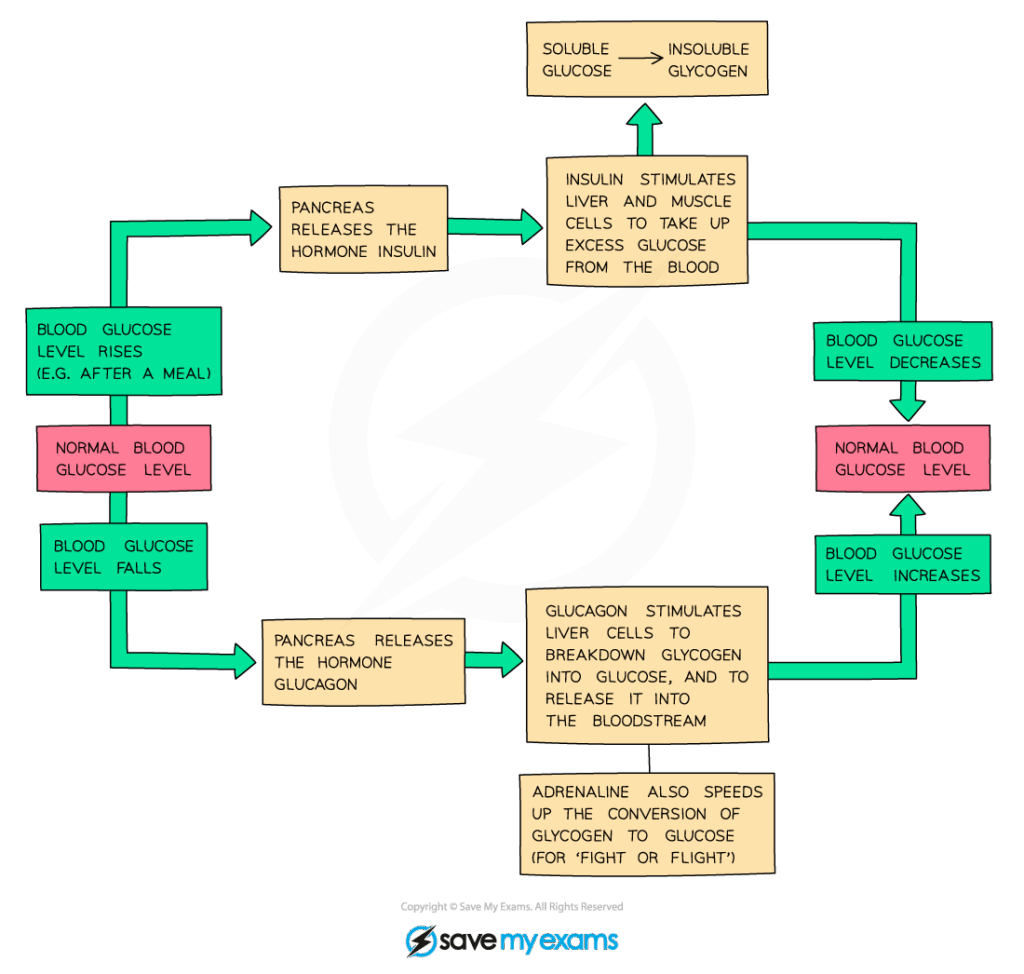
    InsulinHormone secreted by ฮฒ-cells to lower blood glucose.
    GlucagonHormone secreted by ฮฑ-cells to increase blood glucose.

    Temperature and glucose control are prime examples of homeostasis in action. Thermoregulation ensures enzymes function near 37 ยฐC, while glucose regulation provides a constant energy supply. Both involve negative feedback loops, with the hypothalamus and pancreas playing central roles.

    • Hypothalamus detects core temperature via thermoreceptors.
    • Heat loss: vasodilation, sweating, hair flattening.
    • Heat conservation: vasoconstriction, shivering, brown fat metabolism.
    • Thyroxine modulates metabolic heat production.
    • Behavioural responses (seeking shade, clothing) complement physiology.

    ๐Ÿง  Examiner Tip: State that vasodilation/constriction occur in arterioles, not capillaries (a common exam error).

    • High glucose โ†’ ฮฒ-cells secrete insulin โ†’ uptake by cells, glycogenesis, increased respiration.
    • Low glucose โ†’ ฮฑ-cells secrete glucagon โ†’ glycogenolysis, gluconeogenesis, reduced respiration.
    • Balance prevents hyperglycemia and hypoglycemia.
    • Type 1 diabetes: lack of insulin production.
    • Type 2 diabetes: insulin resistance.

    ๐Ÿงฌ IA Tips & Guidance: A lab on how exercise affects glucose levels (measured with glucose test strips) links data to regulation.

    • Endocrine system (pancreas, thyroid) and nervous system coordinate.
    • Hormones act on target organs (liver, muscle, adipose tissue).
    • Thermoregulation affects metabolic demand for glucose.
    • Breakdown of regulation leads to disease (diabetes, heatstroke).
    • Illustrates complexity of feedback loops.

    ๐ŸŒ EE Focus: An EE could explore hormonal regulation in diabetes or compare thermoregulation in mammals vs reptiles.

    • Diabetes management: insulin therapy, diet, exercise.
    • Fever illustrates deliberate thermoregulation changes in infection.
    • Sports medicine relies on glucose and temperature monitoring.
    • Thermoregulation strategies crucial for survival in extreme climates.
    • Advances in endocrinology have improved quality of life for millions.

    โค๏ธ CAS Link: Students could organize a diabetes awareness campaign, demonstrating how lifestyle choices impact glucose regulation.

    ๐ŸŒ Real-World Connection: Temperature and glucose regulation are vital for survival. Failures lead to major diseases (heatstroke, diabetes). Medical interventionsโ€”insulin injections, glucose monitors, cooling therapiesโ€”show practical applications of homeostatic principles.

    • Links energy metabolism with environmental adaptation.
    • Illustrates cooperation of multiple systems.
    • Disruption has immediate and long-term consequences.
    • Essential for survival in changing climates and diets.
    • A classic model of feedback regulation.

    ๐Ÿ” TOK Perspective: Blood glucose and temperature can be measured directly, but the mechanisms (e.g., hormone binding) are inferred. TOK reflection: How do models of unseen processes shape scientific explanations?

    ๐Ÿ“ Paper 2: Be prepared to explain glucose regulation with diagrams of pancreas ฮฑ/ฮฒ cells. Thermoregulation questions may involve skin structure, blood vessel control, or adaptations in endotherms vs ectotherms.

  • TermDefinition
    HomeostasisMaintenance of a stable internal environment within narrow limits.
    Negative feedbackA control mechanism that reverses changes and restores a set point.
    ReceptorA sensor that detects changes in internal or external conditions.
    EffectorA structure (muscle/gland) that produces a corrective response.
    Set pointThe optimal value around which a physiological factor is regulated.

    Homeostasis ensures that internal conditions remain constant despite external changes. This stability is critical for enzymes and cells to function optimally, maintaining temperature, pH, glucose, and osmotic balance. It operates through negative feedback systems, where deviations from a set point are detected and corrected. Without homeostasis, organisms would fail to survive in fluctuating environments

    • Most homeostatic controls use negative feedback to restore conditions.
    • Involves a receptor, coordination system (nervous/endocrine), and effector.
    • Example: increased blood glucose triggers insulin release to lower it.
    • Positive feedback amplifies changes (e.g., oxytocin in childbirth), not used for stability.
    • Ensures enzymes and metabolic processes remain within optimal ranges.

    ๐Ÿง  Examiner Tip: Be preciseโ€”negative feedback restores set points, while positive feedback amplifies changes; students often confuse the two.

    • Core body temperature (critical for enzyme activity).
    • Blood pH (narrow range required for protein function).
    • Glucose concentration (for cellular respiration).
    • Osmotic balance of blood and tissues.
    • Gas concentrations (Oโ‚‚, COโ‚‚) in some animals.

    ๐Ÿงฌ IA Tips & Guidance: Investigations can include how body temperature or heart rate changes with exercise, linking real data to negative feedback regulation.

    • Nervous system: fast, short-term responses (e.g., shivering, sweating).
    • Endocrine system: slower, longer-term regulation (e.g., thyroxine, insulin).
    • Organs work together, e.g., pancreasโ€“liver in glucose control.
    • Disruptions (e.g., diabetes, dehydration) show the importance of regulation.
    • Homeostasis underpins survival in diverse environments.

    ๐ŸŒ EE Focus: An EE could compare efficiency of negative feedback in ectotherms vs endotherms, or investigate homeostatic disruptions in disease states.

    • Understanding feedback loops is essential in medicine (e.g., diabetes treatment).
    • Artificial regulation: dialysis machines mimic kidney function.
    • Athletic performance depends on thermoregulation and hydration control.
    • Feedback models used in biotechnology and ecology.
    • Explains adaptation to extreme environments.

    โค๏ธ CAS Link: Students can design workshops or models showing how feedback loops operate (e.g., thermostat analogy), teaching peers about balance in physiology.

    ๐ŸŒ Real-World Connection: Homeostasis underlies survival in all organisms. Medical conditions like diabetes, heatstroke, or dehydration illustrate its breakdown, while therapies (insulin injections, rehydration salts) show applied regulation

    • Nervous and endocrine systems act in synergy.
    • Feedback ensures survival under changing environments.
    • Regulation applies across scalesโ€”from cells to ecosystems.
    • Failures cause pathology, highlighting its importance.
    • A foundation concept linking all physiology.

    ๐Ÿ” TOK Perspective: Homeostasis is inferred through indirect measures (temperature, glucose). TOK reflection: How reliable is indirect evidence in confirming biological processes?

    ๐Ÿ“ Paper 2: Expect to explain negative feedback with examples (glucose, temperature). Questions may require drawing labelled diagrams of loops or comparing negative vs positive feedback.

  • TermDefinition
    PedigreeA diagram showing inheritance patterns across generations in a family.
    Autosomal dominantTrait appears in every generation; equal distribution in sexes.
    Autosomal recessiveTrait may skip generations; carriers exist.
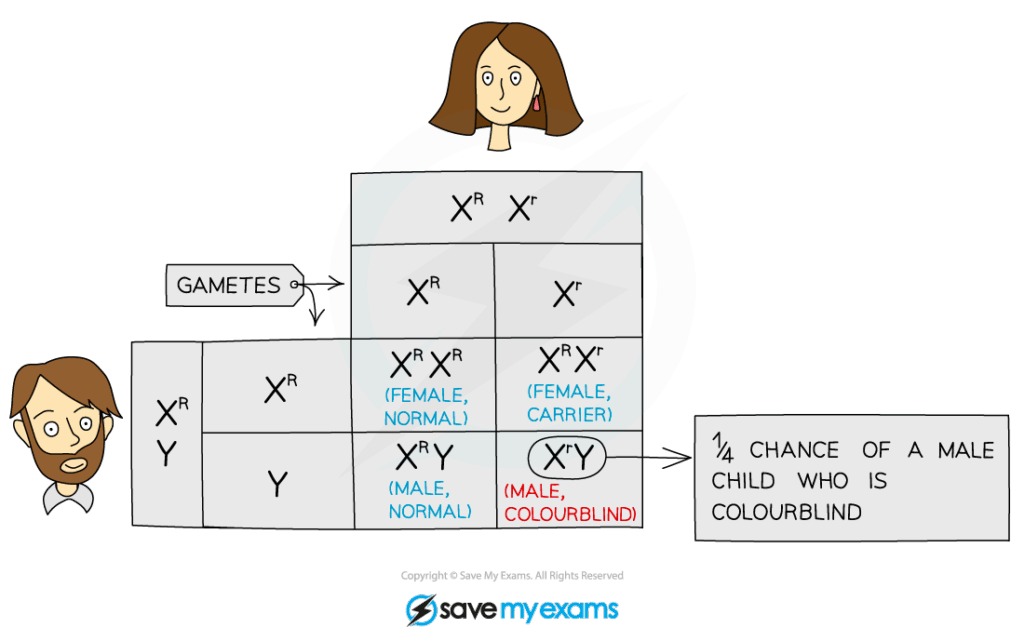
    Sex-linked traitTrait carried on sex chromosomes, often showing sex-specific inheritance.
    CarrierIndividual with one copy of a recessive allele who does not express the trait.

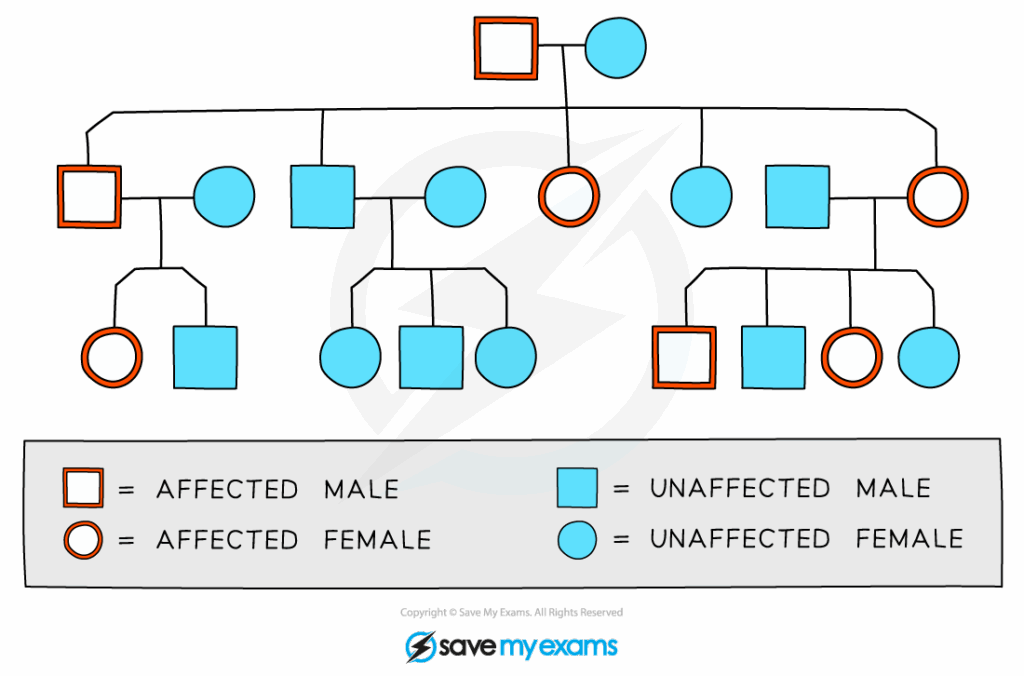
    Pedigree analysis is used to trace inheritance in families and determine the mode of transmission of genetic traits. Combined with probability, it allows predictions about the likelihood of offspring inheriting certain conditions. This approach is fundamental in medicine, breeding, and genetic counselling.

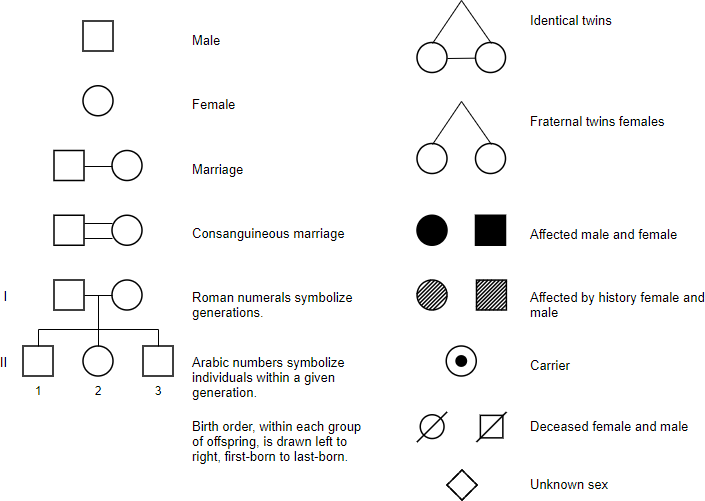
    • Squares = males; circles = females.
    • Shaded symbols represent affected individuals.
    • Horizontal line = mating; vertical lines = offspring.
    • Roman numerals = generations; numbers = individuals.
    • Carriers may be half-shaded in recessive conditions.

    ๐Ÿง  Examiner Tip: Always indicate whether a pedigree shows dominant, recessive, or sex-linked inheritance, and justify with evidence (e.g., skipping generations or male bias).

    • Autosomal dominant: affects both sexes equally, appears every generation.
    • Autosomal recessive: may skip generations, carriers common.
    • X-linked recessive: more males affected, females often carriers.
    • X-linked dominant: affects both sexes, but often more severe in males.
    • Mitochondrial inheritance: passed from mothers to all offspring.

    ๐Ÿงฌ IA Tips & Guidance: Students could construct family pedigrees for simple traits (e.g., attached earlobes) and analyze inheritance patterns in their community.

    • Probability rules applied to predict inheritance likelihood.
    • Multiplication rule: probability of independent events both occurring.
    • Addition rule: probability of one event or another occurring.
    • Used in predicting carrier status and disease risk.
    • Important in population genetics and genetic counselling.

    ๐ŸŒ EE Focus: An EE could investigate the use of probability in predicting inheritance in populations, linking genetics with statistics.

    • Genetic counselling for families with inherited conditions.
    • Identifying carriers of recessive disorders.
    • Determining inheritance mode of rare conditions.
    • Breeding programs in animals and plants.
    • Forensics and ancestry tracing.

    โค๏ธ CAS Link: Students could design workshops on reading pedigrees, connecting science with health education in the community.

    ๐ŸŒ Real-World Connection: Pedigree analysis is central in diagnosing genetic disorders like hemophilia and cystic fibrosis. It is widely used in medical counselling, breeding programs, and ancestry testing.

    • Provides tools to predict disease likelihood in families.
    • Links classical genetics with modern diagnostics.
    • Combines statistical reasoning with biological inheritance.
    • Enables informed decision-making in medicine and breeding.
    • Enhances understanding of genetic risks in populations.

    ๐Ÿ” TOK Perspective: Pedigrees simplify complex inheritance into diagrams. TOK reflection: How does the use of visual models influence our confidence in understanding and communicating scientific knowledge?

    ๐Ÿ“ Paper 2: Expect questions requiring pedigree interpretation and probability calculations. Data questions may involve identifying inheritance patterns or calculating carrier risk.

  • TermDefinition
    Incomplete dominanceHeterozygote shows intermediate phenotype between two alleles.
    CodominanceBoth alleles expressed equally in heterozygotes (e.g., ABO blood group).
    Multiple allelesMore than two alleles exist for a gene within a population.
    Polygenic inheritanceTraits controlled by many genes, producing continuous variation.
    EpistasisInteraction where one gene affects the expression of another.

    While Mendelian ratios explain many traits, real-world inheritance is often more complex. Non-Mendelian patterns account for cases where alleles interact differently, or multiple genes influence traits. These principles explain phenomena such as blood groups, skin colour, and quantitative traits

    • In incomplete dominance, heterozygotes show blended traits (e.g., red ร— white flowers โ†’ pink).
    • Codominance occurs when both alleles are expressed equally (e.g., AB blood group).
    • Both patterns differ from simple dominance/recessiveness.
    • Ratios in crosses differ from Mendelian predictions.
    • Provide key examples for exam questions.

    ๐Ÿง  Examiner Tip: Always use ABO blood groups for codominance examplesโ€”itโ€™s a standard IB marking point.

    • Multiple alleles extend beyond two variations (e.g., IA, IB, and i in ABO system).
    • Polygenic traits result from many genes (e.g., skin colour, height).
    • Show continuous variation instead of discrete categories.
    • Often influenced by environmental factors.
    • Analyzed statistically rather than with Punnett squares.

    ๐Ÿงฌ IA Tips & Guidance: An IA could investigate continuous variation (e.g., human height in a sample group), showing polygenic inheritance.

    • Epistasis occurs when one gene masks or modifies anotherโ€™s expression.
    • Example: coat colour in Labrador retrievers (E gene affects pigment deposition).
    • Explains why ratios deviate from Mendelian predictions.
    • Shows complexity of gene networks.
    • Links genetics to biochemistry.

    ๐ŸŒ EE Focus: An EE could explore the genetics of polygenic traits like skin colour or the inheritance of epistatic traits in model organisms.

    • Blood groups are codominant with multiple alleles.
    • Polygenic traits explain wide diversity in human populations.
    • Complex disorders like diabetes and heart disease involve many genes.
    • Environmental influence further modifies expression.
    • Research into these traits connects genetics to public health.

    โค๏ธ CAS Link: Students could survey traits (like tongue rolling, ear lobes) in classmates to demonstrate variation and inheritance patterns.

    ๐ŸŒ Real-World Connection: Non-Mendelian inheritance explains complex traits in humans, plants, and animals. Understanding these patterns informs breeding, disease research, and forensic science (blood typing).

    • Many traits are polygenic or influenced by environment.
    • Geneโ€“gene interactions modify expected outcomes.
    • Modern genomics explores complex inheritance.
    • Statistical analysis essential for quantitative traits.
    • Mendelian genetics is a foundation, but real inheritance is more nuanced.

    ๐Ÿ” TOK Perspective: Classification of inheritance patterns simplifies reality. TOK reflection: Does reducing genetic complexity into categories help or hinder understanding of biology?

    ๐Ÿ“ Paper 2: Expect questions on codominance, incomplete dominance, and blood groups. Data questions may involve polygenic traits or inheritance ratios that deviate from Mendelian predictions.

  • TermDefinition
    GeneA heritable unit of DNA that codes for a specific trait.
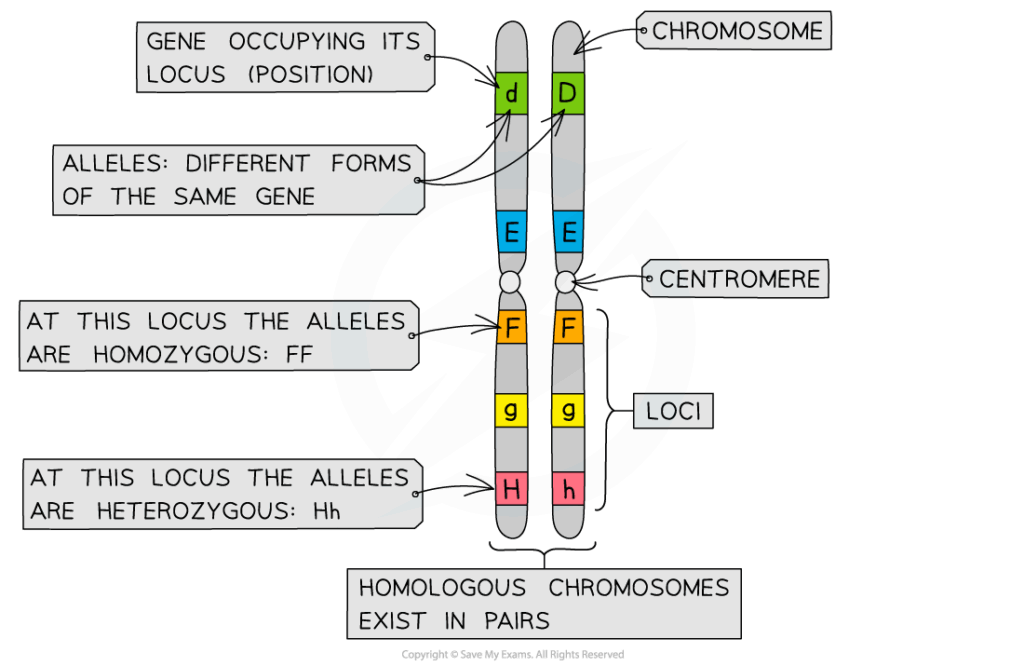
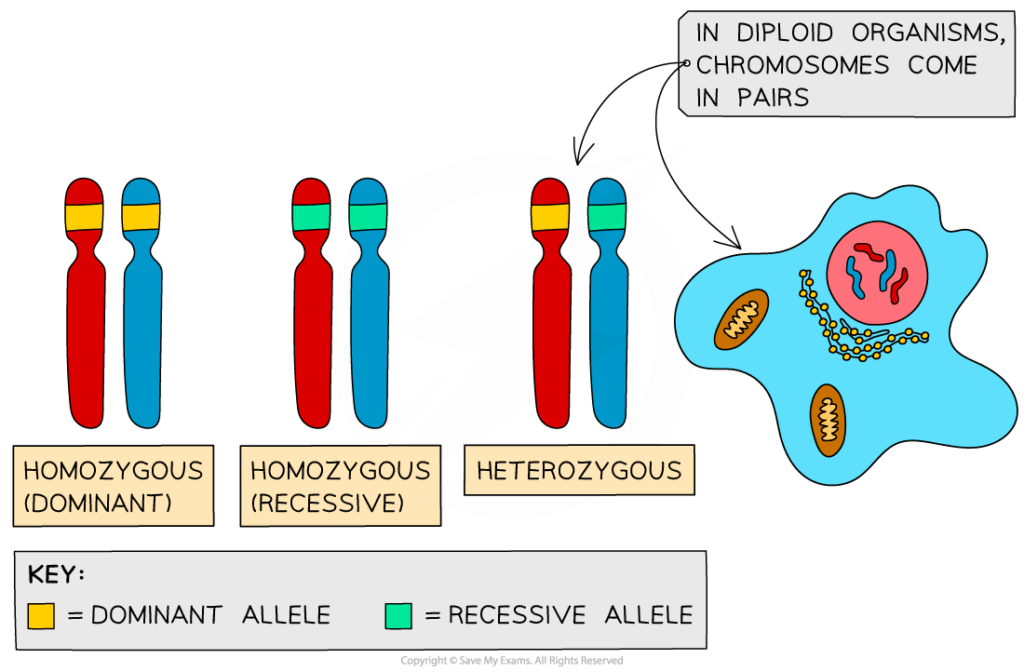
    AlleleDifferent versions of a gene (e.g., dominant vs recessive).
    HomozygousHaving two identical alleles for a gene (AA or aa).
    HeterozygousHaving two different alleles for a gene (Aa).
    PhenotypeObservable characteristics determined by genotype and environment.
    GenotypeGenetic makeup of an organism, represented by allele combinations.

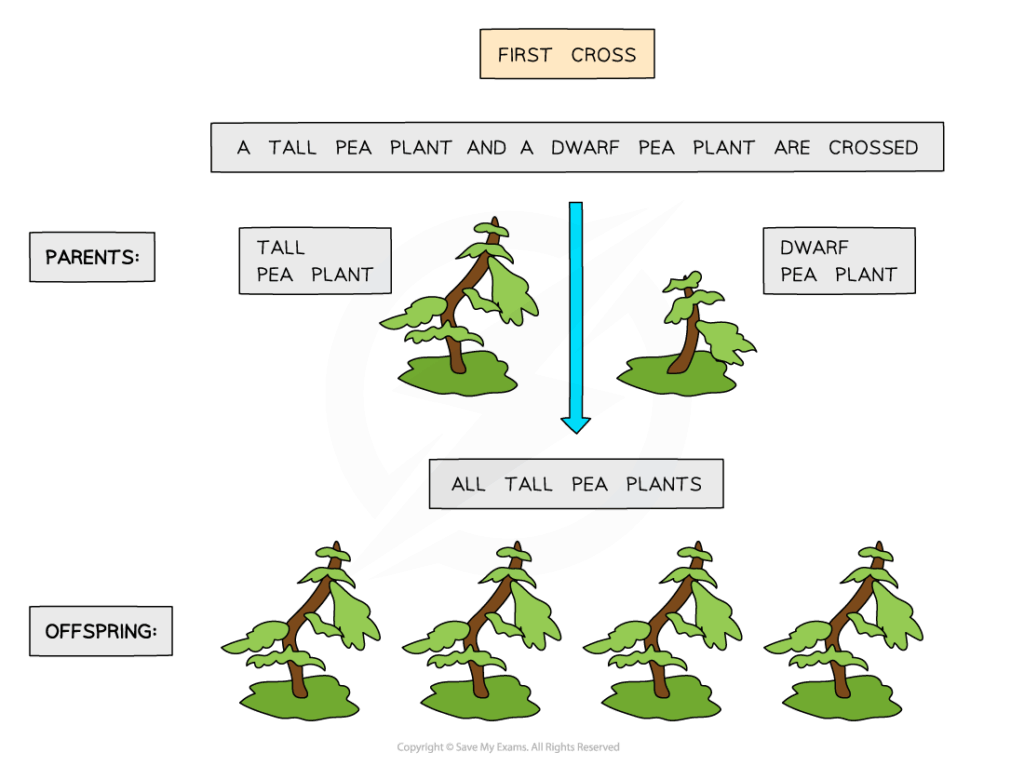
    Mendelโ€™s experiments with pea plants established the foundation of classical genetics. By studying traits such as seed shape and flower colour, he discovered predictable inheritance patterns based on segregation and independent assortment. These principles laid the groundwork for understanding how genes are passed from one generation to the next

    • Law of Segregation: Alleles for a trait separate during gamete formation.
    • Law of Independent Assortment: Alleles of different genes assort independently during meiosis (unless linked).
    • Law of Dominance: One allele may mask the expression of another.
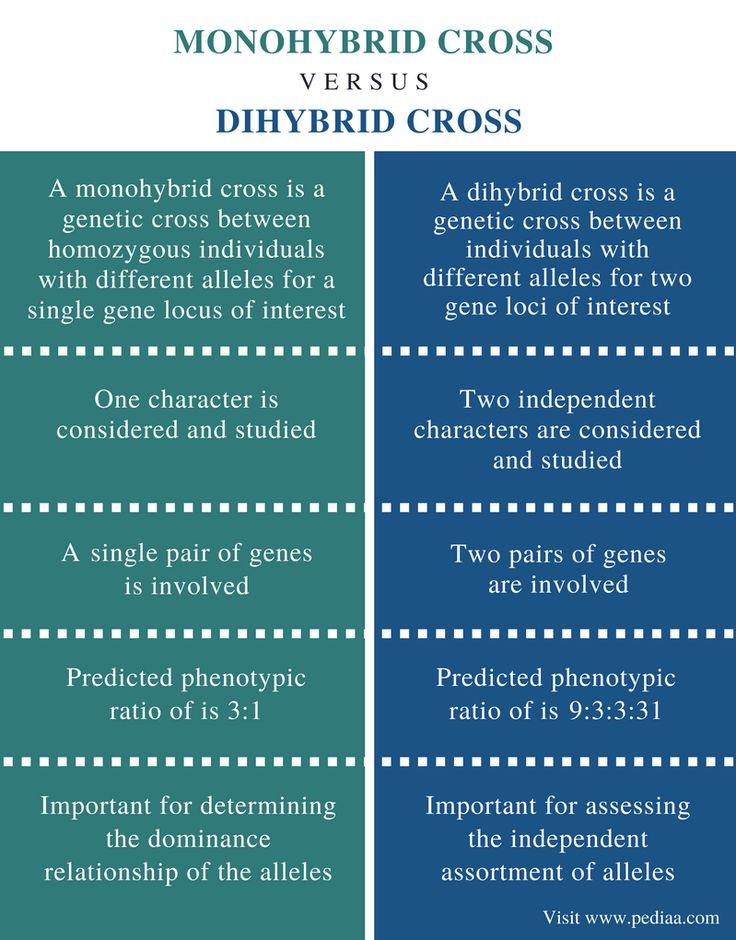
    • Demonstrated through monohybrid and dihybrid crosses.
    • Ratios: 3:1 in monohybrid F2, 9:3:3:1 in dihybrid F2.

    ๐Ÿง  Examiner Tip: Always state genotype and phenotype ratios when drawing Punnett squaresโ€”many IB marks are awarded here.

    • Monohybrid crosses show inheritance of one trait (e.g., AA ร— aa โ†’ 100% heterozygous F1).
    • F2 offspring typically show 3:1 phenotype ratios.
    • Dihybrid crosses involve two traits simultaneously.
    • Crossing heterozygotes (AaBb ร— AaBb) produces the 9:3:3:1 ratio.
    • Linked genes deviate from Mendelian ratios.

    ๐Ÿงฌ IA Tips & Guidance: Possible IA โ€“ modelling Mendelian ratios using dice or simulations, or using plants like fast-growing peas for cross experiments.

    • Predicting carrier status in recessive conditions.
    • Probability calculations in inheritance problems.
    • Importance of large sample sizes for statistical accuracy.
    • Pedigrees trace inheritance across generations.
    • Mendelโ€™s work explains many but not all inheritance patterns.

    ๐ŸŒ EE Focus: An EE could explore Mendelian ratios in non-human organisms (e.g., corn kernels) or investigate how linked genes affect expected outcomes.

    • Used to predict inheritance of single-gene disorders (e.g., cystic fibrosis).
    • Forms the basis of animal and plant breeding programs.
    • Important in understanding recessive vs dominant traits in humans.
    • Provides framework for studying genetic variation.
    • Still taught as foundation despite complexity of real inheritance.

    โค๏ธ CAS Link: Students could run classroom activities demonstrating Punnett squares and inheritance in a simple interactive game, teaching peers or younger students.

    ๐ŸŒ Real-World Connection: Mendelian genetics explains inheritance of many traits and diseases in humans, animals, and plants. It underpins selective breeding in agriculture, genetic counselling in medicine, and carrier screening for inherited disorders.

    • Mendelian ratios hold true for many simple traits.
    • Complex traits require non-Mendelian explanations.
    • Principles connect to molecular genetics and meiosis.
    • Provides starting point for probability-based predictions.
    • Remains essential for understanding genetic counselling.

    ๐Ÿ” TOK Perspective: Mendelโ€™s findings were ignored until rediscovery decades later. TOK reflection: How does social context affect whether scientific knowledge is accepted or overlooked?

    ๐Ÿ“ Paper 2: Expect Punnett square problems, ratio calculations, and explanations of Mendelโ€™s laws. Data questions may involve interpreting results that deviate from expected ratios.

  • TermDefinition
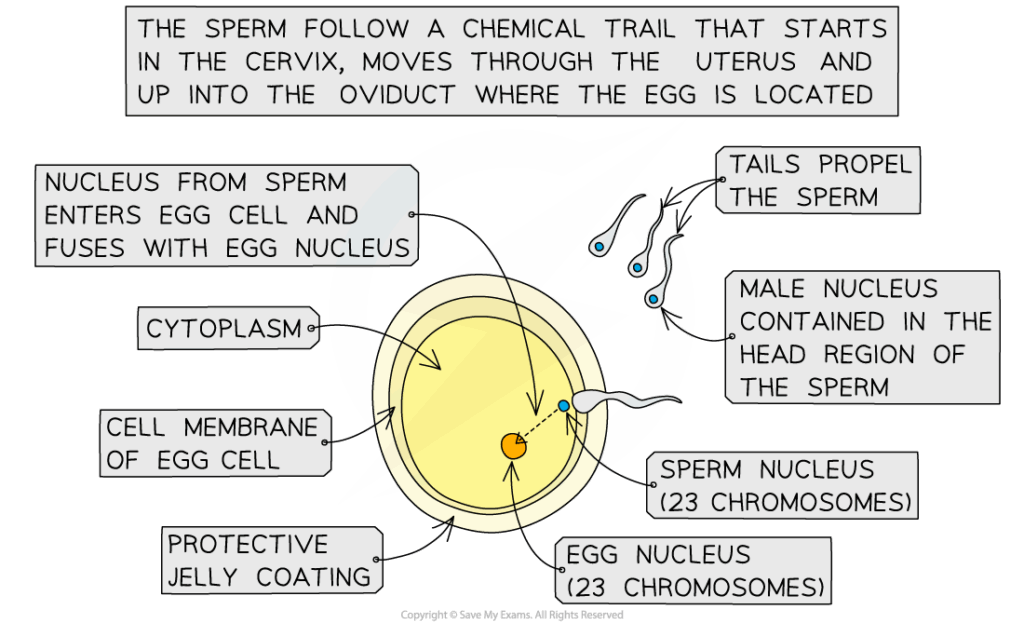
    FertilisationFusion of sperm and egg nuclei to form a diploid zygote.
    Acrosome reactionRelease of enzymes from sperm to penetrate egg membranes.
    ImplantationProcess where the blastocyst embeds into the uterine wall.
    PlacentaOrgan linking mother and fetus for nutrient and gas exchange.
    OxytocinHormone stimulating uterine contractions during labour.

    Human reproduction culminates in fertilisation, pregnancy, and birth. Fertilisation initiates the formation of a zygote, which develops through embryonic and fetal stages, supported by the placenta. Hormonal regulation ensures successful implantation, gestation, and labour. This sequence demonstrates the complexity of reproductive biology

    • Sperm undergo capacitation in the female reproductive tract, increasing motility.
    • Acrosome reaction releases enzymes to digest eggโ€™s zona pellucida.
    • Fusion of sperm and egg membranes allows nuclear fusion.
    • Cortical reaction prevents polyspermy by hardening egg membranes.
    • Zygote forms and begins cleavage divisions.

    ๐Ÿง  Examiner Tip: Always mention the cortical reaction as the mechanism preventing polyspermy in IB answers.

    • Zygote develops into a blastocyst and implants in uterine lining.
    • Placenta forms, enabling maternalโ€“fetal exchange of gases, nutrients, and waste.
    • Placental hormones (hCG, progesterone, estrogen) maintain pregnancy.
    • Fetus undergoes organogenesis, growth, and differentiation.
    • Amniotic sac protects fetus with cushioning fluid.

    ๐Ÿงฌ IA Tips & Guidance: An IA could model diffusion across artificial membranes to represent maternalโ€“fetal exchange, linking experiments to pregnancy physiology.

    • hCG maintains corpus luteum in early pregnancy, sustaining progesterone secretion.
    • Progesterone maintains endometrium and suppresses uterine contractions.
    • Estrogen supports uterine blood flow and fetal development.
    • Hormonal shifts prepare body for labour and lactation.
    • Negative feedback loops coordinate endocrine changes.

    ๐ŸŒ EE Focus: An EE could explore effects of maternal nutrition, stress, or hormones on pregnancy outcomes, linking physiology with health science.

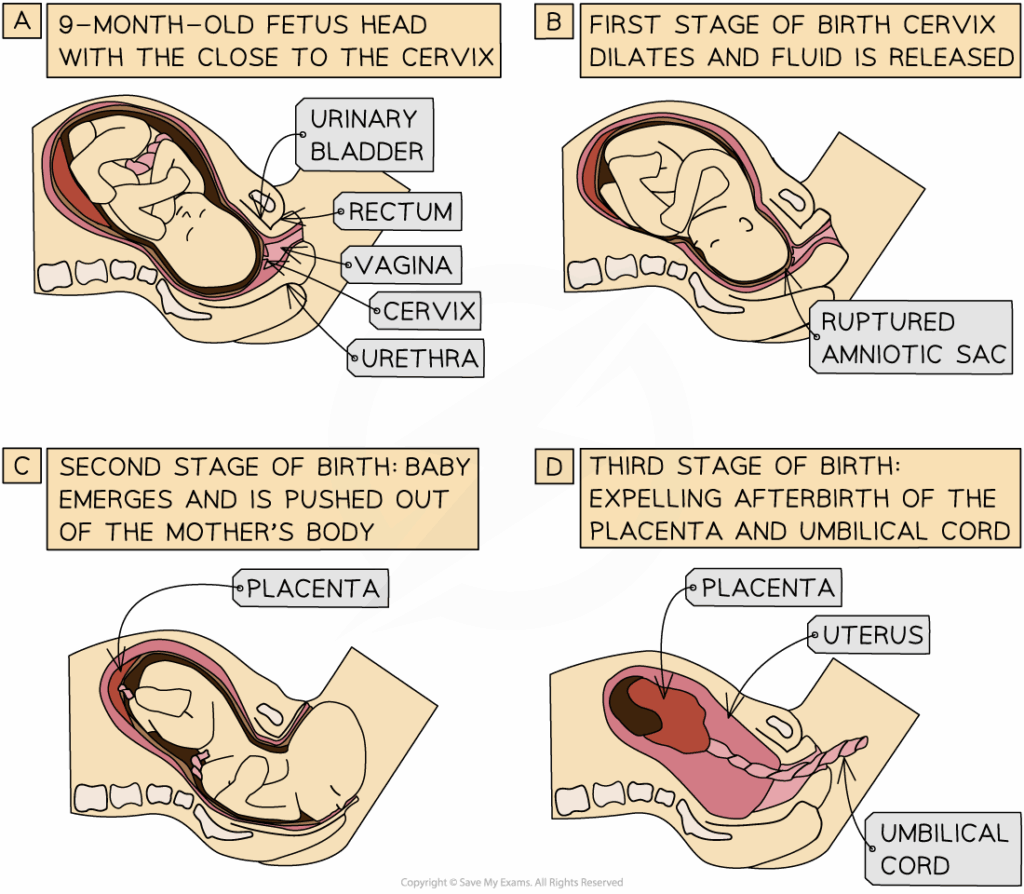
    • Labour begins when oxytocin and prostaglandins trigger uterine contractions.
    • Positive feedback amplifies contractions until delivery.
    • Cervix dilates; fetus is delivered, followed by placenta.
    • After birth, prolactin initiates milk production; oxytocin triggers milk letdown.
    • Breastfeeding provides nutrition and immune protection to the infant.

    โค๏ธ CAS Link: Students could volunteer in maternal health awareness programs, linking scientific understanding of pregnancy and birth to community well-being.

    ๐ŸŒ Real-World Connection: Fertility treatments, prenatal care, and maternal health initiatives rely on understanding fertilisation and pregnancy. Knowledge of hormones underpins IVF, contraception, and obstetric medicine. Public health efforts to reduce maternal and infant mortality draw directly from reproductive biology.

    • Fertilisation ensures genetic diversity and species continuity.
    • Pregnancy demonstrates complex interactions between maternal and fetal systems.
    • Hormonal regulation ensures successful reproduction.
    • Birth is a coordinated physiological process essential for survival.
    • Lactation extends maternalโ€“infant connection beyond pregnancy.

    ๐Ÿ” TOK Perspective: Birth is both a biological and cultural event. TOK reflection: How do scientific explanations of reproduction coexist with cultural and ethical perspectives on pregnancy and childbirth?

    ๐Ÿ“ Paper 2: Expect questions on fertilisation steps, hormonal roles in pregnancy, and positive feedback during birth. Data interpretation may involve hormone level graphs or case studies of pregnancy complications.