Author: Admin

  • 4.4 WATER POLLUTION

    TermDefinition
    BenthicRefers to organisms or habitats located on or near the bottom of a water body, such as a lake, river, or ocean.
    Ballast WaterWater carried in ships’ tanks to improve stability, often containing invasive species that can be released into new ecosystems.
    OutcompetingWhen one species displaces another by being more efficient in resource use, often leading to a decline in the less competitive species.
    HypoxiaA condition in water where oxygen levels are critically low, often due to excessive decomposition of organic matter.
    Algal BloomRapid increase in algae population in aquatic systems, usually caused by nutrient enrichment (eutrophication).
    BiofiltersSystems using natural materials or organisms to remove pollutants from water through biological processes.
    Cover CropsPlants grown to cover the soil between main crops, reducing runoff, preventing erosion, and improving water retention.
    BioremediationThe use of microorganisms or plants to clean up polluted water or soils by breaking down contaminants.
    • 🧠 Exam Tips:

      For terms like hypoxia and algal bloom, always mention nutrients and oxygen levels.

      Use cause-effect phrasing for process terms (e.g., “nutrient input → algal bloom → hypoxia”).
    • Water pollution has multiple sources and has major impacts on marine and freshwater systems
    • Types of aquatic pollutants include:
      • Organic material
      • Inorganic nutrients (nitrates and phosphates)
      • Industrial effluent
      • Urban run-off
      • Solid waste disposal
      • Toxic metals
      • Synthetic compounds
      • Suspended solids
      • Hot water
      • Oil
      • Radioactive pollution
      • Pathogens
      • Light
      • Noise
      • Invasive species

    Water Pollution Effects

    PollutantDescriptionEffect
    Organic materialExcessive organic matter from untreated human sewage, animal waste, or decaying plant materialLeads to oxygen depletion, harmful algal blooms and eutrophication in water bodies
    Inorganic nutrientsExcess nitrates and phosphates from agricultural run-off, sewage and fertilisersCauses nutrient enrichment, leading to algal overgrowth and water quality degradation
    Industrial effluentWastewater discharged by industrial facilities after being used in productionprocesses, containing a variety of pollutants e.g. heavy metals, toxic chemicals, organic matter and pathogensCan be toxic to aquatic life, disrupt ecosystems, and contaminate drinking water sources
    Urban run-offRainwater or melted snow that flows over impervious surfaces, such as roads, pavement and rooftops, picking up pollutants along the way e.g. oil, grease, pesticides, fertilisers, pet waste and litterDegrades water quality, harming aquatic life, promoting algae blooms, and contaminating drinking water sources
    Solid waste disposalRain falling on landfills leaches contaminants into soil and groundwater, whilst litter can end up in waterways, entangling wildlife and releasing harmful chemicals into the waterContaminates groundwater sources and harms aquatic life
    Heavy metalsHeavy metals such as mercury, lead and arsenic from industrial activities, mining, or improper waste disposalMetals accumulate in aquatic organisms, leading to toxic effects and posing risks to human health
    Synthetic compoundsHuman-made chemicals, including pesticides, herbicides, pharmaceuticals and industrial pollutantsEnter water bodies through run-off, discharges, or improper disposal, potentially harming aquatic life and human health
    Suspended solidsSolid particles in water, typically sediment, silt, or fine particles from erosion, construction, or dredging activitiesHigh concentrations can impair water clarity, clog fish gills, smother benthichabitats and impact aquatic organisms such as invertebrates and their larvae
    Hot waterRelease of heated water into aquatic systems, often associated with industrial processes or power generationDisrupts aquatic ecosystems, reduces oxygen levels and negatively impacts fish and other organisms (e.g. disrupting migration patterns or natural breeding cycles)
    OilOil spills, leaks, or discharges from shipping, oil exploration, or industrial activitiesOil coats the water surface, affecting marine and freshwater ecosystems, harming aquatic life such as seabirds and leading to long-term environmental damage
    Radioactive pollutionRelease of radioactive substances, often associated with nuclear accidents, mining, or waste disposalSevere ecological and human health impacts, with prolonged exposurepotentially leading to genetic mutations and cancer
    PathogensPresence of disease-causing microorganisms, including bacteria, viruses and parasites, often originating from sewageor animal wasteContaminate water sources, leading to waterborne diseases (e.g. cholera) and posing risks to human and animal health
    LightExcessive artificial lighting, particularly in coastal areasDisrupts natural light cycles, affecting nocturnal marine species and disrupting reproduction, navigation and feeding patterns of marine organisms
    NoiseNoise from human activities such as shipping, sonar, construction, or offshore energy productionDisrupts communication, feeding and migration patterns of marine species (e.g. whales), leading to ecological disturbances
    Invasive speciesIntroduction of non-native species into aquatic ecosystems, often through ballast water or occasionally intentional release (e.g. for biological control or recreational fishing purposes)Outcompete native species, alter habitat structure, disrupt food webs and cause severe ecological imbalances (e.g. the invasion of lionfish into U.S. Atlantic coastal waters)
    • Plastic pollution refers to the accumulation of plastic products in the environment, negatively affecting wildlife, habitat and humans
      • Plastic debris is a significant issue in marine environments, where it accumulates and causes various problems

    Harm from oceanic plastic pollution

    Wildlife impacts

    • Ingestion:
      • Many marine animals mistake plastic debris for food
      • This can lead to starvationmalnutrition and death
        • For example, sea turtles often mistake plastic bags for jellyfish, leading to ingestion, which can eventually be fatal
        • Birds, such as albatrosses, have been found with stomachs full of plastic, leading to starvation
    • Entanglement:
      • Animals become entangled in plastic waste like fishing nets, six-pack rings for drinks cans and plastic bags, causing injury or death
        • For example, seals often get caught in discarded fishing gear, leading to severe injuries or drowning
        • Whales are often found with fishing nets wrapped around their bodies, restricting movement and causing distress
    • Invasive species:
      • Plastics can transport invasive species to new areas, disrupting local ecosystems
        • Barnacles and other small crustaceans can hitch rides on floating plastic debris, spreading to new regions and potentially outcompeting local species
    • Chemical leaching:
      • Plastics can release toxic additives into the water, such as bisphenol A (BPA)
        • BPA, used in manufacturing plastics, can leach into water and has been shown to interfere with the reproductive systems of some aquatic species

    Human and economic impacts

    • Water quality:
      • Plastic pollution can degrade water quality, affecting human populations that rely on these water sources
    • Tourism industry:
      • Polluted beaches and coastal areas can deter tourists, affecting local businesses and economies
        • For example, beaches littered with plastic waste can lead to a decline in tourism, impacting local hotels, restaurants and other businesses
    • Recreational activities:
      • Plastic pollution can interfere with recreational activities such as swimming, diving and boating

    Aggregation in oceanic gyres

    • Plastics are carried by rivers and streams into the ocean
    • Ocean currents transport these plastics, which then become trapped in the rotating currents of gyres
      • Gyres are large systems of circular ocean currents
      • They are formed by global wind patterns and forces created by the Earth’s rotation
    • This leads to plastic accumulating in these gyres over time, forming large patches of debris
      • For example, the Great Pacific Garbage Patch is a well-known gyre, containing an estimated 1.8 trillion pieces of plastic

    Microplastics and the food chain

    • Microplastics are small plastic particles less than 5mm in diameter
    • They come from larger plastic debris breaking down or from products like cosmetics and clothing
    • Food chain entry:
      • Microplastics are ingested by small marine organisms
      • These organisms are then eaten by larger predators in higher trophic levels
      • This leads to bioaccumulation and biomagnification
        • This is where concentrations of microplastics and their associated toxins increase up the food chain
      • This can eventually lead to microplastics in human food sources
        • For example, studies have found microplastics in fish and shellfish sold for human consumption, indicating a direct pathway to humans
    • Transport of toxins
      • Plastics can absorb harmful chemicals from the environment
      • When ingested by marine life, these toxins can enter the food chain, posing health risks to animalsand humans
        • For example, chemicals like polychlorinated biphenyls (PCBs) and pesticides found on microplastics have been linked to cancer, reproductive issues and disruption of hormonal systems in animals and humans

    Management and solutions

    • Management is needed to remove plastics from the supply chain and to clear up existing pollution
      • Some management strategies include:
    1. Reduction strategies:
      • Implementing policies to reduce plastic production and usage
      • Promoting alternatives to plastic, such as biodegradable materials
        • For example, the UK has introduced a ban(opens in a new tab) on single-use plastic straws, drinks stirrers and cutlery
    2. Cleanup efforts:
      • Organising beach cleanups and developing technologies for ocean cleanups to remove existing plastic pollution
        • For example, the Ocean Cleanup(opens in a new tab) project aims to remove large quantities of plastic from the Great Pacific Garbage Patch and other water bodies using advanced technology
    3. Recycling and waste management:
      • Improving recycling rates and waste management systems to prevent plastic from entering the ocean
      • Encouraging the public to recycle and dispose of waste responsibly

    Monitoring & assessing water quality

    • Water quality is the measurement of chemical, physical and biological characteristics of water
      • Chemical characteristics include: levels of dissolved substances like minerals, pollutants and nutrients
      • Physical characteristics include water clarity, temperature and turbidity (cloudiness)
      • Biological characteristics include the presence of microorganisms (e.g. bacteria) and invasive species
    • Water quality is highly variable and is often measured using a water quality index (WQI)
      • Scientists use various tests to measure different water quality parameters
      • A water quality index is then calculated
      • This combines multiple measurements into a single value or score
      • This provides an assessment of the overall water quality of a particular water body
      • This index helps in easily communicating the quality of the water body to the public and policymakers
        • E.g. indicating whether water quality is good, acceptable, or poor for various uses such as drinking, recreation and aquatic organisms
      • A high WQI indicates good water quality

    Water quality parameters

    • Some of the different water quality parameters that can be used are:
    1. Dissolved oxygen (DO)
      • Measures the amount of oxygen dissolved in water
      • Sufficient oxygen levels are important for the survival of aquatic organisms
      • Low dissolved oxygen can lead to hypoxia
        • This can suffocate or kill aquatic life
    2. pH
      • Measures the acidity or alkalinity of water
      • pH impacts the survival, growth and reproduction of aquatic organisms
      • Unusual pH levels can indicate pollution, acidification, or other environmental changes
    3. Temperature
      • Measures the degree of heat or coldness of water
      • Temperature affects the metabolic rates, behaviour and distribution of aquatic organisms
      • Abnormal temperature fluctuations can stress or kill aquatic life
    4. Nitrates and phosphates
      • Measuring nitrates and phosphates assesses nutrient pollution in water
      • High nutrient levels can lead to eutrophication
      • Monitoring nutrient concentrations helps manage nutrient inputs and prevent water quality degradation
    5. Metals
      • Testing for metals, such as mercury, lead, cadmium, or arsenic assesses contamination levels
      • Metals can accumulate in aquatic organisms
        • This poses risks to their health and the health of organisms in higher trophic levels
      • Monitoring metal concentrations helps identify pollution sources and evaluate potential ecological impacts
    6. Total suspended solids (TSS)
      • TSS is the concentration of solid particles suspended in water
      • High levels of TSS can decrease water quality by blocking sunlight
        • This reduces photosynthesis in aquatic plants and disrupts aquatic food chains
      • Suspended solids can also smother the gills or breathing apparatus of aquatic invertebrates and fish
      • High TSS can be a sign of erosion, wastewater discharge, or runoff from urban and agricultural areas, leading to habitat degradation
    7. Turbidity
      • Turbidity measures the clarity or cloudiness of water
        • This is affected by suspended particles
      • High turbidity can reduce light penetration
        • This reduces photosynthesis in aquatic plants and visibility for predators and prey
      • High turbidity can indicate soil erosion or urban, agricultural or industrial run-off

    ❤️ CAS Tip: Participate in a water quality testing project in local rivers or lakes.

    Measuring key abiotic factors in aquatic systems

    Abiotic factorHow abiotic factor is measured
    Dissolved oxygen (DO)Measured using an oxygen meter equipped with a probe
    pHpH levels are determined using a pH meter equipped with a probe
    TemperatureWater temperature is assessed using a digital thermometer or a temperature probe
    Nitrate and phosphate concentrationsMeasured using  test kits, specific to each nutrientThese kits use colorimetric tests where the water sample reacts with chemicals, producing a colour change corresponding to the concentration level of the nutrient
    Total suspended solids (TSS)Measured by filtering a known volume of water through a pre-weighed filter paper, then drying and weighing the paper againThe difference in weight represents the mass of TSS collectedThis can then be converted to a concentration
    TurbidityMeasured using a Secchi disc—a black and white disc lowered into the waterThe depth at which the disc disappears from sight is recordedThis indicates light penetration and turbidity in the water column
    • These parameters provide valuable information about the health and condition of aquatic ecosystems
    • It is crucial to compare readings from various locations, such as upstream and downstream of a sewage outlet or factory, to assess any potential impacts on the ecosystem
    • Monitoring and analysing these parameters at regular intervals helps scientists, environmental agencies and policymakers to:
      • Understand the overall water quality
      • Identify potential issues
      • Implement appropriate management strategies to protect and restore aquatic ecosystems

    Biochemical oxygen demand

    • Biochemical oxygen demand (BOD) is a measure of the amount of dissolved oxygen required to break down the organic material in a given volume of water through aerobic biological activity
    • Aerobic organisms rely on oxygen for respiration
    • When there is a higher abundance of organisms or an increased rate of respiration, more oxygen is consumed
    • This means that the biochemical oxygen demand (BOD) is influenced by:
      • The quantity of aerobic organisms present in the water
      • The rate at which these organisms respire
    • BOD can be used as an indirect measure to evaluate:
      • The amount of organic matter within a sample
      • The pollution levels in water
        • The introduction of organic pollutants, such as sewage, leads to an increase in the population of organisms that feed on and break down the pollutants
        • This, in turn, results in increased BOD values
        • Certain species, such as bloodworms and Tubifex worms, show tolerance to organic pollution and the associated low oxygen levels
        • On the other hand, mayfly nymphs and stonefly larvae are typically only found in clean-water environments

    Example of how BOD is used to indirectly measure the amount of organic matter within a sample

    • Higher BOD values indicate a larger amount of organic matter present in the water sample
      • This is because more oxygen is needed for its decomposition
    • By measuring the decrease in dissolved oxygen levels over a specific incubation period, BOD provides an estimate of the organic load or pollution level in the water
    • BOD values are typically expressed in milligrams of oxygen consumed per litre of water (mg/L) or as a percentage of the initial dissolved oxygen level
    • The BOD test involves:
      • Collecting a water sample in a closed container
      • Measuring the initial dissolved oxygen concentration
      • Re-measuring the dissolved oxygen concentration after a specific incubation period (usually 5 days) at a constant temperature (usually 20℃)
    • For example:
      • A water sample has an initial dissolved oxygen concentration of 8 mg/L
      • After 5 days, the dissolved oxygen concentration decreases to 2 mg/L
      • The BOD value would be calculated as 8 mg/L – 2 mg/L = 6 mg/L
        • As the dissolved oxygen levels have decreased substantially, this indicates that the sample has a relatively high organic load
    • Eutrophication occurs when water bodies like lakes, estuaries and coastal areas receive large amounts of mineral nutrients, mainly nitrates and phosphates
      • This often results in the excessive growth of phytoplankton, a type of microscopic algae, as well as aquatic plants
    • Main nutrients involved:
      • Nitrates: often from agricultural run-off
      • Phosphates: commonly found in detergents and sewage that is discharged into waterways without proper treatment

    The process of eutrophication

    1. Nutrient enrichment:
      • Excess nitrates and phosphates enter the water
      • This encourages rapid growth of phytoplanktonalgae and aquatic plants
    2. Excessive aquatic plant growth:
      • Nutrient availability causes fast growth of aquatic plants (macrophytes) e.g. duckweed and water hyacinth
      • Dense plant growth nearer the surface can block sunlight reaching underwater plants
    3. Algal bloom formation:
      • Algae also use available nutrients to grow quickly
      • For example, when the mineral ions from excess fertilisers leach from farmland into waterways, they cause rapid growth of algae at the surface of the water
      • This is known as an algal bloom
      • Eventually, algae can completely cover the water surface
    4. Blocking of sunlight:
      • The algal bloom can completely block out sunlight and stop it from penetrating below the water surface
      • Aquatic plants below the water surface start to die as they can no longer photosynthesise
        • As this photosynthesis normally helps to oxygenate the water, dissolved oxygen levels begin to decrease
      • The algae also start to die when competition for nutrients becomes too intense Phytoplankton and excess aquatic plants die off
    5. Decay of phytoplankton and plants leading to oxygen depletion:
      • Bacteria decompose the dead plants and algae
      • As the bacteria respire aerobically, they use up the dissolved oxygen in the water
      • The amount of dissolved oxygen in the water rapidly decreases, so aquatic organisms such as fish and insects may be unable to survive
      • Dead zones in both oceans and freshwater can occur when there is not enough oxygen to support aquatic life
      • Hypoxia = low oxygen levels in water
      • Anoxia = severe or complete depletion of oxygen in water
    6. Impact on aquatic life:
      • Fish and other aquatic life die in large numbers due to lack of oxygen
      • This can eventually lead to a loss of species and imbalances in aquatic ecosystems


    Image source: savemyexams.com

    • Positive feedback amplifies changes, creating a reinforcing cycle in eutrophication:
    1. Increased nutrients:
      • Excess nitrates and phosphates from run-off or sewage
      • Promotes rapid growth of algae and aquatic plants
    2. Increased death:
      • Algae and plants die off in large numbers
      • Adds organic matter to the water
    3. Increased decomposition:
      • Bacteria decompose dead organisms, consuming oxygen
      • This decomposition releases more nutrients back into the water
    4. Cycle repeats:
      • Released nutrients promote further algal and plant growth
      • Each step reinforces the next, worsening eutrophication and its impacts on the aquatic ecosystem

    Impacts of eutrophication

    • Eutrophication can greatly affect various ecosystem services:
    • Fisheries:
      • Fish kills: sudden losses of fish due to low oxygen
      • Reduced fish stocks: long-term depletion of fish populations in certain areas
    • Recreation and aesthetics:
      • Unpleasant odours: decaying algae and plants release unpleasant smells
      • Water quality: poor water conditions make swimming and boating unpleasant
      • Visual pollution: algal blooms create green or murky water
      • Foam and slime: algal blooms and decaying algae can cause foam and slimy water surfaces
    • Health:
      • Toxins: some algal blooms produce harmful toxins
      • Drinking water: eutrophication can lead to contamination of drinking water sources
    • There are three types of strategies for managing the impacts of pollution (which relate to the stages of pollutant impact shown above):
      • Changing human activity
      • Regulating and reducing quantities of pollutants released at the point of emission
      • Cleaning up the pollutants and restoring the ecosystem after pollution has occurred
    Diagram showing the main strategies for managing the impacts of pollution


    Image source: savemyexams.com

    • Eutrophication and other types of water pollution can be addressed at three different levels of management:
      • The reduction of human activities that produce pollutants
      • The reduction of the release of pollution into the environment
      • The removal of pollutants from the environment and restoration of ecosystems

    1. Reduction of human activities producing pollutants

    • This level aims to prevent pollution at the source by changing human practices and products
    • Alternatives to fertilisers:
      • Organic fertilisers: use compost or manure instead of synthetic fertilisers
      • Slow-release fertilisers: release nutrients gradually, reducing the amount of nitrate and phosphate leaching into water bodies
    • Alternatives to detergents:
      • Phosphate-free detergents: use products without phosphates to minimise pollution
    • Sustainable farming practices:
      • Crop rotation: improve soil health and fertility by alternating crops with different nutrient needs, reducing the need for chemical fertilisers
      • Buffer strips: plant vegetation along waterways to absorb excess nutrients

    2. Reduction of pollution release into the environment

    • This level focuses on treating pollution before it reaches natural waters
    • Wastewater treatment:
      • Nutrient removal: use treatment plants that remove nitrates and phosphates from sewage
      • Advanced treatment methods: use methods like constructed wetlands and biofilters
    • Regulation and monitoring:
      • Enforce pollution controls: introduce and enforce regulations on nutrient discharge from industries and farms
      • Monitoring programmes: regularly test water bodies for nutrient levels
    • Agricultural practices:
      • Controlled fertiliser application: apply fertilisers at optimal times to minimise run-off (e.g. apply during the growing season and avoid periods of heavy rain)
      • Cover crops: plant cover crops to absorb excess nutrients and prevent soil erosion

    3. Removal of pollutants and restoration of ecosystems

    • This level involves cleaning up polluted environments and restoring natural ecosystems
    • Pollutant removal:
      • Dredging: remove nutrient-rich mud and sediments from eutrophic lakes
      • Algae removal: physically remove excess algae from water bodies
    • Ecosystem restoration:
      • Reintroduction of species: reintroduce native plants and fish that may have become locally extinct, to restore ecosystem balance
      • Habitat restoration: create or restore wetlands to filter nutrients naturally

    Application to other types of pollution

    These strategies can also be applied to manage other types of pollution:

    • Plastic pollution:
      • Prevention: reduce plastic use and improve recycling
      • Treatment: implement systems to capture and remove plastics from waterways
      • Cleanup: remove plastic waste from beaches and oceans
    • Chemical pollution:
      • Prevention: reduce the use of harmful chemicals in agriculture and industry
      • Treatment: use filtration and treatment systems to remove chemicals from wastewater
      • Cleanup: clean contaminated soils and sediments e.g. using bioremediation

    🌐 EE Tip: Explore water pollution trends in a nearby watershed using chemical, biological, or policy-based approaches.
  • 4.3 AQUATIC FOOD PRODUCTION SYSTEMS

    TermDefinition
    AutotrophicDescribes organisms that produce their own food from inorganic substances using energy from light or chemicals.
    ProkaryoticOrganisms, like bacteria, that lack a membrane-bound nucleus and organelles.
    Sediment PollutionWater pollution caused by excessive soil or mineral particles entering water bodies, reducing water quality and harming aquatic life.
    Ghost NetsAbandoned or lost fishing nets that continue to trap marine organisms, causing ecological harm.
    MoratoriumA temporary ban or suspension of an activity, such as commercial fishing, to allow resource recovery.
    Fishing QuotasLegally set limits on the amount or number of fish species that can be caught to promote sustainable fisheries.
    BycatchNon-target species unintentionally caught during commercial fishing operations.
    LeachThe process by which soluble substances are washed out of soil or waste into water bodies, potentially causing contamination.
    EutrophicationNutrient enrichment of water bodies leading to excessive algal growth, oxygen depletion, and ecosystem degradation.
    BiocidesChemical substances that kill or control harmful organisms, often used in agriculture or aquaculture.
    BiosecurityMeasures taken to protect ecosystems from invasive species, diseases, or biological threats.
    BiorightsEthical principle that all forms of life have the right to exist and be protected, regardless of their utility to humans.
    • 🧠 Exam Tips:

      When defining pollution or environmental damage terms, include impact on ecosystems or biodiversity for a complete answer.

      Terms like bycatch, quotas, moratorium often appear in fisheries case study questions—link to sustainability when possible.
    • Aquatic food webs show how energy and nutrients move through freshwater and marine ecosystems

    Phytoplankton

    • Phytoplankton are microscopic organisms found in marine and fresh water bodies that can perform photosynthesis
      • Phytoplankton are not plants
      • They include a variety of autotrophic microorganisms, such as:
        • Algae (e.g. diatoms)
        • Cyanobacteria (prokaryotic organisms that are also known as blue-green algae) 
    • Role in food webs:
      • They form the base of most aquatic food webs
      • They capture solar energy and convert it into biomass through photosynthesis
      • They are consumed by primary consumers (zooplankton and small fish)
      • They contribute to oxygen production and nutrient cycling

    Macrophytes

    • Macrophytes are aquatic plants that are visible to the naked eye
    • They can be:
      • Emergent: plants that grow above the water surface (e.g. cattails or bulrushes)
      • Submerged: plants that grow completely underwater (e.g. seagrass)
      • Floating: plants that float on the water surface (e.g. water lilies or duckweed)
    • Role in food webs:
      • They provide habitat and food for various aquatic organisms
      • They capture solar energy and convert it into biomass through photosynthesis
      • They contribute to oxygen production and nutrient cycling

    Energy flow in aquatic food webs

    • Producers: phytoplankton and macrophytes capture energy from sunlight through photosynthesis
    • Primary consumers: zooplankton, small fish and some invertebrates and birds feed on primary producers
    • Secondary consumers: larger fish and birds consume primary consumers
    • Tertiary consumers: top predators like sharks and birds of prey eat secondary consumers
    • Decomposers: aquatic bacteria and fungi break down dead organisms, recycling nutrients back into the ecosystem
    • Humans consume a variety of organisms (flora and fauna) from both freshwater and marine environments
    • These organisms provide essential nutrients and form a significant part of many cultures’ diets
    • Consumption patterns vary locally and globally
      • This reflects availability, tradition and sustainability concerns

    Examples of aquatic food resources

    Local and Global Examples of Aquatic Flora and Fauna Consumed by Humans

    OrganismType of organismType of aquatic environmentHow widely consumedDescription
    WatercressFloraFreshwaterLocalLeafy green plantPopular in the UKGrown in shallow, flowing water beds fed by natural springs or streamsUsed in salads and soups
    SpirulinaFloraFreshwaterGlobalBlue-green algae (cyanobacteria)Consumed worldwideGrown in freshwater ponds and lakesHarvested by filtering the water and then drying the algaeUsed as a dietary supplement
    DulseFloraMarineLocalType of red seaweedTraditionally eaten in IrelandHand-harvested from rocks during low tide along the coastlineDried in the sun or indoorsConsumed dried or cooked
    NoriFloraMarineGlobalType of red seaweedPopular globally, especially in JapanFarmed in coastal waters on nets suspended from bamboo poles or floating raftsHarvested, then dried and processed into sheetsUsed in sushi and snacks
    TroutFaunaFreshwaterLocalFreshwater fishCommonly consumed in the UKRaised in freshwater ponds or tanks with controlled water qualityHarvested by netting when they reach market size
    TilapiaFaunaFreshwaterGlobalFreshwater fishConsumed worldwideRaised in freshwater ponds or recirculating aquaculture systemsHarvested by draining the ponds or using nets
    Orkney ScallopsFaunaMarineLocalType of shellfishA delicacy in Scotland, UKCollected by divers from the seabed around the Orkney Islands (ensures minimal environmental impact)
    ShrimpFaunaMarineGlobalSmall crustaceanFound in oceans worldwide and consumed globallyRaised in coastal ponds or tanksHarvested by draining the ponds and collecting the shrimp with nets

    Demand for aquatic food resources

    • The demand for aquatic food resources has significantly increased in over the last 50–100 years
      • This is due to the combined effects of a growing human population and dietary changes
    • As populations expand and economies develop, there is a higher demand for seafood products to meet nutritional needs and culinary preferences
    • The main factors behind the increase in demand for aquatic food resources are:
    1. Growing human population
      • The global population has rapidly increased, resulting in a larger consumer base for aquatic food resources
    2. Changing dietary patterns
      • As countries undergo economic growth, there is often a shift in dietary patterns towards increased consumption of protein-rich foods, including seafood
    3. Nutritional benefits of seafood
      • Seafood is recognised as a valuable source of essential nutrients, such as omega-3 fatty acids, vitamins and minerals
      • These all contribute to human health and well-being
    4. Urbanisation and the rising middle class
      • Urbanisation and the emergence of a middle class in many regions have led to changes in dietary preferences
      • This has increased demand for diverse and higher-value food options, including seafood
    5. Global trade and supply chains
      • Advances in transportation and the expansion of global trade networks have made it easier to import and export seafood products
      • This has increased their availability to communities
    6. Aquaculture production
      • Aquaculture, the farming of aquatic organisms, has experienced significant growth to meet the rising demand for seafood

    Unsustainable harvesting practices

    • The rising global demand for seafood has led to the use of unsustainable harvesting practices
      • These methods often damage marine ecosystems and lead to overexploitation of fish stocks
    1. Bottom trawling:
      • This method involves dragging heavy nets along the seabed
      • Impacts:
        • Destroys habitats such as coral reefs
        • Results in significant bycatch (catching non-target species)
        • Disturbs sediment, causing sediment pollution and releasing other trapped pollutants
    2. Ghost fishing:
      • This occurs when abandoned or lost fishing gear continues to catch marine life
        • E.g. ghost nets
      • Impacts:
        • Continues to catch fish and other marine animals, leading to unnecessary deaths
        • Causes entanglement of marine organisms, including endangered species
        • Contributes to marine debris and pollution
    3. Use of poisons:
      • Some fishermen use poisons and toxic substances, such as cyanide, to stun or kill fish, making them easier to catch
      • Impacts:
        • Poisons kill or damage a wide range of marine life
        • Cyanide kills coral polyps and other organisms that form the coral reef structure, leading to reef degradation and overall loss of biodiversity
        • This method is highly unsustainable and illegal in many places
    4. Use of explosives:
      • Some fishermen use explosives, such as dynamite, to stun or kill fish, making them easier to catch
      • Impacts:
        • Explosives destroy marine habitats and kill indiscriminately (kill non-target species)
        • Causes extensive damage to coral reefs and other important marine habitats
        • This method is also highly unsustainable and illegal in many places

    Overexploitation

    • Developments in fishing equipment and increased use of unsustainable fishing methods have led to declining fish stocks and damage to habitats
      • Fish stocks in the oceans are rapidly decreasing in size
      • This is mainly due to overfishing
    • Overexploitation happens when fish are harvested at a rate faster than they can reproduce
      • This can eventually lead to the collapse of fisheries, where the fish population drops so low that it cannot recover

    Maximum sustainable yield

    • The annual yield for a natural resource (such as a forest) is the annual gain in biomass or energy,through growth
    • The maximum sustainable yield (MSY) is the maximum amount of a renewable natural resource that can be harvested annually without compromising the long-term productivity of the resource
    • It is the level of harvest that can be maintained indefinitely
    • The concept of maximum sustainable yield applies to various resources, such as crops, fish, timber, and game animals
      • For example, in fisheries, the concept of maximum sustainable yield is used to determine the maximum amount of fish that can be harvested sustainably from a given population
      • This is calculated based on the population size, growth rate and reproduction rate
      • If the fishing rate exceeds the maximum sustainable yield, the population may decline, and the long-term productivity of the fishery may be affected
    • In summary, the maximum sustainable yield is the highest possible annual catch that can be sustained over time without depleting the fish stock
    • Calculating the maximum sustainable yield is important as it helps in setting appropriate limits on fishing quotas to ensure sustainable fishing practices
    • Unsustainable exploitation of aquatic systems can be mitigated at a variety of levels (international, national, local and individual)
      • This can be achieved through policy, legislation and changes in consumer behaviour
        • For example, control of net size and the introduction of fishing quotas play important roles in the conservation of fish stocks
        • Strategies like these can keep fish stocks at a sustainable level

    International and national level actions

    • Increasing the size of gaps in fishing nets can help in two main ways:
      • Fewer unwanted species (that are often discarded) will be caught and killed
        • This is because they can escape through larger net gaps (as long as they are smaller than the species being caught)
        • The accidental capture and killing of larger, unwanted species is still a problem
      • Juvenile fish of the fish species being caught can escape through larger net gaps
        • This means they can reach breeding age and have offspring before they are caught and killed
        • This ensures the population of the fish species being caught can be replenished
    • Fishing quotas limit the number and size of particular fish species that can be caught in a given area
      • Many nations have introduced quotas to prevent overfishing of certain species
    • There are several ways to enforce governmental regulations:
      • Establishing fishing quotasAgreeing zones or areas of the ocean where fishing is banned (e.g. spawning grounds) and permitted (e.g. within a country’s territorial waters)Agreeing specific times of the year when fishing is not allowed to let fish populations recover (e.g. spawning season)Regulating mesh size of nets (to allow undersized/juvenile fish to escape)Limiting the size of the fishing fleet by issuing licences and permitsInspecting the catch as a fishing boat returns to portBanning certain practices, e.g. gillnets (static nets that catch anything that swims past),Promoting sustainable practices such as trolling (different to trawling) that reduce bycatch
    • Sustainable seafood choices:
      • Encouraging consumers to buy seafood that is certified as sustainable
        • For example, the Marine Stewardship Council (MSC) label indicates sustainably sourced seafood
    • Food labelling:
      • Providing clear information on the origin and sustainability of seafood products to help consumers make informed choices
        • For example, the UK’s “Blue Fish” label signifies fish caught using sustainable practices
    • Community initiatives:
      • Educating the public about the importance of sustainable fishing and responsible seafood consumption
      • Supporting local fishing communities that practice sustainable fishing
      • Participating in local conservation efforts
      • Involving local communities in managing and protecting their own fisheries
        • For example, in the Philippines, community-based coastal resource management has successfully increased fish stocks and biodiversity

    Marine protected areas

    • Marine protected areas (MPAs) are designated regions of seas and oceans where human activities are restricted or managed
      • This is to protect marine ecosystems and biodiversity
    • MPAs play a crucial role in supporting aquatic food chains and maintaining sustainable yields
      • They do this by providing safe areas for marine life

    Benefits of marine protected areas

    Biodiversity conservation

    • Habitat protection:
      • MPAs protect critical habitats like coral reefs, seagrass beds and mangroves
        • For example, the Great Barrier Reef Marine Park protects one of the most biodiverse ecosystems on the planet
    • Species protection:
      • MPAs protect endangered and vulnerable species by reducing human-induced pressures such as fishing and pollution
        • For example, the Galápagos Marine Reserve protects unique species found nowhere else in the world
        • It does this by imposing fishing restrictions and carefully managing tourism

    Support for aquatic food chains

    • Spawning and nursery grounds:
      • MPAs provide safe areas for fish and other marine organisms to reproduce and for juveniles to grow
    • Feeding grounds:
      • By protecting areas rich in food sources, MPAs ensure that marine species have access to enough food

    Spillover effect

    • Population growth beyond MPA boundaries:
      • Healthy and abundant populations within MPAs can migrate to nearby areas
      • This replenishes fish stocks and benefits fisheries outside the protected zones
    • Genetic diversity:
      • MPAs maintain genetic diversity by protecting breeding populations
      • This contributes to the resilience of marine species
        • For example, the Chagos Marine Reserve in the Indian Ocean supports genetically diverse populations of fish and coral

    Sustainable yields

    • Fisheries management:
      • MPAs can help maintain sustainable fishery yields by preventing overfishing and allowing fish populations to recover
      • Sustainable fish populations lead to more stable and long-term economic benefits for fishing communities

    What is aquaculture?

    • Aquaculture, also known as fish farming or aquafarming, refers to the cultivation of aquatic organisms in controlled environments such as ponds, tanks, or ocean enclosures
    • It involves the rearing, breeding, and harvesting of various species of fish, shellfish, algae and other aquatic organisms for commercial, recreational, or conservation purposes
    • Aquatic flora and fauna, both freshwater and marine, are harvested by humans through various methods to meet different needs and purposes
    • Aquatic organisms that are farmed include:
      • Fish
        • e.g. salmon, tilapia and catfish
      • Molluscs
        • e.g. oysters, mussels, scallops and clams
        • e.g. snails
        • e.g. octopus and squid
      • Crustaceans
        • e.g. shrimp, prawns, lobsters and crabs
      • Aquatic plants
        • E.g. seaweed and algae

    The growth of aquaculture


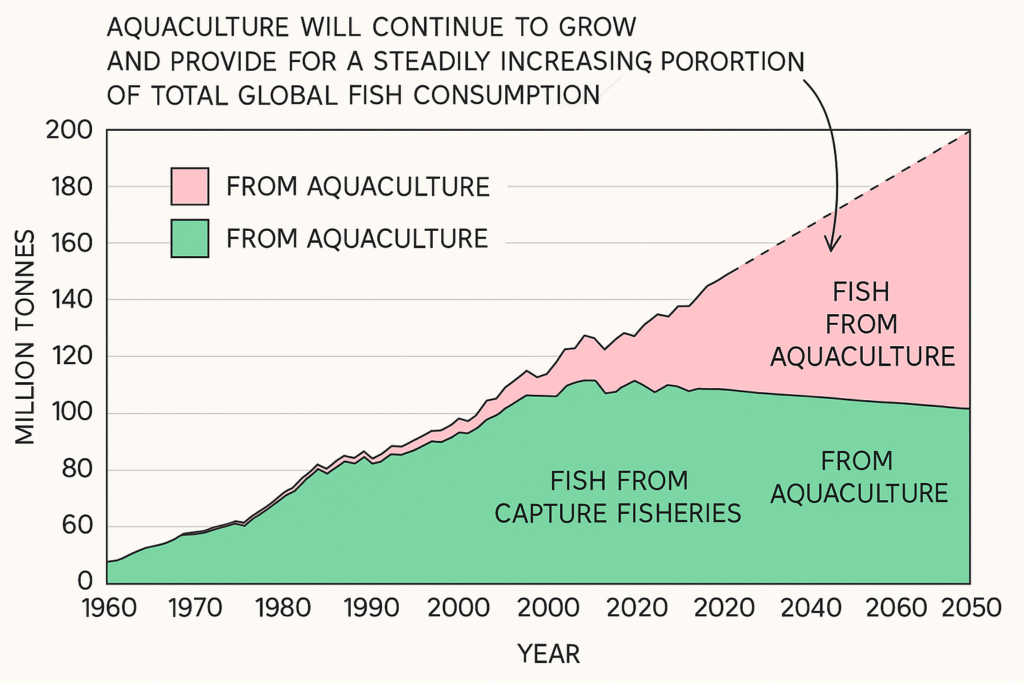
    • Aquaculture has experienced significant growth to meet the increasing global demand for seafood
      • This is driven by population growth, changing dietary preferences and rising incomes
    • Aquaculture has the potential to provide a reliable and sustainable source of seafood
      • This can help to meet the protein needs of a growing population
      • At the same time, minimise the impact on wild fish stocks
    • By cultivating aquatic organisms through aquaculture, the pressure on wild fish populations can be reduced
      • This allows them to recover and the ecological balance of these marine ecosystems to be restored

       1. Providing additional food resources:

    • Aquaculture contributes to global food security by providing an additional source of nutritious food resources
    • Cultivating fish and shellfish through aquaculture offers a consistent supply of protein-rich seafood
      • This can help address nutritional deficiencies and improve human health in many parts of the world
    • The controlled environments of aquaculture systems allow for efficient production and reduced waste

       2. Supporting economic development:

    • Aquaculture has emerged as a significant sector in the global economy
      • It generates employment opportunities, income and economic growth
    • It provides livelihoods for millions of people, particularly in coastal and rural communities, where fishing and aquaculture activities are integral to the local economy
    • Aquaculture encourages trade and investments, contributing to the overall development and prosperity of regions and whole countries

    Food for future generations

    • The growth of aquaculture is expected to continue in the coming years due to several factors:
      • Rising global demand for seafood: the growing population, urbanisation and changing dietary preferences drive the need for increased seafood production
      • Technological advancements: ongoing research and technological developments in aquaculture practices, breeding techniques, feed formulations and disease management are enhancing production efficiency and sustainability
      • Environmental considerations: aquaculture is evolving towards more environmentally friendly and sustainable practices, addressing concerns such as waste management and habitat impacts
      • Innovation and diversification: the development of new species for aquaculture, such as high-value fish and seaweed, opens up opportunities for market expansion
      • Policy support: governments and international organisations are promoting and investing in aquaculture development to address food security, reduce pressure on wild fish stocks and support economic growth

    Aquaculture issues

    • Issues caused by aquaculture include:
      • Habitat loss
      • Pollution (with feed, antifouling agents, antibiotics and other medicines added to fish pens)
      • Spread of diseases
      • Escaped species (sometimes involving genetically modified organisms)
      • Ethical Issues and biorights

    Issues in Aquaculture

    IssueDescription
    Habitat lossAquaculture facilities often require the conversion of natural habitats such as wetlands, mangroves, or coastal areas into fish farmsThese habitats are cleared or modified to create suitable spaces for aquaculture operationsThis habitat loss can have negative impacts on biodiversity, ecosystem functions and the livelihood of local communities
    PollutionExcess nutrients from uneaten feed and fish waste can leach into the surrounding water bodies, leading to eutrophication, algal blooms and oxygen depletionSome feed formulations may contain additives, such as growth enhancers or colourants, that can potentially negatively impact water qualityPowerful chemicals known as antifouling agents are used to prevent the growth of marine organisms (e.g. mussels and barnacles) on aquaculture infrastructureThese biocides can leach into the surrounding water, potentially causing harm to marine lifeTo prevent and treat diseases, aquaculture operations may use antibiotics and other medicines, which can enter the surrounding waters, posing risks to aquatic organisms and contributing to antibiotic resistance
    Spread of diseasesThe high density of fish in aquaculture facilities facilitates the spread of diseases among farmed fishThis leads to increased disease risks and the need for disease management strategiesIf proper biosecurity measures are not in place, pathogens can also spread from aquaculture facilities to wild fish populations, impacting their health and survival
    Escaped speciesEscape of farmed fish from aquaculture facilities can lead to genetic interactions with wild populationsThis impacts wild species through competition, interbreeding, or transmission of genetic diseasesSome aquaculture operations involve the use of genetically modified fishThis raises concerns about potential ecological impacts and ethical considerations if these fish breed with wild populations
    Ethical Issues and biorightsAquaculture raises ethical questions regarding the treatment and welfare of farmed animals, particularly in intensive farming systemsConcerns centre around the confinement and stress experienced by farmed species, the use of antibiotics and growth enhancers, and the overall quality of life for the animals
    • In addition, issues in aquaculture can often arise regarding international conservation legislation
      • Aquaculture must comply with international conservation legislation and regulations to ensure the sustainable use of resources and to protect biodiversity
      • Compliance with these regulations helps prevent the exploitation of threatened species, maintain ecological balance and ensure the long-term viability of aquaculture practices
    • Balancing environmental sustainability, animal welfare and legal obligations is crucial to maintaining an equitable and socially responsible aquaculture sector
    • Climate change refers to significant changes in global temperatures and weather patterns over time
      • Mostly driven by human activities such as burning fossil fuels, deforestation and industrial processes
      • Leads to global warming, which is an increase in Earth’s average surface temperature

    What is ocean acidification?

    • Ocean acidification is the ongoing decrease in the pH of Earth’s oceans
      • Caused by absorption of excess carbon dioxide (CO2) from the atmosphere
      • When CO2 dissolves in seawater, it forms carbonic acid, which lowers the pH

    Impacts on ecosystems

    Climate change effects

    • Temperature rise:
      • Warmer waters can alter habitat ranges for marine species
        • For example, many fish populations are migrating to cooler waters, impacting local fishing industries
    • Melting ice caps:
      • Polar ice is important for the survival of many species
        • For example, the loss of important ice habitats will affect polar bears and seals that need them for huntingavoiding predators and raising offspring
        • Walruses are increasingly forced to rest on land, leading to overcrowding and increased mortality
      • Leads to sea level rise, threatening coastal ecosystems
        • For example, rising sea levels are threatening the coastal mangrove forests in Bangladesh, which serve as crucial habitats for many species and protect the coastline from erosion
    • Hurricane damage:
      • Increased intensity and frequency of hurricanes is damaging coral reefs (e.g. in the Caribbean)
        • For example, hurricane Irma in 2017 caused widespread coral destruction, particularly affecting the coral reefs around the Florida Keys and the Virgin Islands

    Ocean acidification effects

    • Coral bleaching:
      • Warmer temperatures and acidification cause coral to expel the algae that live in their tissues
      • This causes the coral to turn white (known as bleaching)
      • This often leads to coral death if the stressful conditions persist
        • For example, the Great Barrier Reef is currently experiencing massive coral bleaching events
    • Shellfish vulnerability:
      • Acidic waters weaken calcium carbonate shells of marine organisms like oysters, clams, and sea urchins
      • This makes them more vulnerable to predation, disease and environmental stress,
      • This can lead to population declines and disruption of marine food webs
        • For example, oyster populations in the Pacific Northwest (USA) are in decline partly due to ocean acidification
        • Oyster farms here are struggling with reduced harvests due to shell degradation

  • 4.2 WATER ACCESS, USE AND SECURITY

    TermDefinition (Exam-Ready, 2 Marks)
    Reverse OsmosisA water purification method that uses pressure to force water through a semipermeable membrane, removing salts and impurities.
    Groundwater RechargeThe process where water from precipitation or surface sources infiltrates into the ground and refills aquifers.
    Drip IrrigationAn efficient irrigation method that delivers water directly to plant roots through a network of tubes, minimizing evaporation losses.
    Water SurplusA situation where water supply exceeds demand in a particular area or time period.
    Water DeficitA condition where water demand exceeds available supply, often leading to stress on ecosystems or agriculture.
    Water ScarcityLong-term imbalance between water demand and availability, often due to overuse or drought, affecting sustainability.
    GreywaterWastewater from domestic activities like washing and bathing, which can be reused for irrigation after treatment.
    AquaponicsA sustainable farming system that combines aquaculture (fish farming) and hydroponics, using fish waste to fertilize plants.
    HydroponicsThe method of growing plants in a nutrient-rich water solution without soil, often used in controlled environments.
    Conservation TillageA farming practice that reduces soil disturbance, helping to retain moisture, reduce erosion, and improve soil health.
    • 🧠 Exam Tips:

      Use sustainability language (e.g., conserve, efficient, reuse) for full marks on water management strategies.

      Pair scarcitysurplus, and deficit with examples or causes if asked for explanation or evaluation.
    • Water security is having access to sufficient amounts of safe drinking water
    • Water security is essential for sustainable societies
      • Without adequate water, societies cannot continue to exist
      • Human well-being and health, agriculture and industries quickly begin to deteriorate when there is a lack of water
    • Many different social, cultural, economic, political and geographical factors affect the availability of freshwater
      • These factors also affect equitable access to this freshwater (i.e. how fairly this water access is distributed between societies)

    Social factors

    • Population growth:
      • Larger populations increase water demand
        • For example, India’s rapidly growing population is straining its water resources
    • Population density:
      • Regions with higher population densities tend to experience greater pressure on water resources
      • Increased water demand for domestic, agricultural and industrial purposes can strain available supplies
    • Urbanisation:
      • Cities require very large amounts of water
    • Living standards:
      • Higher living standards often lead to higher water usage
        • For example, developed countries like the USA use more water per capita than developing countries

    Cultural factors

    • Water conservation:
      • Cultures that prioritise water conservation tend to manage their water supplies better
      • Some cultures may not prioritise water conservation, leading to wastage
        • For example, in parts of the USA, despite ongoing droughts, water usage remains high due to a lack of conservation efforts
    • Consumerism:
      • High levels of consumerism often lead to increased water consumption
        • For example, in Western countries, the high demand for consumer goods results in significant water usage for manufacturing and food production
    • Traditional agriculture:
      • Some traditional agricultural methods may use water inefficiently
    • Cultural attitudes towards water pollution:
      • Attitudes towards pollution can affect water quality
      • In some regions, cultural indifference towards pollution has led to severe contamination of water bodies

    Economic factors

    • Economic development:
      • Industrial activities require significant water resources
      • Wealthier nations often have greater financial resources to invest in water infrastructure and management, which can result in better access to fresh water
      • In contrast, poorer countries may lack the means to develop and maintain robust water systems
    • Investment in infrastructure:
      • The presence of well-developed water management systems, including reservoirs, dams, canals, and pipelines, can enhance water availability and distribution
      • Investing in water treatment facilities ensures a better supply of safe drinking water
    • Agricultural needs:
      • Agriculture is a major water consumer
        • For example, in Egypt, a large portion of water from the Nile River is used for irrigation

    Political factors

    • Government policies:
      • Policies and regulations affect water distribution and quality
        • For example, South Africa’s National Water Act aims to ensure equitable water access and that the basic human needs of current and future generations are met
    • International agreements:
      • Transboundary water management requires cooperation between countries
        • For example, the Nile Basin Initiative involves multiple countries working together to manage the Nile River’s resources.
    • Conflict and stability:
      • Political instability and conflicts can disrupt water supplies

    Geographical factors

    • Geographic location:
      • Some regions naturally contain abundant freshwater resources due to factors such as proximity to large rivers, lakes, or high rainfall
      • Others, like arid and semi-arid regions, naturally have limited water availability
    • Climate:
      • Areas with high levels of precipitation, such as tropical rainforests or coastal regions, generally have better access to fresh water compared to arid or desert regions with low rainfall
    • Topography:
      • Mountainous regions often have better access to fresh water
      • This is due to higher precipitation rates and the presence of glaciers and snowpack that act as natural reservoirs
      • Conversely, flat or low-lying areas may face challenges in water availability

    🔍 TOK Tip: Who owns water? How do power structures influence access to natural resources?

    • Human societies undergoing population growth or economic development need to increase the supply of water or use it more efficiently
    • Water is essential for:
      • Domestic use
      • Agriculture (drinking-water for livestock and irrigation-water for crops) 
      • Industry

    Strategies Used to Increase Fresh Water Supplies

    StrategyDescriptionExample
    Constructing dams and reservoirsStructures built to store water, regulate flow and prevent floodsHelps store water during periods of high rainfall for use during dry seasonsThe Hoover Dam in the USA creates Lake Mead, supplying water to several states and generating hydroelectric power
    Rainwater Catchment SystemsCollecting and storing rainwater run-off from rooftops or other surfaces for domestic useCollected rainwater can be used for non-potable purposes like irrigation, toilet flushing and cleaning, reducing the strain on freshwater sourcesIn Chennai, India, rooftop rainwater harvesting helps tackle water scarcityIt also mitigates stormwater run-off, reducing flooding and erosion
    Desalination PlantsRemoving salt and minerals from seawater to produce freshwater using methods like reverse osmosisThe Jebel Ali Desalination Plant in Dubai provides a significant portion of the city’s water supply
    Enhancement of Natural WetlandsImproving wetlands to act as natural filters, removing pollutants and aiding groundwater rechargeThe Everglades in Florida, USA, are being restored to enhance water flow and quality
    Improving Irrigation MethodsUsing efficient irrigation techniques like drip irrigation to reduce water wastage in agricultureIn Israel, the development and use of advanced drip irrigation technology has maximised water use efficiency
    Water Recycling and ReuseTreating wastewater for reuse in industrial processes or irrigationSingapore’s NEWater project treats and reuses wastewater, reducing reliance on imported water
    Artificial Recharge of AquifersIncreasing groundwater supplies by directing surface water into the ground to replenish aquifersRecharging aquifers helps prevent groundwater depletion and maintains a sustainable supply of water for wells and springsIn California, USA, managed aquifer recharge projects help counteract over-extraction of groundwater
    RedistributionEfficient water redistribution systems, such as canals and pipelines, transfer water from water-rich regions to areas experiencing scarcityRedistributing water resources can help balance supply and demand, particularly in densely populated or arid regionsThe Central Arizona Project in the USA redistributes water from the Colorado River to arid regions of Arizona

    Using a combined approach

    • Sustainable management of freshwater resources requires a combination of strategies to enhance water supplies
      • Dams, reservoirs, rainwater catchment systems, desalination plants and enhancement of natural wetlands are effective approaches to increase water availability
      • However, these measures can be complemented by water conservation practices, recycling and reuse, recharging of aquifers and sustainable agriculture
    • By adopting a comprehensive and balanced approach, societies can ensure the sustainable use of freshwater resources
    • Water is unevenly distributed around the globe
    • There are significant areas of water surplus and water deficit
    • Around 450 million people in LICs suffer from severe water shortages
    • Around 1.2 billion live in areas of water scarcity
    • Physical water scarcity occurs where demand for water outstrips supply, often due to arid climate and low rainfall
    • Economic water scarcity is where water is available but people can’t afford it or the infrastructure is inadequate

    Domestic Water Conservation Techniques

    TechniqueDescription
    MeteringInstall water metres to monitor and control water usage accuratelyIt helps households track their consumption
    RationingSet limits on water usage per householdThis can involve implementing quotas or tariffs based on usage levels
    Grey-water RecyclingCapture and treat greywater for reuse in non-potable applications like toilet flushing or outdoor irrigation
    Low-flush ToiletsInstall toilets with low-flow mechanisms to reduce water usage per flush
    Rainwater HarvestingCollect and store rainwater for tasks such as watering gardens or washing vehicles.

    Industrial Water Conservation Techniques (Food Production Systems)

    TechniqueDescription
    GreenhousesUse greenhouses equipped with large-scale rainwater harvesting systems to irrigate the crops grown inside)
    Aquaponics SystemsIntegrated aquaponics systems combine fish farming with hydroponic plant cultivationThese closed-loop systems recycle water between fish tanks and plant beds, reducing overall water consumption
    Drip IrrigationInstall agricultural drip irrigation systems to deliver water directly to the roots of crop plants, minimising evaporation and surface run-off
    Drought-resistant CropsDevelop and cultivate crops that are resilient to drought conditionsThese crops require less water to grow and are suited for arid regions
    Switching to Vegetarian Food ProductionTransition to plant-based agriculture to reduce the significant water usage associated with livestock farming

    Case Study

    Mitigation Strategies for Water Scarcity

    Country Case Study: Australia

    • Some parts of Australia face water scarcity challenges due to the arid climate and variable rainfall
    • To address these issues, the country has implemented a range of innovative water management strategies, including:
    1. Water pricing mechanisms
      • Tiered water pricing: Australia uses a tiered pricing structure where the cost of water increases with higher usage levels
        • This approach incentivises households and businesses to conserve water
      • Water trading: in regions like the Murray-Darling Basin, water trading allows users to buy and sell water allocations
        • This market-based approach helps allocate water more efficiently, especially during drought periods
    2. Desalination plants
      • Sydney Desalination Plant: Sydney’s only major source of non-rainfall dependent drinking water
        • This plant can supply up to 15% of Sydney’s drinking water, providing a reliable water source during droughts
        • It uses reverse osmosis to remove salt and impurities from seawater, ensuring a continuous supply of fresh water
      • Perth Desalination Plant: one of the largest desalination plants in the Southern Hemisphere
        • It meets about half of Perth’s water needs
        • This demonstrates the effectiveness of desalination in supplementing traditional water sources
    3. Water recycling programmes
      • Purple pipe systems: in some cities, recycled water is delivered through a separate “purple pipe” system for non-potable uses
        • This includes irrigation, industrial processes and toilet flushing
        • This reduces the demand on potable water supplies
      • Western Corridor Recycled Water Scheme: this project in Queensland treats and purifies wastewater to a standard suitable for industrial use
        • In times of need, it can also supplement drinking water supplies
    4. Crop selection and rotation
      • Drought-resistant crops: farmers are encouraged to grow crops like sorghum and millet
        • These require less water and are more resilient to dry conditions
        • Research institutions, such as the Commonwealth Scientific and Industrial Research Organisation (CSIRO), are developing new varieties of drought-tolerant crops
      • Sustainable farming practices: using crop rotation and conservation tillage helps maintain soil moisture and reduce water usage
        • For example, rotating legumes with cereals can improve soil fertility and reduce the amount of irrigation required
    5. Community awareness and education
      • Water conservation campaigns: public awareness campaigns, such as “Target 155” in Victoria, encourage residents to limit their water use to 155 litres per person per day
        • These campaigns educate the public on water-saving techniques and the importance of water conservation
      • School education programmes: schools incorporate water conservation into their curricula, teaching students about sustainable water use and the importance of preserving this vital resource
    • These strategies illustrate Australia’s comprehensive approach to managing water scarcity through a combination of technological innovation, economic incentives and public education

  • TOPIC 4: WATER

    4.1 WATER SYSTEMS

    TermDefinition
    GroundwaterWater stored beneath Earth’s surface in soil pore spaces and rock formations.
    AquifersUnderground layers of permeable rock or sediment that store and transmit groundwater.
    Steady StateA condition in which the inputs and outputs of a system are balanced, maintaining stability over time.
    Natural Surface DischargeThe release of groundwater to the surface via springs, rivers, or seepage.
    Subsurface FlowThe lateral movement of water beneath the surface, often through soil layers toward streams or aquifers.
    EvapotranspirationThe combined process of water evaporation from land and transpiration from plants.
    ErosionThe physical removal of soil or rock by wind, water, or gravity, often accelerated by human activity.
    • 🧠 Exam Tips:

      For hydrological terms, include movement or storage of water and specify where it occurs (surface, subsurface, underground).

      Use systems language (e.g., input, flow, storage) where applicable.
    • The hydrosphere includes all Earth’s water, such as oceans, rivers, lakes and atmospheric moisture
      • Fresh water only makes up a small fraction (approximately 2.5% by volume) of the Earth’s water storages
      • Of this fresh water, approximately 69% is stored in glaciers and ice sheets and 30% is stored as groundwater
      • The remaining 1% of freshwater is in rivers, lakes and the atmosphere
    • All water is part of the hydrological cycle
    • Gravity and solar radiation both influence the movement of water in the hydrosphere
      • The Sun’s heat causes water to evaporate from oceans, lakes, and rivers
      • Water vapour cools and condenses into clouds, releasing heat
      • Gravity pulls condensed water back to Earth via the process of precipitation (rain, snow, sleet, or hail).
      • Gravity causes water to flow over land into rivers and streams (runoff) and drain through soil
      • Rivers flow downhill due to gravity, moving water from inland back to the oceans

    Components of the hydrological cycle

    • The global hydrological cycle is a closed system
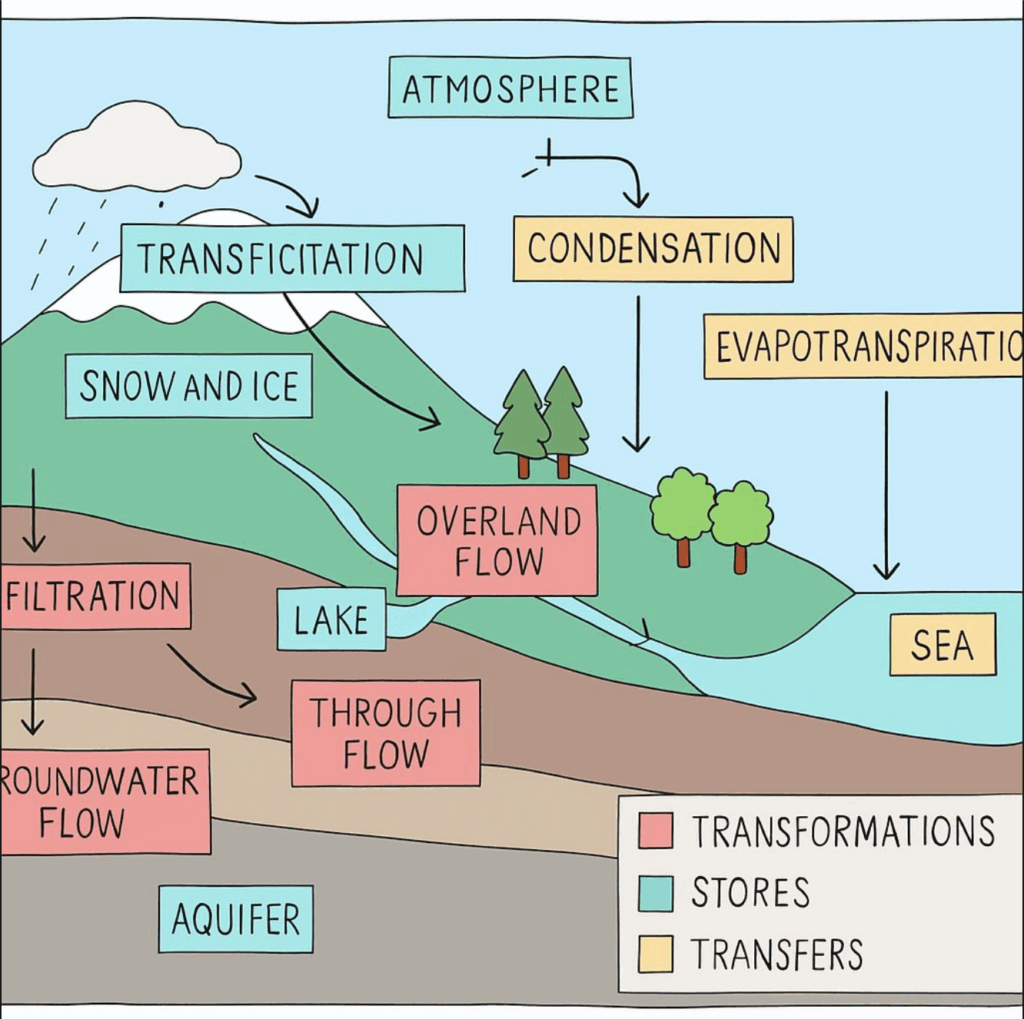
    • Within the hydrological cycle, there are stores and flows
    • The hydrological cycle is a series of processes in which water is constantly recycled through the system
      • The cycle also shapes landscapes, transports minerals and is essential to life on Earth
    • The main stores occurring within the hydrological cycle are:
      • Oceans
      • Glaciers and ice caps
      • Groundwater and aquifers
      • Surface freshwater (rivers and lakes)
      • Atmosphere
    • The main flows occurring within the hydrological cycle are:
      • Transformations: processes where the state or form of water changes, e.g.
        • Evaporation (the sun evaporates surface water into vapour)
        • Condensation (water vapour condenses and precipitates)
      • Transfers: movements of water from one location to another without changing state, e.g.
        • Water runs off the surface into streams and reservoirs or beneath the surface as ground flow
    • These flows move the water on Earth from one store to another (river to ocean or ocean to atmosphere)


    Image source: savemyexams.com

    • Flows in the hydrological cycle include the following:

    Flows in the Hydrological Cycle

    FlowTypeDescription
    EvaporationTransformationThe process by which liquid water changes into a gaseous state (water vapour) and enters the atmosphere from water bodies such as oceans, lakes, and rivers
    TranspirationTransformationThe process by which plants absorb water from the soil through their roots and release it as water vapour through tiny openings called stomata in their leaves
    EvapotranspirationTransformationThe combined process of water vaporisation from the Earth’s surface (evaporation) and the release of water vapour by plants ( transpiration)
    SublimationTransformationThe direct transition of water from a solid state (ice or snow) to a vapour state without melting first
    CondensationTransformationThe process by which water vapour in the atmosphere transforms into liquid water, forming clouds or dew, as a result of cooling
    MeltingTransformationThe process by which solid ice or snow changes into liquid water due to an increase in temperature
    FreezingTransformationThe process by which liquid water changes into a solid state (ice or snow) due to a decrease in temperature
    AdvectionTransferThe wind-blown movement of water vapour or condensed/frozen water droplets (clouds)
    PrecipitationTransferThe process of water falling from the atmosphere to the Earth’s surface in the form of rain, snow, sleet, or hail
    Surface run-offTransferThe movement of water over the Earth’s surface typically occurs when the ground is saturated or impermeable, leading to excess water
    InfiltrationTransferThe process of water seeping into the soil from the surface, entering the soil layers and becoming groundwater
    PercolationTransferThe downward movement of water through the soil and underlying rock layers, eventually reaches aquifers or groundwater reservoirs
    StreamflowTransferThe movement of water in streams, rivers, or other water bodies, driven by gravity and the slope of the land, ultimately leads to oceans or lakes
    Groundwater flowTransferThe movement of water through the pores and spaces in underground soil and rock layers, often moving towards rivers, lakes or oceans
    • Human activities have significant impacts on the hydrological cycle
      • They alter the natural processes of surface run-off and infiltration
    • These activities include:
      • Agriculture (specifically irrigation)
      • Deforestation
      • Urbanisation

    Impact of agriculture and irrigation

    • Irrigation is the process of artificially supplying water to crops
      • It has a direct impact on the hydrological cycle by modifying the water distribution and availability in a region
    • Increased irrigation leads to:
      • Artificially high evapotranspiration rates
      • This is because more water is supplied to plants than would occur naturally
      • This results in increased atmospheric moisture levels
      • This can lead to localised increases in precipitation downwind of irrigated areas, altering rainfall patterns in the region
    • Excessive irrigation can also result in increased surface run-off
      • Water is applied faster than the soil can absorb it
      • This causes water to flow over the soil surface, carrying sediments, fertilisers, and pesticides
      • This leads to water pollution and nutrient imbalances

    Impact of deforestation

    • Deforestation refers to the clearing or removal of forests
      • This is primarily for agriculture, logging or urban development purposes
    • Forests play a crucial role in the hydrological cycle
      • They act like natural sponges
      • They absorb rainfall and facilitate infiltration
        • This helps to recharge groundwater and maintain stream flows
    • When forests are cleared, surface runoff increases significantly
      • Without the tree canopy and vegetation to intercept and slow down rainfall, more water reaches the ground surface
      • This leads to higher surface runoff rates
    • Deforestation also reduces evapotranspiration rates
      • As trees are removed, there is less transpiration and evaporation occurring
      • This results in reduced moisture release into the atmosphere
    • Overall, deforestation disrupts the balance between surface run-off and infiltration
      • This can lead to increased erosion, reduced groundwater recharge and altered stream flow patterns

    Impact of urbanisation

    • Urbanisation involves the transformation of natural landscapes into urban areas with buildings, roads and infrastructure
    • Urban development significantly alters the hydrological cycle by:
      • Replacing permeable surfaces (such as soil and vegetation) with impermeable surfaces(concrete, asphalt)
        • Impermeable surfaces prevent infiltration
        • This leads to reduced groundwater recharge
        • Instead of infiltrating into the soil, rainfall quickly becomes surface run-off
        • This results in increased flooding and diminished water availability during dry periods
    • Urban areas typically have efficient drainage systems designed to quickly remove excess water
      • This further accelerates surface run-off
      • This can overload natural water bodies and cause downstream flooding
    • Urban areas often experience higher temperatures due to the urban heat island effect
      • This effect is caused by the concentration of buildings and paved surfaces
      • It can lead to increased evaporation rates
      • This can alter local precipitation patterns

    Steady state of water bodies

    • Understanding the steady state of a water body involves analysing the balance between inputs and outputs
      • This balance ensures that the water level remains constant over time

    Flow diagrams of inputs and outputs

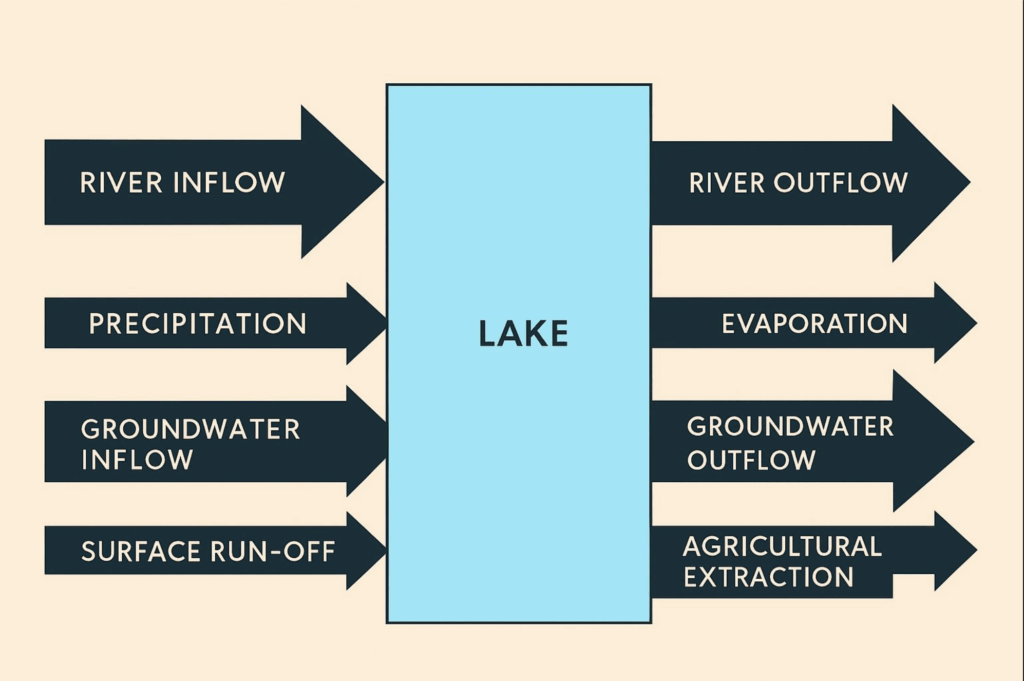
    • Flow diagrams visually represent the water inputs and outputs for a water body
    • Inputs: e.g.
      • Precipitation: rain, snow, or other forms of water falling directly into the water body
      • Surface run-off: water flowing over the land into the water body
      • Groundwater Inflow: water moving into the water body from underground sources
    • Outputs: e.g.
      • Evaporation: water turning into vapour and leaving the water body
      • River outflow: water leaving the water body through rivers or streams
      • Groundwater outflow: water moving out of the water body into underground aquifers
      • Agricultural extraction: water that is extracted for irrigation
    • For example, a lake that is at a steady state may have the following inputs and outputs:
      • Inputs: river inflow (80 units), rainfall (30 units), groundwater inflow (40 units), surface run-off (30 units)
      • Outputs: river outflow (80 units), evaporation (30 units), groundwater outflow (40 units), agricultural extraction (30 units)
      • Steady state: inputs (180 units) equal outputs (180 units)
    • This is an example of sustainable water harvesting
      • Sustainable harvesting means taking water from a water body at a rate that does not exceed the rate of natural replenishment
      • Assessing the total inputs and outputs of a water body can help calculate sustainable rates of water harvesting
      • This ensures the harvested water amount does not disrupt the steady state
    • If total outputs are greater than total inputs, then the water body will decrease in size
      • This may be due to unsustainable water harvesting for agriculture or for domestic and industrial purposes, e.g. water used in drinking, cleaning, heating and cooling systems, and manufacturing processes
      • Water may be extracted faster than it can be naturally replenished
    • For example, an aquifer that is being unsustainably harvested (and therefore is not at a steady state) may have the following inputs and outputs:
      • Inputs: precipitation (70 units), surface infiltration (80 units)
      • Outputs: natural surface discharge (30 units), subsurface flow (70 units), groundwater extraction for domestic and industrial use (150 units)
      • Steady state disruption: inputs (150 units) are less than outputs (250 units), causing a water deficit of 100 units
    • This is why groundwater extraction must be balanced with recharge rates—to prevent aquifer depletion

  • 🔹 3. Evolutionary Explanations of Behaviour

    📘 Notes

    Overview
    Evolutionary psychology explains behaviour as adaptive responses shaped by natural selection to enhance survival and reproduction. Behaviours are viewed as evolved mechanisms encoded genetically.

    Key Concepts

    • Adaptation: Traits that increase survival likelihood.
    • Natural Selection: Differential survival of advantageous traits.
    • Sexual Selection: Traits that increase reproductive success.

    Key Study 1: Buss (1989)

    • Aim: Investigate cross-cultural preferences in mate selection.
    • Method: 10,000 participants across 37 cultures completed questionnaires.
    • Findings: Women preferred financial stability; men preferred youth and physical attractiveness.
    • Conclusion: Universal patterns reflect evolutionary pressures.
    • Evaluation:
      • 👍 Large cross-cultural data.
      • 👎 Social desirability bias; gender role stereotypes.

    Key Study 2: Curtis et al. (2004)

    • Aim: Explore whether disgust evolved as a disease-avoidance mechanism.
    • Findings: Stronger disgust response to disease-related images.
    • Conclusion: Disgust has adaptive, evolutionary roots.
    • Evaluation:
      👎Online survey limits control; 

    👍large sample strengthens reliability.

    💡 TOK Links
    To what extent is evolutionary psychology speculative rather than empirical?

    How do values and cultural assumptions shape scientific explanations of human nature?
    🌍 Real-World Connections
    Explains modern stress, phobias, mate selection patterns, and parental investment.
    ❤️ CAS Links
    Debate or podcast: “Are human behaviours products of evolution or culture?”
    🧪 IA Guidance
    Experimental replications of disgust-response studies (Curtis-style) possible within ethics.
    🧠 Examiner Tips
    Always connect evolutionary theory to specific behaviours (e.g., disgust, attraction).

    Avoid teleological (goal-driven) language — natural selection has no intent.
  • 🔹 2. Genetic Similarities and Twin Studies

    📘 Notes

    Overview
    Twin and family studies are classic tools to separate genetic from environmental influences. Monozygotic (MZ) twins share ~100% of their DNA, while dizygotic (DZ) share ~50%, allowing comparison of heritability estimates.

    Key Study 1: Kendler et al. (2006)

    • Aim: Investigate heritability of major depression.
    • Method: Over 42,000 Swedish twins studied via registry data.
    • Findings: Heritability of depression ≈ 38%; higher in women.
    • Conclusion: Genetic factors moderately contribute to depression, but environment remains key.
    • Evaluation:
      • 👍 Large, representative sample.
      • 👎 Correlational; cannot pinpoint causal genes.

    Key Study 2: McGuffin et al. (1996)

    • Aim: Examine concordance rates for depression.
    • Findings: MZ = 46%; DZ = 20%.
    • Conclusion: Genetic factors strongly implicated; environment still important.

    Key Study 3: Scarr & Weinberg (1983)

    • Adoption study on intelligence: adopted children resembled biological parents more in IQ → genetic influence significant.
    💡 TOK Links
    How do probabilistic correlations challenge what it means to “know” something scientifically?Can statistical data truly explain human individuality?
    🌍 Real-World Connections
    Twin registries used in studying addiction, personality, and schizophrenia.Policy implications for early screening and interventions.
    ❤️ CAS Links
    Create informative posters explaining twin research ethics.
    🧪 IA Guidance
    Model twin correlations through small class surveys comparing siblings’ traits.
    🧠 Examiner Tips
    Always explain why twin studies are used (control for genes).Avoid stating “genes cause behaviour” — always refer to interaction.
  • 🔹 2. Genetic Similarities and Twin Studies

    📘 Notes

    Overview
    Twin and family studies are classic tools to separate genetic from environmental influences. Monozygotic (MZ) twins share ~100% of their DNA, while dizygotic (DZ) share ~50%, allowing comparison of heritability estimates.

    Key Study 1: Kendler et al. (2006)

    • Aim: Investigate heritability of major depression.
    • Method: Over 42,000 Swedish twins studied via registry data.
    • Findings: Heritability of depression ≈ 38%; higher in women.
    • Conclusion: Genetic factors moderately contribute to depression, but environment remains key.
    • Evaluation:
      • 👍 Large, representative sample.
      • 👎 Correlational; cannot pinpoint causal genes.

    Key Study 2: McGuffin et al. (1996)

    • Aim: Examine concordance rates for depression.
    • Findings: MZ = 46%; DZ = 20%.
    • Conclusion: Genetic factors strongly implicated; environment still important.

    Key Study 3: Scarr & Weinberg (1983)

    • Adoption study on intelligence: adopted children resembled biological parents more in IQ → genetic influence significant.
    💡 TOK Links
    How do probabilistic correlations challenge what it means to “know” something scientifically?

    Can statistical data truly explain human individuality?
    🌍 Real-World Connections
    Twin registries used in studying addiction, personality, and schizophrenia.

    Policy implications for early screening and interventions.
    ❤️ CAS Links
    Create informative posters explaining twin research ethics.
    🧪 IA Guidance
    Model twin correlations through small class surveys comparing siblings’ traits.
    🧠 Examiner Tips
    Always explain why twin studies are used (control for genes).

    Avoid stating “genes cause behaviour” — always refer to interaction.
  • 1. Genetic Inheritance and Behaviour

    📘 Notes

    Overview
    Genetic inheritance refers to the transmission of biological traits from parents to offspring through genes. In psychology, it explores how inherited genetic information influences behaviour, personality, intelligence, and susceptibility to mental disorders.

    Key Terms

    TermDefinition
    GenotypeThe genetic makeup of an individual.
    PhenotypeObservable characteristics resulting from genotype-environment interaction.
    HeritabilityThe proportion of observed variation in a trait that can be attributed to genetic factors.
    Gene expressionThe process by which information from a gene is used to synthesize functional products like proteins, influenced by environment.
    EpigeneticsStudy of how environmental factors affect gene expression without altering DNA sequence.

    Genetic Influence on Behaviour
    Genes affect brain structure, neurotransmitter systems, and hormone regulation — which, in turn, influence cognition, emotion, and behaviour. However, behaviour is polygenic and shaped by complex gene–environment interactions (GxE).

    Key Study 1: Bouchard and McGue (1981)
    Meta-analysis of intelligence studies among twins and families.

    • Aim: To investigate the heritability of intelligence.
    • Method: Reviewed 111 twin studies comparing IQ correlations in MZ (identical) and DZ (fraternal) twins reared together/apart.
    • Findings: MZ twins reared together = 0.86 IQ correlation; MZ apart = 0.72; DZ together = 0.60.
    • Conclusion: Intelligence has a significant genetic component (~70%), but environment still plays a role.
    • Evaluation:
      • 👍 Large sample increases reliability.
      • 👎 Publication bias possible; “intelligence” operationalization varies.
      • 👎 Correlational; cannot infer causation.

    Key Study 2: Caspi et al. (2003)
    Gene–environment interaction and depression.

    • Aim: To test the influence of the 5-HTT gene (serotonin transporter) on depression.
    • Method: Longitudinal study; 847 New Zealand adults genotyped for short (s) and long (l) alleles.
    • Findings: Those with two short alleles had more depressive symptoms following stressful events.
    • Conclusion: Genetic vulnerability interacts with environmental stress → supports diathesis–stress model.
    • Evaluation:
      • 👍 Real-world applicability to mental health risk.
      • 👎 Self-report bias; correlational; ethics in genetic disclosure.
    💡 TOK Links
    To what extent does knowing your genetic predisposition shape personal identity and free will?

    How do probabilistic claims in genetics challenge what we consider “knowledge” in human sciences?
    🌍 Real-World Connections
    Gene therapy and CRISPR raise ethical debates about manipulating genetic traits.

    Personalized medicine uses genetic testing to tailor antidepressant or cancer treatments.
    ❤️ CAS Links
    Create an awareness campaign or discussion on genetic testing and ethical implications in schools.
    🧪 IA Guidance
    IAs can explore heritability through simulated twin studies or survey-based measures of personality and environment.
    🧠 Examiner Tips
    Always define heritability clearly (percentage variance explained by genes).

    Distinguish between genetic determinism and interactionist approaches.
  • 🧬 Pheromones and Behaviour

    📘 Key Concepts

    TermDefinition
    PheromoneA chemical substance produced and released by an organism affecting behaviour or physiology of others of the same species.
    Olfactory systemNeural system responsible for detecting chemical signals.
    Vomeronasal organ (VNO)Accessory olfactory structure proposed to detect pheromones in mammals.
    Primer pheromonesCause long-term physiological changes.
    Signalling pheromonesTrigger immediate behavioural responses.

    📖 Key Studies

    1. Wedekind et al. (1995) — The “Sweaty T-Shirt” Study

    • Aim: To determine if body odour influences mate preference through genetic compatibility.
    • Method: Men wore shirts for two days; women rated odours.
    • Results: Women preferred scents of men with dissimilar MHC genes.
    • Conclusion: Olfactory cues may influence attraction for genetic diversity.
    • Evaluation:
      • ✅ Controlled odour conditions
      • ❌ Artificial setting
      • ✅ Supported evolutionary mate selection

    2. Zhou et al. (2014) — Sex Pheromones and Gender Perception

    • Aim: To see if AND (male pheromone) and EST (female pheromone) affect perception of gender.
    • Method: Participants watched point-light displays of walking figures while exposed to AND or EST.
    • Results: AND made participants perceive figures as more masculine; EST as more feminine.
    • Conclusion: Pheromones may influence gender perception in humans.
    • Evaluation:
      • ✅ Controlled exposure
      • ❌ Small sample size
      • ✅ Suggests subtle human chemosensory communication

    3. Cutler, Friedmann, & McCoy (1998) — Synthetic Pheromones and Sociosexual Behaviour

    • Aim: To test if synthetic male pheromones increased sociosexual behaviour.
    • Results: Men who added synthetic pheromones to aftershave reported more sexual activity.
    • Conclusion: Pheromones may play a role in human sexual behaviour.
    • Evaluation:
      • ✅ Field-based data
      • ❌ Self-reported behaviour (bias)
      • ❌ Correlational, not causal
    💡 TOK Links
    Are human behaviours like attraction biologically determined or socially constructed?

    Can pheromones be considered a valid “way of knowing” in humans when evidence is inconclusive?
    🌍 Real-World Connections
    Pheromone research informs fragrance design, relationship therapy, and marketing psychology.

    Genetic compatibility studies help understand mate selection and fertility treatment.
    ❤️ CAS Links
    Community projects on gender bias, relationships, or attraction science awareness.

    Creativity projects: designing “Myth vs Science” presentations on pheromones.
    🧪 IA Guidance
    Potential IA replications: gender perception or scent preference under controlled conditions.

    Ethics: informed consent, avoidance of deception about sexual stimuli.
    🧠 Examiner Tips
    State whether pheromones in humans are hypothesised or empirically established.

    Always discuss biological mechanisms (MHC, olfactory cues).

    Evaluate evidence — it remains correlational and inconclusive in humans.


  • 🧬 Hormones and Behaviour

    📘 Key Concepts and Definitions

    TermDefinition
    HormoneChemical messenger secreted by endocrine glands that travels in the bloodstream to regulate physiology and behaviour.
    Endocrine systemGlandular system (pituitary, adrenal, thyroid, gonads) that secretes hormones directly into the blood.
    Target cellA cell that has receptor sites specific to a particular hormone.
    Feedback loopRegulatory system that controls hormone levels to maintain homeostasis.
    OxytocinA peptide hormone linked to bonding, trust, and social attachment.
    CortisolGlucocorticoid stress hormone that regulates metabolism, immune function, and memory.
    TestosteroneSex hormone associated with aggression, dominance, and reproduction.

    📌 Hormonal Mechanisms

    • Hormones act slowly but have long-lasting effects compared to neurotransmitters.
    • They bind to specific receptors on target organs or brain structures, altering gene expression or neural activity.
    • They influence behavioural patterns such as aggression, stress, and bonding.

    🧠 Key Studies

    1. Newcomer et al. (1999) — Cortisol and Verbal Memory

    • Aim: To test the effect of stress hormones on cognitive performance.
    • Method: Double-blind experiment; participants received either a high cortisol dose, low dose, or placebo.
    • Results: High cortisol impaired performance on verbal declarative memory tasks.
    • Conclusion: Stress levels of cortisol negatively affect hippocampal function and memory.
    • Evaluation:
      • ✅ High internal validity (controlled experiment)
      • ❌ Low ecological validity (artificial stress induction)
      • ✅ Ethical safeguards (short duration, informed consent)

    2. Baumgartner et al. (2008) — Oxytocin and Trust

    • Aim: To investigate the role of oxytocin in trust and social risk-taking.
    • Method: fMRI study using a “trust game.” Participants received intranasal oxytocin or placebo before playing.
    • Results: Oxytocin increased trust even after betrayal. Activity decreased in amygdala and caudate nucleus.
    • Conclusion: Oxytocin reduces fear and increases trust by inhibiting amygdala activity.
    • Evaluation:
      • ✅ Neuroimaging evidence for biological basis of trust
      • ❌ Artificial task limits generalisability
      • ✅ Double-blind placebo control reduced bias

    3. Dabbs et al. (1995) — Testosterone and Aggression in Prisoners

    • Aim: To explore testosterone’s relationship with aggression.
    • Method: Salivary testosterone measured in 692 male inmates.
    • Results: Higher testosterone correlated with violent crimes and dominance-related behaviours.
    • Conclusion: Testosterone is associated with dominance and aggressive behaviour.
    • Evaluation:
      • ✅ Large sample size improves reliability
      • ❌ Correlational study (no causation)
      • ❌ Cultural and environmental influences uncontrolled
    💡 TOK Links
    How far can we attribute behaviour to biological determinism?

    Does the presence of a hormone cause behaviour, or merely correlate with it?

    Can we “see” hormones’ effects, or do we infer them indirectly?
    🌍 Real-World Connections
    Cortisol testing is used in occupational health and PTSD treatment.

    Oxytocin therapies are studied for autism and social anxiety.

    Hormonal insights help understand stress management and emotion regulation.
    ❤️ CAS Links
    Workshops or campaigns on stress management or mental health can link to cortisol and oxytocin research.

    Creativity projects: informational posters or infographics on “How Hormones Shape Emotions.”
    🧪 IA Guidance\
    Replicable experiments: effects of stress on memory recall or trust behaviour tasks.

    Ethics: informed consent, debriefing, minimal distress.
    🧠 Examiner Tips\Always identify the hormone and the behaviour.

    Don’t confuse neurotransmission with hormonal action.

    For ERQs, discuss multiple hormones and link to localisation (amygdala, hippocampus).