Vectors are quantities that have both magnitude (size) and direction.
They are essential for describing motion, forces, and many geometric ideas in three-dimensional space.
In this topic you learn how to represent vectors, perform algebra with them, and interpret them geometrically.
| Term | Meaning / Notation |
|---|---|
| Vector | A quantity with magnitude and direction. Written as AB, v, or as a column vector. |
| Position vector | The vector from the origin O to a point A. Written as OA or a. |
| Displacement vector | The vector from point A to point B, written AB. In component form: b − a, where a and b are position vectors of A and B. |
| Base vectors | In 3D, the standard unit vectors along the axes: i (x–axis), j (y–axis), k (z–axis). |
| Component form | A vector v can be written as a column (v1, v2, v3) or as v = v1i + v2j + v3k. |
📌 1. Representing vectors
- Directed line segment: draw an arrow from A to B. The length shows magnitude, the arrowhead shows direction.
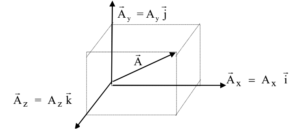
- Column vector: in 3D, v =
(v1, v2, v3)
represents movement v1 along x, v2 along y, v3 along z. - Base vectors: any vector can be expressed using i, j, k.
Example: moving 3 units in x, −2 in y, 5 in z gives v = 3i − 2j + 5k.
300 × 131
📌 2. Vector addition, subtraction and scalar multiplication
Operations on vectors work component–wise. If u = (u1, u2, u3) and
v = (v1, v2, v3):
- Addition: u + v = (u1 + v1, u2 + v2, u3 + v3)
- Subtraction: u − v = (u1 − v1, u2 − v2, u3 − v3)
- Zero vector: 0 = (0, 0, 0), has zero magnitude and no direction.
- Negative vector: −v has same magnitude as v but opposite direction.
- Scalar multiplication: for scalar k,
kv = (k × v1, k × v2, k × v3).
If k > 0, direction is unchanged; if k < 0, direction reverses. - Parallel vectors: u and v are parallel if one is a scalar multiple of the other,
e.g. u = kv.
Example 1 — Vector operations
Let u = (2, −1, 4) and v = (−3, 5, 2).
a) u + v
= (2 + (−3), −1 + 5, 4 + 2)
= (−1, 4, 6)
b) 2u − v
First 2u = (2 × 2, 2 × (−1), 2 × 4) = (4, −2, 8)
Then 2u − v = (4 − (−3), −2 − 5, 8 − 2)
= (7, −7, 6)
📌 3. Magnitude, unit vectors and distance
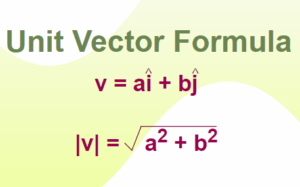
The magnitude (or length) of a vector v = (v1, v2, v3) is:
|v| = √(v12 + v22 + v32)
- A unit vector has magnitude 1. The unit vector in the direction of v is
v ÷ |v| (provided v ≠ 0). - If A has position vector a and B has position vector b, then the displacement vector from A to B is b − a.
- The distance between A and B is the magnitude of that displacement: |b − a|.
457 × 285
Example 2 — Distance and direction
Point A has coordinates (1, 2, −1) and point B has coordinates (5, −1, 3).
a) Find the displacement vector AB.
Position vectors: a = (1, 2, −1), b = (5, −1, 3).
AB = b − a
= (5 − 1, −1 − 2, 3 − (−1))
= (4, −3, 4).
b) Find the distance AB.
|AB| = √(42 + (−3)2 + 42)
= √(16 + 9 + 16)
= √41.
c) Find a unit vector in the direction from A to B.
Unit vector = AB ÷ |AB|
= (4, −3, 4) ÷ √41.
📌 4. Position vectors and geometric proofs
- If OA = a and OB = b, then
AB = b − a. This converts geometry questions into algebra on vectors. - To prove points are collinear, show one displacement vector is a scalar multiple of another, for example
AB = kAC. - To prove a quadrilateral is a parallelogram, show opposite sides are equal and parallel using vectors, e.g.
AB = DC and
BC = AD.
🌍 Real-World Connections
- In physics, forces, velocities and accelerations are all modelled as vectors.
- Navigation uses displacement vectors to track movement in 3D (for example aircraft flight paths).
- Computer graphics and 3D games use vectors for position, movement and camera direction.
📐 IA Spotlight
- Model the path of a moving object (for example, a drone or ball) using vectors and investigate its displacement, speed and direction.
- Analyse vector methods for locating a ship or aircraft using two or more position readings.
- Use vectors to prove geometric properties in a real structure, such as symmetry in a bridge or building design.
🔍 TOK Perspective
- Vectors can be used to save a lost sailor or to guide a missile. How does this illustrate the neutral nature of mathematical knowledge versus its ethical use?
- Does representing physical phenomena with vectors change how we understand those phenomena, or just how we calculate with them?
📝 Exam Tips
- Write vectors clearly, distinguishing between scalars and vectors (for example, bold letters for vectors).
- For distance questions, always form the displacement vector first, then take its magnitude.
- Check arithmetic carefully when adding and subtracting components; one sign error can change direction completely.