B1.1.3 – LIPIDS: STRUCTURE, TYPES & FUNCTIONS
📌Definition Table
| Term | Definition |
|---|---|
| Lipid | Hydrophobic organic molecule composed mostly of carbon and hydrogen with some oxygen; not true polymers. |
| Triglyceride | A lipid formed from glycerol and three fatty acids linked by ester bonds; main form of energy storage. |
| Fatty acid | Long hydrocarbon chain with a carboxyl group at one end; can be saturated or unsaturated. |
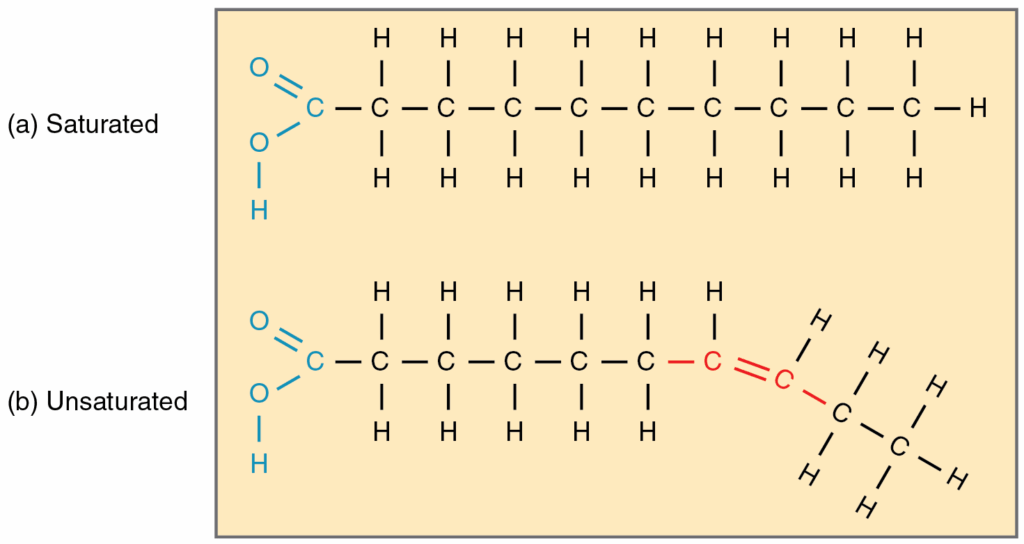
| Saturated fatty acid | Fatty acid with no double bonds; solid at room temperature (e.g., animal fats). |
| Unsaturated fatty acid | Fatty acid with one or more C=C double bonds; liquid at room temperature (e.g., plant oils). |
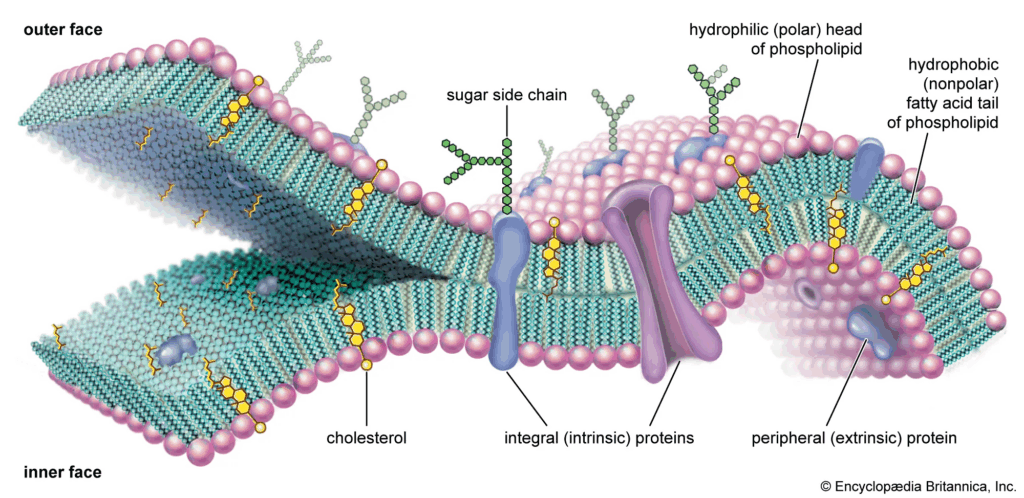
| Phospholipid | Lipid with glycerol, two fatty acids, and a phosphate group; forms bilayers in cell membranes. |
| Steroid | Lipid with four fused carbon rings; includes hormones like testosterone, estrogen, and cholesterol. |
📌Introduction
Lipids are a diverse group of hydrophobic molecules that perform crucial roles in energy storage, insulation, cell signaling, and membrane structure. Unlike carbohydrates and proteins, lipids are not true polymers, but their structural variations allow for wide functional diversity. They are formed mainly through condensation reactions between glycerol and fatty acids (esterification) and can store more than twice the energy of carbohydrates. Lipids are essential in both cellular biology and human health, making them one of the most important classes of biomolecules.
📌 Triglycerides and Energy Storage
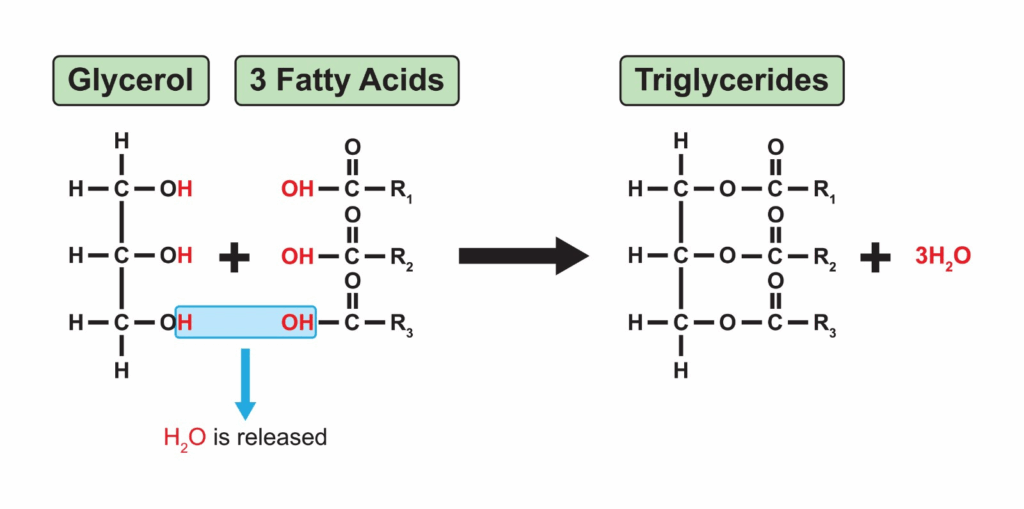
- Composed of glycerol + 3 fatty acids linked by ester bonds.
- Store large amounts of chemical energy in C–H bonds.
- Hydrophobic → stored without water, making them more compact than glycogen.
- Used for long-term energy storage, thermal insulation, and protection of organs.
🧠 Examiner Tip: Always contrast lipid energy storage with carbohydrates — lipids store more energy per gram but are slower to mobilize than glycogen.
📌 Phospholipids and Membrane Structure
- Structure: glycerol + 2 fatty acids + phosphate group.
- Amphipathic: hydrophilic phosphate head + hydrophobic fatty acid tails.
- Self-assemble into bilayers in aqueous environments → basis of cell membranes.
- Allow selective permeability and membrane fluidity.
🧬 IA Tips & Guidance: Simple experiments with oil–water mixtures or soap micelles can demonstrate lipid hydrophobicity and amphipathic behavior. For HL, cholesterol’s effect on membrane permeability can be modeled.
📌 Saturated vs Unsaturated Fatty Acids
- Saturated: no double bonds, straight chains, pack tightly → solid fats.
- Unsaturated: one or more C=C double bonds, kinks prevent tight packing → oils.
- Trans fats: unsaturated fats artificially hydrogenated; associated with cardiovascular disease.
🌐 EE Focus: An EE could explore the health impacts of different dietary lipids (saturated, unsaturated, trans fats) or investigate how lipid structure affects membrane permeability.
📌 Steroids and Other Lipid Functions
- Steroids: cholesterol, testosterone, estrogen, cortisol.
- Waxes: protective coatings in plants and animals.
- Pigments and vitamins: fat-soluble vitamins (A, D, E, K) derived from lipids.
- Signaling molecules: steroid hormones regulate metabolism, reproduction, stress responses.
❤️ CAS Link: Students could organize a health campaign on the role of dietary fats, comparing “good” vs “bad” lipids, and promoting balanced nutrition in their community.
🌍 Real-World Connection: Lipids are critical in health and disease. Cholesterol balance affects cardiovascular health; omega-3 fatty acids reduce inflammation; lipid-based nanoparticles are used in modern vaccines. Industrially, lipids are used in cosmetics, soaps, and biofuels, highlighting their wide-ranging applications.
📌 Lipid Functions in Biology
- Long-term energy storage (triglycerides).
- Thermal insulation and shock absorption.
- Structural (phospholipids in membranes, cholesterol regulating fluidity).
- Hormonal signaling (steroid hormones).
- Waterproofing (waxes on leaves, feathers).
🔍 TOK Perspective: Lipids raise knowledge questions in nutrition science — for decades fats were considered harmful, but now “good fats” are recognized as essential. TOK reflection: How does evolving scientific evidence reshape long-standing societal beliefs?