A4.1.2- SPECIATION AND ISOLATION MECHANISMS
📌Definition Table
| Term | Definition |
|---|---|
| Speciation | The process by which new species arise from existing ones. |
| Allopatric Speciation | Speciation due to geographical isolation between populations. |
| Sympatric Speciation | Speciation occurring within the same geographical area, often due to ecological or behavioural isolation. |
| Reproductive Isolation | Barriers preventing gene flow between populations, leading to speciation. |
| Hybrid Zone | Region where two species meet and interbreed, producing hybrids. |
📌Introduction
Speciation is the formation of new species through the gradual accumulation of genetic differences that prevent interbreeding. This process is driven by reproductive isolation, which can be caused by geographic separation, ecological divergence, behavioural differences, or genetic incompatibility. Understanding isolation mechanisms is crucial for explaining biodiversity patterns and evolutionary processes.
📌 Types of Speciation
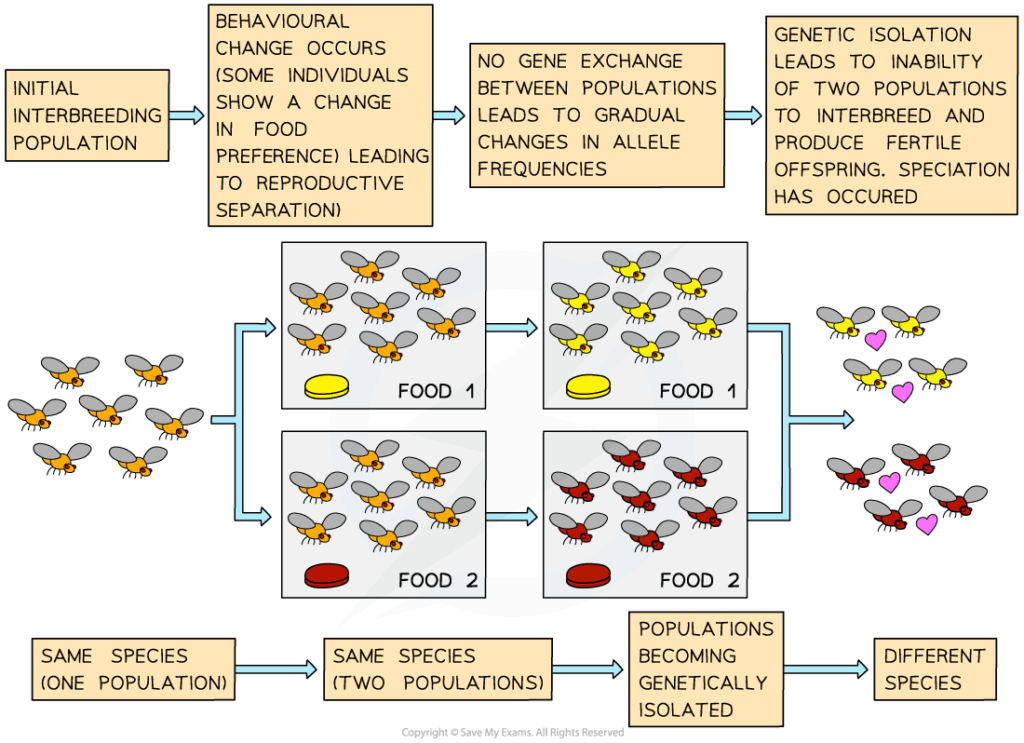
- Allopatric: Geographic barriers prevent gene flow, leading to divergence.
- Peripatric: Small populations become isolated at the edge of a larger population’s range, allowing rapid divergence.
- Parapatric: Adjacent populations diverge while maintaining some gene flow.
- Sympatric: Occurs without physical barriers, often via polyploidy in plants or niche specialisation.
- Speciation speed varies — can be gradual or rapid.
- Molecular evidence helps confirm speciation events.
🧠 Examiner Tip: Always link examples of speciation to the type — e.g., Darwin’s finches (allopatric), cichlid fish in the same lake (sympatric).
📌 Prezygotic Isolation Mechanisms
- Temporal isolation: species breed at different times/seasons.
- Behavioural isolation: unique courtship behaviours prevent interbreeding.
- Mechanical isolation: incompatible reproductive structures.
- Ecological isolation: different habitats reduce encounters.
- Gametic isolation: gametes cannot fuse due to chemical incompatibility.
- Prezygotic barriers prevent fertilisation entirely.
🧬 IA Tips & Guidance: A possible IA could investigate mating behaviours in a model organism to study behavioural isolation patterns.
📌 Postzygotic Isolation Mechanisms
- Hybrid inviability: hybrids fail to develop or survive.
- Hybrid sterility: hybrids survive but cannot reproduce (e.g., mule).
- Hybrid breakdown: hybrid offspring viable but less fit or fertile in subsequent generations.
- Postzygotic barriers reinforce species boundaries.
- Often result from genetic incompatibilities.
- Maintain separation even when hybridisation occurs.
🌐 EE Focus: An EE could analyse genetic incompatibilities causing hybrid sterility in closely related species.
📌 Role of Natural Selection and Genetic Drift
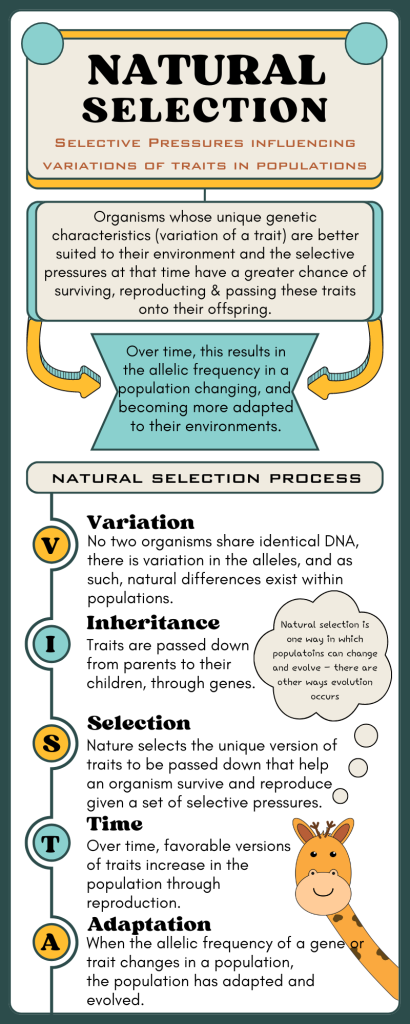
- Natural selection drives adaptation to different environments, reinforcing isolation.
- Genetic drift can fix differences in small populations.
- Founder effects accelerate divergence in isolated groups.
- Sexual selection may lead to reproductive isolation through mate preferences.
- Isolation allows accumulation of unique alleles.
- Gene flow reduction is key to speciation.
❤️ CAS Link: A CAS project could involve presenting case studies of local species undergoing isolation to a school science club.
🌍 Real-World Connection:
Understanding speciation helps in conservation by identifying evolutionarily significant units and preventing genetic homogenisation of populations
📌 Examples of Speciation in Nature
- Darwin’s finches (allopatric, adaptive radiation).
- Apple maggot flies shifting from hawthorn to apple trees (sympatric).
- Cichlid fishes in African lakes (sympatric).
- Polar and grizzly bears producing hybrids yet remaining distinct species.
- Plant polyploidy in wheat and other crops.
- Squirrels separated by the Grand Canyon (allopatric).
🔍 TOK Perspective: Speciation illustrates how defining species is not always straightforward — the concept is shaped by the criteria scientists choose to emphasise (morphological, genetic, ecological).