A3.2.3 – RECLASSIFICATION & SYSTEM
📌Definition Table
| Term | Definition |
|---|---|
| Reclassification | The reassignment of organisms to different taxonomic groups based on new evidence. |
| Systematics | The scientific study of the diversity of organisms and their evolutionary relationships. |
| Monophyletic Group | A group containing an ancestor and all its descendants. |
| Polyphyletic Group | A group containing organisms from different ancestors, not including their most recent common ancestor. |
| Paraphyletic Group | A group containing an ancestor and some, but not all, of its descendants. |
📌Introduction
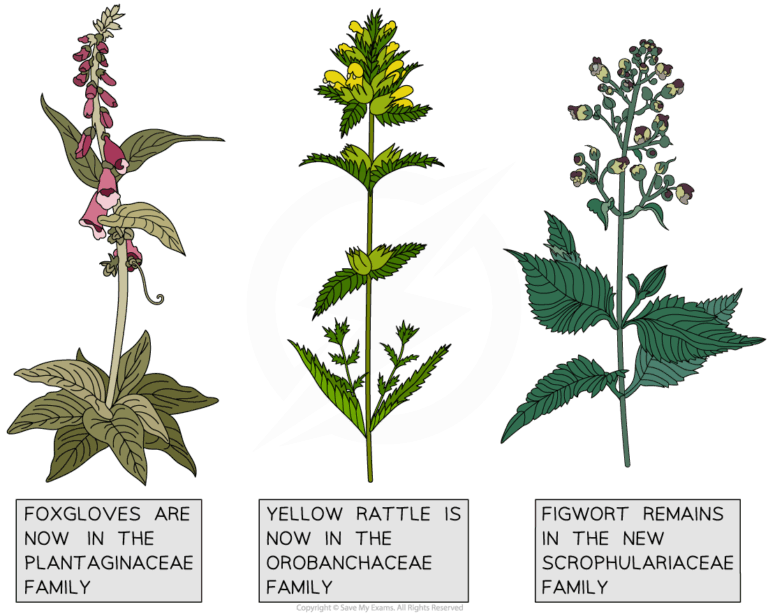
Reclassification is an essential part of taxonomy as scientific understanding evolves. As new evidence emerges — particularly from molecular genetics — organisms may be reassigned to more accurate groups. This process reflects the dynamic nature of systematics, which aims to represent evolutionary history as precisely as possible. Reclassification ensures that taxonomic systems remain consistent with current scientific knowledge, even if it means overturning long-held classifications.
📌 Reasons for Reclassification
- Discovery of new fossil or living species.
- Molecular evidence (DNA, RNA, protein sequences) revealing unexpected relationships.
- Correction of historical misclassifications based on superficial similarities.
- Evidence of convergent evolution misleading earlier classification.
- Advances in bioinformatics allowing more robust phylogenetic analysis.
- Refinement of evolutionary models to reflect new data.
🧠 Examiner Tip: When discussing reclassification in IB answers, always give a concrete example, such as the reclassification of prokaryotes into separate domains: Bacteria and Archaea.
📌 Impact of Molecular Evidence
- DNA sequencing can reveal genetic similarities and differences invisible to morphology.
- Ribosomal RNA gene sequences are often used to determine deep evolutionary splits.
- Mitochondrial DNA is used for recent divergence studies.
- Molecular data can confirm or contradict morphology-based classifications.
- Has led to major taxonomic revisions, such as splitting Protista into multiple lineages.
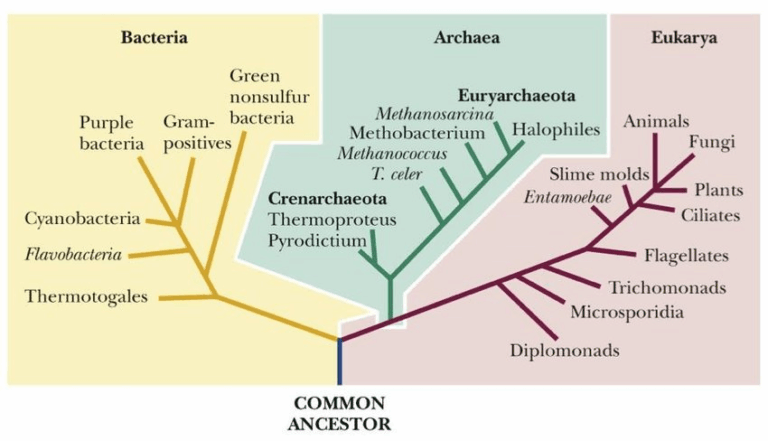
- Supports the three-domain system over the traditional five-kingdom model.
🧬 IA Tips & Guidance: A possible IA could analyse genetic sequence data from online databases to propose a reclassification of a selected group.
📌 Examples of Reclassification
- Prokaryotes: Once grouped as Monera, now divided into Bacteria and Archaea.
- Fungi: Previously classified with plants, now recognised as a separate kingdom.
- Whales: Once grouped separately, now classified with even-toed ungulates (Artiodactyla) based on molecular data.
- Protists: Split into multiple eukaryotic supergroups based on genetic evidence.
- Pandas: Giant pandas and red pandas once thought closely related, now placed in different families.
- Birds: Reclassified as a subgroup of reptiles based on cladistic analysis.
🌐 EE Focus: An EE could examine the role of molecular evidence in the reclassification of a specific taxonomic group, integrating both historical and modern perspectives.
📌 Challenges in Reclassification
- Requires consensus among the scientific community.
- Can cause confusion in literature and field guides.
- Changes in names may affect conservation legislation and legal documents.
- Requires updates to educational materials and databases.
- Some classifications remain debated despite molecular evidence.
- Historical inertia can slow adoption of new classifications.
❤️ CAS Link: A CAS project could involve updating a local biodiversity database to reflect recent taxonomic changes.
🌍 Real-World Connection:
Reclassification affects agriculture, conservation, and medicine — for example, correctly identifying pathogen species is crucial for disease control.
📌 Role of Systematics in Modern Biology
- Integrates taxonomy, evolutionary biology, and molecular genetics.
- Informs conservation priorities by identifying evolutionarily distinct species.
- Supports ecological studies by clarifying species identities.
- Assists in tracking the spread of invasive species.
- Helps in drug discovery by identifying related species with known properties.
- Contributes to understanding the tree of life.
🔍 TOK Perspective: Reclassification illustrates how scientific knowledge is provisional and subject to revision — even well-established systems can change when new evidence arises.