B4.1.3 –ADAPTATIONS FOR LOW OXYGEN AND SPECIALISED ENVIRONMENTS
📌Definition Table
| Term | Definition |
|---|---|
| Hypoxia | Condition where oxygen availability is insufficient to meet metabolic needs. |
| Myoglobin | Oxygen-binding protein in muscle tissue with high affinity for oxygen, facilitating storage. |
| Hemoglobin Affinity Shift | Change in hemoglobin’s oxygen-binding properties to optimise oxygen uptake or release under specific conditions. |
| Anaerobic Respiration | Energy production without oxygen, producing ATP less efficiently but allowing survival during oxygen deprivation. |
| Barophilic Organism | Organism adapted to survive in high-pressure environments, such as the deep ocean. |
📌Introduction
Life in extreme environments requires unique physiological, structural, and behavioural adaptations. In habitats with low oxygen — such as high altitudes, deep seas, or burrows — organisms must maximise oxygen uptake, transport, and storage. Similarly, specialised environments such as deserts, polar regions, and hydrothermal vents impose multiple stresses including temperature extremes, pressure, and nutrient limitations. Adaptations often involve convergent evolution where unrelated species evolve similar solutions to environmental challenges.
❤️ CAS Link: Partner with a mountaineering club to create a training workshop on physiological preparation for high-altitude treks, including oxygen acclimatisation strategies.
📌 High-Altitude Adaptations
- Increased Hemoglobin Affinity — Ensures oxygen loading in thin air (e.g., llamas, yaks).
- Higher Red Blood Cell Count — Increases oxygen-carrying capacity of blood.
- Expanded Lung Volume — Improves oxygen uptake per breath.
- Increased Capillary Density — Enhances oxygen delivery to tissues.
- Behavioural Acclimatisation — Gradual ascent reduces risk of altitude sickness in humans.
🧠 Examiner Tip: In application questions, always distinguish between short-term acclimatisation and long-term genetic adaptations.
📌 Aquatic Low-Oxygen Environments
- Large Gills or Respiratory Surfaces — Maximise oxygen extraction from water.
- Cutaneous Respiration — Amphibians and some fish absorb oxygen directly through skin.
- Air Breathing in Fish — Lungfish use lungs in stagnant, oxygen-poor waters.
- High Myoglobin Concentration — In diving mammals, stores oxygen in muscles for extended dives.
- Bradycardia — Slowed heart rate during dives conserves oxygen.
🌍 Real-World Connection: Free-divers study marine mammal adaptations to extend breath-holding limits safely.
📌 Deep-Sea Adaptations
- Pressure-Resistant Enzymes — Function normally under high hydrostatic pressure.
- Slow Metabolism — Reduces oxygen demand.
- Bioluminescence — Used for prey attraction, camouflage, and communication in dark waters.
- Large Eyes — Optimised for detecting minimal light.
- Flexible Skeletons — Prevent structural damage under pressure.
🔍 TOK Perspective: Studying deep-sea species challenges our assumptions about the limits of life and “habitability” of environments.
📌 Adaptations in Burrowing and Nocturnal Animals
- Low Metabolic Rates — Reduce oxygen needs in poorly ventilated burrows.
- Tolerance to High CO₂ Levels — Special hemoglobin variants prevent acid–base imbalance.
- Efficient Ventilation Movements — Rapid breathing when emerging above ground to replenish oxygen stores.
- Use of Anaerobic Pathways — Temporarily sustain energy production without oxygen.
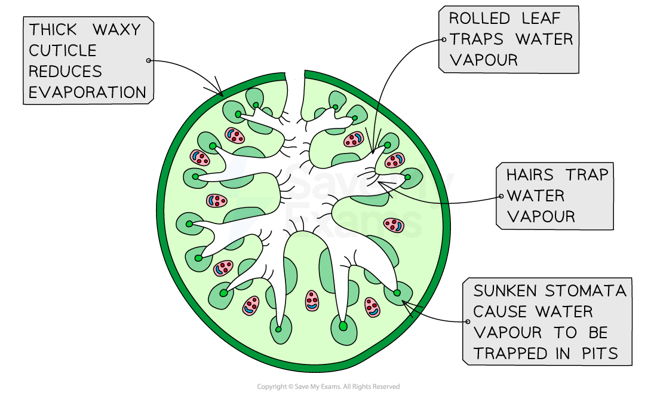
- Water Conservation — Linked to burrow life in arid climates.
⚗️ IA Tips & Guidance: An IA could investigate oxygen diffusion rates through different thicknesses of agar gel to model oxygen limitation in various environments.
📌 Hydrothermal Vent and Extremophile Adaptations
- Chemosynthesis — Bacteria use hydrogen sulfide instead of sunlight for energy production.
- Symbiotic Relationships — Tube worms rely on internal bacteria for nutrients.
- Heat-Stable Enzymes — Allow survival at temperatures near boiling.
- Pressure-Resistant Membranes — Maintain fluidity and function under extreme pressure.
- Toxin Resistance — Proteins resistant to heavy metals and toxins in vent water.