B4.1.1 – ADAPTATIONS FOR TEMPERATURE REGULATION
📌Definition Table
| Term | Definition |
|---|---|
| Endotherm | Organism that maintains a constant internal body temperature through metabolic heat production. |
| Ectotherm | Organism whose body temperature varies with environmental temperature, relying primarily on external heat sources. |
| Thermoregulation | The process by which organisms maintain their core internal temperature within a tolerable range. |
| Vasodilation | Widening of blood vessels to increase blood flow to the skin and promote heat loss. |
| Vasoconstriction | Narrowing of blood vessels to reduce blood flow to the skin and minimise heat loss. |
| Countercurrent Heat Exchange | Mechanism where warm blood flowing from the body core transfers heat to colder returning blood, conserving body heat. |
📌Introduction
Temperature regulation is essential for maintaining optimal enzyme activity, metabolic rate, and cellular processes. Endotherms use metabolic heat production combined with behavioural and physiological adaptations to stabilise body temperature, while ectotherms rely largely on environmental heat sources. Survival in extreme hot or cold environments requires a range of structural, behavioural, and physiological traits that reduce thermal stress and energy expenditure.
❤️ CAS Link: Create an educational campaign showing how different animals adapt to extreme temperatures, including interactive models and infographics for local schools.
📌 Adaptations in Cold Environments
- Insulation — Thick fur or feather layers trap air for insulation; blubber in marine mammals reduces heat loss.
- Small Surface Area-to-Volume Ratio — Compact body shapes (Allen’s Rule) minimise heat loss.
- Behavioural Strategies — Huddling, burrowing, or seasonal migration to warmer regions.
- Countercurrent Heat Exchange — Found in penguins and Arctic foxes to retain core heat in cold limbs.
- Increased Metabolic Heat Production — Shivering thermogenesis and brown adipose tissue metabolism in mammals.
🧠 Examiner Tip: In application questions, link each structural feature (e.g., fur length) directly to the thermoregulatory advantage it provides.
📌 Adaptations in Hot Environments
- Large Surface Area-to-Volume Ratio — Long limbs and ears (e.g., fennec fox) facilitate heat dissipation.
- Reduced Insulation — Short fur or seasonal shedding to prevent overheating.
- Behavioural Cooling — Seeking shade, burrowing during the day, being nocturnal to avoid peak heat.
- Evaporative Cooling — Sweating in humans; panting in dogs; gular flutter in birds.
- Tolerance of Higher Body Temperatures — Camels can allow their body temperature to rise to reduce water loss from sweating.
🌍 Real-World Connection: Desert survival training often applies knowledge of evaporative cooling and hydration strategies based on animal adaptations.
📌 Endothermy vs. Ectothermy
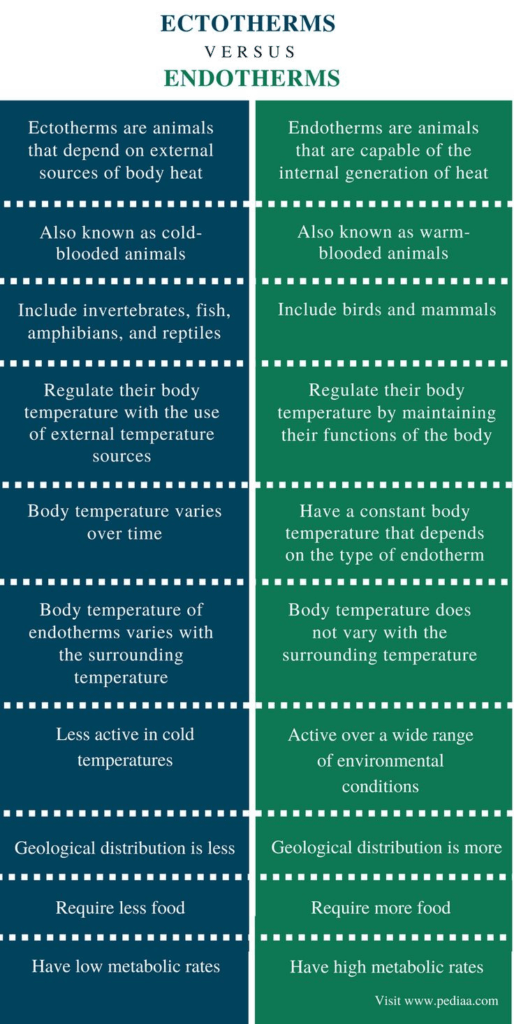
- Endotherms — Stable internal temperatures allow activity in varied conditions but require high energy intake.
- Ectotherms — Lower metabolic demands but activity restricted to suitable environmental temperatures.
- Behavioural Regulation — Ectotherms bask to warm up and retreat to shade to cool down; endotherms may migrate seasonally.
- Ecological Niches — Endothermy allows colonisation of colder regions; ectothermy often limits species to warmer climates.
- Thermal Acclimatisation — Both groups can adjust tolerance ranges seasonally to match environmental conditions.
🔍 TOK Perspective: The classification of animals into endotherms and ectotherms is a simplification — many species exhibit traits of both under certain conditions.
📌 Physiological Mechanisms of Thermoregulation in Humans
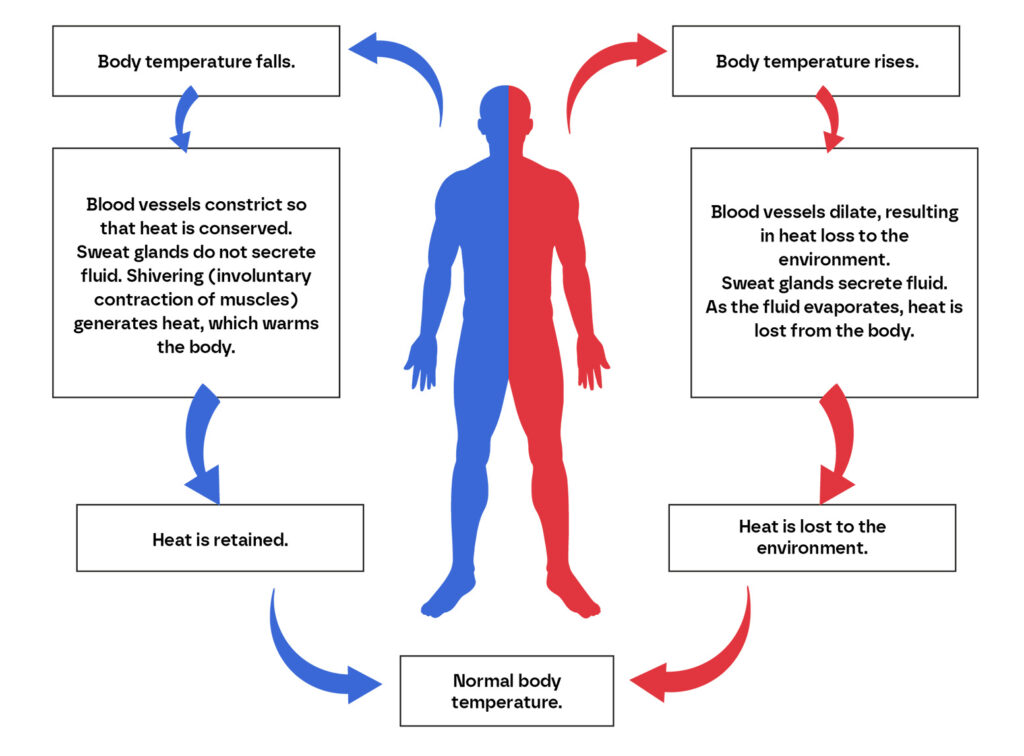
- Hypothalamic Control — Detects changes in blood temperature and initiates corrective responses.
- Vasodilation and Vasoconstriction — Control blood flow to skin to regulate heat exchange.
- Sweating and Shivering — Increase or decrease heat production and loss.
- Metabolic Adjustments — Thyroid hormone levels influence long-term metabolic heat production.
- Acclimatisation — Gradual physiological adjustments to temperature extremes improve survival and performance.
🌐 EE Focus: An EE could compare the efficiency of evaporative cooling between desert-adapted and temperate mammals, measuring body temperature changes under controlled heat exposure.
📌 Extremophile Thermoregulation
- Thermophilic Bacteria — Enzymes adapted to function at high temperatures; heat-stable membranes.
- Polar Fish — Antifreeze proteins prevent ice crystal formation in body fluids.
- Alpine Plants — Grow in rosettes to trap heat and reduce wind exposure.
- Insects in Deserts — Use stilting behaviour to keep their bodies above hot sand.
- Reptiles in Cold Climates — Hibernate to survive long periods of low temperatures.