B3.2.3 – BLOOD COMPOSITION AND FUNCTION
📌Definition Table
| Term | Definition |
|---|---|
| Plasma | The liquid portion of blood, consisting mainly of water, proteins, electrolytes, nutrients, hormones, and waste products. |
| Erythrocyte | Red blood cell containing haemoglobin, specialised for oxygen and carbon dioxide transport. |
| Leukocyte | White blood cell involved in immune defence, including phagocytosis and antibody production. |
| Platelet (Thrombocyte) | Cell fragment involved in blood clotting and wound repair. |
| Haemostasis | The process of stopping bleeding, involving vasoconstriction, platelet plug formation, and coagulation cascade. |
| Fibrin | Insoluble protein fibres formed during clotting that stabilise the platelet plug. |
| Immunoglobulin | Antibody protein produced by B cells, binding specifically to antigens for immune defence. |
📌Introduction
Blood is a specialised connective tissue that serves as the main transport medium in animals with closed circulatory systems. It delivers oxygen, nutrients, and hormones to cells, removes metabolic wastes, and plays a central role in immunity, pH balance, and temperature regulation. Blood composition reflects an organism’s physiology and environmental adaptations, and understanding its components is vital in both medical and ecological contexts.
❤️ CAS Link: Partner with a local blood donation campaign to create an educational display on blood components and their functions, encouraging community participation.
📌 Plasma
- Composition — ~90% water, with dissolved salts, proteins, nutrients, hormones, and waste products.
- Functions — Acts as a transport medium for glucose, amino acids, fatty acids, hormones, CO₂ (as bicarbonate), and urea.
- Plasma Proteins — Albumin maintains osmotic pressure; fibrinogen involved in clotting; globulins (including immunoglobulins) play immune roles.
🧠 Examiner Tip: When explaining plasma functions, explicitly link each dissolved component to its transport or homeostatic role.
📌 Erythrocytes (Red Blood Cells)
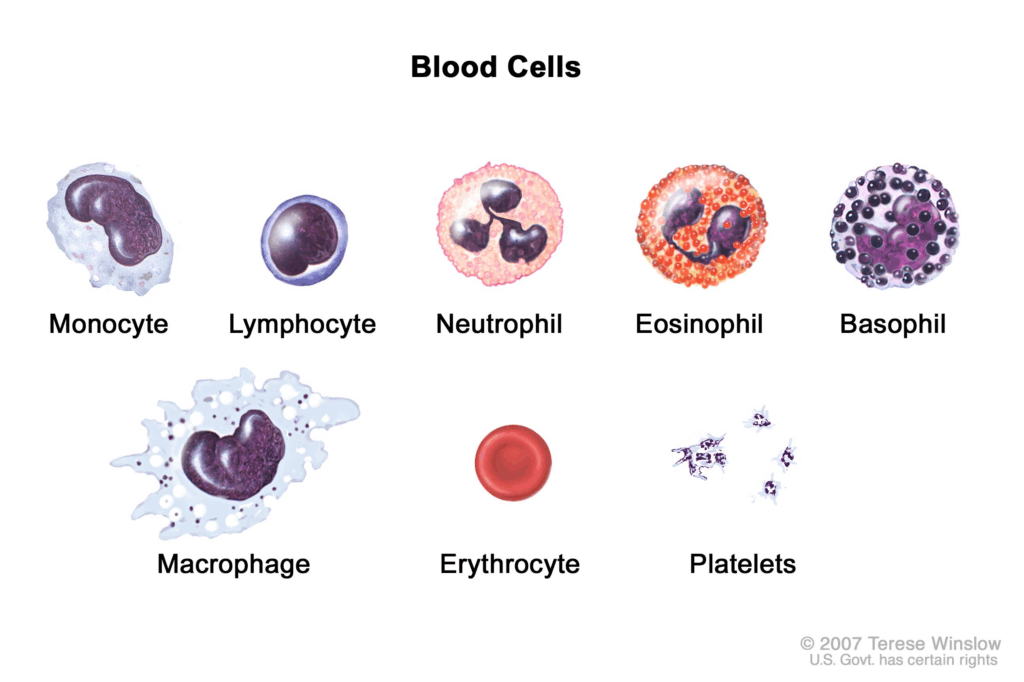
- Structure — Biconcave disc shape increases surface area for gas exchange; no nucleus or mitochondria to maximise haemoglobin content.
- Function — Transport oxygen bound to haemoglobin; transport some CO₂ bound to haemoglobin or dissolved in plasma.
- Lifespan — ~120 days, destroyed in spleen/liver; iron recycled for new haemoglobin synthesis.
🌍 Real-World Connection: Athletes training at high altitudes stimulate increased erythrocyte production to improve oxygen delivery.
📌 Leukocytes (White Blood Cells)
- Granulocytes — Neutrophils (phagocytosis of bacteria), eosinophils (defend against parasites), basophils (release histamine in inflammation).
- Agranulocytes — Lymphocytes (B and T cells for adaptive immunity), monocytes (differentiate into macrophages for phagocytosis).
- Numbers rise during infection; low counts can indicate immune suppression.
🔍 TOK Perspective: The classification of immunity as “innate” vs. “adaptive” is a human framework that may oversimplify the integrated nature of immune responses.
📌 Platelets and Blood Clotting
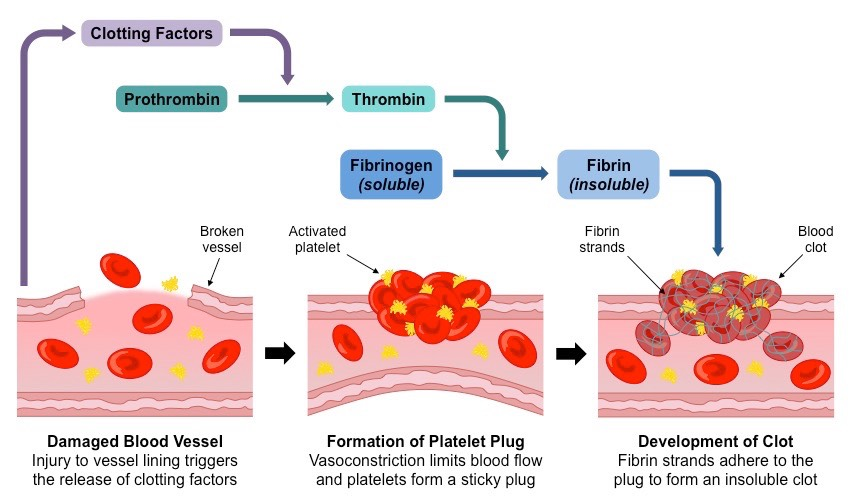
- Structure — Small, anucleate cell fragments derived from megakaryocytes.
- Clotting Process:
- Vessel injury triggers platelet adhesion and aggregation → platelet plug.
- Clotting factors activate thrombin.
- Thrombin converts fibrinogen → fibrin, forming a mesh that stabilises the clot.
- Clot retraction and repair occur as fibrin is broken down after healing.
⚗️ IA Tips & Guidance: An IA could compare clotting times under different conditions (e.g., temperature, calcium concentration) to investigate enzyme-mediated processes in blood coagulation.
📌Transport of Gases and Nutrients
- Oxygen — Bound to haemoglobin in erythrocytes; loading in lungs, unloading in tissues (Bohr effect in active tissues).
- Carbon Dioxide — Mostly as bicarbonate ions in plasma, some bound to haemoglobin, small amount dissolved.
- Nutrients — Absorbed in intestines, transported in plasma to cells for metabolism or storage.
📝 Paper 2: Data Response Tip: When explaining the hydrothermal vent hypothesis, always include energy source, protection from UV, and chemical gradients for full marks
📌 Immunity and Defence
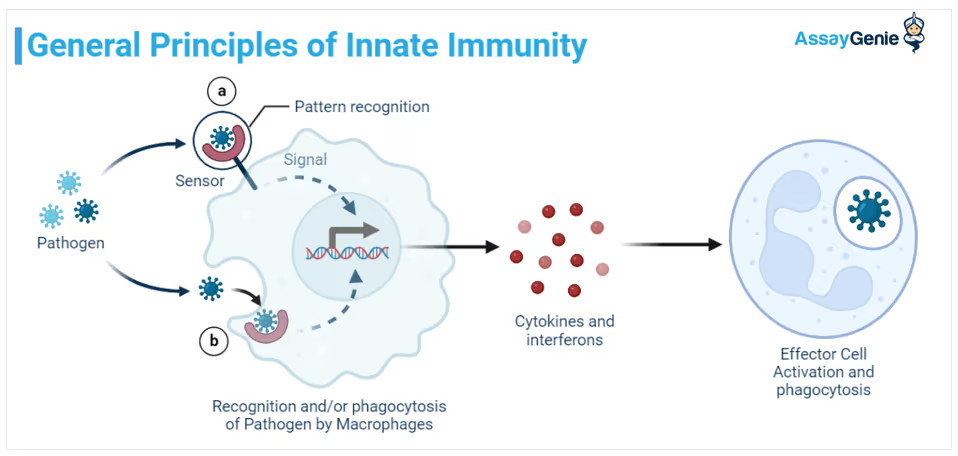
- Innate Immunity — Non-specific; includes skin barrier, phagocytosis, inflammation.
- Adaptive Immunity — Specific; B lymphocytes produce antibodies, T lymphocytes target infected cells.
- Memory cells ensure faster, stronger secondary responses.
📌 Homeostatic Roles of Blood
- Temperature Regulation — Redistribution of blood flow to skin or internal organs.
- pH Buffering — Plasma proteins and bicarbonate buffer system maintain pH near 7.4.
- Osmoregulation — Plasma proteins help maintain water balance between blood and tissues.