B3.2.2 – TRANSPORT IN ANIMALS
📌Definition Table
| Term | Definition |
|---|---|
| Circulatory System | System responsible for transporting substances such as oxygen, nutrients, hormones, and waste products throughout the body. |
| Open Circulatory System | Circulatory system in which blood is not always enclosed in vessels and bathes organs directly. |
| Closed Circulatory System | Circulatory system where blood remains within vessels, allowing higher pressure and efficiency. |
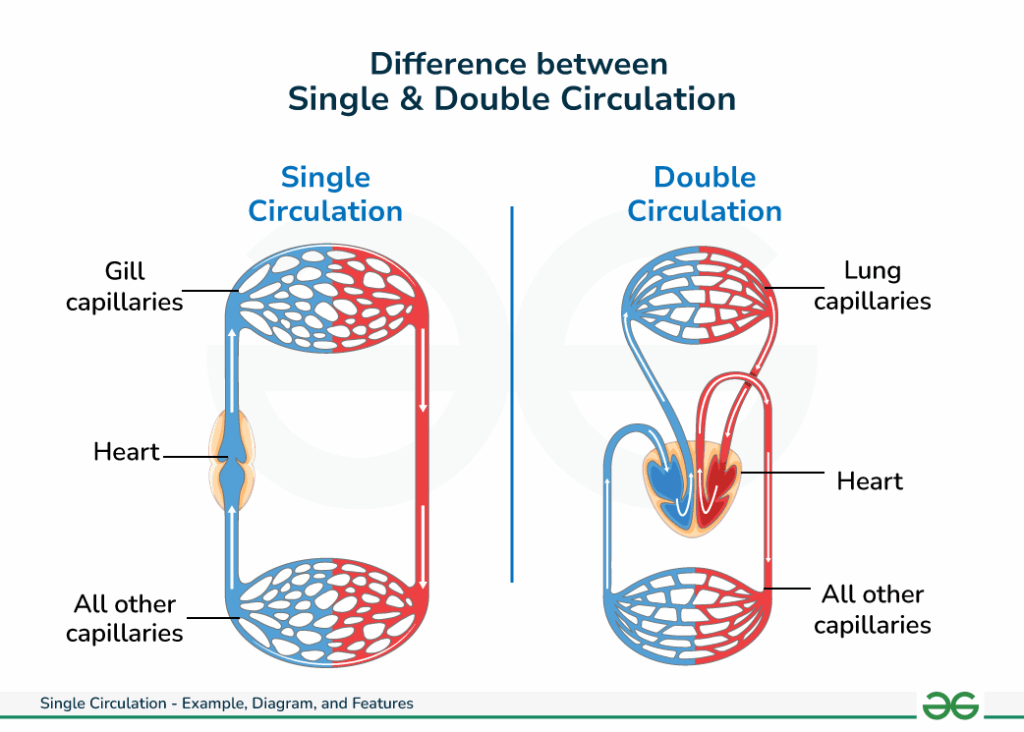
| Single Circulation | Blood passes through the heart once per complete circuit of the body. |
| Double Circulation | Blood passes through the heart twice per complete circuit — once for oxygenation and once for systemic distribution. |
| Pulmonary Circulation | The part of the circulatory system that carries blood between the heart and lungs. |
| Systemic Circulation | The part of the circulatory system that carries oxygenated blood from the heart to the body and returns deoxygenated blood. |
📌Introduction
Animals have evolved circulatory systems to overcome the limitations of diffusion for transporting substances over long distances. The type of circulatory system depends on body size, metabolic rate, and evolutionary history. Closed systems allow for greater control and higher pressures, while double circulation ensures efficient oxygen delivery in endotherms with high metabolic demands.
❤️ CAS Link: Organise a school health awareness day where students measure and compare resting and post-exercise heart rates to explore circulatory adaptations.
📌 Open vs. Closed Circulatory Systems

- Open Systems — Found in insects, crustaceans; haemolymph directly bathes tissues in body cavities; lower pressure; less control over distribution.
- Closed Systems — Found in vertebrates, annelids; blood contained in vessels; higher pressure allows faster transport and better regulation.
🧠 Examiner Tip: When comparing open and closed systems, always link structure to oxygen delivery efficiency.
📌 Single vs. Double Circulation
- Single — Found in fish; heart pumps blood to gills, then directly to body; lower pressure after gills limits speed of delivery.
- Double — Found in mammals and birds; separate pulmonary and systemic circuits maintain high systemic pressure without damaging lung capillaries.
🌍 Real-World Connection: Knowledge of circulation types is applied in designing artificial heart-lung machines for surgery.
📌 Heart Structure and Function in Mammals
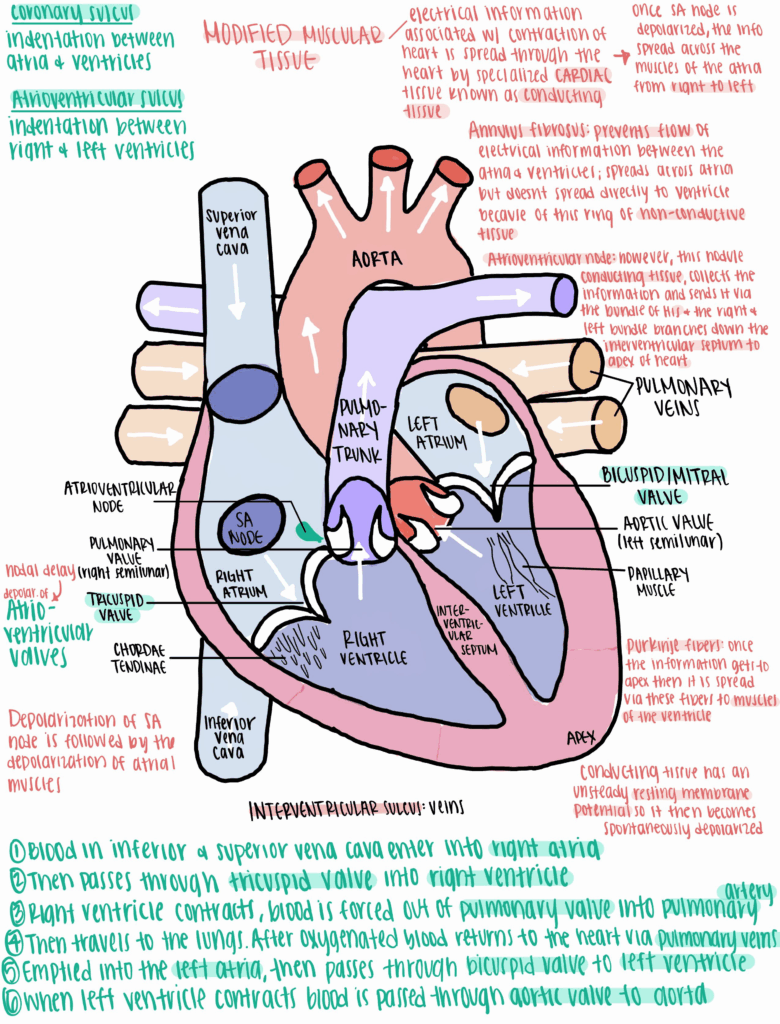
- Right Side — Receives deoxygenated blood from body; pumps it to lungs.
- Left Side — Receives oxygenated blood from lungs; pumps it to body at high pressure.
- Valves — Prevent backflow; atrioventricular valves between atria and ventricles; semilunar valves at exits of ventricles.
- Coronary Circulation — Supplies oxygen directly to heart muscle.
🔍 TOK Perspective: The representation of the heart as a simple “pump” is useful for teaching, but oversimplifies the complex neurochemical regulation of cardiac activity.
📌 Blood Vessels
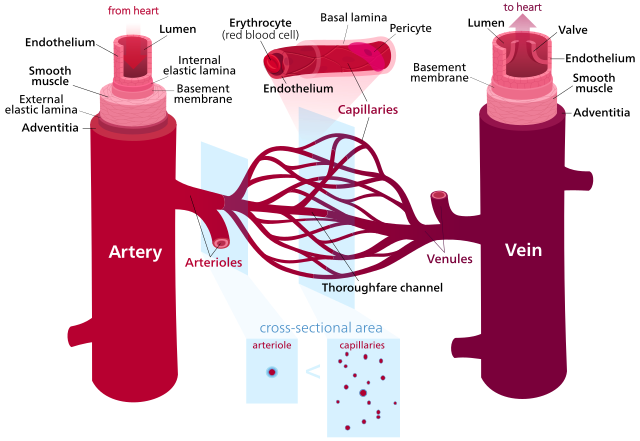
- Arteries — Thick elastic walls; carry blood away from heart at high pressure.
- Veins — Thinner walls; valves prevent backflow; rely on muscle contractions for return flow.
- Capillaries — One-cell-thick walls for exchange between blood and tissues.
⚗️ IA Tips & Guidance: An IA could investigate how different exercise intensities affect recovery heart rate, using controlled time intervals and biometric sensors.
📌 Regulation of Heart Rate
- Controlled by medulla oblongata responding to CO₂, O₂, and pH levels.
- Sympathetic stimulation increases heart rate; parasympathetic stimulation decreases it.
- Hormones (e.g., adrenaline) increase rate during stress or exercise.