B3.1.2 – GAS EXCHANGE IN COMPLEX ANIMALS
📌Definition Table
| Term | Definition |
|---|---|
| Tracheal System | Network of air-filled tubes in insects that delivers oxygen directly to tissues. |
| Spiracle | External opening in insects that connects to the tracheae and controls air entry. |
| Gill | Filamentous respiratory organ in aquatic animals for extracting oxygen from water. |
| Counter-Current Exchange | Flow arrangement where blood and water move in opposite directions to maximise oxygen diffusion into blood. |
| Alveolus | Microscopic air sac in mammalian lungs specialised for gas exchange. |
📌Introduction
Larger and more metabolically active animals require specialised respiratory systems to efficiently obtain oxygen and remove carbon dioxide. As body size increases, the surface area-to-volume ratio decreases, making simple diffusion insufficient. Complex animals have evolved adaptations such as tracheal systems, gills, and lungs, often supported by ventilation mechanisms and circulatory systems to maintain steep concentration gradients.
❤️ CAS Link: Organise a comparative anatomy workshop where students dissect fish gills and observe insect tracheae under microscopes, linking form and function in gas exchange.
📌 Gas Exchange in Insects
- Insects have a tracheal system made of tubes (tracheae) branching into smaller tracheoles that reach individual cells.
- Spiracles control the entry of air and water loss via opening/closing mechanisms.
- Oxygen diffuses directly to tissues, bypassing the need for respiratory pigments.
- Larger insects may use abdominal pumping to ventilate the tracheal system.
🧠 Examiner Tip: In insect gas exchange questions, always mention that oxygen is delivered directly to cells — not transported via blood.
📌 Gas Exchange in Fish
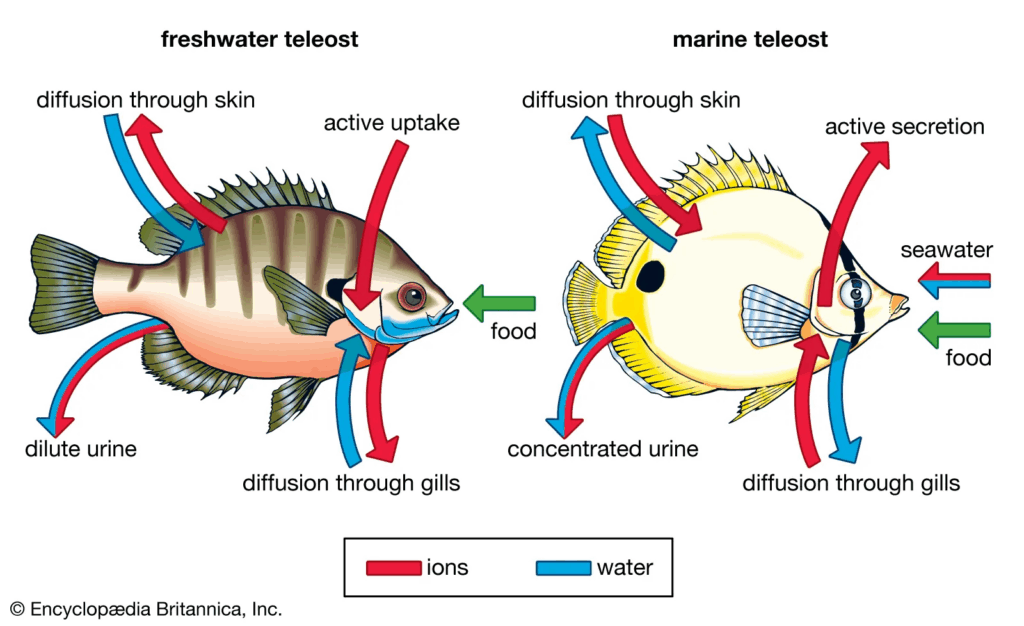
- Fish use gills made of thin filaments covered in lamellae to maximise surface area.
- Counter-current flow between water and blood maintains a steep oxygen gradient across the entire exchange surface.
- Gills are ventilated by buccal pumping or ram ventilation.
🌍 Real-World Connection: Understanding counter-current systems is applied in heat exchangers and oxygenation technology in aquaculture.
📌 Gas Exchange in Mammals
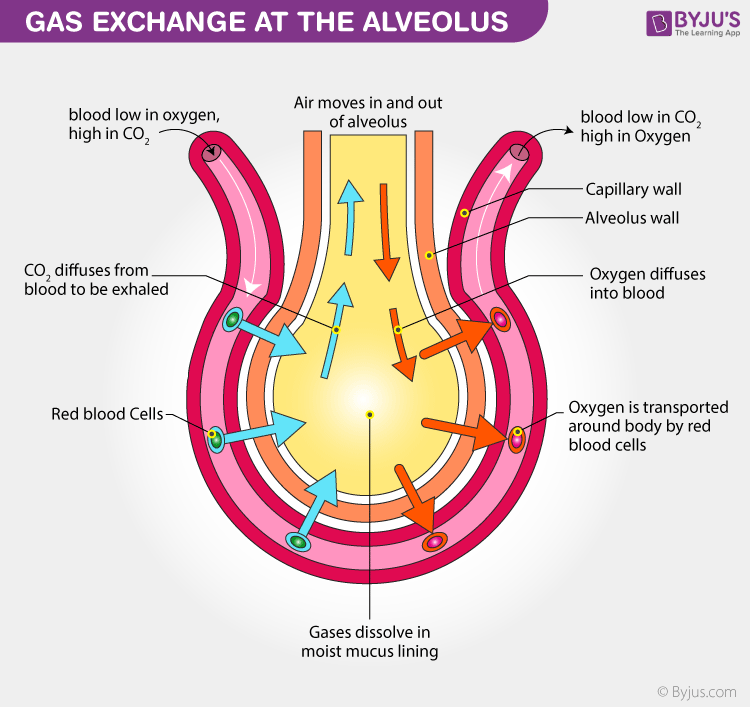
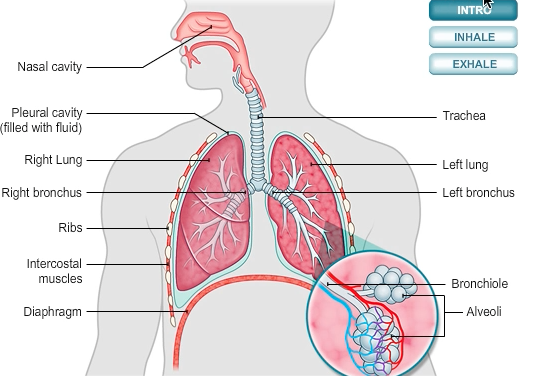
- Lungs contain millions of alveoli, each surrounded by a dense capillary network.
- Type I pneumocytes — thin epithelial cells for gas diffusion.
- Type II pneumocytes — secrete surfactant to prevent alveolar collapse.
- Ventilation is maintained by contraction/relaxation of the diaphragm and intercostal muscles.
🔍 TOK Perspective: The term “respiratory efficiency” can be defined differently in ecological, medical, and athletic contexts, highlighting the influence of perspective in scientific definitions.
📌 Ventilation Adaptations
- Insects — body pumping to move air.
- Fish — buccal and opercular movements create unidirectional water flow.
- Mammals — negative pressure breathing draws air into lungs.
⚗️ IA Tips & Guidance: An IA could compare oxygen saturation in water flowing over static vs. ventilated gills to model the importance of active ventilation.