A3.2.1 – BIOLOGICAL CLASSIFICATION
📌Definition Table
| Term | Definition |
|---|---|
| Taxonomy | The science of classifying organisms into groups based on shared characteristics. |
| Taxon (Taxa) | A group of organisms in a classification system (e.g., species, genus, family). |
| Hierarchy | System in which larger groups contain smaller, non-overlapping groups. |
| Morphology | Study of the form and structure of organisms. |
| Introgression | Transfer of genetic material from one species to another via repeated backcrossing. |
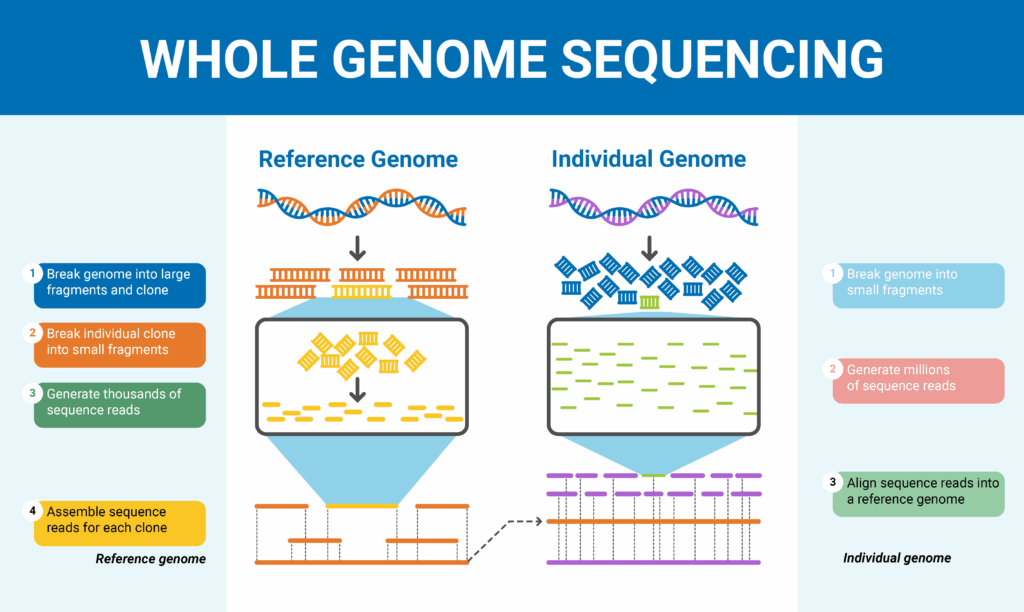
| Genome Sequencing | Determining the complete DNA sequence of an organism’s genome. |
📌Introduction
Biological classification organises Earth’s biodiversity into a structured system that reflects evolutionary relationships and facilitates scientific communication. From early morphology-based systems to modern genome-informed taxonomy, classification underpins conservation, research, and disease control. Without it, species could be misidentified, conservation priorities misplaced, and evolutionary history misunderstood.
❤️ CAS Link: Organise a school biodiversity survey, classifying plant species using morphological traits, then compare results to DNA barcoding data.
📌 Purpose and Importance of Classification
- Allows scientists to accurately record and identify species, preventing duplication.
- Reveals evolutionary relationships between species and their common ancestry.
- Aids in conservation — cannot protect species if they are not recognised as distinct.
- Supports medical research by identifying related species with useful traits.
- Enables rapid response to new diseases (e.g., COVID-19 classified as a coronavirus).
🧠 Examiner Tip: Always mention evolutionary relationships and practical applications when asked why classification is important.
📌 Hierarchy of Taxa
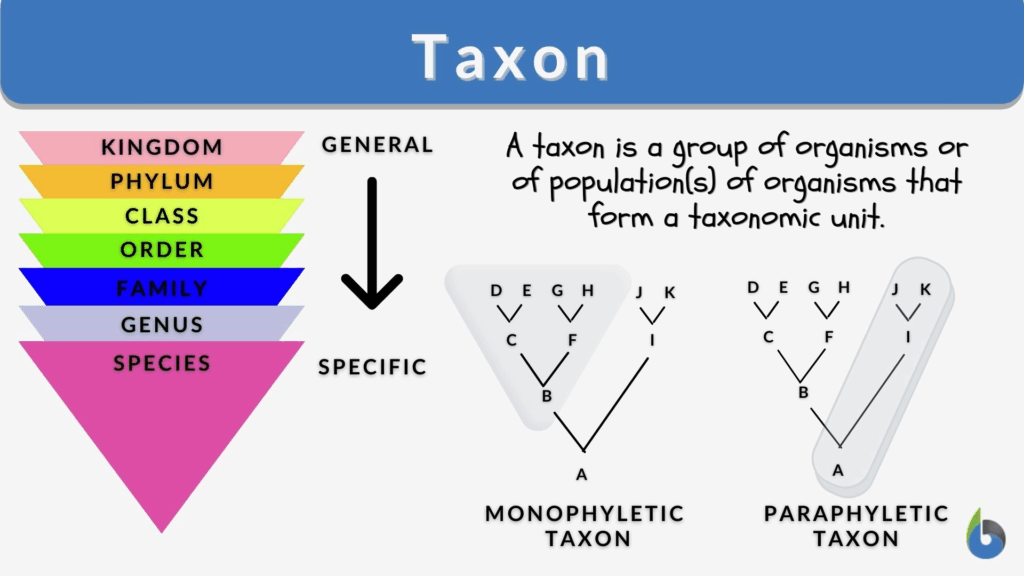
- Traditional classification has fixed ranks: Domain → Kingdom → Phylum → Class → Order → Family → Genus → Species.
- Larger groups contain smaller, non-overlapping groups.
- Example:
- Wolf: Domain Eukaryote, Kingdom Animalia, Phylum Chordata, Class Mammalia, Order Carnivora, Family Canidae, Genus Canis, Species lupus.
- Hibiscus: Domain Eukaryote, Kingdom Plantae, Phylum Angiospermae, Class Dicotyledonae, Order Malvales, Family Malvaceae, Genus Hibiscus, Species rosa-sinensis.
🌐 EE Focus: An EE could explore how phylogenetic evidence has reshaped specific taxonomic ranks over time.
📌 Challenges in Classification
- Morphology Limitations – Similar features can evolve independently through convergent evolution (e.g., streamlined bodies in dolphins and sharks).
- Taxonomic Rank Issues – Hybridisation and evolutionary complexity can make placement difficult, sometimes requiring major reorganisation of ranks.
- Species Boundaries – Defining a species is subjective; gene flow via introgression blurs distinctions (e.g., Neanderthal DNA in modern humans).
🔍 TOK Perspective: The taxonomic hierarchy is a human-made structure; in nature, differences between organisms often occur on a continuum.
📌Role of Genome Sequencing
- Provides objective genetic data for classification.
- Identifies evolutionary relationships that are not obvious from morphology.
- Allows reclassification when genetic evidence contradicts earlier systems.
- Forms the foundation for cladistics, which groups organisms purely by shared ancestry rather than fixed ranks.