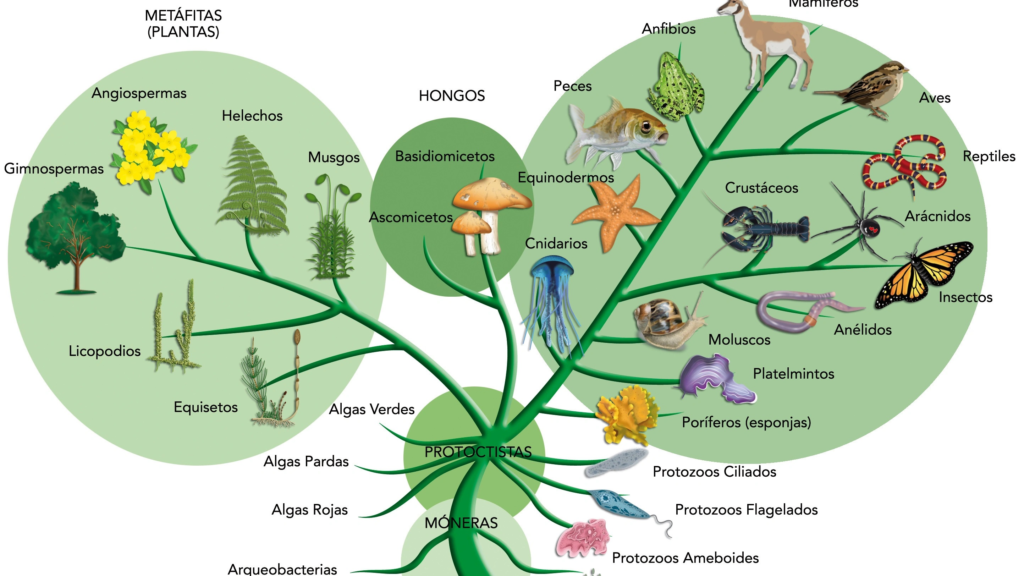
A3.1.1 – CLASSIFICATION AND TAXONOMY
📌Definition Table
| Term | Definition |
|---|---|
| Taxonomy | The science of naming, describing, and classifying organisms. |
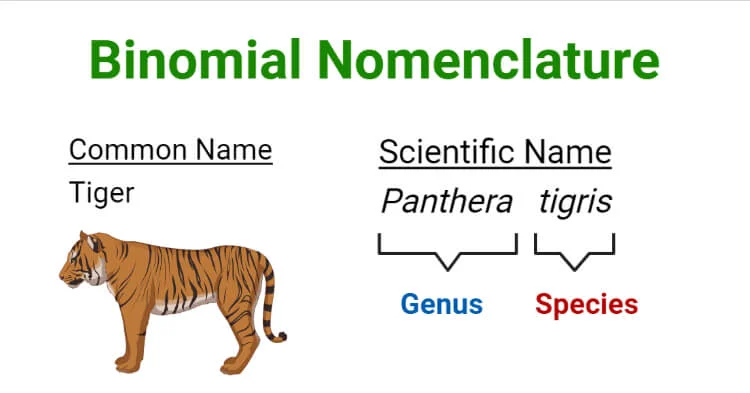
| Binomial Nomenclature | System of giving each species a two-part scientific name (genus + species). |
| Hierarchical Classification | Arrangement of organisms into nested groups from broad to specific categories. |
| Phylogenetics | Study of evolutionary relationships among species. |
| Morphological Traits | Physical characteristics used for classification. |
| Molecular Phylogenetics | Use of DNA, RNA, and protein sequences to determine evolutionary relationships. |
📌Introduction
Classification allows scientists to organise and communicate biological information, making it easier to study, identify, and understand organisms. This system helps reveal evolutionary relationships and track biodiversity. Taxonomy uses morphological, biochemical, and molecular data to place organisms into groups that reflect their ancestry.
❤️ CAS Link: Lead a biodiversity survey in a local park, collecting and classifying organisms using a simplified field guide for community education.
📌 Importance of Classification in Biology
- Provides a universal language for scientists across the world.
- Helps avoid confusion from common names, which can vary between regions and languages.
- Organises knowledge of the vast diversity of life into manageable categories.
- Reveals evolutionary relationships among organisms.
- Assists in predicting characteristics of organisms based on their group.
- Essential for biodiversity monitoring and conservation planning.
🧠 Examiner Tip: Always explain that classification is based on shared characteristics and increasingly on genetic evidence — this is a common IB mark point.
📌 Binomial Nomenclature System
- Developed by Carl Linnaeus in the 18th century.
- Each species has a two-part name:
- Genus (capitalised)
- Species (lowercase)
- Written in italics or underlined when handwritten.
- Provides a unique and standardised name for every organism.
- Reduces ambiguity in scientific communication.
- Example: Homo sapiens (humans).
🌍 Real-World Connection: Binomial nomenclature is used in medicine to identify pathogens precisely, avoiding dangerous miscommunication.
📌 Hierarchical Classification Levels
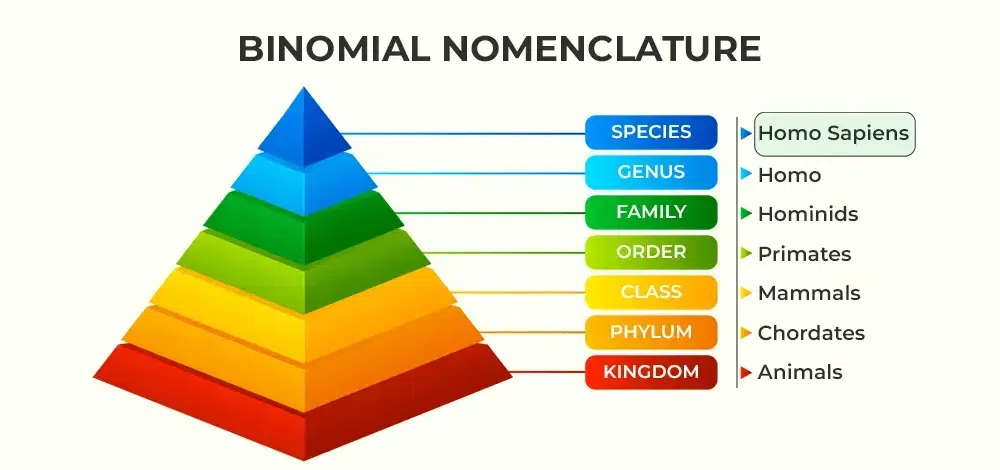
- Domain → Kingdom → Phylum → Class → Order → Family → Genus → Species.
- Domains represent the broadest groupings; species is the most specific.
- Each level groups organisms that share certain characteristics.
- Organisms become more similar to each other as you move down the hierarchy.
- Mnemonics like “Dear King Philip Came Over For Good Soup” help memorise the order.
- Modern classification increasingly uses genetic data to refine groupings.
🌐 EE Focus: An EE could compare morphological vs molecular classification in a particular group of organisms (e.g., flowering plants, fish).
📌 Criteria for Classification
- Morphological: Shape, structure, anatomy.
- Physiological: Metabolism, reproduction, life cycle.
- Biochemical: Enzyme composition, metabolic pathways.
- Genetic: DNA, RNA, and protein sequence similarities.
- Ecological: Habitat, niche, interactions with other organisms.
- Combining multiple criteria provides a more accurate classification.
🔍 TOK Perspective: How do advances in technology (e.g., DNA sequencing) influence our perception of how life should be classified?
📌 Role of Molecular Phylogenetics
- Uses DNA and protein sequences to determine evolutionary relationships.
- Reveals hidden similarities not visible morphologically.
- Helps correct misclassifications based on convergent evolution.
- Can reconstruct evolutionary trees (phylogenies).
- Identifies relationships among extinct species through ancient DNA.
- Plays a role in tracking the evolution of pathogens.