D4.3.2 BIOLOGICAL AND ECOLOGICAL IMPACTS
📌Definition Table
| Term | Definition |
|---|---|
| Phenology | Timing of biological events such as flowering, migration, and breeding. |
| Range shifts | Movement of species distributions in response to changing climates. |
| Coral bleaching | Loss of symbiotic algae from corals due to stress, often linked to warming seas. |
| Ecosystem services | Benefits provided by ecosystems, such as pollination, water purification, and carbon sequestration. |
| Trophic mismatch | Disruption between timing of species interactions (e.g., predator and prey cycles). |
| Biodiversity loss | Decline in variety of species and genetic resources due to climate and habitat change. |
📌Introduction
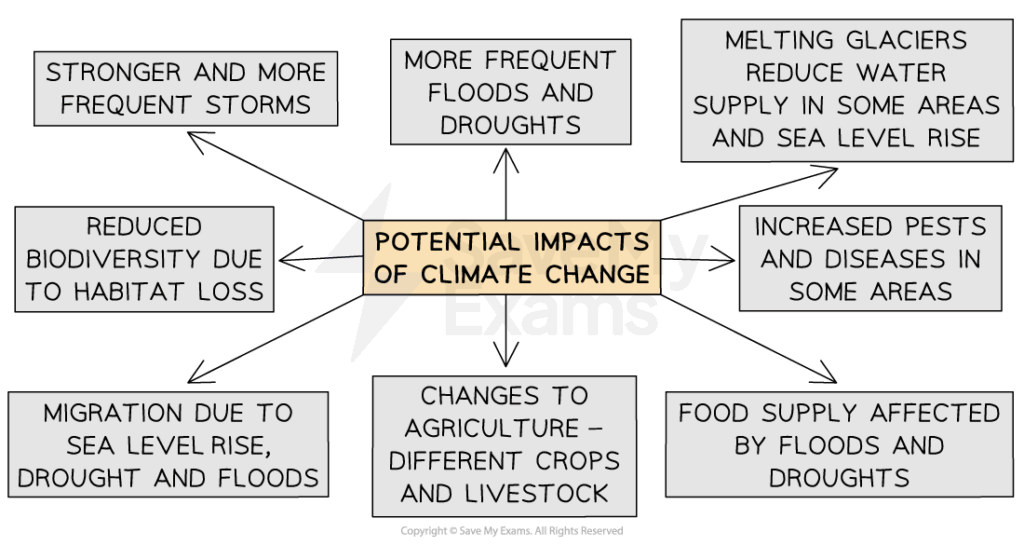
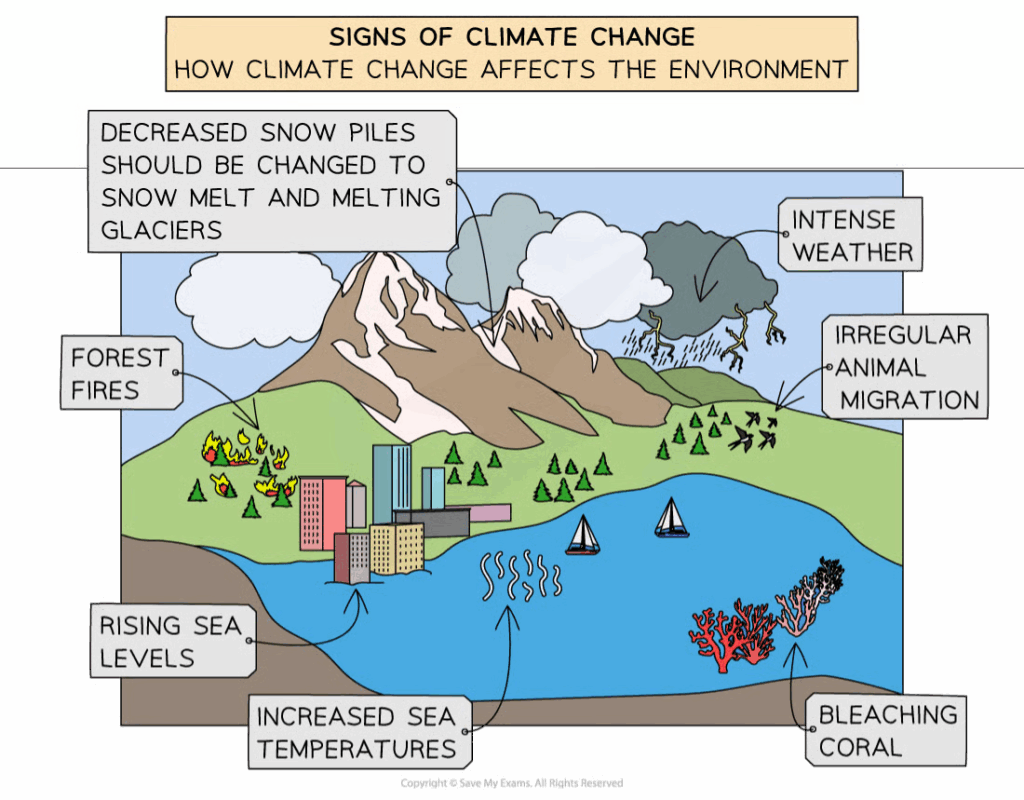
Climate change impacts biological systems at every level, from molecular physiology to global ecosystems. Rising temperatures, altered precipitation, and extreme events disrupt life cycles, migration, and reproduction. Ecosystems face shifts in community composition, species extinction risks, and altered services. These effects cascade through food webs, destabilising ecological interactions and human systems that depend on them
📌 Phenological Changes
- Plants flowering earlier in spring, altering pollination networks.
- Migratory birds arriving earlier or mismatched with food peaks.
- Insects emerging at different times, disrupting predator–prey synchrony.
- Amphibians breeding earlier in response to warming.
- Seasonal cues increasingly unreliable under shifting climates.
🧠 Examiner Tip: Use specific examples (e.g., UK butterflies emerging earlier) to illustrate impacts; generic statements lose marks.
📌 Range Shifts and Extinction Risk
- Species moving poleward or upslope to track suitable climates.
- Arctic species (polar bears, walruses) losing habitat due to ice melt.
- Alpine species confined to shrinking high-altitude zones.
- Coral reefs threatened by warming seas and acidification.
- Species unable to migrate or adapt risk extinction.
🧬 IA Tips & Guidance: Local surveys could track species distributions over time (e.g., plants along an elevation gradient), linking observed changes to climate patterns.
📌 Ecosystem Disruptions
- Coral bleaching events causing large-scale reef mortality.
- Forest dieback from droughts, pests, and wildfires.
- Ocean acidification harming shell-building organisms.
- Shifts in fisheries as marine species move poleward.
- Cascading effects destabilise food webs and ecosystem services.
🌐 EE Focus: An EE could focus on ecological resilience — e.g., how climate stress alters keystone species, changing entire ecosystem dynamics.
📌 Human Dependence on Ecosystems
- Agriculture disrupted by droughts and shifting growing zones.
- Loss of pollinators threatens food security.
- Freshwater supplies reduced by shrinking glaciers.
- Fisheries collapse affecting livelihoods of millions.
- Ecosystem service degradation increases human vulnerability.
❤️ CAS Link: Students could collaborate with conservation groups to raise awareness about protecting pollinators or planting climate-resilient vegetation.
🌍 Real-World Connection: Indigenous communities and small-island nations are already experiencing existential threats from rising seas and biodiversity loss.
📌 Feedbacks Between Biology and Climate
- Deforestation reduces carbon sinks, accelerating warming.
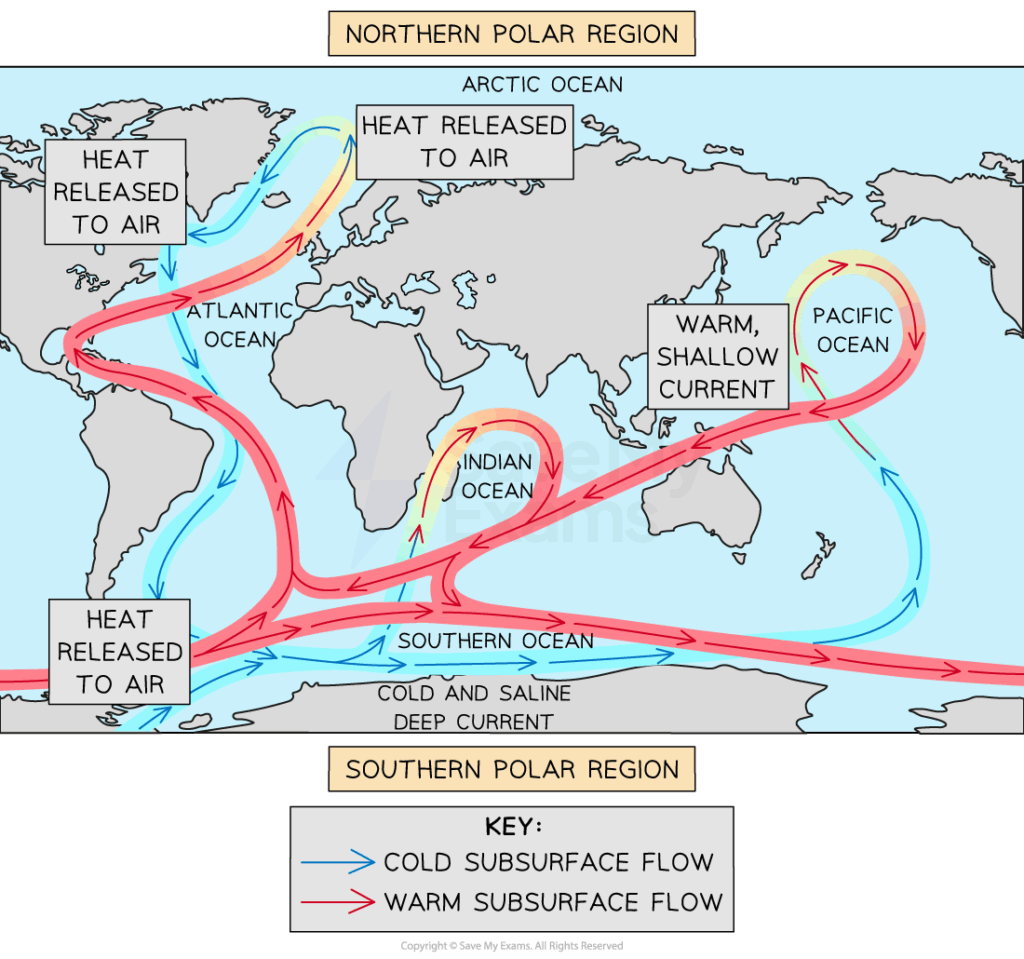
- Permafrost thaw releases methane, intensifying greenhouse effect.
- Forest dieback reduces evapotranspiration, altering rainfall patterns.
- Ocean ecosystem collapse reduces CO₂ absorption.
- Biology both suffers from and amplifies climate change.
🔍 TOK Perspective: Predicting ecological futures involves uncertainty. TOK issue: How do scientists balance probabilistic predictions with public communication to inspire action without overstating certainty?