D3.3.3 OSMOREGULATION AND EXCRETION
📌Definition Table
| Term | Definition |
|---|---|
| Osmoregulation | Control of water and solute balance in body fluids. |
| Excretion | Removal of toxic metabolic wastes from the body. |
| Nephron | Functional unit of the kidney, producing urine. |
| Ultrafiltration | High-pressure filtration of blood in the glomerulus. |
| ADH (antidiuretic hormone) | Hormone regulating water reabsorption in kidneys. |
📌Introduction
Osmoregulation and excretion maintain stable fluid composition by balancing water, salts, and nitrogenous waste. The kidneys are central, producing urine through ultrafiltration, selective reabsorption, and controlled water reabsorption. Failure of these processes can be fatal, making them critical to life
📌 Excretion and the Nephron
- Nitrogenous waste (from amino acids) excreted mainly as urea in humans.
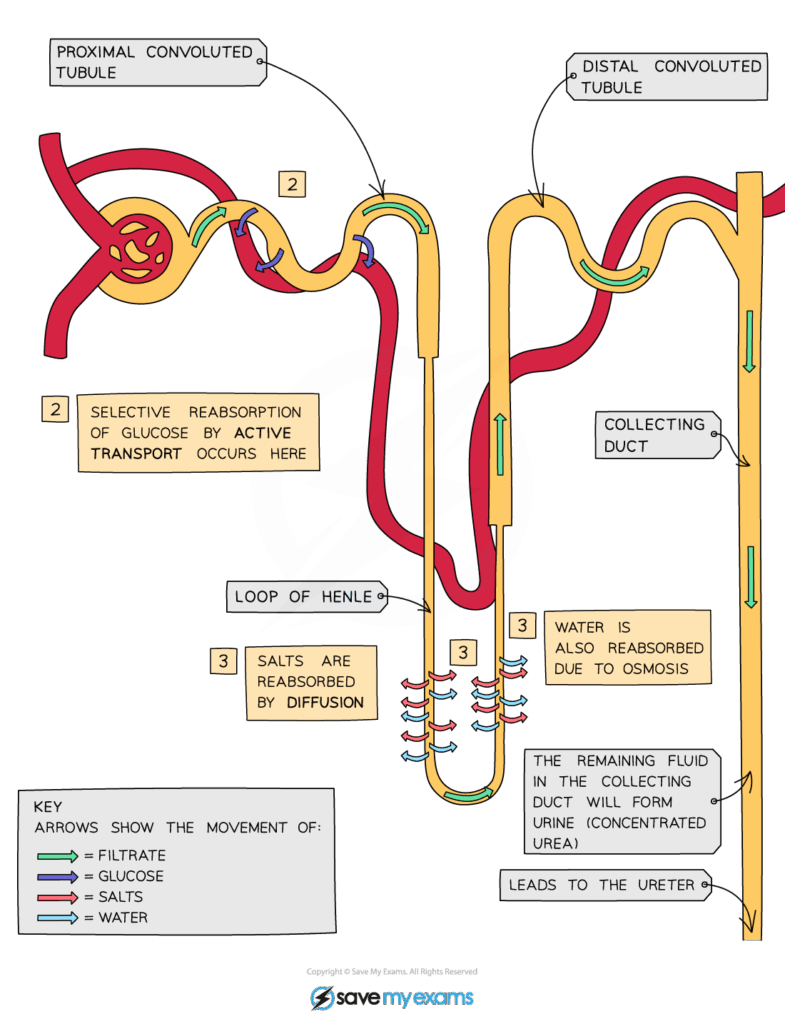
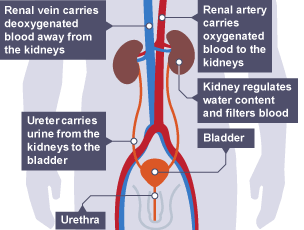
- Nephrons span cortex and medulla, filtering and modifying blood plasma.
- Ultrafiltration at Bowman’s capsule forces small molecules into filtrate.
- Selective reabsorption in proximal tubule reclaims glucose, amino acids, salts.
- Loop of Henle establishes osmotic gradients for water conservation.
🧠 Examiner Tip: Students often confuse glucagon (hormone) with glycogen (storage molecule). Keep spelling distinctions clear.
📌 Osmoregulation by ADH
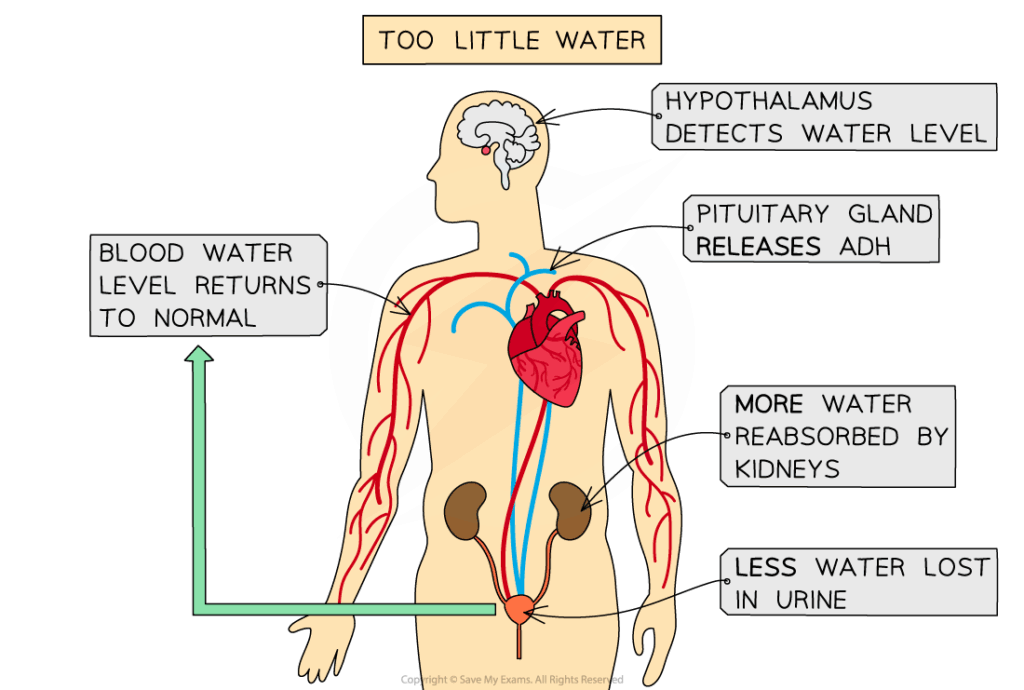
- Hypothalamus osmoreceptors detect blood water concentration.
- Low water → ADH release → aquaporins inserted in collecting duct → more water reabsorbed → concentrated urine.
- High water → ADH falls → fewer aquaporins → dilute urine.
- Loop of Henle gradient ensures reabsorption efficiency.
- Balances hydration under varying intake and loss conditions.
🧬 IA Tips & Guidance: Students could test urine solute concentration under different hydration conditions (safe classroom simulations using salt solutions).
📌 Kidney Adaptations and Variations
- Desert animals have longer loops of Henle → produce concentrated urine.
- Aquatic animals may excrete ammonia directly.
- Uric acid excretion in birds conserves water.
- Kidney structure links tightly to ecological niche.
- Human kidney failure managed with dialysis or transplant.
🌐 EE Focus: An EE could investigate comparative osmoregulation in desert vs aquatic animals, or the efficiency of dialysis vs natural kidney function.
📌 Medical and Environmental Applications
- Dialysis mimics nephron functions in renal failure patients.
- ADH malfunction causes diabetes insipidus (excess dilute urine).
- Hydration monitoring crucial in athletics and medicine.
- Waste excretion central to maintaining pH and ionic balance.
- Pollution affects excretion in aquatic organisms.
❤️ CAS Link: Students could create awareness posters on hydration and kidney health, linking classroom learning to community well-being.
🌍 Real-World Connection: Osmoregulation is critical in medicine (kidney disease, dialysis), ecology (animal adaptations), and health (hydration). Technologies like dialysis machines and water balance therapies directly apply this biology.
📌 Integration with Other Systems
- Kidneys integrate with circulatory and endocrine systems.
- ADH and aldosterone show hormonal control.
- Links metabolism (protein breakdown) to excretion.
- Adaptations illustrate natural selection in action.
- Highlights role of water balance in all life forms.
🔍 TOK Perspective: We cannot observe osmoregulation directly but infer it from urine composition and blood solutes. TOK reflection: How do indirect measurements shape our confidence in unseen physiological processes?