D3.1.3 FERTILISATION, PREGNANCY AND BIRTH
📌Definition Table
| Term | Definition |
|---|---|
| Fertilisation | Fusion of sperm and egg nuclei to form a diploid zygote. |
| Acrosome reaction | Release of enzymes from sperm to penetrate egg membranes. |
| Implantation | Process where the blastocyst embeds into the uterine wall. |
| Placenta | Organ linking mother and fetus for nutrient and gas exchange. |
| Oxytocin | Hormone stimulating uterine contractions during labour. |
📌Introduction
Human reproduction culminates in fertilisation, pregnancy, and birth. Fertilisation initiates the formation of a zygote, which develops through embryonic and fetal stages, supported by the placenta. Hormonal regulation ensures successful implantation, gestation, and labour. This sequence demonstrates the complexity of reproductive biology
📌 Fertilisation
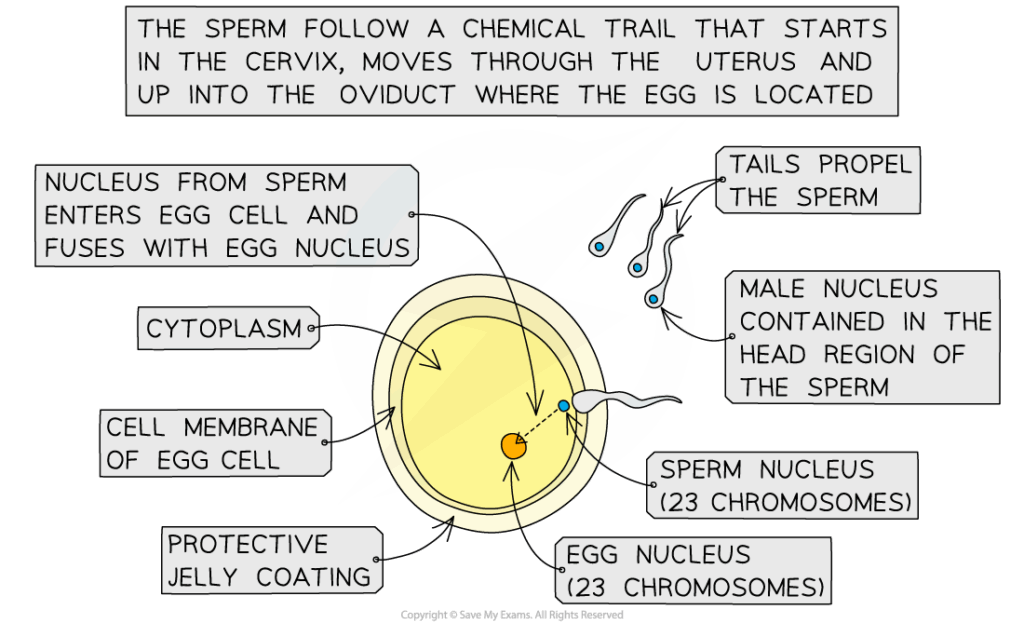
- Sperm undergo capacitation in the female reproductive tract, increasing motility.
- Acrosome reaction releases enzymes to digest egg’s zona pellucida.
- Fusion of sperm and egg membranes allows nuclear fusion.
- Cortical reaction prevents polyspermy by hardening egg membranes.
- Zygote forms and begins cleavage divisions.
🧠 Examiner Tip: Always mention the cortical reaction as the mechanism preventing polyspermy in IB answers.
📌 Pregnancy and Development
- Zygote develops into a blastocyst and implants in uterine lining.
- Placenta forms, enabling maternal–fetal exchange of gases, nutrients, and waste.
- Placental hormones (hCG, progesterone, estrogen) maintain pregnancy.
- Fetus undergoes organogenesis, growth, and differentiation.
- Amniotic sac protects fetus with cushioning fluid.
🧬 IA Tips & Guidance: An IA could model diffusion across artificial membranes to represent maternal–fetal exchange, linking experiments to pregnancy physiology.
📌 Hormonal Control of Pregnancy
- hCG maintains corpus luteum in early pregnancy, sustaining progesterone secretion.
- Progesterone maintains endometrium and suppresses uterine contractions.
- Estrogen supports uterine blood flow and fetal development.
- Hormonal shifts prepare body for labour and lactation.
- Negative feedback loops coordinate endocrine changes.
🌐 EE Focus: An EE could explore effects of maternal nutrition, stress, or hormones on pregnancy outcomes, linking physiology with health science.
📌 Birth and Lactation
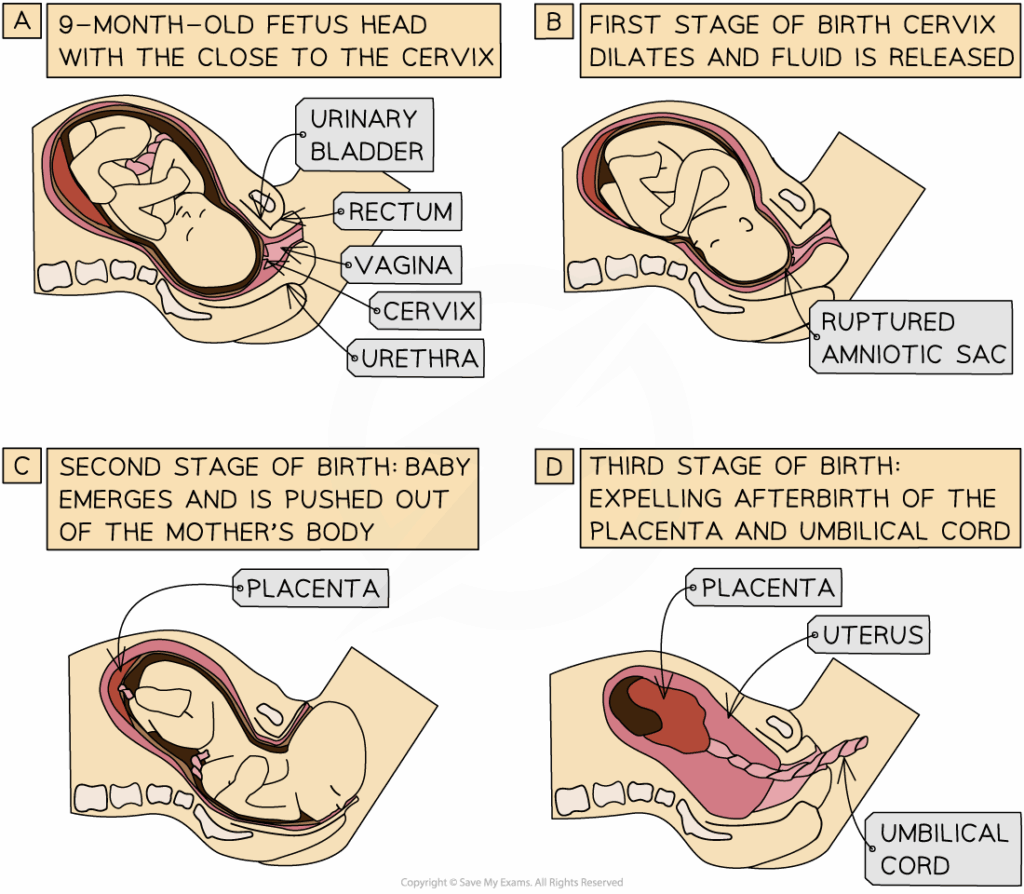
- Labour begins when oxytocin and prostaglandins trigger uterine contractions.
- Positive feedback amplifies contractions until delivery.
- Cervix dilates; fetus is delivered, followed by placenta.
- After birth, prolactin initiates milk production; oxytocin triggers milk letdown.
- Breastfeeding provides nutrition and immune protection to the infant.

❤️ CAS Link: Students could volunteer in maternal health awareness programs, linking scientific understanding of pregnancy and birth to community well-being.
🌍 Real-World Connection: Fertility treatments, prenatal care, and maternal health initiatives rely on understanding fertilisation and pregnancy. Knowledge of hormones underpins IVF, contraception, and obstetric medicine. Public health efforts to reduce maternal and infant mortality draw directly from reproductive biology.
📌 Integration with Human Development
- Fertilisation ensures genetic diversity and species continuity.
- Pregnancy demonstrates complex interactions between maternal and fetal systems.
- Hormonal regulation ensures successful reproduction.
- Birth is a coordinated physiological process essential for survival.
- Lactation extends maternal–infant connection beyond pregnancy.
🔍 TOK Perspective: Birth is both a biological and cultural event. TOK reflection: How do scientific explanations of reproduction coexist with cultural and ethical perspectives on pregnancy and childbirth?