C4.1.2 COMMUNITY INTERACTIONS PREDATION, COMPETITION, SYMBIOSIS
📌Definition Table
| Term | Definition |
|---|---|
| Community | All the populations of different species living and interacting in the same area. |
| Predation | An interaction where one organism (predator) kills and consumes another (prey). |
| Competition | When two or more species or individuals vie for the same limited resource. |
| Symbiosis | A close and long-term interaction between species, which may be mutualistic, commensal, or parasitic. |
| Mutualism | A symbiotic interaction where both species benefit. |
| Keystone species | A species that has a disproportionately large effect on community structure. |
📌Introduction
Community interactions shape biodiversity and ecosystem structure. Predation, competition, and symbiosis are central to regulating population sizes, resource availability, and species coexistence. These interactions drive natural selection, coevolution, and niche differentiation, creating dynamic and resilient ecosystems.
📌 Predation
- Predators regulate prey populations, preventing overgrazing or overpopulation.
- Predator–prey cycles often oscillate, with prey abundance driving predator numbers.
- Prey evolve defences: camouflage, toxins, mimicry, behavioural adaptations.
- Predators evolve counter-adaptations (speed, stealth, venom).
- Predation can increase biodiversity by reducing dominance of competitive prey species.
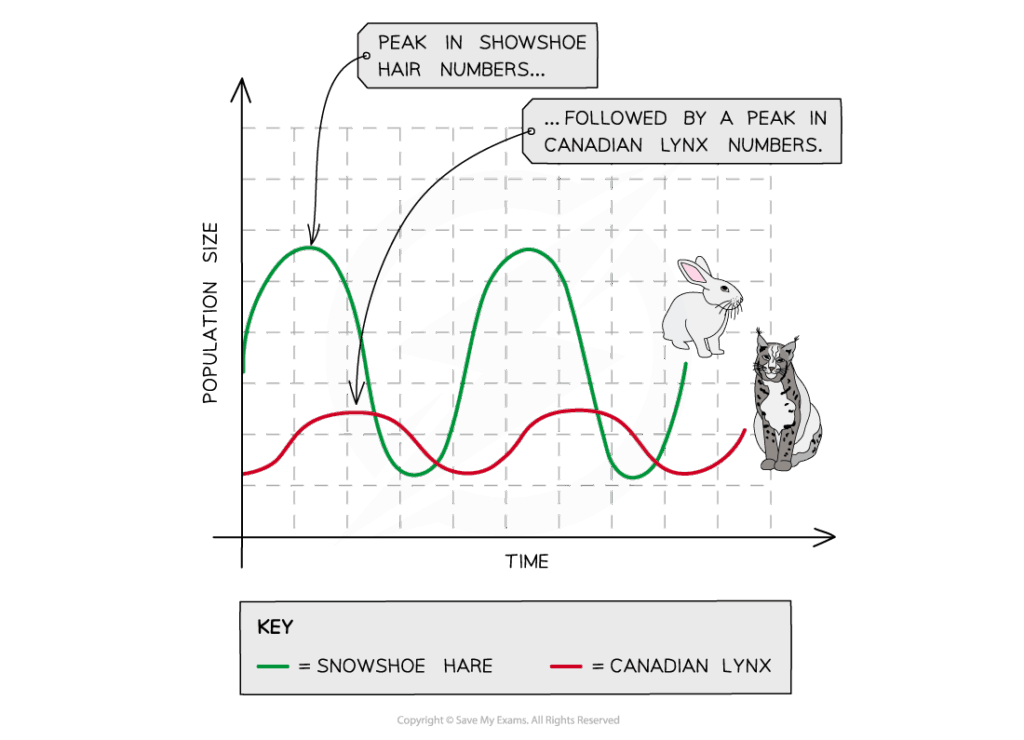
🧠 Examiner Tip: Don’t just describe “predators eat prey.” Use examples of coevolution (e.g., cheetahs and gazelles).
📌 Competition
- Intraspecific competition: occurs within a species for food, mates, or territory.
- Interspecific competition: between different species; may lead to competitive exclusion or niche partitioning.
- Competitive exclusion principle: no two species can occupy the same niche indefinitely.
- Partitioning reduces overlap — e.g., birds feeding in different canopy layers.
- Competition influences community diversity and stability.
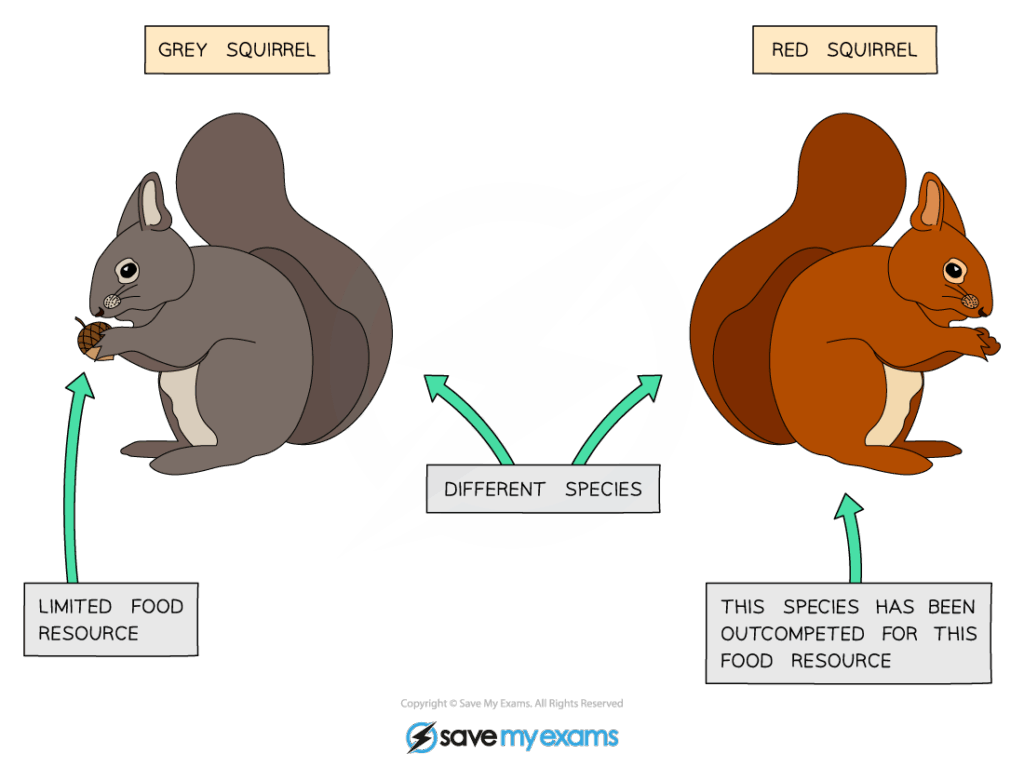
🧬 IA Tips & Guidance: Experiments with plants in limited soil can model competition for nutrients.
📌 Symbiosis
- Mutualism: both species benefit (bees pollinating flowers).
- Commensalism: one benefits, other unaffected (barnacles on whales).
- Parasitism: one benefits at the expense of the other (tapeworms in intestines).
- Obligate vs facultative symbiosis depends on whether the relationship is essential.
- Symbioses increase ecological complexity and resilience.
🌐 EE Focus: An EE could compare symbiotic relationships in different ecosystems (e.g., coral reefs vs forests) and assess their role in maintaining biodiversity.
📌 Keystone and Foundation Species
- Keystone species disproportionately affect ecosystems (e.g., sea otters control urchins, protecting kelp forests).
- Removal of keystone species causes trophic cascades and biodiversity loss.
- Foundation species shape environments by creating habitats (e.g., coral reefs, trees in forests).
- Both types highlight interdependence within communities.
- Conservation prioritises keystone species for ecosystem stability.
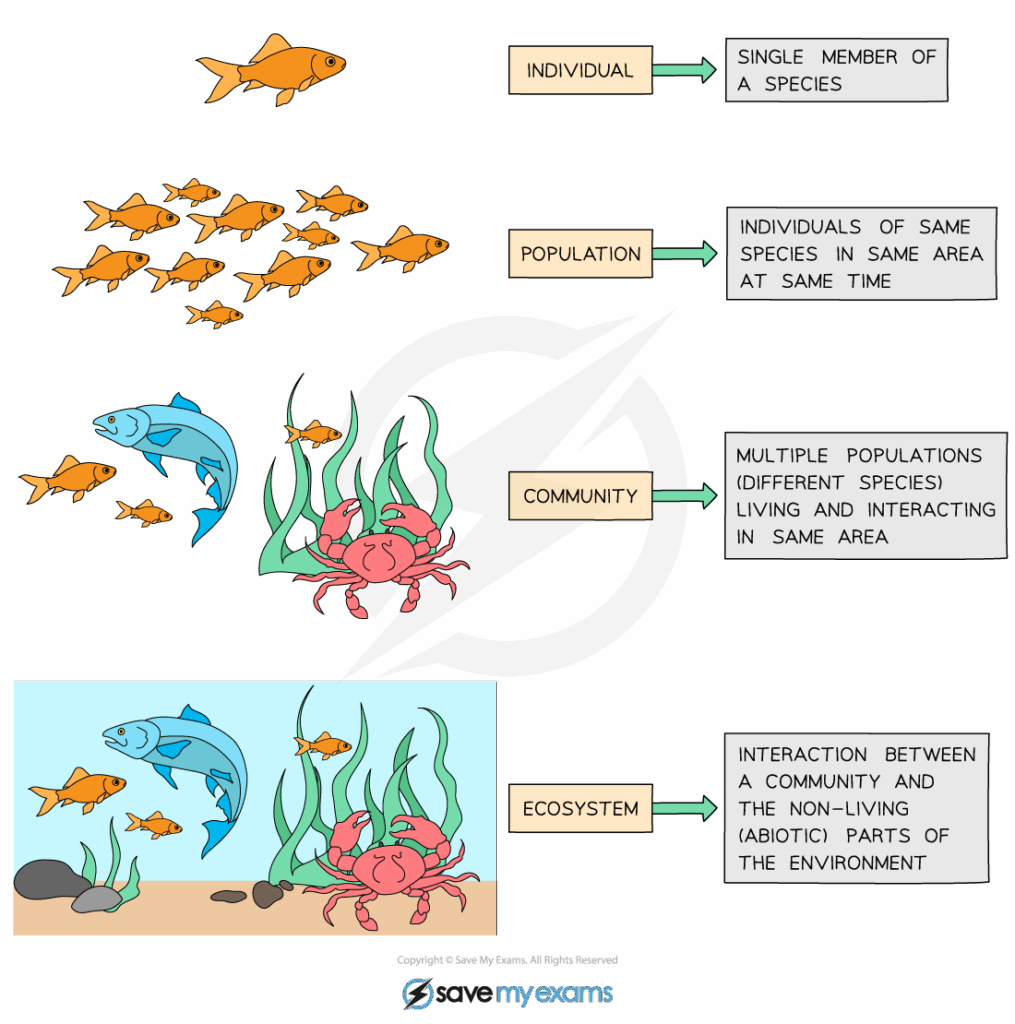
❤️ CAS Link: Students could create community awareness posters on local keystone species and their ecological roles.
🌍 Real-World Connection: Conservation efforts often focus on predators (wolves in Yellowstone) because of their keystone role in restoring ecosystems.
📌 Coevolution and Community Dynamics
- Coevolution shapes predator-prey, host-parasite, and mutualistic interactions.
- Symbiotic interactions can drive diversification of species niches.
- Community stability arises from a balance of competition, predation, and cooperation.
- Invasive species disrupt coevolved interactions, destabilising communities.
- Interactions are dynamic, shifting with environmental change.
🔍 TOK Perspective: Interactions are often categorised as predation, competition, or symbiosis, but real relationships are fluid. TOK question: Are human-made categories oversimplifications of continuous ecological processes?