B3.2.3 – BLOOD COMPOSITION AND FUNCTION
📌Definition Table
| Term | Definition |
|---|---|
| Plasma | The liquid component of blood (mostly water, with proteins, ions, nutrients, and wastes dissolved). |
| Erythrocyte (RBC) | Red blood cell; biconcave, anucleate cells specialized for oxygen transport via hemoglobin. |
| Leukocyte (WBC) | White blood cells involved in defense and immunity. |
| Platelet (thrombocyte) | Small, cell-fragment particles that play a key role in blood clotting. |
| Hemostasis | The physiological process that stops bleeding, involving platelets and clotting factors. |
| Antigen | A molecule recognized by the immune system, often triggering antibody production. |
📌Introduction
Blood is the primary transport medium in animals with closed circulatory systems, carrying oxygen, nutrients, hormones, and wastes while also defending the body and regulating homeostasis. It is composed of plasma, red blood cells, white blood cells, and platelets. The precise composition of blood allows it to function not just as a transport fluid but also as an immune defense system, a thermal regulator, and a key player in wound repair.
📌 Plasma and Its Functions
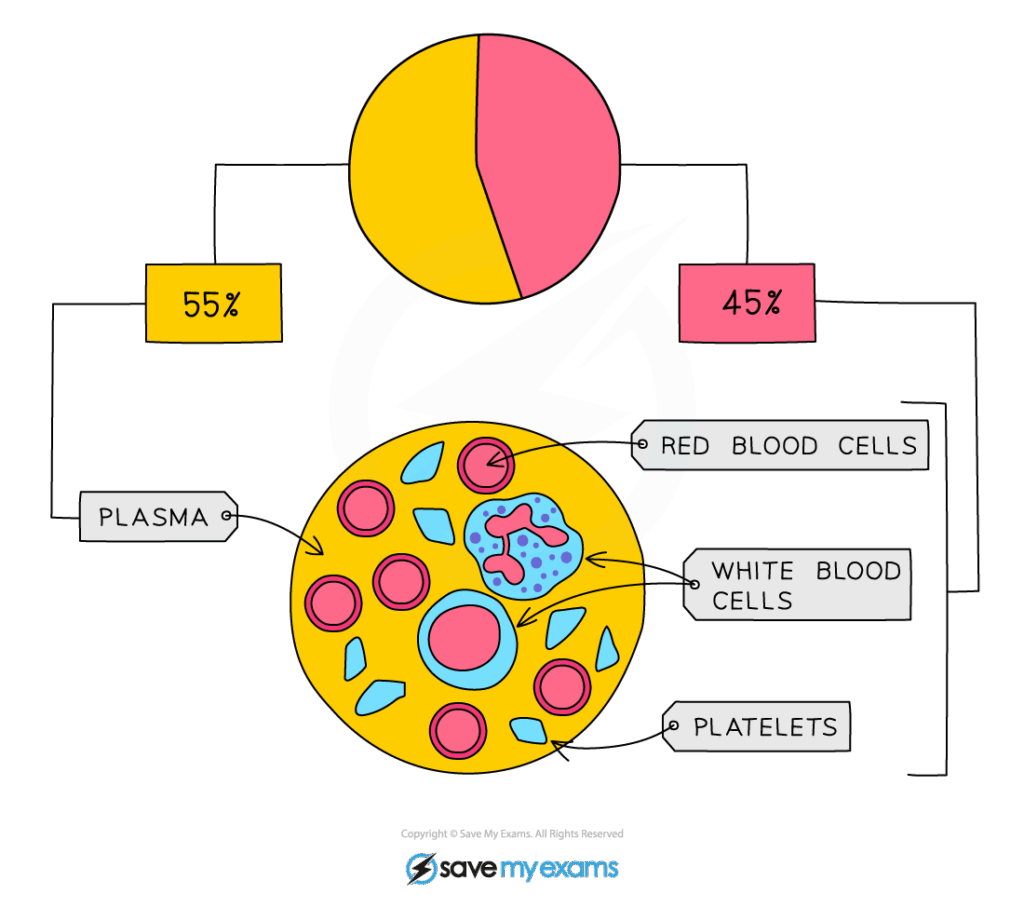
- Plasma makes up ~55% of blood volume and is mostly water, giving blood its fluidity.
- Carries dissolved gases (O₂, CO₂), nutrients (glucose, amino acids, lipids), and wastes (urea, lactic acid).
- Contains plasma proteins:
- Albumin → maintains osmotic balance and transports lipids/hormones.
- Globulins → transport and immunity (antibodies).
- Fibrinogen → clotting factor that forms fibrin during clotting.
- Plasma distributes hormones, heat, and buffers to regulate pH, making it vital for homeostasis.
🧠 Examiner Tip: In IB exams, don’t just list plasma functions — link them to homeostasis (e.g., albumin → osmotic pressure → tissue fluid balance).
📌 Erythrocytes (Red Blood Cells)
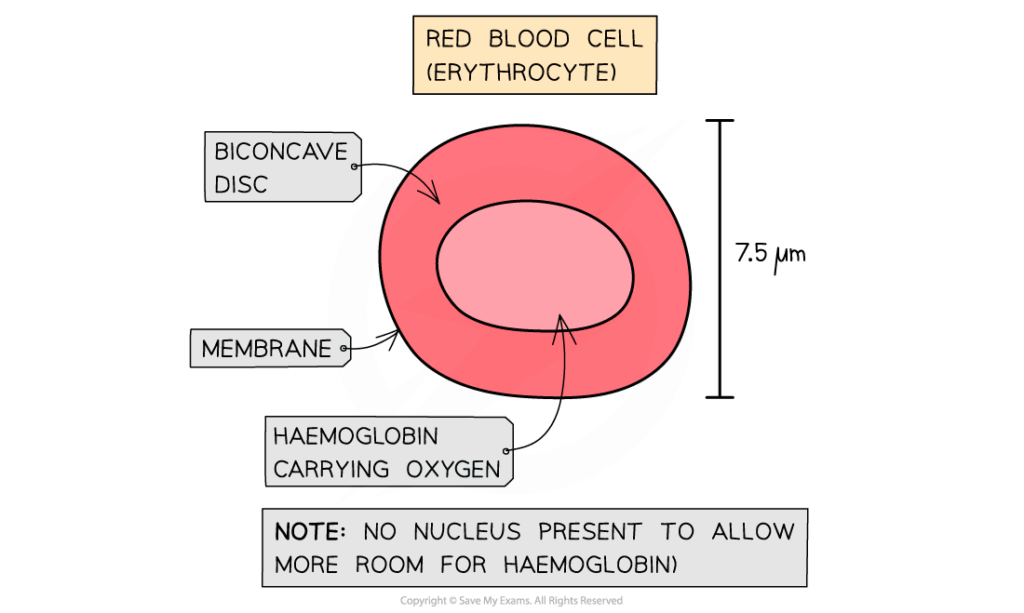
- RBCs are highly specialized: biconcave shape increases surface area for gas exchange.
- Lack nuclei and most organelles → maximize space for hemoglobin.
- Hemoglobin binds oxygen reversibly, enabling efficient transport.
- Life span is ~120 days, after which RBCs are recycled by the spleen and liver.
- RBC count and hemoglobin levels are critical indicators of health (e.g., anemia results from low hemoglobin).
🧬 IA Tips & Guidance: Investigations can include calculating hematocrit levels from blood samples or modeling oxygen dissociation curves using data sets. Ethical simulations rather than direct human samples are encouraged at IB level.
📌 Leukocytes (White Blood Cells)
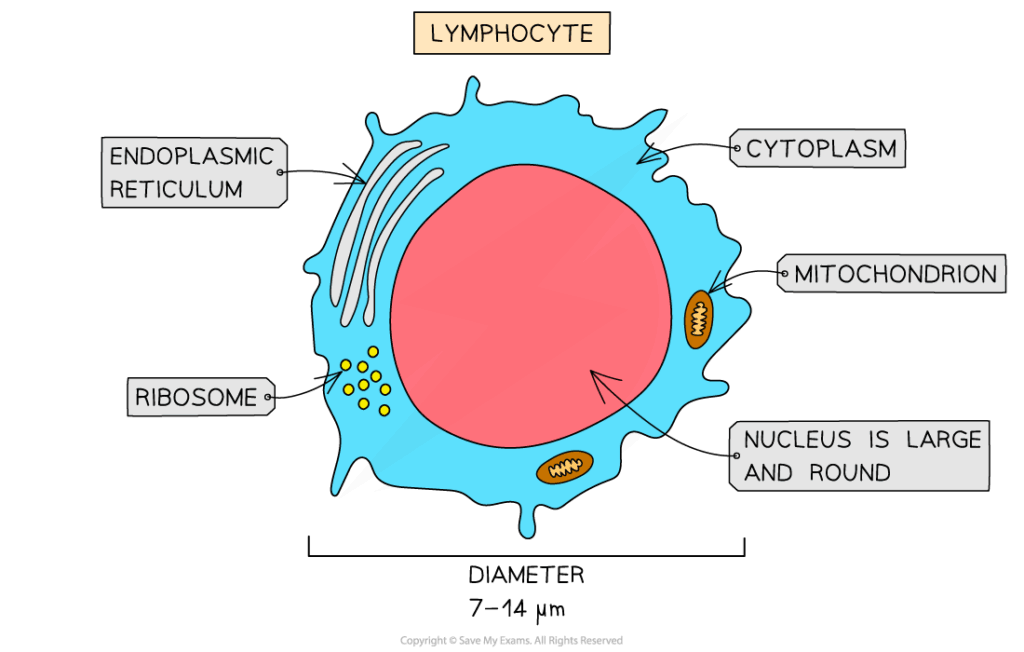
- Leukocytes are diverse, each specialized for immune defense:
- Neutrophils → phagocytose bacteria and fungi.
- Lymphocytes → B cells produce antibodies, T cells destroy infected cells.
- Monocytes → differentiate into macrophages for long-term defense.
- Eosinophils & basophils → combat parasites and mediate allergic reactions.
- They can exit capillaries by diapedesis to reach sites of infection.
- Though less numerous than RBCs, their protective role is essential for survival.
🌐 EE Focus: An EE could explore how leukocyte counts change in response to infections or how vaccination influences antibody production, linking blood composition to immunity.
📌 Platelets and Blood Clotting

- Platelets are cell fragments derived from megakaryocytes in bone marrow.
- In response to injury, they adhere to exposed collagen and release clotting factors.
- This activates a cascade leading to conversion of fibrinogen → fibrin, forming a mesh that traps RBCs to create a clot.
- Hemostasis prevents excessive blood loss while protecting against pathogens.
- Disorders such as hemophilia or thrombosis show the importance of balance in clotting systems.
❤️ CAS Link: Students could organize a blood donation awareness campaign, explaining to peers and community members how donated blood (RBCs, plasma, platelets) saves lives in surgery, cancer therapy, and trauma care.
🌍 Real-World Connection:
Blood composition is central to medicine. Blood tests (CBC, glucose levels, clotting times) are routine diagnostic tools. Blood transfusions require knowledge of ABO and Rh antigens to prevent rejection. Disorders such as anemia, leukemia, and clotting diseases illustrate how disruption in one component can threaten life. Advances like synthetic blood substitutes, stem-cell-derived RBCs, and immunotherapies show applied knowledge of blood biology.
📌 Integration of Blood Functions
- Transport → O₂, CO₂, nutrients, wastes, hormones.
- Regulation → body temperature, pH buffering, osmotic balance.
- Protection → clotting prevents blood loss; WBCs and antibodies defend against pathogens.
- Blood integrates transport, regulation, and defense into one fluid system that sustains homeostasis.
🔍 TOK Perspective: Blood has cultural and symbolic significance across societies, influencing how science communication is received. TOK reflection: How does cultural symbolism affect the way scientific knowledge about blood is understood and accepted by the public?