B2.3.1 – STEM CELLS AND POTENCY
📌Definition Table
| Term | Definition |
|---|---|
| Stem cell | An undifferentiated cell capable of unlimited division and differentiation into specialised cells. |
| Differentiation | The process by which stem cells develop into specialised cells with distinct functions. |
| Potency | The capacity of a stem cell to differentiate into different cell types. |
| Totipotent | Stem cells that can form all embryonic and extra-embryonic cell types. |
| Pluripotent | Stem cells that can form any embryonic cell type but not extra-embryonic cells. |
| Multipotent | Stem cells that can differentiate into a limited range of closely related cell types. |
| Unipotent | Stem cells that can only divide into their own cell lineage. |
📌Introduction
Stem cells are unique because they combine self-renewal with the potential to differentiate into other cell types. This makes them central to embryonic development and to adult tissue repair. Potency defines how versatile a stem cell is — totipotent cells have the greatest developmental potential, while unipotent cells are restricted to a single lineage. Understanding stem cells is vital for explaining how multicellular organisms grow, repair, and adapt.
📌 Stem Cell Niches
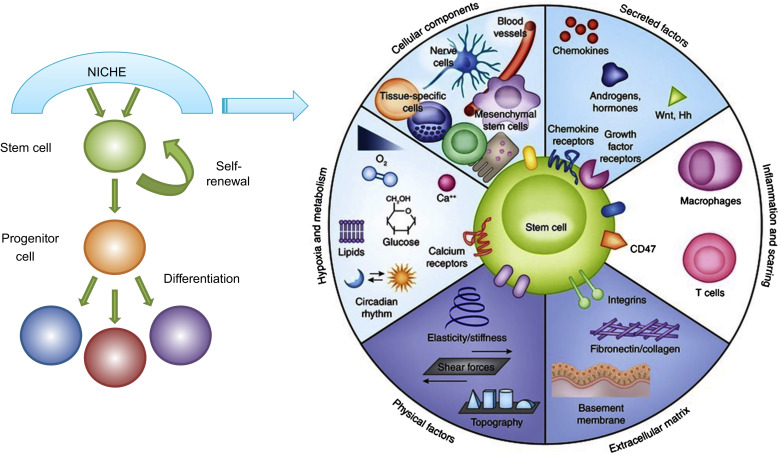
- Stem cells are maintained in specific “niches” — microenvironments that control their balance between self-renewal and differentiation.
- Bone marrow provides a niche for hematopoietic stem cells, enabling the continuous production of red blood cells, white blood cells, and platelets.
- Hair follicle niches ensure ongoing growth and regeneration of hair.
- Niches regulate stem cells by keeping them inactive until needed, or stimulating them when repair is required.
- The environment of the niche provides growth factors, cell-cell signals, and molecular cues that control stem cell fate.
🧠 Examiner Tip: Always remember the two hallmark properties of stem cells — self-renewal and differentiation. In exam answers, link potency terms (totipotent, pluripotent, multipotent, unipotent) to specific examples such as “bone marrow stem cells → blood cells.”
📌 Stem Cell Potency
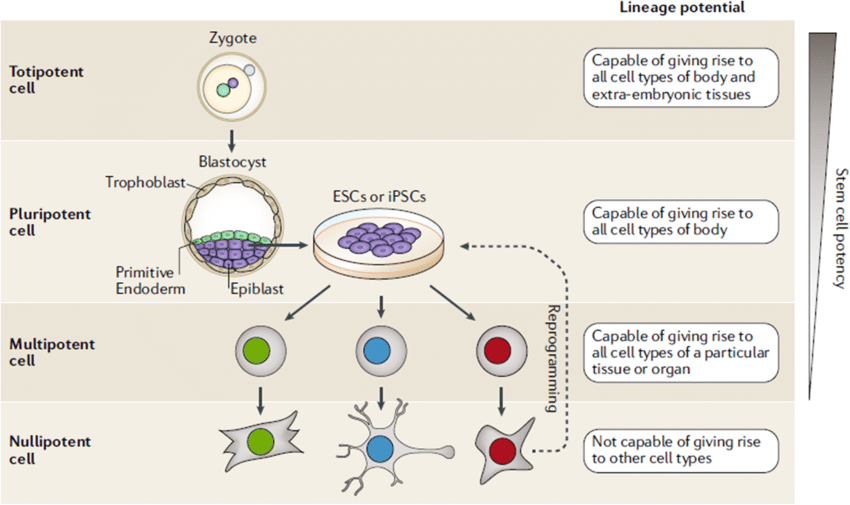
- Totipotent cells (zygote and early embryonic cells up to 16-cell stage) can give rise to all embryonic and extra-embryonic tissues, including placenta.
- Pluripotent cells (embryonic stem cells) can form any embryonic tissue, but not extra-embryonic tissues.
- Multipotent cells (adult stem cells, e.g., in bone marrow) can differentiate into a limited but related group, such as all blood cell types.
- Unipotent cells (e.g., cardiomyocytes) can only divide to produce their own type, but still play a crucial role in tissue maintenance and repair.
- Potency is gradually lost as development progresses, reflecting increasing specialisation and loss of flexibility.
🧬 IA Tips & Guidance: Students could design investigations using model organisms such as planarians (flatworms) that demonstrate regeneration through stem cells, linking observations of regrowth to the concept of potency.
📌 Medical and Biological Significance
- Embryonic stem cells have immense potential for regenerative medicine, but raise ethical issues.
- Adult stem cells are used in therapies such as bone marrow transplants for leukaemia.
- Induced pluripotent stem cells (iPSCs) show how somatic cells can be reprogrammed to pluripotency, offering new therapeutic approaches.
🌐 EE Focus: An EE could explore the comparative effectiveness of embryonic stem cells versus iPSCs in regenerative therapies, or analyse ethical frameworks surrounding stem cell research
📌 Regenerative Potential
- Stem cells offer the possibility of replacing damaged tissues in diseases such as Parkinson’s, type I diabetes, or spinal cord injuries.
- Their ability to self-renew makes them suitable for long-term therapies, unlike transplanted differentiated cells that cannot divide indefinitely.
❤️ CAS Link: Students could create informational campaigns or workshops explaining stem cell therapies to the public, engaging in service learning while raising awareness of scientific and ethical issues.
🌍 Real-World Connection: Stem cells are already used in medicine (bone marrow transplants), and clinical trials continue for conditions like macular degeneration and heart disease. Understanding potency has direct relevance for modern medicine.
📌 Ethics and Constraints
- Stem cell use raises ethical debates, particularly embryonic sources.
- Scientific advances such as iPSCs aim to resolve ethical dilemmas by avoiding embryo destruction.
🔍 TOK Perspective: The study of stem cells highlights tensions between scientific potential and ethical boundaries. It raises the TOK question: should knowledge always be pursued if it has potential benefits, even when ethical objections exist?