A3.1.1 – CLASSIFICATION AND TAXONOMY
📌Definition Table
| Term | Definition |
|---|---|
| Taxonomy | The science of classifying organisms into groups based on shared characteristics. |
| Binomial Nomenclature | The two-part scientific naming system for species, consisting of genus and species names. |
| Taxon (plural: taxa) | A group of organisms classified together at any level in the taxonomic hierarchy. |
| Phylogeny | The evolutionary history and relationships among species. |
| Cladistics | A classification method that groups organisms by common ancestry using shared derived characteristics. |
📌Introduction
Classification and taxonomy organise biological diversity into a structured system, enabling scientists to identify, name, and study organisms systematically. This framework allows communication across languages and disciplines and reflects evolutionary relationships. The modern system of taxonomy, developed from the work of Carl Linnaeus, uses hierarchical levels — from domain to species — and binomial nomenclature for species naming. Advances in molecular biology have refined classification, allowing genetic data to guide taxonomy and resolve ambiguities in evolutionary relationships.
📌 Taxonomic Hierarchy

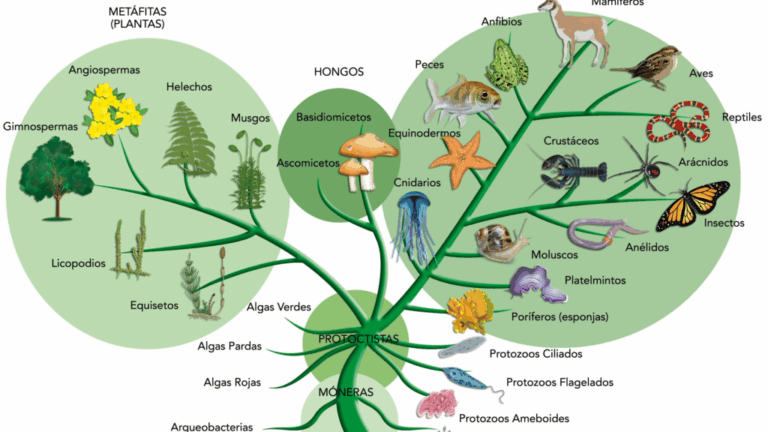
- Levels from broadest to most specific: Domain → Kingdom → Phylum → Class → Order → Family → Genus → Species.
- Each level groups organisms with increasingly specific similarities.
- Binomial nomenclature: genus name capitalised, species name lowercase (e.g., Homo sapiens).
- Classification reflects morphological, physiological, and molecular traits.
- Fossil records and molecular clocks can support taxonomic placement.
- Revisions occur as new data become available, especially from DNA sequencing.
🧠 Examiner Tip: Always italicize scientific names in written answers and ensure the genus is capitalised but the species name is not.
📌 Principles of Classification
- Morphological classification: based on structural similarities and differences.
- Physiological classification: based on metabolic processes or biochemical traits.
- Molecular classification: uses DNA, RNA, or protein sequence comparisons.
- Ecological classification: based on habitat or ecological niche.
- Cladistic analysis: groups organisms by evolutionary descent rather than overall similarity.
- Classification systems are dynamic, changing with new discoveries.
🧬 IA Tips & Guidance: A possible IA could compare classification outcomes when using morphological vs molecular data for the same set of species.
📌 Cladistics and Phylogenetic Trees
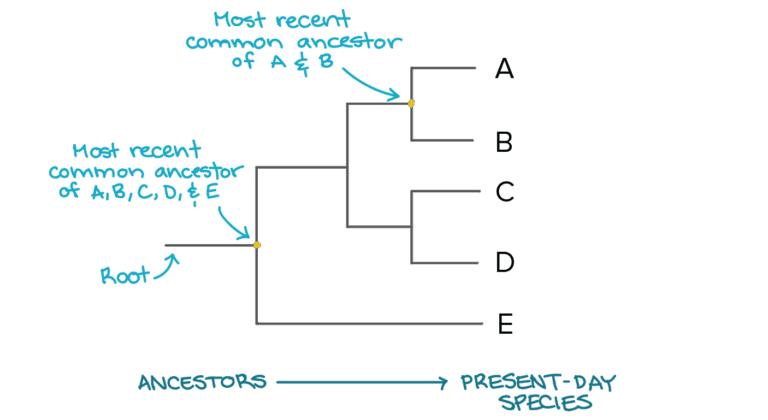
- Cladograms depict evolutionary relationships based on shared derived characteristics (synapomorphies).
- Branch points (nodes) represent common ancestors.
- Outgroups help establish the direction of evolutionary change.
- Molecular phylogenetics uses DNA/RNA/protein data to build trees.
- Trees are hypotheses, subject to change with new evidence.
- Cladistics emphasises monophyletic groups (common ancestor and all its descendants).
🌐 EE Focus: An EE could analyse how molecular phylogenetics has changed the classification of a specific group (e.g., fungi or protists).
📌 Advantages of Taxonomy
- Provides a universal language for scientists worldwide.
- Organises vast biodiversity into manageable categories.
- Reflects evolutionary relationships between organisms.
- Facilitates identification of species and study of their biology.
- Aids in predicting characteristics of newly discovered organisms.
- Helps track and manage biodiversity conservation efforts.
❤️ CAS Link: A CAS project could involve creating an interactive exhibit on classification for a local science fair.
🌍 Real-World Connection:
Taxonomy underpins conservation biology, agriculture, and medicine — correct species identification is essential for managing invasive species, breeding crops, and diagnosing pathogens.
📌 Tools and Methods in Taxonomy
- Dichotomous keys for species identification.
- Field guides for local flora and fauna.
- Genetic barcoding using standard DNA sequences.
- Microscopy to examine structural features.
- Biochemical assays for unique metabolic products.
- Databases like GenBank for genetic information.
🔍 TOK Perspective: Taxonomy illustrates how scientific classification systems are human-made frameworks that reflect both nature and our interpretation of it — they can change as new knowledge emerges.