A4.2.3 – CONSERVATION STRATEGIES
📌Definition Table
| Term | Definition |
|---|---|
| In-situ Conservation | Protecting species in their natural habitat. |
| Ex-situ Conservation | Conserving species outside their natural habitat, such as in zoos or botanical gardens. |
| Protected Area | A designated region managed to conserve biodiversity and natural resources. |
| Restoration Ecology | The process of assisting the recovery of degraded ecosystems. |
| Sustainable Use | Using biological resources in a way that does not lead to long-term decline. |
📌Introduction
Conservation strategies aim to protect biodiversity, maintain ecosystem services, and ensure the sustainable use of natural resources. These strategies operate at global, national, and local levels, and include both proactive measures to prevent biodiversity loss and reactive measures to restore degraded ecosystems. Effective conservation requires a combination of in-situ and ex-situ methods, legal protection, community involvement, and integration with sustainable development goals.
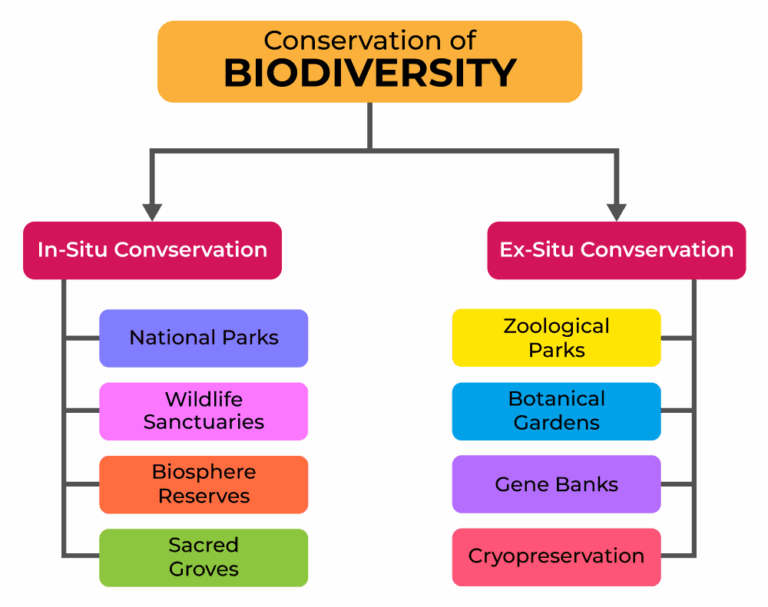
📌 In-situ Conservation Strategies
- Establishment of national parks, wildlife reserves, and marine protected areas.
- Legal enforcement against poaching, logging, and illegal fishing.
- Habitat restoration to support natural populations.
- Community-based conservation projects involving local stakeholders.
- Ecological corridors to connect fragmented habitats.
- Control of invasive species within protected areas.
🧠 Examiner Tip: Always highlight that in-situ conservation maintains natural ecological processes and species interactions.
📌 Ex-situ Conservation Strategies
- Zoos and aquaria for captive breeding and reintroduction programmes.
- Botanical gardens and seed banks preserving plant genetic diversity.
- Cryopreservation of gametes and embryos for rare species.
- Gene banks for agricultural crops and livestock.
- Rescue and rehabilitation centres for injured wildlife.
- Ensures survival when in-situ conservation is not possible.
🧬 IA Tips & Guidance: An IA could assess germination rates of seeds stored under different conditions to model seed bank viability.
📌 Legal and Policy Measures
- National biodiversity strategies aligned with the Convention on Biological Diversity (CBD).
- Endangered Species Acts and wildlife protection laws.
- CITES regulating international trade in endangered species.
- Environmental impact assessments before development projects.
- Integration of biodiversity conservation into land-use planning.
- Enforcement mechanisms and penalties for violations.
🌐 EE Focus: An EE could compare the effectiveness of protected areas in two different countries or ecosystems.
📌 Restoration and Sustainable Use
- Reforestation and afforestation projects.
- Wetland restoration to improve water quality and biodiversity.
- Sustainable forestry and fisheries management practices.
- Agroforestry combining agriculture with biodiversity benefits.
- Ecotourism generating revenue while conserving habitats.
- Payment for ecosystem services to incentivise conservation.
❤️ CAS Link: A CAS project could involve volunteering in a local habitat restoration programme or running a biodiversity awareness campaign.
📌 Community and International Collaboration
- Indigenous knowledge integrated into conservation planning.
- Local communities trained as wildlife monitors or eco-guides.
- Cross-border conservation initiatives for migratory species.
- Partnerships between governments, NGOs, and private sector.
- Public awareness campaigns and environmental education.
- Citizen science projects for biodiversity monitoring.
🔍 TOK Perspective: Conservation decisions often involve balancing scientific recommendations with cultural, economic, and political considerations.
🌍 Real-World Connection:
Successful conservation strategies can restore endangered species populations, revitalise ecosystems, and support sustainable livelihoods.