A4.1.1 – EVOLUTION AND EVIDENCE FOR EVOLUTION
📌Definition Table
| Term | Definition |
|---|---|
| Evolution | The change in heritable characteristics of populations over successive generations. |
| Microevolution | Small-scale evolutionary changes within a population over short timescales. |
| Macroevolution | Large-scale evolutionary changes that result in the formation of new species or higher taxa. |
| Fossil Record | Preserved remains or traces of past organisms, providing evidence of evolutionary change. |
| Homologous Structures | Structures with similar anatomy due to shared ancestry, even if function differs. |
📌Introduction
Evolution explains the diversity of life by showing how species change over time through natural selection and other mechanisms. Evidence for evolution comes from multiple disciplines, including palaeontology, comparative anatomy, embryology, molecular biology, and biogeography. The integration of fossil evidence with genetic data has created a robust framework that connects extinct and extant species in a continuous evolutionary lineage.
📌 Fossil Evidence
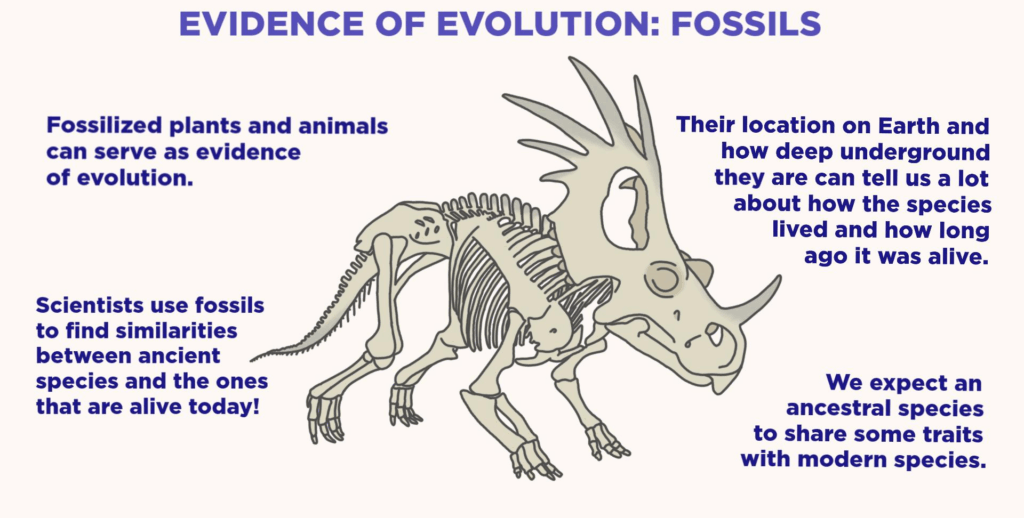
- Shows chronological changes in organisms through the geological record.
- Transitional fossils bridge gaps between major groups (e.g., Archaeopteryx between reptiles and birds).
- Radiometric dating provides accurate age estimates for fossils.
- Fossil distribution aligns with evolutionary theory and plate tectonics.
- Reveals extinct species and their relationship to modern organisms.
- Helps calibrate molecular clocks for evolutionary timelines.
🧠 Examiner Tip: When giving fossil examples, always link them to the evolutionary transition they represent.
📌 Anatomical and Embryological Evidence
- Homologous structures indicate shared ancestry (e.g., vertebrate forelimbs).
- Analogous structures arise from convergent evolution, not shared ancestry.
- Vestigial structures are remnants of features from ancestors (e.g., human appendix).
- Comparative embryology shows similar developmental stages among different species.
- Morphological patterns can be mapped onto phylogenetic trees.
- Anatomy supports hypotheses generated from molecular data.
🧬 IA Tips & Guidance: An IA could compare morphological data from related species to test phylogenetic predictions.
📌 Molecular Evidence
- DNA and protein sequence comparisons show degrees of relatedness.
- Highly conserved genes (e.g., cytochrome c) provide deep evolutionary links.
- Molecular clocks estimate divergence times.
- Supports and refines phylogenetic trees built from morphology.
- Can reveal cryptic species undetectable by anatomy alone.
- Mitochondrial DNA useful for tracing maternal lineages.
🌐 EE Focus: An EE could investigate the correlation between genetic similarity and geographical distribution of related species.
📌 Biogeographical Evidence
- Species distribution patterns support continental drift and plate tectonics.
- Endemic species on islands often resemble mainland relatives but are distinct.
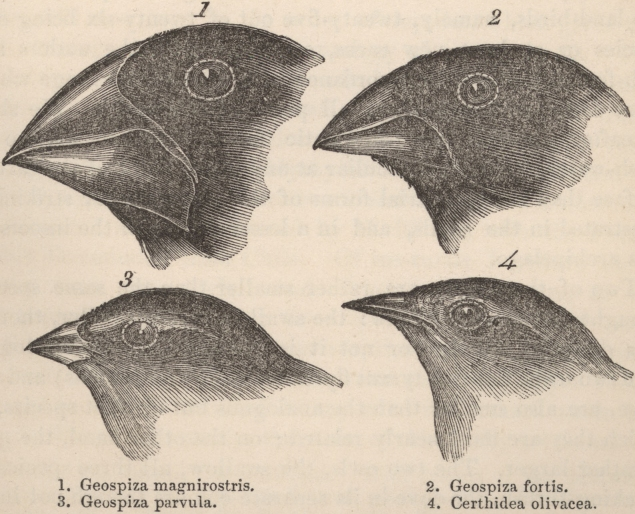
- Adaptive radiation seen in isolated habitats (e.g., Darwin’s finches).
- Continental separation explains unique fauna in Australia.
- Dispersal and vicariance shape species ranges.
- Fossil distribution matches predicted historical land connections.
❤️ CAS Link: A CAS project could involve mapping local biodiversity and explaining its evolutionary significance to a community audience.
📌 Observations of Evolution in Action
- Antibiotic resistance in bacteria evolves rapidly under selection pressure.
- Insecticide resistance in agricultural pests.
- Industrial melanism in peppered moths as an example of natural selection.
- Climate change affecting migration and breeding times in birds.
- Laboratory experiments demonstrating artificial selection in plants/animals.
- Rapid evolution in invasive species adapting to new environments.
🔍 TOK Perspective: The variety of evidence for evolution highlights the role of converging lines of inquiry in building strong scientific theories.
🌍 Real-World Connection:
Evolutionary evidence guides conservation strategies, helps predict disease emergence, and informs sustainable agriculture through understanding pest resistance.