A2.1.3 – EVIDENCE FOR EVOLUTION OF LIFE
📌Definition Table
| Term | Definition |
|---|---|
| Fossil Record | Preserved remains or traces of organisms that provide chronological evidence of life’s history. |
| Transitional Fossil | Fossil showing intermediate traits between ancestral and descendant groups. |
| Comparative Anatomy | Study of similarities and differences in organism structures to infer evolutionary relationships. |
| Homologous Structures | Anatomical features derived from a common ancestor but adapted for different functions. |
| Analogous Structures | Features with similar functions but different evolutionary origins. |
| Molecular Evidence | DNA, RNA, and protein sequence comparisons revealing genetic relationships. |
| Biogeography | Study of species distribution patterns across geographical locations. |
📌Introduction
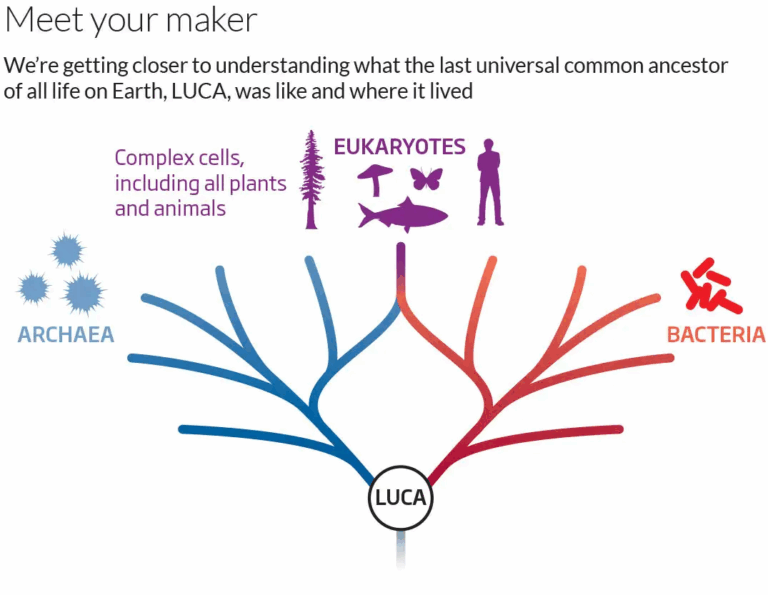
Multiple lines of evidence, from fossils to molecular comparisons, demonstrate that all life shares a common origin and has diversified over time. These independent but converging data sets provide a robust framework for understanding how life evolved on Earth.
📌 Fossil Record
- Older strata contain simpler organisms, younger strata contain more complex forms.
- Transitional fossils (e.g., Archaeopteryx) link major groups.
- Provides chronological evidence of change and extinction events.
- Reveals adaptive radiations after mass extinctions.
🧠 Examiner Tip: Always note that the fossil record is incomplete due to preservation bias and erosion.
📌 Comparative Anatomy
- Homologous structures (e.g., vertebrate forelimbs) show divergent evolution.
- Analogous structures (e.g., bird vs. insect wings) show convergent evolution.
- Vestigial structures (e.g., whale pelvis, human appendix) indicate evolutionary remnants.
- Supports inference of common ancestry or similar selective pressures.
🧬 IA Tips & Guidance: Measure and compare homologous bone lengths across species to model evolutionary relationships.
📌 Molecular Evidence
- DNA sequence similarities indicate relatedness (more similarities → closer relation).
- Protein sequences (e.g., cytochrome c) act as molecular clocks.
- Highly conserved genes across taxa (e.g., HOX genes) show shared ancestry.
🌐 EE Focus: Compare molecular clock results with fossil record dates to test evolutionary timelines.
📌 Embryological Evidence
- Early embryonic stages of vertebrates share features like gill slits and tails.
- Similar developmental pathways suggest common ancestry.
- Differences arise in later development due to divergent evolution.
❤️ CAS Link: Create an educational poster showing vertebrate embryonic similarities and differences.
📌Biogeography
- Species distribution patterns reflect evolutionary history.
- Island species (e.g., Darwin’s finches) show adaptive radiation from common ancestors.
- Continental drift explains related fossils on now-distant continents.
🌍 Real-World Connection: Biogeography informs conservation of endemic and endangered species.
📌 Observed Evolution in Real Time
- Examples: antibiotic resistance in bacteria, pesticide resistance in insects.
- Documented allele frequency changes over generations.
- Shows that evolution is ongoing and observable.
🔍 TOK Perspective: Evidence is interpreted through current scientific models; interpretations may change with new data.