B4.2.3 – NICHE ADAPTATION AND ENVIRONMENTAL CHANGE
📌Definition Table
| Term | Definition |
|---|---|
| Niche Shift | Change in the range of conditions and resources used by a species due to environmental change or species interactions. |
| Niche Expansion | Broadening of a species’ realised niche, often due to reduced competition or new resource availability. |
| Niche Contraction | Reduction of a species’ realised niche due to increased competition, predation, or habitat loss. |
| Climate Envelope | The set of climatic conditions within which a species can survive and reproduce. |
| Phenotypic Plasticity | The ability of an organism to change its physiology or behaviour in response to environmental conditions. |
📌Introduction
Environmental change — whether natural or human-induced — can alter species niches by shifting the conditions and resources available. Organisms may respond by moving, adapting, or facing extinction. Some species expand their range, while others become more restricted. These dynamics have profound implications for biodiversity conservation, ecosystem services, and predicting species’ future distributions.
❤️ CAS Link: Coordinate a climate-awareness campaign that highlights local species vulnerable to niche contraction due to habitat loss or climate change.
📌 Climate Change and Niche Shifts
- Rising temperatures and altered precipitation patterns change the location of suitable habitats.
- Species may shift polewards or to higher altitudes to track their climatic niche.
- Example: Alpine plants move upslope as lower elevations become too warm.
- Marine species shift towards cooler waters, disrupting fisheries and predator-prey relationships.
- Climate change also alters phenology, causing mismatches between species (e.g., pollinators and flowering times).
🧠 Examiner Tip: Always link climate change impacts to both abiotic (temperature, rainfall) and biotic (competition, predation) niche constraints.
📌 Human Activities and Niche Contraction
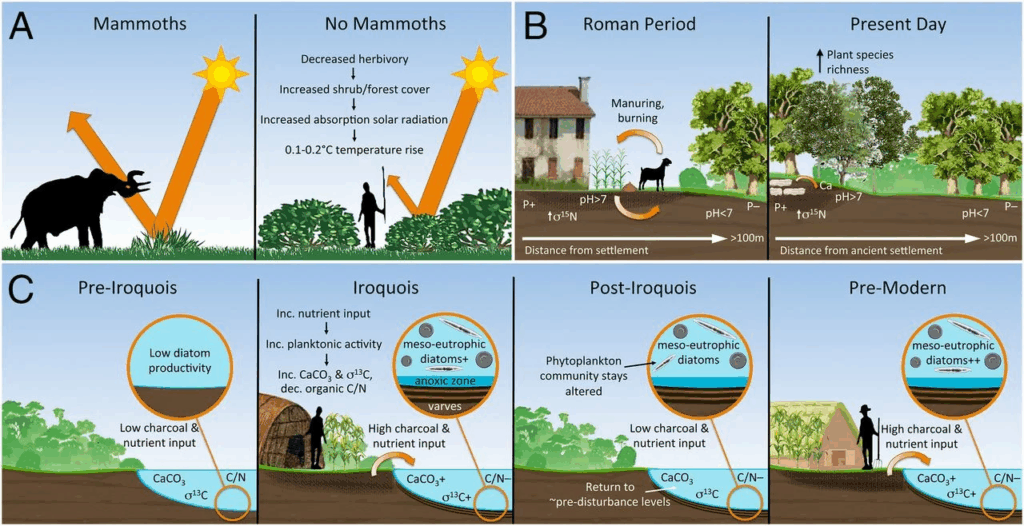
- Habitat destruction from agriculture, logging, and urbanisation reduces available niche space.
- Pollution can eliminate sensitive species from parts of their range.
- Overexploitation (hunting, overfishing) can shrink populations below viable levels.
- Invasive species outcompete or prey on native species, reducing their realised niche.
- Example: Native mussels in North America displaced by invasive zebra mussels.
🌍 Real-World Connection: Orangutan niches have contracted severely due to palm oil plantation expansion, forcing conservation action in remaining forests.
📌 Niche Expansion through Disturbance or Adaptation
- Disturbances such as forest fires can create new habitat for pioneer species, expanding niches temporarily.
- Reduced competition (e.g., after predator removal) allows some species to exploit new resources.
- Phenotypic plasticity enables species to survive in broader conditions without genetic change.
- Example: Coyotes expanded their niche in North America after wolf populations declined.
- Evolutionary adaptation can permanently broaden a niche, given sufficient time and selective pressure.
🔍 TOK Perspective: Predicting species’ future ranges involves uncertainty — models are simplifications that depend on assumptions about ecological and evolutionary processes.
📌 Predictive Modelling and Conservation Planning
- Species Distribution Models (SDMs) forecast future niche locations under climate scenarios.
- Used to identify climate refugia — areas that will remain suitable as conditions change.
- Assists in designing protected area networks and wildlife corridors.
- Can prioritise conservation for species with narrow climate envelopes and low dispersal ability.
- Example: Modelling polar bear niches predicts rapid habitat loss due to sea ice decline.
⚗️ IA Tips & Guidance: An IA could investigate how altering salinity or temperature in controlled aquaria changes the feeding rate or activity pattern of a marine invertebrate, linking results to niche adaptability.