B2.2.3 – PROTEIN SYNTHESIS AND VESICLE FORMATION
📌Definition Table
| Term | Definition |
|---|---|
| Ribosome | Organelle responsible for protein synthesis, composed of rRNA and proteins. |
| Rough Endoplasmic Reticulum (RER) | Membrane network with ribosomes attached, involved in protein modification. |
| Golgi Apparatus | Organelle that modifies, sorts, and packages proteins and lipids for transport. |
| Vesicle | Small membrane-bound sac used to transport substances within or outside the cell. |
| Exocytosis | Process of vesicle fusion with the plasma membrane to release contents. |
📌Introduction
Protein synthesis and vesicle transport are essential for the functioning of eukaryotic cells. These processes involve multiple organelles working together to produce, modify, and transport proteins to their final destinations.
❤️ CAS Link: Organise a hands-on classroom demonstration where students build a “protein pathway” model showing ribosomes, ER, Golgi apparatus, and vesicles.
📌 Protein Synthesis Pathway
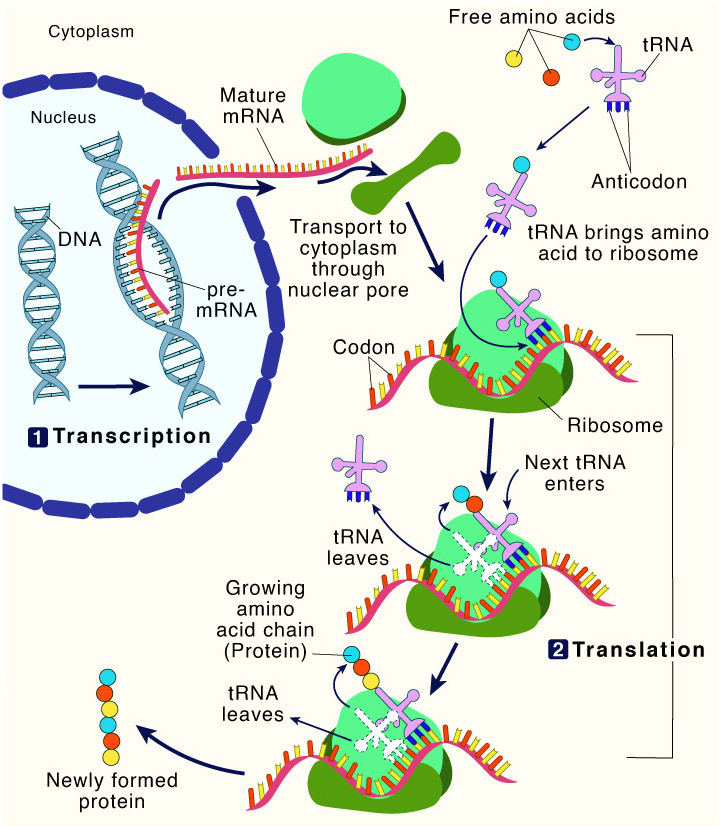
- Free ribosomes: Produce proteins for use within the cytoplasm.
- Bound ribosomes on RER: Produce proteins for secretion or for membranes.
- RER: Modifies proteins (e.g., folding, adding carbohydrate groups).
- Signal sequences direct proteins to their correct cellular location.
- Ribosomes composed of 70S in prokaryotes, 80S in eukaryotes — a common exam point.
- Protein synthesis is tightly regulated to conserve resources and ensure accuracy.
🧠 Examiner Tip: If asked about protein synthesis, mention both transcription and translation, and link the ribosome location to the protein’s final destination.
📌 Golgi Apparatus and Protein Modification
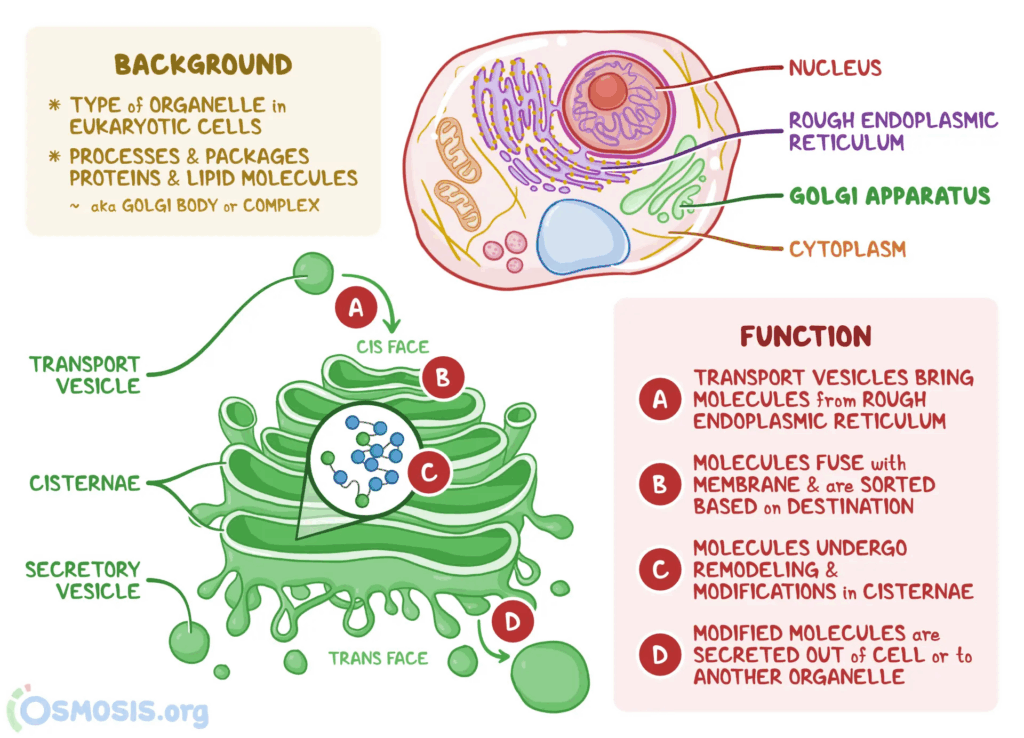
- Cis face: Receives proteins from RER in transport vesicles.
- Cisternae: Flattened membrane sacs where proteins are modified (e.g., glycosylation, phosphorylation).
- Trans face: Ships proteins in vesicles to final destinations.
- Proteins are sorted for lysosomes, the plasma membrane, or secretion.
- Golgi also processes lipids and produces some polysaccharides.
🌍 Real-World Connection: Defective Golgi function can cause Congenital Disorders of Glycosylation (CDG), leading to severe developmental issues.
📌 Vesicle Formation and Transport
- Vesicles bud from donor membranes (e.g., RER, Golgi) and fuse with target membranes.
- Coat proteins (like clathrin) help shape vesicles and select cargo.
- Vesicle movement is facilitated by motor proteins along cytoskeletal tracks.
- Exocytosis: Secretion of hormones, enzymes, or neurotransmitters.
- Endocytosis: Uptake of external materials, which may then be processed by lysosomes.
- Essential for rapid and regulated material exchange.
⚗️ IA Tips & Guidance: An IA could track enzyme secretion in yeast or bacteria over time using a measurable colour change in the medium, linking vesicle function to secretion efficiency.