B2.2.1 – CELL ORGANELLES AND COMPARTMENTALISATION
📌Definition Table
| Term | Definition |
|---|---|
| Organelle | A specialised subunit within a cell with a specific function, usually membrane-bound. |
| Compartmentalisation | Separation of cellular activities into different organelles or areas of the cell. |
| Cytoplasm | Fluid matrix inside the cell containing organelles and dissolved substances. |
| Cytoskeleton | Network of protein filaments providing shape, support, and transport pathways. |
| Cell Fractionation | Laboratory process to separate organelles by centrifugation based on size/density. |
📌Introduction
Eukaryotic cells are highly organised, with distinct compartments called organelles. This compartmentalisation allows specialisation of functions, prevents interference between incompatible processes, and maintains optimal conditions for reactions. It is one of the defining differences between prokaryotic and eukaryotic cells.
❤️ CAS Link: Organise a cell biology lab activity for younger students, using microscopes to compare plant and animal cell structures and identify organelles.
📌 Advantages of Compartmentalisation
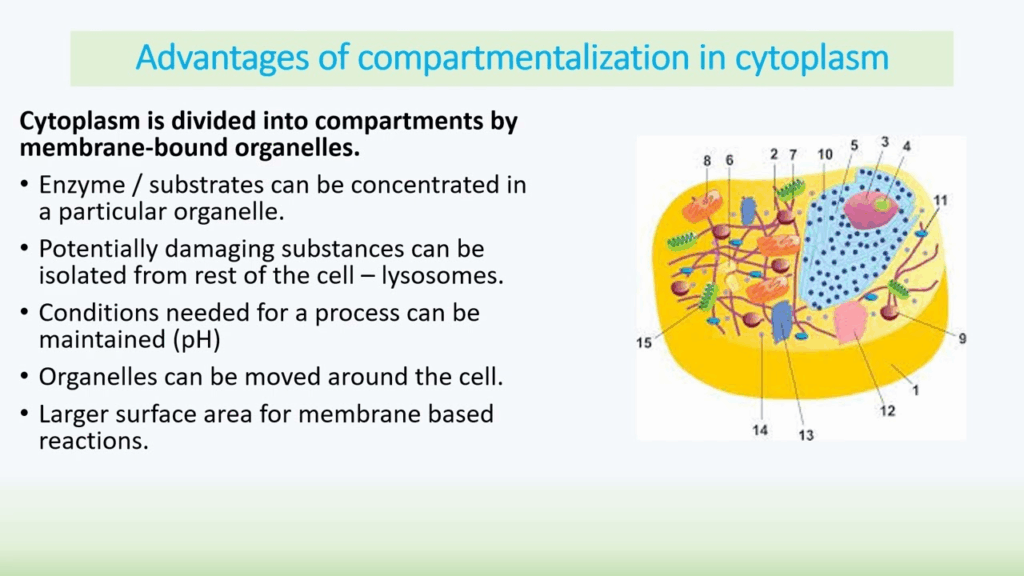
- Isolates harmful substances, e.g., digestive enzymes in lysosomes.
- Allows different parts of the cell to maintain different environments (pH, ion concentration).
- Localises enzymes and substrates for efficiency.
- Enables simultaneous but incompatible processes (e.g., aerobic respiration and photosynthesis in plant cells).
- Provides flexibility — organelle numbers can change based on cell needs.
- Increases surface area for metabolic reactions (e.g., cristae in mitochondria).
🧠 Examiner Tip: In questions comparing prokaryotic and eukaryotic cells, always link the presence of membrane-bound organelles to compartmentalisation benefits.
📌 Specialisation of Organelles
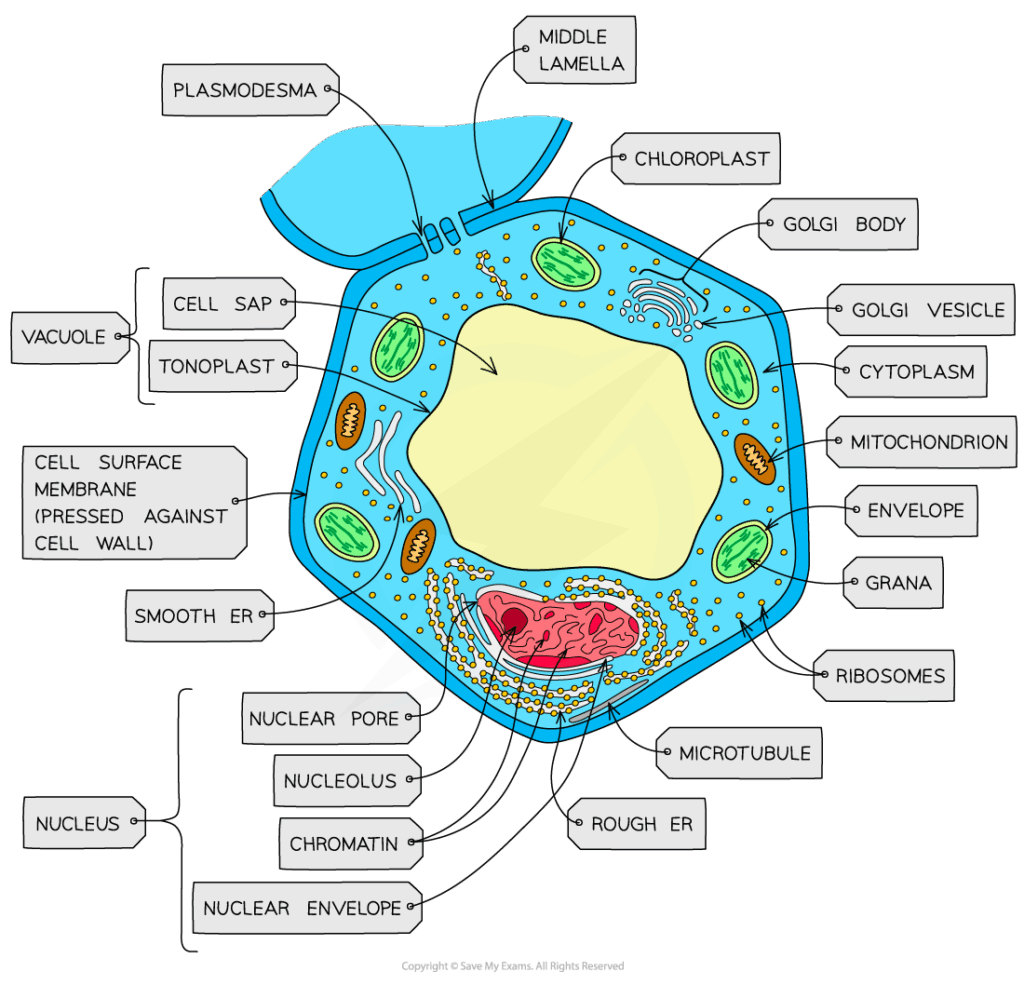
- Nucleus: Stores genetic information, coordinates cell activities.
- Mitochondria: ATP production via aerobic respiration.
- Chloroplasts: Photosynthesis in plant and algal cells.
- Endoplasmic reticulum (ER): Smooth ER synthesises lipids; Rough ER modifies proteins.
- Golgi apparatus: Modifies, packages, and distributes proteins and lipids.
- Lysosomes: Digestive enzymes for breakdown of waste and pathogens.
- Peroxisomes: Detoxification and fatty acid breakdown.
🌍 Real-World Connection: Defective lysosomes cause Tay-Sachs disease, leading to lipid accumulation in neurons.
📌 Techniques for Studying Organelles
- Cell fractionation separates organelles by density using ultracentrifugation.
- Electron microscopy reveals fine structural details.
- Staining techniques highlight specific organelles.
- Advances in imaging (e.g., cryo-electron microscopy) allow 3D reconstruction of organelles in near-native states.
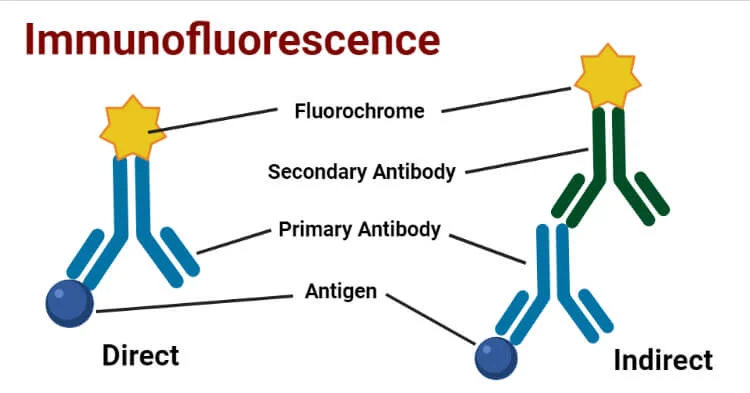
- Immunofluorescence labelling can identify proteins in specific organelles.
🌐 EE Focus: An EE could investigate mitochondrial density in muscle cells under different activity levels using electron microscopy images.
⚗️ IA Tips & Guidance: Possible IA — compare enzyme activity from isolated organelles (e.g., catalase activity from peroxisomes in different plant tissues). Include proper controls and replicate trials for accuracy.