B2.1.3 – MEMBRANE INTERACTIONS & CELL ADHESION
📌Definition Table
| Term | Definition |
|---|---|
| Cell Adhesion Molecule (CAM) | Protein on the cell surface that binds to other cells or the extracellular matrix. |
| Extracellular Matrix (ECM) | Network of proteins and carbohydrates outside cells providing support and communication. |
| Tight Junction | Cell junction forming a seal to prevent leakage between cells. |
| Desmosome | Strong cell junction linking cytoskeletons of adjacent cells. |
| Gap Junction | Channel linking cytoplasm of two cells for molecule/ion exchange. |
📌Introduction
Membranes are not just passive barriers — they actively participate in cell adhesion, communication, and coordination of activities between cells. Proteins and carbohydrates embedded in or attached to membranes facilitate these interactions, which are essential for tissue formation, signalling, and maintaining homeostasis.
❤️ CAS Link: Volunteer in a biology outreach program explaining how cancer research targets cell adhesion to prevent metastasis.
📌 Cell Adhesion and the Extracellular Matrix
- Cell adhesion molecules (CAMs) anchor cells to each other and the ECM.
- CAMs interact with cytoskeleton and signalling pathways.
- Extracellular matrix (ECM) is composed of collagen, glycoproteins, and proteoglycans.
- ECM provides structural support and regulates cell behaviour.
- ECM composition varies by tissue type and function.
- Changes in CAM expression are linked to developmental processes and diseases.
🧠 Examiner Tip: In tissue-related questions, always link ECM and adhesion molecules to both structure and communication roles.
📌 Types of Cell Junctions
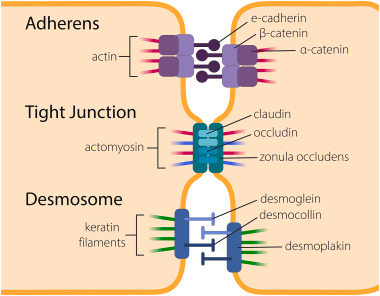
- Tight junctions: Create a watertight seal, preventing leakage (e.g., epithelial lining in gut).
- Adherens junctions: Connect actin cytoskeleton between cells for mechanical stability.
- Desmosomes: Anchor intermediate filaments; found in skin and heart muscle for strength.
- Gap junctions: Allow direct communication via channels for ions and small molecules.
- Junction types differ in protein composition and function.
- Multiple junctions often work together in the same tissue.
🌍 Real-World Connection: Mutations in desmosomal proteins can lead to skin blistering diseases like pemphigus vulgaris.
📌 Membranes in Communication
- Membrane receptors detect chemical signals (hormones, neurotransmitters) and trigger intracellular responses.
- Signal transduction pathways amplify the initial signal inside the cell.
- Membranes integrate signals from multiple sources to coordinate responses.
- Receptor location and density influence sensitivity to signals.
- Intercellular communication maintains tissue and organ homeostasis.
- Faulty signalling can lead to cancer, diabetes, or autoimmune disorders.
🌐 EE Focus: Investigate the effect of membrane cholesterol on receptor function using cell culture experiments.
⚗️ IA Tips & Guidance: You could investigate how varying salt concentrations affect adhesion in onion epidermal cells using microscopy, quantifying changes in cell separation.