B1.2.3 – SPECIALISED PROTEINS AND FUNCTIONAL SIGNIFICANCE
📌Definition Table
| Term | Definition |
|---|---|
| Structural Protein | Protein providing mechanical support and strength (e.g., collagen). |
| Functional Protein | Protein performing dynamic roles like catalysis, transport, or signalling. |
| Immunoglobulin | Antibody protein involved in immune defence. |
| Hormonal Protein | Protein that acts as a chemical messenger (e.g., insulin). |
| Rhodopsin | Light-sensitive receptor protein in the retina. |
📌Introduction
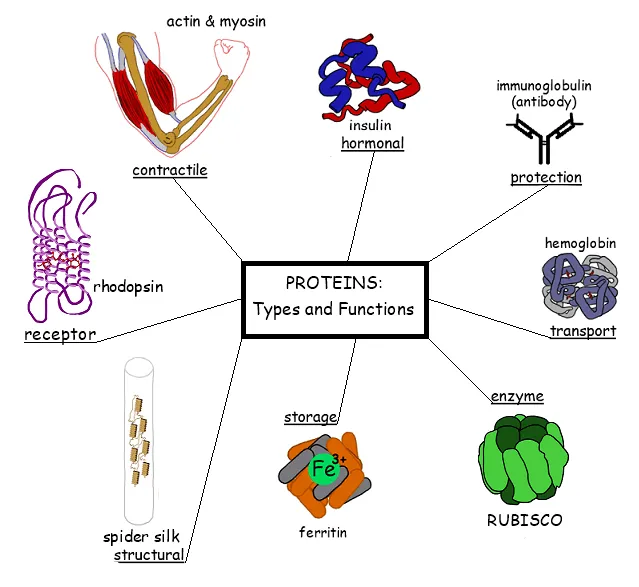
Specialised proteins perform highly specific roles, often crucial to survival. These functions range from maintaining structural integrity to enabling complex biochemical reactions, immune defence, sensory perception, and hormonal regulation. Their unique structures allow them to operate efficiently in a wide variety of environmental and physiological conditions.
❤️ CAS Link: Organise a science outreach event where you present real-life applications of specialised proteins in medicine and industry, such as insulin therapy and antibody testing.
📌 Structural Proteins
- Provide mechanical strength, elasticity, and protection.
- Collagen: Found in connective tissue, high tensile strength due to triple-helix structure.
- Spider Silk: Stronger than steel by weight; flexible and elastic.
- Often repetitive amino acid sequences for regular structure.
- Insoluble in water — ideal for long-term structural roles.
- Used in biomedical materials like sutures and tissue scaffolds.
🧠 Examiner Tip: When comparing structural proteins, mention both strength and flexibility where applicable (e.g., spider silk vs. collagen).
📌 Functional Proteins in Metabolism and Transport
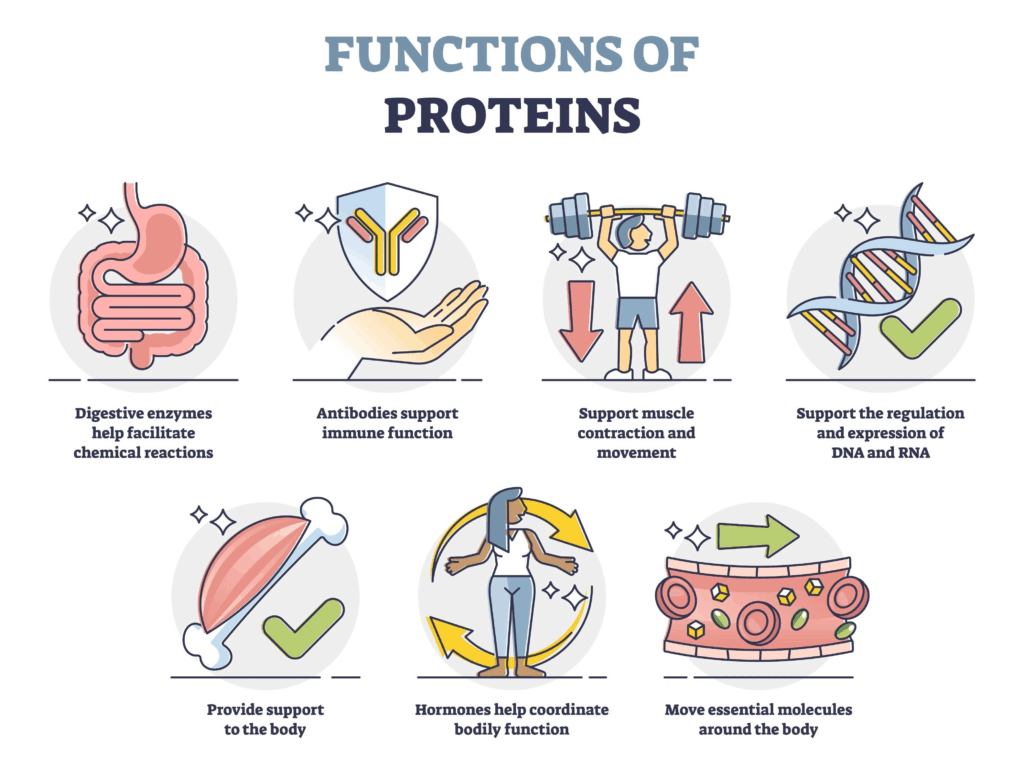
- Rubisco: Catalyses carbon fixation in photosynthesis; most abundant enzyme on Earth.
- Haemoglobin: Transports oxygen in red blood cells via iron-containing haem groups.
- Myoglobin: Stores oxygen in muscles for rapid release during activity.
- Enzyme activity depends on tertiary and quaternary structure.
- Denaturation or mutation can impair function (e.g., sickle-cell anaemia).
- Transport proteins often undergo conformational changes to move substances.
🌍 Real-World Connection: Artificial haemoglobin research aims to develop blood substitutes for transfusions in emergencies.
📌 Immune and Hormonal Proteins
- Immunoglobulins: Antibodies that recognise and bind to specific antigens.
- Diverse variable regions allow recognition of millions of pathogens.
- Insulin: Regulates blood glucose; produced by β-cells in the pancreas.
- Hormonal proteins often act at low concentrations but have large effects.
- Signalling proteins (e.g., cytokines) coordinate immune responses.
- Protein hormones bind to receptors, triggering signal cascades.
🌐 EE Focus: An EE could analyse antibody binding specificity using ELISA or similar immunoassays.
📌 Sensory and Adaptive Proteins
- Rhodopsin: Pigment-protein in photoreceptor cells; changes shape when absorbing light, triggering nerve impulses.
- Heat-shock proteins protect cells from stress by refolding damaged proteins.
- Antifreeze proteins prevent ice crystal growth in polar fish.
- Adaptations allow survival in extreme environments (high temperature, salinity, or acidity).
- Sensory proteins are often linked to rapid structural changes for signal transduction.
- Many adaptive proteins are being explored for biotechnological applications.
🔍 TOK Perspective: How does our understanding of “function” in proteins reflect a human-centric viewpoint focused on usefulness to us rather than in nature?