A4.2.3 – CONSERVATION STRATEGIES
📌Definition Table
| Term | Definition |
|---|---|
| In situ Conservation | Protection of species in their natural habitat. |
| Ex situ Conservation | Protection of species outside their natural habitat. |
| Rewilding | Reintroducing species and restoring ecosystems to their natural state. |
| EDGE Species | Evolutionarily Distinct and Globally Endangered species; high priority for conservation. |
| Seed Bank | Facility that stores seeds under controlled conditions to preserve genetic diversity. |
| Tissue Bank | Storage of living tissue or cells for future use in breeding or research. |
| Protected Area | Region designated for biodiversity conservation, such as national parks or reserves. |
📌Introduction
Conservation strategies aim to preserve biodiversity, maintain ecosystem services, and protect endangered species. Effective conservation requires understanding species’ ecological roles, threats to their survival, and the socio-political context. Strategies can be in situ (protecting species in their natural environment) or ex situ (maintaining them outside their natural range). Often, a combination of both is used for long-term success.
❤️ CAS Link: Partner with a wildlife NGO to create an educational campaign comparing in situ and ex situ methods using local examples.
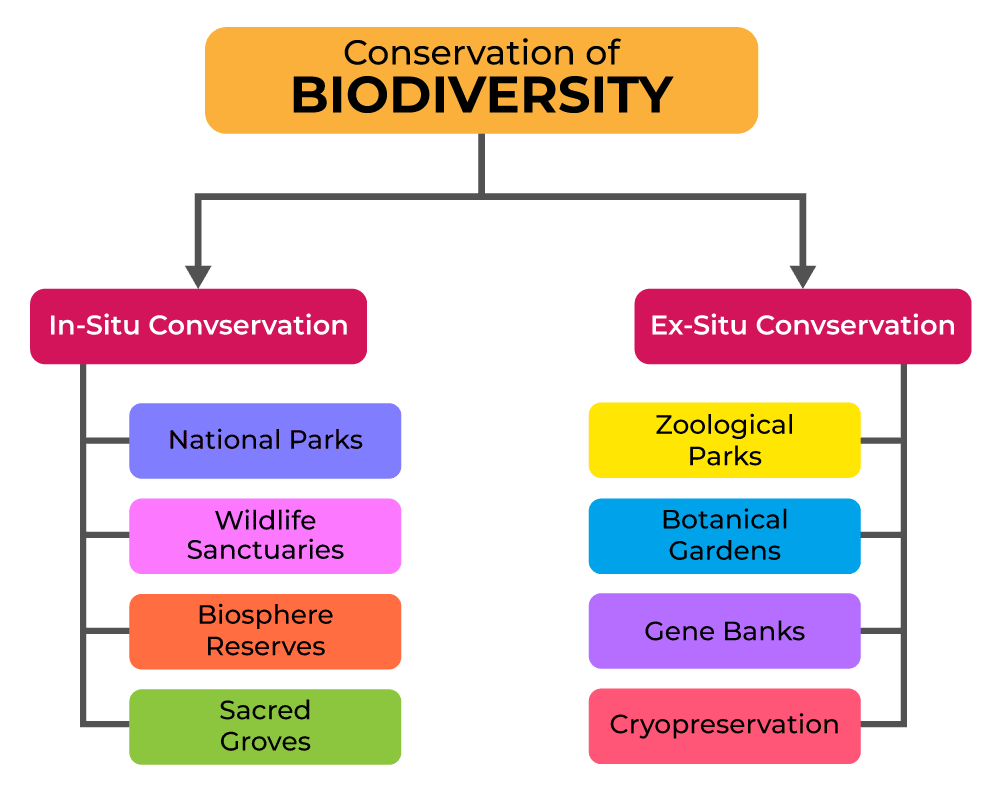
📌 In Situ Conservation
- Protects species in their natural habitats.
- Examples: national parks, wildlife sanctuaries, marine protected areas.
- Benefits: maintains natural behaviours, ecosystem interactions, and evolutionary processes.
- Drawbacks: may not protect against all threats, such as poaching or invasive species.
- Rewilding involves restoring ecosystems and reintroducing species to historical ranges.
🧠 Examiner Tip: When comparing in situ and ex situ, focus on ecological realism vs. control over conditions.
📌 Ex Situ Conservation
- Protects species outside their natural habitats.
- Methods:
- Zoos and aquariums (breeding programs).
- Botanic gardens (rare plant cultivation).
- Seed and tissue banks (long-term genetic storage).
- Advantages: allows close monitoring, protects from immediate threats.
- Disadvantages: may not prepare organisms for reintroduction; costly.
🌍 Real-World Connection: The Millennium Seed Bank in the UK stores over 2.4 billion seeds, safeguarding plant genetic diversity.
📌Species Selection for Conservation
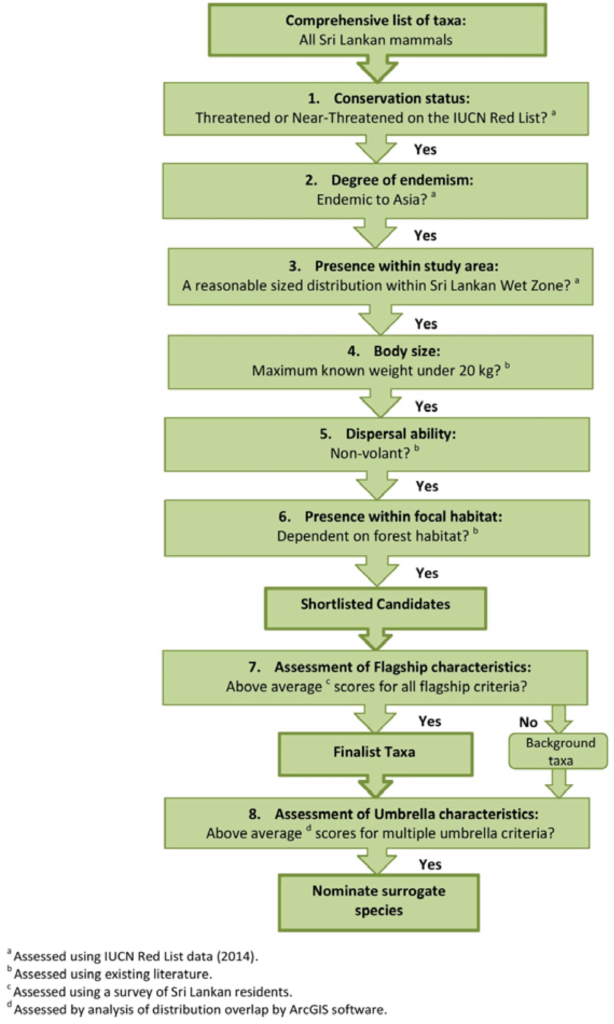
Criteria for priority:
- Endangered status (IUCN Red List).
- Ecological role (keystone species).
- Cultural or economic importance.
- EDGE species status — combining evolutionary uniqueness with high endangerment.
🔍 TOK Perspective: Ethical debates arise over whether to prioritise charismatic species or those most critical for ecosystem function.
📌 Global and Local Conservation Efforts
International agreements:
- CITES — Convention on International Trade in Endangered Species.
- CBD — Convention on Biological Diversity.
Local measures: habitat restoration projects, wildlife corridors, community-led conservation.
Public engagement and education increase long-term success.