A4.1.3 – ADAPTIVE RADIATION AND SPECIATION IN PLANTS
📌Defination Table
| Term | Definition |
|---|---|
| Adaptive Radiation | Rapid diversification of a common ancestor into many species adapted to different niches. |
| Ecological Niche | The role and position of a species in its environment, including its interactions and resource use. |
| Polyploidy | Possession of more than two complete sets of chromosomes. |
| Autopolyploidy | Polyploidy arising from chromosome duplication within a single species. |
| Allopolyploidy | Polyploidy resulting from hybridisation between different species followed by chromosome doubling. |
| Instant Speciation | Formation of a new species in one generation, often via polyploidy in plants. |
| Endemism | Condition of a species being found only in a specific geographic location. |
📌Introduction
Adaptive radiation and plant speciation are key drivers of biodiversity. Adaptive radiation produces a burst of new species from a common ancestor, each adapted to a unique niche. In plants, speciation often involves polyploidy, which can cause reproductive isolation almost instantly. These processes help explain the vast diversity in ecosystems, particularly on islands and in environments with varied niches.
❤️ CAS Link: Establish a school garden biodiversity plot, planting species that illustrate adaptive radiation or polyploidy origins.
📌 Adaptive Radiation
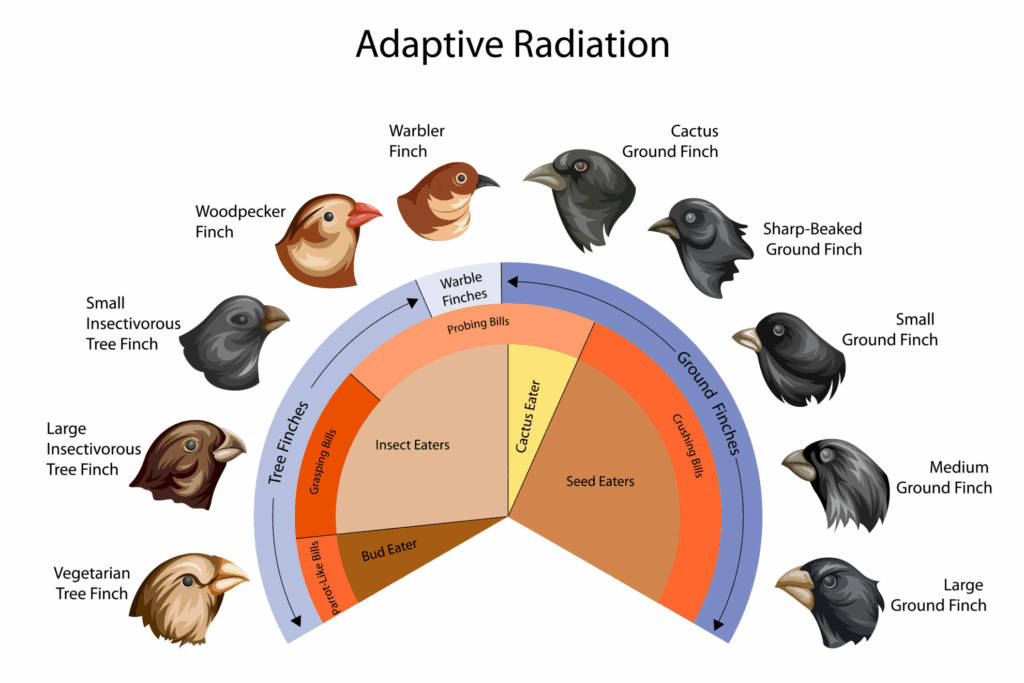
- Occurs when a single ancestral species diversifies into many species adapted to different niches.
- Requires available niches and minimal competition or predation.
- Often follows events such as colonisation of a new habitat or mass extinctions.
- Example: Darwin’s finches evolved different beak shapes to exploit different food sources.
- Increases biodiversity rapidly in geological terms.
🧠 Examiner Tip: In adaptive radiation diagrams, label common ancestor and niche specialisation clearly.
📌 Ecological Niches and Speciation
- A niche includes all environmental conditions and interactions that allow a species to survive and reproduce.
- Differentiation of niches reduces competition and can drive speciation.
- Closely related species in the same habitat often occupy different niches to avoid direct competition.
- Niche partitioning maintains biodiversity within ecosystems.
🌍 Real-World Connection: Coral reef fish species show niche partitioning by depth, diet, and time of activity.
📌 Polyploidy in Plants
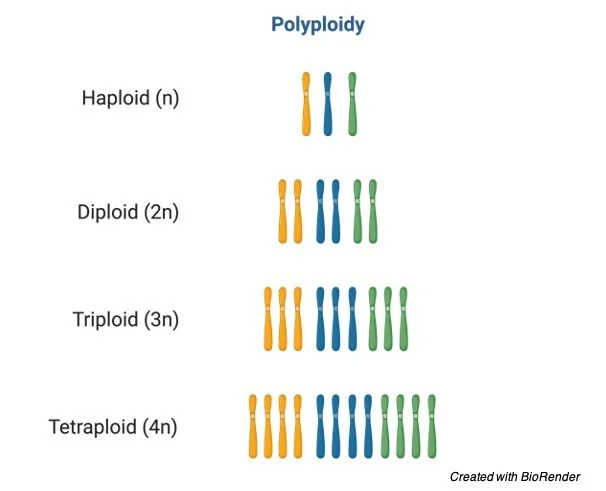
- Polyploidy is common in plants and can cause instant reproductive isolation.
- Autopolyploidy – duplication of chromosome sets within one species; results in fertile polyploids that cannot breed with the original diploid population.
- Allopolyploidy – hybridisation between two species followed by chromosome doubling; produces fertile hybrids reproductively isolated from both parent species.
- Polyploidy can increase vigour, adaptability, and resistance to environmental stress.
🔍 TOK Perspective: Polyploidy challenges the gradualist model of speciation, showing that new species can arise in a single generation.
📌 Case Studies in Plant Speciation
- Wheat – Bread wheat (Triticum aestivum) is an allopolyploid formed by hybridisation between three different grass species.
- Tragopogon species – In the 20th century, hybridisation between introduced species in the USA produced new allopolyploid species in just decades.
- Many crop plants (bananas, potatoes, cotton) are polyploid, contributing to agricultural success.