A3.1.3 – EVOLUTIONARY RELATIONSHIPS AND BIODIVERSITY
📌Definition Table
| Term | Definition |
|---|---|
| Phylogeny | Evolutionary history and relationships among species or groups of organisms. |
| Common Ancestor | An ancestral species from which later species evolved. |
| Adaptive Radiation | Evolution of many species from a common ancestor into different niches. |
| Convergent Evolution | Independent evolution of similar traits in unrelated species. |
| Biodiversity | Variety of life in all its forms, including species, genetic, and ecosystem diversity. |
| Conservation Biology | Study and practice of protecting biodiversity and natural resources. |
📌Introduction
Evolutionary relationships show how different organisms are linked by common ancestry and how life has diversified over time. Biodiversity — at genetic, species, and ecosystem levels — is a result of millions of years of evolutionary processes. Protecting biodiversity is critical for ecosystem health, resilience, and the services they provide to humans.
❤️ CAS Link: Partner with a local environmental group to conduct a tree-planting and biodiversity awareness campaign linking conservation to evolutionary principles.
📌 Concept of Common Ancestry and Evolutionary Trees
- Phylogenetic trees represent hypothesised evolutionary relationships.
- Branch points (nodes) indicate a common ancestor.
- The closer two species are on a tree, the more recent their shared ancestor.
- Trees are constructed using morphological and molecular data.
- Shared derived traits (synapomorphies) help identify related groups.
- Evolutionary trees are constantly revised with new genetic data.
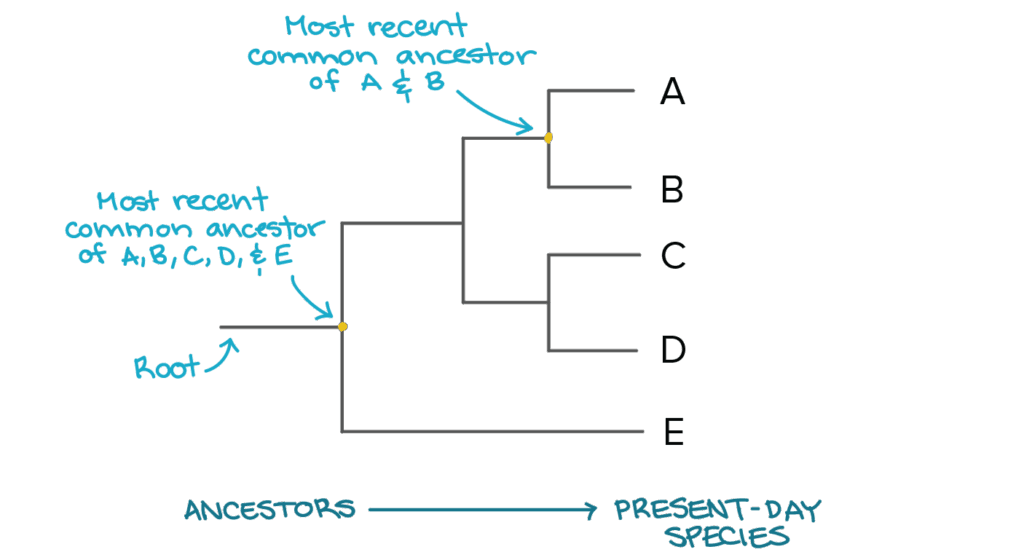
🧠 Examiner Tip: When describing a phylogenetic tree, refer to branch points — avoid simply listing species in order.
📌 Evidence for Evolutionary Relationships
- Fossil Record: Shows changes in species over time and transitional forms.
- Comparative Anatomy: Homologous structures indicate shared ancestry.
- Embryology: Similar early development stages across species suggest common origins.
- Molecular Evidence: DNA, RNA, and protein sequence similarities.
- Biogeography: Geographic distribution of species supports evolution from common ancestors.
- Observable Evolution: Example — antibiotic resistance in bacteria.
🌍 Real-World Connection: Molecular phylogenetics is used to track viral outbreaks, such as tracing the origin of COVID-19 strains.
📌Adaptive Radiation and Convergent Evolution
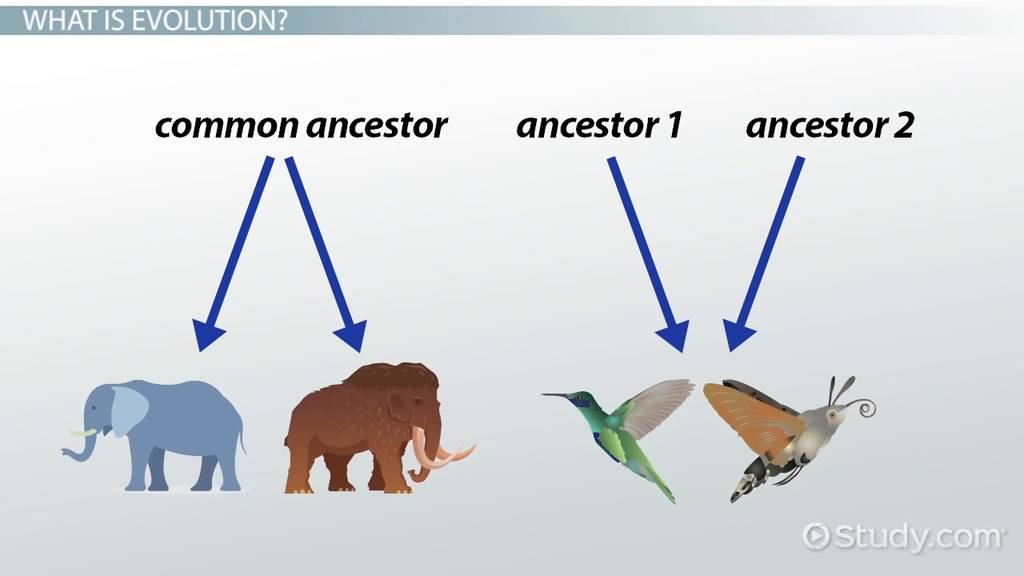
- Adaptive Radiation: Diversification from a common ancestor into many forms adapted to different niches (e.g., Darwin’s finches).
- Convergent Evolution: Unrelated species evolve similar traits due to similar environmental pressures (e.g., wings in bats and birds).
- Adaptive radiation increases biodiversity by producing many species in a short evolutionary period.
- Convergent evolution can complicate classification if based only on morphology.
- Both processes highlight the role of environment in shaping biodiversity.
- Examples often come from isolated ecosystems like islands.
🌐 EE Focus: An EE could analyse morphological divergence in species from a single island to study adaptive radiation.
📌 Importance of Biodiversity
- Provides ecosystem services (pollination, nutrient cycling, water purification).
- Increases ecosystem resilience to disturbances.
- Source of food, medicine, and raw materials.
- Genetic diversity within species aids adaptation to changing environments.
- Cultural and aesthetic value to human societies.
- Loss of biodiversity can lead to ecosystem collapse.
🔍 TOK Perspective: Conservation priorities often reflect human values — how do ethics influence which species we protect?
📌 Human Impact and Conservation Strategies
- Habitat destruction, pollution, overexploitation, and climate change reduce biodiversity.
- Invasive species outcompete native species.
- Conservation strategies include protected areas, captive breeding, habitat restoration, and legislation.
- Genetic analysis helps identify populations most in need of protection.
- Global agreements (e.g., CITES, CBD) coordinate conservation efforts.
- Public education is critical for long-term success.