A2.3.1 – VIRUS STRUCTURE
📌Definition Table
| Term | Definition |
|---|---|
| Virus | An infectious particle made of nucleic acid enclosed in a protein coat, sometimes with an envelope. |
| Capsid | Protein shell that encloses the viral genome. |
| Envelope | Membrane derived from the host cell, containing viral proteins and glycoproteins. |
| Bacteriophage | Virus that infects bacteria. |
| Retrovirus | Virus with RNA genome that uses reverse transcriptase to integrate into host DNA. |
| Host Range | The spectrum of host species or cells a virus can infect. |
📌Introduction
Viruses are non-cellular infectious agents that rely entirely on a host cell to reproduce. They have no metabolism or organelles and cannot carry out life processes independently. Structurally, viruses are made up of nucleic acids (DNA or RNA) surrounded by a capsid, and in some cases, an additional lipid envelope.
❤️ CAS Link: Develop an educational infographic explaining how viruses differ from living cells, for use in a school health awareness campaign.
📌 Basic Structure of Viruses
- All viruses contain genetic material — either DNA or RNA, but never both.
- The genome can be single-stranded (ss) or double-stranded (ds), and linear or circular.
- A capsid made of protein subunits (capsomeres) encloses and protects the genome.
- Some viruses have an envelope derived from the host cell membrane, containing viral glycoproteins.
- Enveloped viruses are generally more sensitive to heat, detergents, and desiccation.
- Non-enveloped viruses rely on their stable capsid for protection and tend to be more resistant to environmental changes.
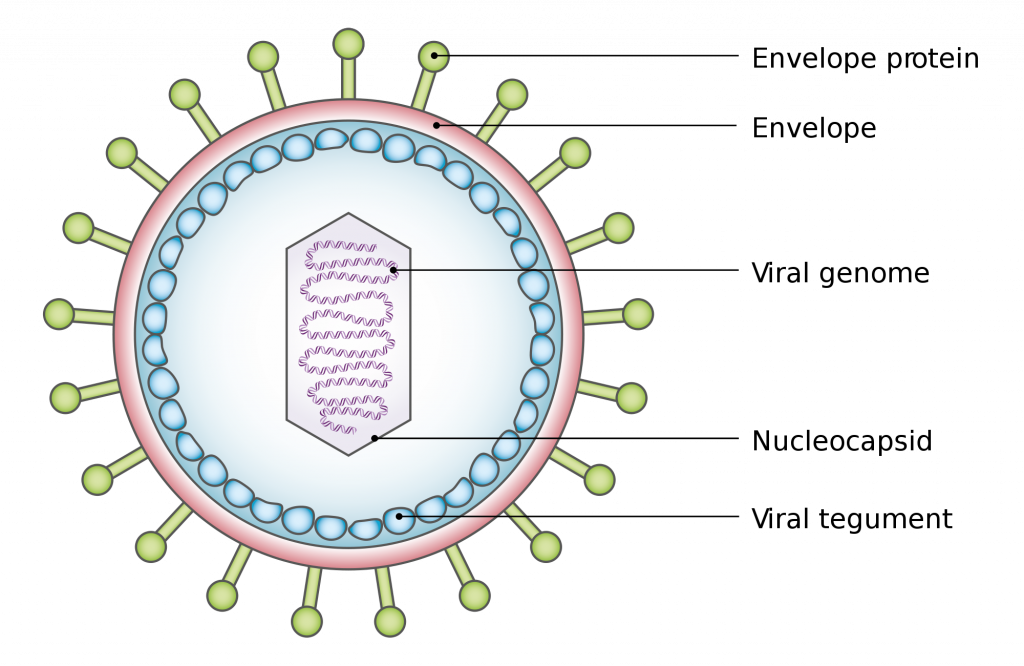
🧠 Examiner Tip: Always state whether a virus is enveloped or non-enveloped when describing its structure — this is often linked to exam questions about viral survival outside a host.
📌 Structural Diversity in Viruses
- Helical viruses: Capsid proteins arranged in a spiral (e.g., tobacco mosaic virus).
- Icosahedral viruses: Symmetrical 20-sided capsid (e.g., adenoviruses).
- Complex viruses: More elaborate structures (e.g., bacteriophages with head-tail arrangement).
- Enveloped viruses: Have a lipid layer containing viral glycoproteins (e.g., influenza virus, HIV).
- Non-enveloped viruses: Lack lipid envelope (e.g., poliovirus).
- Capsid shape is determined by the arrangement of capsomeres and can influence host interactions.
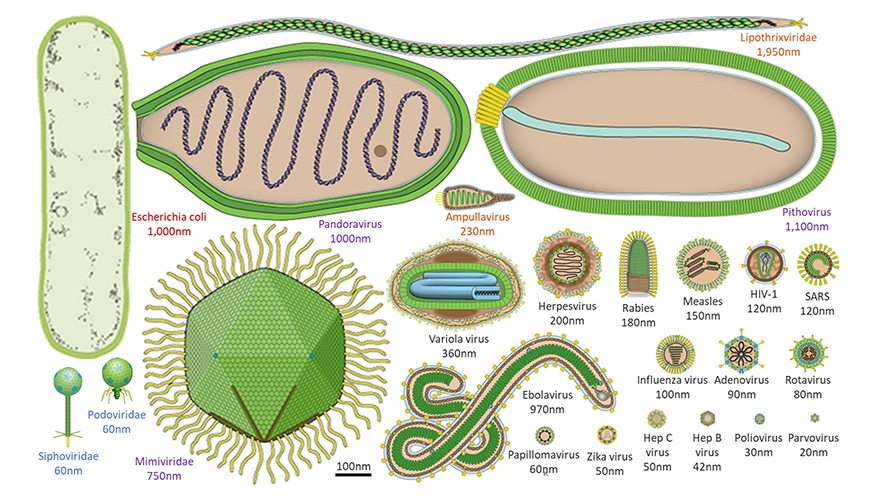
🌍 Real-World Connection: The structural stability of non-enveloped viruses makes them persistent on surfaces, explaining why norovirus outbreaks spread rapidly in schools and cruise ships.
📌 Genetic Material in Viruses
- Viral genomes can be DNA or RNA, single-stranded or double-stranded.
- RNA viruses tend to have higher mutation rates due to lack of proofreading by RNA polymerases.
- DNA viruses generally have more stable genomes.
- Retroviruses use reverse transcriptase to make DNA from their RNA genome, integrating into host DNA.
- Segmented genomes (e.g., influenza virus) can undergo reassortment, leading to new strains.
- Genome type affects replication strategies and host immune responses.
🔍 TOK Perspective: How do classification systems for viruses challenge our definition of “living” versus “non-living” things?
📌 Special Adaptations for Host Infection
- Viral surface proteins (ligands) bind to specific host cell receptors, determining host range.
- Bacteriophages have tail fibres for attachment to bacterial surfaces.
- Enveloped viruses enter cells via membrane fusion or endocytosis.
- Non-enveloped viruses often inject genetic material directly into the host cytoplasm.
- Some viruses encode proteins that suppress host immune responses.
- Structural adaptations allow evasion of immune detection and efficient cell entry.
🌐 EE Focus: An EE could investigate how changes in viral surface glycoproteins affect infection efficiency in different host cell types.