A2.2.2 – EUKARYOTIC CELL STRUCTURE AND FUNCTION
📌Definition Table
| Term | Definition |
|---|---|
| Eukaryote | A cell containing a true nucleus and membrane-bound organelles. |
| Organelle | A specialised structure within a cell with a specific function. |
| Cytoskeleton | A network of protein filaments providing structural support and movement. |
| Endoplasmic Reticulum (ER) | Network of membranes for protein and lipid synthesis (rough ER) or lipid metabolism (smooth ER). |
| Golgi Apparatus | Organelle that modifies, packages, and distributes proteins and lipids. |
| Mitochondrion | Site of aerobic respiration, producing ATP. |
📌Introduction
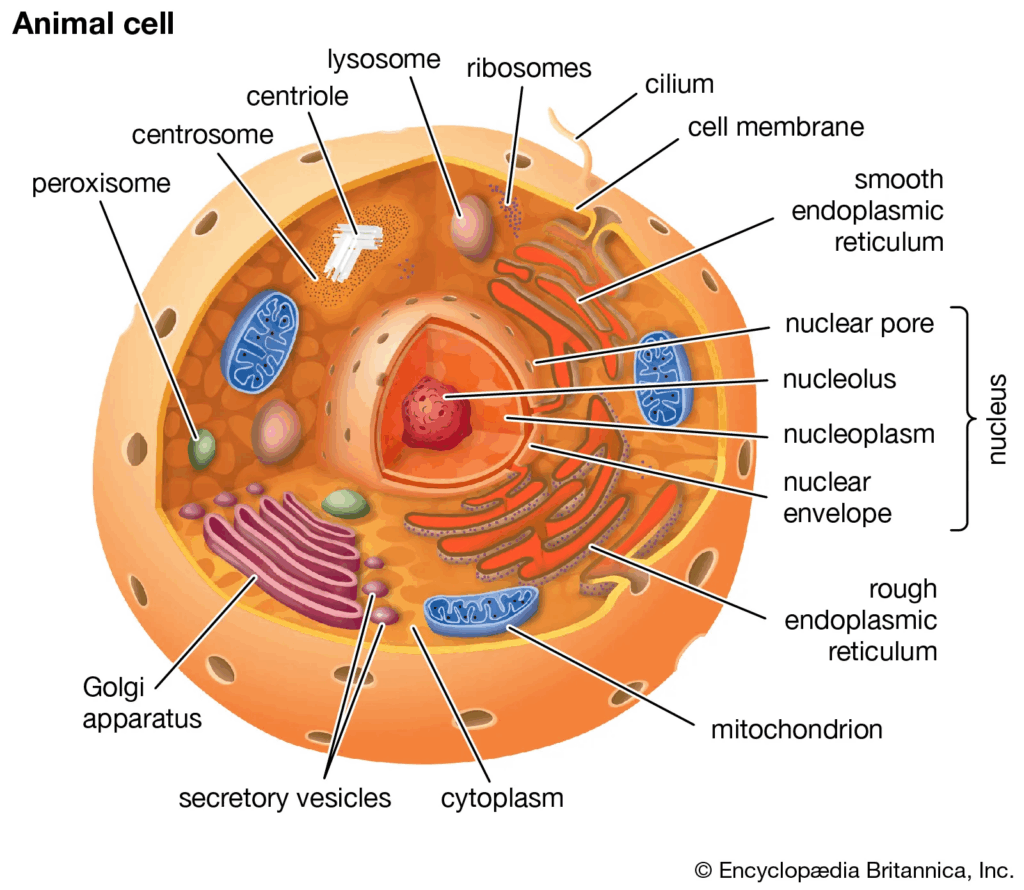
Eukaryotic cells are larger and more complex than prokaryotic cells, found in animals, plants, fungi, and protists. They contain membrane-bound organelles that compartmentalise cellular functions, allowing greater efficiency and specialisation. Their internal complexity enables them to perform more advanced metabolic processes and support multicellular life.
📌 General Characteristics of Eukaryotes
- Possess a nucleus containing DNA wrapped around histones.
- Contain 80S ribosomes in the cytoplasm and 70S ribosomes in mitochondria and chloroplasts.
- Exhibit compartmentalisation — separation of functions into organelles.
- Larger cell size (10–100 μm) compared to prokaryotes.
- Have a complex cytoskeleton for movement, shape, and intracellular transport.
- Reproduce through mitosis (asexual) and meiosis (sexual).
🧠 Examiner Tip: Always include the presence of membrane-bound organelles when defining eukaryotic cells — many students miss this and lose marks.
📌 Nucleus and Genetic Control
- Enclosed by a double membrane (nuclear envelope) with pores for molecule exchange.
- Contains chromatin (DNA + proteins) and the nucleolus, where ribosomes are assembled.
- DNA is linear and associated with histones.
- Controls gene expression and coordinates cell activities.
- Nuclear pores allow mRNA and ribosomal subunits to exit to the cytoplasm.
- Replication and transcription occur inside the nucleus.
🌍 Real-World Connection: Knowledge of plant cell structure supports crop improvement strategies in agriculture.
📌 Endomembrane System
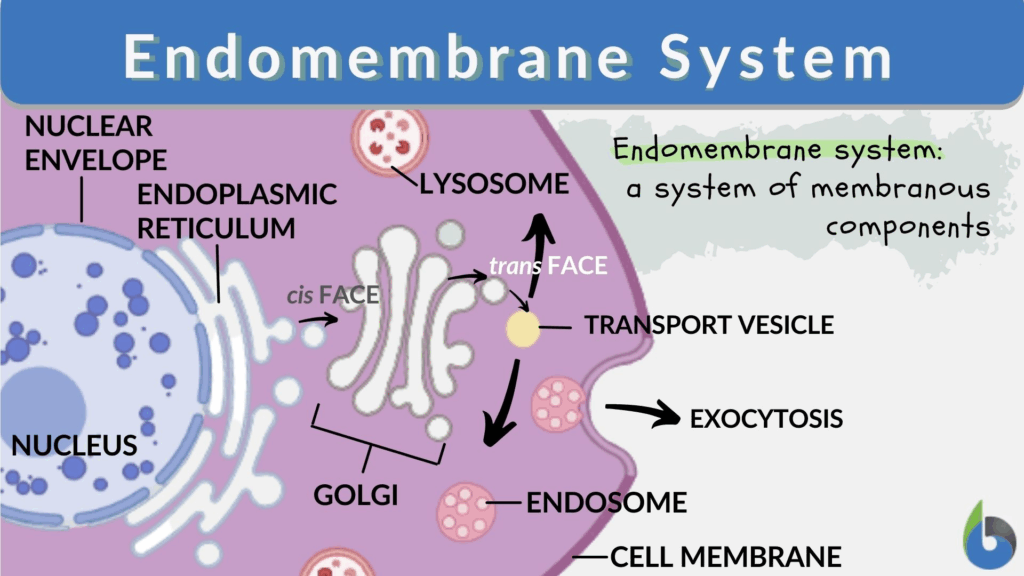
- Rough ER has ribosomes and synthesises proteins for secretion or membranes.
- Smooth ER synthesises lipids, detoxifies drugs, and stores calcium.
- Golgi apparatus modifies, sorts, and packages proteins and lipids into vesicles.
- Lysosomes contain hydrolytic enzymes for digesting macromolecules and old organelles.
- Secretory vesicles transport molecules to the plasma membrane for exocytosis.
- Endocytosis brings materials into the cell via vesicles.
⚗️ IA Tips & Guidance: A cell fractionation IA can measure enzyme activity in isolated organelles to explore compartmentalisation.
📌 Energy Organelles: Mitochondria and Chloroplasts
- Mitochondria are the site of aerobic respiration, producing ATP.
- Double membrane: outer membrane + highly folded inner membrane (cristae).
- Contain 70S ribosomes and circular DNA — evidence for endosymbiosis.
- Chloroplasts (in plants/algae) perform photosynthesis, converting light energy into chemical energy.
- Have thylakoid membranes, stacked into grana, surrounded by stroma.
- Also contain 70S ribosomes and circular DNA.
🔍 TOK Perspective: The endosymbiotic theory shows how indirect molecular evidence can strongly support historical biological events.
📌 Specialisation: Plant vs Animal Cells
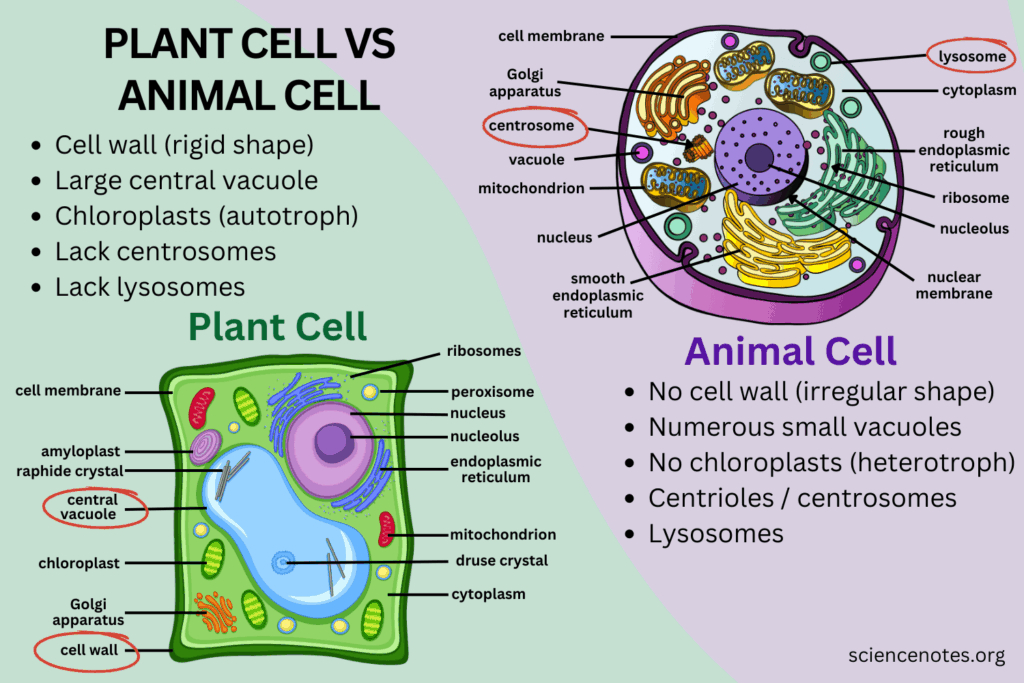
- Plant cells have a rigid cell wall, chloroplasts, and a large central vacuole.
- Animal cells have centrioles and more lysosomes.
- Plant vacuole maintains turgor pressure and stores materials.
- Cell wall provides structure and protection.
- Some plant cells have plasmodesmata for cell-to-cell communication.
- Animal cells often have specialised shapes for specific functions.