A2.2.1 – PROKARYOTIC CELL STRUCTURE AND FUNCTION
📌Definition Table
| Term | Definition |
|---|---|
| Prokaryote | A unicellular organism lacking a true nucleus and membrane-bound organelles. |
| Nucleoid | Region in a prokaryotic cell containing the circular DNA molecule. |
| Plasmid | Small, circular DNA molecule in prokaryotes, often carrying extra genes. |
| Binary Fission | A method of asexual reproduction in prokaryotes where the cell divides into two identical cells. |
| Pili | Hair-like structures on bacteria used for attachment or DNA transfer. |
| Flagella | Long, whip-like structures used for movement in some prokaryotes. |
📌Introduction
Prokaryotic cells are the simplest and oldest forms of life, found in domains Bacteria and Archaea. They are small, typically 0.1–5.0 μm, and lack a nucleus and membrane-bound organelles. Despite their simplicity, prokaryotes display a diverse range of adaptations, enabling them to survive in almost every environment on Earth.
❤️ CAS Link: Create a public awareness campaign about biofilms and their role in medical device infections.
📌 General Characteristics of Prokaryotes
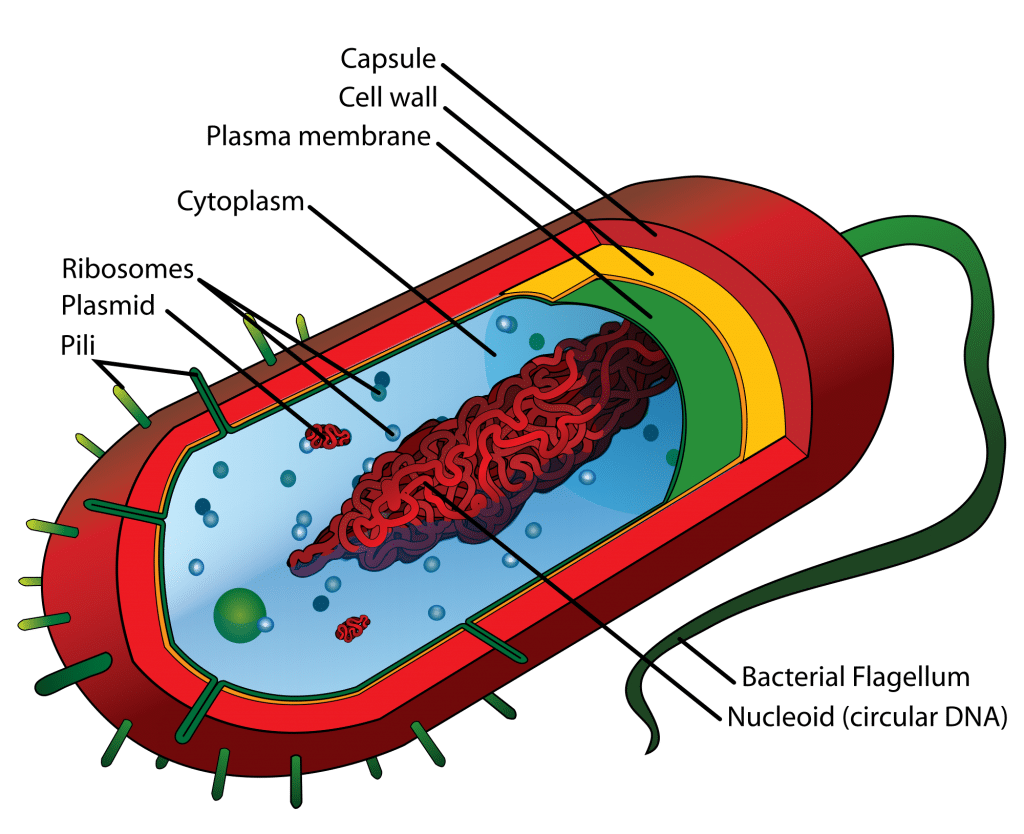
- Unicellular with simple internal organisation.
- DNA is located in the nucleoid region, not enclosed by a membrane.
- Contain 70S ribosomes for protein synthesis.
- Reproduce mainly through binary fission.
- Some possess additional DNA in plasmids, which can be transferred between cells.
- Cell wall composition varies — Gram-positive vs Gram-negative bacteria.
🧠 Examiner Tip: Always state “70S ribosomes” for prokaryotes and “80S ribosomes” for eukaryotes — mixing them up is a common error in exams.
📌 Cell Wall and Plasma Membrane
- Cell wall maintains shape, protects against osmotic pressure, and provides structural support.
- Peptidoglycan is the main component in bacterial cell walls.
- Gram-positive bacteria have thick peptidoglycan layers; Gram-negative have thinner layers and an outer membrane.
- Plasma membrane controls substance exchange with the environment.
- Some bacteria have a capsule for protection and attachment to surfaces.
- Archaea have cell walls without peptidoglycan (pseudopeptidoglycan instead).
🌍 Real-World Connection: Antibiotics like penicillin target bacterial cell wall synthesis, making them ineffective against Archaea.
📌 Genetic Material: Nucleoid and Plasmids
- Nucleoid contains a single circular chromosome made of DNA.
- DNA is supercoiled to fit into the cell.
- Plasmids carry extra genes, often for antibiotic resistance.
- Plasmids can be transferred between bacteria via conjugation (pili-mediated).
- Chromosome replication is linked to binary fission.
- No histones in bacteria, but Archaea have histone-like proteins.
🌐 EE Focus: An EE could investigate plasmid transfer rates in different bacterial strains, linking to antibiotic resistance spread.
📌 Movement and Surface Structures
- Flagella provide motility, enabling movement towards nutrients or away from toxins.
- Flagellar movement is driven by a rotary motor powered by proton gradients.
- Pili aid in surface attachment and genetic exchange.
- Fimbriae are shorter and more numerous, mainly for adhesion.
- Some prokaryotes secrete a slime layer to aid movement on surfaces.
- Motility and adhesion are important for colonisation in both pathogenic and symbiotic bacteria.
⚗️ IA Tips & Guidance: A possible IA could measure bacterial growth rates under different conditions using turbidity or colony counting.
📌 Binary Fission
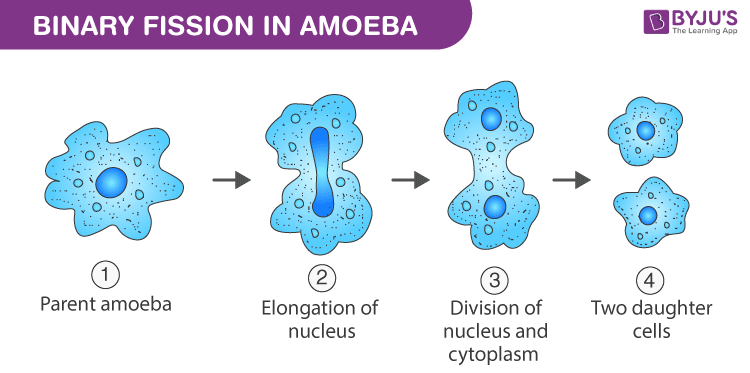
- DNA is replicated beginning at the origin of replication.
- Chromosomes attach to the cell membrane and are pulled apart as the cell elongates.
- The plasma membrane pinches inwards to divide the cell.
- Produces two genetically identical daughter cells.
- Occurs rapidly under favourable conditions — some bacteria divide every 20 minutes.
- Allows for fast population growth but limits genetic diversity unless horizontal gene transfer occurs.