7.2 ENERGY SOURCES: USES AND MANAGEMENTS
📌 Definitions Table
| Term | Definition (Exam-Ready, 2 Marks) |
|---|---|
| Energy Independence | A state in which a country can meet its energy needs without relying on imported sources. |
| Initial High Capital Investment | The large upfront cost required to develop or install infrastructure, such as renewable energy systems. |
| Solar Farms | Large-scale installations of solar panels designed to generate electricity from sunlight for distribution to the grid. |
| Energy Security | The reliable and affordable access to sufficient energy supplies to meet national needs. |
| Peak-Shaving | The process of reducing energy consumption during periods of highest demand to ease grid pressure and lower costs. |
- 🧠 Exam Tips:
Use terms like “infrastructure,” “grid,” “demand,” and “supply” in energy-related definitions to demonstrate systems understanding.
For capital investment, mention its role in long-term sustainability when elaborating in extended responses.
📌 Energy Sources and Sustainability
- Energy sources are classified into renewable and non-renewable categories
- This is based on their ability to regenerate within a human lifespan
What are renewable energy sources?
- Renewable energy comes from energy sources that will not run out and includes:
- Wind energy
- Solar energy
- Tidal energy
- Biomass (wood)
- Geothermal energy
- Hydropower
- Once in place, these renewable energy sources do not produce any greenhouse gas emissions (except for biomass)
- It is important to note that greenhouse gases may be emitted in the production, construction and transport of the equipment required for renewable energy sources
- Advantages of all:
- Reduces dependence on fossil fuels and foreign energy sources
- This promotes energy independence and security
- The renewables industry creates jobs in manufacturing, installation, operation and maintenance of renewable infrastructure
- Reduces dependence on fossil fuels and foreign energy sources
Wind energy
- Wind energy harnesses the kinetic energy of moving air to generate electricity
- It involves the use of wind turbines
- These have large blades that spin when the wind blows
- The rotating blades transfer kinetic energy to a generator, which converts it into electrical energy
- Advantages:
- Abundant energy source
- No greenhouse gas emissions or air pollutants produced during operation
- Land beneath turbines can often still be used for farming or other purposes
- Can be installed offshore (in the sea) to minimise land use conflicts
- Installation and running costs have decreased significantly, making it competitive with non-renewable energy sources
- Can be small- or large-scale
- Disadvantages:
- Intermittent (non-constant) energy source dependent on wind availability
- Visual and noise pollution can affect local communities
- Initial high capital investment for turbines and infrastructure
- Potential impact on wildlife, particularly birds and bats flying into the turbine blades
- Wind farms require large areas of land, which can have an impact on agricultural or natural landscapes
Solar energy
- Solar energy uses photovoltaic (PV) panels that transfer energy from sunlight to produce an electrical current, generating electrical power
- Advantages:
- Abundant energy source
- No greenhouse gas emissions or air pollutants produced during operation
- Suitable for various scales of application (from house rooftops to very large solar farms)
- Can be integrated into existing buildings and infrastructure
- Solar is progressively becoming less expensive and more efficient
- Solar energy can be generated in remote places where they don’t have electricity (e.g. to power solar street signs in rural areas)
- Disadvantages:
- Intermittent (non-constant) energy source dependent on sunlight availability
- Initial high capital investment for solar panels and equipment
- Requires significant land area for solar farm installations (which could otherwise be used for agriculture)
- Energy storage solutions needed for night-time or cloudy days
- Potential environmental impact during manufacturing and disposal of panels (electronic waste)
- Some people dislike the appearance of large solar farms (visual pollution)
Tidal energy
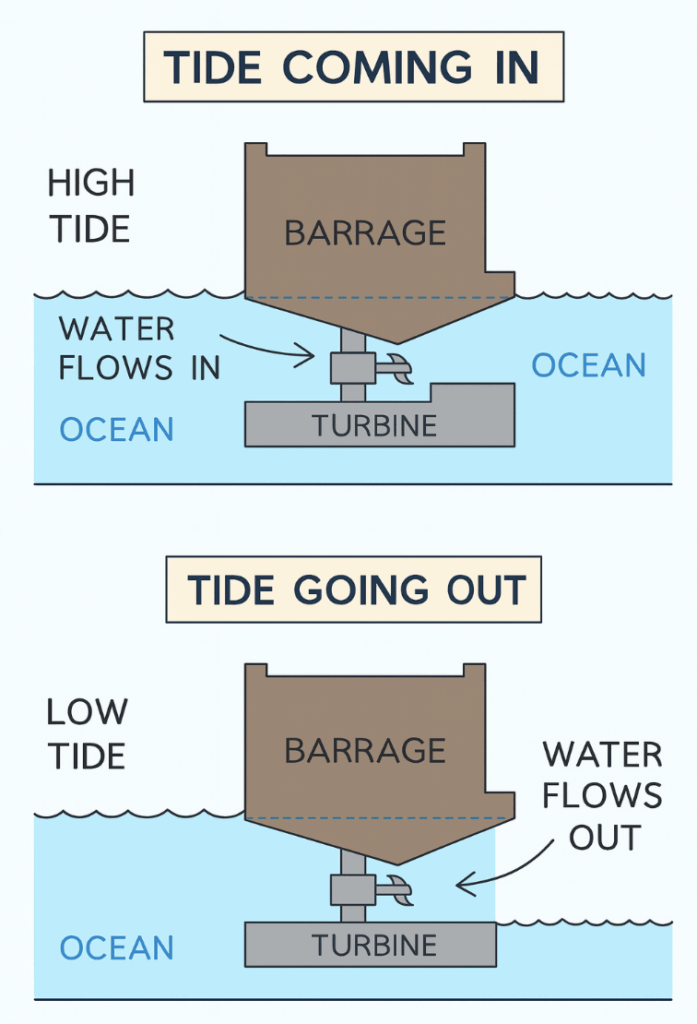
- Tidal energy uses the energy of rising and falling tides to turn a turbine and generate electricity
- Advantages:
- Abundant energy source
- No greenhouse gas emissions or air pollutants produced during operation
- Predictable and reliable source of energy due to regular tidal patterns
- Can produce a large amount of electricity at short notice
- Minimal visual impact when installed underwater
- Long lifespan of tidal turbines with minimal maintenance
- Disadvantages:
- High initial costs
- Limited availability of suitable sites
- Potential environmental impact on marine ecosystems and fish migration
- Maintenance challenges and costs due to underwater installations
- Possible interference with shipping lanes and navigation
Biomass (wood)
- Biomass energy uses organic materials such as wood to generate heat or electricity
- Advantages:
- Renewable resources and carbon neutral if managed sustainably
- Readily available in many regions, especially rural areas
- Disadvantages:
- Carbon dioxide and air pollution from combustion emissions
- Deforestation risk and habitat loss if not sustainably managed
- Impact on indoor air quality if not properly ventilated
Geothermal energy
- Geothermal energy harnesses heat from within the Earth’s crust for electricity generation or heating purposes.
- The Earth’s interior is extremely hot
- Water can be poured into shafts below the Earth’s surface
- The water is heated and returned via another shaft as steam or hot water
- Steam can be used to turn a turbine and generate electricity
- The hot water can also be used to heat homes
- Advantages:
- Sustainable energy source
- Reliable and stable source of energy available at all times
- Small land footprint compared to other renewable sources (e.g. wind and solar)
- Geothermal power stations are usually small compared to nuclear or fossil fuel power stations
- Long lifespan of geothermal plants with low operating costs
- Disadvantages:
- Site-specific; limited to regions with near-surface geothermal activity
- High initial drilling and exploration costs
- Can result in the release of greenhouse gases from underground
- Geological risks such as earthquakes or ground subsidence
Hydropower
- Hydropower uses flowing water to generate electricity through turbines in dams
- Advantages:
- Reliable and predictable source of energy
- Low greenhouse gas emissions during operation
- Multi-purpose benefits, including flood control and irrigation
- Long lifespan of hydroelectric plants with low operating costs
- Can respond to demand quickly, generating large scale amounts of electricity in a short period of time
- Disadvantages:
- Disruption of river ecosystems and fish migration routes
- High initial capital costs for dam construction and infrastructure
- Dam construction and reservoir formation floods habitats and can require relocation of human communities
- Climate change impacts on water availability is affecting reservoir levels, making them less reliable
What are non-renewable energy sources?
- Non-renewable energy comes from energy sources that will eventually run out, including:
- Fossil fuels
- Nuclear energy (using uranium as a fuel)
Fossil fuels
- Fossil fuels include:
- Coal
- Crude oil, which is refined into petrol, diesel and other fuels
- Natural gas (mostly methane), which is used in domestic boilers and cookers
- Fossil fuels are formed from the remains of plants and animals
- Chemical energy stored in fossil fuels originally came from sunlight
- Energy from the sun was transferred to chemical energy stores within plants through photosynthesis (plants use energy from sunlight to make food)
- Animals ate the plants and the energy was then transferred to their chemical store
- Advantages
- The current systems of transport and electricity generation used by human societies rely heavily on fossil fuels
- These fossil fuels are generally readily available on a daily basis
- In the past, fossil fuels have been reliable for large-scale energy production (although this is changing as supplies start to become depleted and prices rise)
- Efficient—fossil fuels typically have a high energy density (they produce a large amount of energy per kilogram)
- The current systems of transport and electricity generation used by human societies rely heavily on fossil fuels
- Disadvantages
- It takes millions of years for fossil fuels to form:
- This is why they are considered a non-renewable energy resource
- The increasing demand for decreasing supply causes prices to increase
- Fossil fuels are predicted to completely run out within the next 200 years
- Burning fossil fuels pollutes the atmosphere with harmful gases such as:
- Carbon dioxide, which contributes to the greenhouse effect
- Sulphur dioxide, which produces acid rain
- Both carbon and sulphur can be captured upon burning, preventing them from being released into the atmosphere, but this is expensive to do
- Oil spills can occur during transport of fossil fuels, which damage the marine environment and wildlife over very large areas
- Prices fluctuate rapidly
- Conflict and political disagreements (such as the war in Ukraine) can have an impact on supplies
- It takes millions of years for fossil fuels to form:
Nuclear energy
- Energy stored in the nucleus of atoms can be released when the nucleus is broken in two:
- This is known as nuclear fission
- Nuclear power stations use fission reactions to create steam to turn turbines to generate electricity
- Nuclear power is a low-carbon, low-emission, non-renewable resource
- However, it is controversial due to the radioactive waste it produces and the potential scale of any accident
- Advantages
- No pollution released into atmosphere
- Nuclear reactors are perfectly safe as long as they are functioning properly (rigorous safety checks must be routinely carried out and rigorous safety procedures followed)
- Nuclear power stations can generate electricity reliably on a large scale to be available as needed
- Small amounts of uranium are needed, and large reserves are available
- Reduces reliance on fossil fuels
- Increases energy security
- Disadvantages
- There is a finite supply of uranium ore, so nuclear power is a non-renewable resource
- Nuclear fuels produce radioactive waste, which needs to be stored for thousands of years
- Safe ways of storing radioactive waste are very expensive
- If an accident occurs at a nuclear reactor, radioactive waste can leak out and spread over large areas
- The cost of decommissioning (shutting down) nuclear power plants is very high
Sustainability of energy sources
- Energy sustainability refers to meeting current energy demands without compromising the ability of future generations to meet their needs
- The sustainability of energy sources can vary greatly depending on:
- Whether they are renewable or non-renewable
- Their environmental impact
Environmental cost of non-renewable energy
Fossil fuels
- Extraction: mining for coal and drilling for oil and gas can destroy habitats and lead to soil erosion and water contamination
- Refining crude oil: this process releases harmful chemicals and contributes to air and water pollution
- Liquefaction of natural gas: turning gas into liquid for easier transportation emits carbon dioxide and other greenhouse gases
Nuclear energy
- Mining of uranium: extracting uranium for nuclear power plants is energy-intensive and leaves behind radioactive waste
- Nuclear waste: long-term storage of nuclear waste is difficult, as it remains hazardous for thousands of years
Environmental cost of renewable energy sources
- Renewable energy comes from sources that can be naturally replenished, such as the sun, wind and water
- These sources tend to have a lower environmental impact
- However, they can still have significant (sometimes ‘hidden‘) environmental costs, including:
- Manufacturing: producing renewable energy devices requires energy and raw materials, leading to environmental damage
- End-of-life management: recycling components from solar panels, wind turbines and batteries is often expensive and not always efficient, leading to waste and pollution
Examples of renewable energy devices
- Wind turbines
- Challenges:
- Wind turbines require rare earth elements for magnets and motors, such as neodymium
- At the end of their life, turbine blades are difficult to recycle and often end up in landfills
- Challenges:
- Solar panels
- Challenges:
- The production of solar panels requires mining for materials like silicon and rare earth elements
- Solar panels have a limited lifespan (20-30 years) and need careful disposal to avoid chemical pollution
- Challenges:
- Tidal barrages
- Tidal barrages use the movement of tides to generate energy
- Challenges:
- Building tidal barrages can disrupt local ecosystems, affecting fish and marine life
- Barrages are large and expensive to construct and maintain
Rare earth elements in renewable energy
- Renewable technologies, like electric vehicles (EVs) and wind turbines, rely on rare earth elements for efficient energy conversion
- However, these elements are difficult to mine and refine, leading to sustainability issues, including:
- Energy-intensive extraction:
- Extracting rare earth elements requires significant energy (e.g. for mining machinery), contributing to greenhouse gas emissions
- Mining impacts:
- Mining for rare earth elements can cause severe environmental damage, including:
- Water contamination: mining processes release toxic chemicals into nearby water sources, affecting both surface water and groundwater
- Habitat destruction: clearing land for mining operations and access routes can destroy local ecosystems, disrupt wildlife habitats and cause deforestation
- Dust pollution: dust from cutting, drilling and blasting rocks accumulates in surrounding areas, leading to air pollution and increasing the risk of respiratory diseases for nearby communities
- Mining for rare earth elements can cause severe environmental damage, including:
- Energy-intensive extraction:
📌 Energy Consumption and Choices
- Energy consumption refers to the total amount of energy used by individuals, industries and countries
- As populations grow and individual demand increases, global energy consumption continues to rise
- Meeting energy needs whilst also managing environmental and economic impacts is a significant challenge
Global trends in energy consumption
Rising demand
- Population growth:
- As the global population increases, so does energy demand
- More people need energy for electricity, transport, heating and cooling
- Per capita energy demand:
- People are using more energy per person
- Particularly in developing countries where industrialisation and living standards are improving
- People are using more energy per person
Energy production and consumption changes
- Fossil fuels like coal, oil, and natural gas continue to supply the majority of the world’s energy
- Renewable energy (e.g. wind, solar and hydro) is growing but still provides a smaller portion of global energy
- E.g. in 2022, 80% of the world’s energy came from fossil fuels, with renewable energy making up 12.7%
Reasons for changes in energy use
- Economic development:
- As countries become wealthier, they tend to use more energy for:
- Industrial processes
- Transportation
- Technology
- For example, India’s energy consumption is rapidly increasing as it develops its manufacturing sector and infrastructure
- As countries become wealthier, they tend to use more energy for:
- Environmental concerns:
- Global concerns about climate change are driving a shift towards cleaner energy sources like solar and wind
- Governments are setting targets to:
- Reduce carbon emissions
- Invest in renewable energy
- For example, the European Union aims to achieve carbon neutrality by 2050, which requires a massive reduction in fossil fuel use
The role of fossil fuels
- Despite environmental concerns, fossil fuels still play a crucial role in supporting industries that are hard to power with renewable energy:
- Steel and concrete industries:
- The production of steel and concrete relies heavily on coal and natural gas
- Renewable energy is not yet suitable for these high-energy processes
- For example, China is the world’s largest producer of steel, and its steel industry is responsible for a significant portion of global coal consumption
- Synthetic fertilisers:
- Natural gas is essential for producing ammonia
- Ammonia is a key ingredient in synthetic fertilisers that support global agriculture
- As global food demand increases, the need for synthetic fertilisers (and therefore natural gas) is likely to continue
- Natural gas is essential for producing ammonia
Meeting the growing demand for energy
Changing energy production resources
- Increased renewable energy:
- Investing in renewable energy sources can help meet rising demand while reducing reliance on fossil fuels
- Energy storage:
- Storing energy efficiently is key to managing renewable sources that are not able to provide a constant supply, like solar and wind
- For example, Tesla’s battery storage systems in Australia help store surplus solar energy for use at night or during low-wind periods
- Storing energy efficiently is key to managing renewable sources that are not able to provide a constant supply, like solar and wind
Reducing energy consumption
- Energy efficiency:
- Improving the energy efficiency of appliances, vehicles and buildings can significantly reduce overall consumption
- For example, the UK government has introduced stricter building regulations
- These require homes to be more energy efficient, helping to lower overall energy demand
- Improving the energy efficiency of appliances, vehicles and buildings can significantly reduce overall consumption
- Behavioural changes:
- Encouraging individuals and industries to use less energy can make a big difference
Energy choices
- Energy choices refer to the decisions a country makes about how it generates and consumes energy
- There are many factors that affect decisions, such as:
- Economic cost
- Pollution
- Energy efficiency
- Availability
- Energy security
Factors influencing energy choices
Economic cost
- The cost of building and maintaining energy infrastructure plays a big role in energy choices
- Fossil fuels: often cheaper to develop initially but come with high environmental and long-term costs
- Renewables: may have higher upfront costs but offer long-term savings and environmental benefits
- For example, solar energy is becoming more cost-competitive in many countries due to advances in technology and falling costs
Pollution
- Some energy sources cause more pollution than others
- Many countries are trying to balance energy needs with environmental health
- Fossil fuels: emit large amounts of greenhouse gases and contribute to air pollution
- Renewables: produce little to no pollution during operation
Energy efficiency
- Energy efficiency refers to how well energy is used and conserved.
- Fossil fuels: often less efficient and result in energy waste during burning
- Renewables: can be efficient but some rely on weather conditions
Availability
- The natural resources available to a country influence its energy choices
- Fossil fuels: countries with large reserves of coal, oil, or natural gas are likely to use them as major energy sources
- Renewables: depend on geographic features like sunlight, wind, or water availability
Energy security
- Energy security refers to a country’s ability to meet its energy needs reliably and without being overly dependent on foreign sources
- Fossil fuels: many countries that rely on imported oil or gas face risks from fluctuating prices or geopolitical issues
- Renewables: provide more energy security, as they are often produced locally and are not subject to international market fluctuations
📌 Energy Sources and Conservation
- Energy storage is important for managing the supply of energy, especially from renewable sources
- This is because many renewable sources do not produce a consistent flow of energy
- By storing energy, countries can ensure a reliable supply even when renewable sources like wind or solar power are not generating electricity
The need for energy storage:
- Some renewable energy sources, such as wind and solar, produce energy intermittently
- This means they only generate power when conditions are right:
- Wind power: only produces electricity when the wind is blowing
- Solar power: only generates electricity during the day when there is sunlight
- Because of this, there can be times when energy supply does not meet demand
- Energy storage systems help solve this problem by:
- Storing excess energy when production is high
- Releasing it when demand exceeds supply
Energy storage solutions
There are several ways to store energy to ensure supply can meet demand, including the following:
- Batteries: Store electricity as chemical energy, which can be released when needed
- Uses: common in electric vehicles and home solar systems
- Example: Tesla Powerwall batteries store energy from solar panels and can supply power to homes during outages or high demand periods
Pumped hydroelectricity storage (PHS)
- PHS stores energy by pumping water to a higher reservoir when there is surplus electricity
- When electricity demand is high, the water is released back down to a lower reservoir, turning turbines to generate electricity
- Uses: large-scale energy storage used by national grids
- Example: Dinorwig Power Station in Wales is one of the largest PHS systems and is used to balance electricity supply in the UK
- Advantages of PHS:
- Large capacity: can store huge amounts of energy from excess electricity generated during periods of high renewable energy production (e.g. when the wind is blowing strongly or during peak solar energy generation)
- Reliable: provides quick response to sudden demand increases (known as peak-shaving)
- Long lifespan: PHS plants can operate for decades with low maintenance, contributing to their sustainability
- Disadvantages of PHS:
- Geographic limitations: requires specific landforms (mountains, valleys) and large reservoirs, limiting where it can be built
- Environmental impact: constructing dams and reservoirs can damage ecosystems and disrupt local wildlife
- Economic costs: can have very high initial costs to build
Fuel cells
- Fuel cells convert stored chemical energy (often hydrogen) directly into electricity
- Uses: used in transportation (e.g. hydrogen-powered vehicles) and backup power systems
- Example: Japan is investing in hydrogen fuel cells for its energy transition, particularly for powering vehicles and buildings
Thermal storage
- Stores heat energy, which can be used to generate electricity later or provide heating
- Uses: often used with solar power plants, where excess solar energy is stored as heat and converted to electricity during low sunlight
- Example: the Crescent Dunes Solar Energy Project in the US uses molten salt to store solar energy as heat, which is then used to generate electricity after sunset
Managing energy demand: peak-shaving
- Energy storage systems can be used for peak-shaving
- This is the process of levelling out periods of high demand to ensure supply meets demand
- When there is a peak in electricity usage (like during cold winter evenings), stored energy can be released to meet the extra demand
- This avoids blackouts or the need to turn on extra power plants
Energy conservation & efficiency
What is energy conservation?
- Energy conservation means changing our behaviour to use less energy
- It includes small daily actions such as:
- Turning off lights when not in use
- Reducing the use of heating or air conditioning by wearing appropriate clothing or using natural ventilation
- Travelling less by fuel-driven vehicles and opting for walking, cycling or public transport instead
What is energy efficiency?
- Energy efficiency means using technologies and designs that require less energy to perform the same task
- This can include:
- Installing low-energy LED lighting in homes and buildings
- Using energy-efficient appliances (e.g. the latest washing machines and fridges with high energy-efficiency ratings)
- Developing fuel-efficient transportation methods, such as electric vehicles (EVs)
- Designing buildings to conserve heat through better insulation, reducing the need for heating and cooling
- For example, the use of double-glazed windows in homes increases energy efficiency by keeping heat inside, reducing the need for heating systems
The importance of energy conservation and efficiency
- Energy conservation and efficiency help reduce energy demand and waste
- These strategies make countries less dependent on importing energy resources
- This reduces costs and improve energy security
- They also contribute to reducing carbon emissions
- This helps combat climate change
Examples of energy conservation and efficiency
Smart lighting systems
- Energy-efficient lighting like LED bulbs and motion sensors are designed to reduce electricity use
- Motion sensors ensure that lights are only on when needed, reducing waste in public spaces and large buildings
- Effectiveness:
- LEDs use up to 80% less energy than traditional bulbs, making them a cost-effective solution for reducing electricity use
Passive solar building design
- Passive solar design uses natural sunlight to heat buildings, reducing the need for artificial heating
- Buildings are designed with large windows facing the sun and materials that store and release heat efficiently
- Effectiveness:
- Passive solar design is effective in regions with consistent sunlight, helping reduce energy bills and making homes more energy-efficient
Designing goods to be easily recycled
- The circular economy aims to reduce waste by designing products that can be easily reused, repaired or recycled
- By creating products with longer lifespans and using recyclable materials, less energy is needed for producing new items
- Effectiveness:
- Designing goods to be recycled reduces the energy needed for producing new materials, cutting down energy demand in industries
Commercial shipping with sails
- One innovative way to improve energy efficiency in the shipping industry is by designing ships with sails (wind-assisted propulsion)
- Modern ships can use large, automated sails, known as rotor sails or kite sails, to harness wind energy and reduce fuel consumption
- This reduces greenhouse gas emissions
- Effectiveness:
- Ships using wind-assisted propulsion can reduce fuel consumption by 10-30%, depending on wind conditions