D4.3.3 MITIGATION AND ADAPTATION STRATEGIES
📌Definition Table
| Term | Definition |
|---|---|
| Mitigation | Actions to reduce greenhouse gas emissions or enhance carbon sinks to slow climate change. |
| Adaptation | Adjustments in ecological, social, or economic systems to minimise harm from climate change impacts. |
| Carbon capture and storage (CCS) | Technology to remove CO₂ from emissions and store it underground. |
| Renewable energy | Energy from sources like solar, wind, and hydro that do not emit GHGs. |
| Climate resilience | Ability of systems to absorb disturbances and maintain function under changing conditions. |
| Paris Agreement | International treaty aiming to limit warming to below 2 °C above pre-industrial levels. |
📌Introduction
Addressing climate change requires both mitigation to tackle root causes and adaptation to cope with unavoidable impacts. Mitigation focuses on reducing greenhouse gas emissions through energy transition, efficiency, and carbon sequestration. Adaptation strategies help societies and ecosystems adjust, from climate-resilient crops to coastal defences. Effective action requires cooperation across scales, integrating science, policy, economics, and community engagement.
📌 Mitigation Approaches
- Transition to renewable energy (solar, wind, hydro, geothermal).
- Improving energy efficiency in transport, industry, and housing.
- Carbon capture and storage (CCS) for industrial emissions.
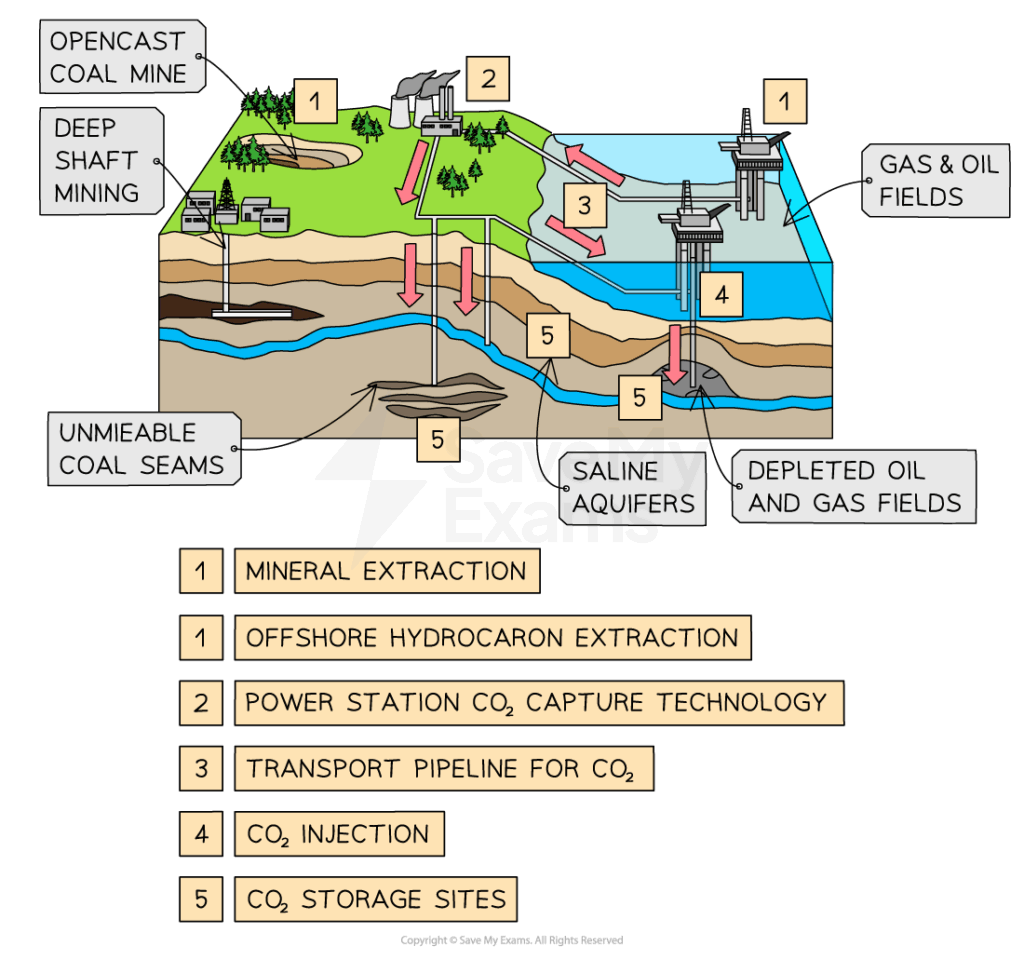
- Reforestation and afforestation to increase carbon sinks.
- Policy tools: carbon pricing, emissions trading, and subsidies for green tech.
🧠 Examiner Tip: Distinguish clearly between mitigation (reducing the cause) and adaptation (managing the effects).
📌 Adaptation Strategies
- Developing drought-resistant and flood-tolerant crops.
- Building sea walls and managed retreat in coastal zones.
- Enhancing water storage and irrigation efficiency.
- Designing climate-resilient infrastructure (e.g., flood-proof housing).
- Protecting and restoring ecosystems to provide natural buffers.
🧬 IA Tips & Guidance: Projects could model effects of tree planting on CO₂ absorption, or compare water-use efficiency in different crop varieties under stress conditions.
📌 International and Local Action
- Paris Agreement (2015): global cooperation to limit warming to <2 °C.
- Nationally Determined Contributions (NDCs) set by each country.
- Local initiatives: community renewable projects, urban greening.
- NGOs and grassroots movements advocate climate justice.
- Integration of science, policy, and education critical for success.

🌐 EE Focus: An EE could evaluate effectiveness of mitigation vs adaptation in a particular country, combining data analysis with policy evaluation.
📌 Challenges and Trade-Offs
- Economic costs of transition vs long-term benefits.
- Resistance from industries reliant on fossil fuels.
- Unequal vulnerability: poorer nations face disproportionate impacts.
- Geoengineering proposals raise ethical and ecological concerns.
- Balancing immediate needs with long-term sustainability.
❤️ CAS Link: Students could initiate school sustainability projects — reducing waste, promoting renewable energy use, or climate awareness campaigns.
🌍 Real-World Connection: Climate change is already shaping geopolitics (climate refugees, food insecurity). Effective mitigation and adaptation are essential for human security.
📌 Resilience and Future Pathways
- Building resilience requires integrating ecological, economic, and social systems.
- Ecosystem-based adaptation (mangrove restoration, wetlands) provides co-benefits.
- Innovation in energy storage and carbon removal may transform future scenarios.
- Equity and justice central to climate strategies.
- Collective action determines whether warming is stabilised or escalates.
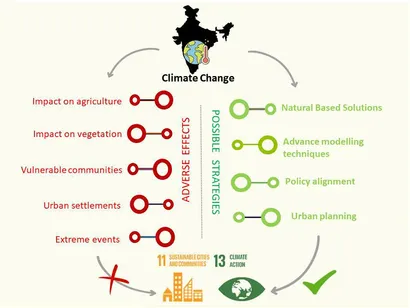
🔍 TOK Perspective: Mitigation involves ethical and political decisions. TOK issue: To what extent is science sufficient to solve climate change, and where do values and cultural perspectives play a decisive role?