D4.1.2 ADAPTATION AND FITNESS
📌Definition Table
| Term | Definition |
|---|---|
| Adaptation | Inherited trait that increases an organism’s chance of survival and reproduction. |
| Fitness | Ability of an organism to survive, reproduce, and pass on genes to the next generation. |
| Structural adaptation | Physical feature of an organism (e.g., thick fur, beak shape). |
| Physiological adaptation | Internal function enhancing survival (e.g., enzymes working at extreme temperatures). |
| Behavioural adaptation | Actions or behaviours that aid survival (e.g., migration, mating calls). |
| Evolutionary fitness | Measured by reproductive success relative to others in the population. |
📌Introduction
Adaptation is the process by which traits that improve survival or reproduction become more common in a population. Fitness, in evolutionary terms, is not about strength or speed, but the relative success in leaving viable offspring. Organisms display structural, physiological, and behavioural adaptations that allow them to thrive in their niches. Over time, natural selection ensures that beneficial adaptations accumulate, while less useful traits decline
📌 Types of Adaptations
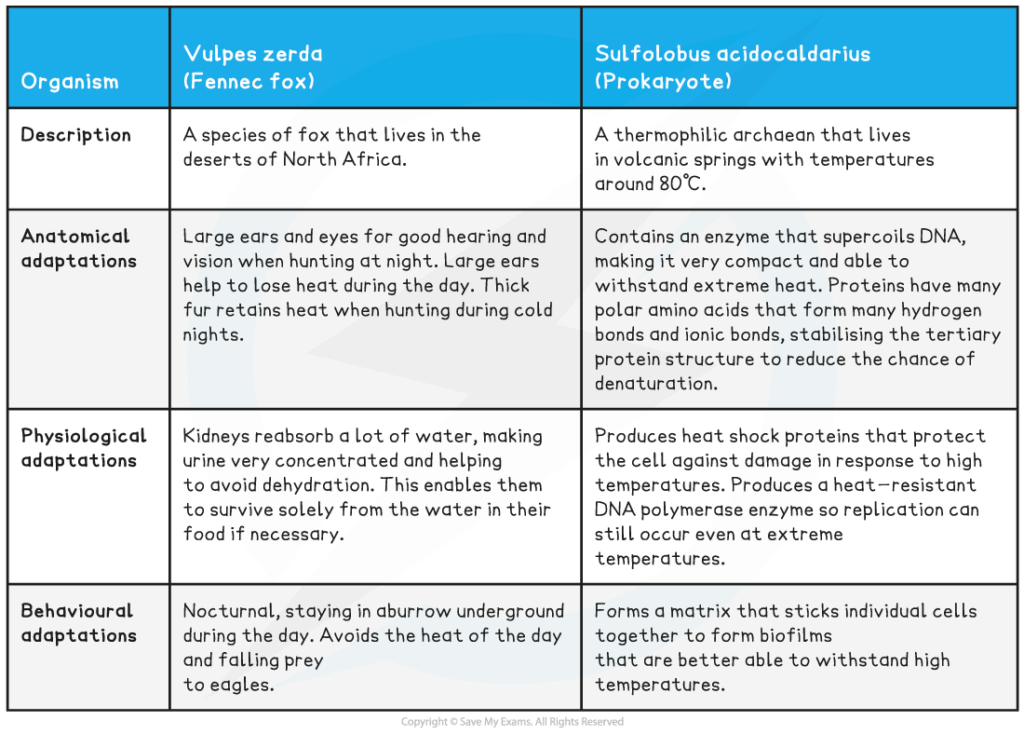
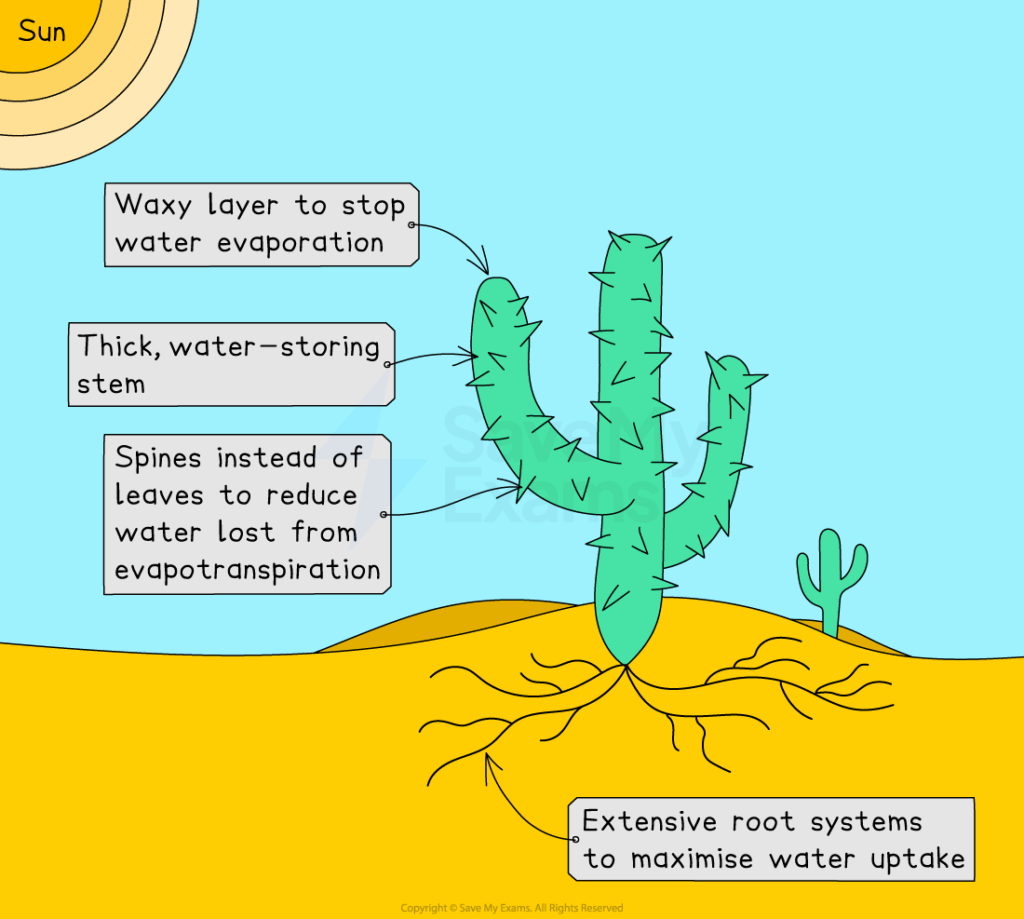
- Structural adaptations: physical modifications like spines in cacti or camouflaged fur.
- Physiological adaptations: biochemical adjustments like antifreeze proteins in polar fish.
- Behavioural adaptations: cooperative hunting in wolves, migration in birds.
- Reproductive adaptations: strategies like producing many seeds or parental care.
- Molecular adaptations: changes in enzymes for efficiency under specific conditions.
🧠 Examiner Tip: Don’t define fitness as strength or health. In biology, fitness is measured by reproductive success and contribution to the gene pool.
📌 Fitness and Natural Selection
- Individuals with higher fitness produce more viable offspring.
- Fitness depends on match between traits and environment.
- Different environments favour different traits (context-specific).
- Fitness may involve trade-offs (e.g., bright colours attract mates but predators too).
- Fitness varies with time as environments change.
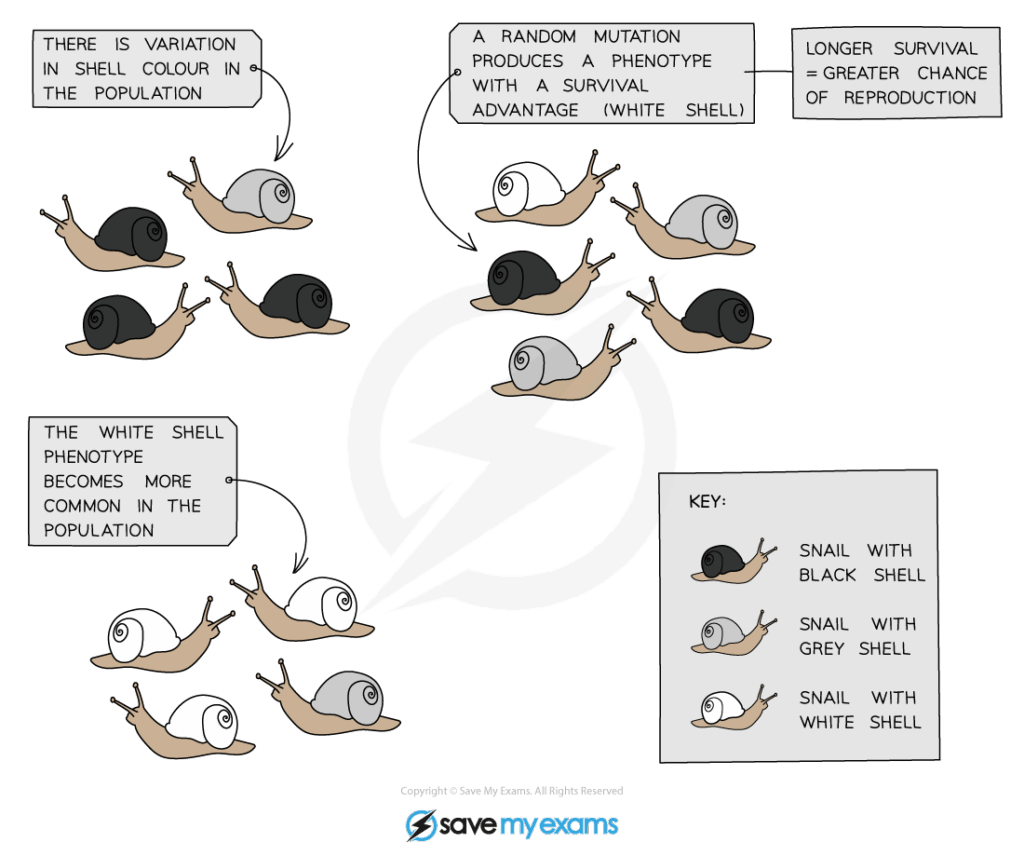
🧬 IA Tips & Guidance: Experiments on adaptation can model selection — e.g., simulating predation on coloured beads against different backgrounds to show camouflage fitness.
📌 Adaptations in Specific Environments
- Desert plants: water storage, CAM photosynthesis.
- Polar animals: blubber, fur insulation, seasonal hibernation.
- Predator-prey systems: speed, camouflage, mimicry.
- High altitude species: haemoglobin with higher oxygen affinity.
- Parasites: specialised mouthparts, complex life cycles.
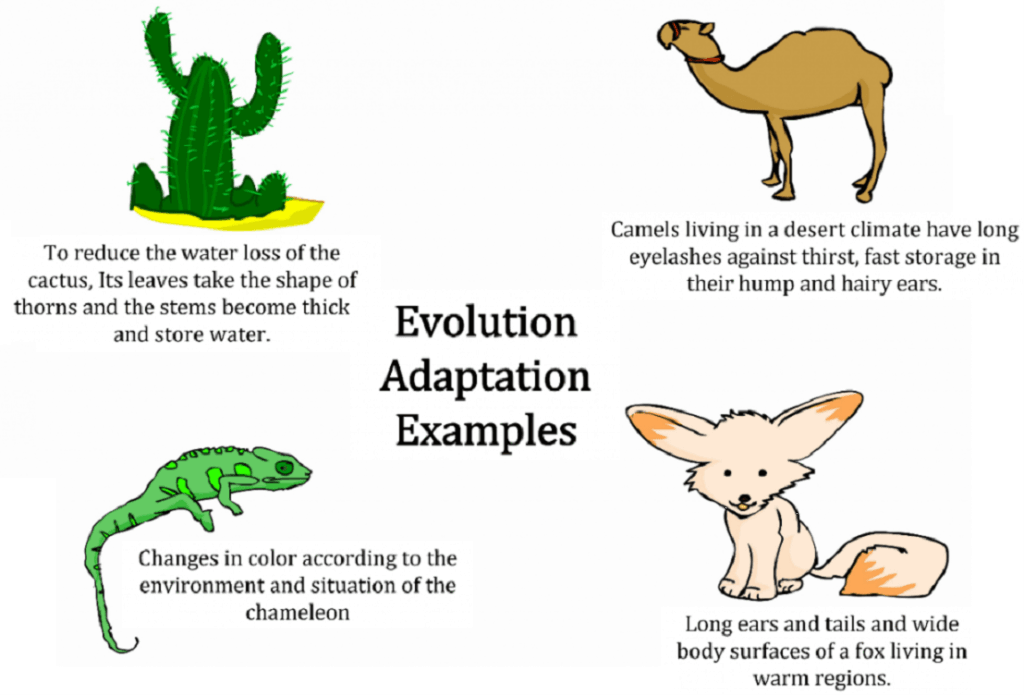
🌐 EE Focus: An EE could investigate trade-offs in adaptations, e.g., why some plants invest in chemical defence over growth. This explores cost-benefit balances in evolutionary fitness.
📌 Adaptation and Speciation
- Accumulated adaptations may isolate populations reproductively.
- Leads to divergence and eventually speciation.
- Adaptive radiation: multiple adaptations from one ancestor (e.g., Darwin’s finches).
- Coevolution: adaptations shaped by interactions (e.g., flowers and pollinators).
- Shows adaptation as both a driver of diversity and survival.
❤️ CAS Link: Students could present projects comparing local species’ adaptations (e.g., plants in dry vs wet areas), linking them to environmental fitness.
🌍 Real-World Connection: Understanding adaptations informs conservation (protecting species in changing climates) and biotechnology (engineering enzymes with industrial adaptations).
📌 Evolutionary Importance of Adaptations
- Adaptations accumulate gradually, refining survival.
- They are context-dependent, advantageous only in certain environments.
- Maladaptations occur when environments change rapidly.
- Fitness landscapes illustrate peaks (high fitness) and valleys (low fitness).
- This concept underpins predictions about evolutionary trajectories.
🔍 TOK Perspective: Fitness is a relative, not absolute, concept. TOK issue: To what extent is scientific knowledge shaped by how we define and measure abstract concepts like “fitness”?