C4.2.2 NUTRIENT CYCLES CARBON, NITROGEN, WATER
📌Definition Table
| Term | Definition |
|---|---|
| Biogeochemical cycle | The movement of elements through living organisms and the abiotic environment. |
| Carbon cycle | The cycling of carbon between atmosphere, organisms, soil, and oceans. |
| Nitrogen cycle | The cycling of nitrogen between atmosphere, soil, organisms, and water. |
| Fixation | Conversion of atmospheric N₂ into usable nitrogen compounds by bacteria or lightning. |
| Transpiration | Loss of water vapour from plant leaves to the atmosphere. |
| Runoff | Water movement over land, carrying nutrients into rivers and oceans. |
📌Introduction
Matter cycles continuously through ecosystems, linking organisms to their environment. Key elements like carbon, nitrogen, and water cycle through biotic and abiotic processes, sustaining life and enabling productivity. These cycles are powered by energy flow but differ from energy in that matter is recycled. Human activity is increasingly altering these natural cycles, leading to global challenges like climate change, eutrophication, and water scarcity.
📌 Carbon Cycle
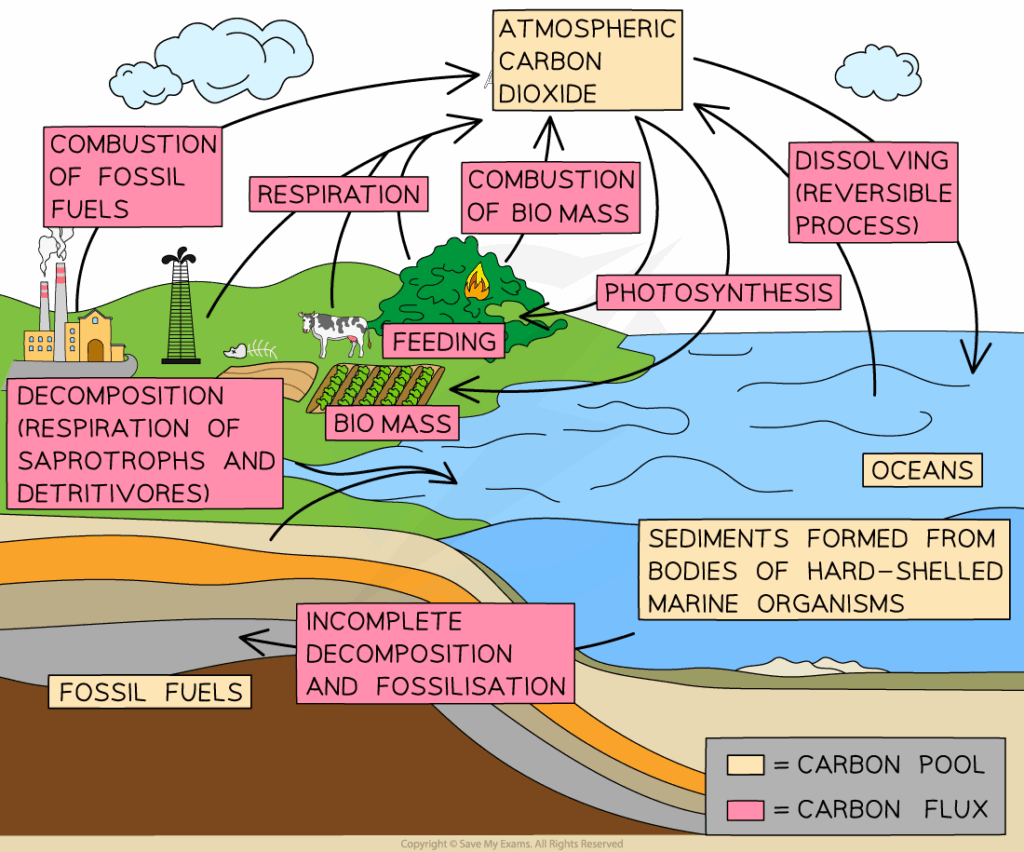
- Carbon enters the biosphere via photosynthesis, stored in biomass.
- Respiration by organisms returns CO₂ to the atmosphere.
- Decomposers release carbon from dead matter into soil and air.
- Long-term storage occurs in fossil fuels, peat, and ocean sediments.
- Human burning of fossil fuels increases atmospheric CO₂, driving climate change.
🧠 Examiner Tip: Remember: photosynthesis = CO₂ sink, respiration/combustion = CO₂ source.
📌 Nitrogen Cycle
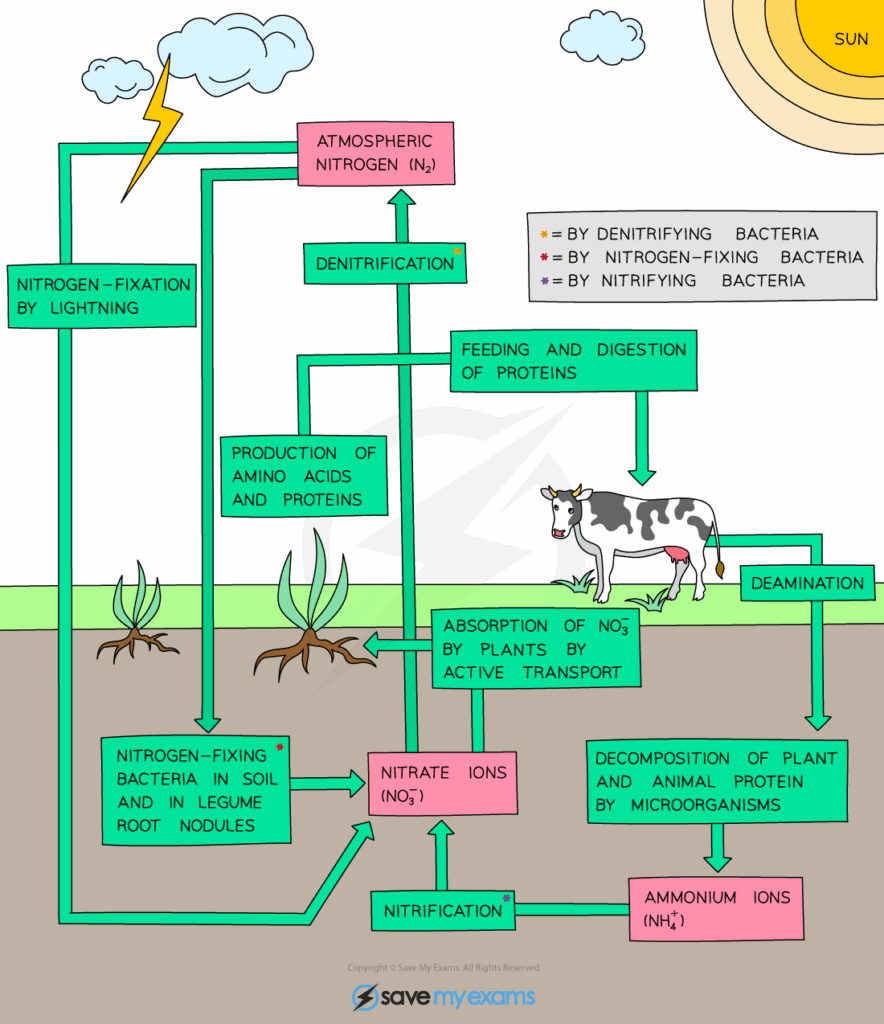
- Atmospheric nitrogen (N₂) is inert; must be fixed into usable forms (NH₃, NO₃⁻).
- Nitrogen-fixing bacteria (in soil or root nodules) convert N₂ to ammonia.
- Nitrifying bacteria convert ammonia → nitrites → nitrates (usable by plants).
- Denitrifying bacteria return nitrogen to the atmosphere.
- Fertilisers and sewage disrupt natural cycling, causing eutrophication.
🧬 IA Tips & Guidance: Students could measure nitrate levels in water samples to study human impacts on nitrogen cycling.
📌 Water Cycle
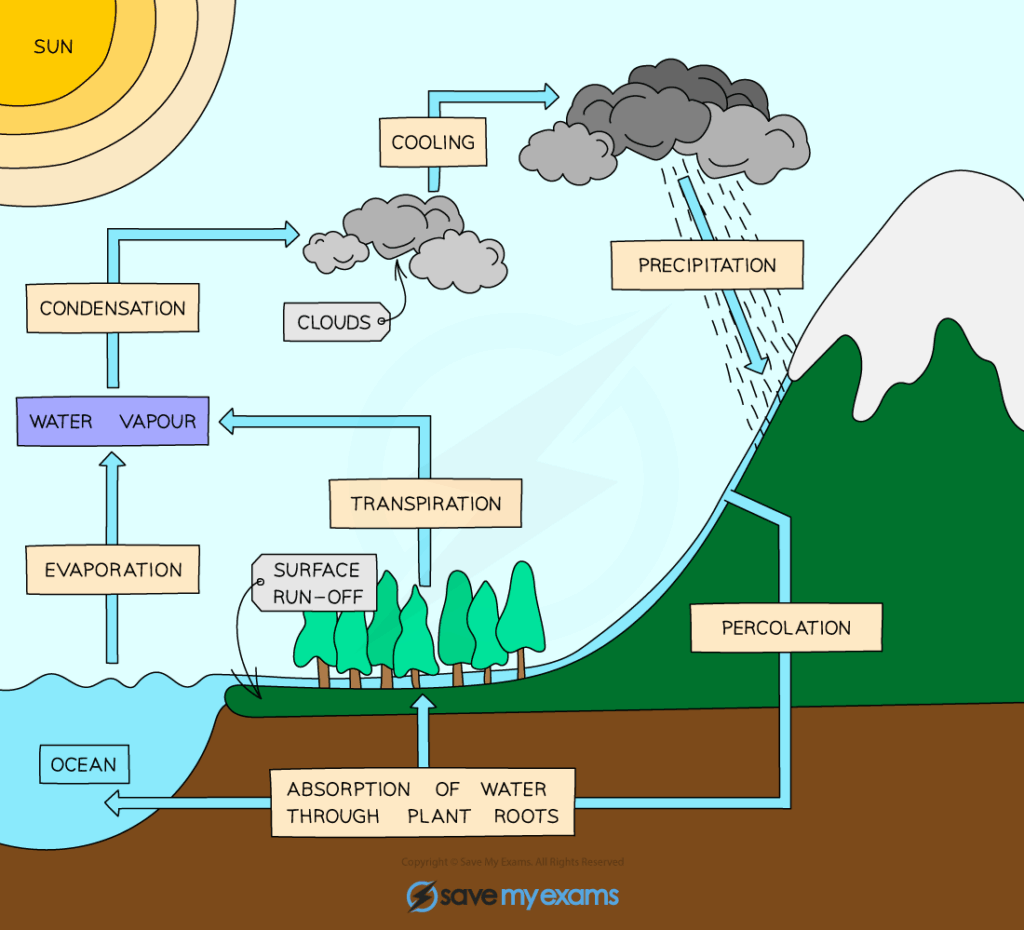
- Evaporation and transpiration transfer water to the atmosphere.
- Condensation forms clouds; precipitation returns water to land and oceans.
- Infiltration and percolation replenish groundwater.
- Runoff returns water to rivers and oceans, carrying nutrients.
- Human use (irrigation, reservoirs, deforestation) alters flows.
🌐 EE Focus: An EE could investigate how human activity modifies local water cycles (e.g., urbanisation reducing infiltration, increasing runoff).
📌 Interactions Between Cycles
- Carbon and water cycles are linked: transpiration moves both water and carbon.
- Nitrogen availability influences plant growth, altering carbon storage.
- Ocean acidification reflects excess CO₂ disrupting marine nutrient cycles.
- Global climate change alters precipitation patterns, affecting all cycles.
- Biogeochemical cycles are interconnected, not isolated loops.
❤️ CAS Link: Students could participate in water conservation projects or local tree planting to promote sustainable nutrient cycling.
🌍 Real-World Connection: Deforestation reduces carbon storage and disrupts water cycling. Industrial agriculture drives nitrogen pollution. These impacts contribute to climate change and ecosystem collapse.
📌 Human Disruptions
- Fossil fuel combustion → excess CO₂ → global warming.
- Fertilisers → nitrogen runoff → eutrophication and dead zones.
- Deforestation → reduced carbon sequestration and transpiration.
- Overuse of freshwater → aquifer depletion, droughts.
- Human disruption alters balance, threatening biodiversity and food security.
🔍 TOK Perspective: Models of nutrient cycles are presented as closed loops. TOK issue: To what extent do simplified diagrams hide the complexity and unpredictability of human impacts?