C3.2.1 INNATE IMMUNITY
📌Definition Table
| Term | Definition |
|---|---|
| Innate immunity | The non-specific, immediate defence mechanism present from birth, acting against a wide range of pathogens. |
| Physical barriers | External defences such as skin and mucous membranes that block pathogen entry. |
| Phagocytosis | The process where white blood cells engulf and digest pathogens. |
| Inflammation | A localised immune response characterised by redness, swelling, heat, and pain, recruiting immune cells to infection. |
| Complement system | A set of plasma proteins that enhance phagocytosis, cause lysis of pathogens, and promote inflammation. |
| Cytokines | Signalling proteins released by immune cells that regulate inflammation and communication. |
📌Introduction
Innate immunity provides the body’s first line of defence against pathogens. Unlike adaptive immunity, it does not rely on prior exposure and acts immediately upon infection. Innate immunity includes physical and chemical barriers, cellular responses such as phagocytosis, and soluble factors like the complement system. While non-specific, it is vital for preventing pathogen spread and activating the adaptive immune system. Without innate responses, adaptive immunity would be too slow to prevent serious damage.
📌 Physical and Chemical Barriers
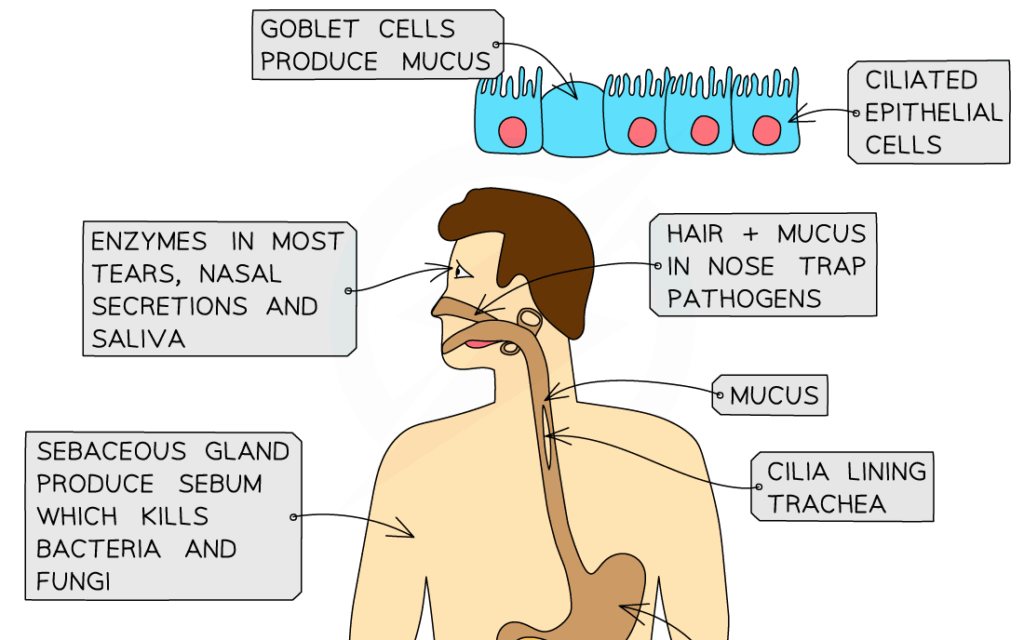
- Skin acts as a tough physical barrier, with keratinised cells resistant to entry.
- Sebum and sweat lower skin pH, inhibiting microbial growth.
- Mucous membranes trap microbes; cilia in the respiratory tract sweep them out.
- Secretions (tears, saliva) contain lysozyme, an enzyme that breaks down bacterial cell walls.
- Stomach acid destroys many ingested pathogens.
🧠 Examiner Tip: When asked about innate immunity, don’t just list barriers — also explain how they prevent pathogen entry (mechanism).
📌 Cellular Defence Mechanisms
- Phagocytes (macrophages, neutrophils) engulf pathogens into phagosomes, fuse with lysosomes, and digest them.
- Phagocytosis is enhanced by opsonins (molecules that coat pathogens for easier recognition).
- Natural killer (NK) cells detect and destroy virus-infected or cancerous cells by releasing perforins.
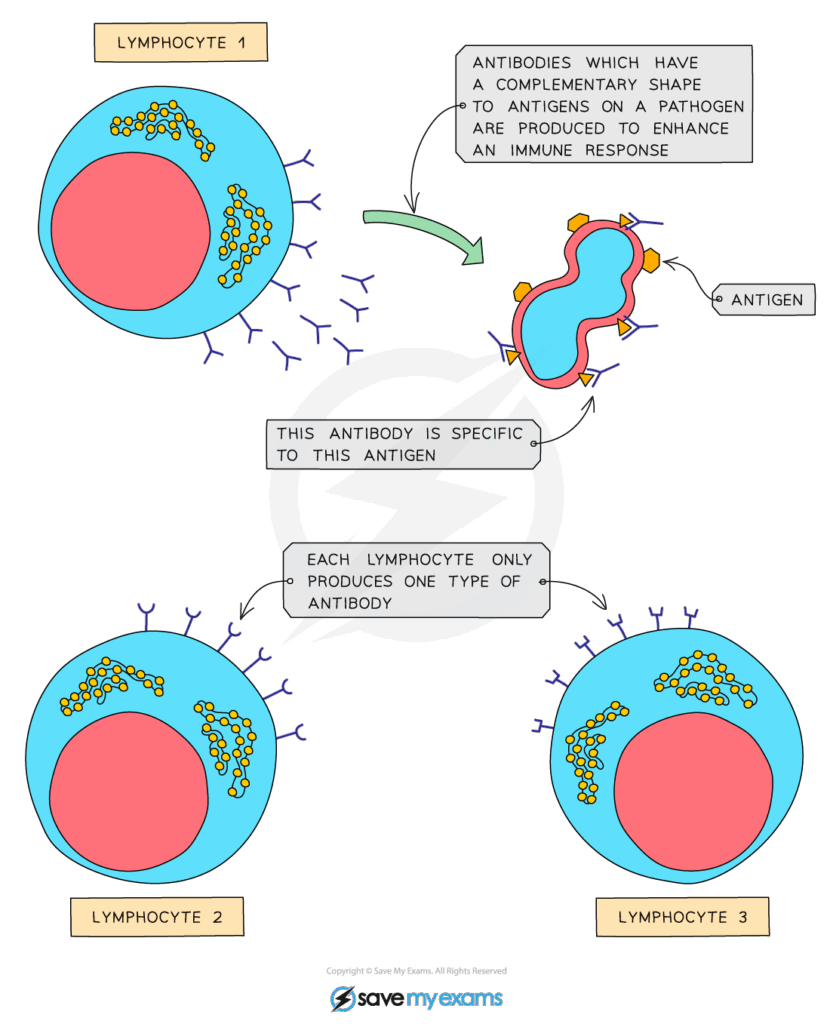
- Dendritic cells process antigens and present them to T cells, linking innate and adaptive immunity.
- Apoptosis (programmed cell death) is triggered in infected cells to limit pathogen spread.
🧬 IA Tips & Guidance: Students can observe phagocytosis using microscope slides or simulations with yeast cells and white blood cell analogues.
📌 Inflammatory Response
- Damaged cells release histamine, causing vasodilation and increased blood flow.
- Capillaries become permeable, allowing immune cells to enter tissues.
- Symptoms: redness, heat, swelling, pain.
- Cytokines recruit more immune cells, amplifying the response.
- Fever (systemic inflammation) raises body temperature, slowing pathogen growth.
🌐 EE Focus: An EE could investigate the role of inflammation in different infections — beneficial in localised infections but damaging in chronic diseases (e.g., autoimmune disorders).
📌 Complement System and Cytokines
- Complement proteins form a cascade that:
- Attracts immune cells (chemotaxis).
- Opsonises pathogens for phagocytosis.
- Forms membrane attack complexes (MAC) to lyse bacteria.
- Cytokines act as chemical messengers, coordinating immune activity.
- Interferons inhibit viral replication and activate NK cells.
❤️ CAS Link: Students could design an educational campaign explaining everyday ways innate immunity is supported — such as hygiene, diet, and vaccinations.
🌍 Real-World Connection: Disorders of innate immunity, such as chronic granulomatous disease (failure of phagocytosis), show its importance. Innate immunity is also the target of therapies like interferon treatment in viral infections.
📌 Link to Adaptive Immunity
- Dendritic cells and macrophages present antigens to T lymphocytes, activating adaptive immunity.
- Innate responses slow pathogen spread, giving adaptive immunity time to develop.
- Failure of innate mechanisms compromises adaptive immunity activation.
🔍 TOK Perspective: Innate immunity is “non-specific,” but is it really? Pattern recognition receptors (PRRs) can identify classes of pathogens — showing that even innate responses involve categorisation. TOK issue: To what extent are our scientific categories (innate vs adaptive) oversimplifications?