C3.1.1 COORDINATION OF NERVOUS AND ENDOCRINE SYSTEMS
📌Definition Table
| Term | Definition |
|---|---|
| Coordination | The process by which the body integrates functions of different organs and systems to respond effectively to internal and external stimuli. |
| Nervous system | A communication system that uses electrical impulses along neurons for rapid, short-term responses. |
| Endocrine system | A communication system where glands release hormones into the bloodstream for slower, longer-lasting regulation. |
| Hormone | A chemical messenger secreted by endocrine glands that travels in the blood and acts on target cells with specific receptors. |
| Reflex arc | A neural pathway that mediates rapid, involuntary responses to stimuli, bypassing conscious brain involvement. |
| Hypothalamus | A brain region that links nervous and endocrine systems, regulating pituitary hormone release. |
📌Introduction
The coordination of the nervous and endocrine systems ensures that organisms can respond appropriately to both rapid changes and long-term demands. The nervous system provides fast, targeted communication using electrical impulses and neurotransmitters, allowing immediate responses such as reflexes and muscle contractions. In contrast, the endocrine system works through hormones transported in the bloodstream, producing slower but more sustained effects such as regulating growth, reproduction, and metabolism. Together, these systems maintain homeostasis and allow organisms to adapt to changing environments. Their interaction is most evident in the hypothalamus–pituitary axis, which integrates neural signals with hormonal regulation.
📌 Nervous System Coordination
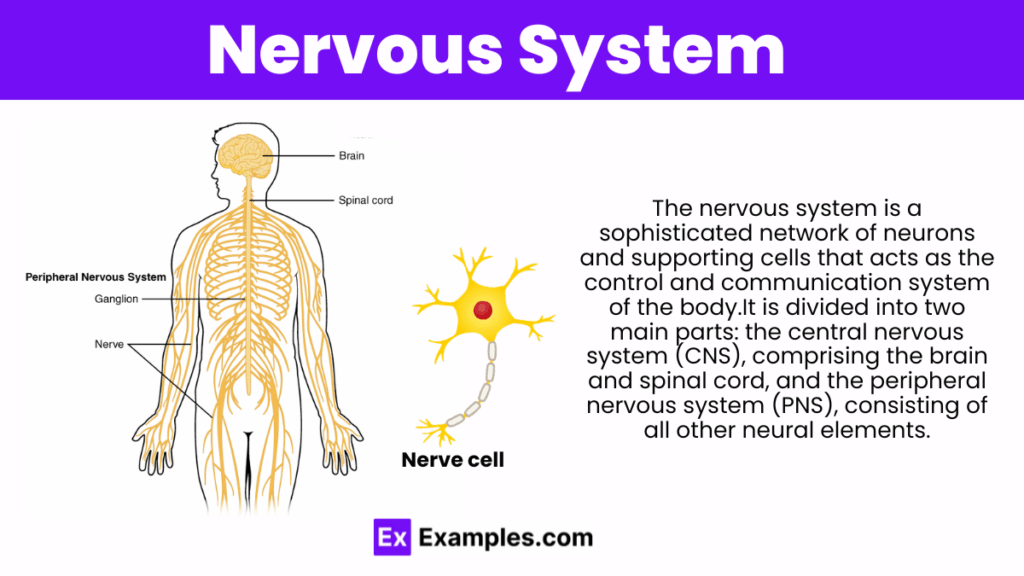
- Nerve impulses travel along neurons at very high speeds, enabling immediate responses to stimuli.
- Coordination is achieved through synaptic transmission, where neurotransmitters bridge communication between neurons.
- Reflex arcs illustrate automatic control mechanisms, e.g., hand withdrawal from a hot object.
- Central nervous system (CNS) integrates sensory information and produces responses via motor neurons.
- Enables precise, localised actions (e.g., contracting a muscle fibre or dilating a pupil).
🧠 Examiner Tip: Don’t just state “nervous system = fast.” Always link speed to survival advantage (e.g., reflexes prevent injury).
📌 Endocrine System Coordination
- Glands release hormones into blood → circulate throughout the body.
- Effects are slower to start but last longer compared to nervous responses.
- Hormones act only on target organs with receptors (specificity).
- Example:
- Adrenaline prepares body for fight-or-flight (increased heart rate, glucose release).
- Insulin lowers blood glucose; glucagon raises it.
- Provides global regulation (growth, metabolism, reproduction).
🧬 IA Tips & Guidance: Investigations could model hormone action using simulations of insulin–glucose regulation or examine how adrenaline affects heart rate in organisms such as Daphnia.
📌 Integration of Nervous and Endocrine Systems
- The hypothalamus is the control centre linking nerves and hormones.
- Hypothalamic neurons secrete hormones that act on the pituitary gland.
- Example: Stress response — hypothalamus triggers pituitary → ACTH release → adrenal glands produce cortisol/adrenaline.
- Feedback loops (negative feedback) prevent overproduction of hormones.
- Integration allows short-term nervous input to result in long-term endocrine effects.
🌐 EE Focus: An EE could compare the efficiency of neural vs hormonal signalling in maintaining homeostasis, or investigate evolutionary adaptations of coordination in different taxa (invertebrates vs vertebrates).
📌 Examples of Coordination in Action
- Fight-or-flight response: Nervous system detects threat → adrenal glands release adrenaline → systemic effects.
- Reproduction: Hormones (FSH, LH, estrogen, testosterone) regulated by hypothalamus and pituitary.
- Thermoregulation: Hypothalamus receives temperature signals and triggers shivering (nervous) or sweating (endocrine influence).
- Blood glucose regulation: Nervous signals after eating + insulin/glucagon secretion coordinate glucose homeostasis.
❤️ CAS Link: Students could create community workshops explaining stress management, linking how nervous (immediate stress) and endocrine (chronic stress) systems interact.
🌍 Real-World Connection: Many disorders involve miscommunication between nervous and endocrine systems — e.g., diabetes (hormonal imbalance), chronic stress (overactive HPA axis), thyroid disorders.
📌 Regulation and Feedback Mechanisms
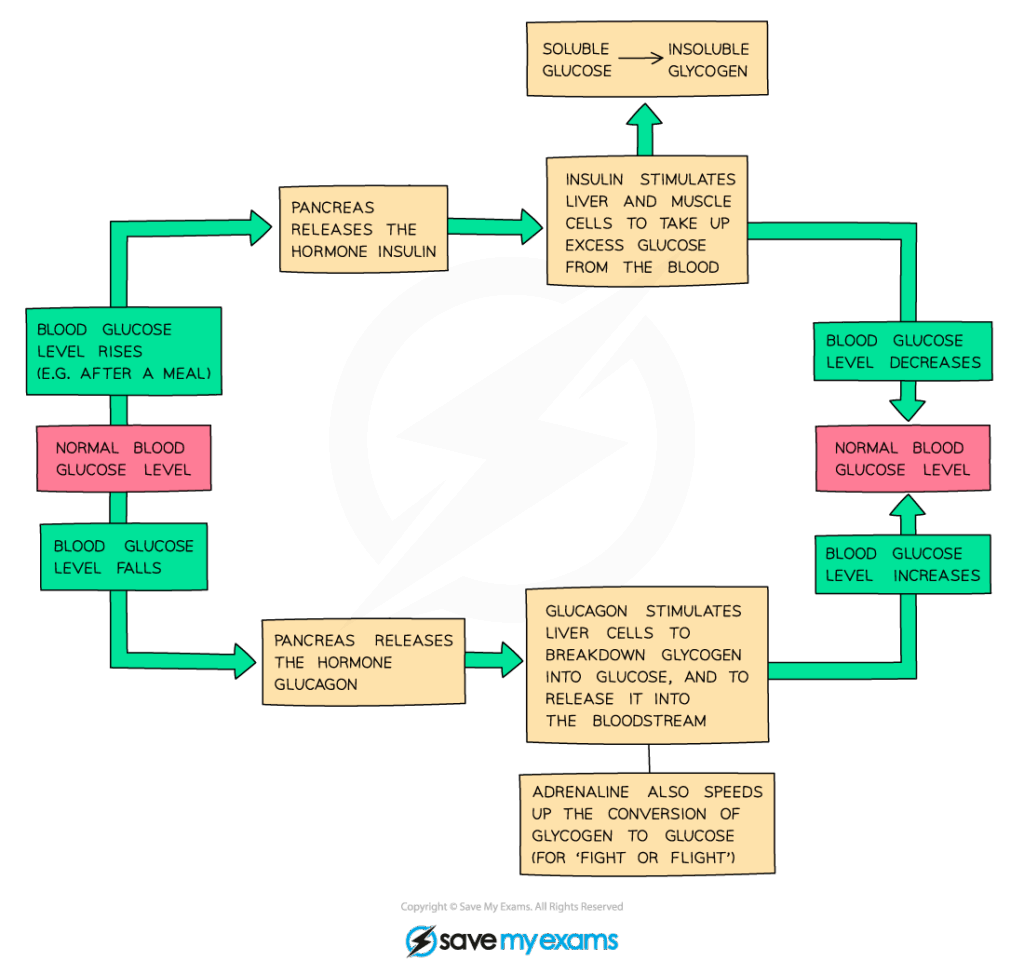
- Negative feedback ensures stability: e.g., high blood glucose triggers insulin → lowers glucose → insulin decreases.
- Positive feedback occurs rarely (e.g., oxytocin in childbirth, lactation).
- Both nervous and endocrine systems rely on these loops for effective control.
- Disruptions in feedback (tumours, genetic mutations, autoimmune conditions) cause diseases.
- Interdependence of systems ensures precise adjustments rather than uncontrolled responses.
🔍 TOK Perspective: Nervous vs endocrine coordination raises a TOK issue: do we oversimplify complex interactions by dividing them into “fast vs slow”? In reality, the systems overlap, challenging reductionist models.