C2.2.2 SYNAPTIC TRANSMISSION AND NEUROTRANSMITTERS
📌Definition Table
| Term | Definition |
|---|---|
| Synapse | Junction between two neurons or a neuron and effector where impulses are transmitted. |
| Neurotransmitter | Chemical messenger released into synaptic cleft to transmit signal across synapse. |
| Synaptic vesicle | Membrane-bound sac containing neurotransmitter molecules in the presynaptic terminal. |
| Exocytosis | Process by which vesicles fuse with presynaptic membrane to release neurotransmitters. |
| Postsynaptic receptor | Protein on postsynaptic membrane that binds neurotransmitter, triggering a response. |
| Excitatory neurotransmitter | Increases likelihood of action potential in postsynaptic cell (e.g., acetylcholine, glutamate). |
| Inhibitory neurotransmitter | Decreases likelihood of action potential (e.g., GABA, glycine). |
| Synaptic cleft | Gap (~20–40 nm) between presynaptic and postsynaptic cells. |
📌Introduction
Synaptic transmission enables communication between neurons and between neurons and effectors. Unlike electrical conduction along axons, synapses rely on chemical messengers (neurotransmitters) to carry signals across the synaptic cleft. This process ensures unidirectional transmission and provides multiple points for regulation, integration, and drug action.
📌 Steps in Synaptic Transmission
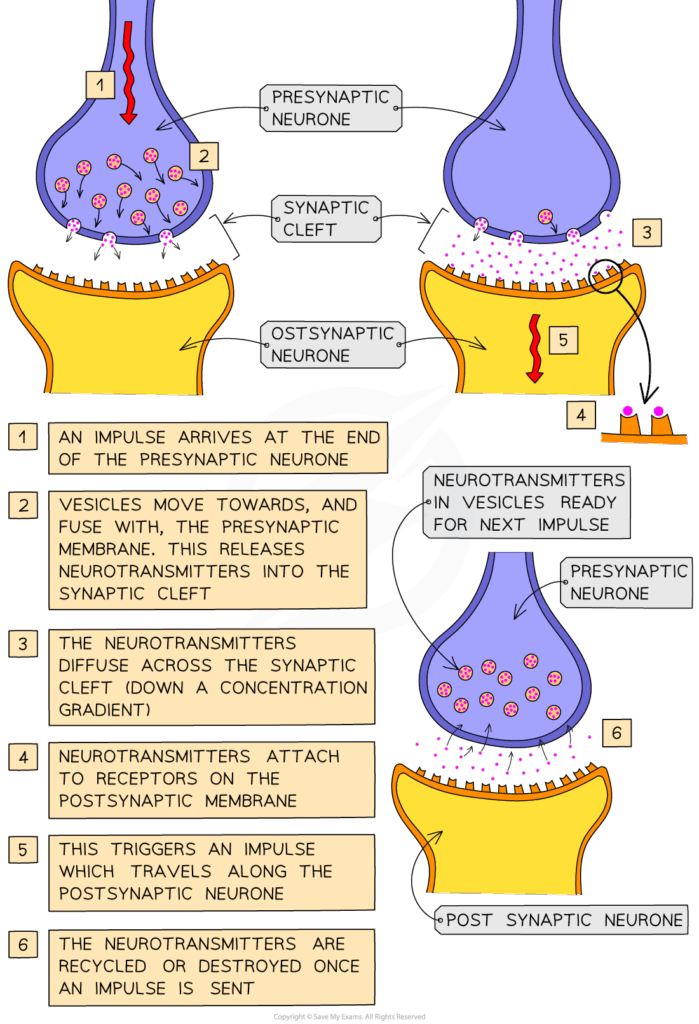
- Arrival of action potential at presynaptic terminal depolarizes membrane.
- Voltage-gated Ca²⁺ channels open; Ca²⁺ influx triggers vesicle movement.
- Synaptic vesicles fuse with presynaptic membrane, releasing neurotransmitter by exocytosis.
- Neurotransmitters diffuse across cleft and bind to postsynaptic receptors.
- Ion channels open, producing excitatory (EPSP) or inhibitory (IPSP) postsynaptic potentials.
- Neurotransmitter is removed via enzymatic breakdown, reuptake, or diffusion, ensuring signals are brief.
🧠 Examiner Tip: Always mention Ca²⁺ influx and exocytosis when describing synaptic transmission—these are frequent marking points.
📌 Neurotransmitter Types and Functions
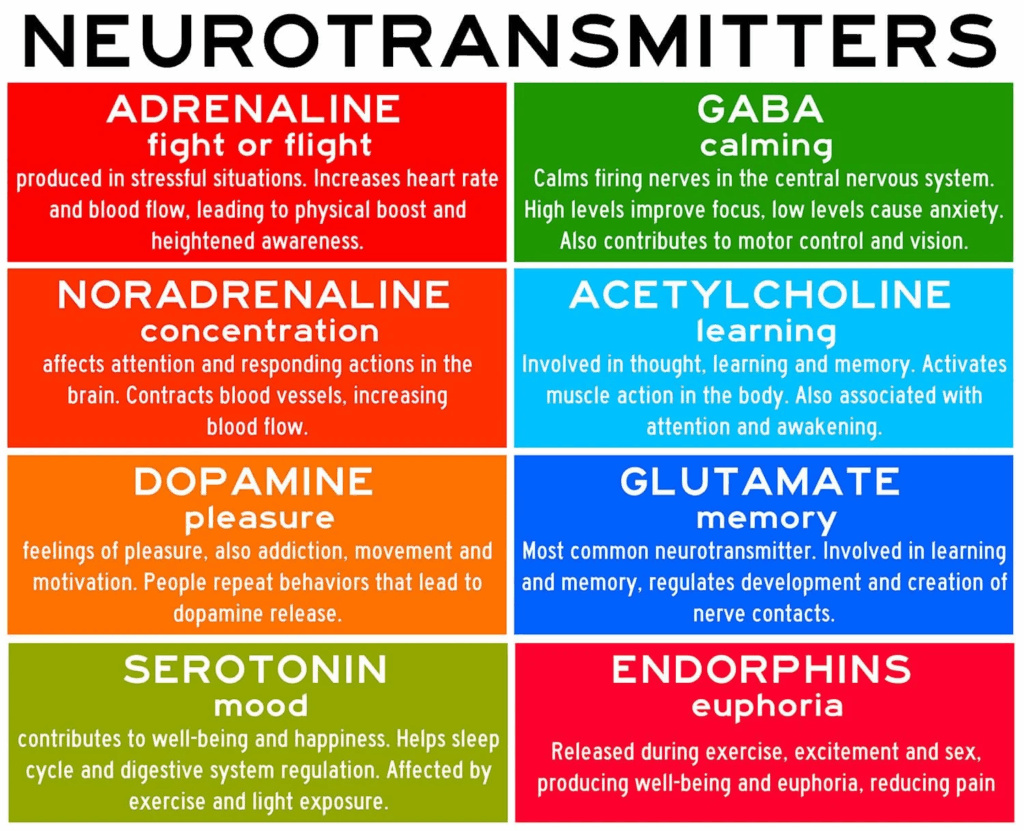
- Acetylcholine (ACh): at neuromuscular junctions; excitatory, triggers muscle contraction.
- Glutamate: main excitatory neurotransmitter in CNS.
- GABA: main inhibitory neurotransmitter in CNS.
- Dopamine, serotonin, norepinephrine: regulate mood, reward, and alertness.
- Neuropeptides (endorphins): modulate pain and stress responses.
🧬 IA Tips & Guidance: An IA could explore reaction times under stimulant vs relaxant conditions (e.g., caffeine vs relaxation exercises) as a proxy for neurotransmitter effects on synaptic activity.
📌 Excitatory vs Inhibitory Synapses
- Excitatory synapses depolarize postsynaptic membranes, bringing potential closer to threshold.
- Inhibitory synapses hyperpolarize postsynaptic membranes, reducing likelihood of action potential.
- Balance between EPSPs and IPSPs determines neuron firing.
🌐 EE Focus: An EE could investigate the role of excitatory vs inhibitory neurotransmission in disorders like epilepsy, Parkinson’s, or depression, linking neurobiology to medical treatments.
📌 Drugs and Synaptic Function
- Stimulants (cocaine, amphetamines) increase neurotransmitter levels or block reuptake.
- Depressants (alcohol, benzodiazepines) enhance inhibitory transmission.
- Neurotoxins (botulinum toxin, curare) block neurotransmitter release or receptor binding.
- Therapeutics (SSRIs, antipsychotics) modulate synaptic activity to treat disorders.
❤️ CAS Link: Students could design awareness projects on the neurological effects of recreational drug abuse or create educational models of neurotransmission for peers.
🌍 Real-World Connection: Neurotransmission is central to understanding diseases like Alzheimer’s (loss of acetylcholine neurons), Parkinson’s (dopamine deficiency), and depression (serotonin imbalance). Many treatments work by modulating synapses.
📌 Synaptic Plasticity
- Repeated activity strengthens synapses (long-term potentiation), forming basis of learning and memory.
- Synaptic pruning removes weaker connections, refining neural circuits.
🔍 TOK Perspective: Much of what we know about synapses comes from animal models and indirect measurements. TOK reflection: Can knowledge about human cognition be fully trusted when it relies on models from simpler organisms?