C2.1.3 FEEDBACK AND REGULATION IN CHEMICAL SIGNALLING
📌Definition Table
| Term | Definition |
|---|---|
| Homeostasis | Maintenance of stable internal conditions in response to external changes. |
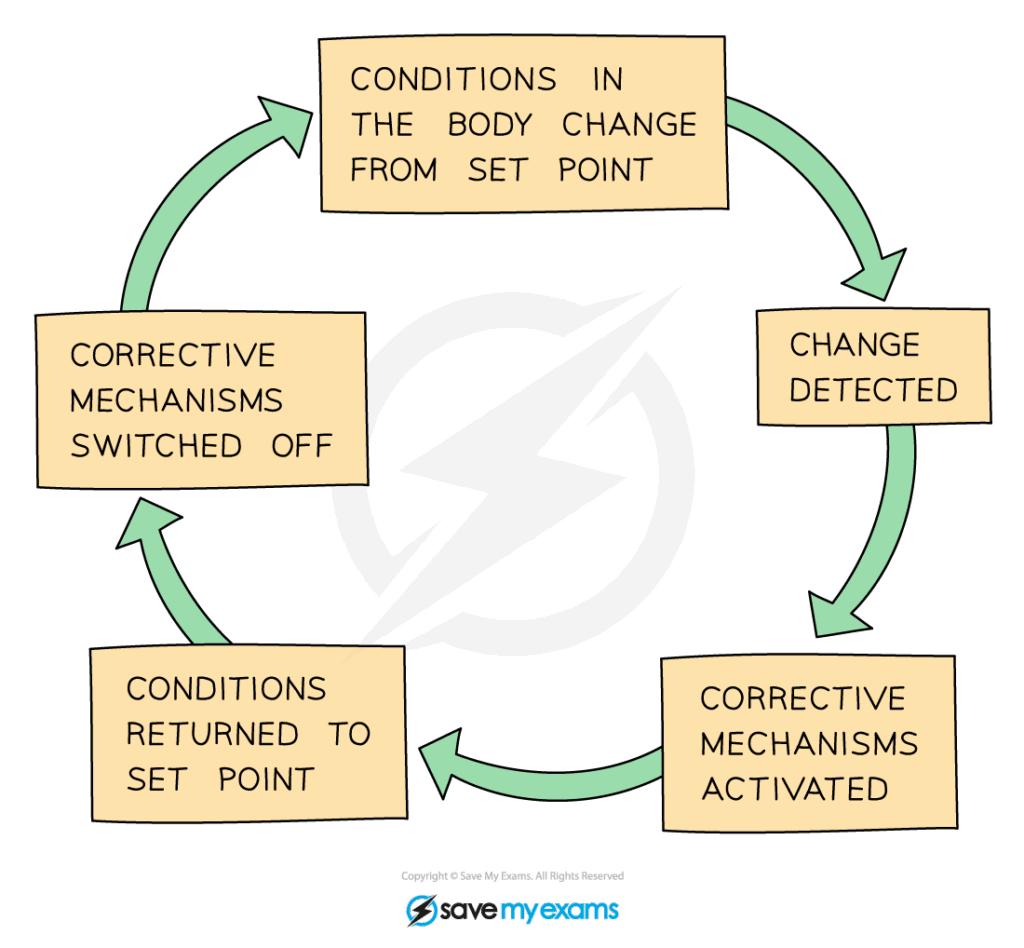
| Negative feedback | Regulatory mechanism where a change triggers responses that counteract the initial stimulus, restoring balance. |
| Positive feedback | Mechanism where a change is reinforced or amplified, driving processes to completion. |
| Endocrine axis | A hierarchical signalling pathway where one gland controls another via tropic hormones (e.g., hypothalamus–pituitary–thyroid). |
| Receptor down-regulation | Decrease in receptor number in response to high hormone levels, reducing sensitivity. |
| Circadian rhythm | Biological cycle regulated by feedback loops of signalling molecules and clock genes. |
📌Introduction
Chemical signalling systems must be tightly regulated to prevent under- or over-activation of pathways. Feedback mechanisms, both negative and positive, ensure appropriate hormone levels and cellular responses. These mechanisms underpin homeostasis, growth, reproduction, and stress responses, and their disruption can lead to disease.
📌 Negative Feedback in Hormonal Control
- Most common form of regulation in endocrine systems.
- Example: Blood glucose control
- High glucose → insulin secretion → glucose uptake/storage → lowers glucose → reduces insulin secretion.
- Low glucose → glucagon secretion → glycogen breakdown → raises glucose → reduces glucagon secretion.
- Example: Thyroid axis
- Hypothalamus (TRH) → pituitary (TSH) → thyroid (thyroxine).
- High thyroxine inhibits TRH and TSH release.
🧠 Examiner Tip: Always specify which hormone or gland is inhibited in negative feedback diagrams — vague answers often lose marks.
📌 Positive Feedback in Hormonal Control
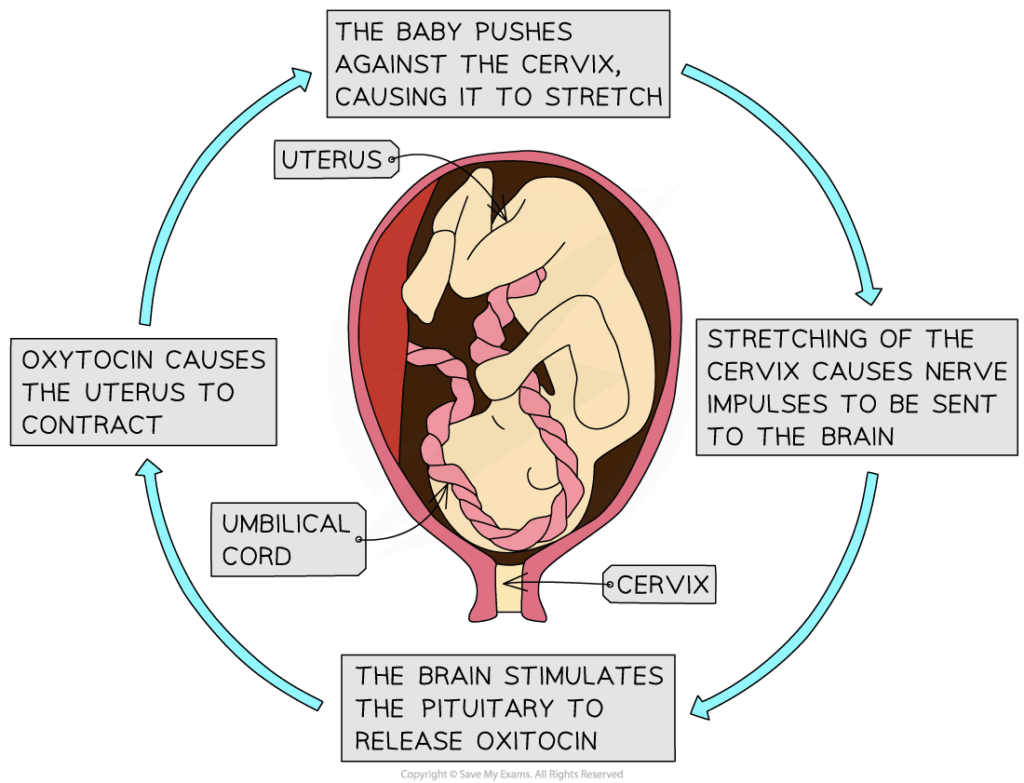
- Less common but important for processes requiring completion.
- Example: Childbirth
- Oxytocin release stimulates uterine contractions.
- Contractions trigger more oxytocin release until delivery.
- Example: Lactation
- Suckling stimulates prolactin and oxytocin release, sustaining milk production and ejection.
🧬 IA Tips & Guidance: Students could simulate feedback with data-logging software, e.g., glucose regulation models or heart rate feedback after exercise, linking physiology to regulation concepts.
📌 Endocrine Axes and Integration
- Multi-gland pathways provide fine control and amplification.
- Hypothalamus integrates nervous and endocrine signals.
- Pituitary releases tropic hormones that regulate other glands (thyroid, adrenal, gonads).
- Axes allow integration of multiple feedback loops.
🌐 EE Focus: An EE could examine disruptions in endocrine feedback, e.g., Cushing’s syndrome (excess cortisol), or model circadian rhythm regulation by melatonin feedback.
📌 Adaptation and Desensitization
- Chronic high hormone levels cause receptor down-regulation (e.g., insulin resistance in type 2 diabetes).
- Chronic low levels cause up-regulation, increasing sensitivity.
- Desensitization protects against overstimulation but contributes to disease when feedback fails.
❤️ CAS Link: Students could run health-awareness programs on diabetes or thyroid disorders, highlighting the role of feedback regulation in maintaining balance.
🌍 Real-World Connection: Disrupted feedback loops underlie many conditions: diabetes (glucose regulation failure), hyperthyroidism (thyroid overactivity), infertility (gonadal axis disruption). Hormone replacement therapies and drugs often restore balance by targeting feedback pathways.
📌 Feedback in Biological Cycles
- Circadian rhythms controlled by feedback loops of clock genes and melatonin secretion.
- Menstrual cycle regulated by interplay of positive and negative feedback among FSH, LH, estrogen, and progesterone.
🔍 TOK Perspective: Feedback systems are often represented in simplified diagrams. TOK reflection: To what extent do simplified models capture the complexity of living systems, and when does simplification risk misrepresenting reality?