C2.1.1 HORMONE TYPES AND MECHANISMS OF ACTION
📌Definition Table
| Term | Definition |
|---|---|
| Hormone | A chemical messenger secreted by endocrine glands, transported in blood to target organs, where it alters physiology. |
| Steroid hormone | Lipid-soluble hormone derived from cholesterol, able to diffuse through membranes and bind intracellular receptors. |
| Peptide hormone | Hormone made of amino acids; water-soluble and binds membrane receptors, activating signal cascades. |
| Amino acid derivative | Small hormones derived from tyrosine or tryptophan (e.g., epinephrine, melatonin). |
| Endocrine signalling | Long-distance communication where hormones are secreted into the bloodstream. |
| Target cell | Cell possessing specific receptors for a hormone, enabling response. |
📌Introduction
Hormones are essential regulators of growth, metabolism, reproduction, and homeostasis. Unlike nervous signalling, which is rapid and localized, hormonal communication is slower but longer-lasting and systemic. Hormones differ in chemical structure, solubility, and mechanisms of action, which determine how they interact with receptors and affect gene expression or enzyme activity.
📌 Hormone Types
- Steroid hormones (e.g., cortisol, estrogen, testosterone):
- Lipid-soluble, pass through membranes.
- Bind intracellular receptors in cytoplasm or nucleus.
- Hormone–receptor complex acts as transcription factor, altering gene expression.
- Peptide hormones (e.g., insulin, glucagon, ADH):
- Water-soluble, cannot cross membrane.
- Bind receptors on cell surface.
- Trigger signal transduction cascades (second messengers like cAMP).
- Amino acid derivatives (e.g., adrenaline, thyroxine):
- Adrenaline behaves like a peptide hormone.
- Thyroxine behaves like a steroid (lipid-soluble).
🧠 Examiner Tip: Always specify whether a hormone acts via intracellular receptors (steroid/thyroxine) or membrane receptors (peptide/adrenaline). This distinction is commonly tested.
📌 Mechanisms of Hormone Action
- Steroid pathway
- Hormone diffuses into cell → binds receptor → moves into nucleus.
- Directly regulates transcription and protein synthesis.
- Longer onset, longer duration.
- Peptide pathway
- Hormone binds to receptor → activates G-protein/kinase cascade.
- Generates second messengers (cAMP, IP₃, Ca²⁺).
- Leads to enzyme activation or channel regulation.
- Rapid, short-lived effects.
🧬 IA Tips & Guidance: A practical extension could be measuring glucose levels in blood samples before and after food intake to illustrate insulin/glucagon action. Graphing hormone effects strengthens data analysis skills.
📌 Integration with Endocrine System
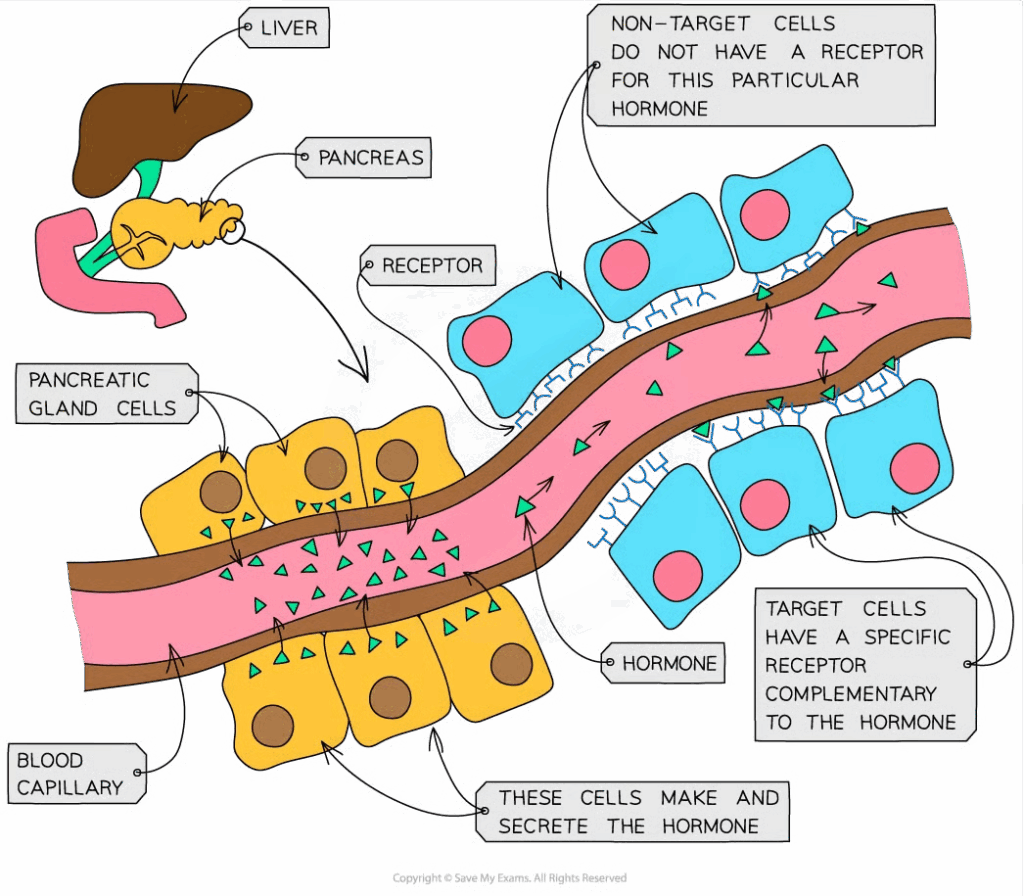
- Hormones often act in antagonistic pairs (insulin vs glucagon).
- Pituitary gland releases “tropic” hormones controlling other glands.
- Hormone action is highly specific due to receptor–ligand binding.
🌐 EE Focus: An EE could explore molecular differences in hormone signalling, such as comparing steroid hormone receptor binding vs peptide hormone cascades, linking biochemistry to physiology.
📌 Hormones and Cellular Adaptation
- Steroid hormones reprogram transcription, producing long-term structural/functional changes.
- Peptide hormones regulate immediate metabolic activity.
- Cells adapt by altering receptor number (up- or down-regulation).
❤️ CAS Link: Students could develop awareness campaigns on lifestyle diseases (e.g., diabetes), showing how hormones regulate blood sugar and why balance is crucial for health.
🌍 Real-World Connection: Hormonal therapies treat many conditions: insulin for diabetes, thyroxine for hypothyroidism, corticosteroids for inflammation, contraceptive pills for reproduction control. Understanding hormone action underpins medical treatments.
📌 Integration with Physiology
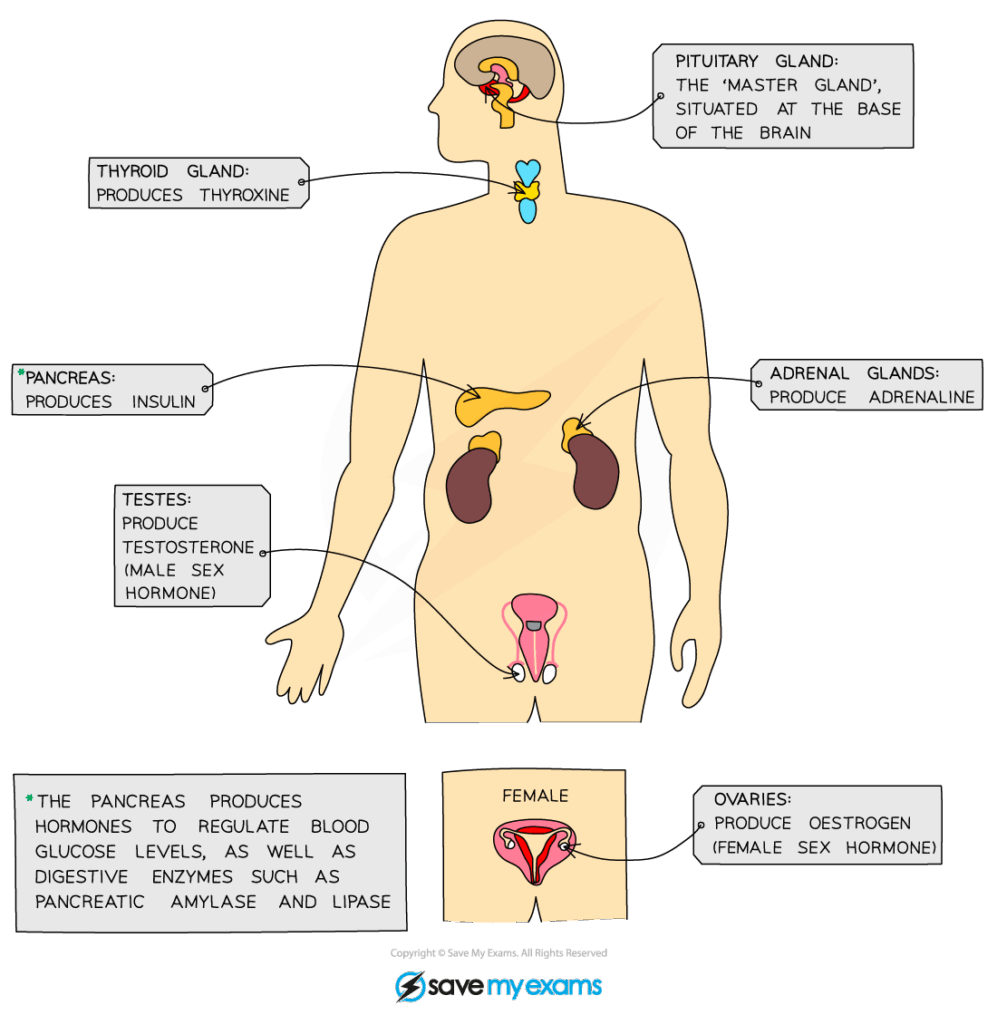
- Nervous and endocrine systems interact (hypothalamus controls pituitary).
- Hormonal cascades allow small signals to have amplified systemic effects.
🔍 TOK Perspective: Hormone action involves invisible molecules inferred by effects on physiology. TOK reflection: How do scientists gain knowledge about unobservable processes, and to what extent can indirect measurements be trusted as evidence?